Unrestricted Electives (UEs)
MDes Unrestricted Electives Offerings are grounded in the Department's strategic research focus areas with categories that create relevant focus areas while maintaining flexibility for learners. These categories reflect industry and practice requirements and align with the Department's strategic directions.
- Creative Technology
- Human Centred Innovation
- Resilient Futures
- Practice-Based Learning
| Semester 1 / August | Semester 2 / January | Semester 3 / August | |
| Creative Technology | ID5401 Spatial Computing: Design and Development
ID5402 Cybernetic Systems: Bodies and Environments ID5357 Interdisciplinary Ways of Knowing |
ID5363 Advanced Interaction Design
ID5400 Creative Computing |
|
| Human Centred Innovation | ID5361 Design for Healthy Living | ID5355 Collaborative Design | |
| Resilient Futures | ID5360 Sustainable Innovation: Design & Transformation Strategies | ||
| Practice-Based Learning | ID5358 Design Research Immersion Programme
|
ID5358 Design Research Immersion Programme
|
ID5358 Design Research Immersion Programme
ID5362 Integrated Design Internship ID5366 Integrated Design in Action |
- All MDes Unrestricted Electives are 4 units.
- The MDes Unrestricted Elective offerings may be subject to changes in each academic semester/year.
- ID5400 Creative Computing - Preclusion: ID4401 Creative Computing
- ID5400 Creative Computing - More Information HERE / Course Syallabus HERE
ID5358 Design Research Immersion Programme
This course offers graduate students an opportunity to engage in academic research under the guidance of Department of Design's Principle Investigator. Students will apply and expand upon concepts from their coursework to tackle complex, open-ended questions and real-world challenges in research projects. Throughout the course, students will learn to develop and refine research questions, design and execute studies using appropriate methodologies, analyse data, draw insightful conclusions, collaborate with various academic and industry partners and articulate their findings in a well-documented written report.
| Research Lab | Principle Investigator | Scope of Research | Works |
| Aging with Dignity Lab | Professor Cees de Bont | The Aging with Dignity Lab aims at ensuring the wellbeingof an aging population by improving products, services, systems,environments, and policies. Through such improvements, the aging population will be empowered to make informed decisions about their own lives. This relates, among other things, to their physical and mental health and personal finances. The underlying principle is that by supporting the young-old (55-74) in their transition from work to retirement, this cohort of aging people will be better prepared (competent), more autonomous, and with stronger social connections (relatedness) than those who are not supported. | HERE |
| NUS CUTE Center | Associate Prof Yen Ching Chiuan | The NUS CUTE (Creating Unique Technology for Everyone) Centre is a premier, multi-award-winning research centre within the Smart Systems Institute at the National University of Singapore. Founded as a joint venture between Keio University (Japan) and NUS, and supported by Singapore’s National Research Foundation under the Prime Minister’s Office through the International Research Centres in Singapore Funding Initiative, the Centre exemplifies international, interdisciplinary collaboration.At the forefront of next-generation interactive media, the CUTE Center pioneers the seamless integration of digital technologies with physical and virtual environments— extending into human sensory experience. Guided by a strong human-centred design philosophy, its research advances tangible interaction, augmented learning, and embodied experience.Key research domains include digital multisensory interaction (electronic transmission and simulation of flavours, aromas, and ambient sensations across networks), wearable technology (smart textiles and devices delivering rich haptic feedback for extended reality and remote communication), and educational and training media (immersive, embodied learning environments that enhance engagement and retention through XR). |
HERE |
| NUS Center for Additive Manufacturing (AM.NUS) |
Associate Prof Yen Ching Chiuan | The NUS Centre for Additive Manufacturing (AM.NUS), established in 2017 at the National University of Singapore, is a premier multidisciplinary hub advancing 3D printing technologies and translating them into real-world impact. By leveraging NUS’ world-class expertise and state-of-the-art additive manufacturing capabilities, AM.NUS develops innovative, practical solutions across healthcare and other strategic sectors—helping to improve outcomes, enable personalisation, and accelerate adoption.AM.NUS is a rare multidisciplinary additive manufacturing centre within an Institute of Higher Learning in Singapore, bringing together expertise across NUS faculties, including Medicine, Science, Design and Engineering, and Dentistry. The Centre is supported by NUS as well as national partners such as the National Additive Manufacturing Innovation Cluster (NAMIC) and the Singapore Economic Development Board (EDB). |
HERE |
| Interactive Materials Lab |
Assistant Prof Clement Zheng |
The Interactive Materials Lab is currently housed within the NUS CUTE Center. They are a team of design researchers and technologists exploring materials and Their research explores four interwoven themes: 1_designing interactive materials by transforming everyday things into functional components for computing; 2_shifting the material culture of physical computing to expand accessibility and engagement beyond traditional electronics; 3_integrating design-based craft innovation to uncover new interactive possibilities within traditional making practices; and 4_advancing computational design and fabrication through rigorous hands-on experimentation. Together, these approaches aim to broaden the material possibilities of interactive systems, foster new ways of engaging with computing, and open up opportunities for more creative, inclusive, and sustainable interactions between people and technology. |
HERE |
| Joyful Experiences in Design and Interaction (JEDI) Lab |
Assistant Prof Janghee Cho | Joyful Experiences in Design and Interaction (JEDI) Lab is an interdisciplinary research group, working at the intersection of human-computer interaction, social computing, and design research. At the JEDI Lab, they study how technologies mediate everyday life and how design can open up more reflective, caring, and joyful ways of living. Drawing on sociotechnical, critical, and speculative perspectives, we deeply explore people and phenomena, challenge established paradigms, and create new possibilities for technology and social innovation.Their current work includes foundational inquiry into the meaning and design theory of reflection through alternative and decolonial perspectives, alongside applied research on well-being and digital health in Singapore, particularly for youth and caregivers. |
HERE |
| Interactive 3D Design Group |
Assistant Prof Gabriel Lipkowitz | Interactive 3D Design Group consist of students, faculty, and researchers on a mission to democratize emerging 3D technologies. They are an international team and engage in collaboration across the world. They translate 3D technologies into impactful user experiences through good design. And they adopt a multidisciplinary approach to designing with new 3D technologies. Our projects span the continuum of Spatial Computing, Generative AI, and Digital Healthcare, focusing on how immersive interfaces can transform professional workflows and patient outcomes. |
HERE |
| Soft Technologies Lab |
Assistant Prof Irmandy Wicaksono | The Soft Technologies Lab adopts a transdisciplinary approach to designing and developing intelligent textiles and soft systems across scales, shaping future objects, interactions, wearables, and environments. Rooted in curiosity and collaboration, the lab brings together design, engineering, materials science, computing, and the arts to explore how soft materials can become sensing, actuating, and computational systems that integrate seamlessly into everyday life. Their work spans applications in health and well-being, human–computer interaction, interactive arts, architecture, and beyond. The lab advances new fabrication techniques, hardware systems, computational methods, and functional and sustainable materials that enable soft technologies to operate as adaptive skins and surfaces.
They investigate scalable and distributed systems, exploring how ubiquitous technologies can permeate and shape human experience, perception, and interaction across both digital and physical worlds. By designing across scales: from fibers to fabrics, body to environment, the Lab envisions a future where soft technologies form the foundation of material, wearable, and environmental systems, creating continuous feedback between humans and ecosystems, and between the built and the natural. |
HERE |
| Fabrication Futures Lab | Assistant Prof Justin Moon | Fabrication Futures Lab investigates novel hybrid fabrication methods at the intersection of advanced manufacturing, smart materials, human computer interaction, and design. The lab integrates multiple fabrication processes and harnesses the properties of functional materials to build interactive systems on complex, non-planar surfaces — developing novel actuators, sensors, and interactive devices through computational design and data-driven approaches for conformal fabrication on complex surface interfaces.
Driven by two core goals, the lab works to empower designers with creative tools to ideate and fabricate responsive, dynamic prototypes using smart materials and to create intuitive design workflows that enable individuals to quickly ideate, iterate, and prototype their ideas. |
HERE |
| in:able Lab | Assistant Professor Dasom Choi |
Rooted in Human- Computer Interaction (HCI) and Accessibility research, we empower marginalized groups—including people with disabilities, the elderly, children, and migrants—through a human-centered design approach. We study, design, and develop inclusive technologies that bridge the gap between individual ability and their sociophysical environment. By reframing the unique traits of marginalized communities as strengths, we redefine systemic barriers and create design solutions that resonate with diverse ways of being. In line with this vision, our research spans AI-mediated communication, the fairness of AI and algorithmic services, and the participatory design of AI systems |
HERE |
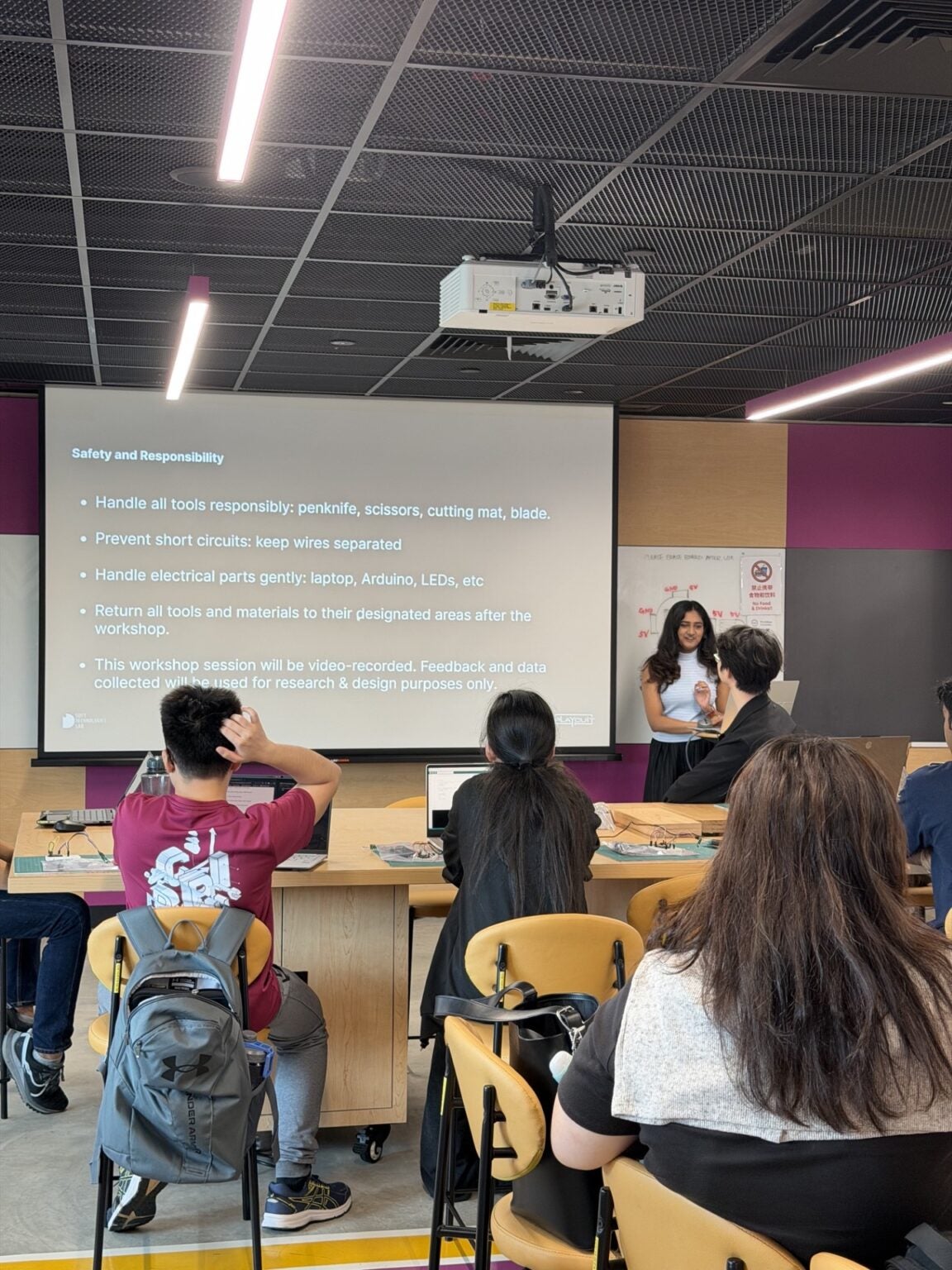
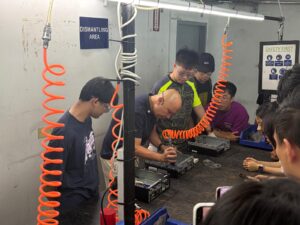
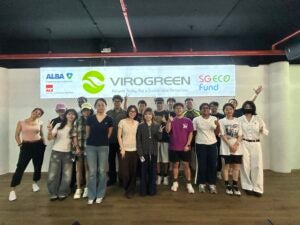
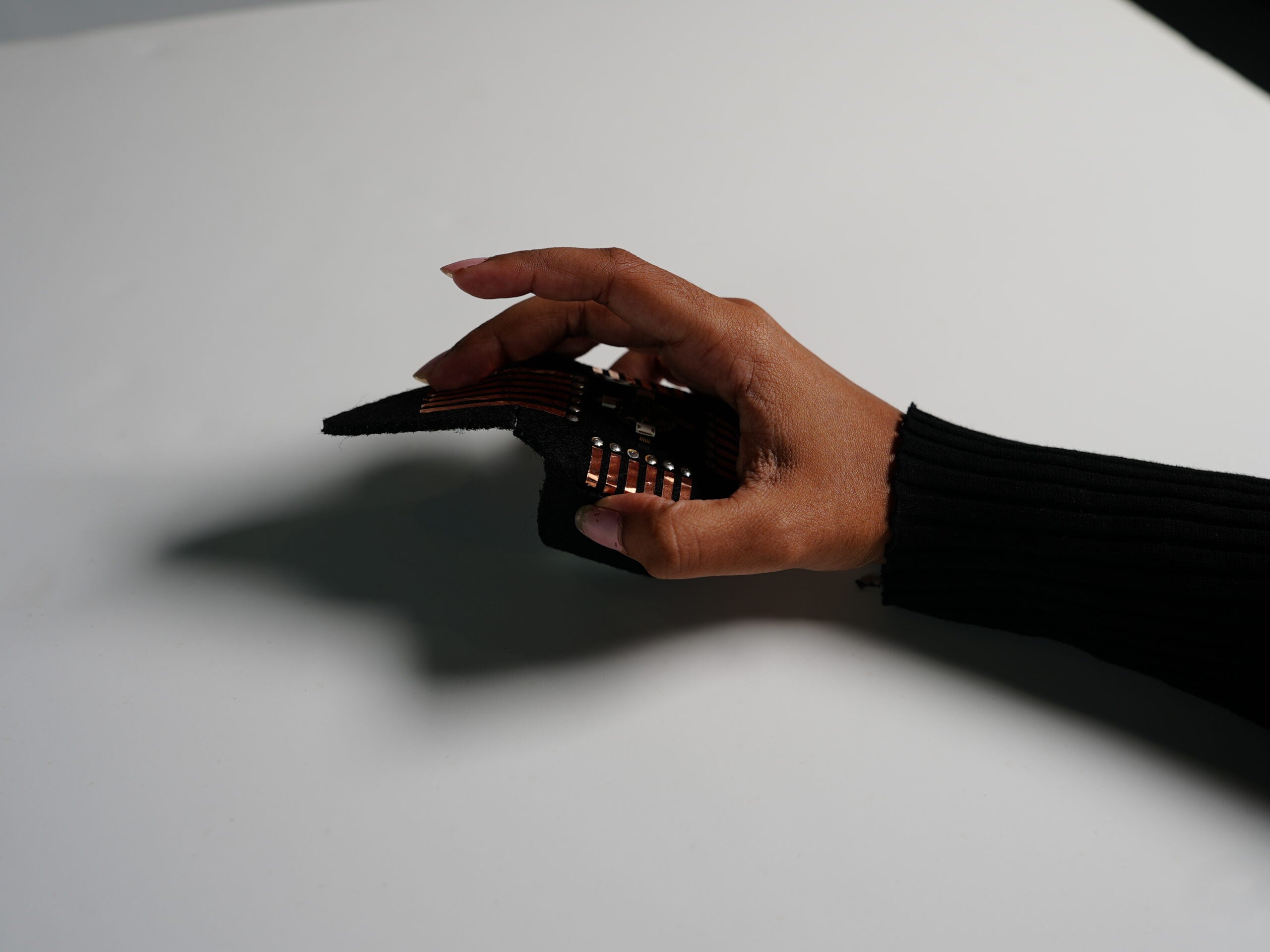
Photo Credit: Janani Ganeshkumar, MDes Class of 2026 & Soft Technologies Lab
ID5362 Integrated Design Internship
Integrated Design Internship provides students with valuable industry experience in a Singapore-based organisation, before graduation, bridging their academic learning experience with real-world practice. A complementary component of the Master of Design in Integrated Design (MDes) programme, this course enables students to work in design and innovation roles across diverse sectors, including public, private, and social enterprises, as well as start-ups and NGOs.
Internship opportunities span a wide range of industries, including technology, financial services, healthcare, service industries, tourism and hospitality, mobility, and sustainability. Through hands-on experience, students will deepen their understanding of design’s role in different sectors, build professional networks, and develop essential skills for their future careers.


Photo Credit: Wang Wanying, MDes Class of 2026 & A4HPV (the Alliance for Active Action Against HPV)
ID5366 Integrated Design In Action
Integrated Design in Action (IDA) is a culminating applied learning experience offered exclusively in Semester 3.
IDA bridges the theoretical and methodological foundations built in Semesters 1 and 2 with sustained, real-world design or research practice. The 13-week course is supported by structured in-class touchpoint sessions combining peer learning, reflection, and academic consultation.
Students produce a final design or research output, such as a thesis, report, exhibition, product showcase, or equivalent, demonstrating their practical outcomes. The exact format and deliverables are defined collaboratively with the IDA supervisor (MDes faculty) and relevant industry or research partners. By combining professional experience with reflective practice, IDA provides a structured bridge from classroom learning to professional design practice.
Projects undertaken in the Integrated Design in Action could originate from a completed ID5358 Design Research Immersion Program, ID5362 Integrated Design Internship, or Integrated Design Studio projects.
Other Unrestricted Electives (UEs)
4 units each
Supplementing your design education, Unrestricted Electives allow students to explore greater breadth or depth in any subject and at any level. Students may use these courses to explore or build a stronger foundation in their chosen area of interest such as business, computer science, engineering, communication, etc.
MDes students may utilise the Submit Course Requests function during CourseReg to request for non-programme requirement courses (i.e. cross-faculty courses). The request will go through a two-step approval process: it is first routed to the home department for decision before approved requests are routed to the course host(s) for final assessment.
There is only one round of Submit Course Requests each semester. Please refer to the schedule here(opens in new tab).
With effect from Sem 1, AY2022/2023, Graduate Coursework (GDC) students taking non-programme requirement courses from self-funded (i.e. non-subsidised) programmes might be charged course fee for the course. Please contact the course host for more information.
For more information, do refer to the information available here(opens in new tab).
Guest Lectures and Workshops
ID5360 Sustainable Innovation: Design & Transformation Strategies
Site Visit to Virogreen
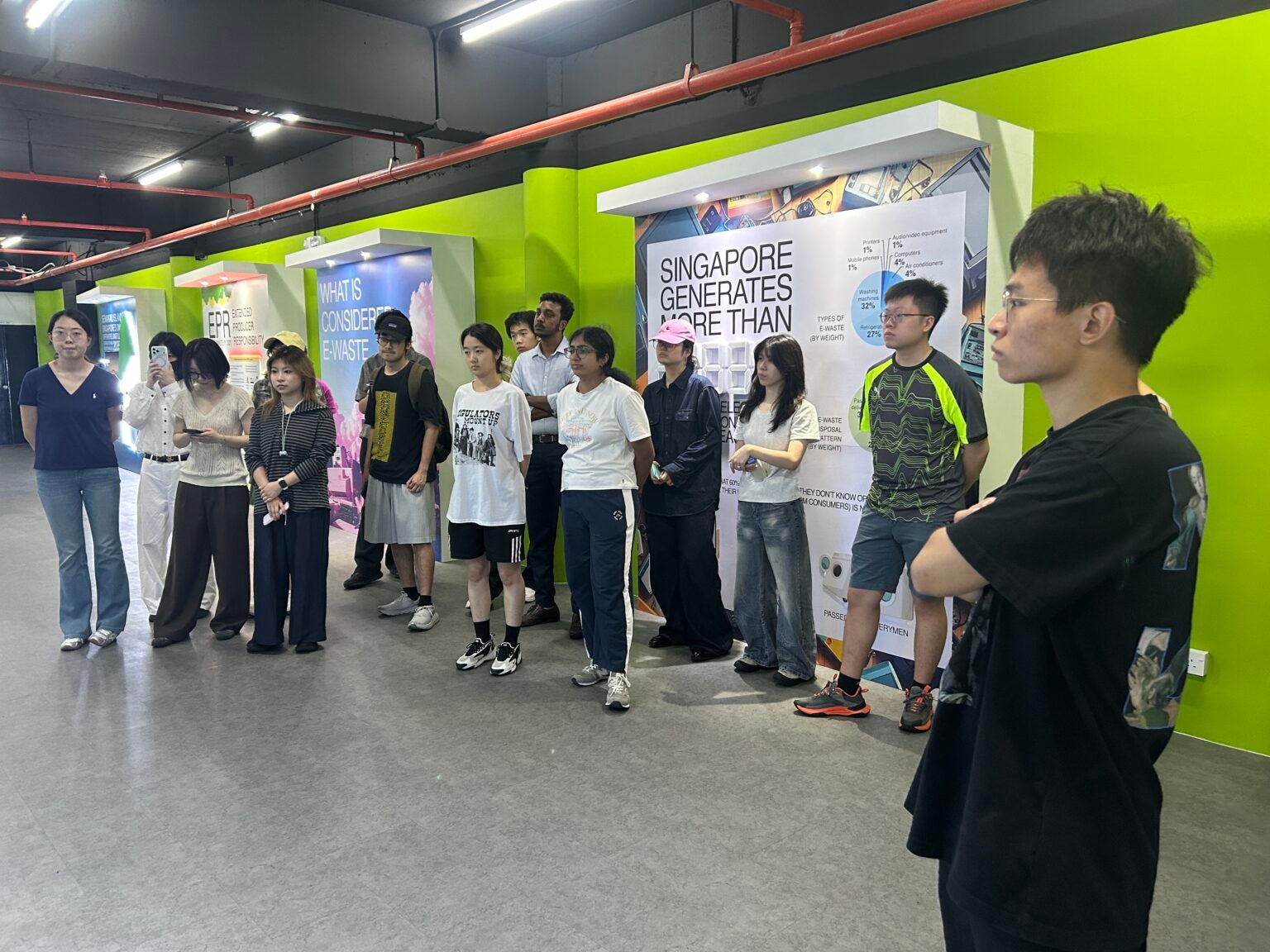
As part of the ID5360 Sustainable Innovation: Design & Transformation Strategies elective course, the Master of Design in Integrated Design (MDes) students, along with other the wider College of Design and Engineering students visited the e-waste recycling facility of Viro Green.
Students explored the journey of our waste and examined the impact of design, consumer behaviour, and wider systemic levers such as policies and regulations. This hands-on experience highlighted that, as designers, innovators, consumers, and citizens, we all have a role to play in shaping a more sustainable future.
Muuse Design Workshop
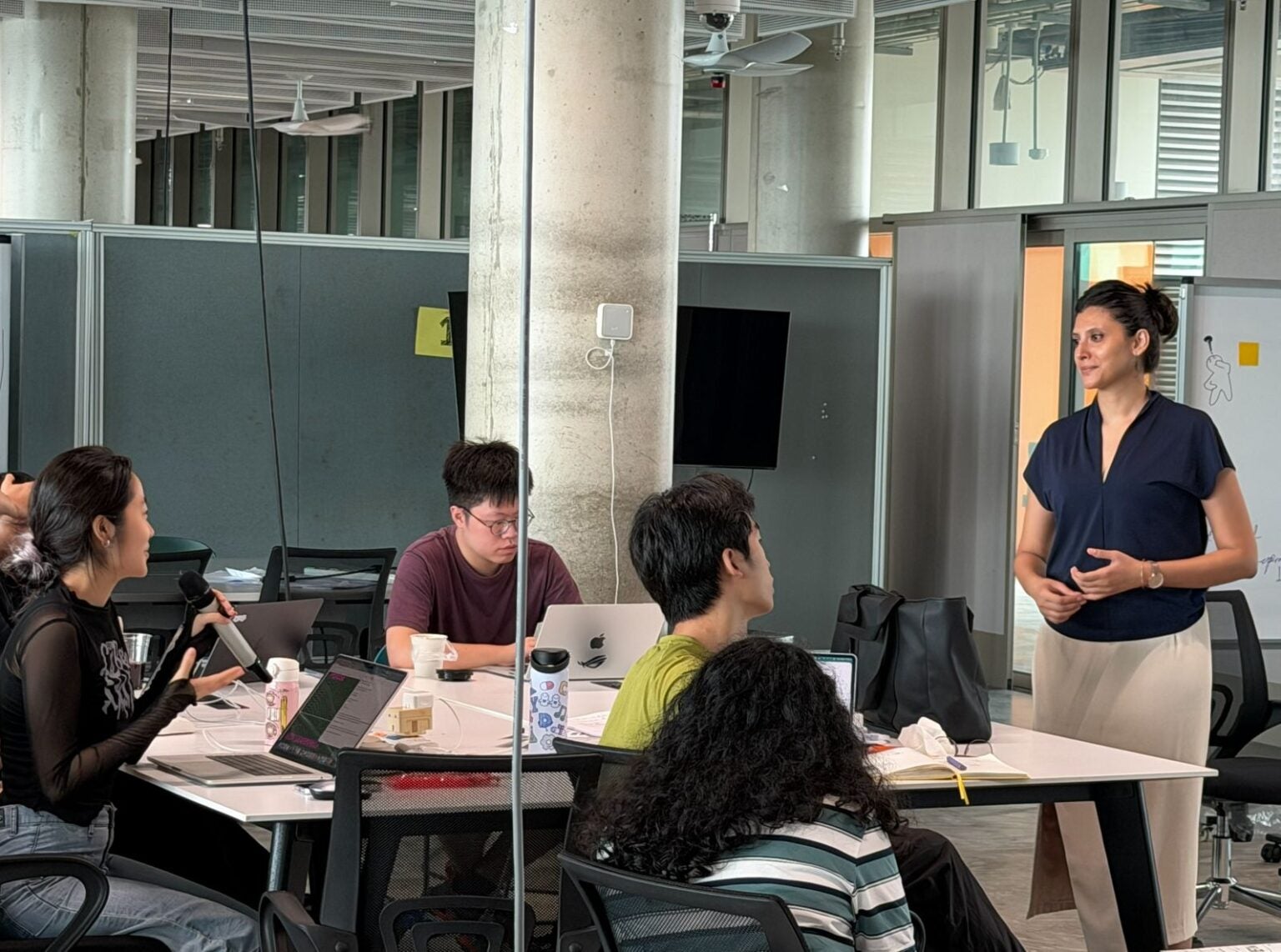
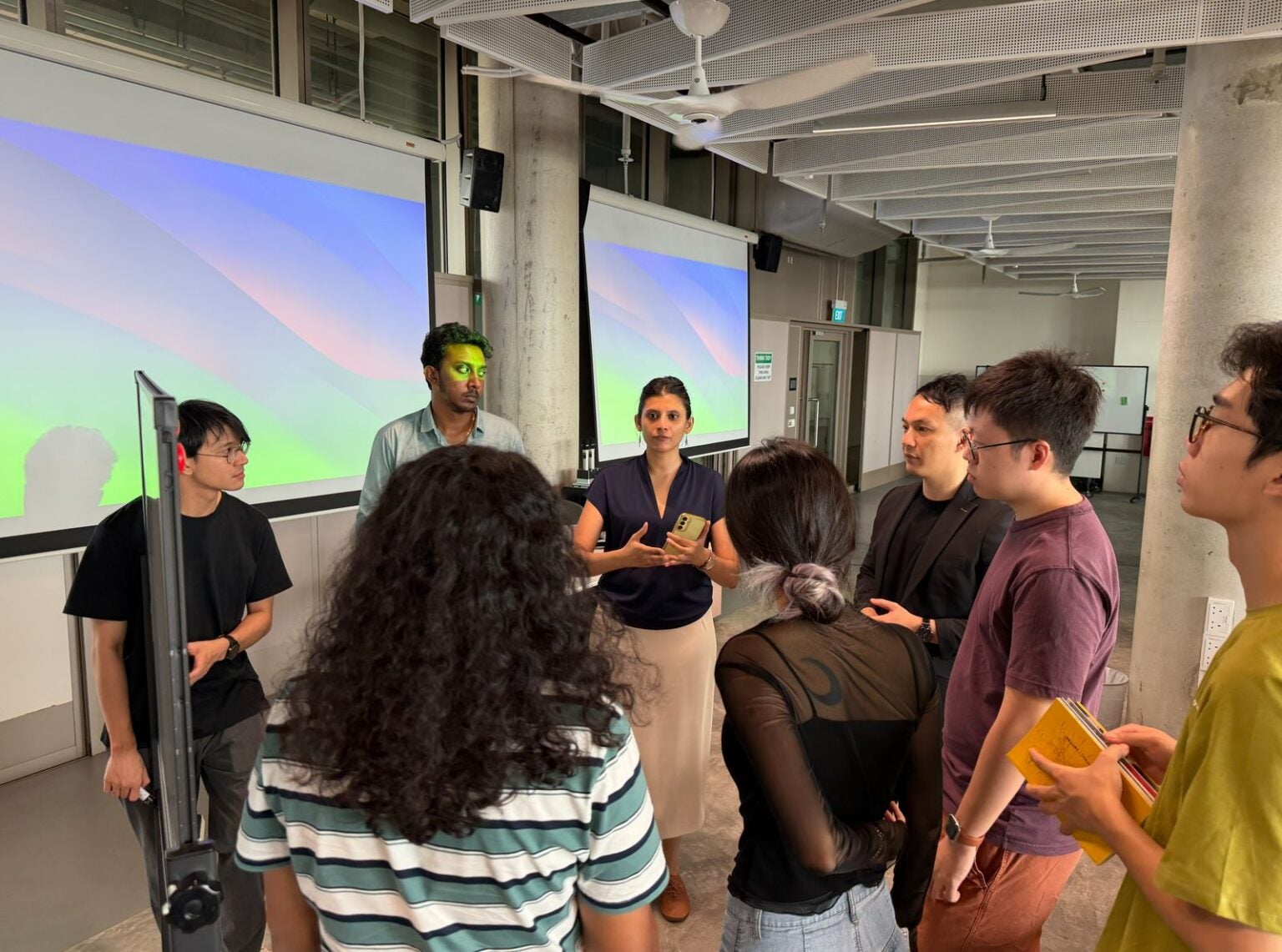
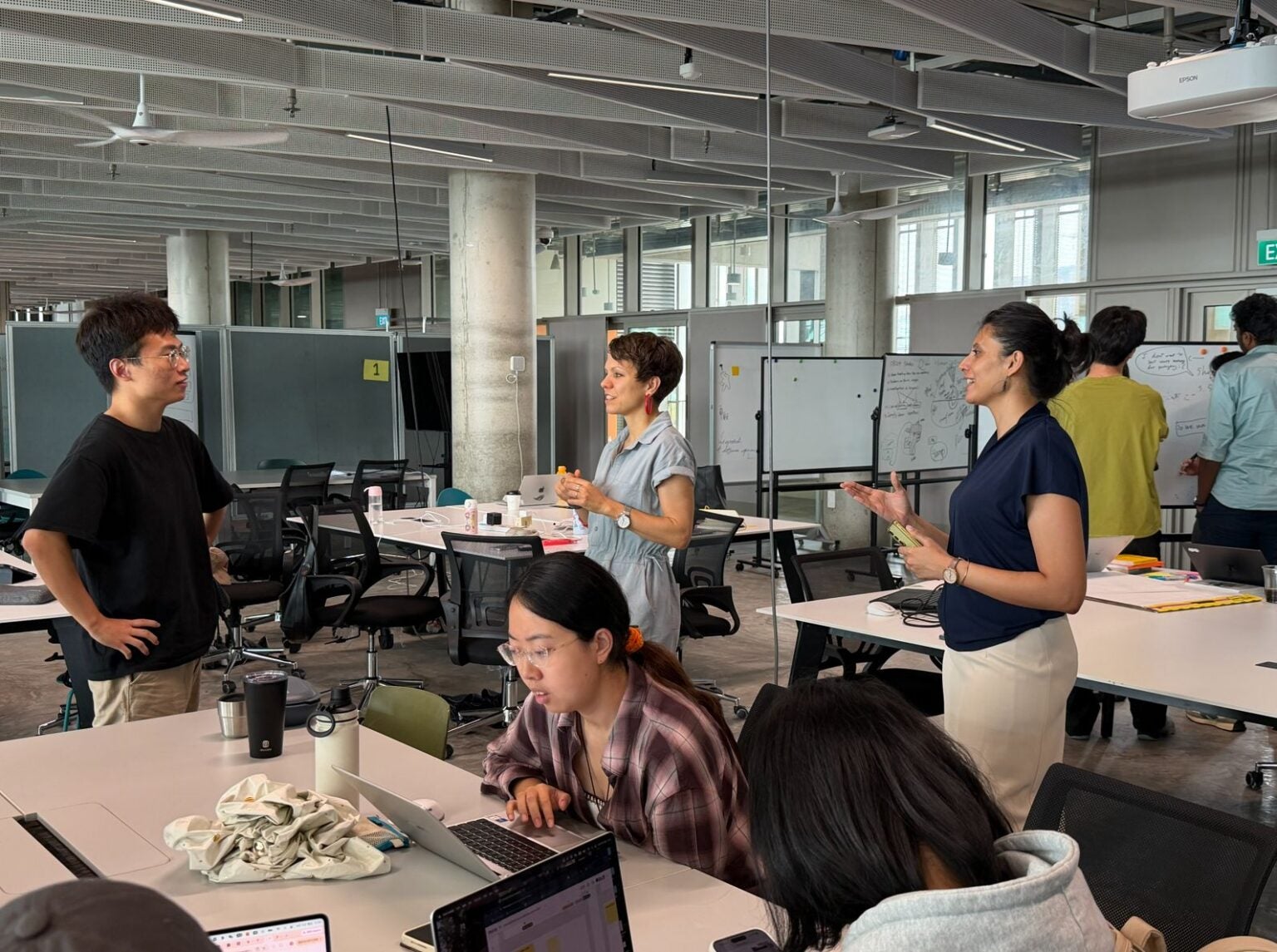
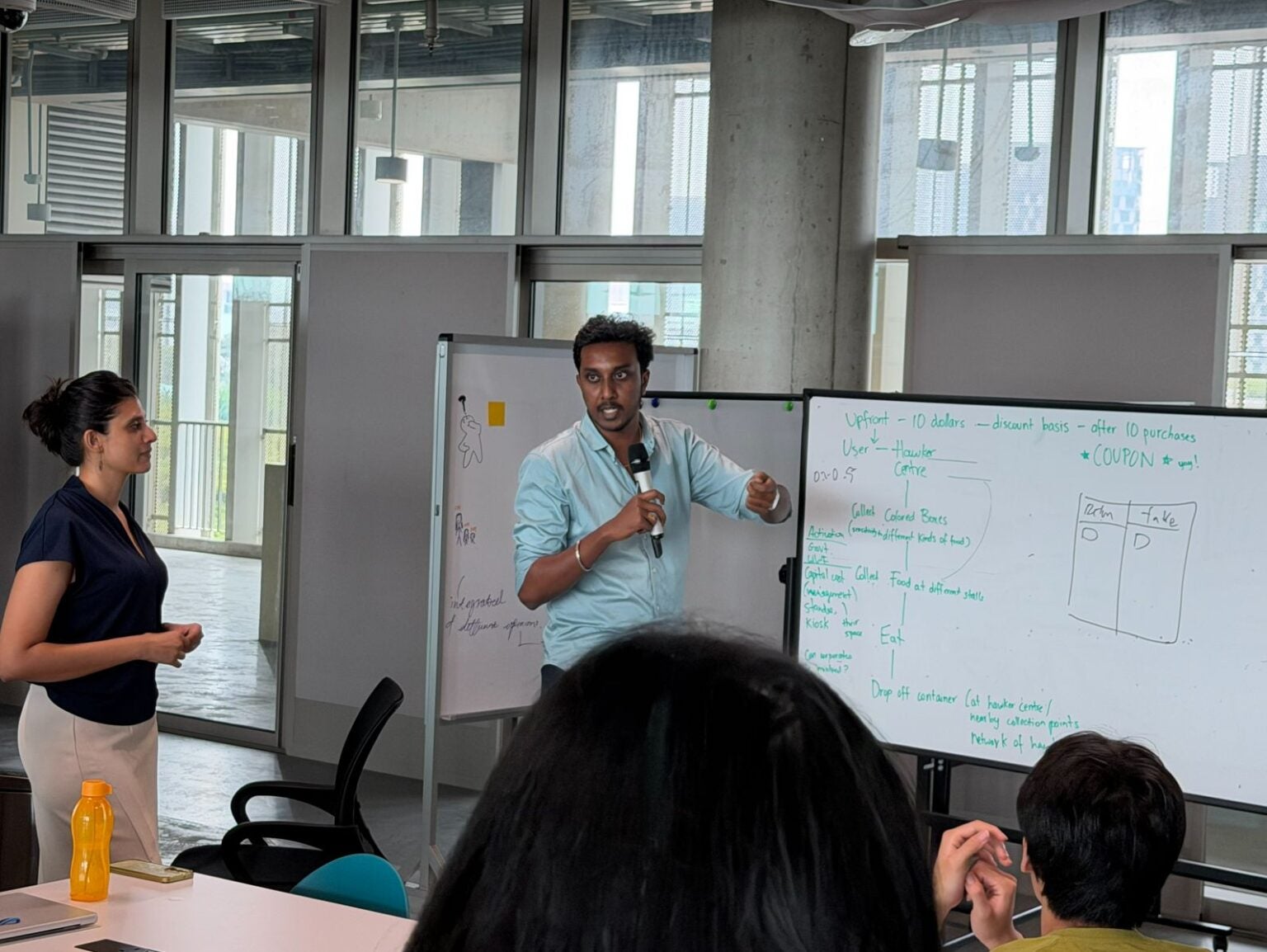
The Design Problem
Singapore’s hawker centres are an important part of everyday life, culture, and community. However, the convenience of takeaway food comes with a significant reliance on single-use packaging. While Singapore hawker center goers are already familiar with the idea of reusable tableware when dining in, this behaviour does not naturally extend to takeaway. One of the reasons being the inconvenience of BYOC (Bring Your Own Container) with every purchase. A shared returnable container system by Muuse presents as a viable alternative.
The Challenge
How might we make returnable packaging a convenient, desirable and habitual choice for takeaway food at Singapore hawker centres?
Speaker: Ojas Vyas, Head of Product, Muuse
What does sustainable design look like when we move from ambition to reality?
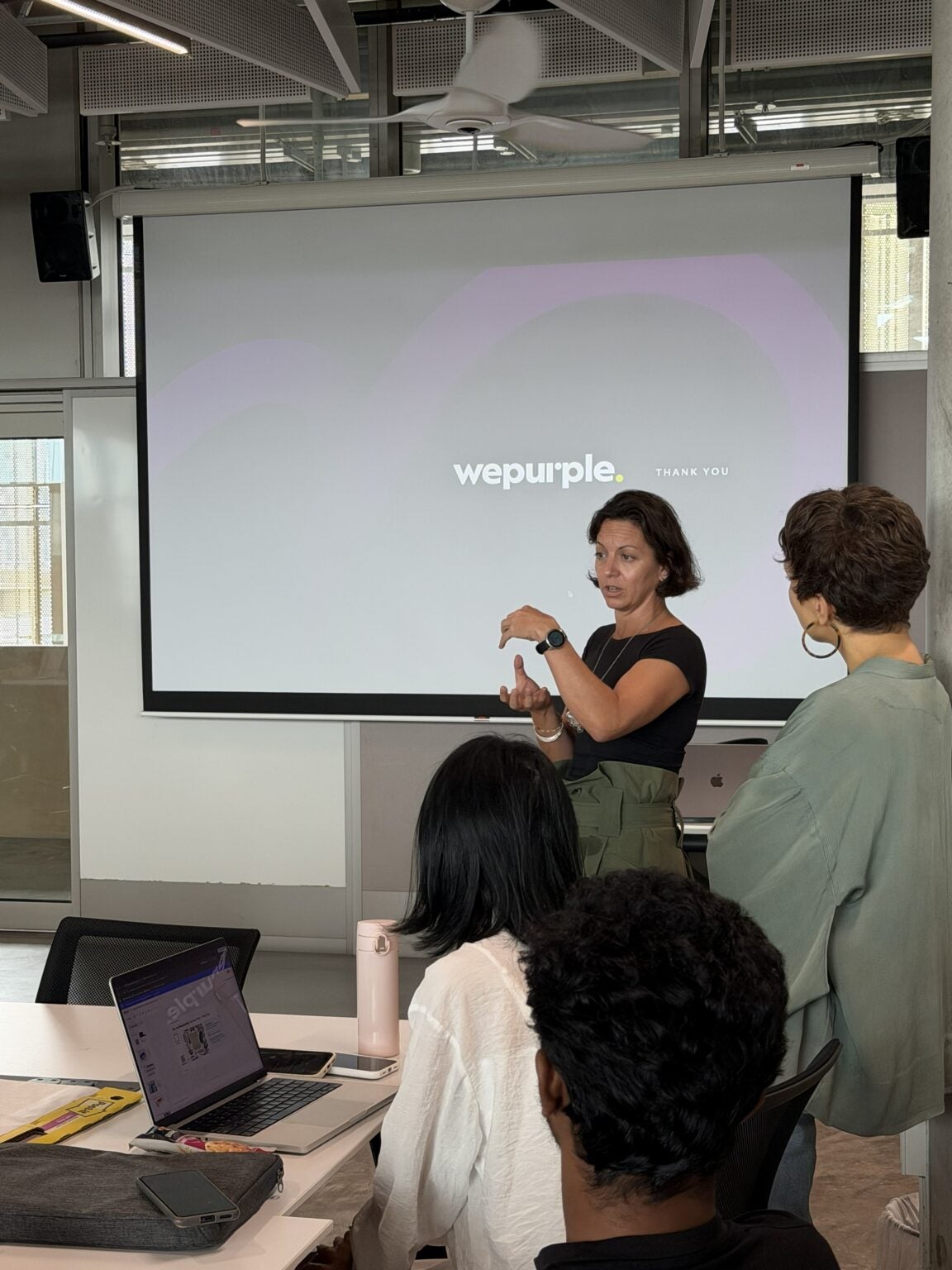
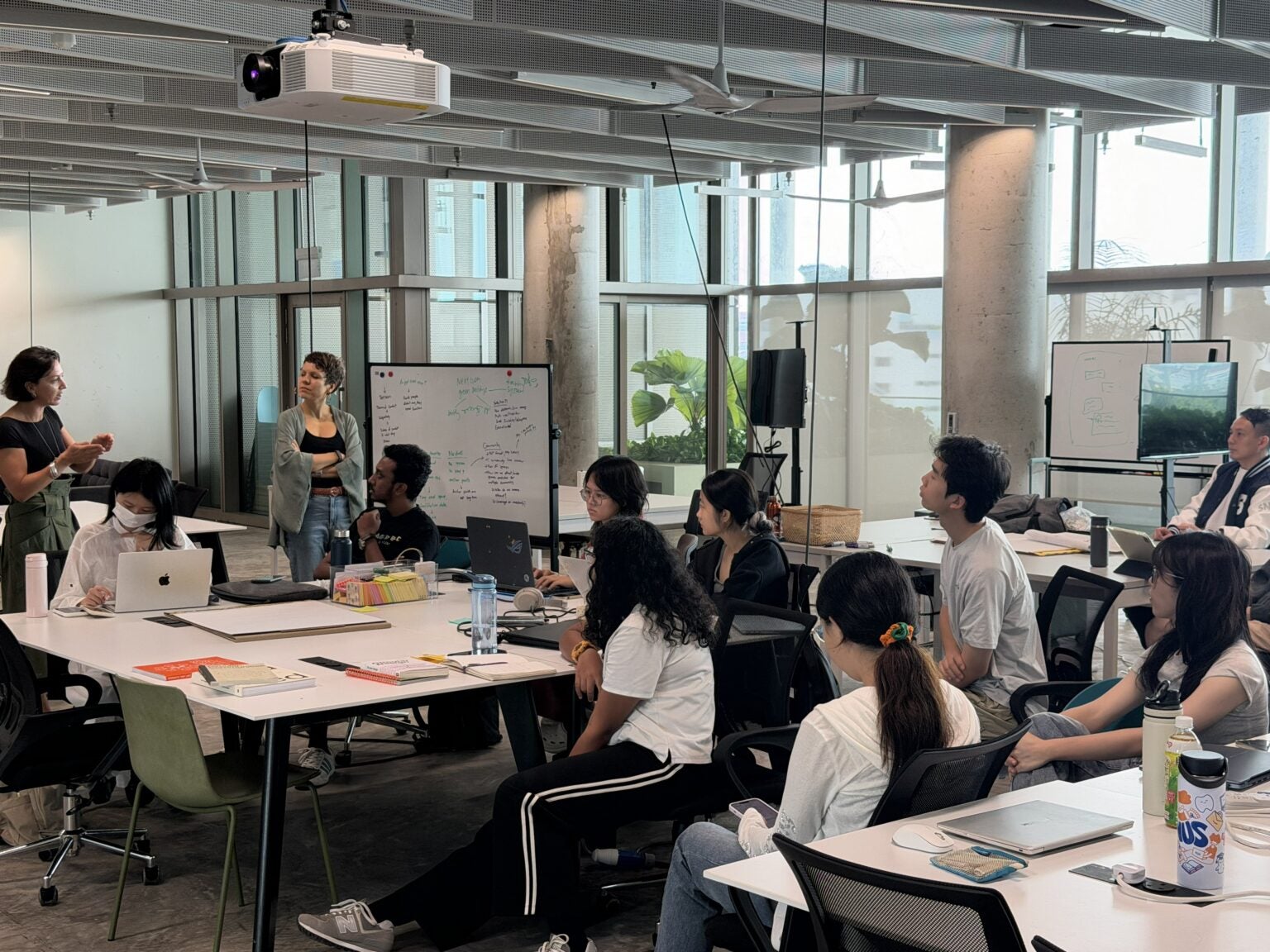
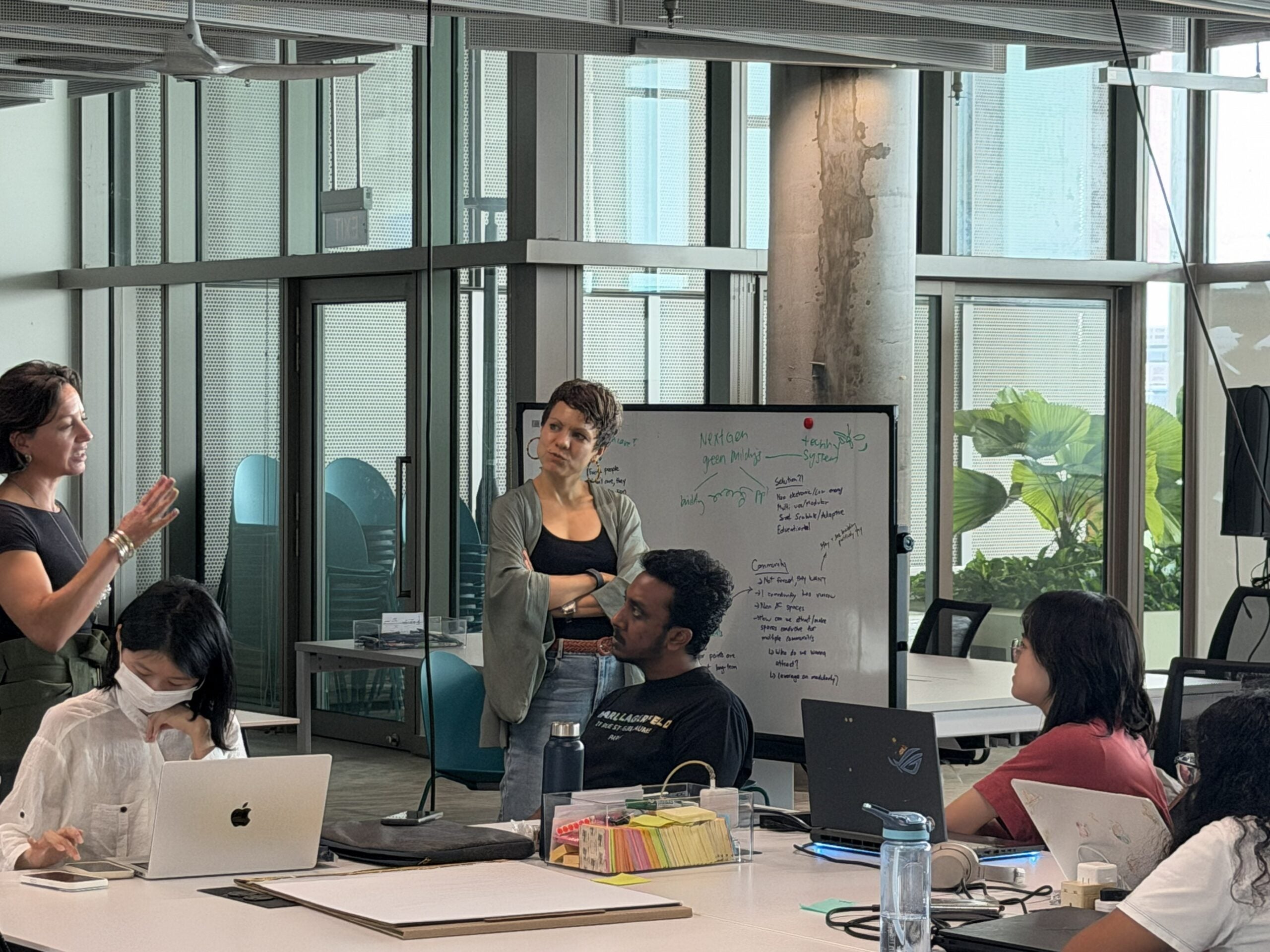
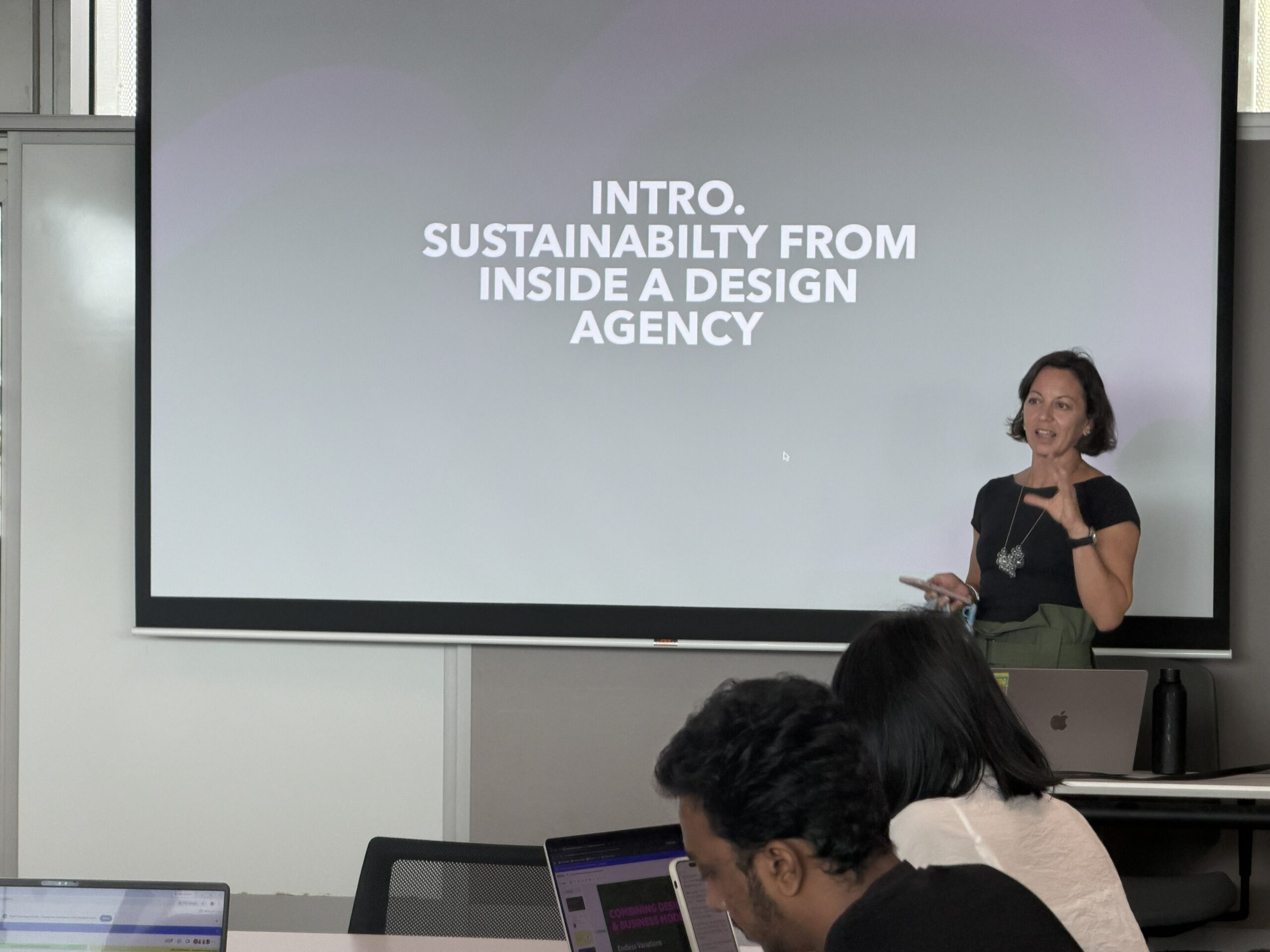
As part of the ID5360 Sustainable Innovation: Design & Transformation Strategies course, our students heard from Caroline Colin, Creative Director of wepurple, about the realities of integrating sustainability into design practice—and the role designers can play in turning ambition into practical solutions.
Key takeaways:
- The gap between ambition and reality: Great ideas need to work within real constraints - budgets, timelines, clients, materials, and context.
- The designer in the middle: Designers are connectors. Sitting between stakeholders, designers can translate sustainability ambitions into feasible and meaningful solutions.
- Sustainability goes beyond materials: Sustainable design is also about how things are made, used, reused, and designed across their lifecycle.
- Temporary doesn’t have to mean disposable: Short-term experiences can still be designed for reuse and longevity.
- Know the possibilities: Designers need to stay curious and informed - you can’t propose an alternative if you don’t know it exists.
Ultimately, designers have a responsibility to make better choices more visible and more possible.
Because designers have a critical influence and shape what gets designed, built, and experienced.
Speaker: Caroline Colin, Creative Director, wepurple
Make Meaningful Matter: Sustainable Innovation in Design Practice.
Festive installations, event stages and brand activations may only last a few weeks, but can their impact go beyond the event?
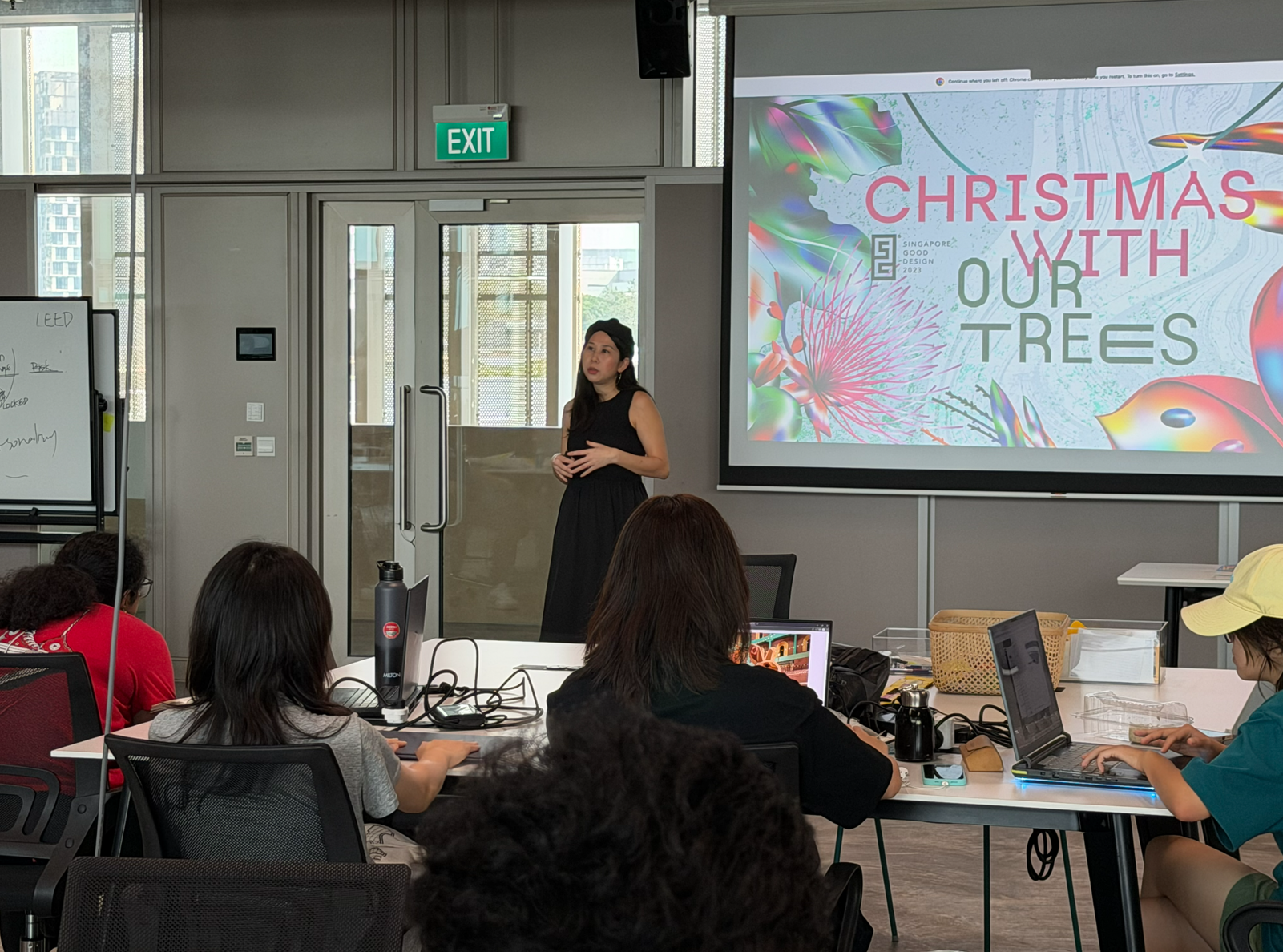
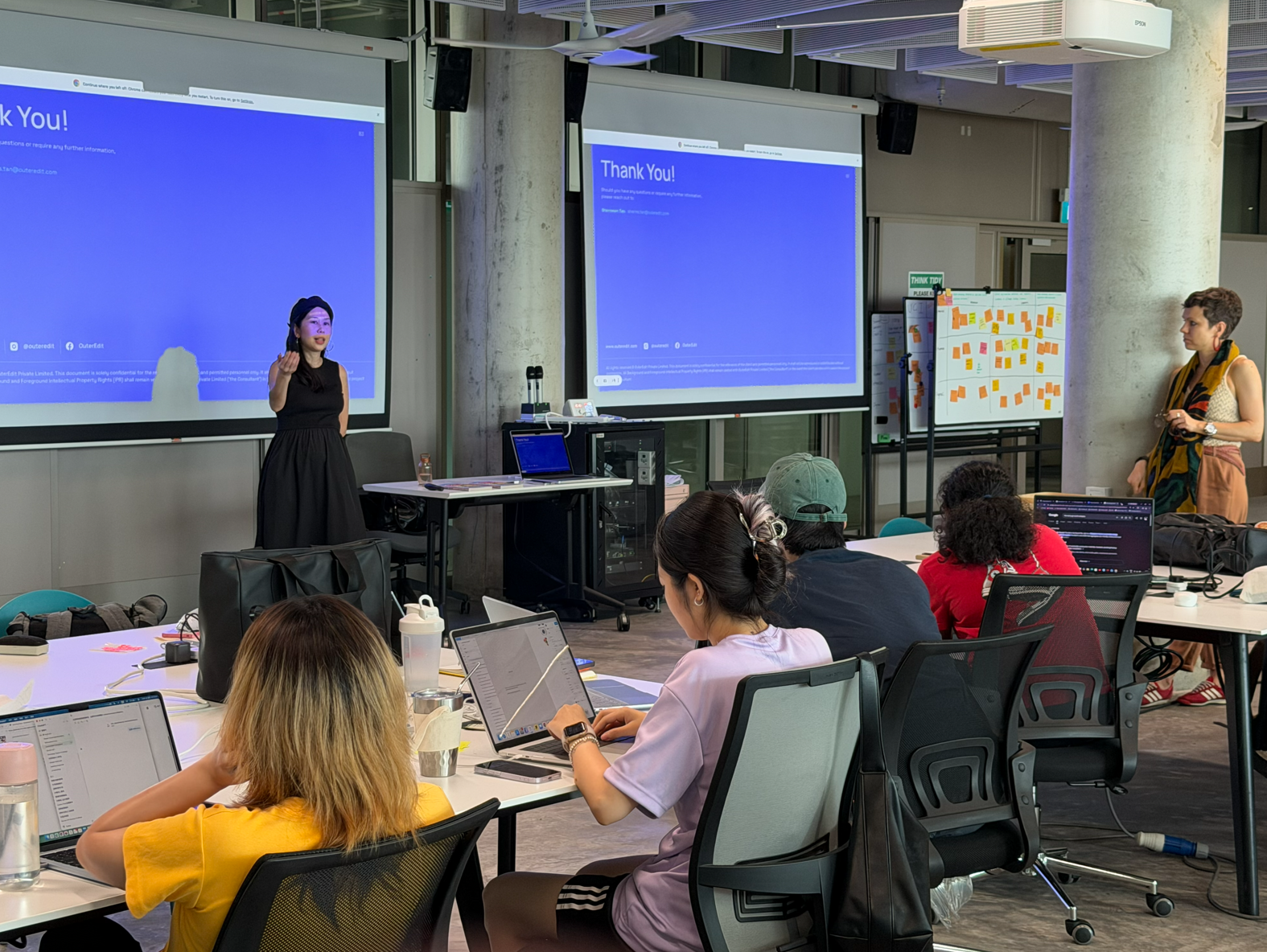
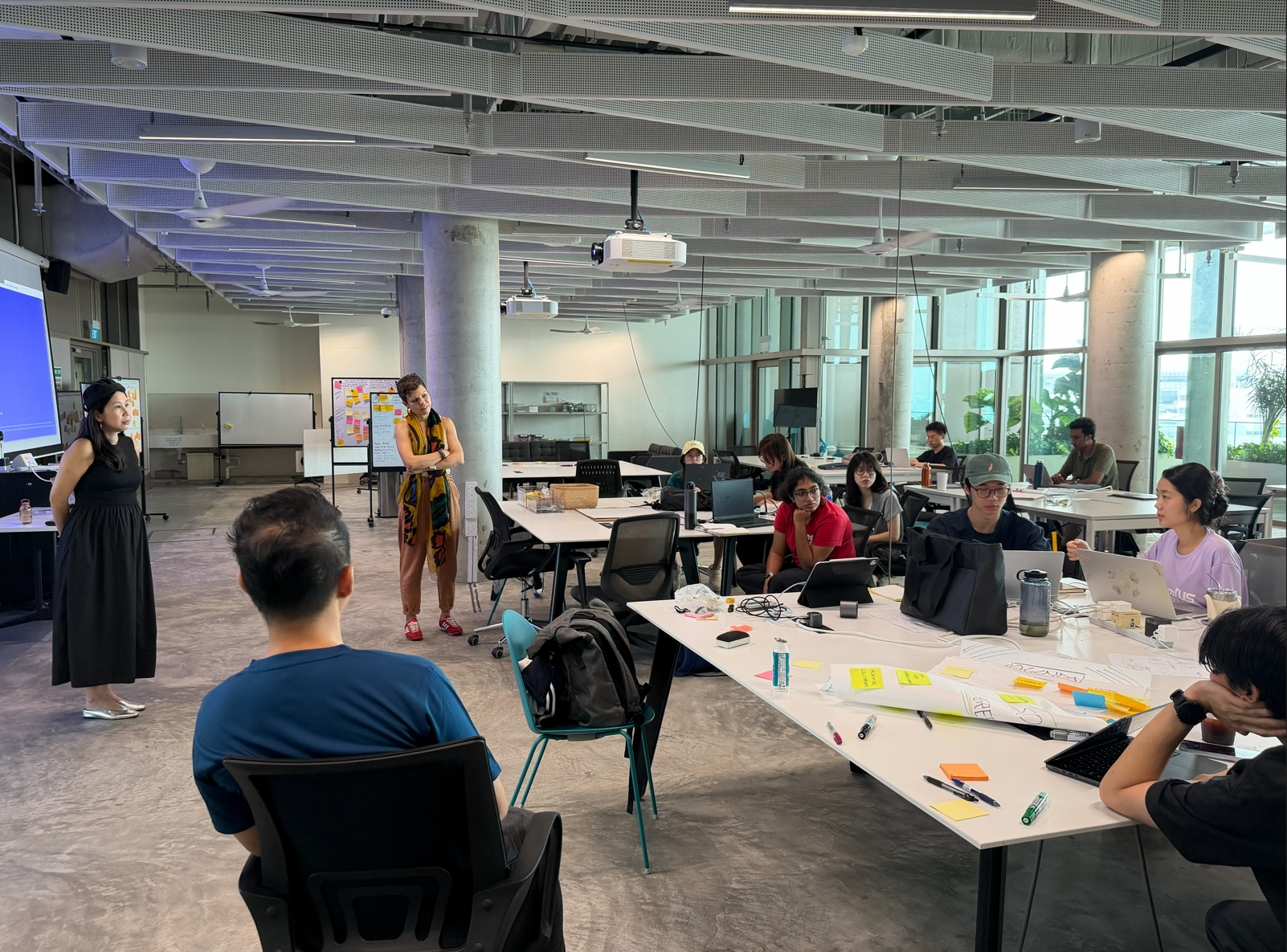
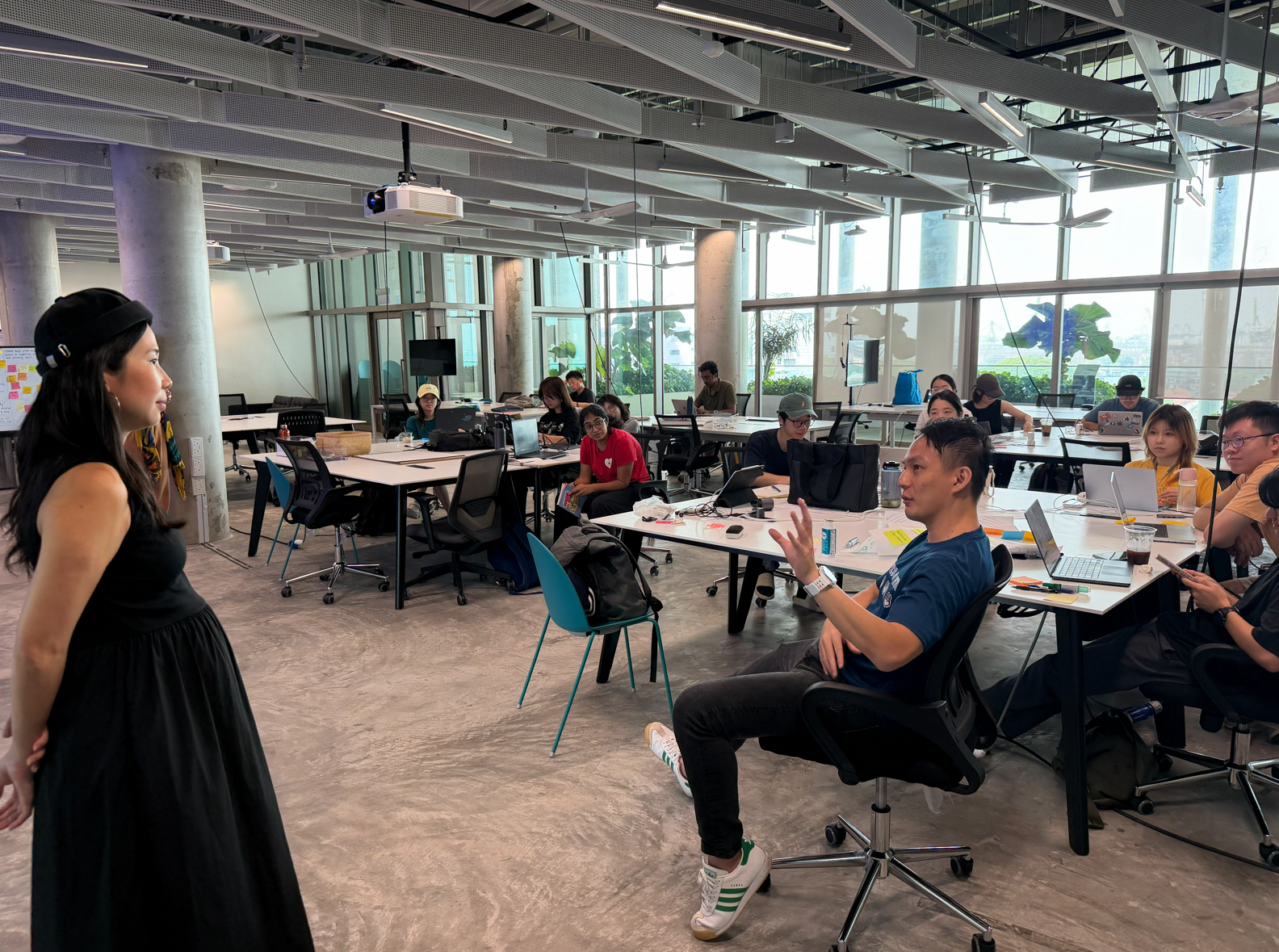
As part of ID5360 Sustainable Innovation: Design & Transformation Strategies, our MDes students, together with students from across the College of Design and Engineering, explored this question through a guest lecture by Shermeen Tan, Managing Director and Co-founder of OuterEdit, a B Corp-certified creative agency, as she shared how the studio’s Make Meaningful Matter philosophy is rethinking the way temporary experiences are designed.
Drawing on projects such as Millenia Walk’s Christmas with Our Trees, recognised with a Singapore Good Design Award in Sustainable Design, Shermeen explored how to create more sustainable temporary builds, navigate commercial realities, convince clients to embrace new ideas, and give designs a second life beyond the event.
Sustainable design practice has to follow the full life cycle of a product, service, or experience...
Speaker: Shermeen Tan, Managing Director and Co-founder of OuterEdit