
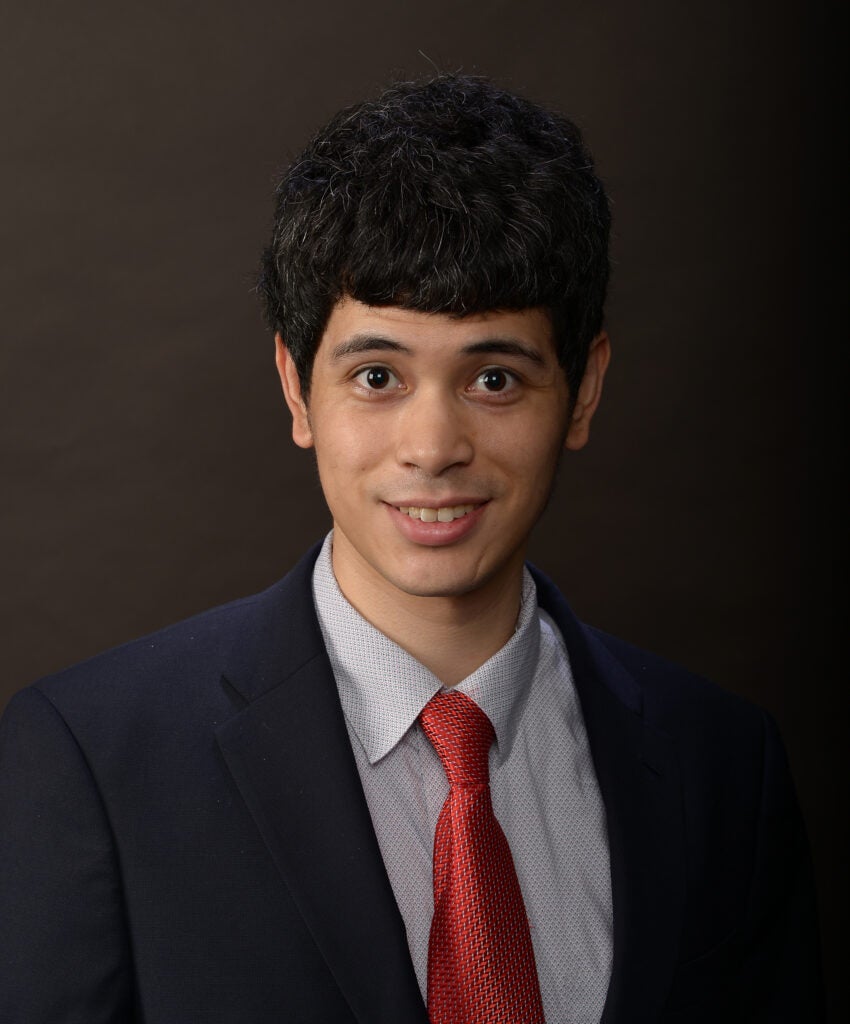
Dr. Andrew B. Wong is a Presidential Young Professor in the Department of Materials Science and Engineering. He also holds a joint appointment in the Department of Chemical and Biomolecular Engineering at NUS. Originally from Buffalo, New York, USA, he received a joint BS-MS degree in Chemistry from the University of Chicago in 2011. Following that, he received his PhD in Chemistry from UC Berkeley in 2016 under Prof. Peidong Yang. Subsequently, he was a postdoctoral researcher at Stanford University, where he was co-advised by Thomas Jaramillo and James Harris. He has significant expertise in nanoscale, optoelectronic, and electrocatalytic materials.
Research Interests
His current research focuses on fundamental understanding and developing control of the local environment for electrochemical CO2 conversion. His research also explores emerging strategies to valorize CO2 inspired by these insights. For the electrochemical CO2 reduction reaction (CO2RR), these topics include developing new innovations in:
- Fundamental Understanding of CO2RR
- New Materials to Tune the Local (Micro)environment to Improve CO2RR Selectivity
- Bicarbonate reduction to valorize CO2
- Molten salt electrolytes for CO2RR to Carbon Nanomaterials
- Bioelectrochemical CO2RR
Selected Publications:
- Chaolong Wei, Suhwan Yoo, Yan Li, Haibin Ma, Yaqi Cheng, Yao Wu, Guangxin Sun, Caiwei Zhang, Qian He, Tiras Y. Lin, Boon Siang Yeo, Joel B. Varley, Yun Jeong Hwang, Chunnian He, Andrew B. Wong. A scalable, biopolymer-based microenvironment for electrochemical CO2 conversion to multicarbon products with current densities over 2 A/cm2, Nature Energy, (2026). DOI: doi.org/10.1038/s41560-026-02040-7
- Yaqi Cheng, Muhammad Iskandar B. Salaman, Qixun Li, Chaolong Wei, Qilun Wang, Xuehu Ma, Bin Liu, Andrew B. Wong. Microenvironment tailoring for electrocatalytic CO2 reduction: Effects of interfacial structure on controlling activity and selectivity, Journal of the American Chemical Society, 147, (2025): 12438–12448. DOI: doi.org/10.1021/jacs.4c13494
- Andrew B. Wong. The microenvironment frontier for electrochemical CO2 conversion, Accounts of Materials Research 5, (2024):1453–1456. DOI: doi.org/10.1021/accountsmr.4c00294
- Guangxin Sun, Yimin Zhang, Haonan Xie, Ya. He, Caiwei Zhang, Yukun Hu, Enzuo Liu, Chunnian He, Andrew B. Wong. Harnessing in-situ oxidation of nanostructured MXene to modulate the electronic structure for improved selectivity for electrochemical carbon dioxide reduction, Nano Energy, 132, (2024): 110385. DOI: doi.org/10.1016/j.nanoen.2024.110385
- Chaolong Wei, Yuehua Yang, Haibin Ma, Guangxin Sun, Xin Wang, Yaqi Cheng, Caiwei Zhang, Boon Siang Yeo, Chunnian He, Andrew B. Wong. Nanoscale management of CO transport in CO2electroreduction: boosting faradaic efficiency to multicarbon products via nanostructured tandem electrocatalysts. Advanced Functional Material 33, (2023): 2214992. DOI: doi.org/10.1002/adfm.202214992
Selected Prior Works (Pre-NUS): (* Denotes Equal Contribution)
- A. B. Wong, S. Brittman, Y. Yu, N. P. Dasgupta, P. Yang, Core–Shell CdS–Cu2S Nanorod Array Solar Cells, Nano Letters, 15, (2015): 4096–4101. DOI: doi.org/10.1021/acs.nanolett.5b01203
- A. B. Wong, M. Lai, S. W. Eaton, Y. Yu, E. Lin, L. Dou, A. Fu, P. Yang, Growth and Anion Exchange Conversion of CH3NH3PbX3 Nanorod Arrays for Light-Emitting Diodes, Nano Letters, 15, (2015): 5519–5524. DOI: doi.org/10.1021/acs.nanolett.5b02082
- L. Dou*, A. B. Wong*, Y. Yu*, M. Lai, N. Kornienko, S. W. Eaton, A. Fu, C. G. Bischak, J. Ma, T. Ding, N. S. Ginsberg, L.-W. Wang, A. P. Alivisatos, P. Yang, Atomically Thin Two-dimensional Organic-inorganic Hybrid Perovskites, Science, 349, (2015): 1518–1521. DOI: doi.org/10.1126/science.aac7660
- K. Sakimoto, A. B. Wong, P. Yang, Self-photosensitization of nonphotosynthetic bacteria for solar-to-chemical production, Science, (2016): 351, 74–77. DOI: doi.org/10.1126/science.aad3317
- W. Lee*, H. Li*, A. B. Wong*, D. Zhang, M. Lai, Y. Yu, Q. Kong, E. Lin, J. J Urban, J. C. Grossman, P. Yang, Ultralow Thermal Conductivity in All-Inorganic Halide Perovskites, Proceedings of the National Academy of Sciences, 114, (2017): 8693–8697. DOI: doi.org/10.1073/pnas.1711744114
- A. B. Wong*, Y. Bekenstein*, J. Kang, C. Kley, D. Kim, N. A. Gibson, D. Zhang, Y. Yu, S. R. Leone, L. W. Wang, A. P. Alivisatos, P. Yang, Strongly Quantum Confined Cesium Tin Iodide Perovskite Nanoplates: Lessons for Reducing Defect Density and Improving Stability, Nano Letters, 18, (2018): 2060–2066. DOI: doi.org/10.1021/acs.nanolett.8b00077
- F. Kracke, A. B. Wong, K, Maegaard, J. S. Deutzmann, M. A. Hubert, C. Hahn, T. F. Jaramillo, A. M. Spormann, Efficient, stable, and biocompatible catalysts for H2-driven microbial electrosynthesis. Comm. Chem, 2, (2019): 45. DOI: doi.org/10.1038/s42004-019-0145-0
Teaching
- MLE2102: Thermodynamics and Renewable Energy Technologies
- CN5216: Electronic Materials and Energy Technologies