


RESEARCH IMPACT & COLLABORATIONS
MoU signed for tropical data centre testbed on Jurong Island
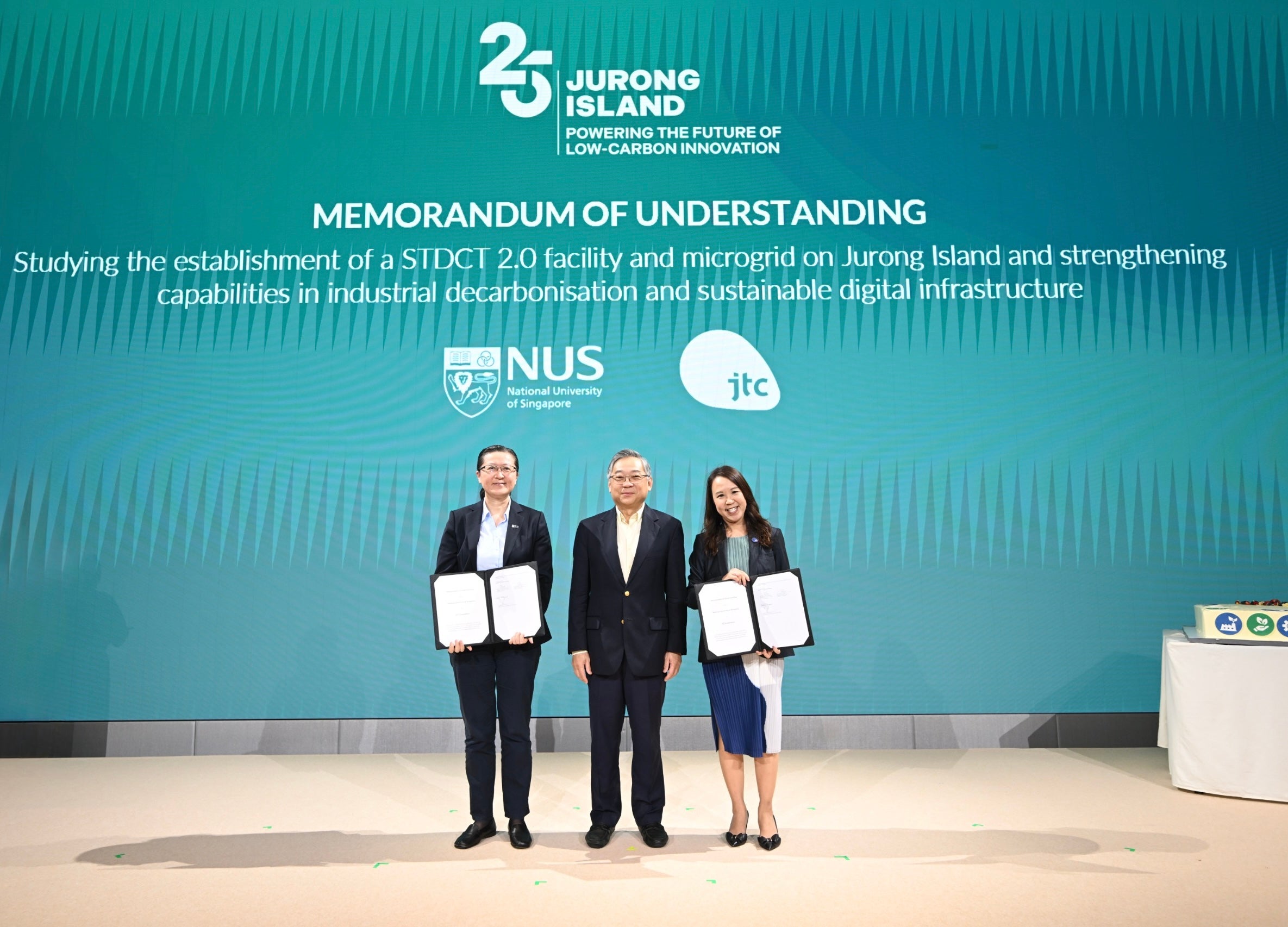
Phase 2 of the Sustainable Tropical Data Centre Testbed (STDCT 2.0) is set to be built on Jurong Island. Under an MoU signed by National University of Singapore and JTC Corporation, the new phase will study a multi-megawatt, low-carbon pilot facility to test advanced cooling, power and heat-recovery solutions for AI-intensive data centres operating in tropical conditions.
Leading the development from the NUS side will be Prof Lee Poh Seng, Head of NUS Mechanical Engineering, Co-Director of NUS Sustainable Futures in charge of the NUS Energy Solutions Hub (NESH), and Programme Director of the STDCT project based in CDE.
Building on the first-phase testbed hosted at NUS and launched in 2023, STDCT 2.0 aims to integrate data centre research with Jurong Island’s growing ecosystem of hydrogen-ready power plants, sustainable fuels, energy storage and industrial decarbonisation technologies.
Prof Lee noted that locating the new testbed on Jurong Island will take advantage of the island’s industrial and energy developments as living laboratories to re-imagine how Singapore designs, powers and cools AI-ready infrastructure. “I am proud to be spearheading STDCT 2.0 with JTC and colleagues across NUS, building a robust, open innovation platform for industry, agencies and researchers to co-create the next generation of AI-ready, low-carbon data centres,” he said.
The MoU was signed on Monday evening at a celebration dinner marking Jurong Island’s 25th anniversary.
Read more: https://cde.nus.edu.sg/news-detail/mou-signed-for-tropical-data-centre-testbed-on-jurong-island/
CEE spinoff aims to produce greener cement using marine waste clay
From construction site waste to protecting our coasts and reducing carbon emissions, Circrete a spinoff from research at CDE, translates academic research into real world impact.
Global production of cement, the key ingredient in concrete, emits more CO2 than the world’s aviation and shipping industries combined.
Invented by Assoc Prof Pang Sze Dai and Dr Du Hongjian, Circrete produces greener cement by using waste marine clay from construction sites as its base ingredient in place of traditional limestone.
The result is two-fold:
- A circular economy, making use of waste clay that otherwise ends up in landfill.
- A more sustainable cement, producing concrete that is just as strong, three times as durable and with 70% less carbon footprint.
Recently, Circrete was used to fabricate coastal protection tiles installed at Changi beach, demonstrating how innovative use of waste materials can help build a stronger, greener, and more climate resilient future.
Looking ahead, the Circrete team is looking to scale up their technology and reshape the future of construction in Singapore and beyond.
NUS startup Squareroot8 Technologies to launch a chip-based QRNG
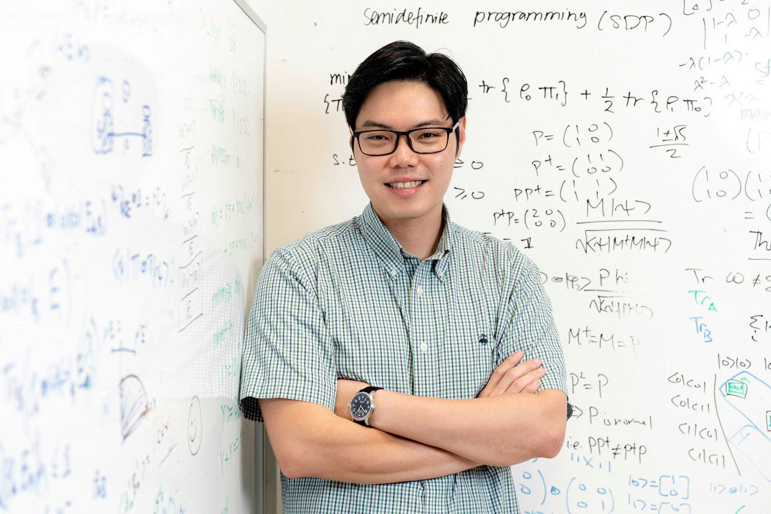
NUS spin-off Squareroot8 Technologies is launching a chip-based Quantum Random Number Generator (QRNG) that leverages intrinsic quantum randomness to produce high-entropy keys, aiming to make protected systems almost unhackable.
The company began QRNG research in 2018 at NUS ECE with Assoc Prof Charles Lim, received a $3 million NRF fellowship/grant in 2019, licensed core technology from NUS in 2020, and secured US$3 million in seed funding in 2022. Squareroot8 is in talks to pilot its quantum cryptography tech with undisclosed firms in healthcare, defence, and finance sectors with high sensitivity to data breaches and regulatory requirements.
QRNG addresses a critical security gap: classical encryption often relies on predictable, math-based algorithms that could be broken by quantum computers, which some experts expect to threaten current cryptosystems by around 2030. The broader quantum computing opportunity is substantial, with Boston Consulting Group estimating US$450–850 billion in economic value by 2040, spanning drug discovery, materials, and advanced AI, while also escalating cyber risks. The company faces global competitors like Toshiba and ID Quantique and is partnering with Danish firm Partisia to pair QRNG with multi-party computation, enabling privacy-preserving AI training on sensitive datasets.
Squareroot8 currently employs about 10 Singaporean engineers and plans to double headcount within two years, highlighting Singapore’s early and continued public investment in quantum tech (NRF has committed $700 million since 2002).
Heat-resistant layer strengthens perovskite–silicon solar cells
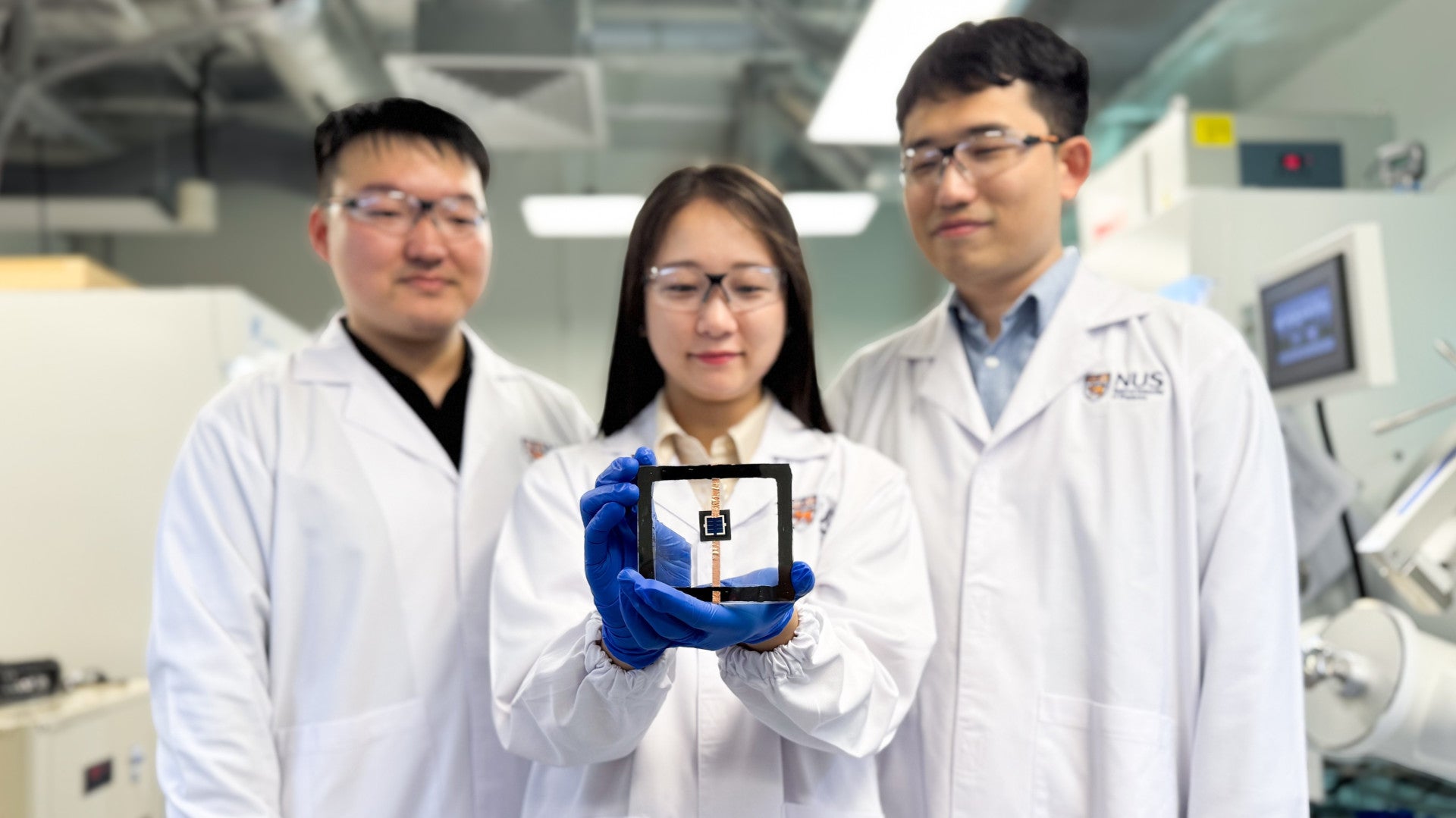
A boost for solar power generation - more durable, more efficient panels, generating more energy from the same rooftop space.
A research team led by Asst Prof Somin Park (Chemistry) and Asst Prof Wei Mingyang (MSE), have designed heat-resistant perovskite–silicon tandem solar cells that stay efficient even under sustained high temperatures. The research is a major advance towards durable, high-output solar panels to meet future sustainable energy needs.
The breakthrough centres on a newly designed molecular layer that bonds the perovskite and silicon layers more securely. This allows the cells to retain their performance after 1,200 hours of continuous illumination at 65 deg C, addressing one of the most significant barriers to commercial deployment.
Read more: https://cde.nus.edu.sg/news-detail/heat-resistant-layer-strengthens-perovskite-silicon-solar-cells/
CDE PYP Feature: Meet Asst Prof Jihyun Baek
Asst Prof Jihyun Baek joined CDE this year as a Presidential Young Professor in NUS Mechanical Engineering. Her research focuses on advanced catalyst materials to make green hydrogen production more efficient, affordable and sustainable.
In this video, she shares what motivates her research, her hopes for how it will support future clean energy systems, and what makes the research ecosystem at CDE a place where ambitious ideas can take shape.
The NUS Presidential Young Professorship aims to attract, support, and empower the brightest and most promising young academics in the early stage of their careers. For more information, visit https://www.nus.edu.sg/careers/nus-programmes/
From kombucha waste to sustainable electronics

A waste product from kombucha brewing could hold the key to more sustainable electronics.
A research team at CDE has discovered a way to turn kombucha brewing waste into biodegradable films that could one day form the base of flexible, eco-friendly electronic devices.
Led by Assistant Professor Tan Yu Jun, the team developed a simple, non-toxic method to convert bacterial cellulose, the thick layer that forms on the surface during kombucha fermentation, into smooth, flexible, and conductive films.
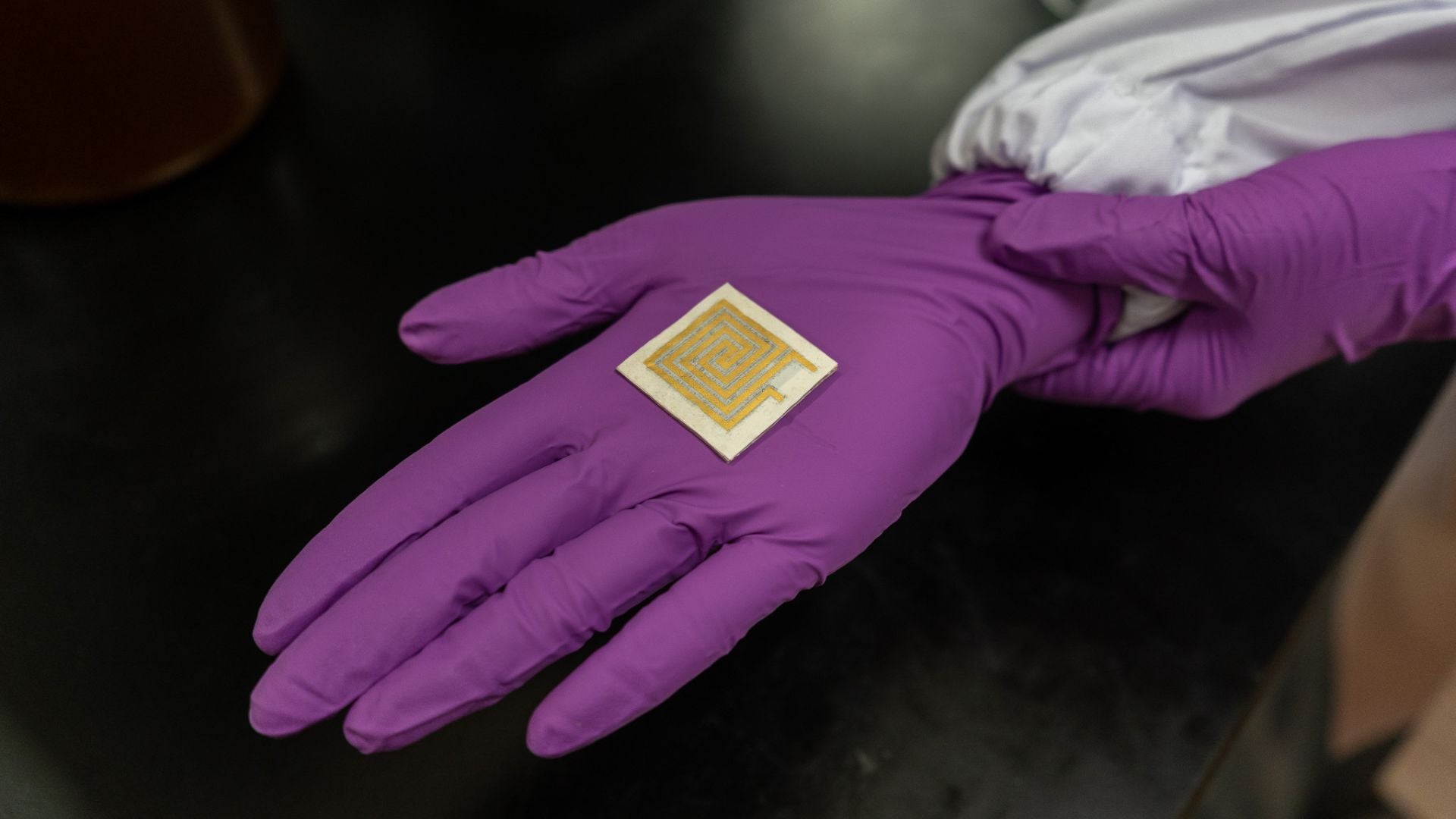
These films are strong, renewable, and biodegradable, offering a sustainable alternative to conventional plastic substrates used in electronics. They could be applied in wearable sensors, temporary medical implants, environmental monitors and smart packaging — devices designed to work for a period of time before safely decomposing.
“In nature, nothing is wasted. Everything becomes part of a new cycle,” said Asst Prof Tan. “Turning something that usually ends up in the bin into a functional electronic material felt like a perfect example of circular design.”
Read more: https://cde.nus.edu.sg/news-detail/turning-kombucha-waste-into-sustainable-electronics/
Major Grants Awarded
The major grants (start date in November 2025) with total project value > $1M.
| Hosting Unit | Project Title | Funding Programme (Source of Funding) |
Principal Investigator | Co-Investigator |
| DBE; ME | Thermoelectric cooling with novel material composites for localised cooling in naturally ventilated and mixed-mode ventilated spaces | GBIC R&I challenge for decarbonisation – 2024/BCA | Chong Zhun Min Adrian | Tham Kwok Wai; Zhai Wei; Bertrand Lasternas (UCI) |
| ME | The development & trial of UAV swam versus swarm counter UAS system | Ministry of Defence (MINDEF) | Khoo Boo Cheong | |
| NUS Cities | Development of a data driven activity chain modelling methodology for geodemographic profiling of Singapore residents and analysis of attitudes towards active lifestyles | Health Promotion Board | Chua Yung Hwa, Alvin | |
| CPT | Construction, quality control, serviceability and maintainability of asphalt airport pavement with flexible hard base | Defence Science and Technology Agency (DSTA) | Ong Ghim Ping, Raymond | |
| ISEM | PSA warehouse digital twin solutioning using O2DES | PSA-NUS Supply Chain Living Laboratory – 2025/ PSA International Pte Ltd | Li Haobin | |
| MSE | Exploring sodium storage mechanisms in sphalerite SnP-based high-entropy compounds | NRF Investigatorship – 2024/NRF | Yang Hui Ying | |
| ME | AI foundation models for regional weather prediction in the maritime continent | Weather science research programme (WSRP) funding initiative – 2025/NEA | Zhu Lailai | He Xiaogang |
| ME | Modelling & simulation of battery-induced fires and relevant safety impacts | LTA Urban mobility innovation (UMI) grant – 2025/LTA | Zhang Huangwei | |
| NERI | Innovative interlocking pervious concrete paver pavement system for durability, urban cooling and runoff control | Cities of tomorrow R&D programme: Greater sustainability – 2023/MND | Ong Ghim Ping, Raymond | Geng Guoqing |