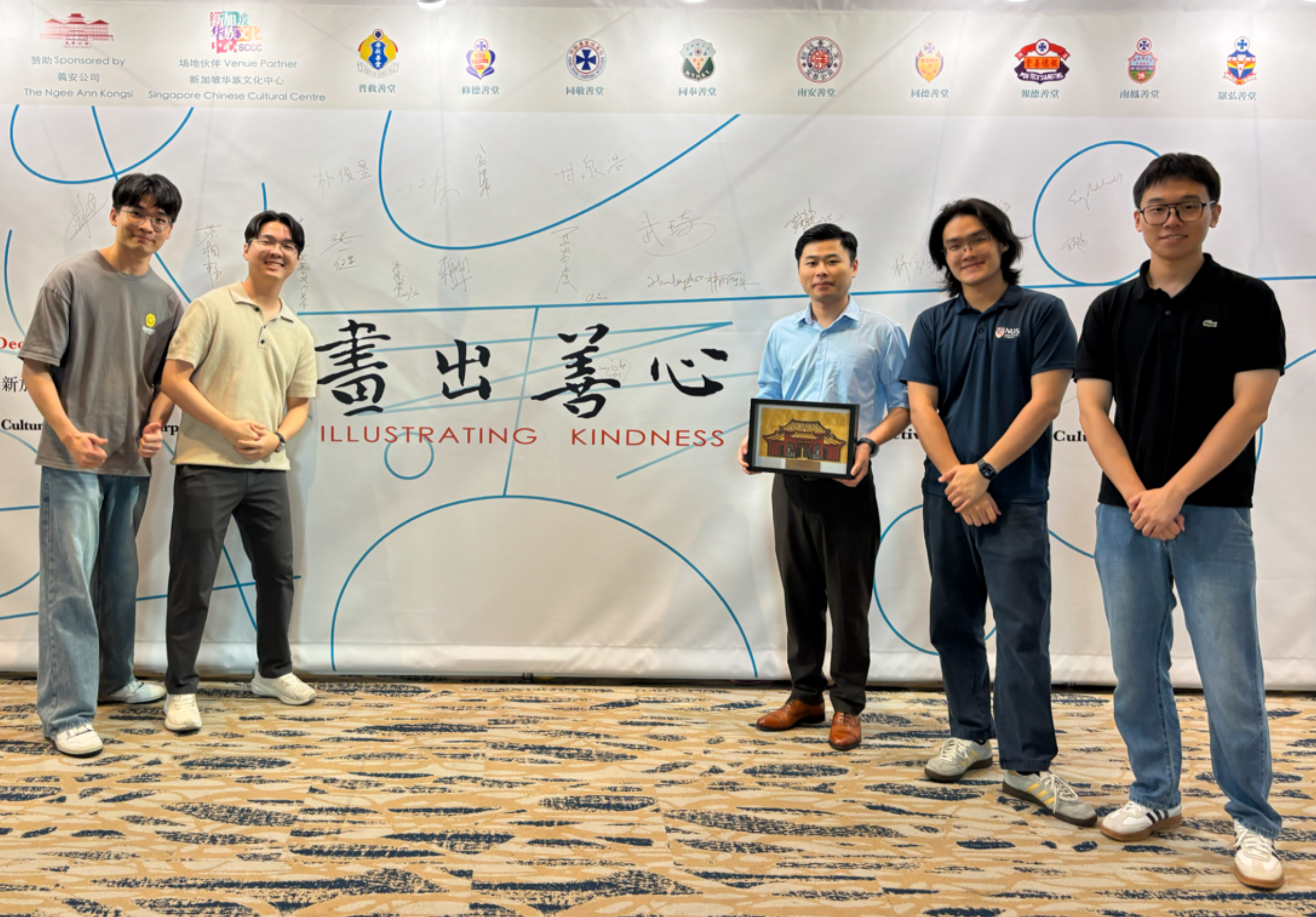



How can we capture and share experiences and connect cultures through technology? Well, a student team worked on a project to do just that. Their Scenting the Past project is a multisensory virtual reality (VR) installation that was showcased at the Singapore Chinese Cultural Centre (SCCC) as part of the Shantang Arts & Culture Exhibition. The project explores Singapore’s hawker culture through visual, auditory, and even olfactory experiences.
The project team comprised not only students from across engineering disciplines, but also Mullappalli Devesh, a Year 3 Economics student! “As the only student from the Faculty of Arts and Social Sciences in the team, I brought the cultural heritage perspective, while my teammates handled the VR and hardware work. That’s how we learned the most from each other,” said Devesh.
The project was developed by Devesh, Park Junha (Year 3, Industrial and Systems Engineering), Bao Ying (Year 3, Electrical Engineering), Chen Yun Feng (Year 3, Mechanical Engineering) through CDE3301: Ideas to Proof-of-Concept by the Engineering Design and Innovation Centre, together with Ni Shi Yong (Year 2, Computer Engineering), who joined the project through the Undergraduate Research Opportunities Programme (UROP). They were guided by Dr Cai Shaoyu and supported by MSc Engineering Design and Innovation students Gan Quanhao and Lin Tao.
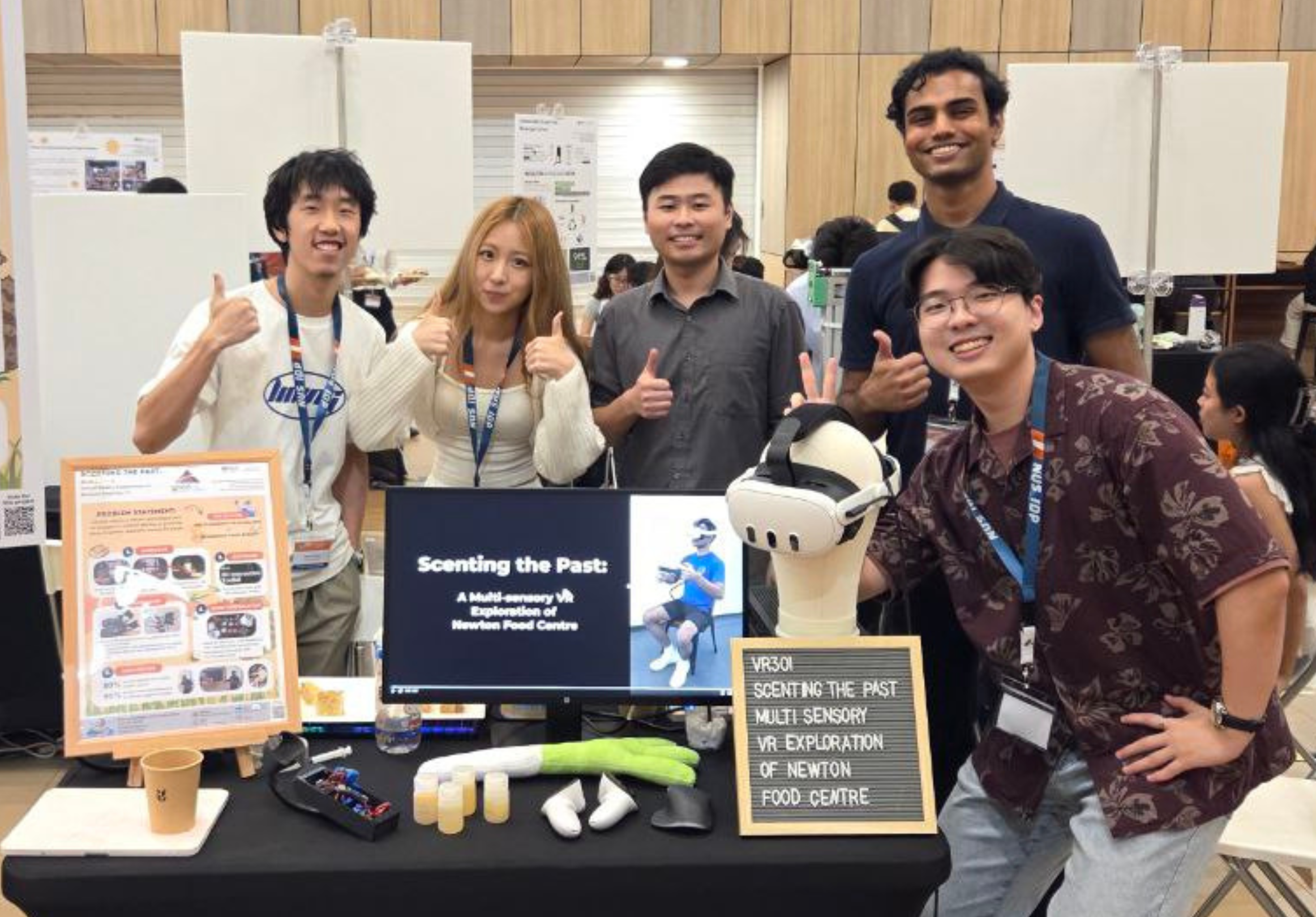
Through VR hawker scenes and virtual Teochew foods, such as fish porridge, the project highlights how everyday food practices reflect values of kindness, sharing, and community. It also highlights how Teochew-influenced shantang values of mutual support and collaboration have historically shaped hawker culture.
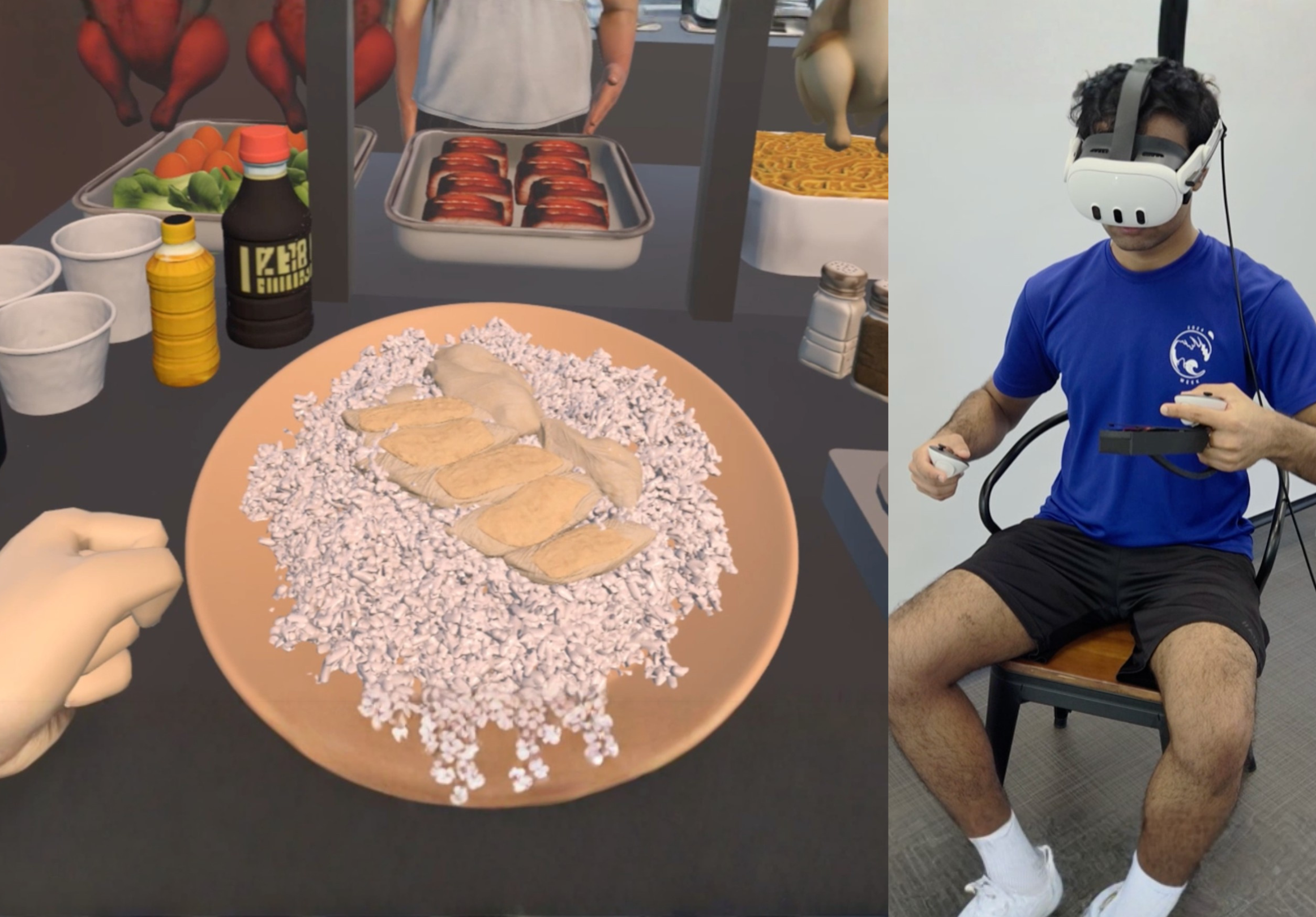
“Shantang tradition, as reflected in hawker culture, is ultimately about human kindness and mutual support,” said Dr Cai Shaoyu. “Multisensory experiences allow these values to be felt, making cultural heritage more tangible and meaningful.”
During the exhibition, the students demonstrated the project to Mr Baey Yam Keng, Minister of State for Culture, Community and Youth, and Transport. Mr Baey commended the students’ efforts and recognised their contributions in promoting Singapore’s cultural heritage through technology, particularly in engaging younger audiences.
Reflecting on the process, Park Junha shared, “Sharing our project with visitors of different ages was both fun and rewarding. Many were curious about how the VR and scent-diffusing technology worked, and it was exciting to see people, especially children, experience it for the first time.”
He added, “Working in a multidisciplinary team was refreshing. Everyone brought unique strengths. Devesh led the research and interviews, Bao Ying and Yun-Feng handled the hardware, and I focused on the VR software. The project challenged me to learn about cultural heritage and develop new technical skills. Seeing everything come together was very rewarding.”