Community Engagement
-
Overseas Community Engagement Programmes
Student-Led Overseas Community Engagement Programmes
CDE's Interdisciplinary Overseas Community Engagement Programme (IOCEP) provide hands-on experience, enabling students to apply their skills to real-world problems while developing valuable skills in problem-solving, teamwork, communication, and cultural sensitivity, preparing them for future careers in global development, healthcare, and beyond. Currently, there are 3 such programmes:
- Operation Orion
- Project Cheway
- Project OceaNUS
To encourage students to participate in CDE's IOCEP, the CDE IOCEP student award is available to help defray programme costs and support students in their overseas learning experience. To learn more about the funding requirements, eligibility criteria, and how to submit your application, please click here.
About
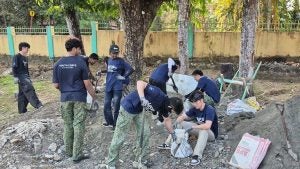
Operation Orion is a unique, student-initiated community service project endorsed by NUS Civil Engineering Club. The story of Orion revolves around 2 main characters, Orion and Taurus. Orion and Taurus are star constellations which can be observed next to each other in the night sky. According to astronomers, Orion symbolizes a hunter who fights courageously against the charging bull, Taurus. Our operation was named after Orion in hopes that we, as a team will have the audacity to fearlessly face adversities that come our way during the process. We thus hope to instill in every member of our team this true fighting spirit of Operation Orion.
Objective
Operation Orion enables students to broaden their horizons by providing them with an insight into the lives and cultures of our neighbours through Community Involvement Projects. The project has obtained endorsement from the Department of Civil Engineering of NUS. The goal of this initiative is to support a construction project that enhances the safety and versatility of the space, making it usable in all weather conditions and better suited for student activities and learning. It also aims to equip students with STEM skills through a series of educational programmes, including hands-on experiments. In addition, we will facilitate English lessons to strengthen literacy skills, while providing students with opportunities to experience diverse cultures through meaningful interactions and immersion within the local community.
- Estimated Cost: Participants are required to pay an estimate of $1000 (amount varies yearly) deposit for travel and accommodation costs.
- Application Period: 3 August to 23 August 2026
- Where to Apply: The sign-up link will be made available at the beginning of each Academic Year and will be shared via the Telegram channel @Orion2k22.
- Travel Period: 11 March to 27 March 2026 (TBC)
- Maximum Intake Capacity: 28
- Who can Apply: CDE students
- Required Skillsets: No specific skills are required; however, participants should have an interest in working with children. An interview will be conducted as part of the selection process.
For Enquiries, Contact:
- Hana Tan (Project Director)
- Email: hana_tan@nus.edu.sg
- Website: operationorion.ceclub.sg
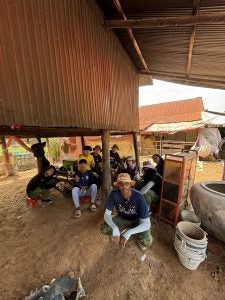
About
Project Cheway is a student-led initiative under NUS ChESS, where engineering students are making a tangible impact in impoverished communities. By leveraging their skills and knowledge, they are crafting innovative solutions to address real-world challenges, from access to clean water to sustainable energy. It's all about using tech for good and empowering those who need it most.
Objective
The goal is to harness chemical engineering principles to uplift underprivileged communities in neighbouring countries. Efforts include planning programmes, organising fundraising events, and ultimately embarking on overseas projects that serve local communities in a meaningful and impactful way.
- Estimated Cost: Participants are required to pay an estimate of $800 (amount varies yearly) deposit for travel and accommodation costs.
- Application Period: Now till 12 September 2026
- Last Travel Period: 17 May to 30 May 2026
- Where to Apply: https://au.cglink.me/2sg/s2060
- Maximum Intake Capacity: 25
- Who can Apply: CDE students
For Enquiries, Contact:
- Venus Chong (Project Director)
- Email: venus.chong@u.nus.edu
- Website: https://www.instagram.com/projectcheway/
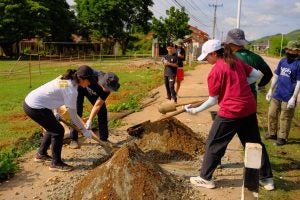
About
Project OceaNUS is a student-led Community Involvement Project (CIP) founded by Environmental Engineering students. We focus on sustainability, installing eco-friendly infrastructure in developing communities, like solar lamp posts in Na Xath Village, Laos, and conducting local initiatives, like mangrove cleanups in Singapore, to promote environmental awareness.
Objective
The goal is to promote environmental consciousness by encouraging sustainable practices in developing communities.
- Estimated Cost: Participants are required to pay a $500 deposit for travel and accommodation costs, which will be partially reimbursed based on fundraising success.
- Application Period: August 2026
- Where to Apply: The sign-up link will be made available at the beginning of each Academic Year and will be shared via the Telegram channel @JoinOceanus and Instagram page @Projectxoceanus.
- Travel Period: 9 May to 22 May 2026
- Maximum Intake Capacity: 22
- Who can Apply: Undergraduates from any discipline who are passionate about CIP, committed and with a good attitude.
- Required Skillsets: No specific skill sets are required. However, it is strongly preferred that participants have some relevant background in the roles they are applying for (e.g., programmes, publicity, or marketing). Applicants for publicity roles must submit a portfolio, such as videos they have edited, Instagram posts, or T-shirt designs.
For Enquiries, Contact:
- Michelle Yap (Project Director)
- Email: E135959@u.nus.edu
- Website: https://www.instagram.com/projectxoceanus/
FOR ENQUIRIES, PLEASE CONTACT
Jacqueline Chiang
cde_specialprojects@nus.edu.sg