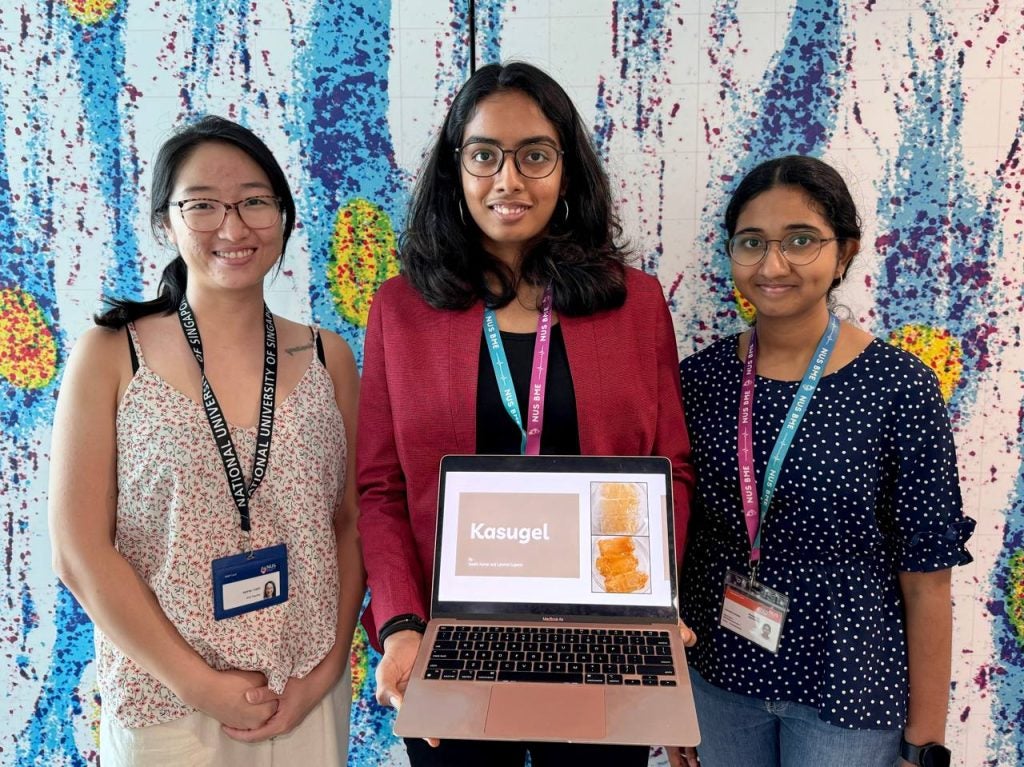
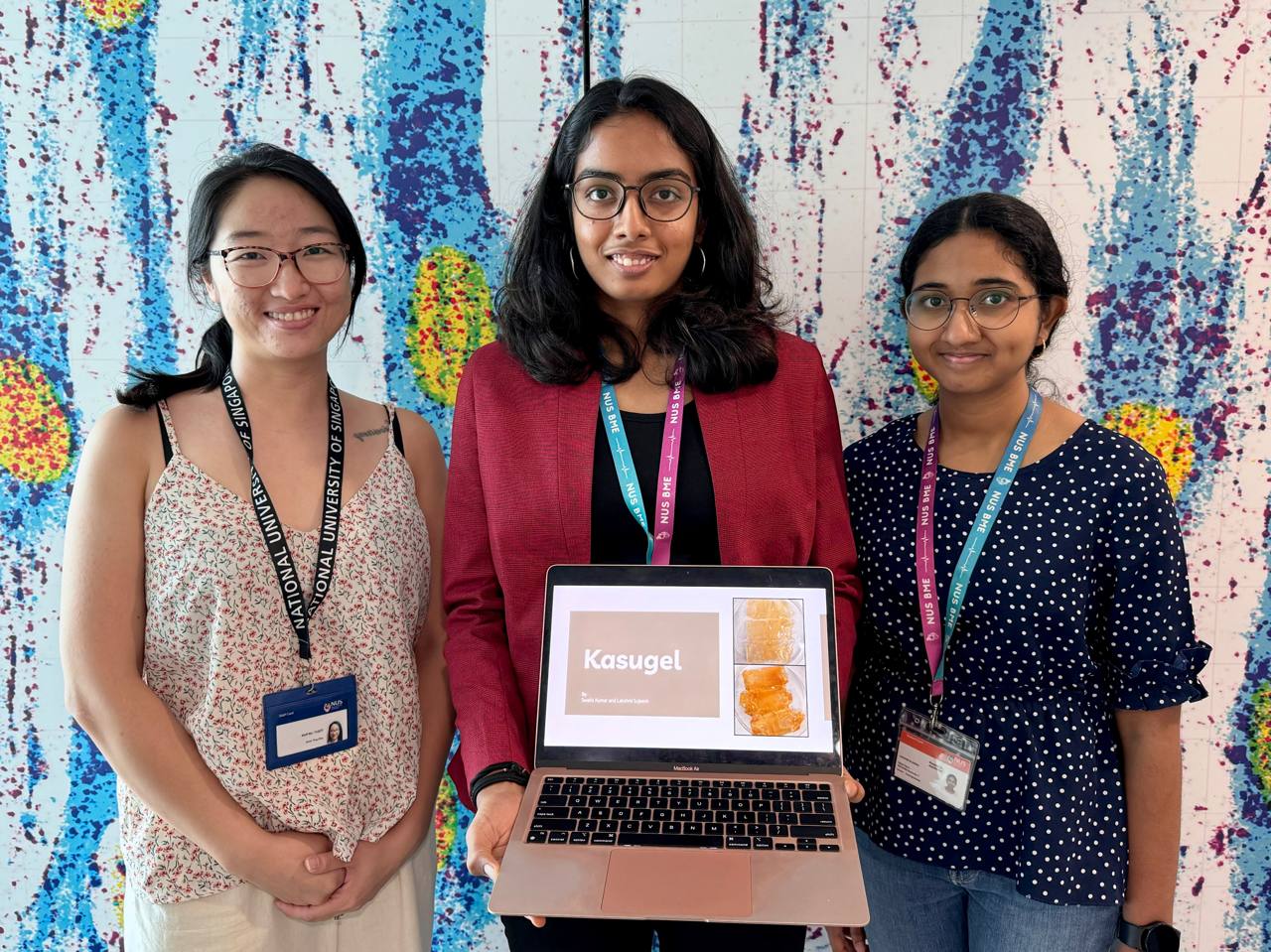
When Biomedical Engineering students Swathi Kumar and Lakshmi Sujeesh travelled to Timor-Leste, they did not arrive with a research question to answer or a technology to test.
On a visit organised by the Biomedical Engineering bGlobal programme in 29 July 2023, they were there to observe, listen and understand.
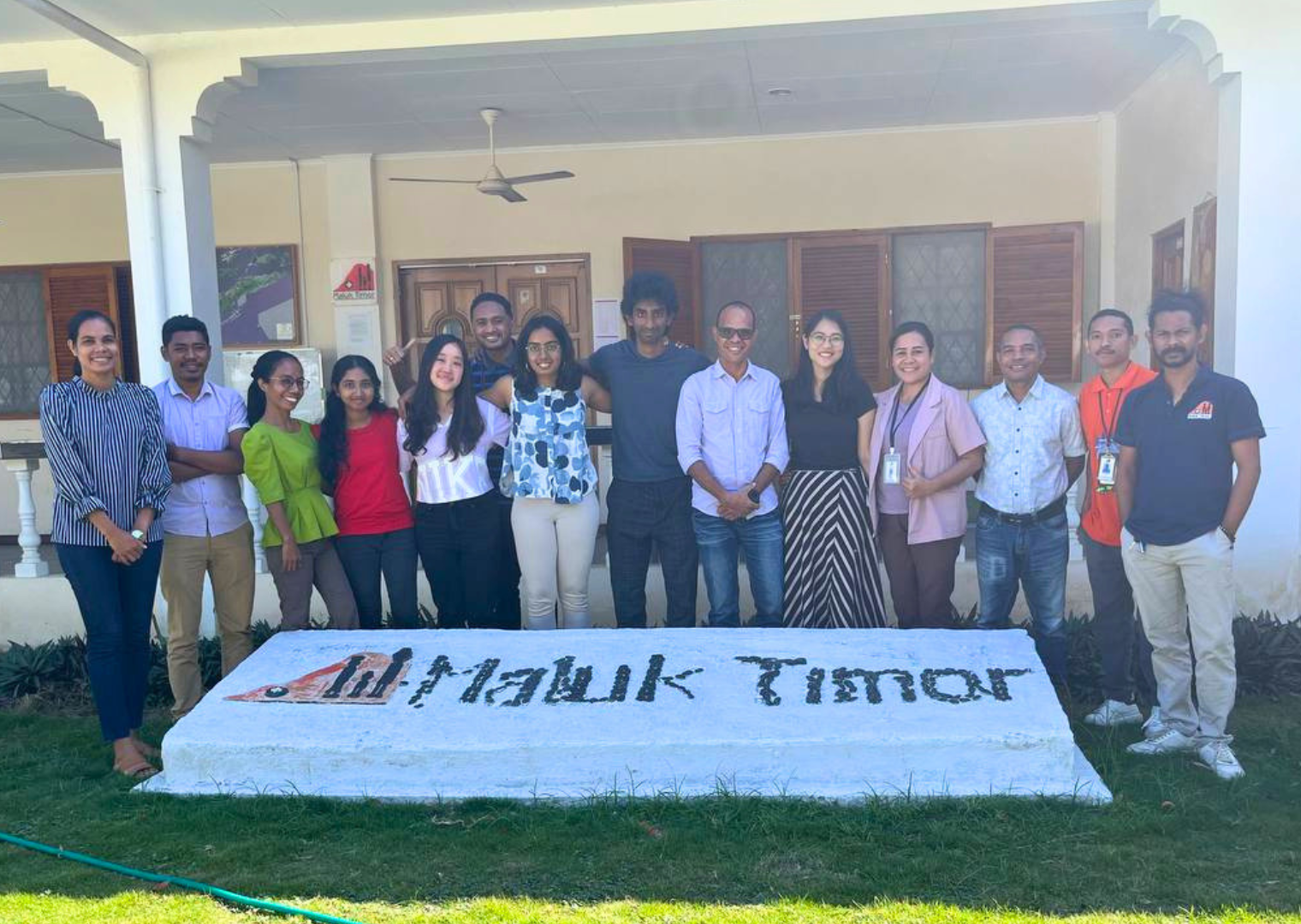
Working with local healthcare organisation Maluk Timor, the students spent two weeks visiting healthcare facilities and speaking with healthcare workers about the challenges they faced. One issue that kept cropping up was access to basic medical supplies, including wound dressings.
In some cases, they were told, orders could take more than three months to arrive.
“We went to Timor-Leste with the broad objective of understanding healthcare challenges, but we had to observe, ask questions and speak to healthcare workers before figuring out what problem we could realistically work on,” said Lakshmi.
Working alongside Maluk Timor showed the students that identifying the right problem was not always straightforward. Their understanding of the medical supply challenge evolved as they spoke to healthcare workers and other stakeholders, with different perspectives sometimes revealing a more complicated picture than initial observations suggested.
For Lakshmi, that became an important lesson in field-based research.
“Some of the information we initially received about the medical supply problem changed as we spoke to different stakeholders,” she said. “That taught me to be much more cautious about taking an initial explanation at face value and to keep asking, ‘Why?’ until I understood the underlying problem.”
Rather than settling immediately on a single challenge, the students developed and refined several possible problem statements, considering what communities needed, what resources were available and what they could realistically address.
For Swathi, this was very different from her previous experience of undergraduate research.
“In many lab-based projects, research is already underway when students join, so we often become involved midway through the process without experiencing how the research question was initially identified,” she said.
An idea takes root
A potential solution began to emerge during a visit to Atauro Island, off the north coast of Timor-Leste, where Swathi and Lakshmi saw locally farmed seaweed being dried and sold.
Brown seaweed such as Sargassum contains alginate, a biocompatible material that can be made into hydrogels and is already used in wound-care applications. The students began exploring whether this locally available resource could provide the basis for a wound dressing that could reduce reliance on imported supplies.
Back in Singapore, they developed the idea into Kasugel, meaning “healing gel” in Tetun, the national language of Timor-Leste. But rather than simply demonstrating that alginate could be extracted in a well-equipped laboratory, they set themselves another challenge: designing the process around resources and equipment that could realistically be available in Timor-Leste.
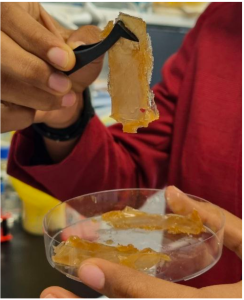
“We deliberately challenged ourselves to remove our dependence on equipment that would not necessarily be available in Timor-Leste,” said Lakshmi.
That meant replacing specialised equipment and processes wherever possible. Seaweed could be dried in sunlight rather than an oven and crushed manually rather than using industrial equipment, while the extraction process used materials that could be obtained or produced locally.
The resulting alginate could be formed into gels with structural properties similar to those produced using conventional laboratory methods. Using 3D-printed moulds, the team was also able to form the gels into patches similar in size to standard wound dressings.
They also tested whether the material could withstand autoclaving, a process used to sterilise medical supplies before use. Importantly, the necessary equipment is already available at the Guido Valadares National Hospital in Dili.
For the students, the process highlighted a fundamental difference between solving a problem in the laboratory and designing something for practical use in the real world.
As Lakshmi put it, “a technically good solution is not necessarily a useful solution”.
Swathi came to a similar conclusion.
“A solution is not necessarily useful simply because it works in a laboratory; it also needs to be accessible, affordable, practical, and sustainable in the setting where it is intended to be used,” she said.
The project remains a proof of concept, with regulatory and manufacturing requirements among the hurdles that would need to be addressed before such a dressing could be used clinically.
But the experience has already travelled beyond the classroom. Swathi and Lakshmi's work and reflections on developing locally and sustainably produced biomaterials were published in Nature Materials(opens in new tab), in an article co-authored with collaborators from NUS and Maluk Timor.
For the students, one of its most important outcomes was a different understanding of what engineering a solution actually involves.
“It is very tempting, especially as an engineering student, to see a problem and immediately start thinking about what you can build,” said Lakshmi. “But the most valuable part of our experience was actually learning to observe first, speak to people, and understand the wider system before deciding what the problem really was.”
For Swathi, the experience reinforced the importance of beginning with the need rather than the technology.
“This taught me the importance of problem-first thinking rather than starting with a technology or solution and looking for a problem to apply it to,” she said.
For both students, that meant learning that sometimes the first step towards engineering a solution is not building anything at all. It is knowing what to look for, and listening carefully enough to understand the problem.