Graduate Research Symposium 2025
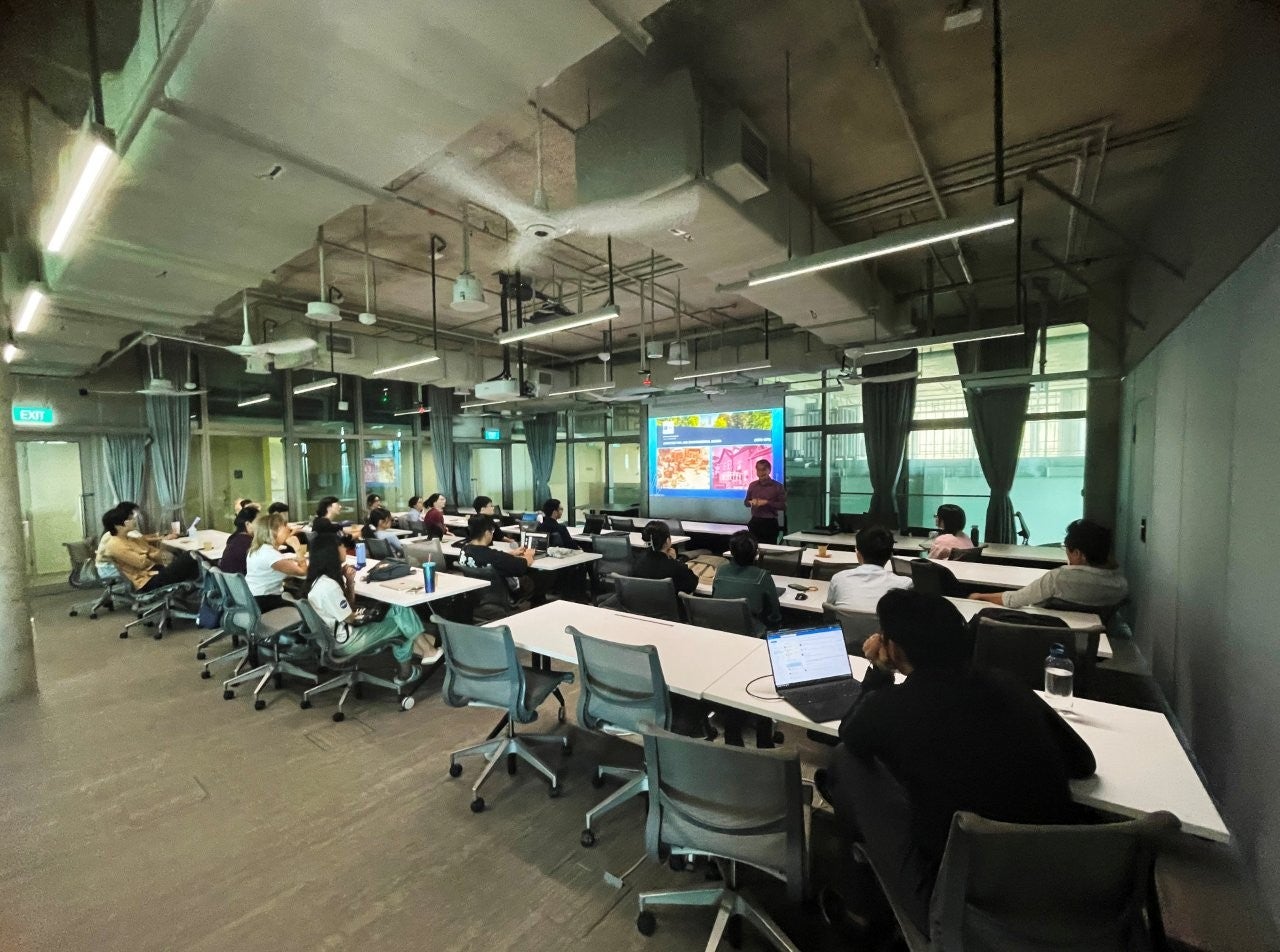
PANEL B: Climate & Infrastructure
Time: 10:30AM – 12:10 PM
Moderated by: Dr. Linjun Xie, Assistant Professor
Venue: Executive Room 2, SDE4
Speakers:
RIZKI D APRILIAN
Encounter with Disasters: A History of Nature, Culture, and Infrastructure in Greater Jakarta after 2000
As the heart of Indonesia’s political and economic activity, Greater Jakarta is home to over 36 million people in 2024, making it the second most populous urban agglomeration in the world after Tokyo. Located on the northwestern coast of Java, the city lies in a basin of volcanic alluvial soil shaped by a long geological process of volcanic eruptions, tectonic activity, and river flows. This geological history has made it a key center of civilization since the 5th century, also poses disaster risks such as hydrological disasters that worsen due to urbanization, land subsidence, and sea-level rise and geological disasters from volcanoes and fault lines. With the potential of a 7.0-magnitude earthquake, it could result in 40,000 casualties and millions of refugees, according to studies of national agencies.
Various infrastructure plans to protect the city from disasters have been designed and implemented, particularly after economic recovery and a new democratic system in Indonesia during the 2000s. Over the past 25 years, such development in Greater Jakarta has been marked by political tensions among citizens, elites, investors, and oligarchs. Power changes through direct elections frequently lead to shifts in policies and mitigation approaches. As a result of these changes, the city has increasingly become an arena of power contestation.
This study provides a critical historiography on disaster mitigation and infrastructure development in Greater Jakarta from 2000 to 2025, demonstrating how shifts in political authority, contestation, and frictions across the interconnected flows of society, infrastructure, and governance have shaped disaster-related infrastructure planning and policies. Using archive-based studies supported by field visits and interviews, this research aims to construct a historiography of the complex layers of the city’s disaster mitigation in the 21st century, demonstrating how lessons from the past can guide the more resilient, equitable, and just urban future development.
Keywords: Disasters, Infrastructure, Urban Political Ecology, Urban History, Greater Jakarta
WANG XUELU
Understanding Adaptive Planning under Uncertainty: Insights from Literature and Stakeholder Mapping for Singapore’s Coastal Futures
Urban coastal zones are increasingly exposed to the compounded pressures of climate change, sea-level rise, and socio-economic growth. Addressing these evolving challenges requires planning approaches that are flexible, iterative, and responsive to uncertainty. This research explores how adaptive planning can be understood and operationalized within Singapore’s coastal context by combining insights from literature synthesis and stakeholder mapping. The literature review identifies key conceptual framings and methodological gaps in how time, uncertainty, and adaptability are incorporated into urban planning and design processes. Building on these insights, the stakeholder mapping reveals the interconnections, interests, and influence of key actors involved in shaping Singapore’s coastal futures, including planning authorities, infrastructure agencies, environmental groups, and research institutions.
By integrating temporal perspectives with institutional dynamics, this study seeks to develop a time-based adaptive planning framework that links scenario development, design flexibility, and feedback mechanisms within early-stage decision-making. The proposed framework will conceptualize planning as a continuous, learning-oriented process that is capable of adapting to evolving ecological, infrastructural, and socio-economic conditions. Through this approach, the research aims to advance methodological tools and theoretical understanding of planning under uncertainty, supporting the creation of resilient and inclusive coastal adaptation strategies. It aims to enhance adaptive capacity in Singapore’s coastal planning and to contribute to broader discourses on planning under uncertainty and climate resilience
Keywords: Adaptive urban planning; coastal protection; climate change adaptation
HWANG YERIN
Evolving Conceptualizations of Urban Shrinkage 2.0: Implications to Policy Responses and Human-Urban Interactions
The scholarly discourse on urban shrinkage has evolved from a narrow focus on demographic decline, economic disinvestment, and spatial abandonment in the 20th century to a more comprehensive, multi-dimensional perspective. This perspective integrates diverse factors shaping urban vitality. Recent studies employ frameworks such as urban resilience and governance to conceptualize shrinkage, yet a unified understanding of its evolving nature remains elusive. While urban shrinkage is a global phenomenon, increasing scholarly attention has focused on East Asian cities, where structural crises driven by economic and demographic transitions profoundly impact the built environment, exacerbating polarization among cities. As projections highlight East Europe and East Asia as future hubs of shrinking cities, this study prioritizes the Asian context to address these dynamics. Drawing on a synthesis of 80 scholarly works, this study develops a theoretically informed analytical framework to define “urban shrinkage 2.0.” This concept serves as an umbrella term capturing emerging trends in urban shrinkage. The paper aims to clarify how narratives framing urban shrinkage influence policy responses and, consequently, shape interactions between human activity and urban spaces. Through a qualitative interpretation of frame-oriented conceptualizations, it examines the interplay between urban shrinkage 2.0, policy responses, and the interaction between human activity and urban space. This study establishes a theoretical foundation for conducting empirical case studies of shrinking cities in East Asia. The analysis highlights the roles of urban resilience, governance, and multidimensional frameworks in shaping policy responses. It underscores how these frameworks mediate the dynamic interactions between human activity and urban spaces in shrinking cities. This research advances scholarly discourse by providing a context-specific lens for studying urban shrinkage in East Asia and a forward-looking framework for analysing post-2020 trends in urban shrinkage conceptualization. It bridges global and regional insights, advancing the understanding of urban shrinkage in rapidly transforming urban contexts.
Keywords: urban shrinkage, frame-oriented conceptualizations, post-2020 trends, East Asian cities
WANG YUFEI
Governance for transportation decarbonization planning in U.S. metropolitan areas: Evidence from state- and regional-level climate action plans
The transportation sector accounts for the largest share of greenhouse gas emissions in the U.S. Achieving transportation decarbonization requires a portfolio of strategies—such as electrification, modal shift, and smart growth and travel demand management—implemented across multiple levels of government. Yet, it remains unclear how the configurations of state and regional agencies influence transportation decarbonization outcomes. This study draws on the newly released database of Priority Climate Action Plans (PCAPs), which were submitted by 47 states and 79 metropolitan statistical areas (MSAs) in the U.S. in 2024 and collectively contain a total of 1803 greenhouse gas emission (GHG) reduction actions. Using structural topic modeling (STM), we identify transportation-related policy themes in all GHG reduction actions and compare the prevalence of these themes across state and MSA levels. We then apply fuzzy-set Qualitative Comparative Analysis (fsQCA) to examine how four governance factors drawn from the literature (i.e., state-level actions, state involvement, the geographical scope of the lead agency, and sectoral involvement) collectively shape transportation decarbonization policies at the MSA level. Results show that while both state and MSA plans prioritize vehicle electrification, decarbonization strategies vary significantly across MSAs. We also find that state-level action or involvement in climate action planning is an important driver of the development of comprehensive decarbonization strategies for regional transportation. When the state support is limited, regional leadership and the active involvement of transportation agencies—especially metropolitan planning organizations (MPOs)—can still make more comprehensive transportation decarbonization actions happen.
Keywords: transportation governance, topic modeling, qualitative comparative analysis, climate mitigation, transportation decarbonization.