Graduate Research Symposium 2025
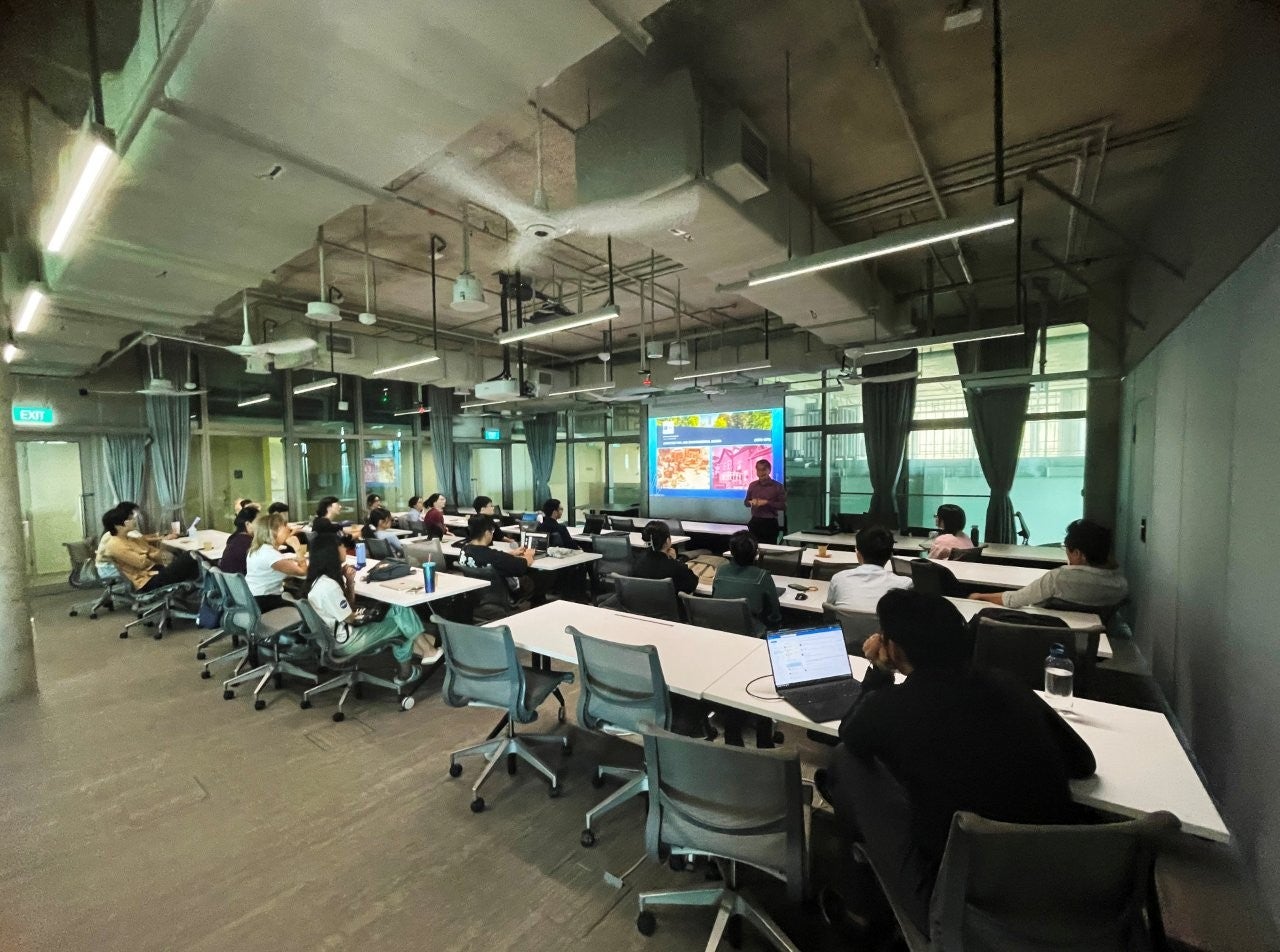
PANEL C: Materiality & Technology
Time: 14:50 PM – 16:30 PM
Moderated by: Dr Pieter Herthogs, Assistant Professor
Venue: Executive Room 1, SDE4
Speakers:
TIAN ZIHUI
Weaving Data and Culture: A Synthetic Analysis of Singapore Shophouses Through Machine Learning
This research develops a computational framework to trace the stylistic evolution of Singapore’s shophouses—hybrid commercial-residential buildings shaped by centuries of trade, migration, and cultural adaptation. Despite their historical importance, shophouses have been reduced to rigid typologies that flatten their stylistic complexity and obscure cultural significance. Existing scholarship, predominantly qualitative in approach, remains constrained by subjectivity and limited in scale.
The study applies AI-based component recognition to large image datasets, identifying patterns in ornament, materiality, and façade design. Style-spectrum analysis reveals gradual transitions and hybrid forms, challenging the notion of distinct architectural periods.
Beyond its analytical contribution, the research translates these findings into an interactive, LLM-powered public platform. This system interprets uploaded shophouse images in real time, transforming computational insights into accessible narratives and linking algorithmic analysis with public engagement.
The study repositions computational methods as instruments of cultural interpretation rather than mere tools of classification. By combining systematic analysis with participatory scholarship, it demonstrates how digital approaches can illuminate both continuity and transformation in built heritage, offering a computational perspective on architectural historiography.
Keywords: Shophouse, Computational Heritage, Machine Learning, Architectural Typology, Large Language Models
ZHANG ZIYUAN
Development of 3D Metrics for Urban Vegetation Assessment Using LiDAR Data
Understanding the spatial structure of urban vegetation is fundamental to studying how cities function ecologically, climatically, and visually. Yet, most existing research still relies on 2D indicators such as the green view index or canopy coverage. These measures provide limited information about the vertical organization and spatial complexity of vegetation, which are essential for describing how vegetation interacts with its surroundings. There is a growing need for a consistent and adaptable framework that can represent vegetation structure in 3D and be applied across different urban research domains.
This study aims to develop a set of 3D vegetation composition and configuration metrics based on multi-scale point cloud data. The objective is to establish an expandable parameter system that can serve as a structural foundation for data-driven urban studies and design. The research combines large-scale airborne lidar data with high-density mobile lidar data and constructs a detailed vegetation structure database using voxel-based modeling.
The proposed metrics are designed to capture the spatial distribution, layering, and complexity of vegetation from two complementary perspectives. From a structural perspective, they describe objective site-based properties such as vegetation volume, height, and spatial organization, which are suitable for studies focusing on the physical environment itself. From a perceptual perspective, they account for visual obstruction and perceptual conditions experienced by observers, providing parameters useful for analyzing human–environment relationships.
The study is currently in the stage of method development and parameter testing. Preliminary results suggest that several 3D metrics show higher sensitivity and explanatory power than traditional 2D indicators in describing vegetation structure and its relationships with environmental variables. These findings indicate that incorporating 3D structural information offers promising directions for future research on urban vegetation.
Keywords: 3D vegetation metrics, LiDAR, point cloud analysis, voxel-based modeling, urban green space
LUO YILU
High-Resolution Pedestrian-Level Air Temperature Evaluation in Tropical High-Density Cities Using Random Forest and Point‑Based Morphology
Rapid urbanization and climate change have intensified thermal challenges in high-density tropical cities. The urban thermal environment is jointly shaped by atmospheric conditions and three-dimensional urban morphology. This study develops a high-resolution, rapid, and generalizable model for evaluating pedestrian-level air temperature using only publicly accessible meteorological data as reference and GIS-derived morphological indicators. Based on urban microclimate physics, a new point-based morphological indicator, the surrounding building height-to-distance ratio (H/D), was introduced and combined with traditional site-averaged metrics to better capture fine-scale spatial variability. Using Singapore as a representative tropical high-density city, six machine learning algorithms were compared for their air temperature evaluation performance. Random Forest performed best and was therefore selected for further modeling. Between two modeling strategies, the year-round model outperformed six microclimate scenario-based models, finally achieving R² = 0.97 and MSE = 0.11 °C². The final model’s evaluative capability performs particularly well between 24 and 31°C, with evaluation errors typically falling below 1°C. SHAP explanation enhanced model transparency, revealing that while regional reference meteorological data remain the dominant influencing factors, point-based morphological indicators also play a crucial role in shaping the pedestrian-level thermal environment. Specifically, in tropical contexts, higher point-based H/D ratios and frontal area density combined with lower point-based sky view factor values were generally associated with elevated evaluated air temperatures, reflecting how denser urban forms reduce ventilation and trap heat. Practically, the 1 m-resolution, minute-scale model allows for rapid generation of continuous thermal maps, visualizing spatial and temporal heterogeneity across urban districts, and providing actionable information for urban design. These results demonstrate a data-efficient, scalable framework for real-time thermal environment evaluation, offering planners and residents a practical decision-support tool to enhance pedestrian comfort and heat resilience in tropical high-density cities.
Keywords: Pedestrian-level air temperature, Point-based urban morphology, Machine learning, Tropical high-density city, Urban thermal environment evaluation
SHEN BOYANG
Architectural Components, Materials, and Manufacturing in the Dissemination of Early Modern Architectural Styles in Asia
This study takes materials as the core research object to investigate the introduction, application, and localization of innovative building materials and production technologies that emerged within various European architectural styles of the early twentieth century into East and Southeast Asia. Focusing on cast-iron components representative of the new architectural styles of the early twentieth century, in order to reveal one facet of “Modern Asian” architecture as material culture and as a dynamic process of architectural production. Drawing on methodologies from communication studies, the narrative goes from prefabricated cast-iron factories in Glasgow and other centers, through the shipping networks linking Eastern and Western ports, to the micro-construction sites across regions such as western Japan, Manchuria, the Yangtze River basin and southeastern China, Vietnam, and Java. By which the research traces the two global “currents of material and aesthetic consciousness”: those imported from the West and those produced locally in Asia. Exposed cast iron structures and ornamental ironwork were created to achieve new spatial and decorative effects, their emergence and subsequent diffusion in East and Southeast Asia – particularly the commodification, standardization, and localization of cast iron railings in the Art Nouveau and Art Deco styles – reflect an intriguing facet of architectural origin beyond the stylistic paradigm: building materials that combined stylistic elements of ostensibly unified Western forms into complex hybrid configurations underwent processes of commodification, standardization, and localization. These processes simultaneously marked the orbit change of the two “currents”. The study draws on construction engineering documents, material and shipping archives, product catalogues, and fieldwork, and it reconsiders the emergence of “Modern Asian” architecture from the ontological perspective of the material assemblages condensed in architectural production. In doing so, it situates and reassesses the birth of this architectural phenomenon, and the accompanying cultural and manufacturing revolutions, within a broader global framework.
Keywords: Style, Material Culture, Commodification, Capitalism, Cast Iron
LI PEISHAN
Literature Review of the Possibility of Bio-Based Preservatives for Mass Engineered Timber
Mass Engineered Timber (MET) faces significant durability challenges in tropical regions due to biological degradation (fungi and termites) and material weathering under high humidity and UV exposure. Conventional timber treatments like thermal modification and charring improve fungal resistance but offer limited termite mitigation and often compromise mechanical properties (e.g., increased brittleness, reduced hardness). (Batista et al., 2016; Del Menezzi et al., 2008)
Pyrolysis is an organic material decomposition process in the absence of oxygen at the elevated temperature, 300˚C to 1000˚C. The major products are biochar, liquid bio-oil, and non-condensable gases. With the notable antifungal properties of pyrolysis products, many studies have been conducted and have shown that pyrolysis bio-oils from different raw materials would vary antifungal and antitermitic activities. (Mattos et al., 2019) Brown and white rot fungi are the main pathogenic factors for timber. (Schmidt, 2006), whereas the targeting termite species is Cryptotermes. The impact factors of pyroligneous liquor/wood vinegar/pyrolysis oil/etc. performance on anti-biological attack are mainly manufacturing temperature, biomass species, content of acid and phenol, etc.
Pyrolysis and its bio products have been widely studied regarding agriculture and forestry. However, there is rare research on pyrolysis extracts’ potential applications on timber construction components in architectural scale. The review will summarize, arrange, and compare the current research outcome related to pyrolysis extracts and conventional non-chemical product treatments for fungal and termite resistance.
Preliminary findings suggest that pyrolysis bio-oils could offer a sustainable alternative to conventional treatments, aligning with decarbonization goals. Further research should explore (1) possible application methods for MET components, (2) long-term and durable MET performance under cyclic hygrothermal loads with high temperature and high humidity.
Keywords: Mass Engineered Timber, Pyrolysis Extract, Tropical Timber Durability, Biodeterioration, Mechanical Properties