Graduate Research Symposium 2025
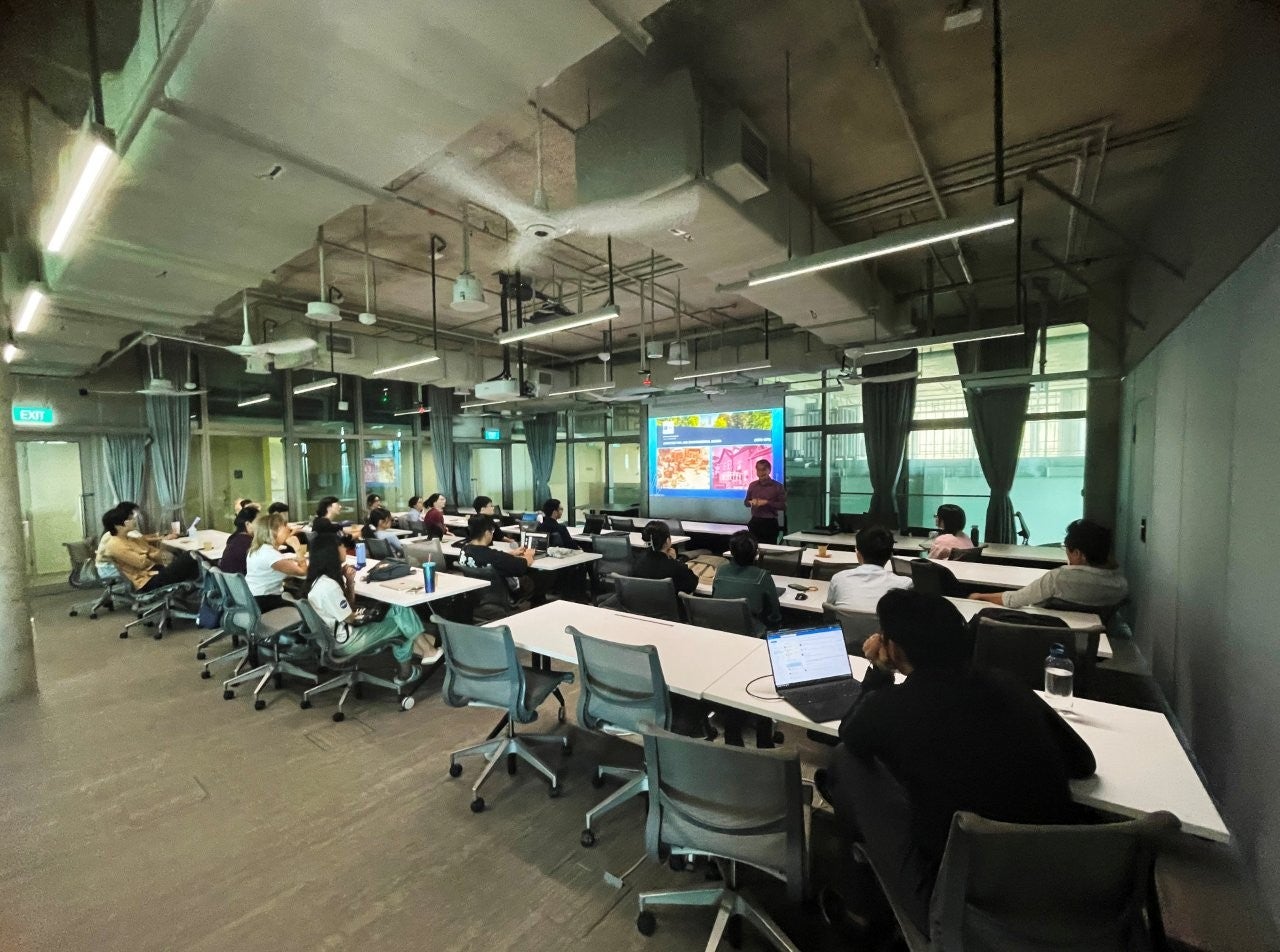
PANEL D: Urban Systems & Informality
Time: 14:50 PM – 16:30 PM
Moderated by: Dr Ruzica Bozovic-Stamenovic, Associate Professor
Venue: Executive Room 2, SDE4
Speakers:
YANG HANKANG
Urban Informality in a Formalized City: Informal Practices on the Streets of Clementi Centre Market in Singapore
Singapore’s strict and meticulous laws and regulations; its bustling, modern streets and buildings; and its efficient, procedural government and administrative systems together make urban informality appear out of place in a city that, in only about thirty years, has “eliminated all randomness and contingency.” From the Master Plan’s detailed regional zoning and parcel-level land-use prescriptions to every activity permitted within void decks, and even the spacing of racks and the types of merchandise allowed in outdoor displays along pedestrian streets, urban life is subject to stringent control.
By contrast, this study explores spatial practices at Singapore’s Clementi Centre Market that are not, as above, uniformly subject to strict control, yet are also not wholly spontaneous or self-organized beyond the reach of law, regulation, and planning frameworks. Actors at Clementi Centre Market draw on kampung legacies and pre-migration social ties and, through encounters, practices, and ongoing negotiation with the evolving application of laws, regulations, and plans, reconstruct a new community network. Through long-term practice this network has become highly familiar with local regulations and enforcement; on this basis it embeds certain nostalgic practices into contemporary street space and, by leveraging ambiguities in existing regulations, secures modest economic benefits while providing temporary income opportunities for unemployed and low-income groups. In this way, Clementi Centre Market exhibits an informal mode of practice that is incorporated across legality and illegality, compliance and non-compliance, and zones of regulatory indeterminacy. By examining this mode of informality, this study seeks to reveal the resilience of urban informal practices in Singapore, an authoritarian state and an increasingly formalized global city, thereby differing from dominant research on urban informality in the Global South.
The paper suggests that these informal practices in Singapore function as crucial extensions of everyday urban life and play a significant role in sustaining vibrant and livable cities, even under high formalization. Recognizing their presence and understanding their emergence illuminate everyday urban needs and advance social sustainability—accessibility, tolerance, diversity, and inclusion.
Keywords: Urban Informality, Singapore, formal/informal divide, street, informal practice
REN YUKUN
From Anecdote to Play: Gaming the Everyday as Bottom-Up Social Action
Urban Design Research, especially ethnographic and social-action strands, has long privileged formal archives and official narratives. While authoritative, these accounts often obscure the fragmented and affective anecdotes embedded in everyday life. Following Lefebvre (1991) and Berlant (2011), everyday practices are seen as central to spatial and political negotiation. This project reconsiders the anecdote as a counter-archive that can be activated—rather than represented—through play.
Ethnographic field-notes and fragments collected from everyday encounters contain narrative potential yet rarely become operative in design. This research asks: How can such materials, when translated into procedural game structures, move beyond description to foster social action and community imagination? It positions digital games as tools for civic engagement where participants’ in-game choices reveal real-life needs and perspectives.
In design and practice research, Chee (2023) reframes anecdotes as “affective evidence,” unsettling established knowledge and reconsidering what counts as a “primary source.” In parallel, Manolopoulou (2022) develops dialogic drawing to hold multiple voices in caring for marginal communities, and Haraway (2016) proposes speculative fabulation for collaborative sense-making. Games provide a narrative and participatory bridge: Ryan (2001, 2015) conceptualises narrative as virtual reality; Jenkins (2004) defines game design as narrative architecture; Juul (2005) theorises games as “half-real”; Bogost (2007) advances procedural rhetoric; Flanagan (2009) frames critical play; and Sicart (2014) views play as ethical world-engagement. Although Bogost (2017) argues that games are weaker than film or literature at storytelling, Chen, Dowling, and Goetz (2023) show that gameplay and narrative can be symbiotic: rules and mechanics perform narrative–semiotic functions, yielding ludic narrativity co-constructed through informed player choice.
Combining ethnographic scoping, oral histories, participatory mapping, and archival work in Bangkok, each anecdote is transformed into a playable narrative node within a digital prototype. Playtesting records participants’ decisions, reflections, and reasoning—interpreted through discourse analysis and design reflection.
Preliminary results show field-notes, once proceduralised, shift anecdotes from memory to situated action: players negotiate uncertainty, articulate needs, and rehearse futures. Serious-game studies (e.g., Gee 2003; Squire 2011) highlight games’ educational power to sustain engagement. The project advances a bottom-up mode of urban knowledge production linking affective fragments, serious-game engagement, and participatory design—reframing the city as a contested game-space shaped through negotiation and collective imagination.
Keywords: Anecdotal Urbanism; Procedural Game Design; Ethnography and Community Engagement; Affective Evidence; Serious Games for Social Action
CHU NGOC HUYEN
The Production of Differential Living Space: People-led Mini-Apartments as Affordable Housing Solutions in Hanoi
Hanoi, Vietnam’s capital, epitomizes the contradictions of urban dynamism in a socialist market economy, where state planning and spontaneous citizen initiatives coexist to produce a mixed and dense housing environment. Since the 1986 Đổi Mới reforms, housing has evolved into a market-oriented system driven by state initiatives and private developers. Yet, this transformation has largely excluded middle- and low-income groups, including young couples, students, and rural migrants, who continue to face severe affordability stress. Within this gap, people-led “mini-apartments” have emerged: compact, individually or family-owned multi-story buildings located within alleyways, available for both sale and rent, offering affordable and accessible housing options to those excluded from the formal market. Their proliferation has turned them into a distinctive feature of Hanoi’s urban fabric, representing a grassroots mode of housing provision that adapts to regulatory ambiguity while addressing urgent demand. This study examines the mechanisms and logics driving the production of these differential living spaces, where socialist legacies intersect with market imperatives and ambiguous regulations, giving rise to what has been described as calculated informality – a condition that blurs the conventional formal–informal binary in housing. It further explores how this housing form relates to Hanoi’s urban villages pattern, assessing its influence on the surrounding built environment and local social cohesion. In contemporary housing scholarship, community-led housing, a concept that originated in Global North contexts, has been widely discussed as a promising solution for post-consumerist societies. These projects are typically supported by the state and grant decision-making power to local communities. While, housing debates in the Global South have largely centred on issues of community-led resettlement of informal housing like slum or squatters. Vietnam, however, follows a different trajectory: the state has been relatively successful in preventing large-scale slum formation, yet faces another form of housing challenge where most initiatives are people-led, undertaken by individuals or families acting as small-scale entrepreneur. Ownership is fragmented, profit-driven, and grounded in personal investment rather than collective management. Moreover, although prior studies have offered insights into the spatial transformations and socio-economic impacts of urban villages, as well as the formation mechanisms of informal housing under policy gaps, these strands of research remain largely disconnected. To date, there has been no work that bridges these two domains, particularly concerning the phenomenon of people-led mini-apartments, which remains underexplored.
Keywords: People-led Affordable housing, production of differential space, Calculated informality, Hanoi, Vietnam.
HU JIAMIN
Tracing Processes of Urbanization Through Food: The Case of Cameron Highlands
Cameron Highlands, one of Malaysia’s most intensive agricultural regions, has undergone profound spatial transformations in recent decades – marked by expanding greenhouses, tourism infrastructure, and transport networks. While these changes appear rural and agrarian, they increasingly embody logics of urban production, commodification, and transnational dependency. This study investigates how an agrarian highland becomes absorbed into transnational networks and how this hinterland functions as a local production centrality while simultaneously being marginalized regionally. Drawing from the analytic framework of Extended Urbanization, with a focus on the material production of urban space and territorial regulations, this paper asks: 1. What forces drive these processes? 2. Can Cameron’s agricultural development be understood as a form of urbanization?
The research combines three methodological components. First, a GIS-based temporal visualization of historical satellite imagery illustrates land-use change, highlighting how farming zones, especially greenhouses, logistics corridors, and tourist facilities have expanded from a spatial dimension. Second, a multi-source textual analysis integrates academic literature, government policy documents, and media reports to trace the evolving food supply chain linking Cameron Highlands and Singapore. This analysis reveals how regional regulations formed a demand for fresh produce has shaped the highlands’ spatial form as well as agricultural activities, particularly through intensified greenhouse production to embed into the global food circuits. Field photographs from on-site observations further provide visual evidence of this spatial reconfiguration—showing how urban production logics are materialized in rural forms. This study acknowledges its limitation in relying on secondary textual sources and merely observations, which lack the analytic dimension on the production of urban experiences for in-depth interpretations. By visualizing and contextualizing these transformations, the paper contributes to understanding how food systems function as spatial agents in the planetary urbanization processes.
Keywords: Extended Urbanization, Cameron Highlands, Singapore, food supply, center-periphery
QI ZHUOXU
Identification and Extraction of Configurational Patterns of Urban Spatial Elements from Social Media Data
The emergence of damage to the natural environment and breaks in historical continuity during urban development has become a key technical challenge in contemporary urban planning and design. Research rooted in morphological typology has produced systematic findings on safeguarding urban historical context, yet it often falls into a mechanical patchwork of historical forms and offers limited capacity to envision the future form of the city. Urban space interacts with the natural environment and historical culture, and this interaction generates distinctive and relatively stable spatial configuration patterns. These patterns carry region-specific information that signifies urban identity and also help sustain a harmonious relationship among urban space, nature, and culture. This paper develops a method that identifies and extracts configuration patterns of urban spatial elements from social media data. First, spatio-temporal clustering method is applied to social media location points to obtain perceived distribution clusters of urban spatial-element configuration patterns across different times and scales. Second, a set of machine learning algorithms is used to analyze social media images and infer the adjacency matrix among spatial elements, from which the configuration combinations are extracted. Third, the texts associated with the images are examined to determine public affective responses and place attachment for each configuration. These steps produce a set of relatively stable configuration patterns of urban spatial elements. Identifying and extracting spatial configuration patterns helps avoid imposing uniform spatial forms on cities with diverse regional characteristics. The results provide an effective design pathway that supports urban development, environmental conservation, and cultural continuity in a mutually beneficial way.
Keywords: Configurational patterns, Urban spatial elements, Identification and extraction, Social media data, Machine learning