


Architecture
Defying gravity: The new threads of space flight and beyond
Follow CDE
PDF Download

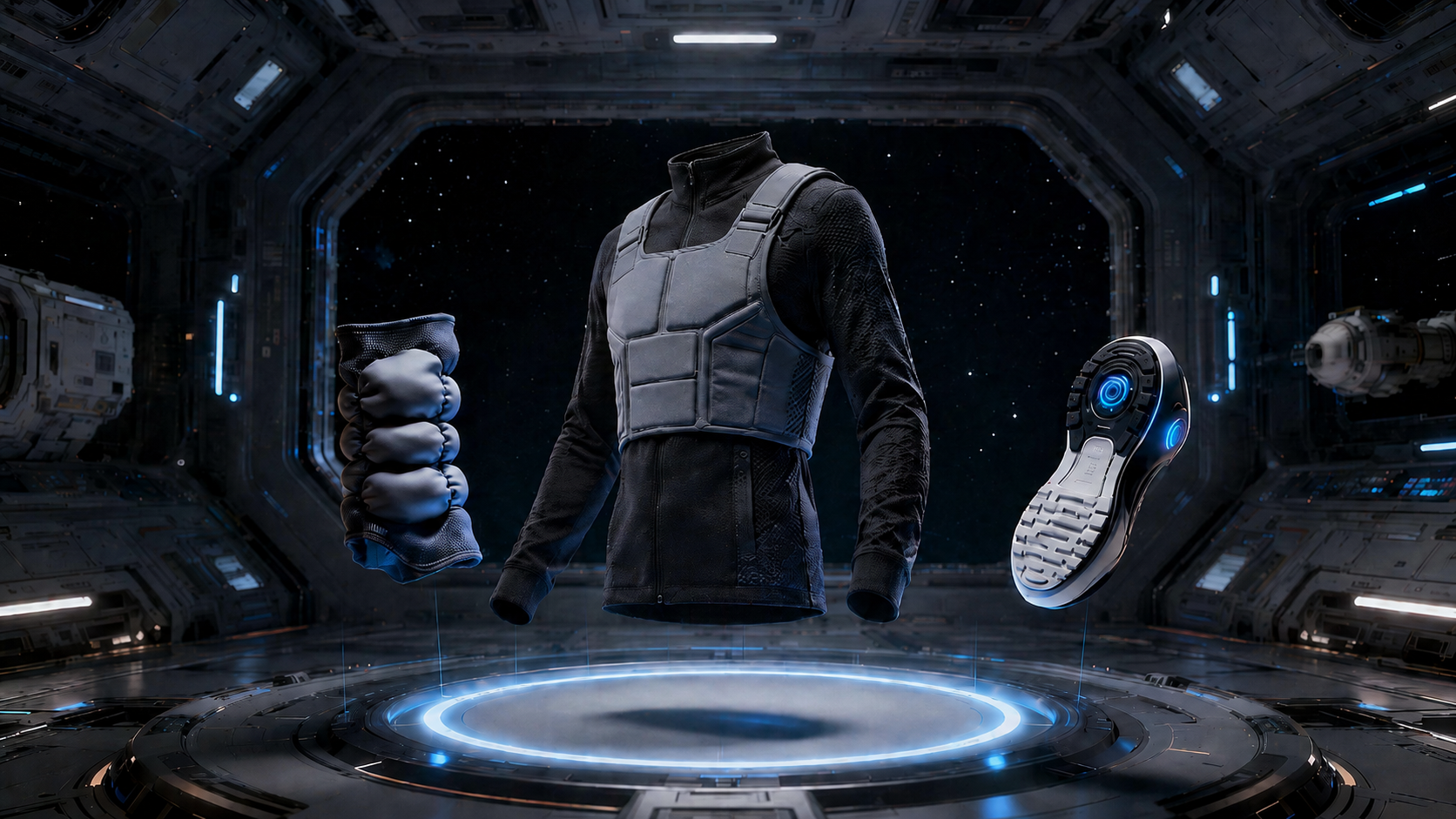
An iron-woven vest for astronauts in microgravity is the starting point for a wider programme: fabrics that sense and regulate the body, whether in space, in hospitals or in sports settings.
As NASA’s Artemis II mission took four astronauts on an elegant figure of-eight path around the Moon and back, here is one of spaceflight’s less glamorous truths: after six decades of human missions, astronauts still strap themselves to walls with Velcro. The hook-and-loop strips are lightweight and easy to apply, but they produce a rasping, jarring sound that reverberates through the astronauts’ otherwise serene habitat and workspace. They also degrade within weeks and do little to address the deeper problem: a body untethered from gravity has no reliable sense of being anchored.
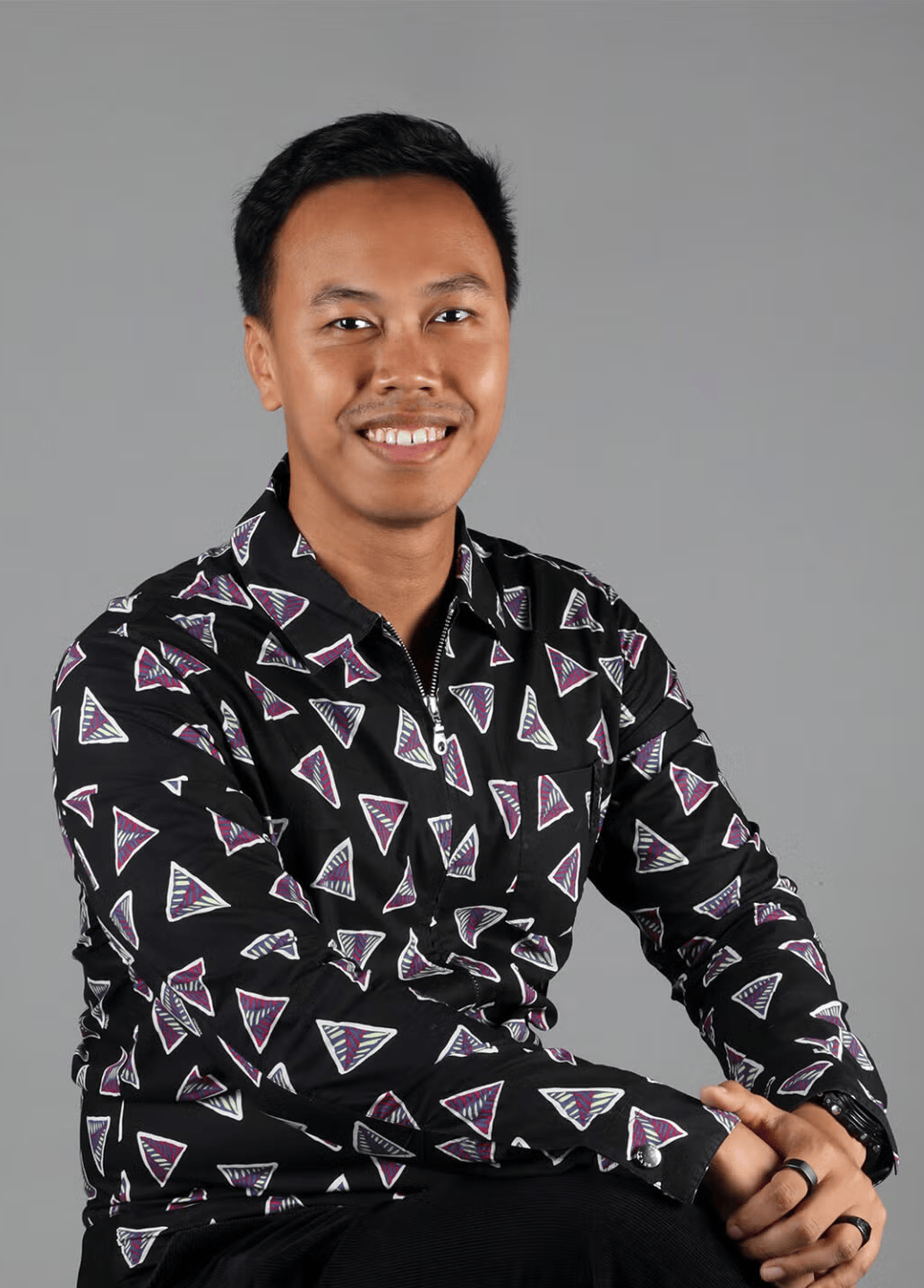
Assistant Professor Irmandy Wicaksono leads a design research programme to develop smart textiles for space missions.
Assistant Professor Irmandy Wicaksono from the Division of Industrial Design, College of Design and Engineering at the National University of Singapore, in collaboration with the MIT Media Lab and the European Space Agency, proposes a solution that can be woven directly into what astronauts wear. Their latest prototype, Ferrozuit, is an electronic textile vest whose weft is made of iron — a custom yarn spun on analogue looms and engineered to be both magnetically active and soft enough for longterm wear. Ferrozuit interacts with electro-permanent magnets, which can be switched on and off using electric pulses, embedded in a space habitat’s walls or furniture. A floating astronaut wearing the garment can gently dock onto surfaces for work, rest or sleep. This work was published at ACM UbiComp/ISWC 2025 (Ubiquitous Computing and the International Symposium on Wearable Computers) and received the Best Design Award in Functional Category.
“We tend to think of spacesuits as armour, like hard
shells that protect you from the unforgiving, hostile environment of space.”
“We tend to think of spacesuits as armour, like hard shells that protect you from the unforgiving, hostile environment of space,” says Asst Prof Wicaksono. “But inside the habitat, astronauts spend most of their time in ordinary clothing. That’s where soft technologies such as wearables and e-textiles have a real opportunity to intervene.”
Woven, not welded
The most technically tricky part of Ferrozuit was the fabric itself. Early prototypes exposed a trade-off where an all-iron weave had the right magnetic properties but was too stiff to wear, while softer blends with iron warp and cotton weft felt comfortable but barely responded to magnets. The breakthrough was a double-cloth structure using iron yarn as a thick weft and high-strength Dyneema as the warp, woven in two bonded layers. It tripled the density of magnetic material while keeping the textile soft. The vest is a wearable garment first and a magnetic interface second.
A 10-by-10 array of electro-permanent magnets coupled to the textile delivers roughly 5 N of anchoring force — below the 22 N needed to arrest a drifting 90 kg crewmember, but scalable through larger arrays without giving up comfort. Asst Prof Wicaksono mentions while the forces involved are modest, the technology is propositional: “We’re showing that ferromagnetic textiles can be woven, worn and magnetically coupled. That opens a design space few have explored.”
“We’re showing that ferromagnetic textiles can be woven, worn and magnetically coupled. That opens a design space few have explored.”
“We’re showing that ferromagnetic textiles can be woven, worn and magnetically coupled. That opens a design space few have explored.”
“We’re showing that ferromagnetic textiles can be woven, worn and magnetically coupled. That opens a design space few have explored.”
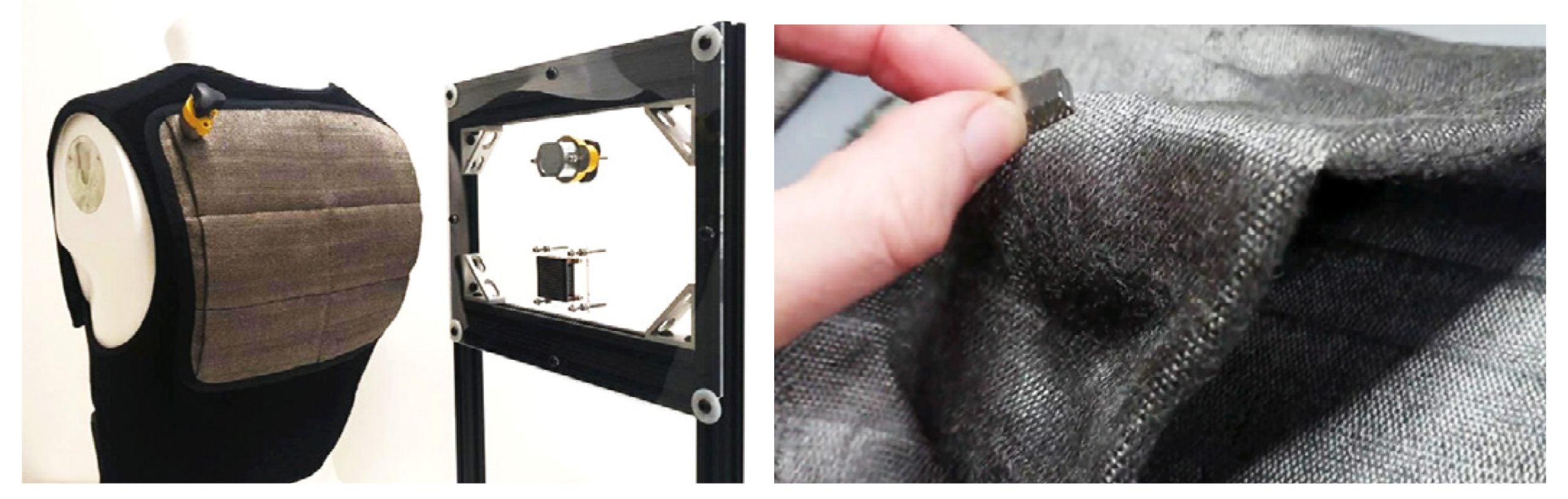
Ferrozuit is an electronic textile vest whose weft is made of iron, engineered to be both magnetically active and soft enough for longterm wear.
Down to Earth
That design space is what makes the project intriguing. At the Soft Technologies Lab, Asst Prof Wicaksono is spearheading a research programme around intelligent textiles that can monitor physiology and physical activity, deliver active compression and provide haptic feedback. While microgravity anchoring is one application, a few more are terrestrial.
A fabric that delivers controlled, gradient compression to a limb can, with different tuning, function as a recovery sleeve for athletes or patients with chronic swelling. A textile embedded with physiological and movement sensors can transform everyday clothing into a continuous health monitor, tracking heart rate, respiration and other parameters without the tether of hospital equipment. The same magnetic weave that allows an astronaut to anchor to a surface could, in another configuration, enable hands-free closures for rehabilitation garments worn by individuals with limited hand mobility.
“The throughline is a design philosophy that the boundary between body and environment need not be a hard one,” adds Asst Prof Wicaksono. “Clothing and textiles can serve a function currently handled by cuffs, monitors and machines.”
Space galore
Asst Prof Wicaksono’s past inventions include the Peristaltic Suit, a full-body garment that embeds inflatable chambers and physiological sensors into a flight suit to deliver gradient compression while monitoring heart activity and blood flow in real time. In addition, SpaceSkin is an aerospace e-textile sleeve for transferring external forces in spacesuits to skin through haptic devices. The team also developed a pair of intelligent electromagnetic shoes whose sole-embedded magnets toggle automatically in response to the wearer’s gait, enabling walking on ferromagnetic surfaces in microgravity. Both prototypes were tested in parabolic flight and presented at the International Conference on Environmental Systems in 2023 and 2025 respectively.
The technologies developed across these projects — textile-based compression sensing, embedded physiological monitoring, gait responsive actuation and sensory augmentation — inform the Soft Technologies Lab’s terrestrial research in intelligent textiles and garments with seamlessly integrated sensors and actuators, supporting applications ranging from sports and healthcare to assistive devices and immersive reality.
Read More
View Our Publications ▏Back to Forging New Frontiers - December 2025 Issue
If you are interested to connect with us, email us at cdenews@nus.edu.sg