CEE 70th Anniversary Symposium 2025
Celebrating 70 Years of Excellence in Research, Innovation, and Achievement
| Steering Committee |
|||
| Prof Richard Liew Chairman |
Dr Chew Soon Hoe Co-Chairman |
Er Chua Tong Seng PEB Rep |
Er Ng Say Cheong IES Rep |
| Organising Committee | ||
| Dr Chew Soon Hoe Chairman |
Dr Paul Ong Co-Chairman |
Ms Peggy Leong Secretary |
| Ms Jazlyn Teo Assistant Secretary |
Ms Valerie Chew Finance/Admin |
Mr Joel Haw Logistics |
| Members |
|
| Ms Jilliane Lee Student Activities |
Mr Dylan Yeo Exhibition |
On 10 October 2025, the Department of Civil and Environmental Engineering (CEE) marked seven decades of impact at the CEE 70th Anniversary Symposium held at Marina Bay Sands – bringing together over 1,600 industry leaders, professional engineers, alumni, exhibitors, and students.
Our theme, “Our Achievement, Our Future”, honours the people and partnerships that built Singapore’s infrastructure, while showcasing the innovations shaping what comes next.
We were honoured to welcome Ms Indranee Rajah, Minister in the Prime Minister’s Office and Second Minister for Finance and National Development, as the Guest of Honour to grace the event.
Organised in partnership with the Professional Engineers Board (PEB) and The Institution of Engineers, Singapore (IES), the Symposium drew 1,300 pre-registrations and 300 walk-ins – underscoring the sector’s strong momentum and interest.
A Three-Zone Experience
- Symposium: Keynotes and special lectures by leaders across public agencies and industry.
- Exhibition: Research, innovation, and achievements from agencies, consultants, contractors, CEE research centres, and spin-offs.
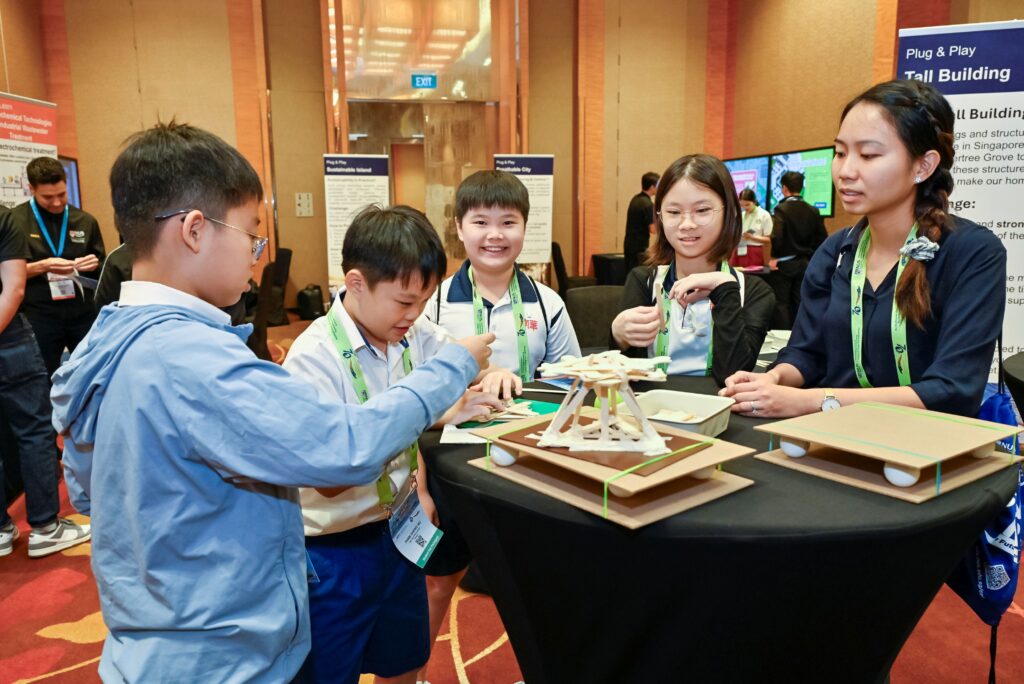
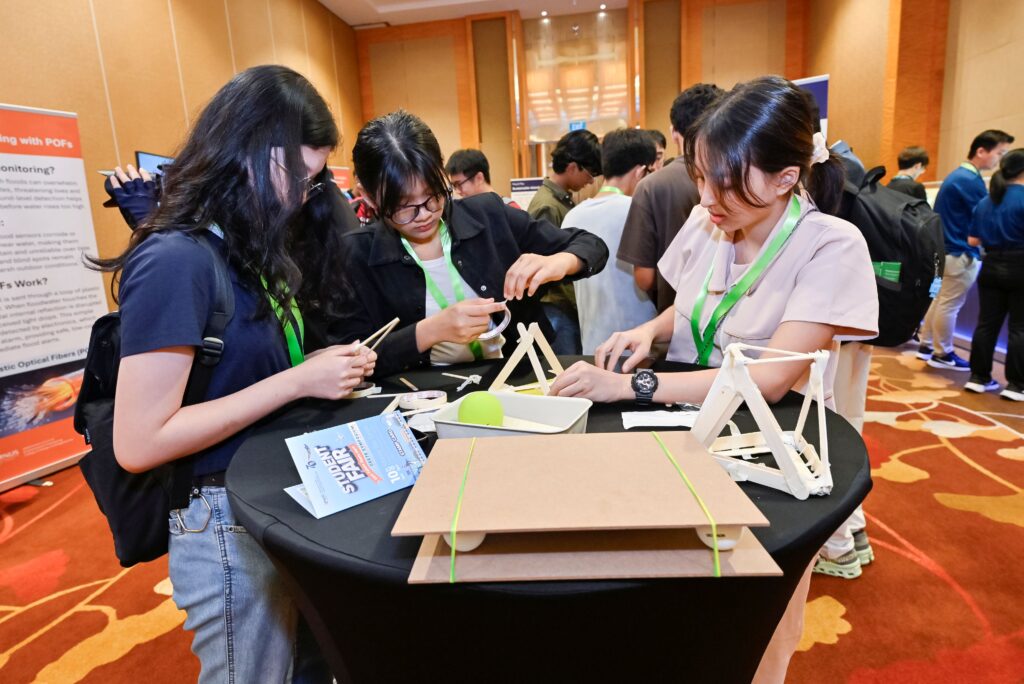
- Student Fair: Hands-on activities for primary, secondary, and pre-university students to discover civil and environmental engineering.
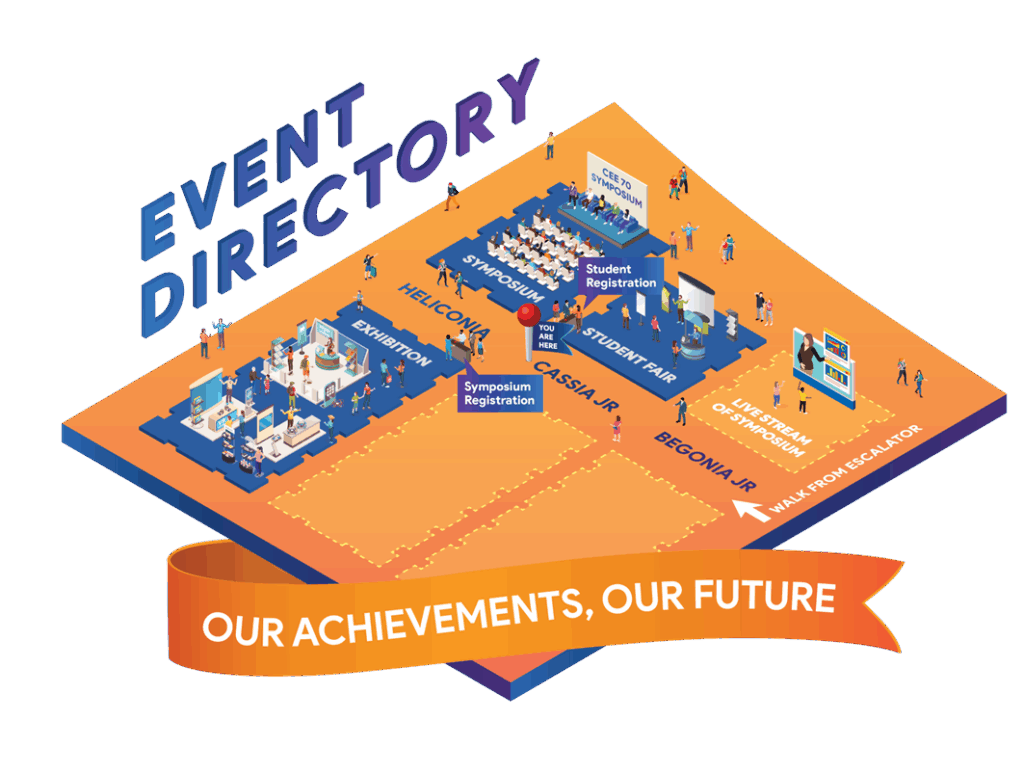
Event Directory showing the Symposium, Exhibition, and Student Fair.
Opening Highlights
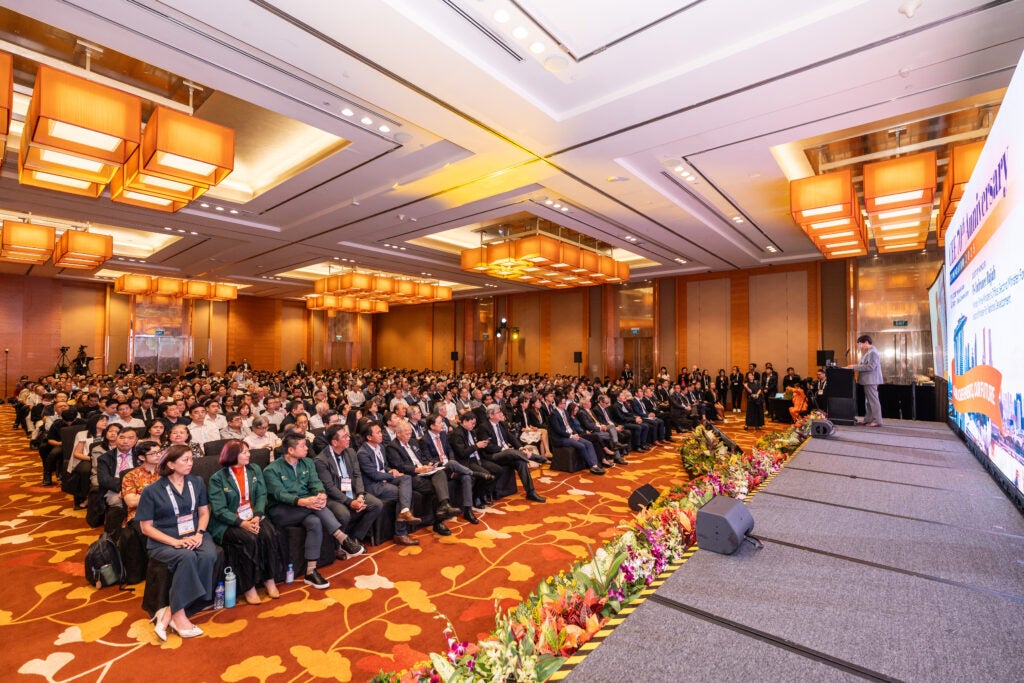
The Opening began at 9:00 am to a packed house – 650 attendees in the Heliconia Junior Ballroom, 380 in the overflow Begonia Junior Ballroom, with additional attendees standing.
In the first welcome address, Prof Richard Liew, Head of the Department of Civil and Environmental Engineering, National University of Singapore, set the tone:
“Anniversaries are about people.”
“Looking at Singapore’s skyline beyond these doors, we see more than structures – we see vision, collaboration, and care for future generations.”
Following that, opening remarks were made by Prof Heng Chye Kiang, Deputy Dean, College of Design and Engineering (CDE) (on behalf of Prof Teo Kie Leong, Dean, CDE), Er Lim Peng Hong, President, PEB, and Er Chan Ewe Jin, President, IES.
Prof Heng reflected on resilience and renewal:
“As we celebrate this proud legacy, we must also look ahead. The challenges we face today differ from those of the past, but the same spirit that built our foundations will guide us into the future.”
When it was time for Minister Indranee to deliver her speech, she emphasised timeliness and purpose:
“Today’s symposium on civil, environmental, and sustainability engineering is timely. As we face challenges like climate change and resource scarcity, the role of civil and environmental engineers has never been more critical—or more exciting.”
“Many of you chose engineering because you want to make a meaningful difference in the world. A career in the Built Environment sector offers just that. Every day, BE professionals shape how we live, work, and play.”
Official Launch
Launch Mechanism Displayed on the Screen
Shortly after, the Symposium was officially launched by Minister Indranee together with:
- Prof Richard Liew, Head of Department, CEE
- Prof Heng Chye Kiang, Deputy Dean, CDE (on behalf of Dean Prof Teo Kie Leong)
- Er Lim Peng Hong, President, PEB
- Er Chan Ewe Jin, President, IES
They were joined by Keynote Speakers and senior leaders from BCA, HDB, HTX, JTC, LTA, PUB, and URA, including:
- Mr Tan Chee Kiat, Deputy CEO (Industry Development), BCA
- Er Dr Johnny Wong Heng Liang, Deputy CEO and Chief Science & Technology Officer, HDB
- Mr William Yeo, Deputy Chief Executive, PUB
- Mr Lam Wee Shann, Deputy Chief Executive (Technology), LTA
- Ms Adele Tan Shiao Ling, Deputy CEO and Chief Planner, URA
- Mr Calvin Chung, Assistant CEO (Engineering & Operations), JTC
- Mr Ng Shu Herng, Director, HTX
With a palm press on the feature wall, the launch unveiled a dynamic video celebrating CEE’s seven decades of training thousands of engineers who helped build modern Singapore.
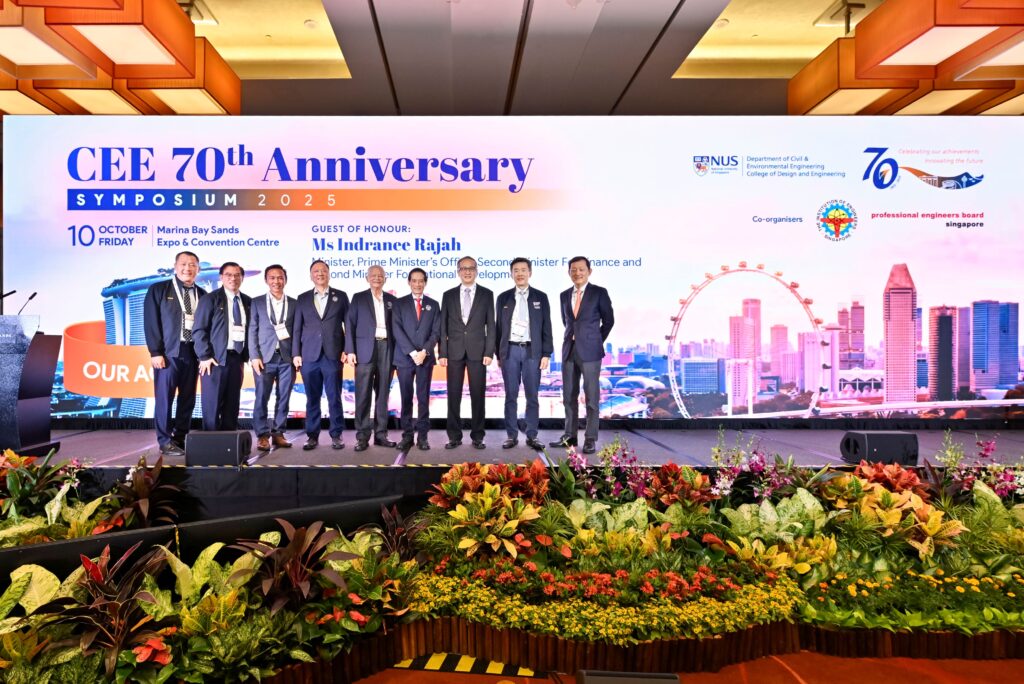
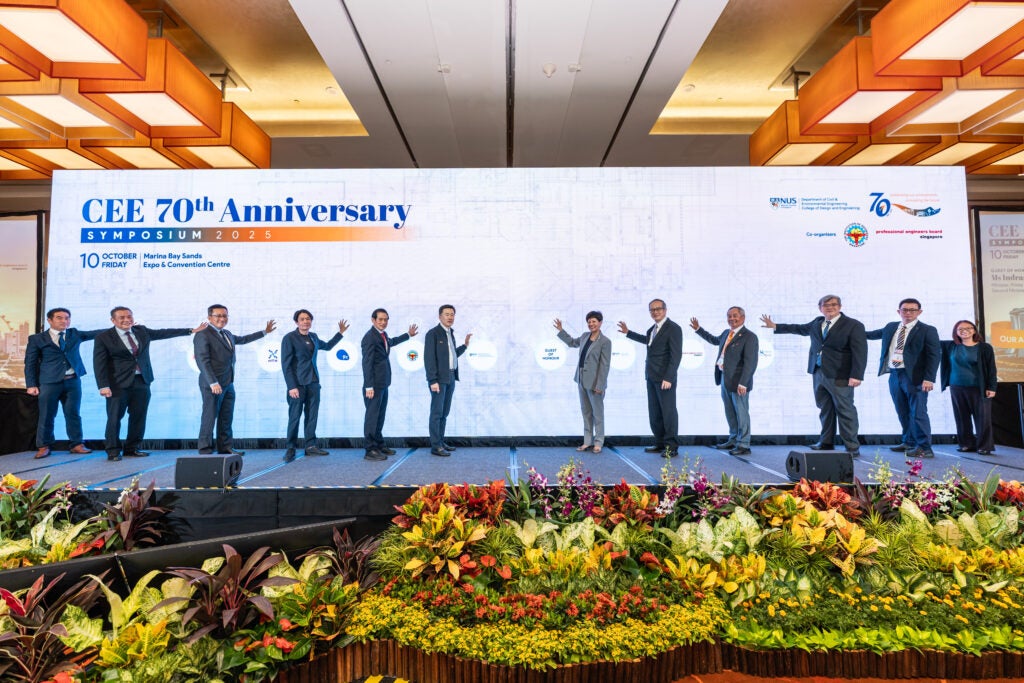 From L to R: Mr Tan Chee Kiat, Dr Johnny Wong, Mr Ng Shu Herng, Mr Chung Weng Yew Calvin, Er Chan Ewe Jin, Prof Richard Liew, Minister Indranee, Prof Heng Chye Kiang, Er Lim Peng Hong, Mr Lam Wee Shann, Mr William Yeo, Ms Tan Shiao Ling Adele, on stage for the opening launch of the CEE 70th Anniversary Symposium
A second, nostalgic video traced our legacy and innovation, opening with the late Mr Lee Kuan Yew’s words at Sree Narayana Mission (12 Sep 1965):
“This was a mud-flat swamp. Today, this is a modern city. Ten years from now, this will be a metropolis. Never fear.”
Minister’s Walkabout
After the Opening, Minister Indranee toured the Exhibition with Departmental leaders and co‑organisers. She began with the feature wall and 3D‑printed concrete CEE logo, speaking with researchers about print quality, material performance, and on‑site productivity gains. She then visited showcases on nature‑based coastal protection and green concrete, asking about deployment in Singapore’s conditions, lifecycle durability, and pathways to wider industry adoption. At BeeX’s AUV exhibit, she discussed how autonomy and sensing enhance inspection and maintenance of critical infrastructure.
Moving to the Student Fair, Minister Indranee tried several stations - including AI Transport, Guardians of the Coast, and 3D Clay Printing - engaging students on design choices and real‑world impact. She concluded her walkabout with group photos with student teams and greetings to industry partners, underscoring the Symposium’s spirit of collaboration and celebration.
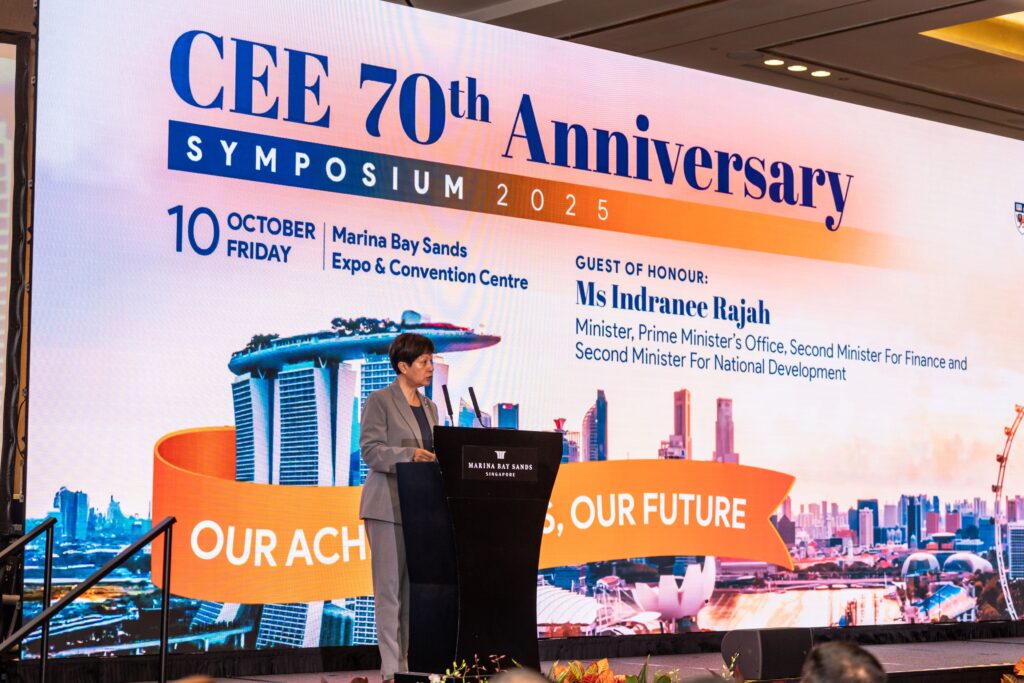
Minister Indranee giving the opening address for the CEE 70th Anniversary Symposium 2025
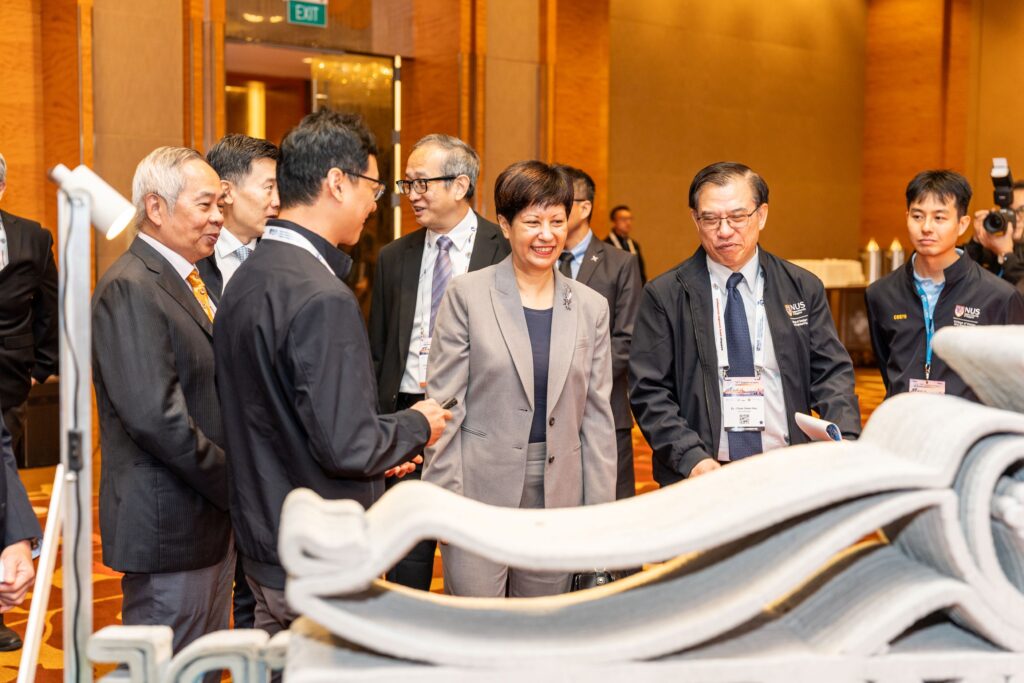
Minister Indranee views the 3D printed CEE70 Logo as Dr Du Hongjian explains the printing concept behind it
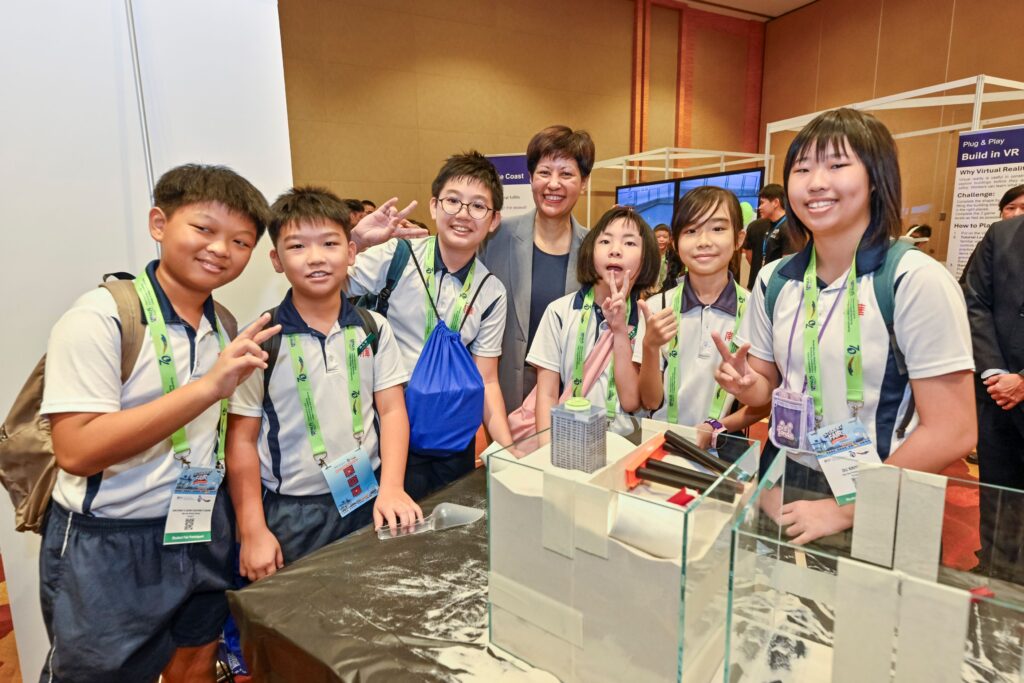
Minister Indranee, together with student participants at the Student Fair
Symposium
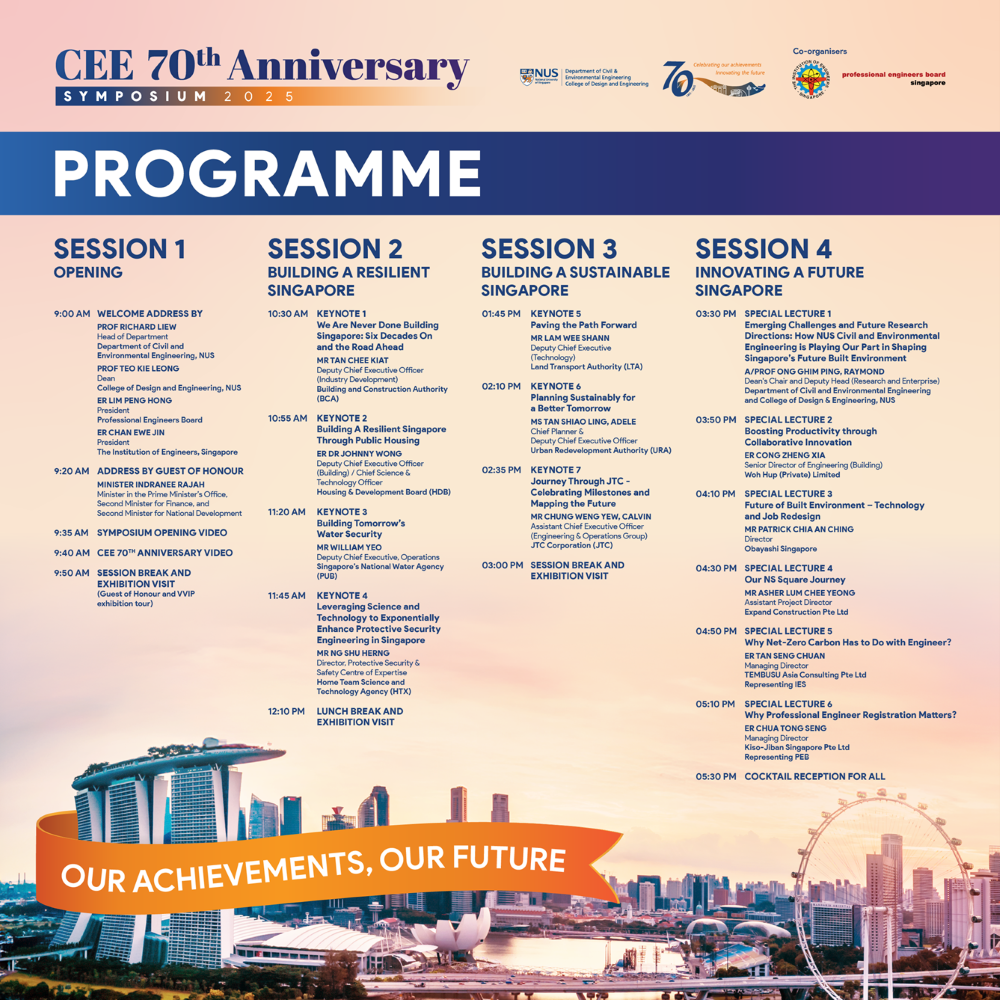
Full Programme of the Symposium
After the Opening, keynote speeches and special lectures ran across three themed sessions.
Session 2: Building A Resilient Singapore
Speakers from BCA, HDB, PUB, and HTX outlined how agencies are strengthening national resilience through innovation and technology. Highlights included initiatives to attract and upskill talent, automation and digitalisation in construction workflows, coastal protection research integrating nature-based solutions, and the design of blast- and explosion-resistant infrastructure.
Session 3: Building A Sustainable Singapore
LTA, JTC, and URA showcased long-standing commitments to sustainability, from greener public transport systems and transit-oriented development to rigorous environmental impact assessments and the creation of inclusive, people-centric spaces for Singaporeans. These initiatives laid the groundwork for how engineers should think about sustainability.
Session 4: Innovating A Future Singapore
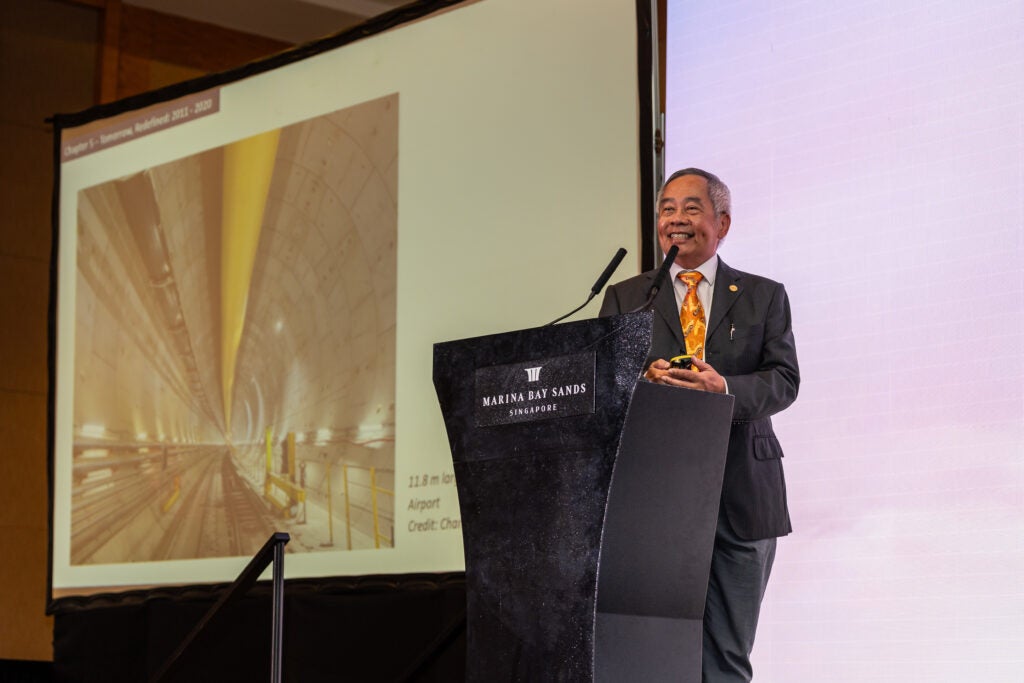
Special lectures by CEE’s Deputy Head of Research, together with Woh Hup, Obayashi Singapore, and Expand Construction, highlighted the journey from lab to field. Examples included autonomous buses piloted at NUS, large-scale 3D-printed concrete components, intelligent PPVC lifting systems, and the engineering ingenuity behind NS Square. Presenters emphasised industry–academia partnerships, regulatory readiness, and scaling strategies to accelerate adoption across the built environment.
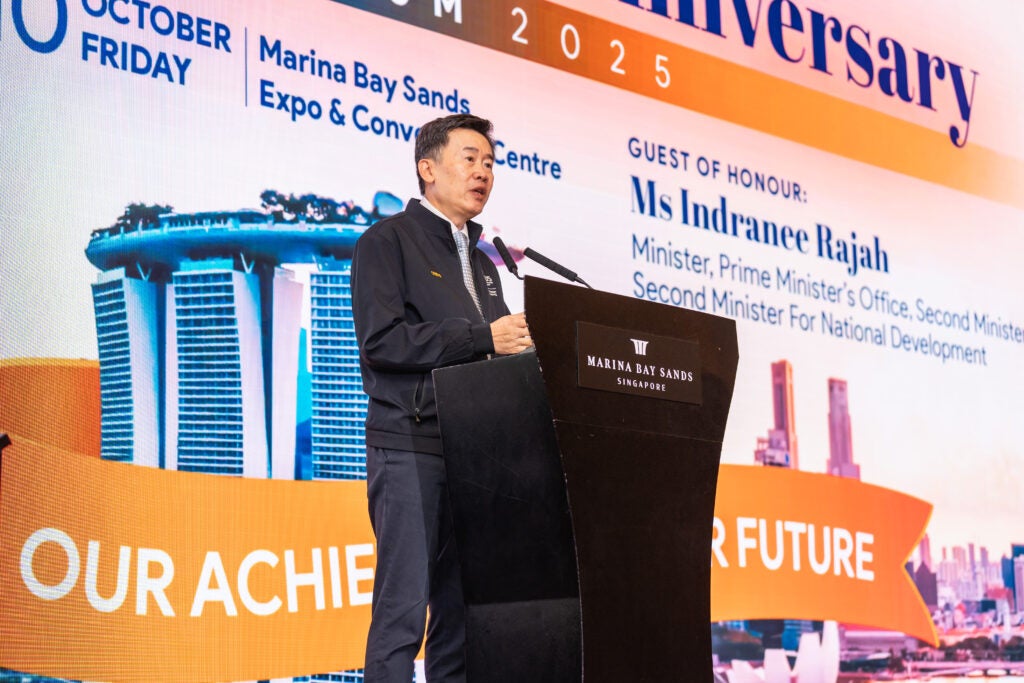
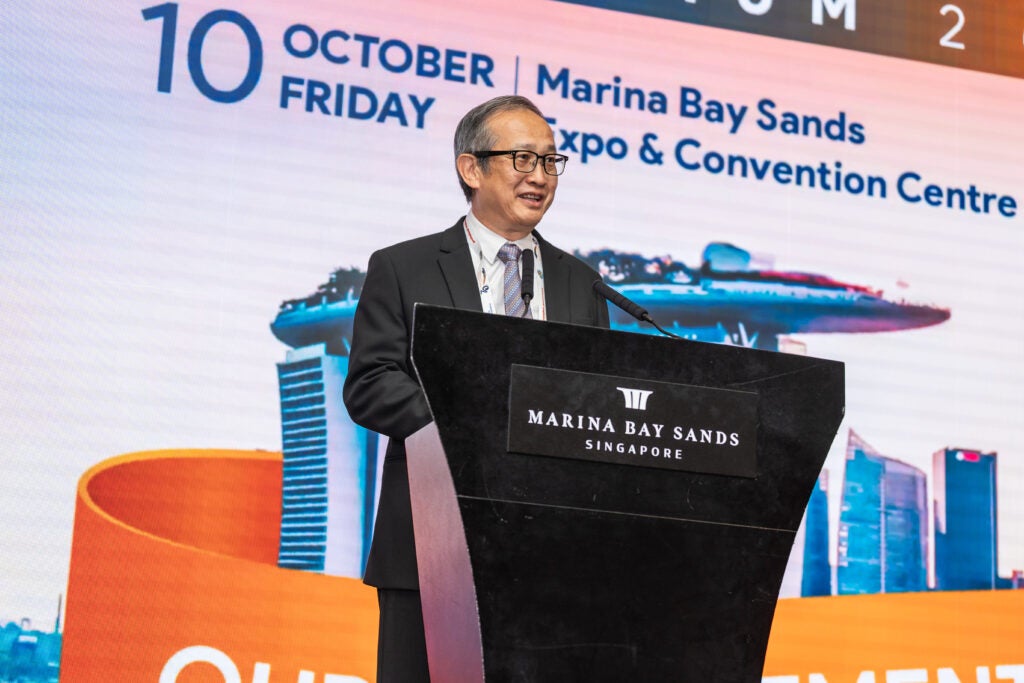
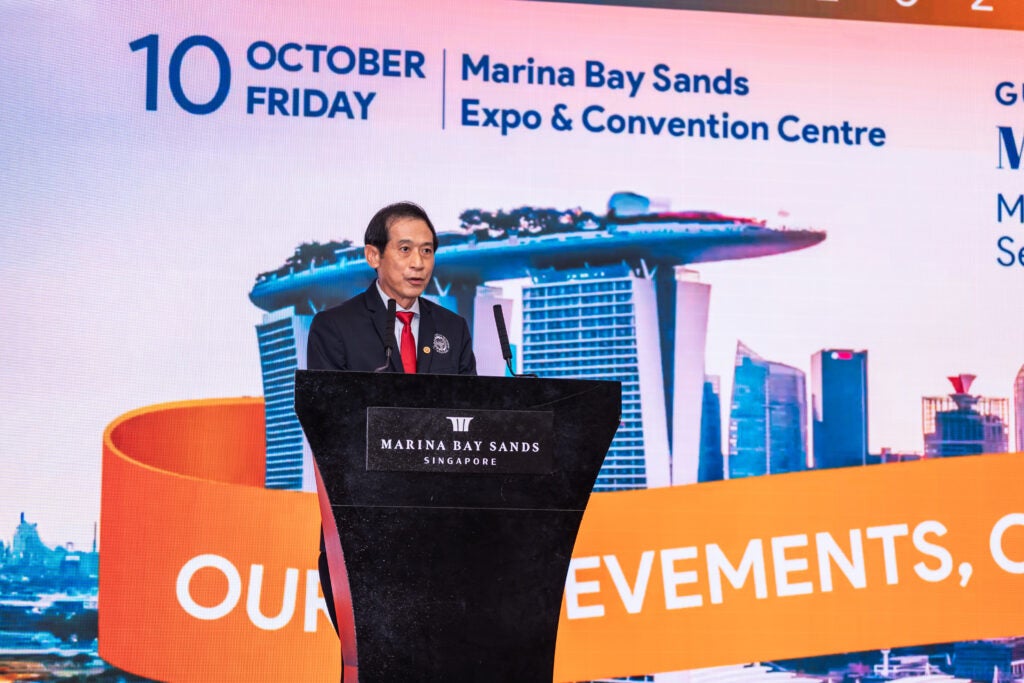
Symposium Photo Gallery
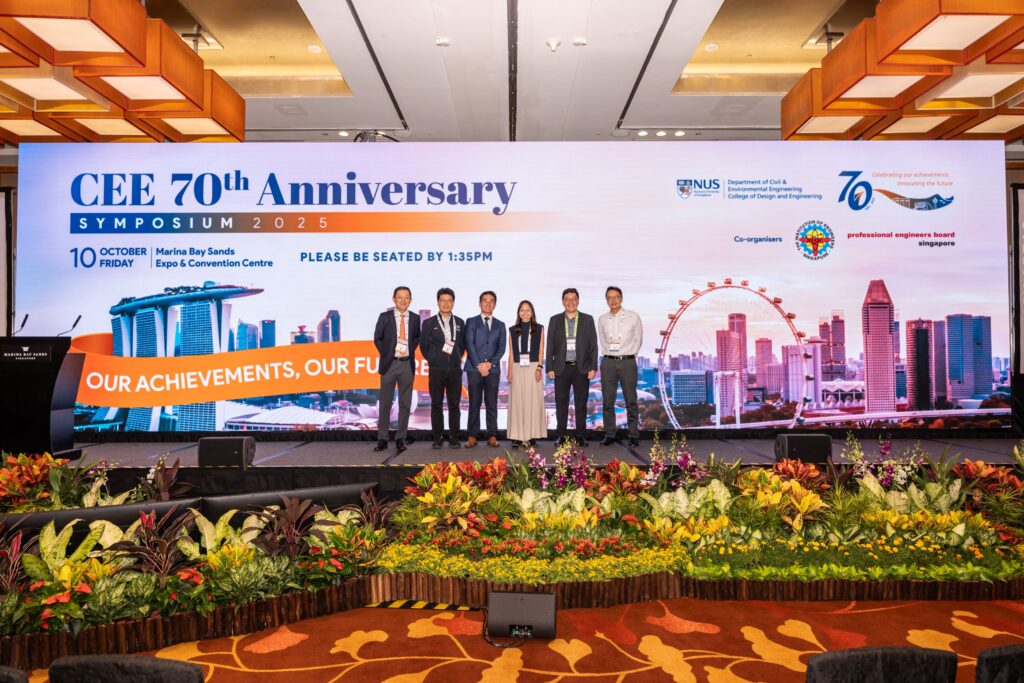
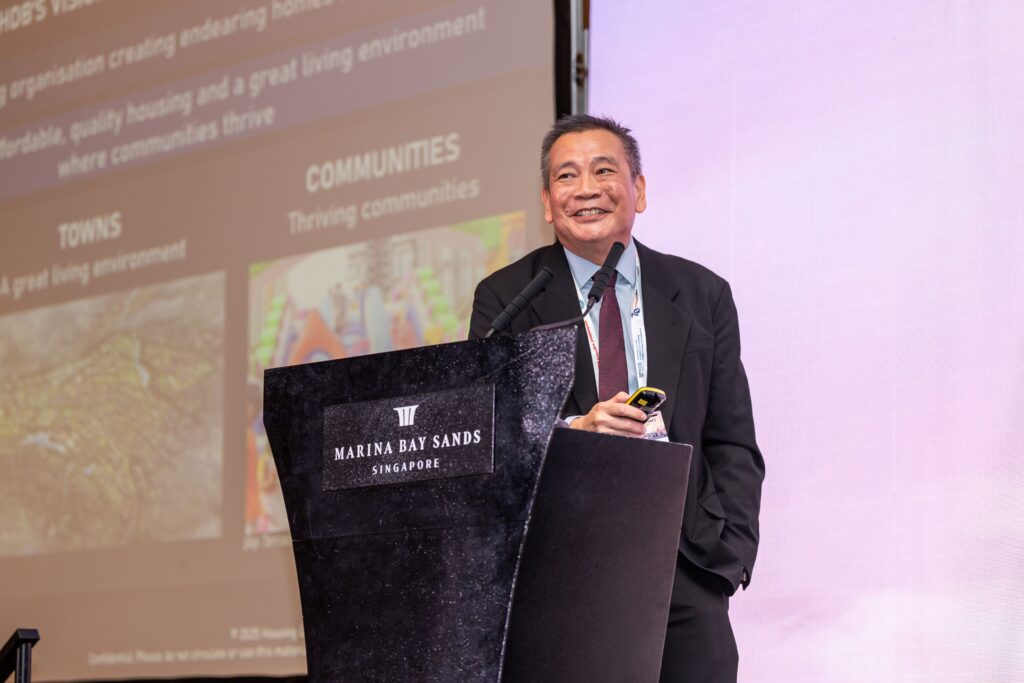
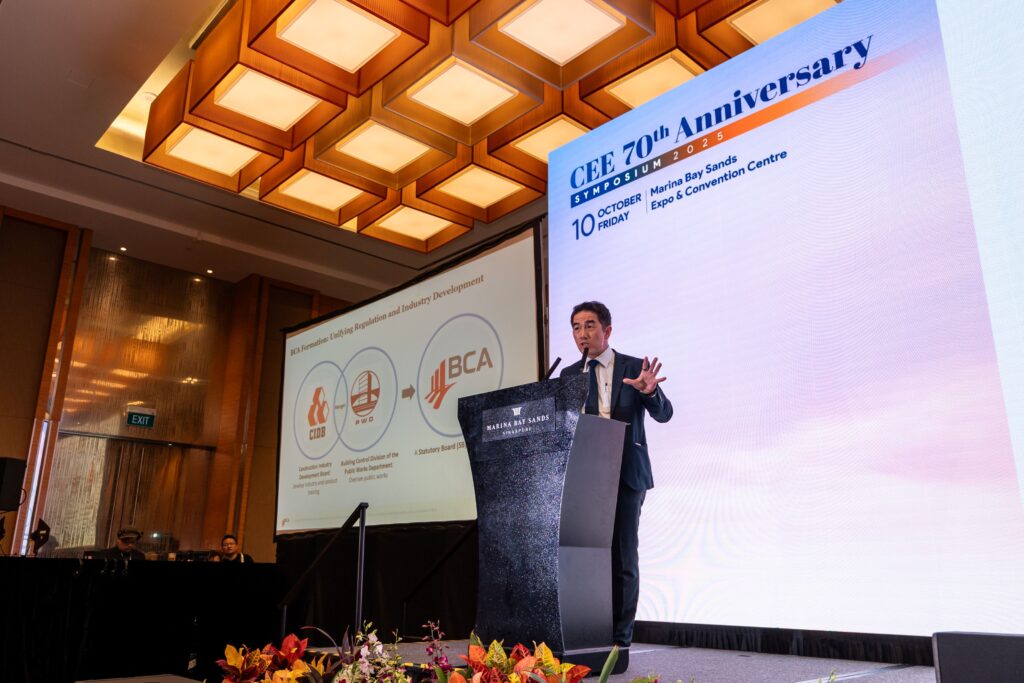
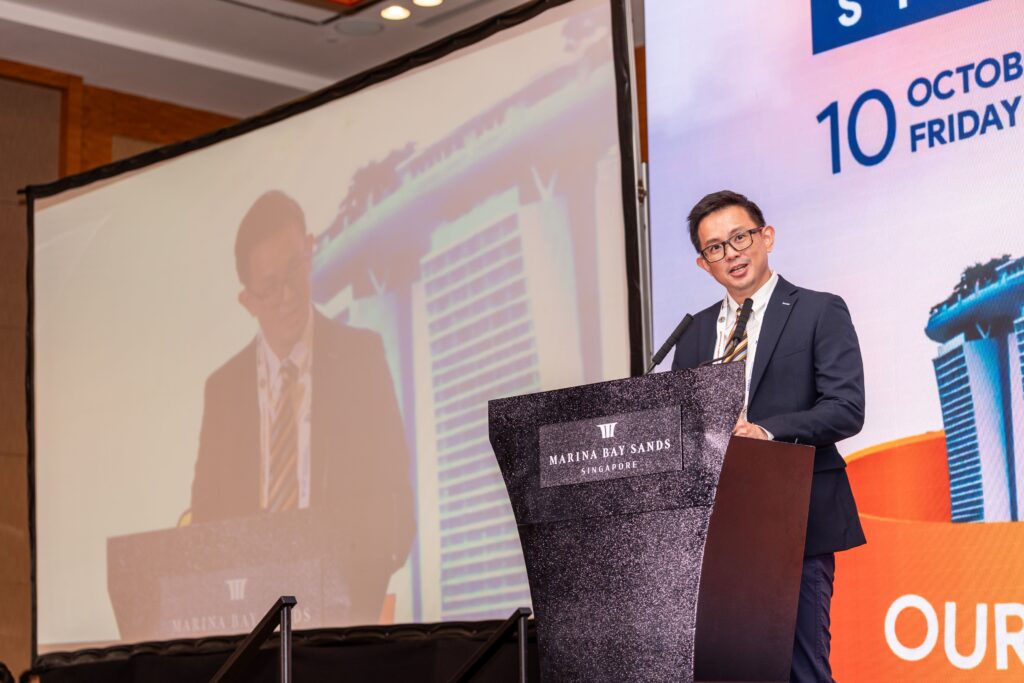
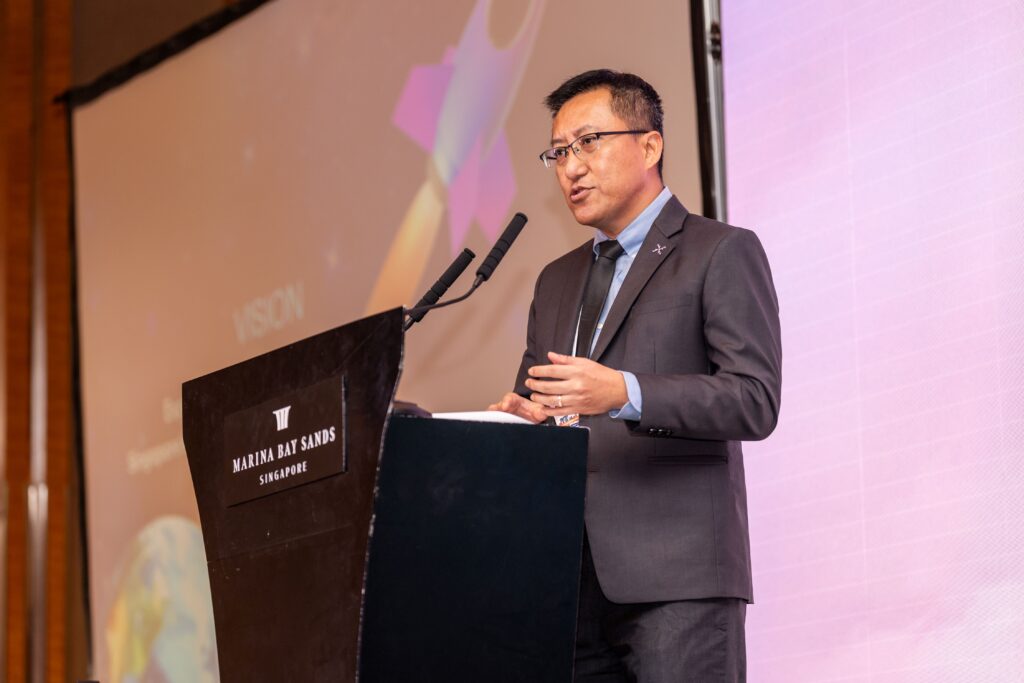
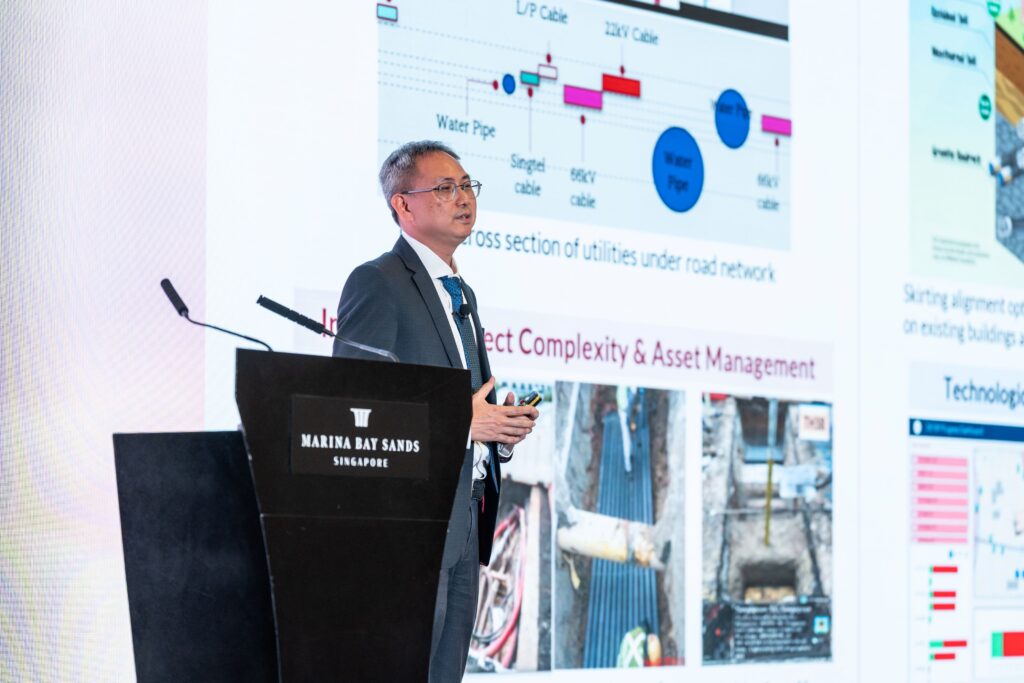
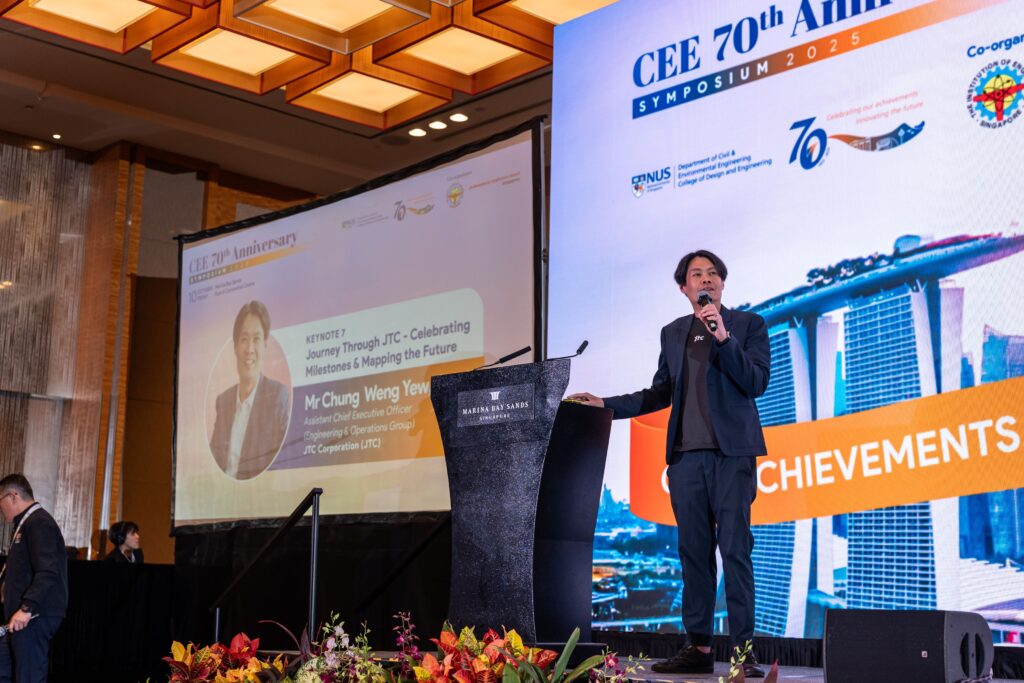
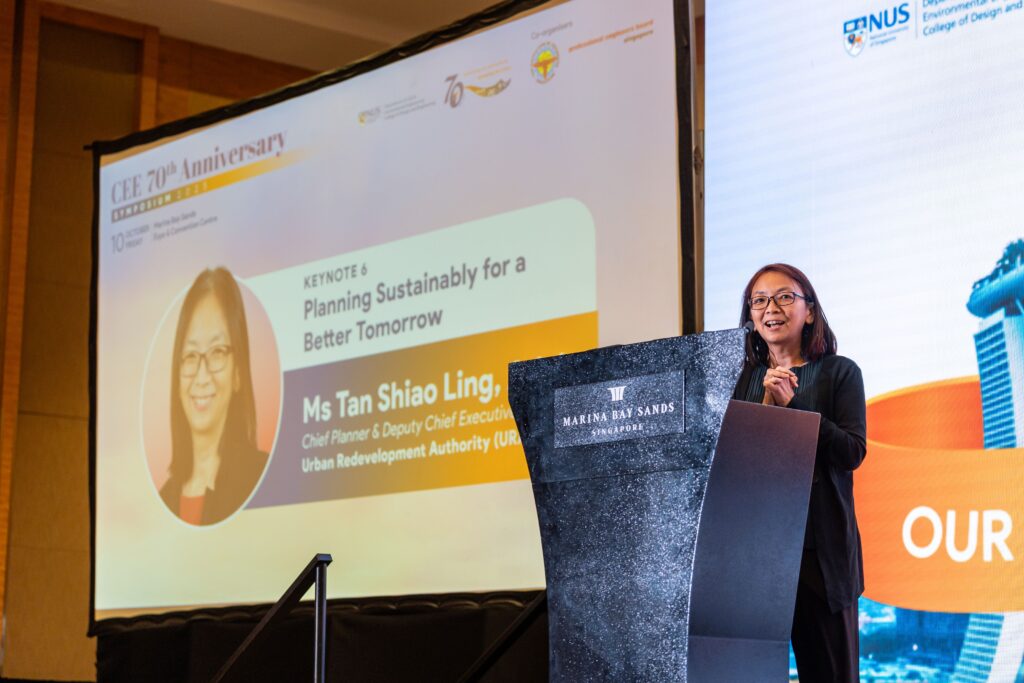
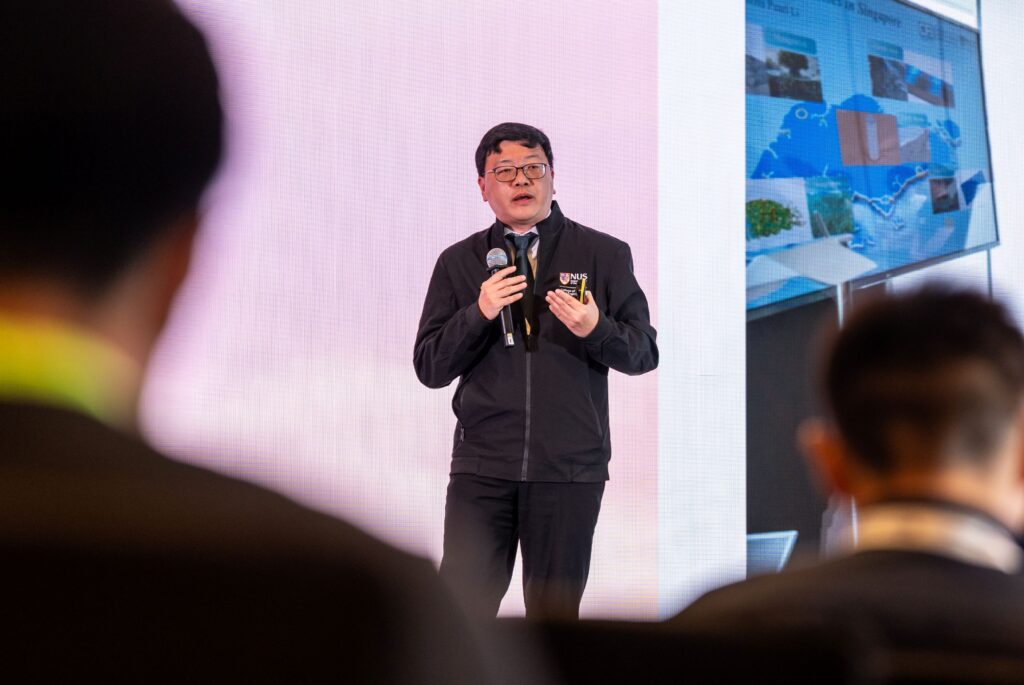
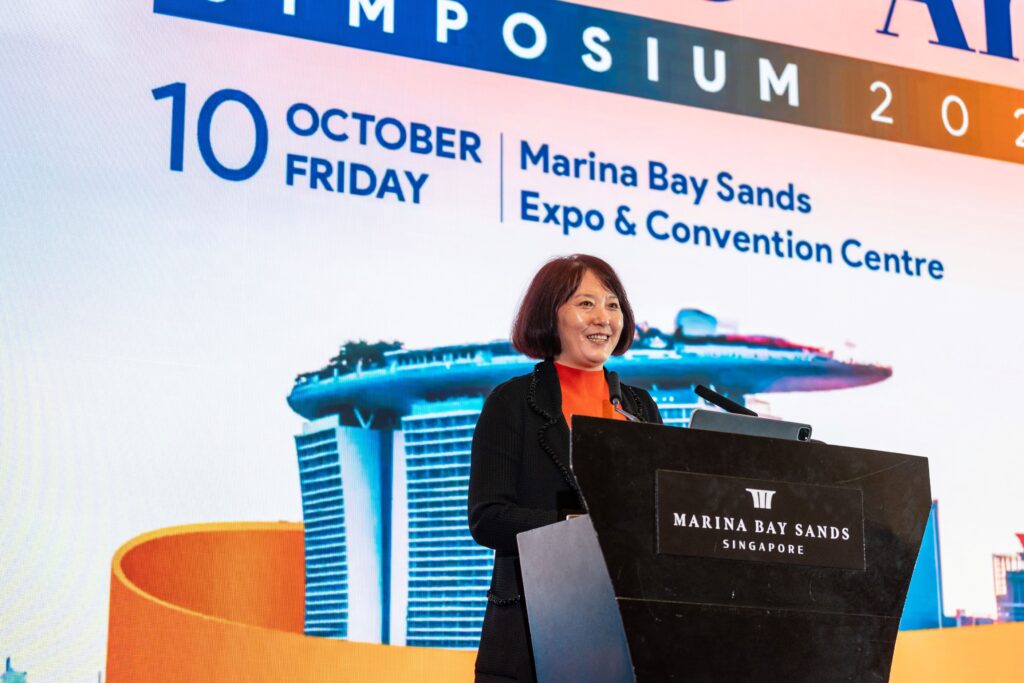
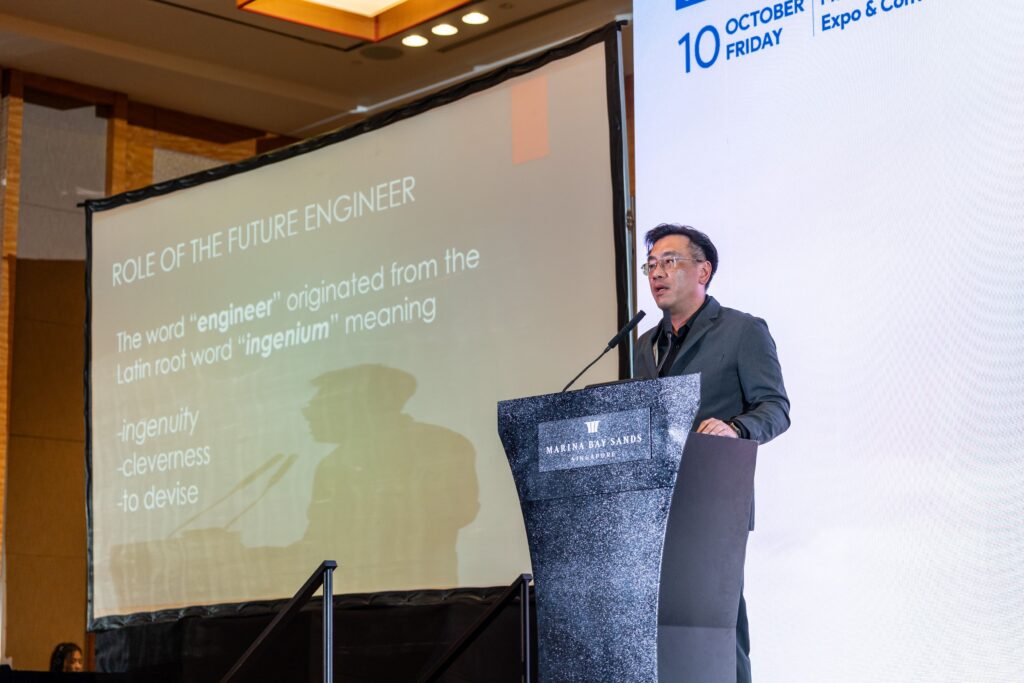
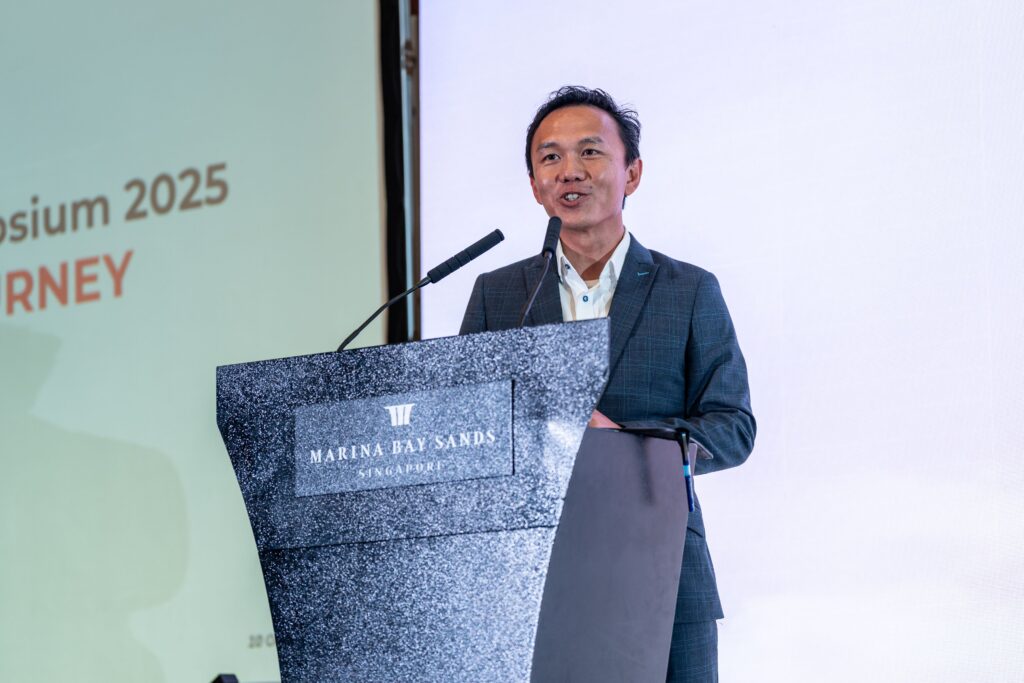
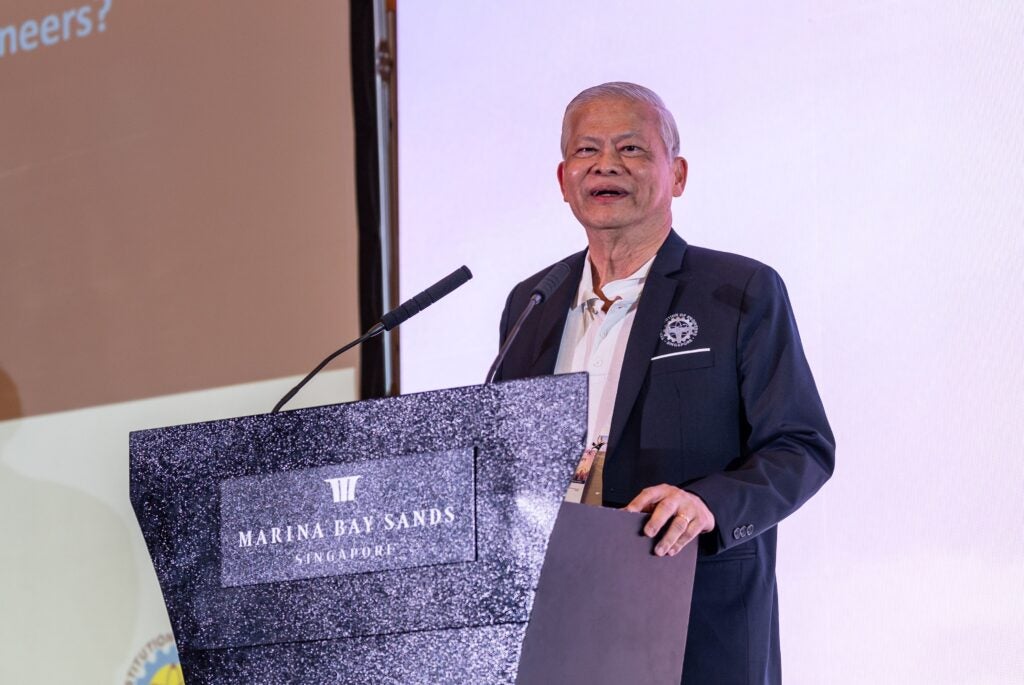
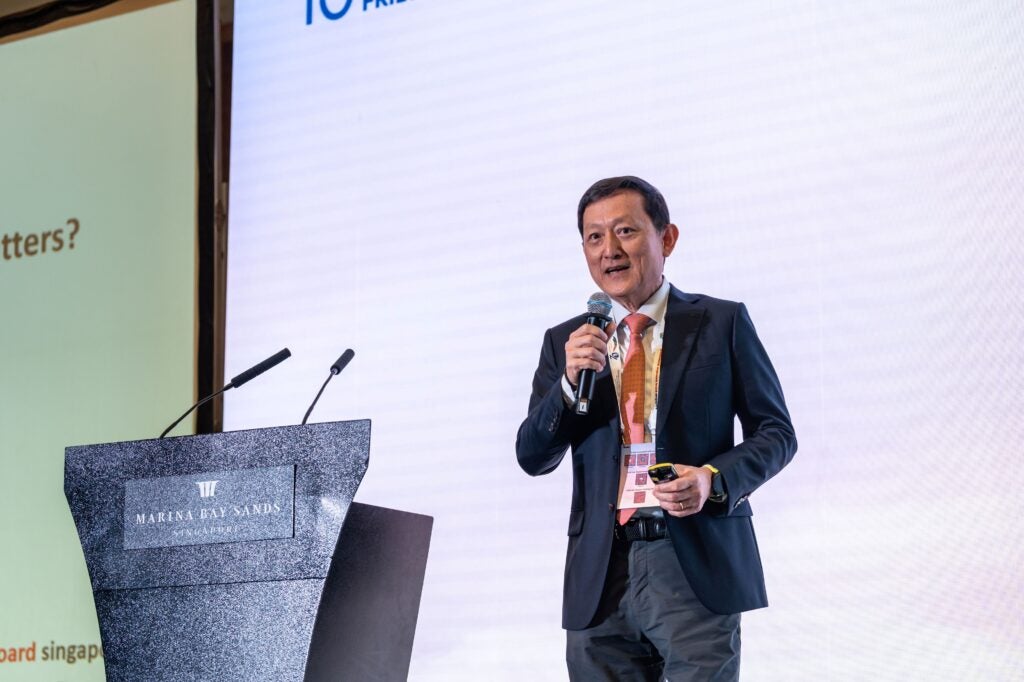
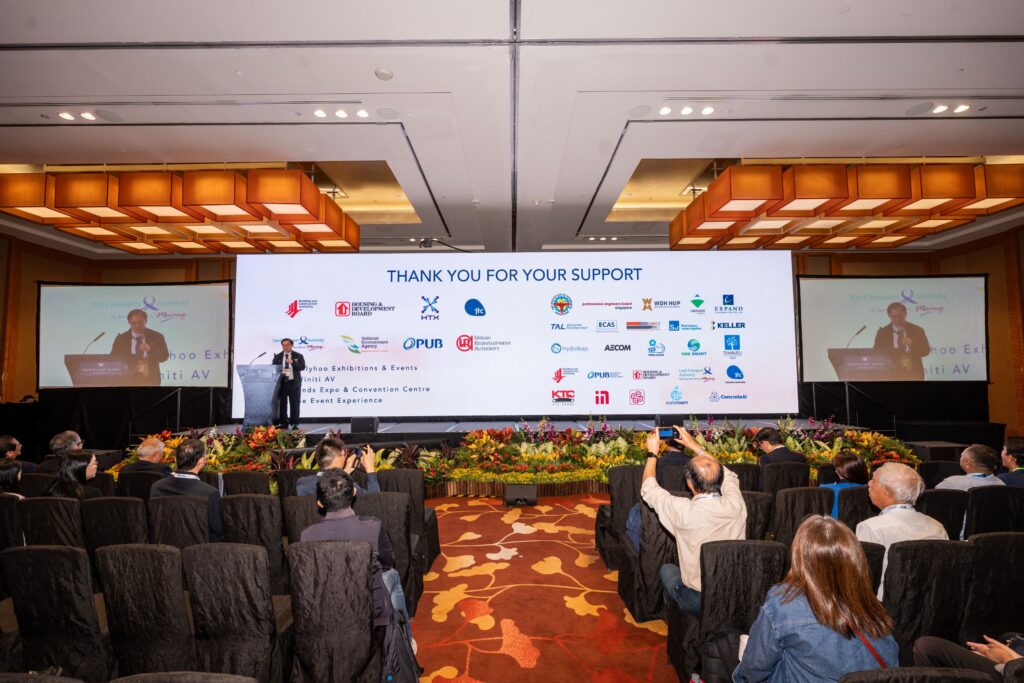
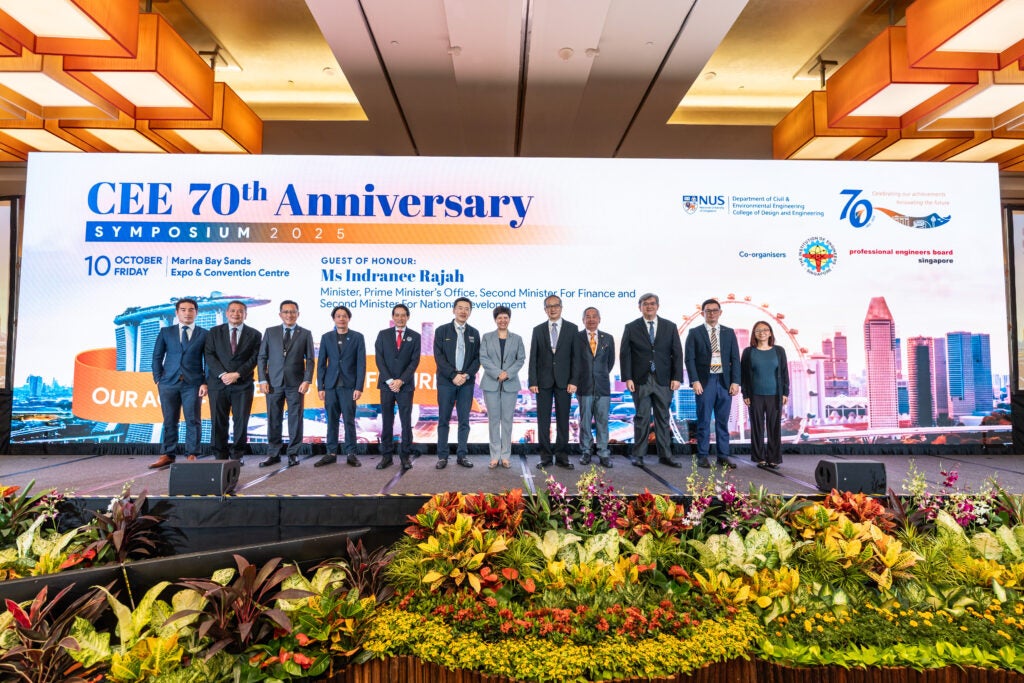
Exhibition
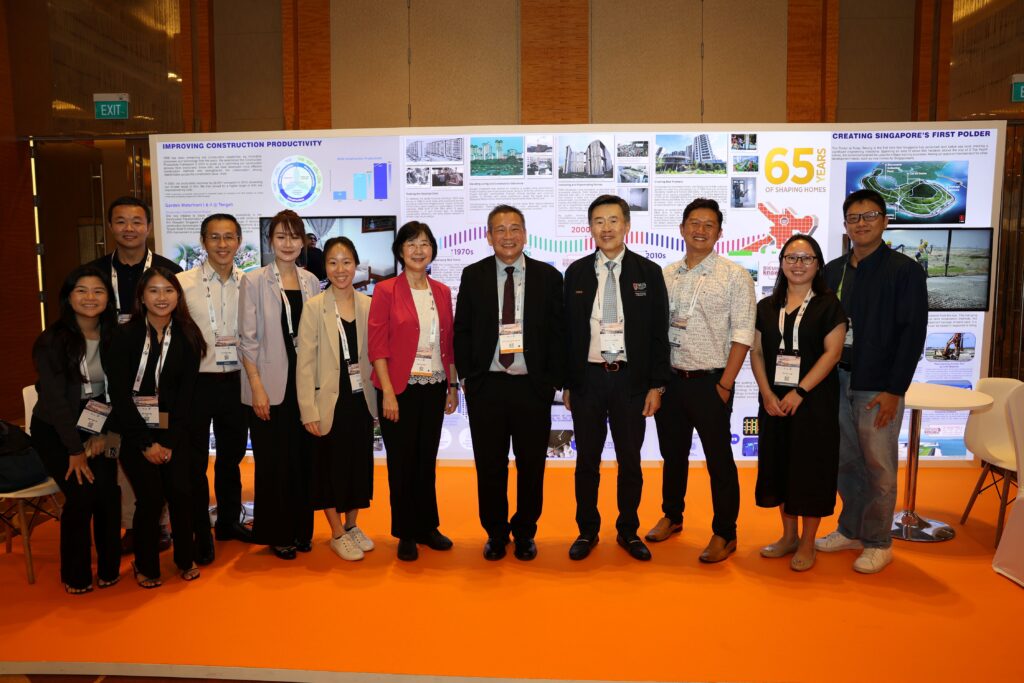
Exhibition Visitors entered through a striking feature wall displaying the Symposium tagline and a 3D-printed concrete CEE logo.
A seven-decade timeline presented milestones in an eye-catching arc – from the first engineering graduates at No. 5 Bukit Timah Campus to the legacy of our longest-serving Head of Department, the late Emeritus Professor Lee Seng Lip – capturing the Department’s growth and national impact.
The Exhibition hosted 35 booths – 10 NUS CEE research booths and 25 industry booths – spotlighting cutting-edge work across nine CEE Research Centres and Clusters, including:
- Sustainable and green concrete materials
- Nature-based coastal protection and flood resilience
- Autonomous systems and robotics (e.g., AUVs)
- Smart construction technologies and digital twins
- Urban systems, air quality, and liveability
- Advanced geotechnics and underground engineering
- Water and wastewater treatment innovations
- Structural engineering, safety, and performance
- AI and data-driven decision support in the built environment
Our Industry Exhibitors:
- The Institution of Engineers, Singapore (IES)
- Professional Engineers Board (PEB)
- PH Consulting Pte. Ltd
- Building and Construction Authority (BCA)
- The Public Utilities Board (PUB)
- Housing & Development Board (HDB)
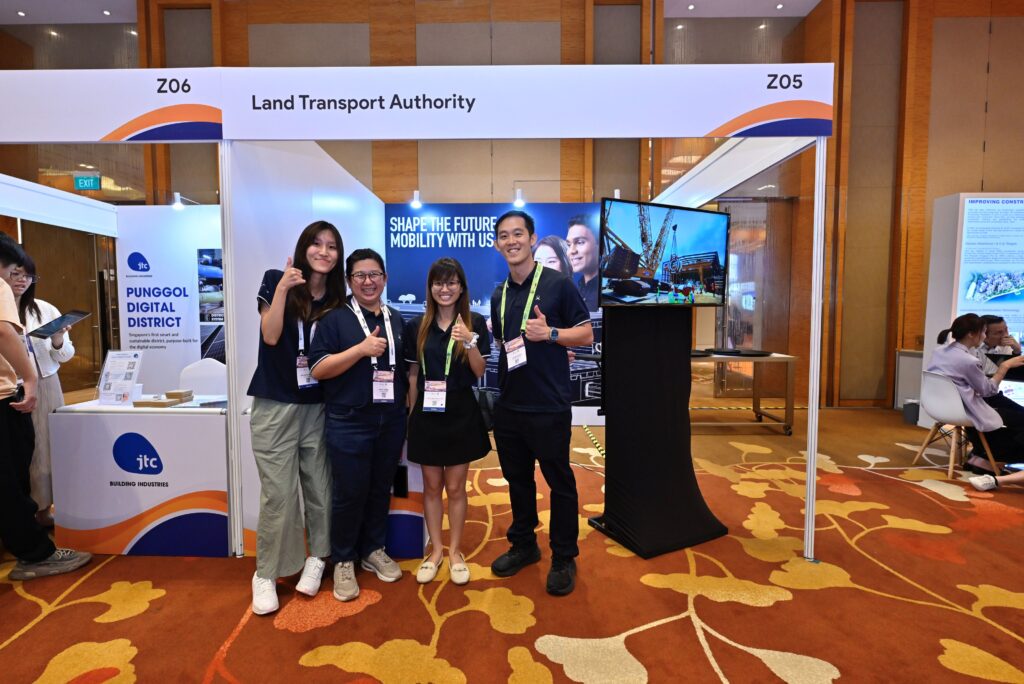
- Land Transport Authority (LTA)
- JTC Corporation (JTC)
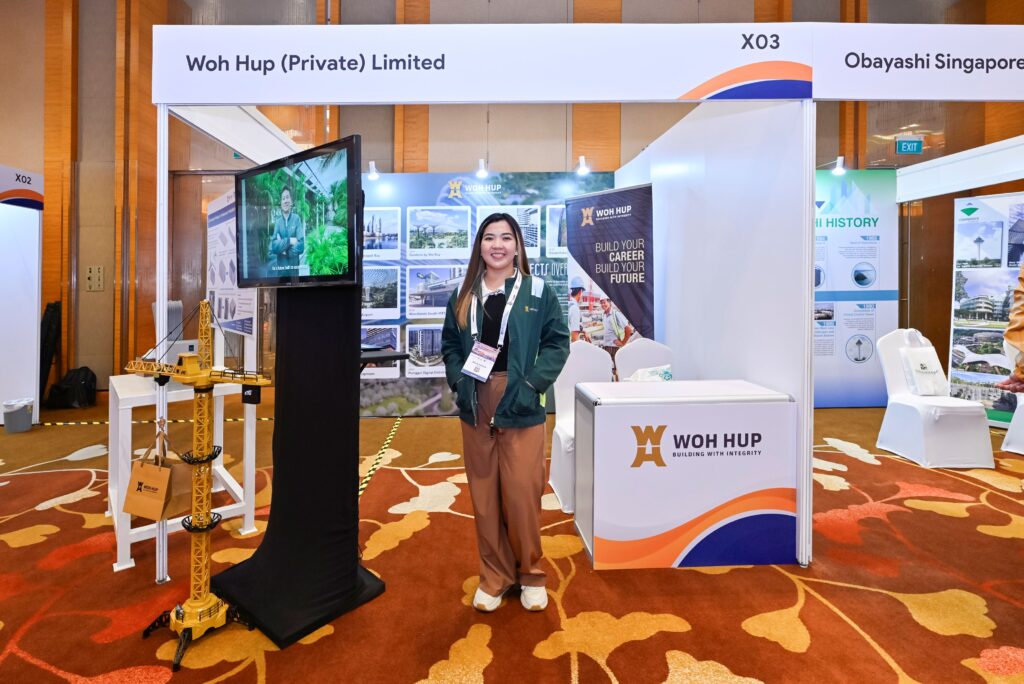
- Woh Hup (Private) Limited
- Obayashi Singapore Pte. Ltd.
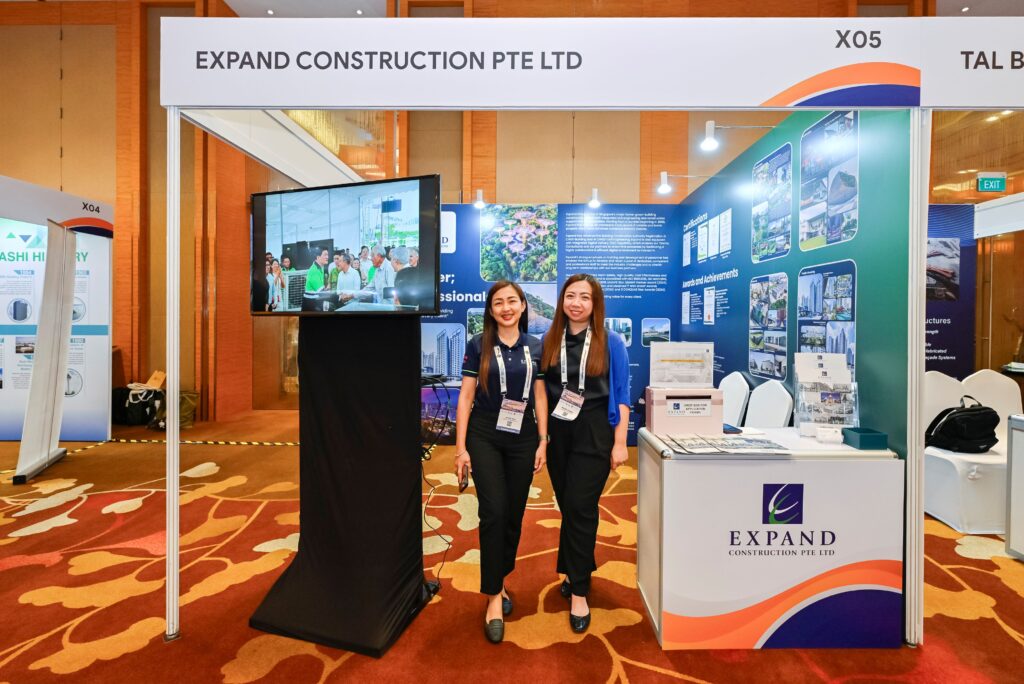
- Expand Construction Pte. Ltd.
- TAL Building Tech
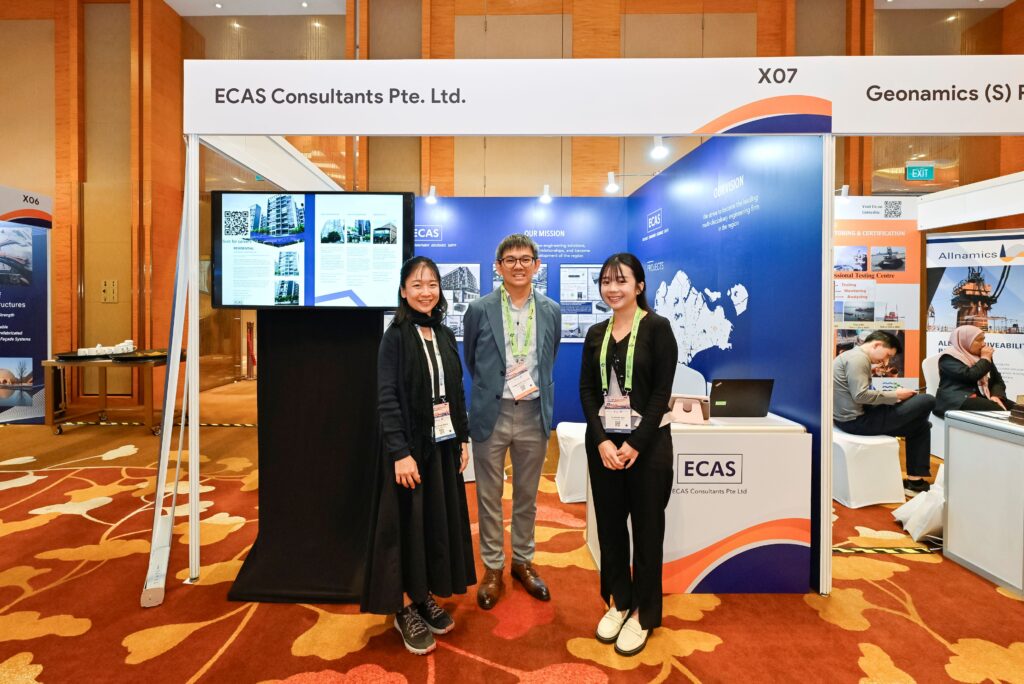
- ECAS Consultants Pte. Ltd.
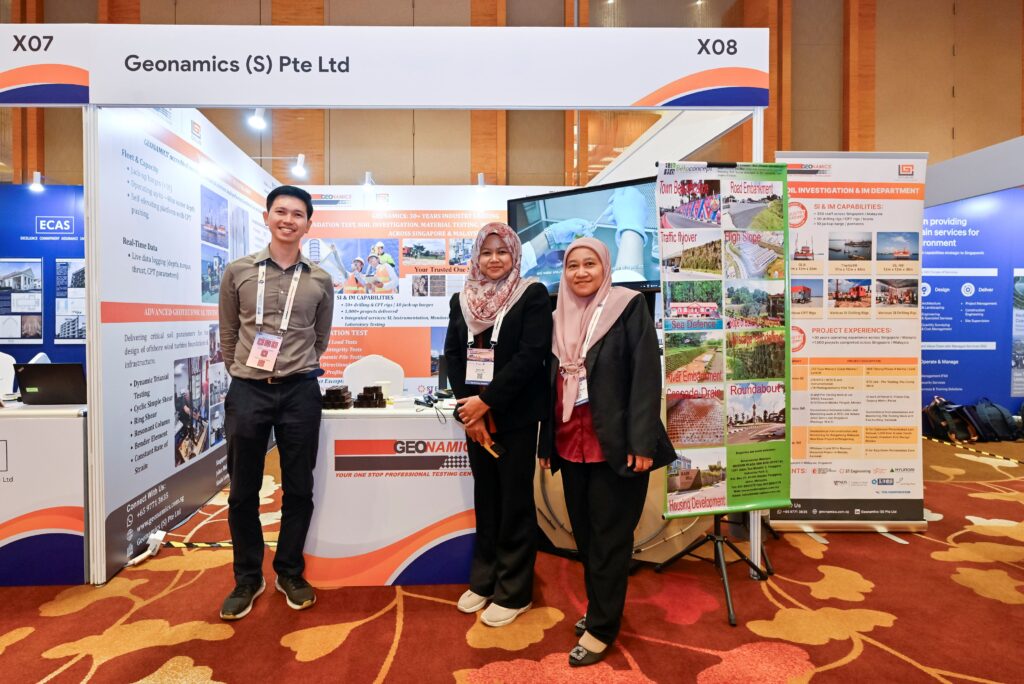
- Geonamics (S) Pte Ltd
- Surbana International Consultants Pte. Ltd.
- Keller Foundations
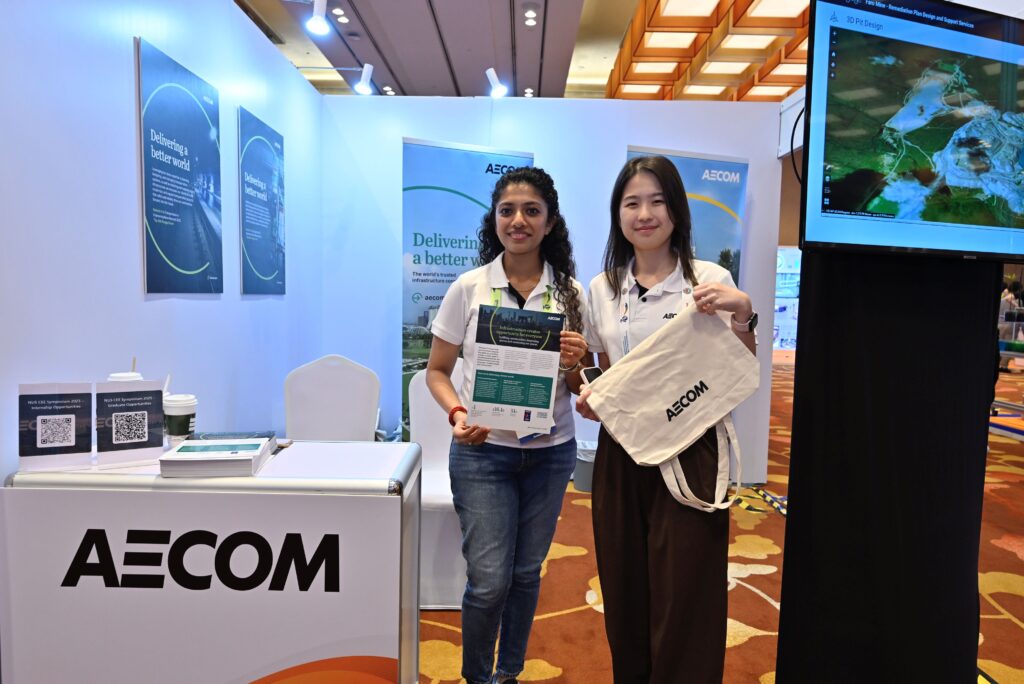
- AECOM Singapore Pte. Ltd.
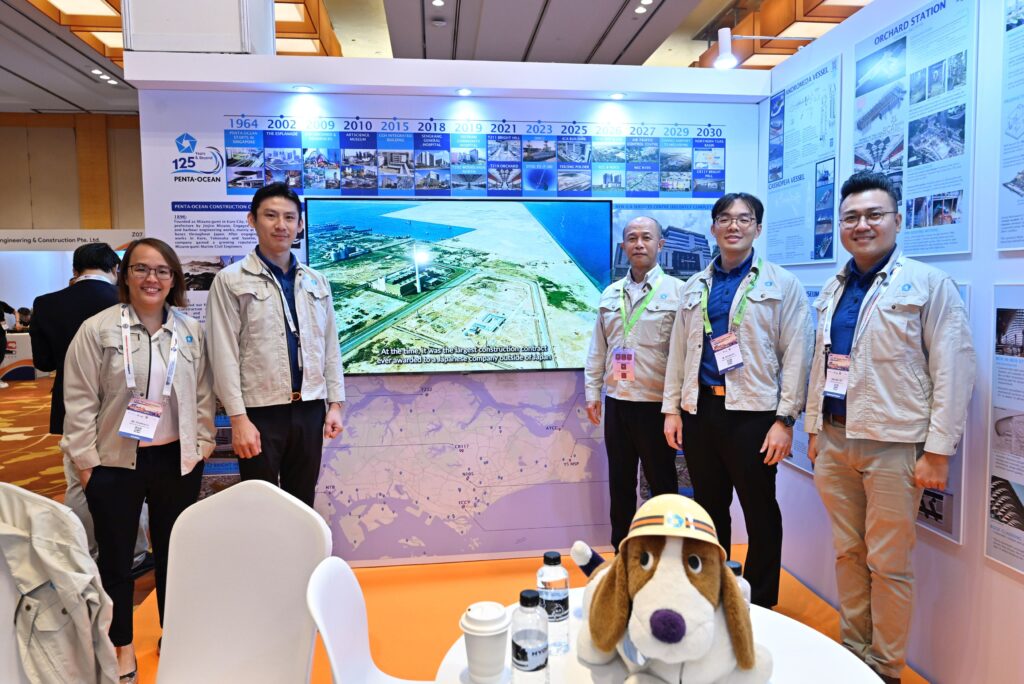
- Penta-Ocean Construction Co. Ltd.
- OneSmart Engineering Pte. Ltd.
- TEMBUSU Asia Consulting Pte. Ltd.
- KTC Civil Engineering & Construction Pte. Ltd.
- Kajima Overseas Asia Pte. Ltd.
- Pintary Foundations Pte Ltd
- Hydroleap
- Wateroam Pte Ltd
- ConcreteAI Private Limited
Beyond agencies and companies, the Exhibition prominently featured spin‑off companies from NUS CEE, showcasing talented civil engineers who are making their mark across the built environment – from advanced materials and digital construction to resilience and sustainability solutions.
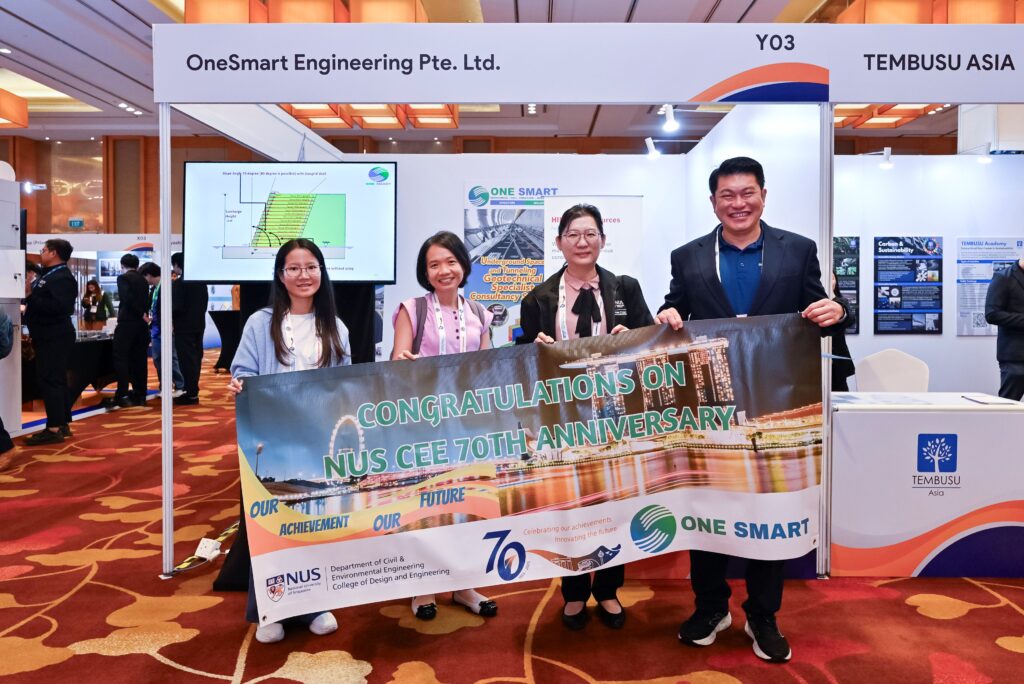
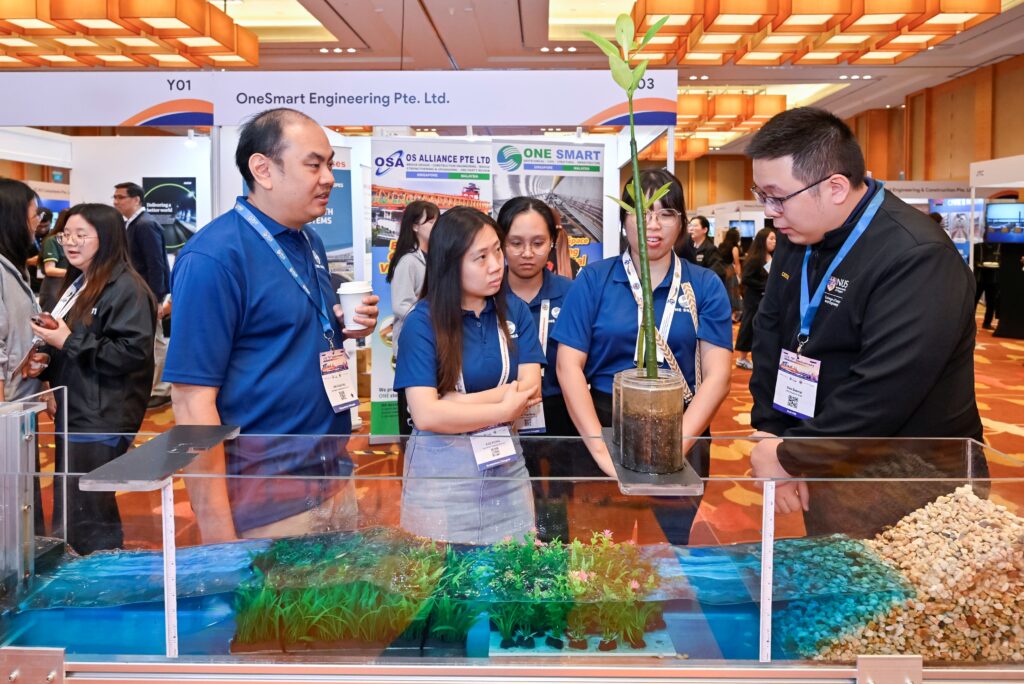
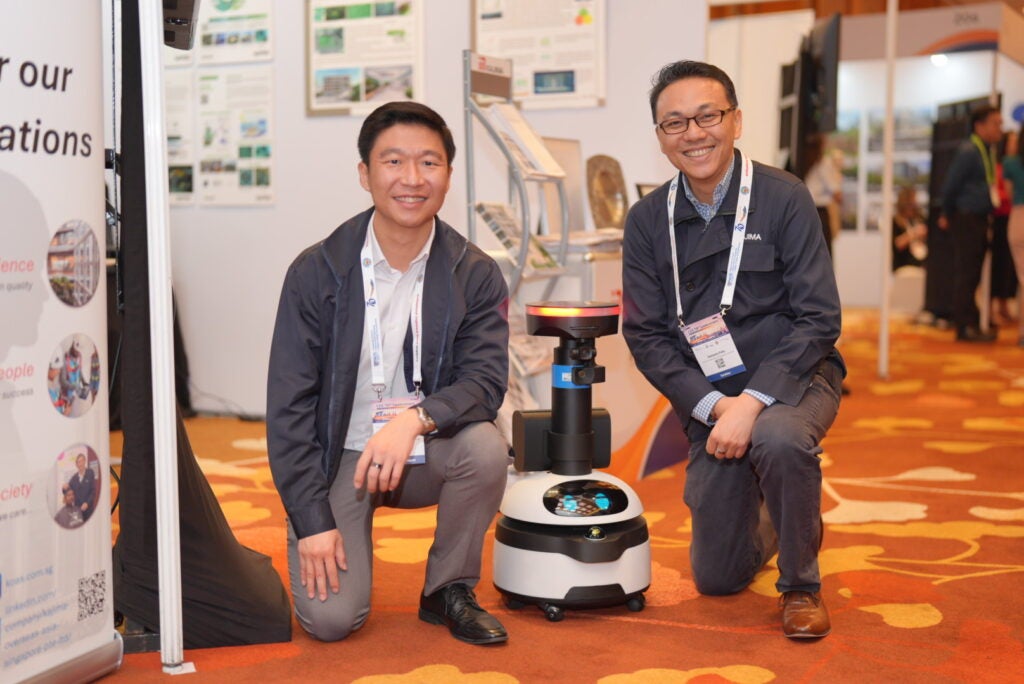
The hall was bustling throughout the day, especially during break times, as Symposium delegates enjoyed food and drinks while engaging with exhibitors. Many took the opportunity to learn about recent industry developments, see demonstrations up close, and network with peers and partners – creating a lively marketplace of ideas and collaboration.
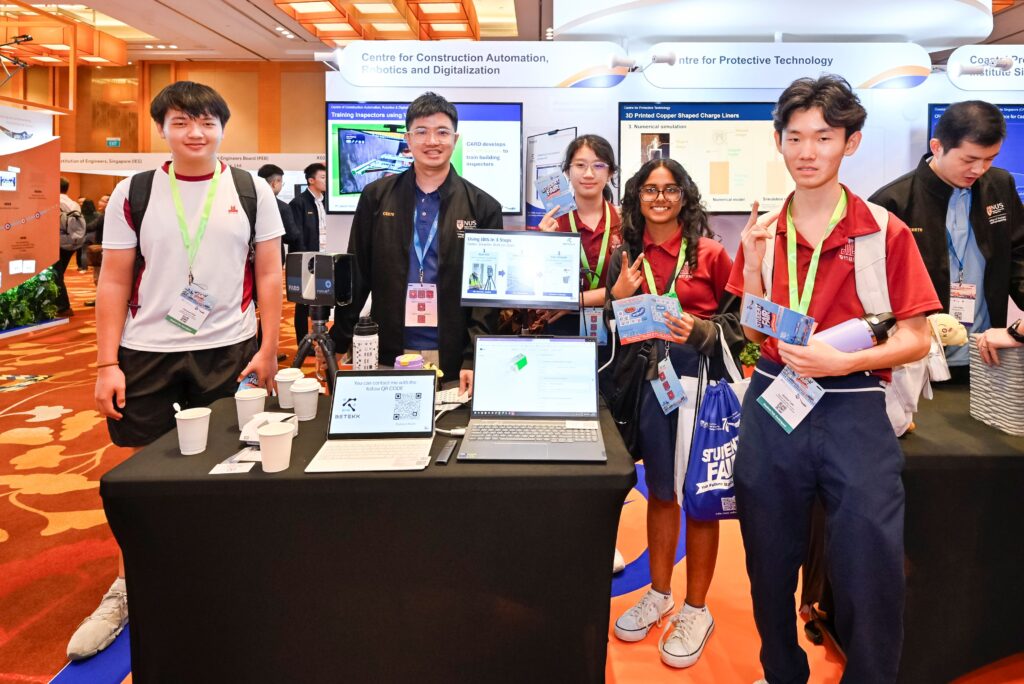
Students from secondary schools, junior colleges, and polytechnics also visited the booths. Their conversations with researchers and industry practitioners broadened their view of civil and environmental engineering and, we hope, inspired the next generation to pursue impactful careers in shaping Singapore’s future.
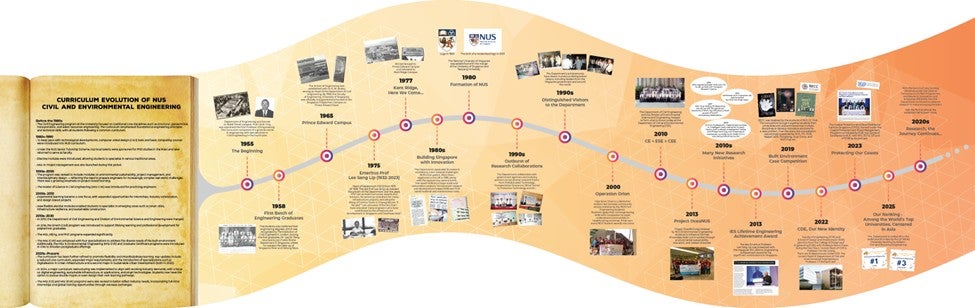
Milestones in Seven Decades of the Department
Click here to download and view the image in high-resolution (PDF 655.6MB)
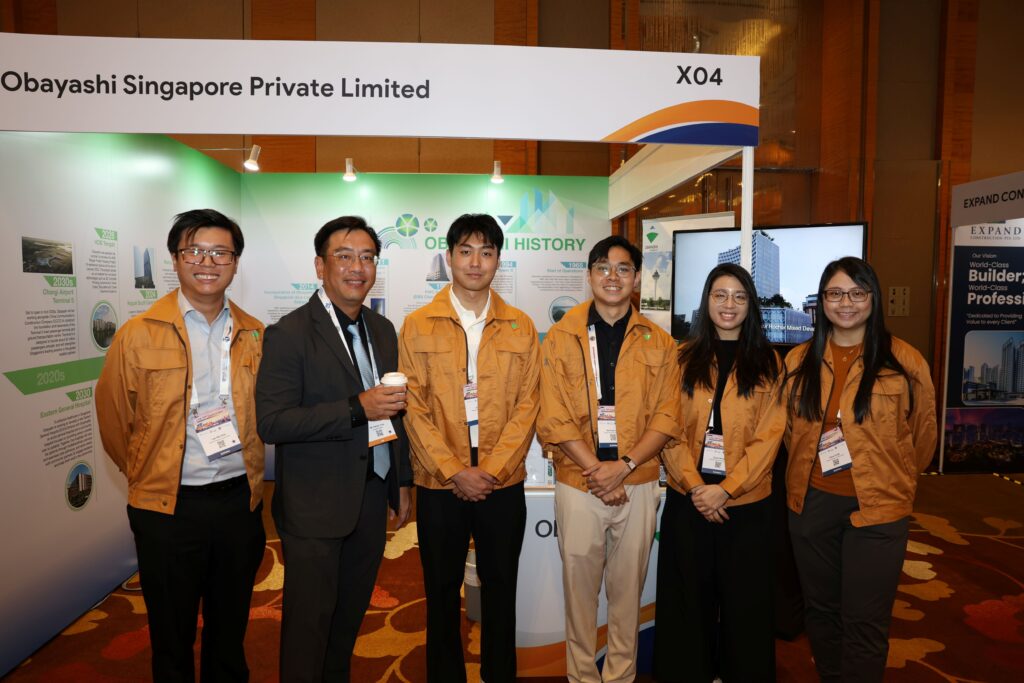
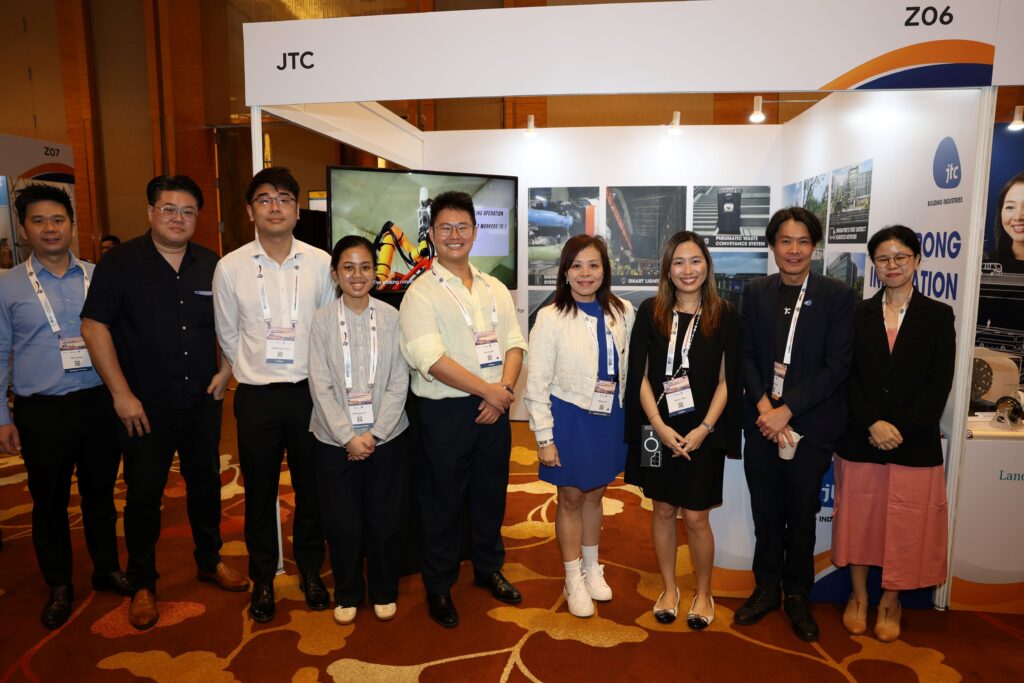
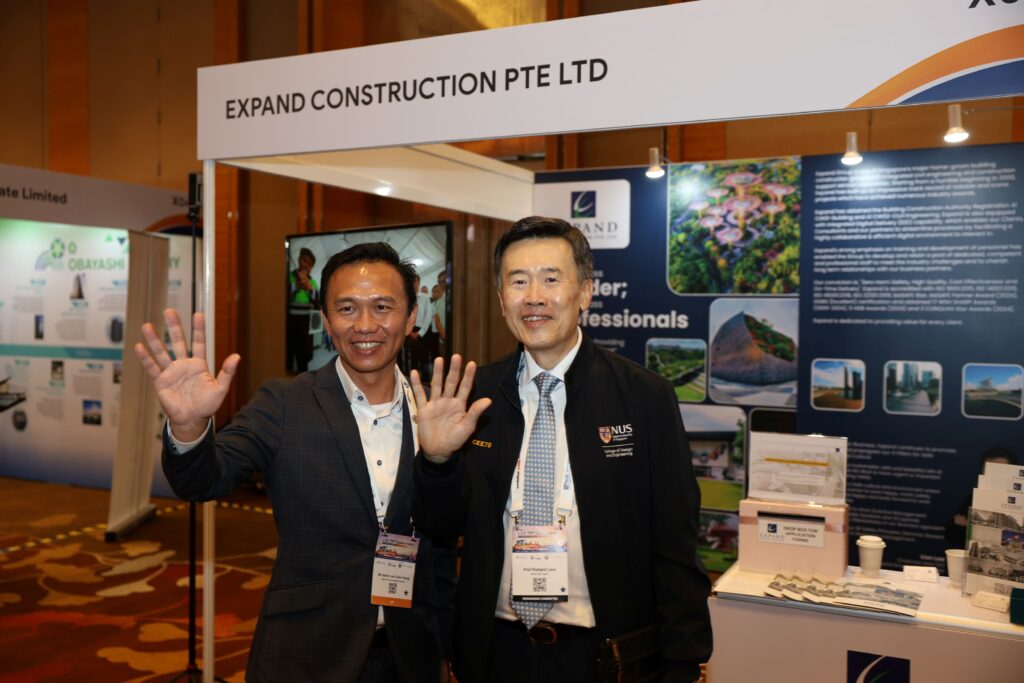
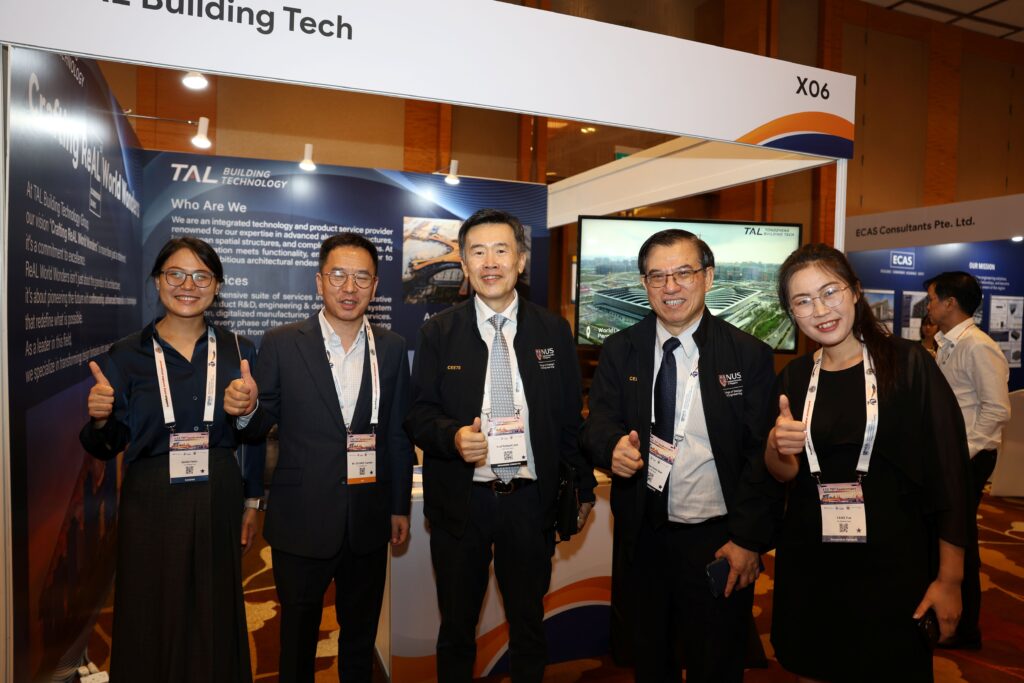
Exhibition Photo Gallery
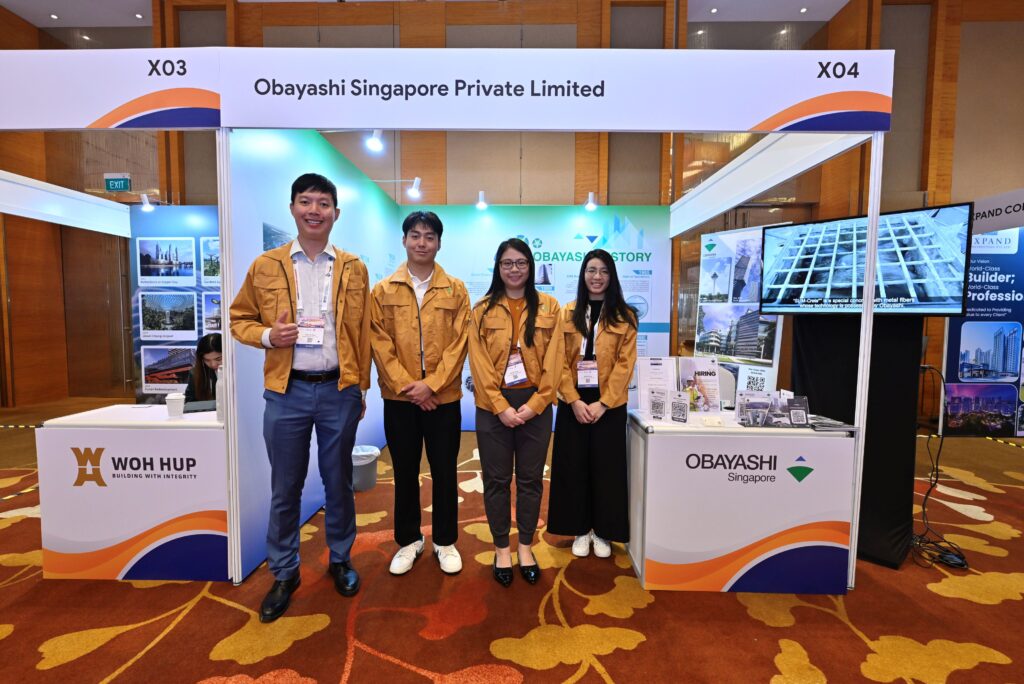
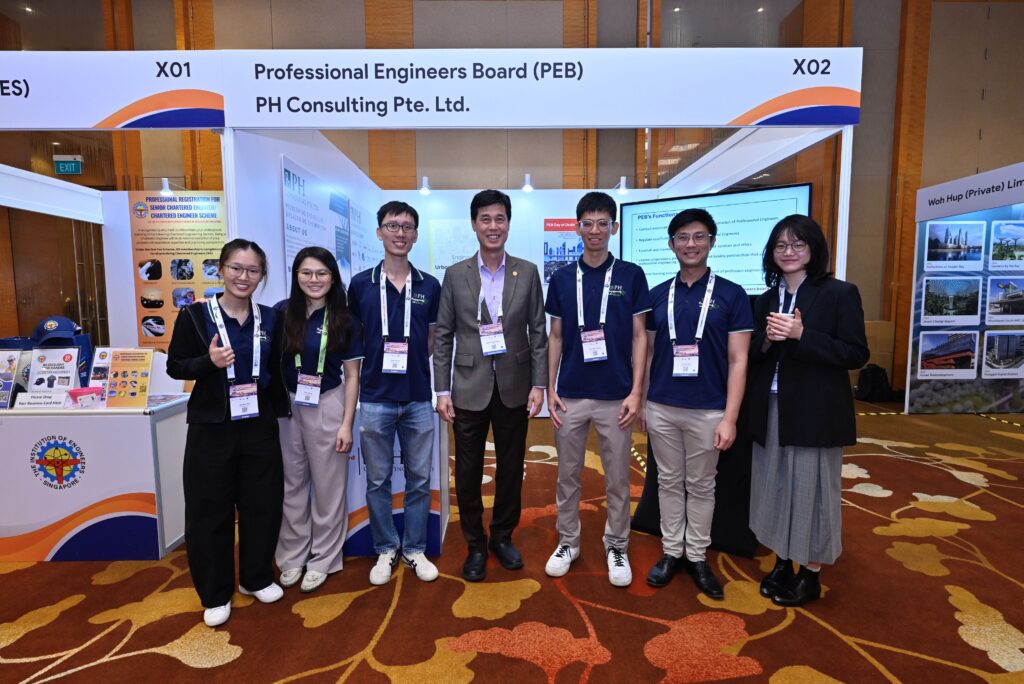
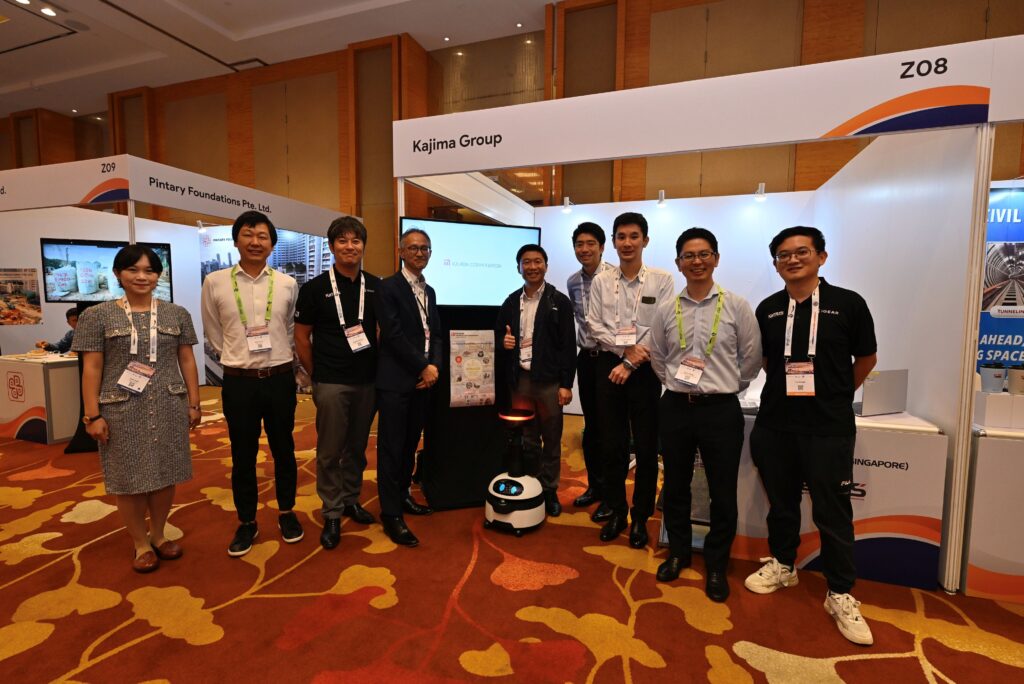
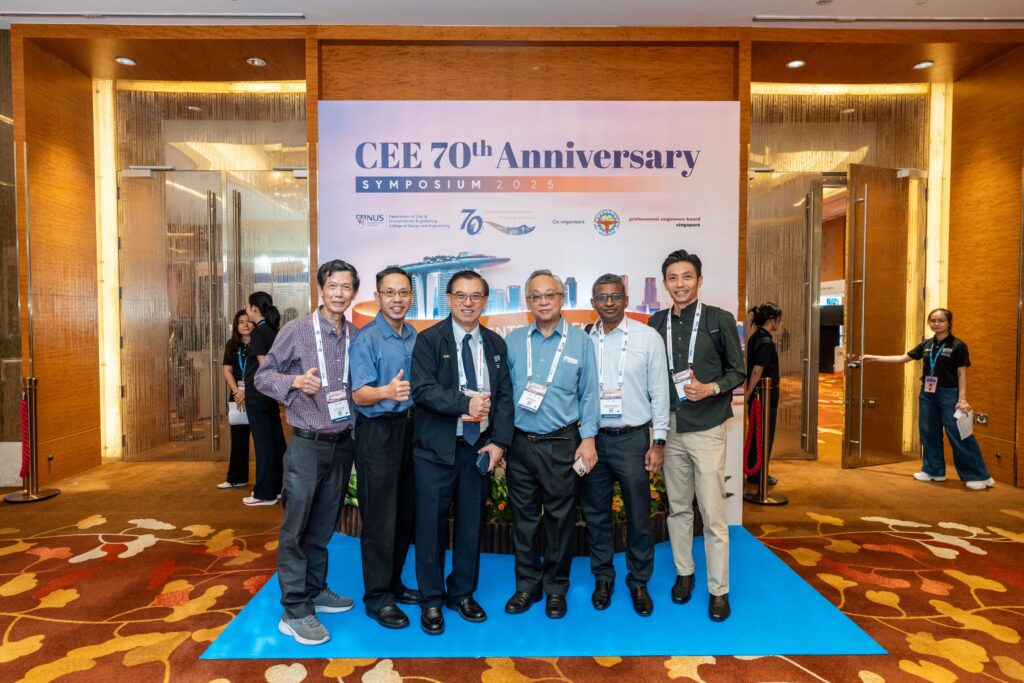
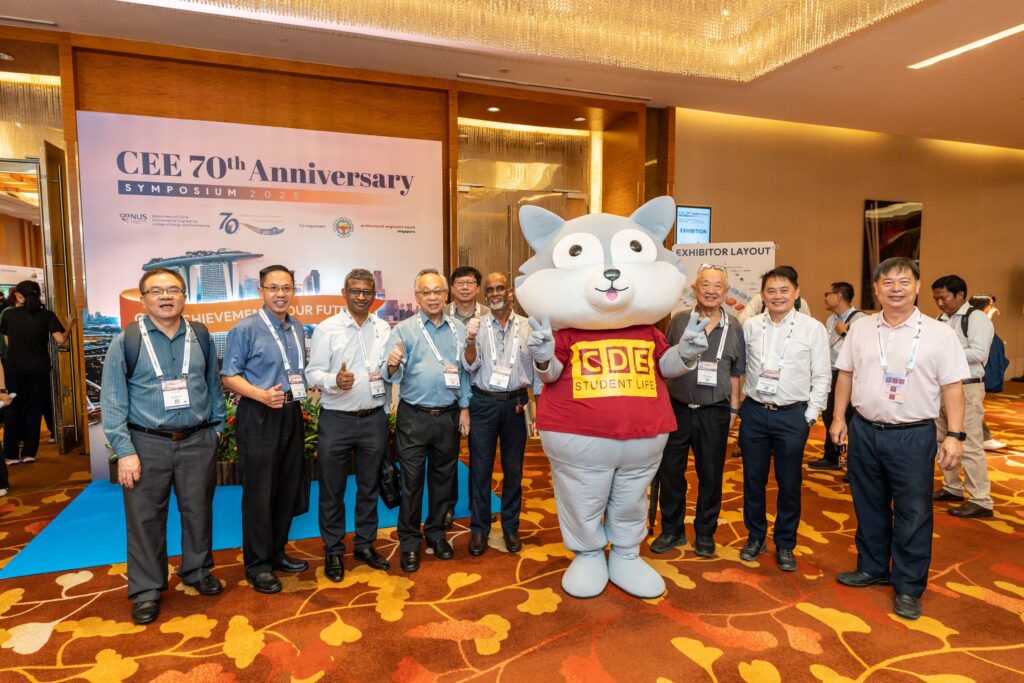
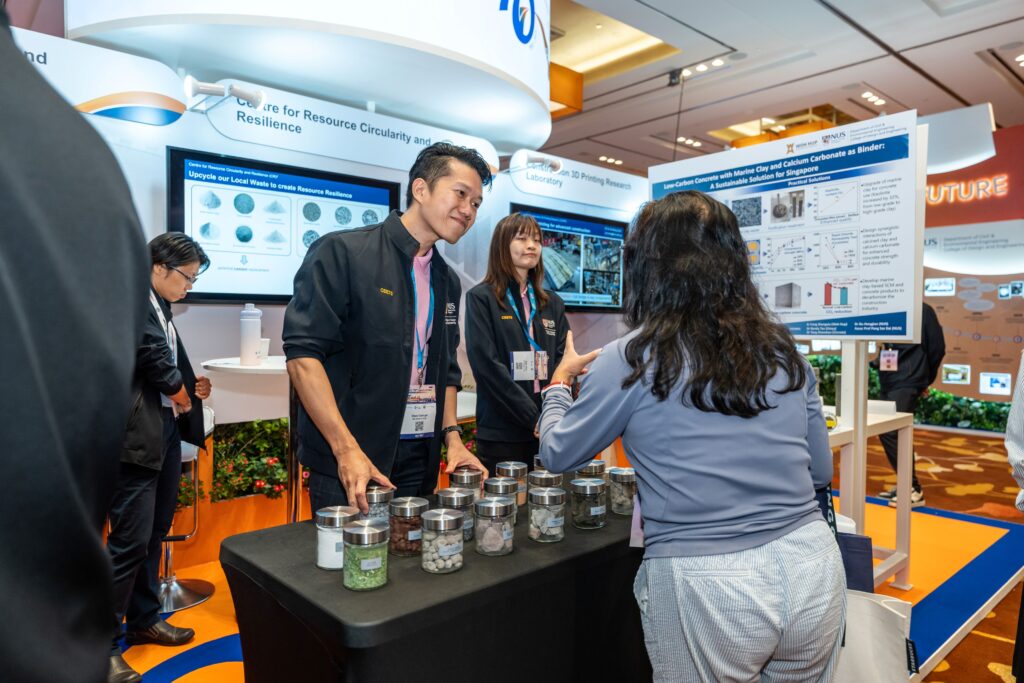
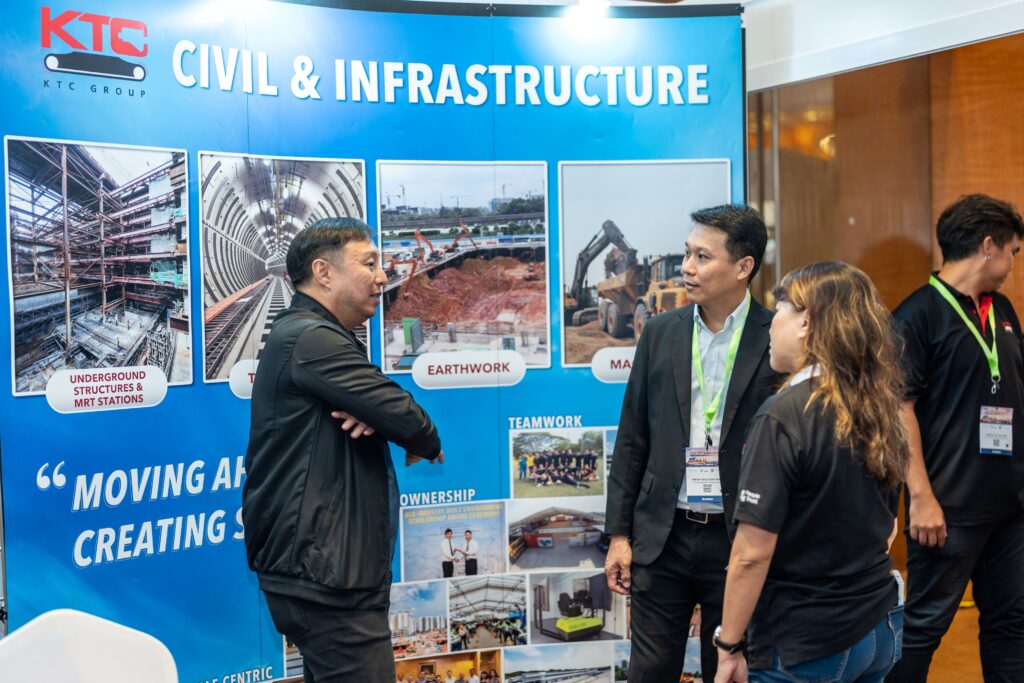
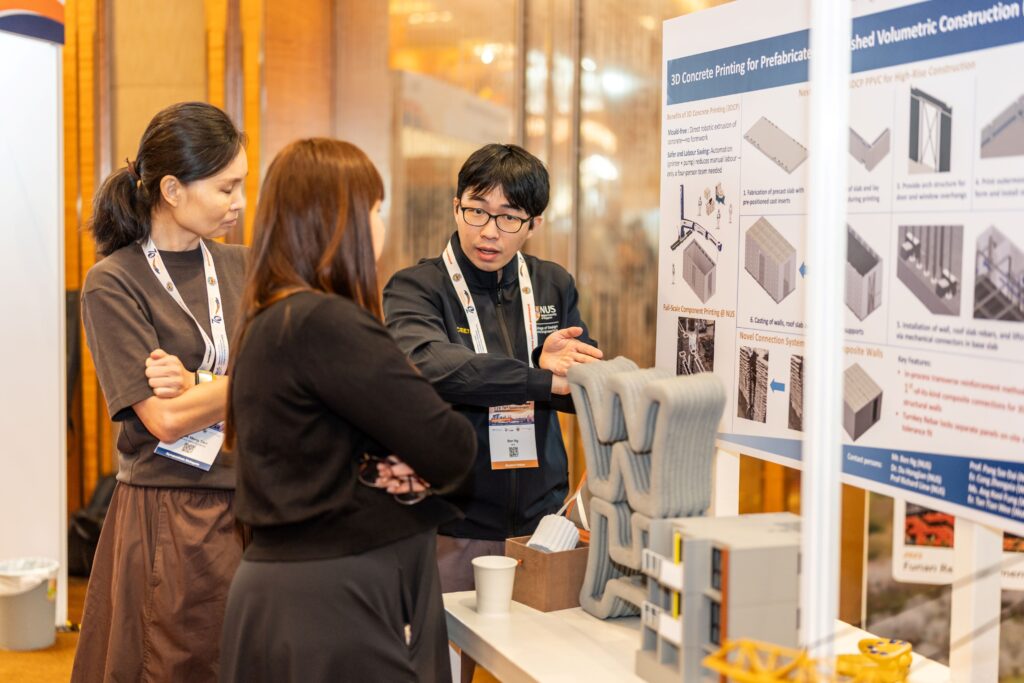
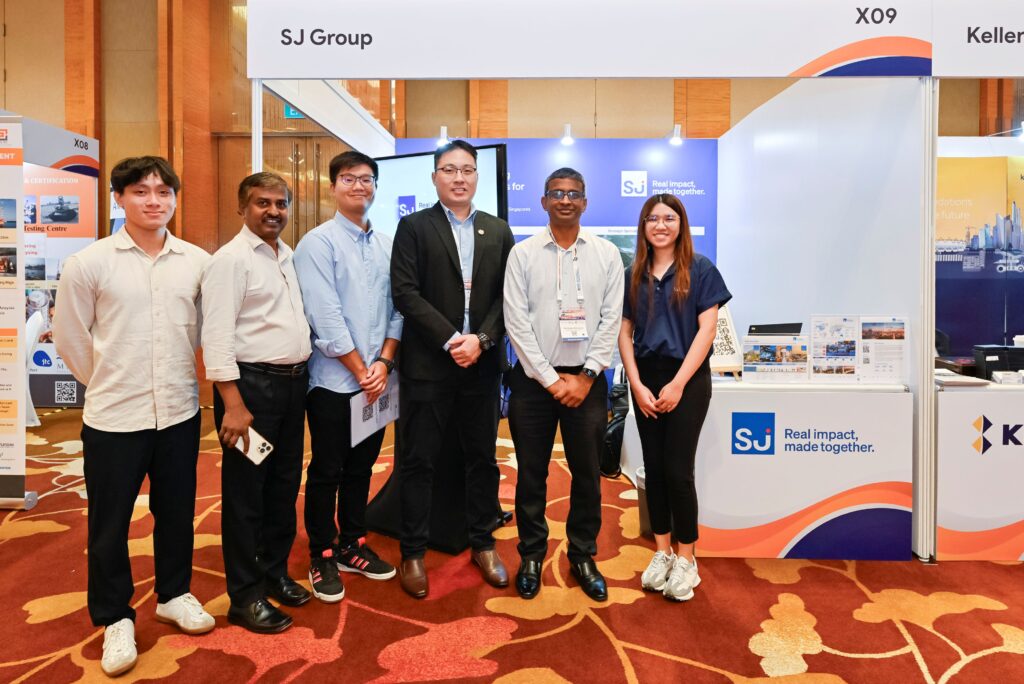
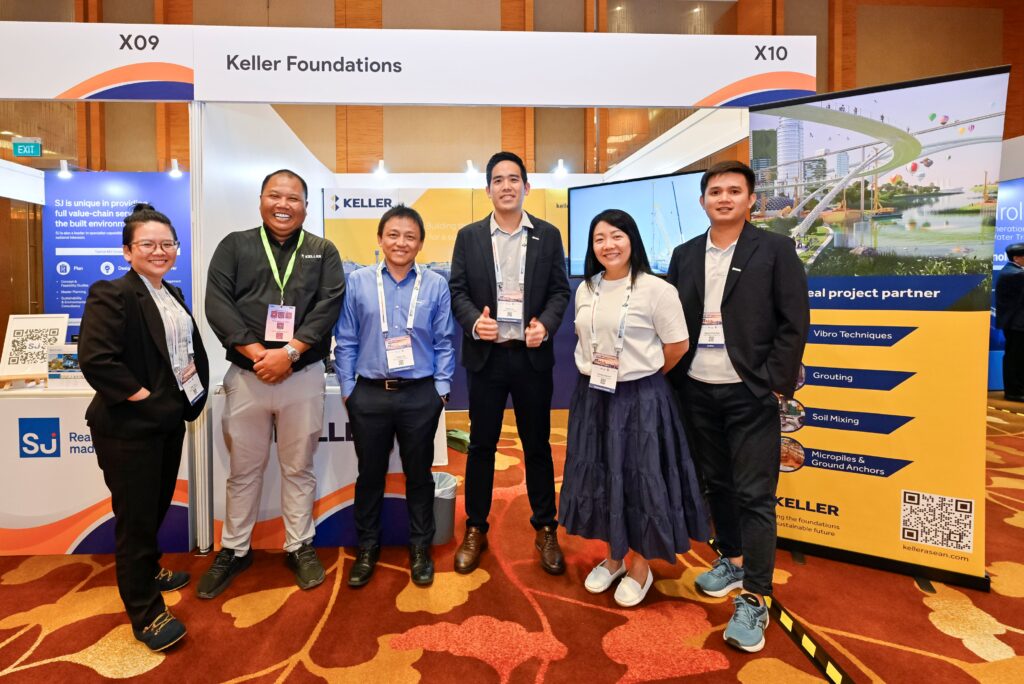
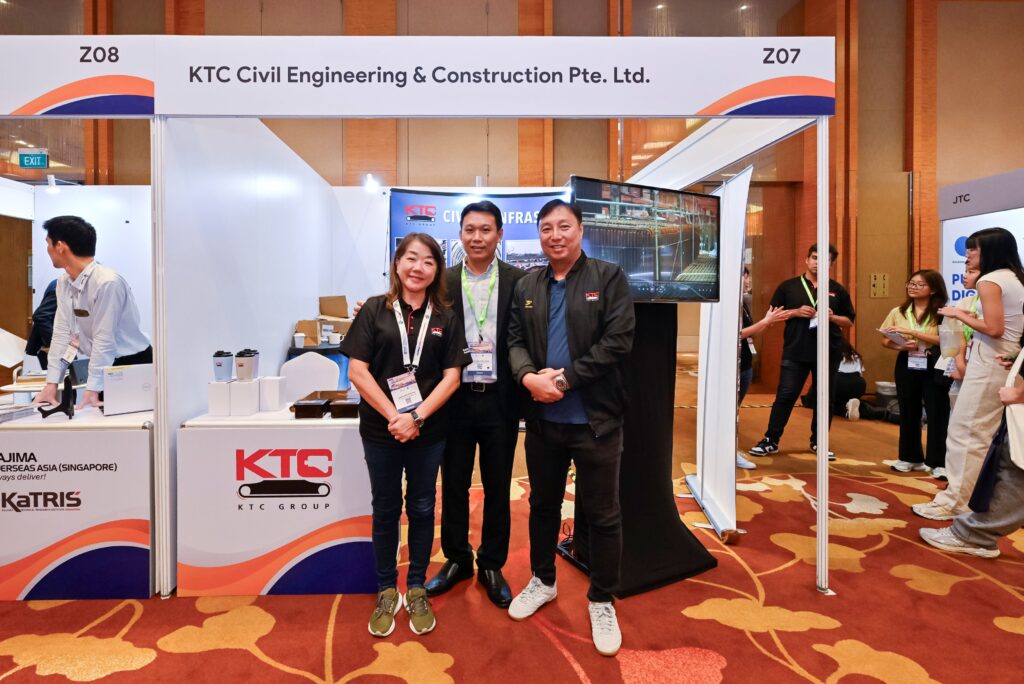
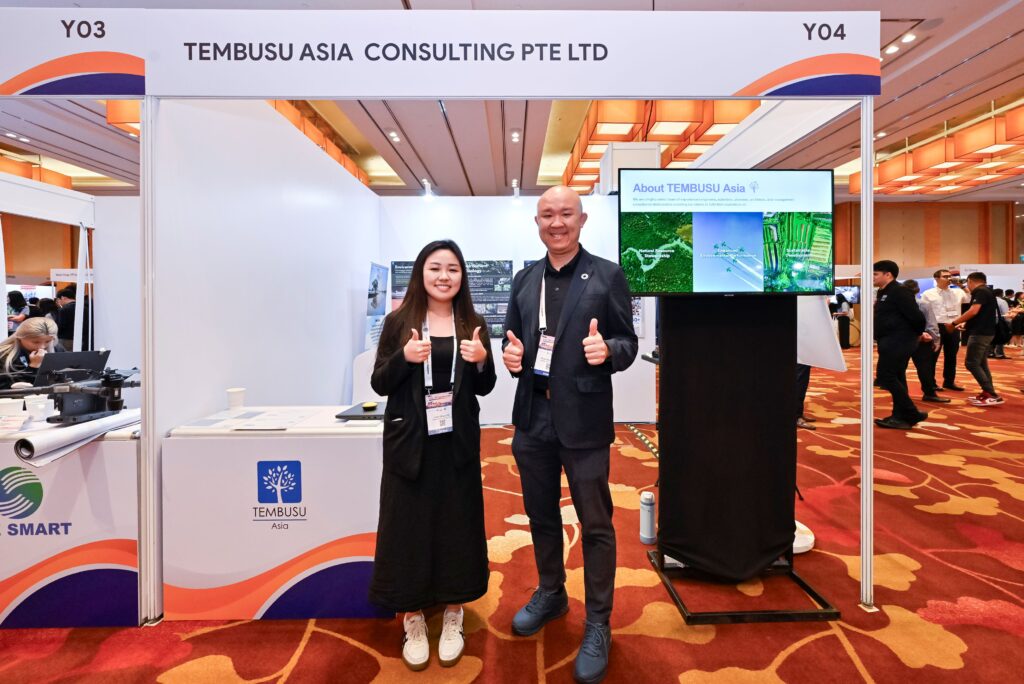
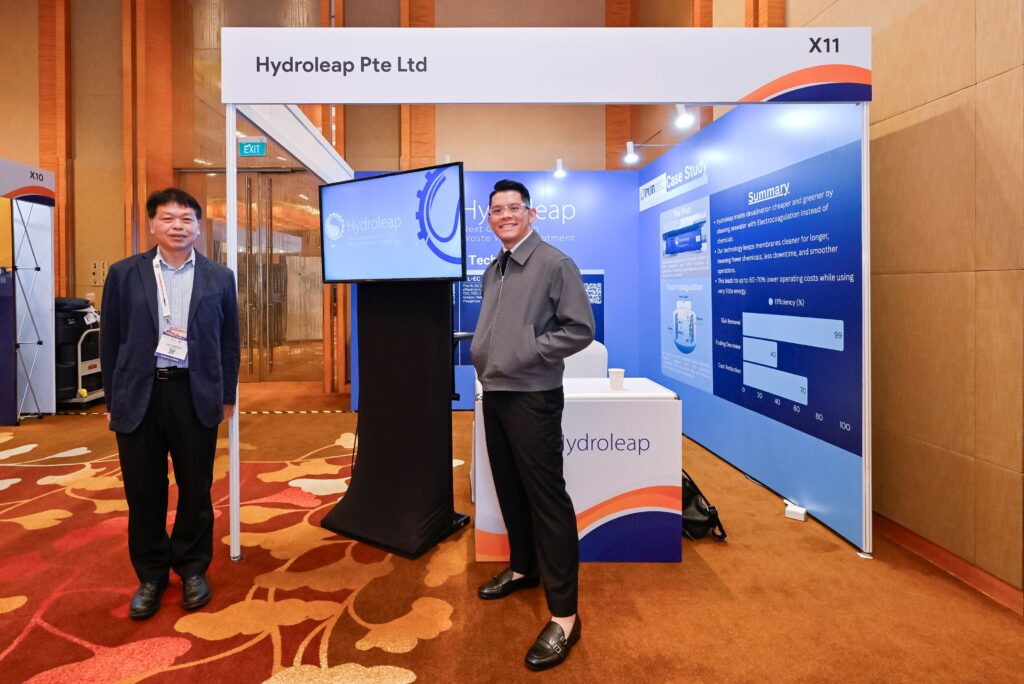
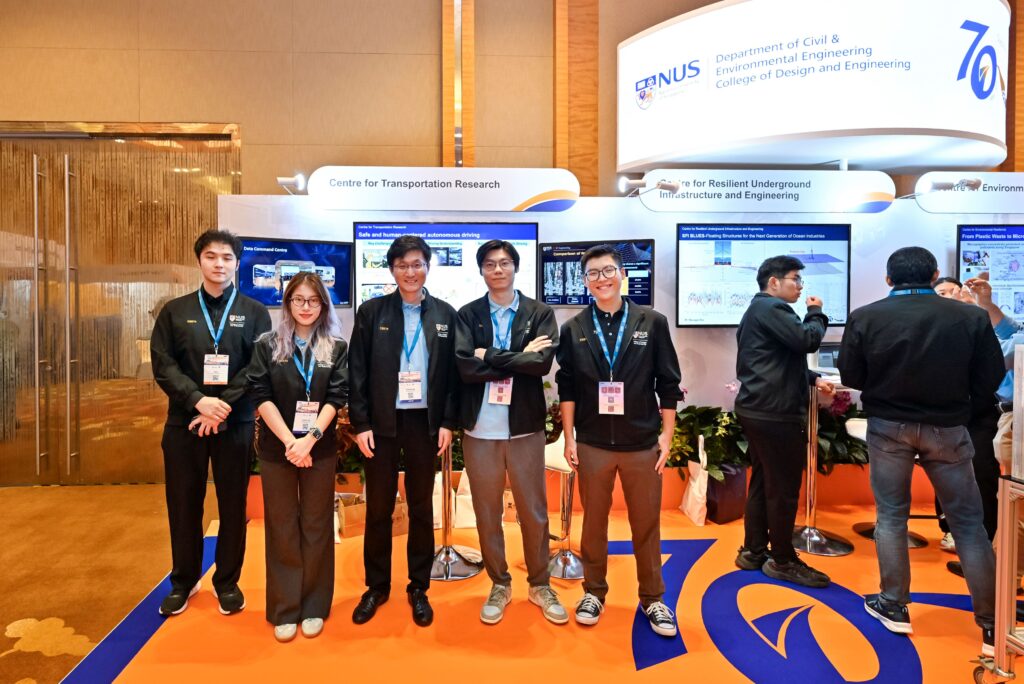
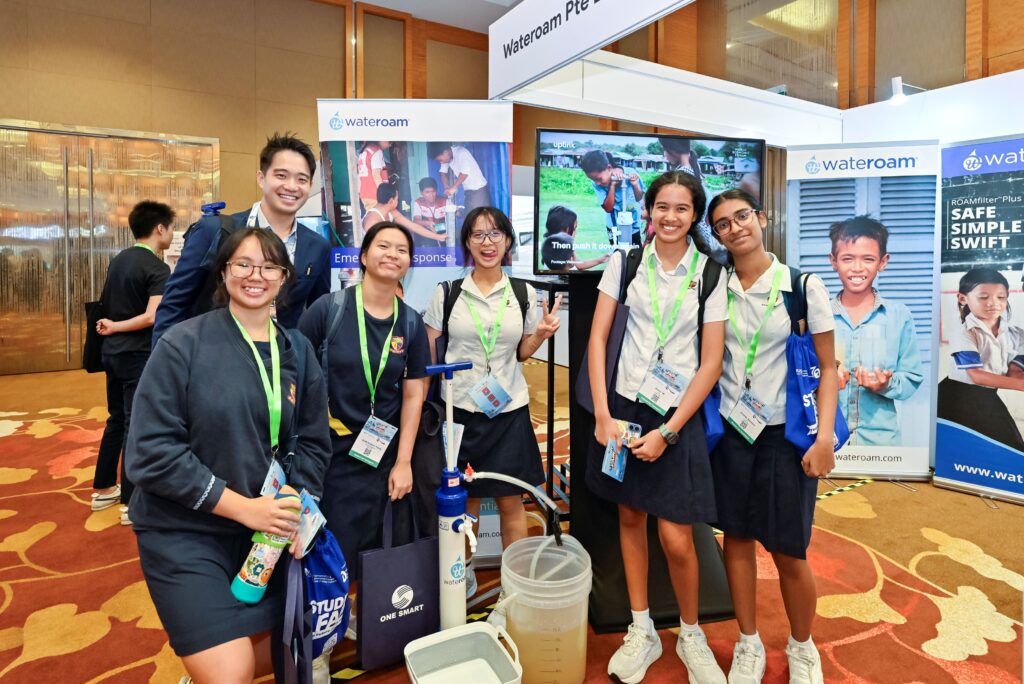
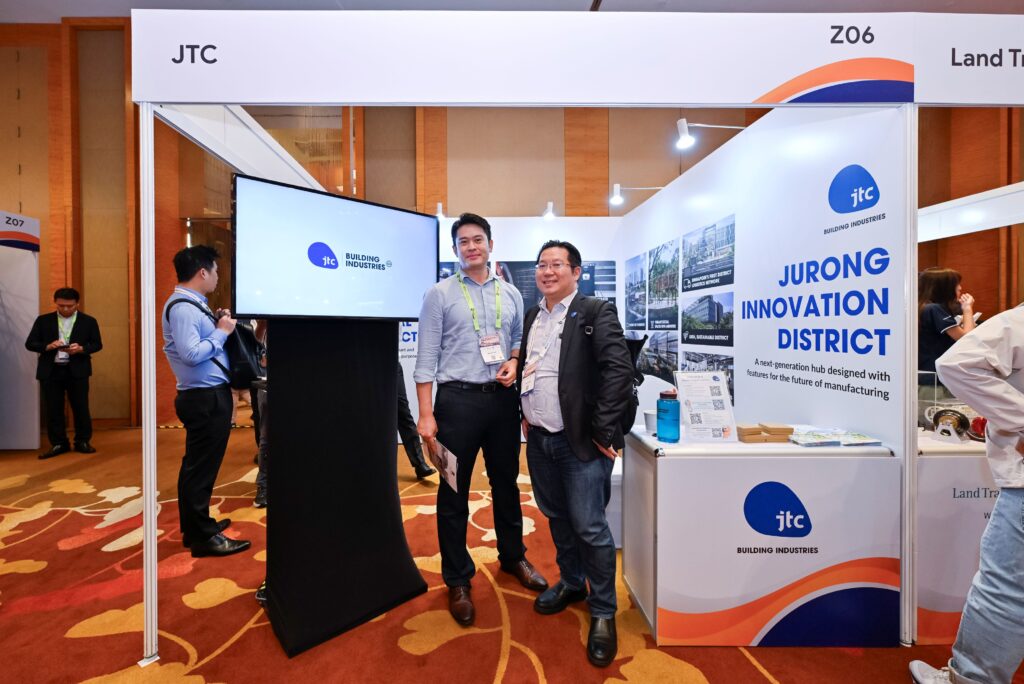
Student Fair
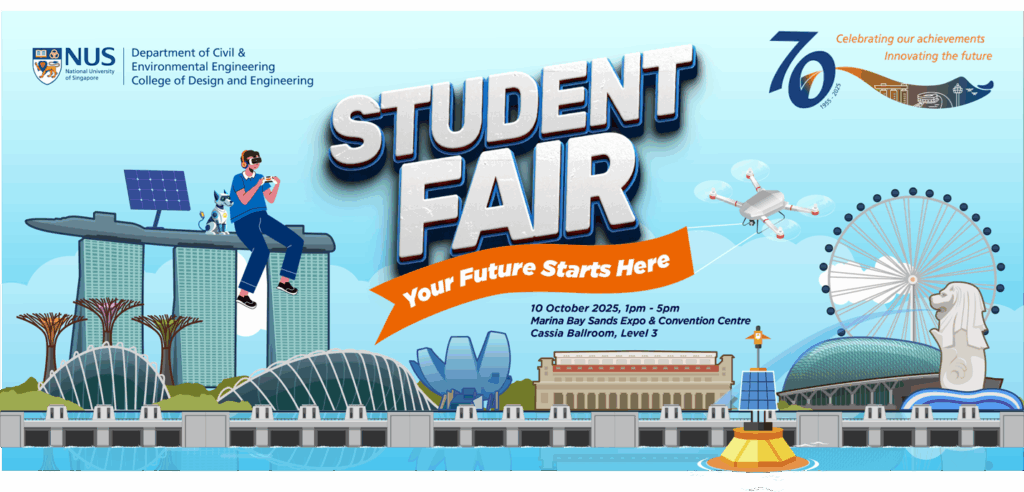 E-flyer of the Student Fair
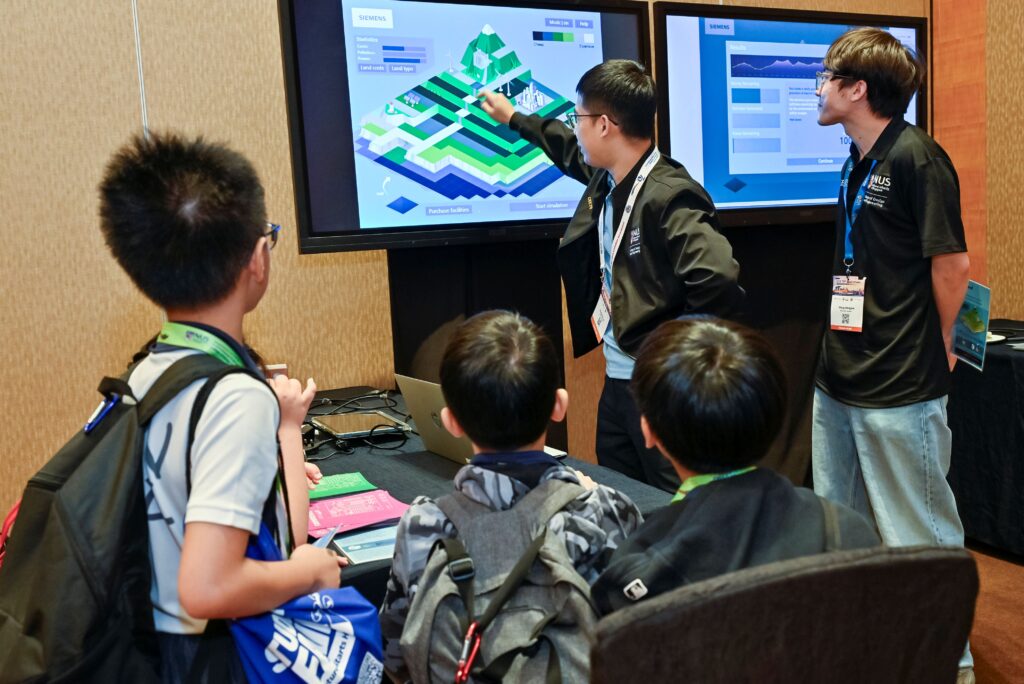
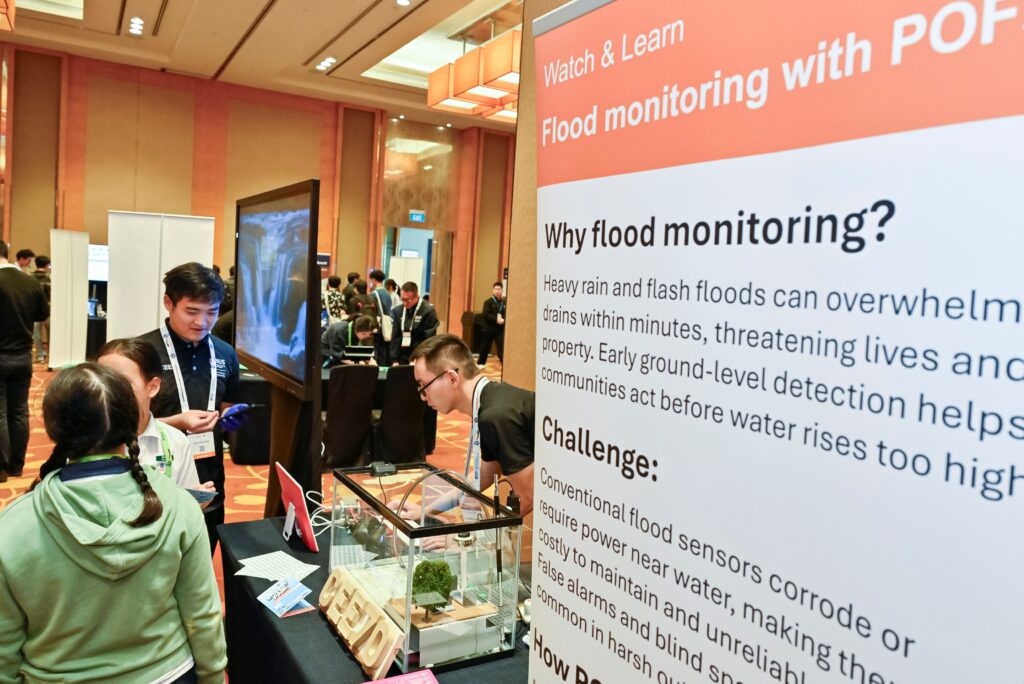
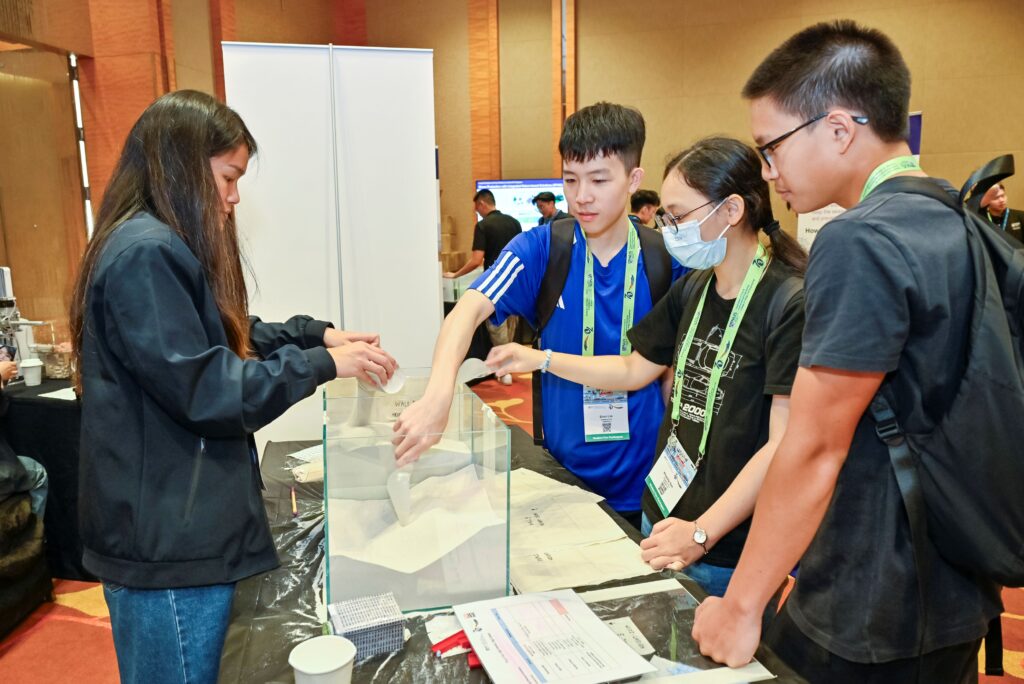
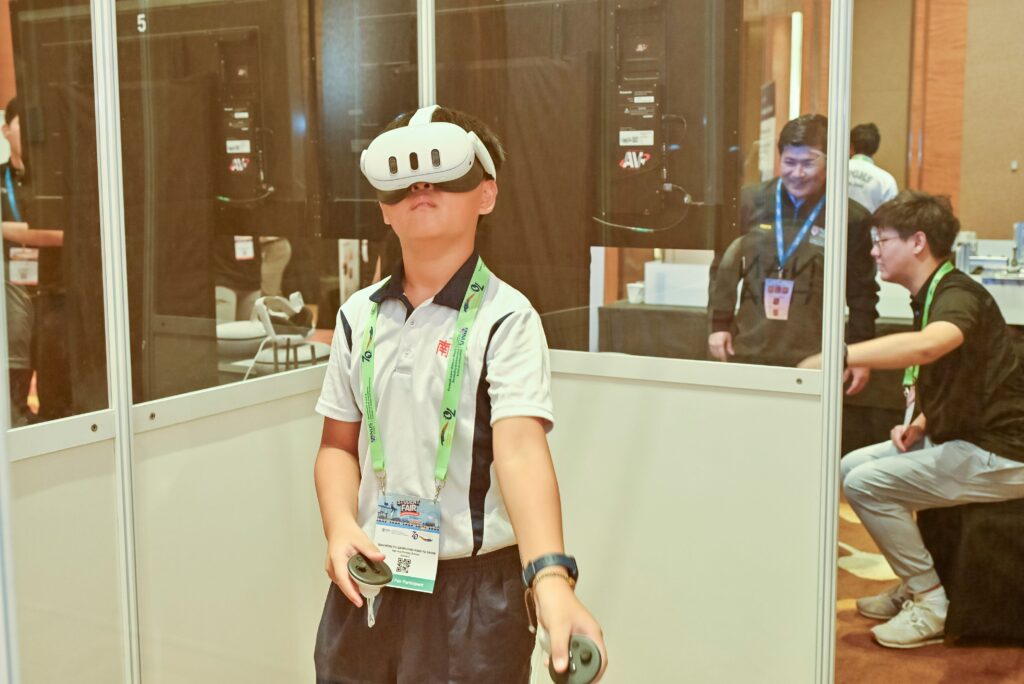
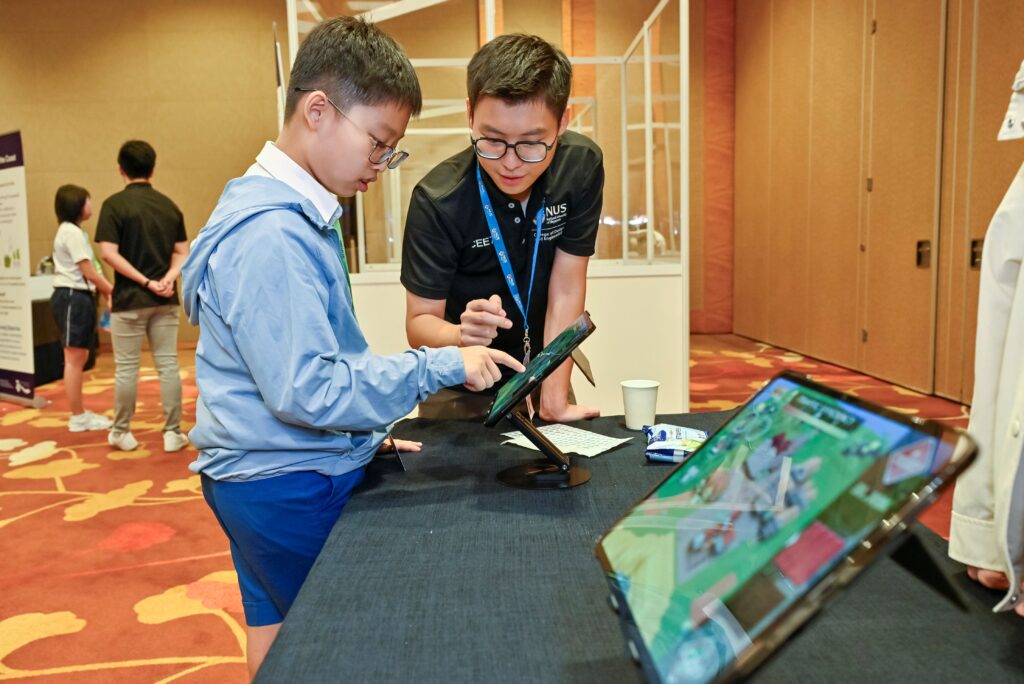
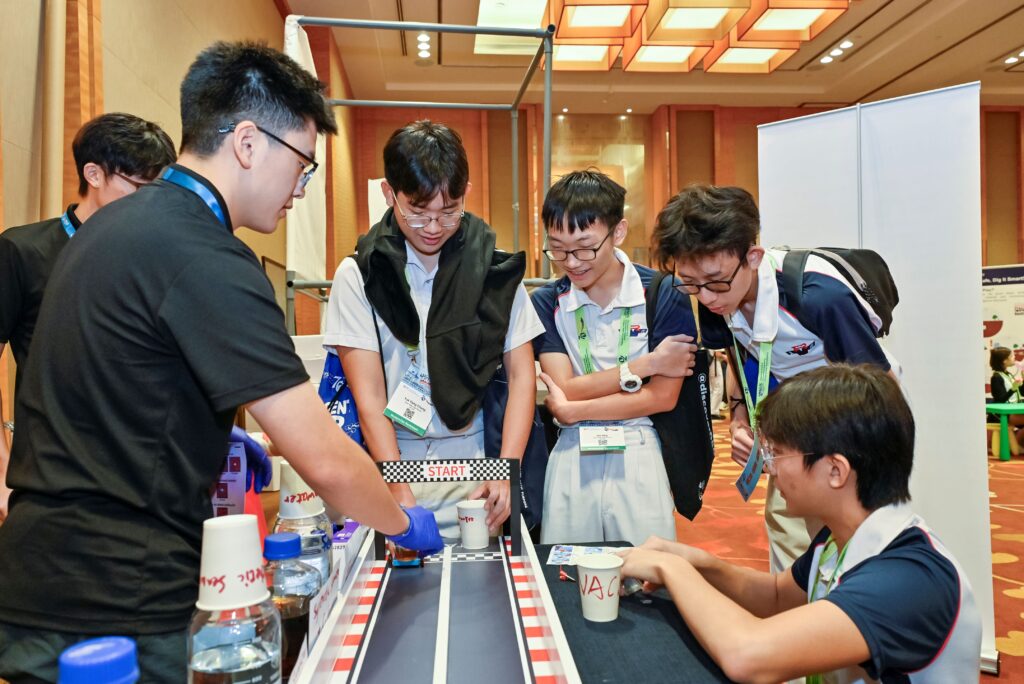
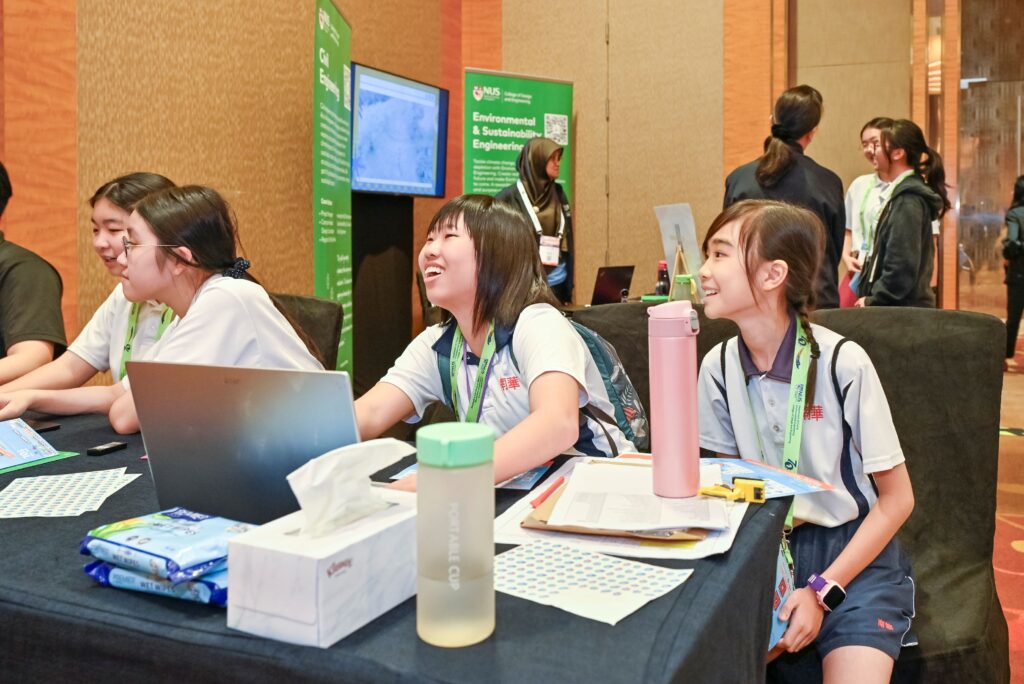
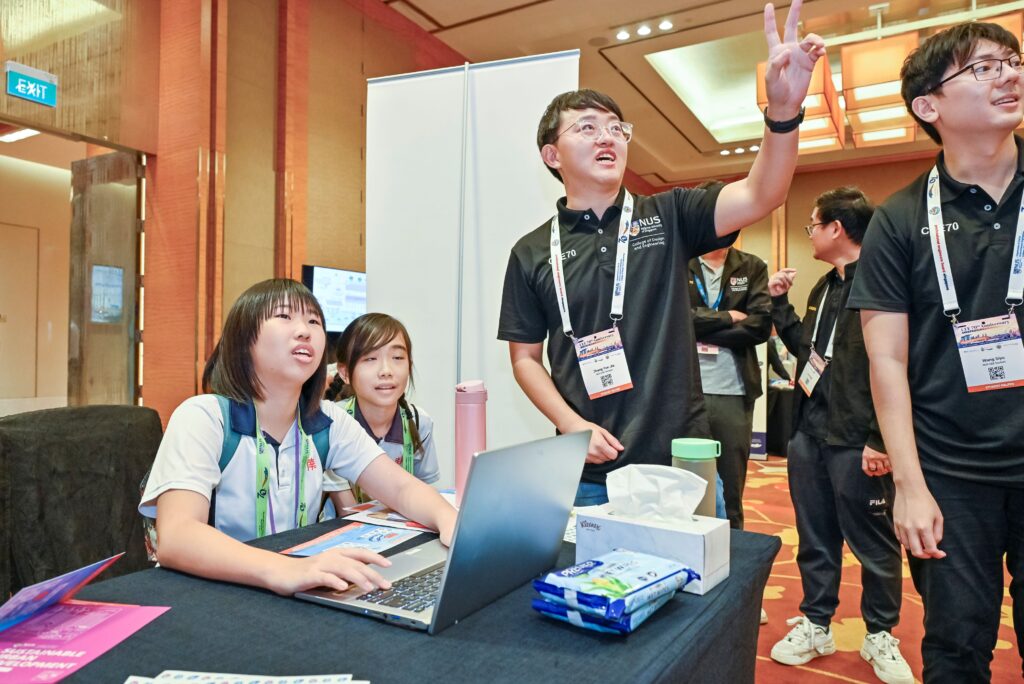
The Student Fair was attended by nearly 300 students from 31 institutions, comprising primary, secondary schools, and junior colleges. Students explore the world of Civil and Environmental Engineering through a range of engaging and hands-on activities.
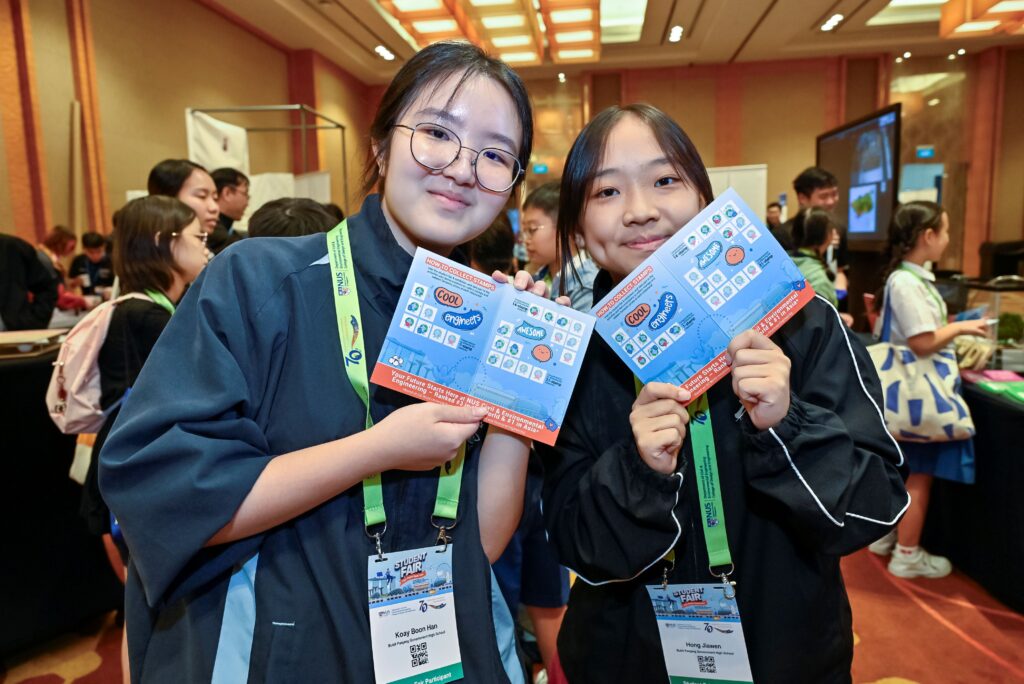
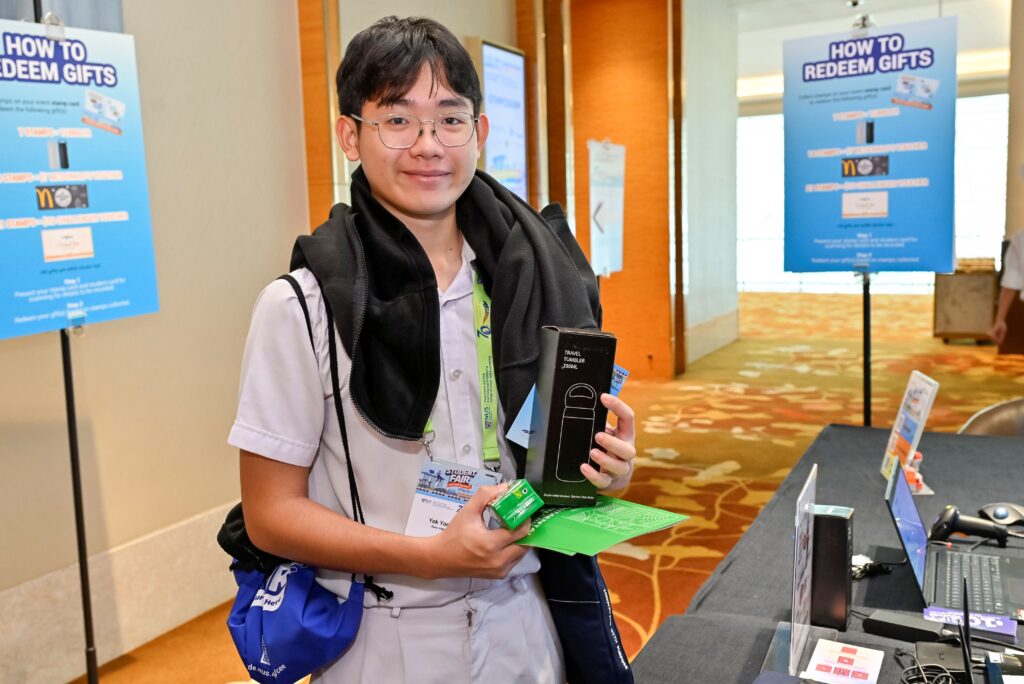
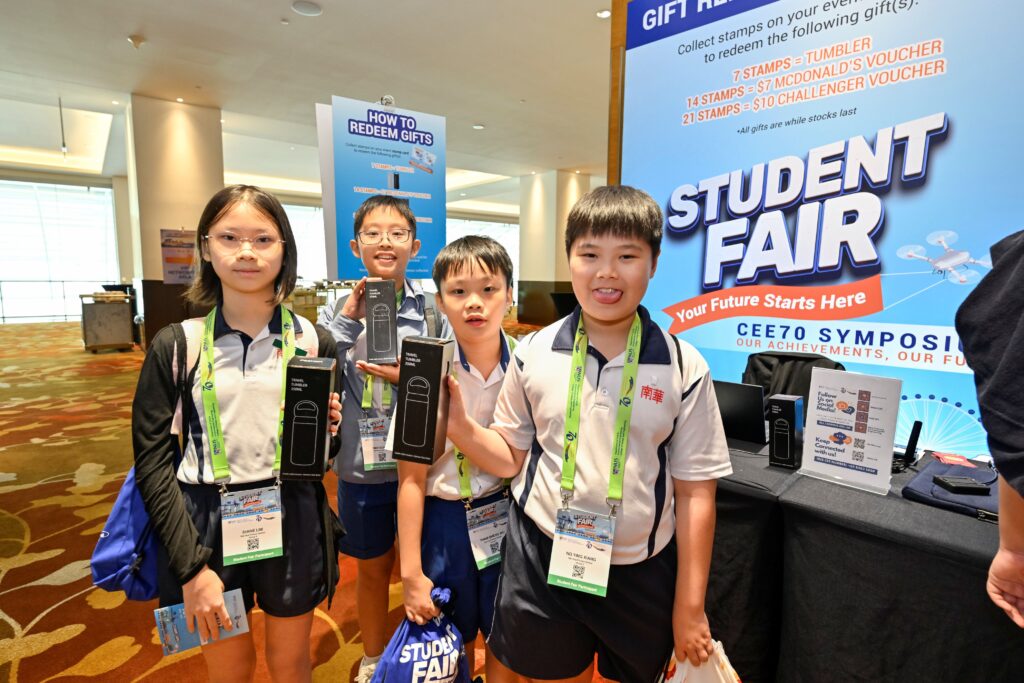
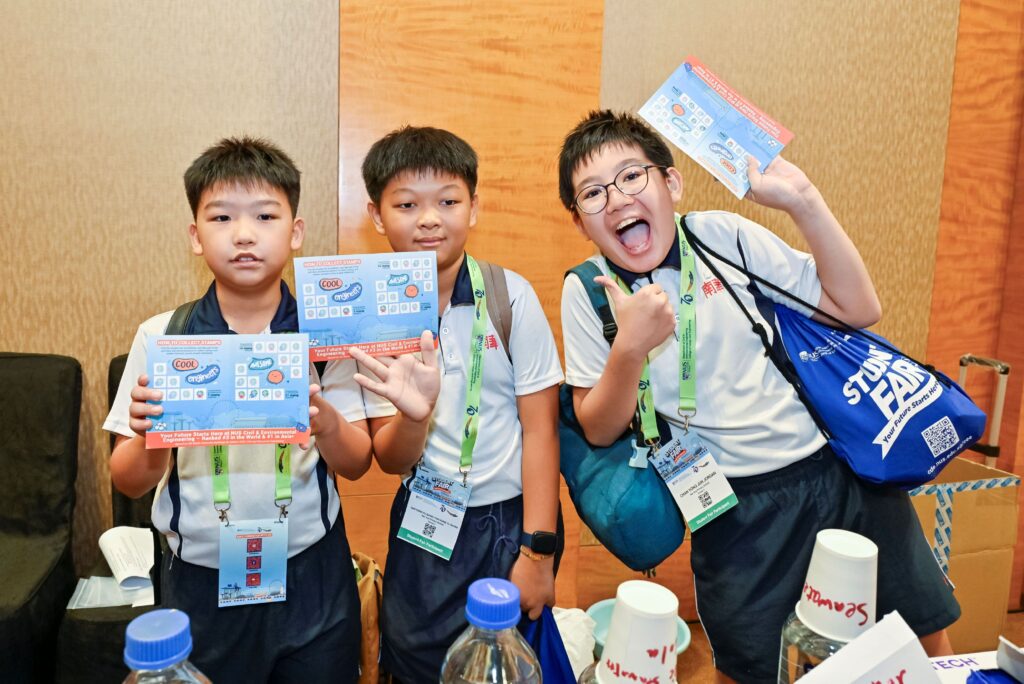
Each student received a goodie bag and a Stamp Card. Completing activities earned stamps redeemable for gifts at 7, 14, and 21 stamps. Students who visited CEE exhibits in the Exhibition Hall earned an additional stamp while discovering our research.
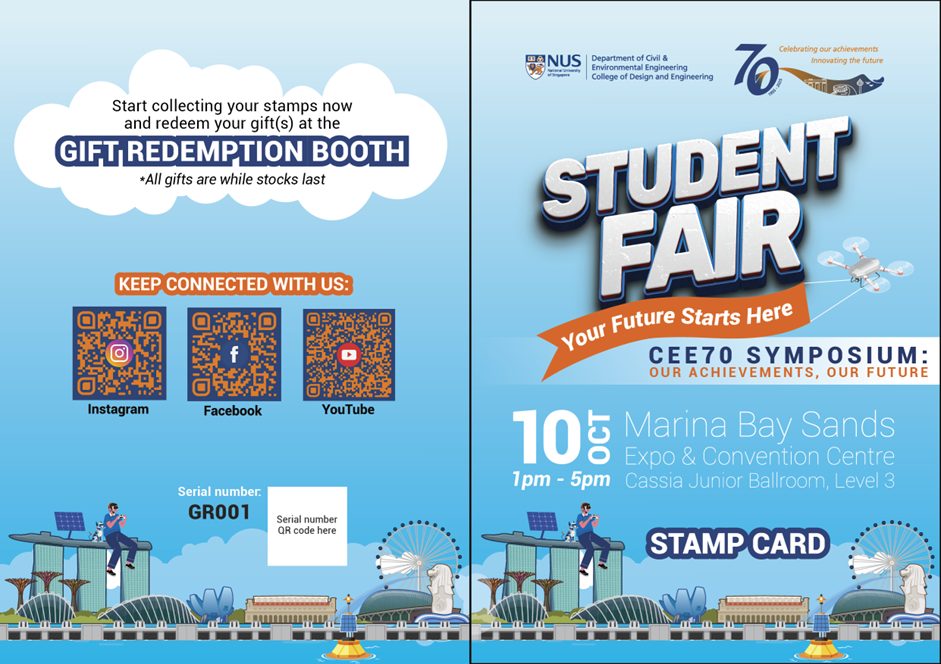
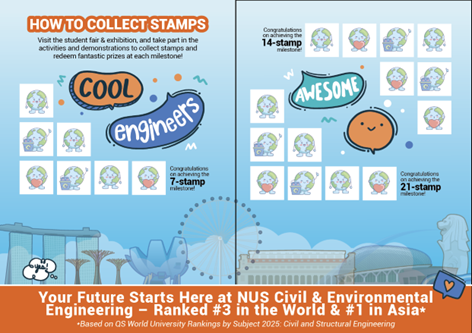
Student Fair Stamp Card
When asked what they liked about the Student Fair, two students replied
“I was able to learn more about how civil engineering was incorporated into our daily lives. At first, I thought civil engineering was mainly about designing buildings and infrastructure. Now I realized it is quite a lot more.”
“I like how we could engage with like-minded individuals. I know we are not of the same age group, but we think the same and have the same interests. It was very engaging.”
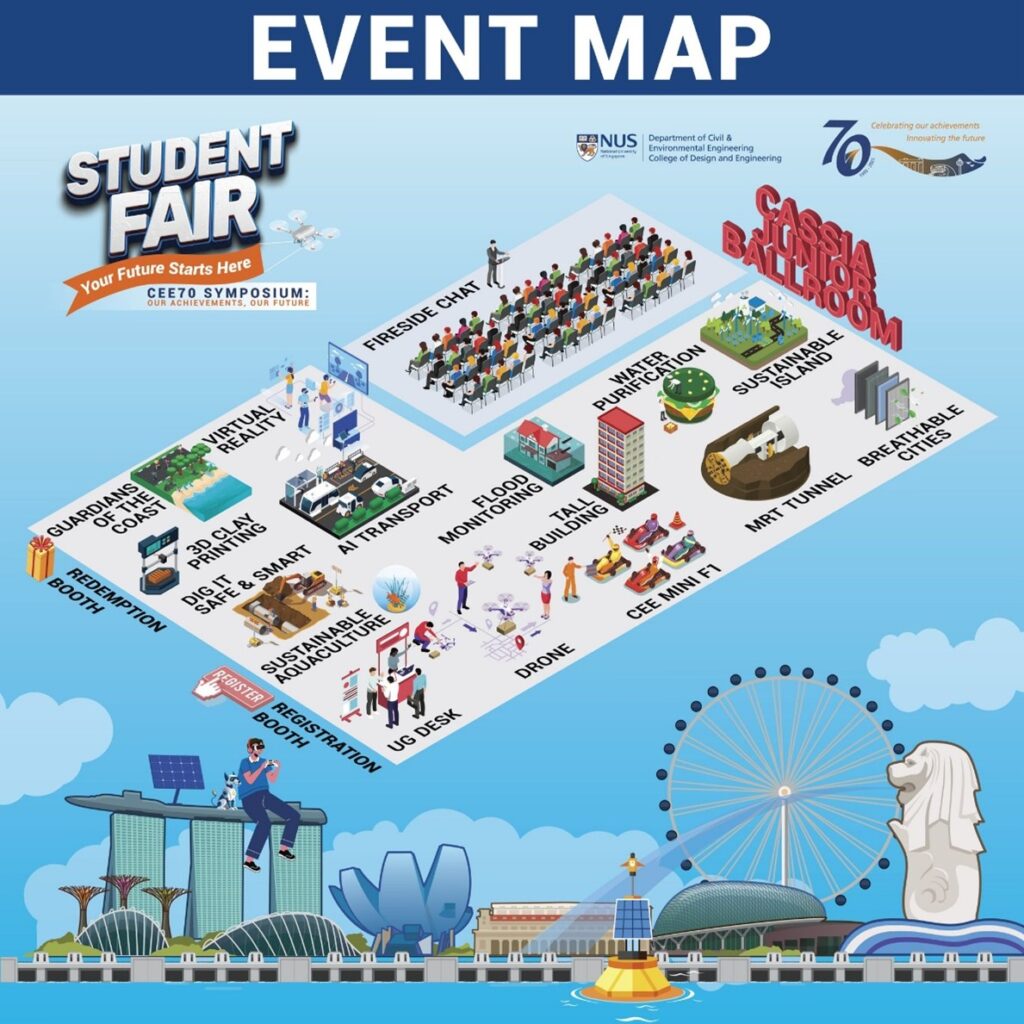
Event Map of the Student Fair Activities
Summary of Student Fair Activities
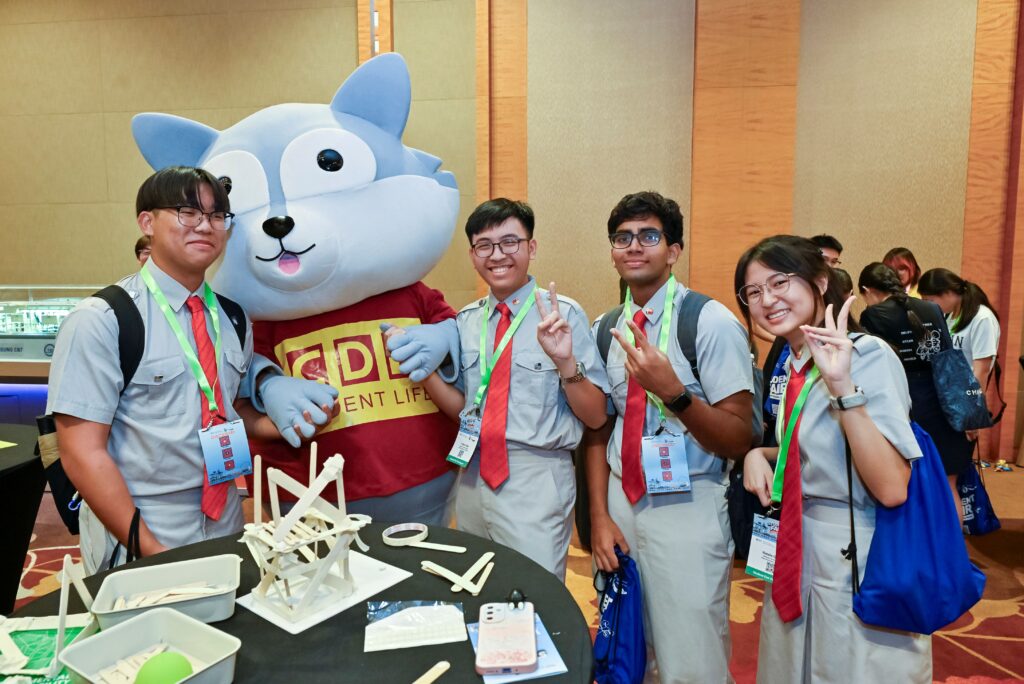
| Tall Building: Students use simple materials to build the tallest, strongest tower. The goal is to ensure the tower remains stable under simulated ground movement. |
| Virtual Reality: Using VR headsets, students are tasked to construct a virtual building by assembling components accurately. |
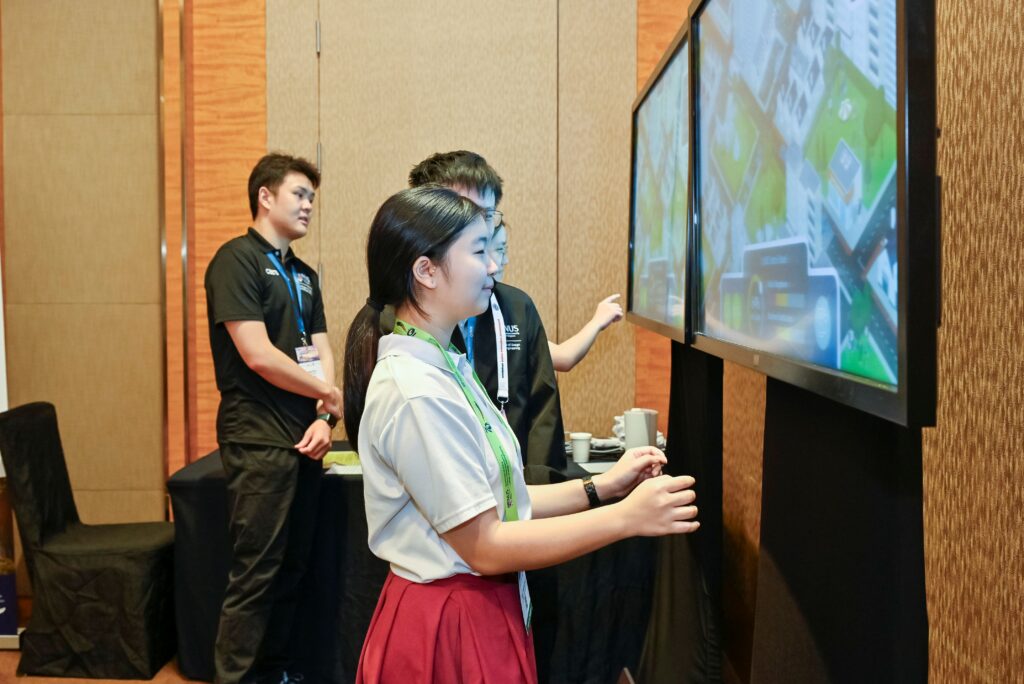
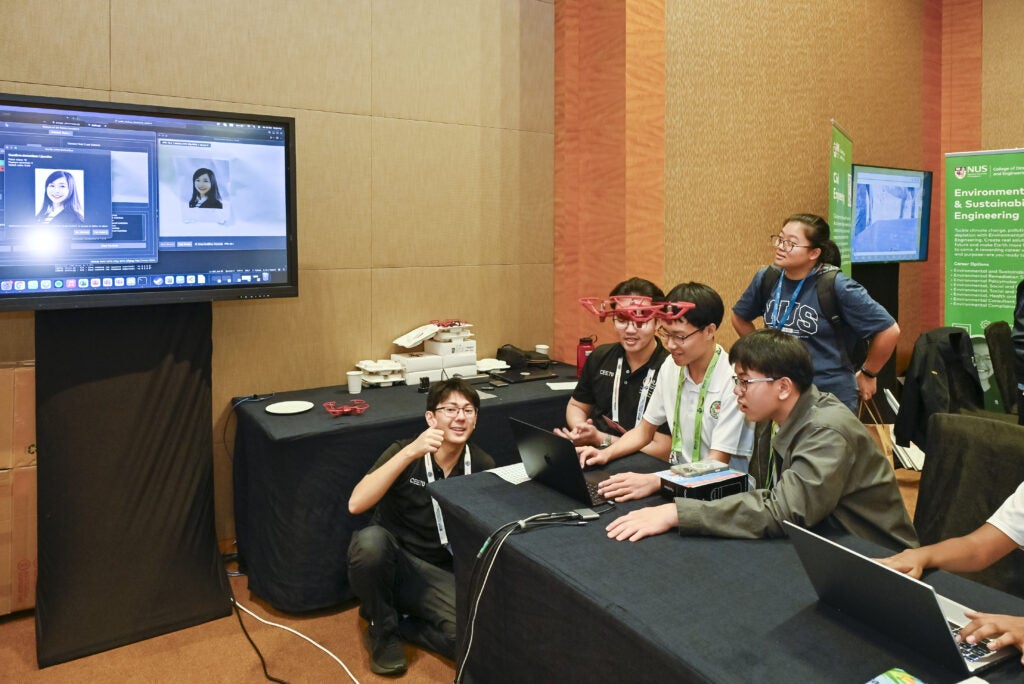
| AI Transport: Students decide where to place the traffic lights on a busy intersection. They are tasked to maximize traffic efficiency by optimizing the timing and interval of each traffic light. |
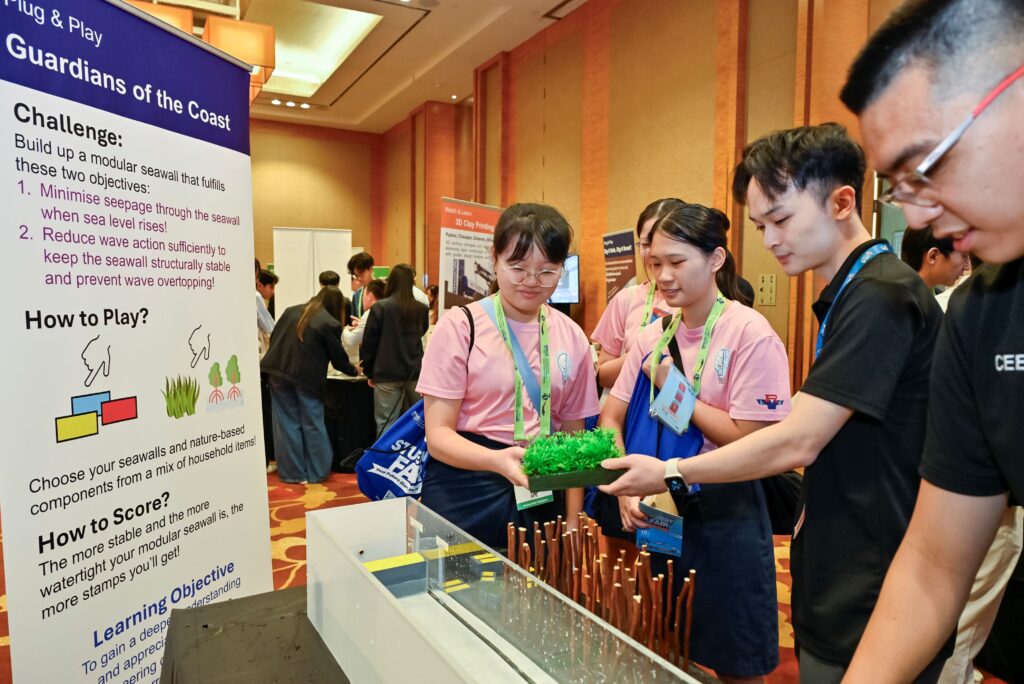
| Guardians of the Coast: Students build a modular seawall to block seepage from rising seas and dampen the wave action, while ensuring stability and no overtopping under coastal conditions. |
| Sustainable Island: By placing different energy sources at the ideal locations, students must balance cost, pollution, and efficiency to meet the energy needs of an offshore island. |
| Breathable Cities: In a simulated city, students manage traffic and the public's access to parks. They design interventions to maintain air quality, control pollution, and maintain a healthy, green city. |
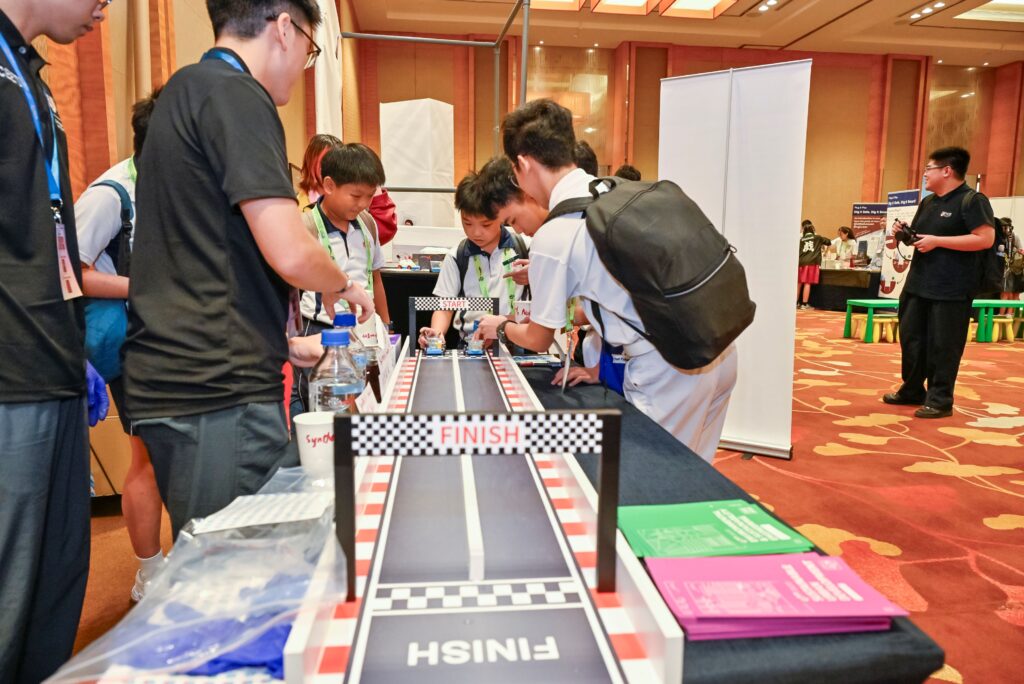
| CEE Mini F1: By choosing between pure water and salty water, students power their mini “F1” cars by achieving the optimal conductivity using the best solution mix. |
| Dig It Smart & Safe: Students determine the optimum number and spacing of struts for an excavation. The aim is to prevent ground failure by designing a safe and efficient support system. |
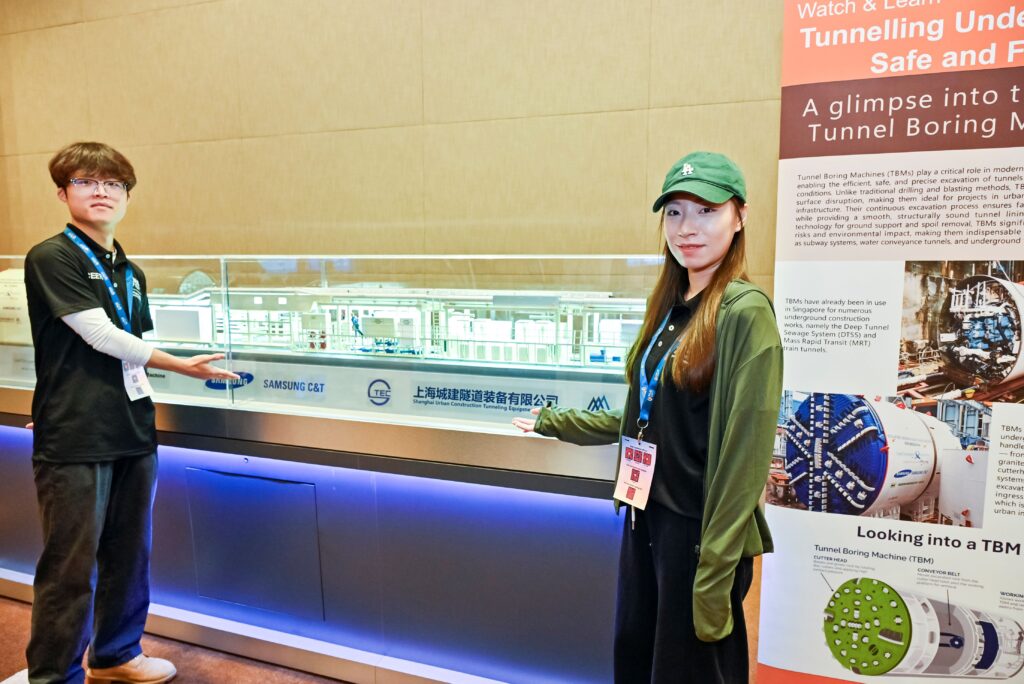
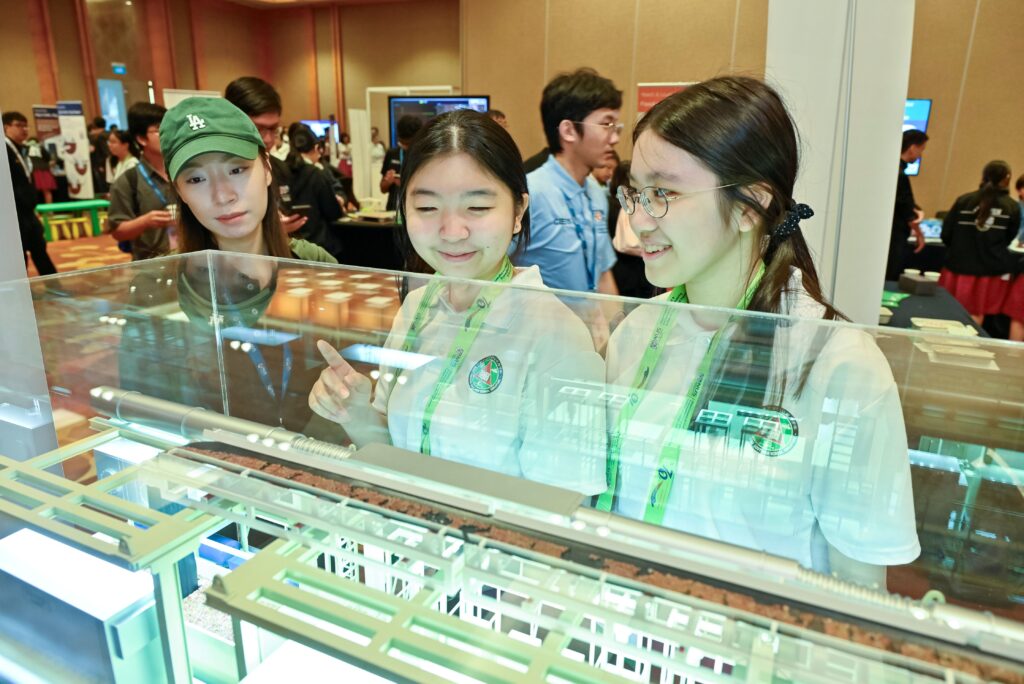
| MRT Tunnel: Students are tasked to watch the tunnel model in action, discover how TBMs excavate and support tunnels, and ask about their methods and safety. |
| Drone: Students observe and discover how drones collect imagery for inspection. They learn about basic operations and applications of drone inspection. |
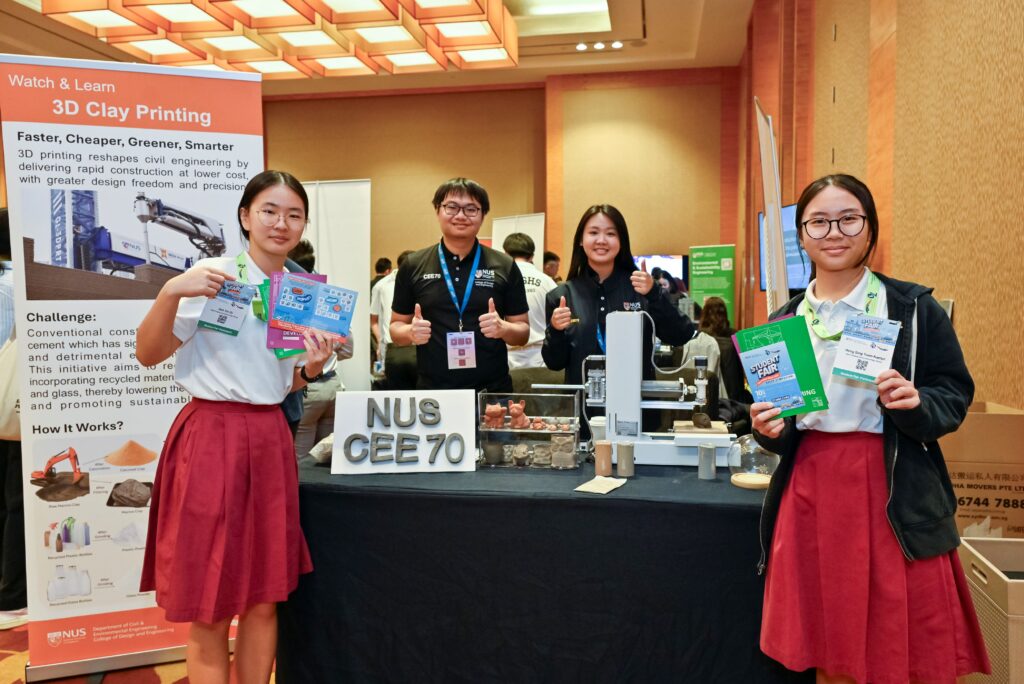
| 3D Clay Printing: Students are tasked to watch a clay printer fabricate structures and discuss how print parameters affect build quality. |
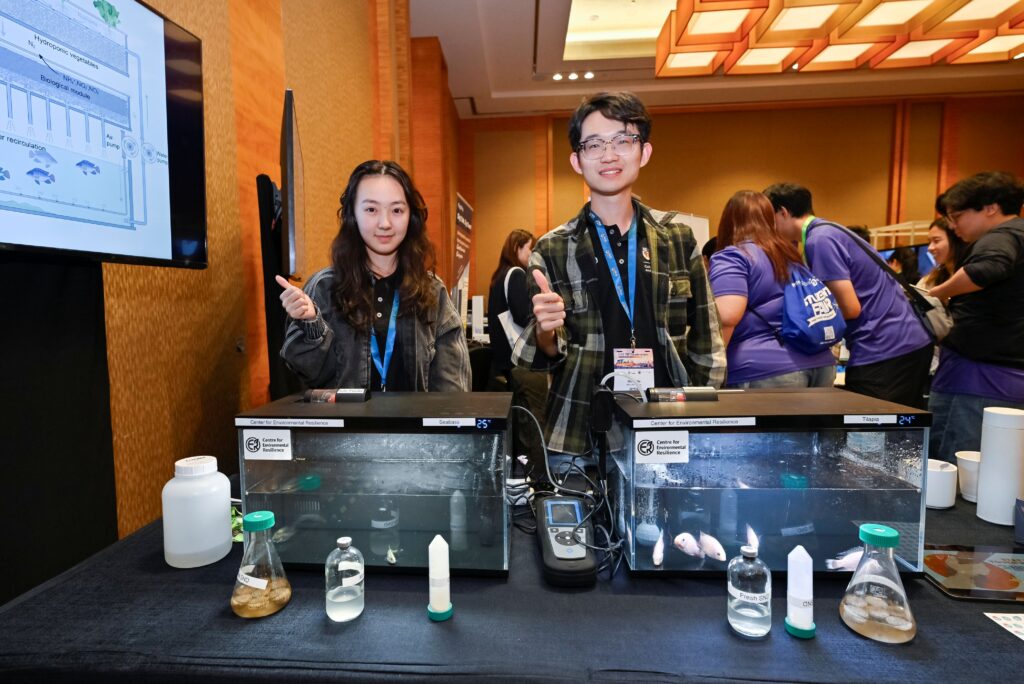
| Sustainable Aquaculture: Students observe a recirculating aquaculture setup and learn how water is treated and reused to maintain system performance. |
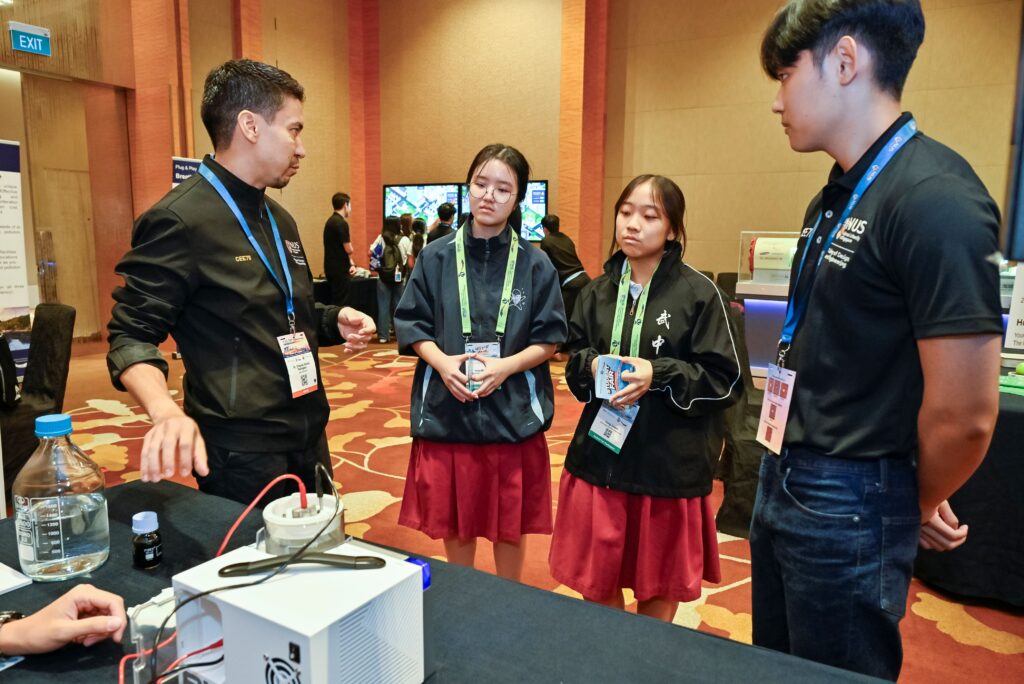
| Water Purification: Students observe how electricity-driven oxidation could treat difficult wastewater and learn about its benefits and limitations versus conventional methods. |
| Flood Monitoring: Students explore how sensors and alert mechanisms could detect rising water and how the data enables early intervention. |
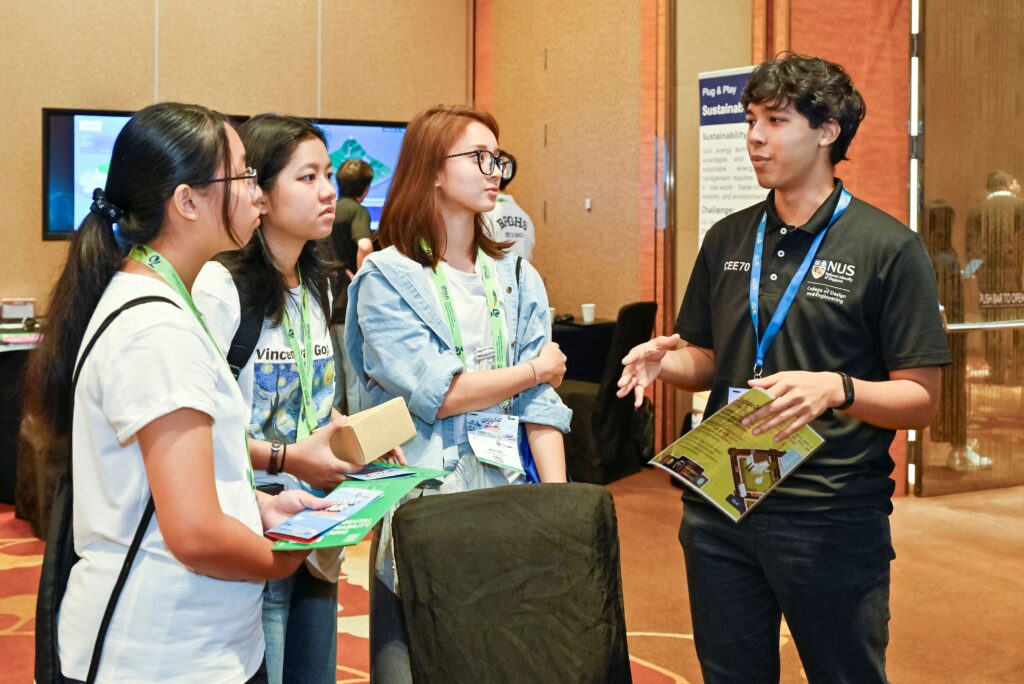
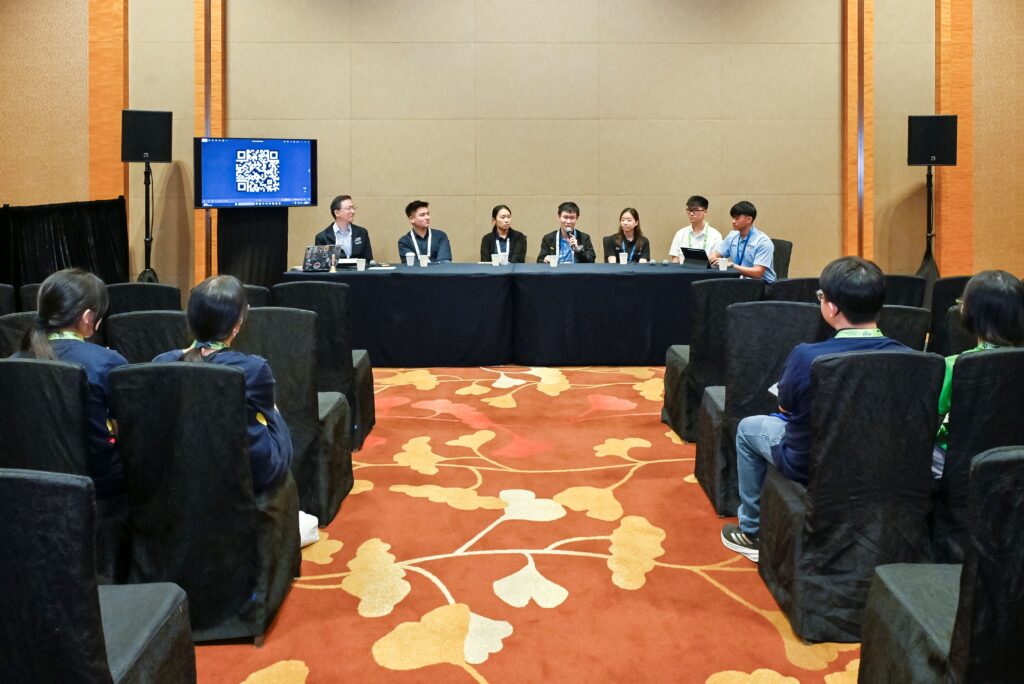
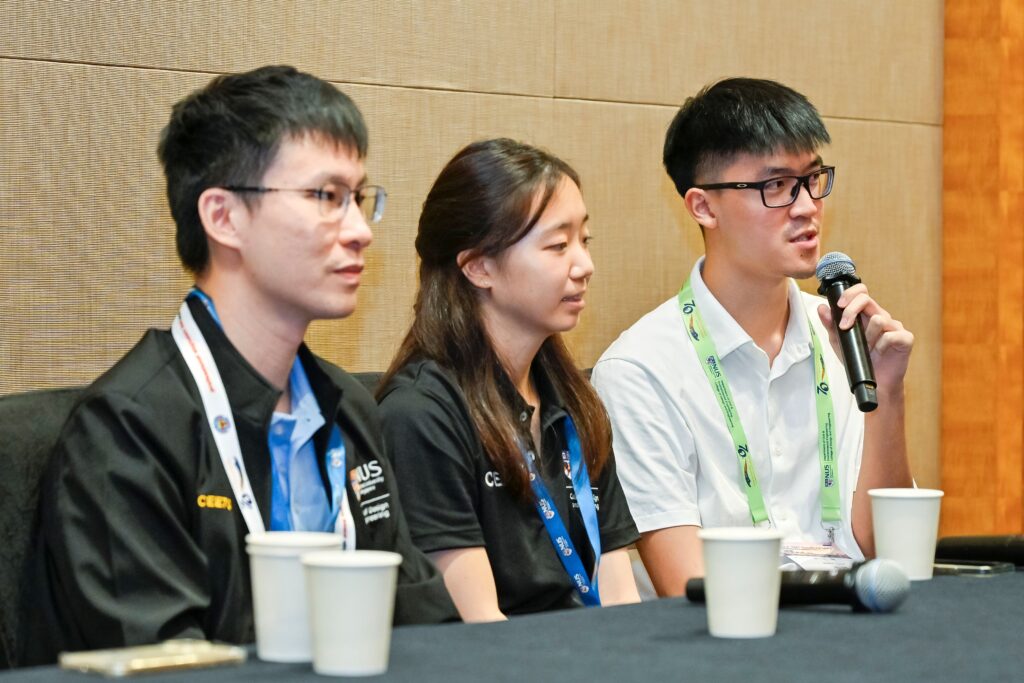
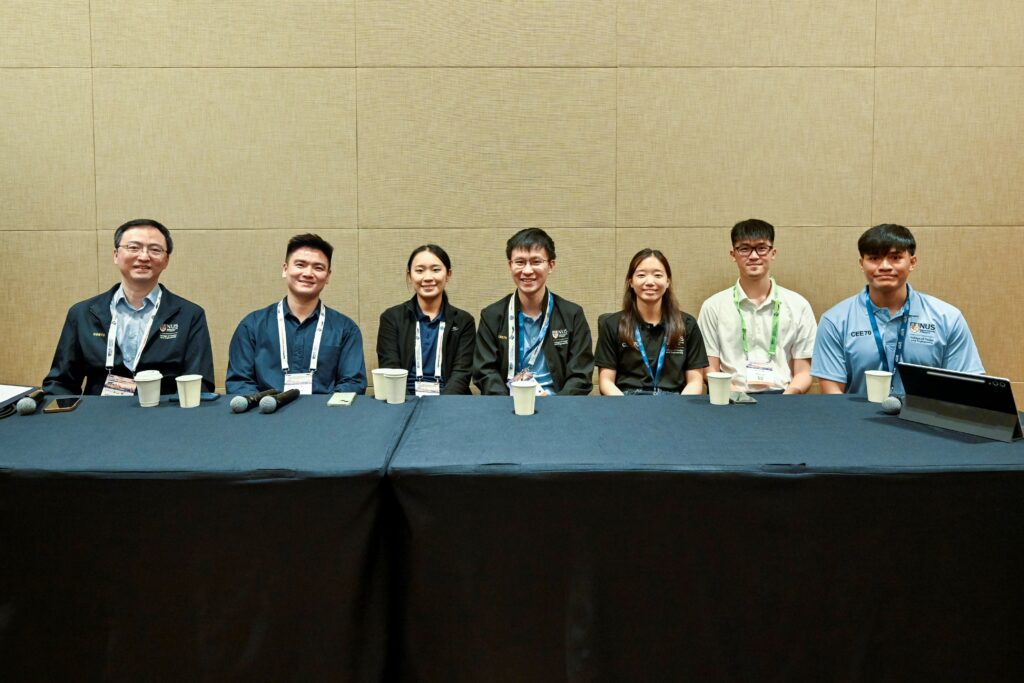
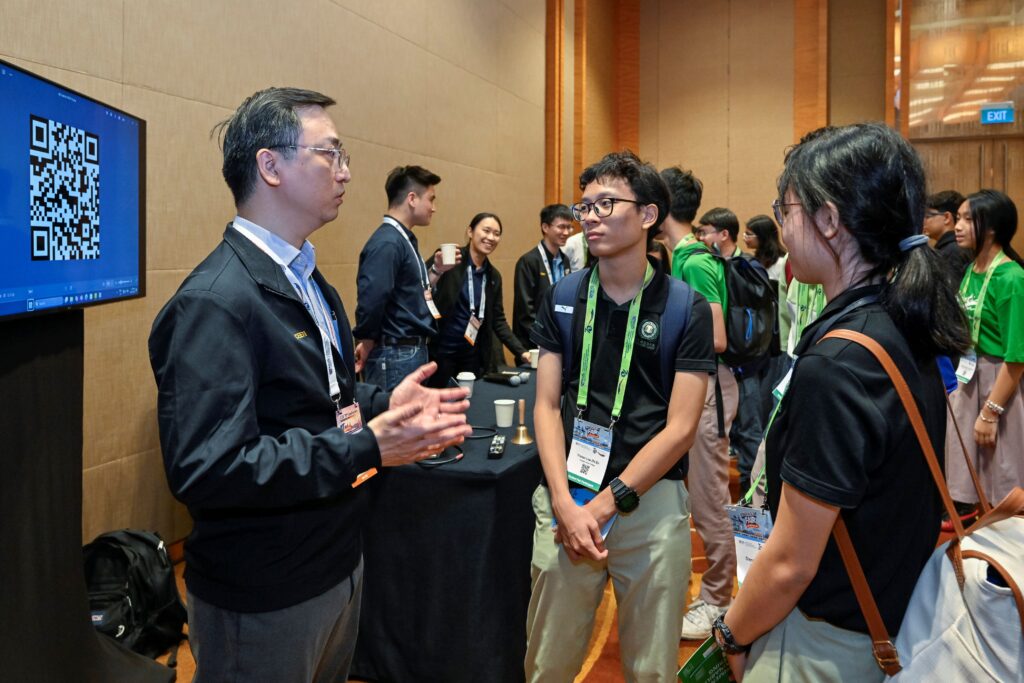
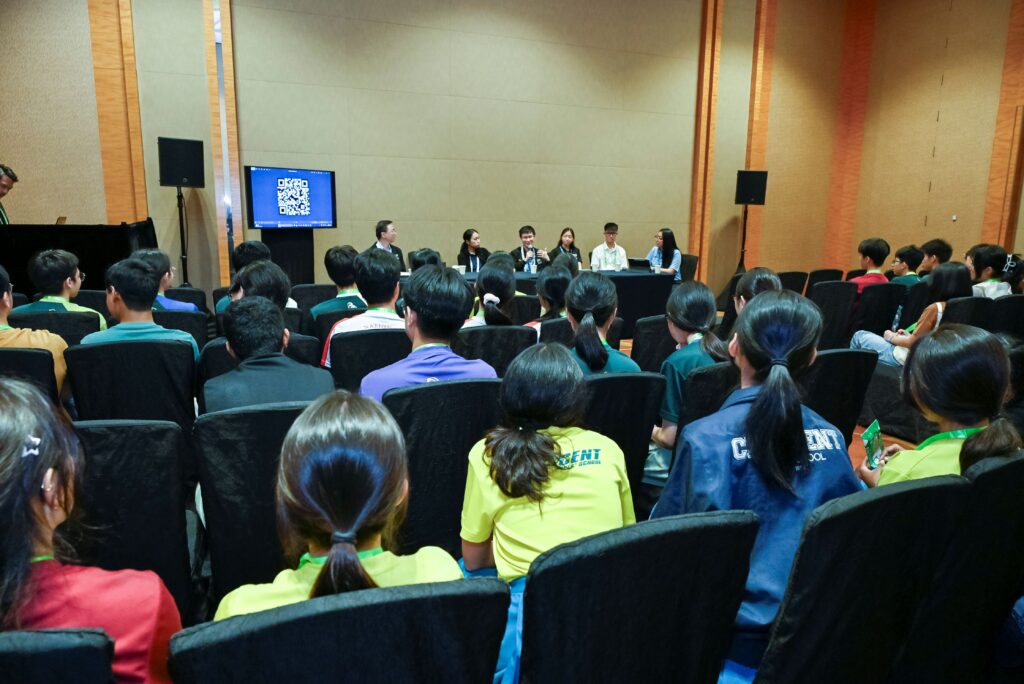
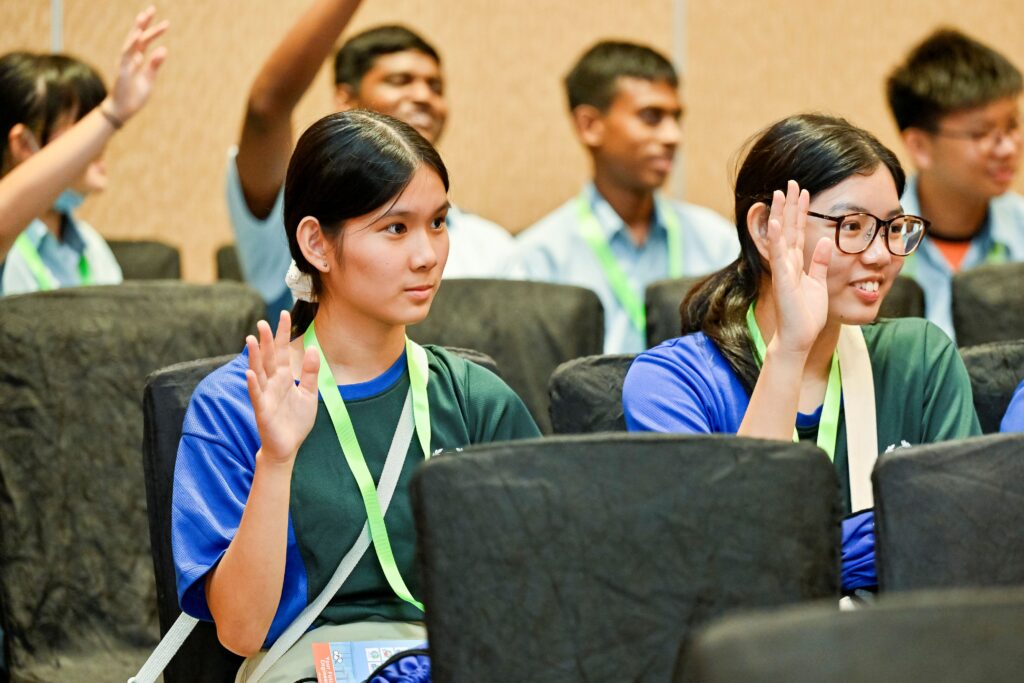
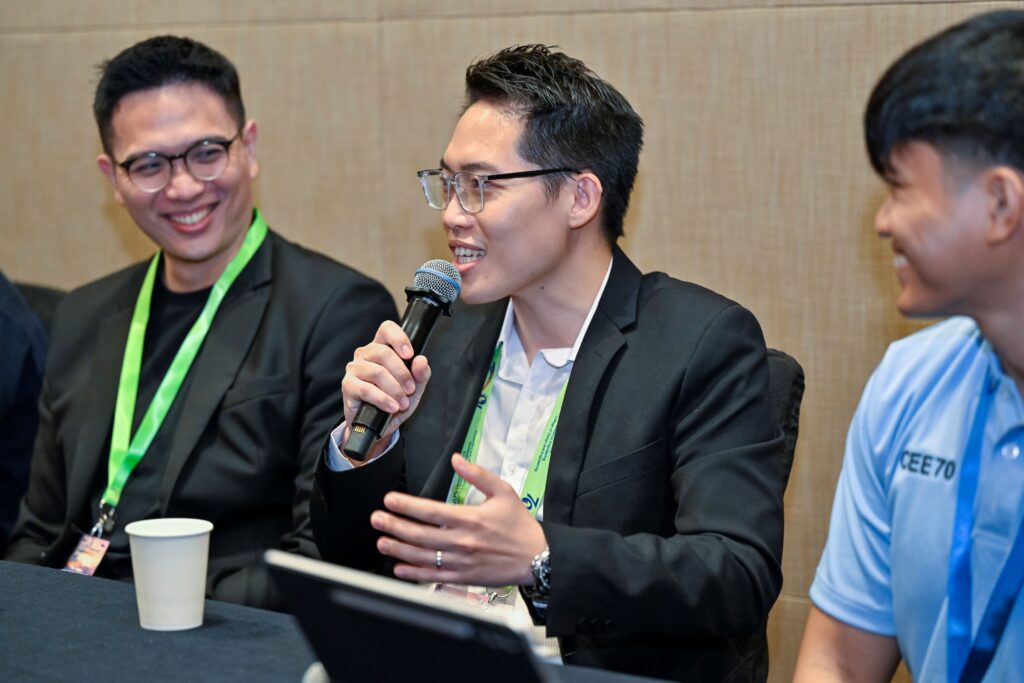
Student Fair Photo Gallery
Cocktail Reception & Appreciation Dinner
After a full day of insightful sessions and lively exchanges, attendees, speakers, exhibitors, and student helpers came together for an inclusive Cocktail Reception, an opportunity to unwind over free-flow beer, canapés, and sushi. The atmosphere was warm and collegial, reflecting the Department’s appreciation for the collective effort that made the day’s event a success. It was a fitting close to the programme and a moment for everyone to reconnect, reflect, and celebrate.
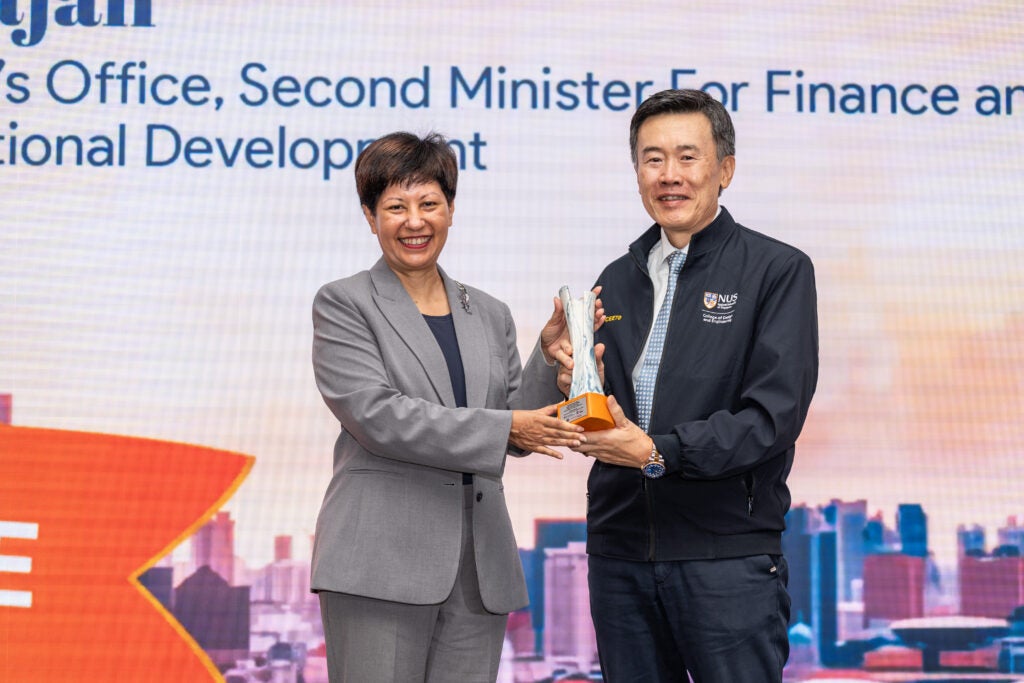
In the evening, 110 invited guests, including Department staff, co-organisers, keynote speakers, and exhibitors, gathered for an eight-course Appreciation Dinner. Conversations ranged from the event’s smooth organisation to fond memories of the Department’s early years, alongside simple but heartfelt words of thanks. The camaraderie in the ballroom underscored the spirit of partnership and shared purpose that defines our community. Tokens of appreciation were presented to Er Lim Peng Hong, President of the Professional Engineers Board, and Er Chan Ewe Jin, President of The Institution of Engineers, Singapore. We extend our sincere thanks to PEB and IES for their steadfast support and meaningful collaboration as co-organisers of the Symposium.
The evening concluded with a final group photo, faces relaxed and smiling, with a sense of pride and optimism for the future. It was a fitting end to a memorable day, and a reminder of the strong, forward-looking community of civil and environmental engineers shaping Singapore’s built environment.