
INDUSTRY & INNOVATION
CDE signs tripartite MOU with HTX and SPF
At CDE, we are committed to strengthening Singapore’s protective security ecosystem through education, applied research, and close collaboration with national partners.
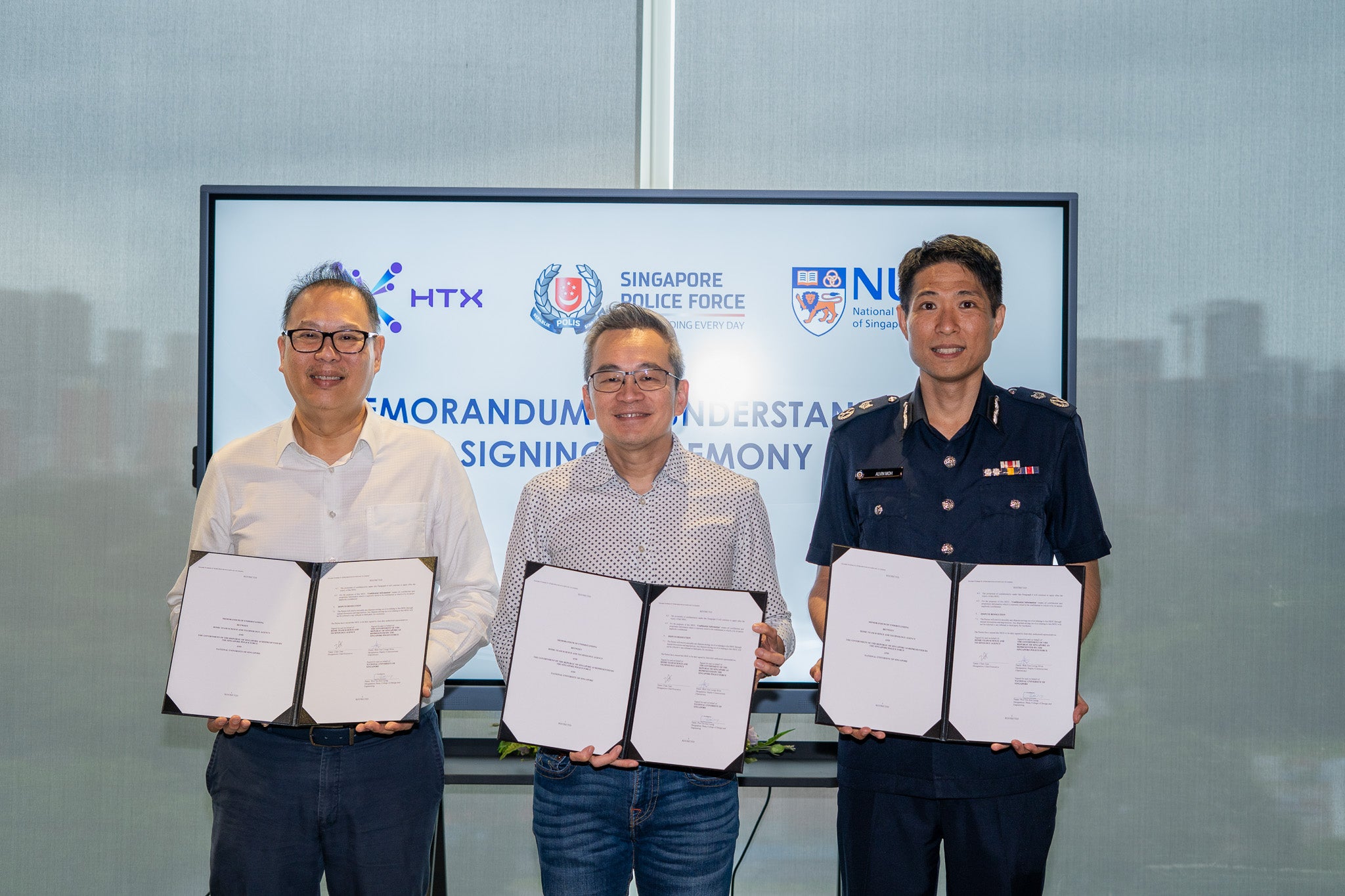
On 7 January 2026, CDE commemorated the signing of a tripartite Memorandum of Understanding between the Home Team Science & Technology Agency (HTX) and the Singapore Police Force (SPF). The MOU was signed by Dean of CDE Prof Teo Kie Leong, Mr Tsan Chan, Chief Executive Officer at HTX and Mr Alvin Moh, Deputy Commissioner (Operations) at SPF, formalising a partnership to advance professional standards and capabilities in protective security engineering.
Through CDE's Department of Civil & Environmental Engineering (CEE), a new Graduate Certificate course in Protective Security Engineering will be introduced, featuring courses on blast protection and the mitigation of progressive collapse in buildings. The programme will strengthen existing learning pathways for protective security practitioners and enhance the assessment framework for professional accreditation.
In addition, over the next three years, HTX and CEE will work towards a series of joint R&D initiatives aimed at expanding the current design envelope and assessment capabilities for critical urban infrastructures against disproportionate collapse. These efforts are expected to translate into practical design guidelines and promulgated to the industry through the Centre for Protective Security, SPF, for the protection of critical infrastructure and iconic developments.
"This is a significant milestone that will anchor and deepen collaboration between NUS, SPF and HTX to further strengthen the capability build up of protective security technologies in Singapore," said MrCheng Wee Kiang, Assistant Chief Executive (Engineering) at HTX. "HTX will continue to work closely with NUS to deliver impactful outcomes the enhance Singapore’s protective design standards and frameworks."
Prof Teo added, "This MOU underscores shared commitment to upholding high standards of protective security engineering, as well as in supporting the professional recognition and development of expertise in this important field."
Lastly, Mr Andy Tan, Director, Centre for Protective Security, SPF, emphasised the partnership's strategic importance: "This collaboration strengthens our protective security ecosystem, enabling Singapore to stay ahead of emerging threats and safeguard our nation's safety and security.”
CBE Eco-Solutions turns carbon soot into high-value materials
Turning environmental challenges into economic opportunities.
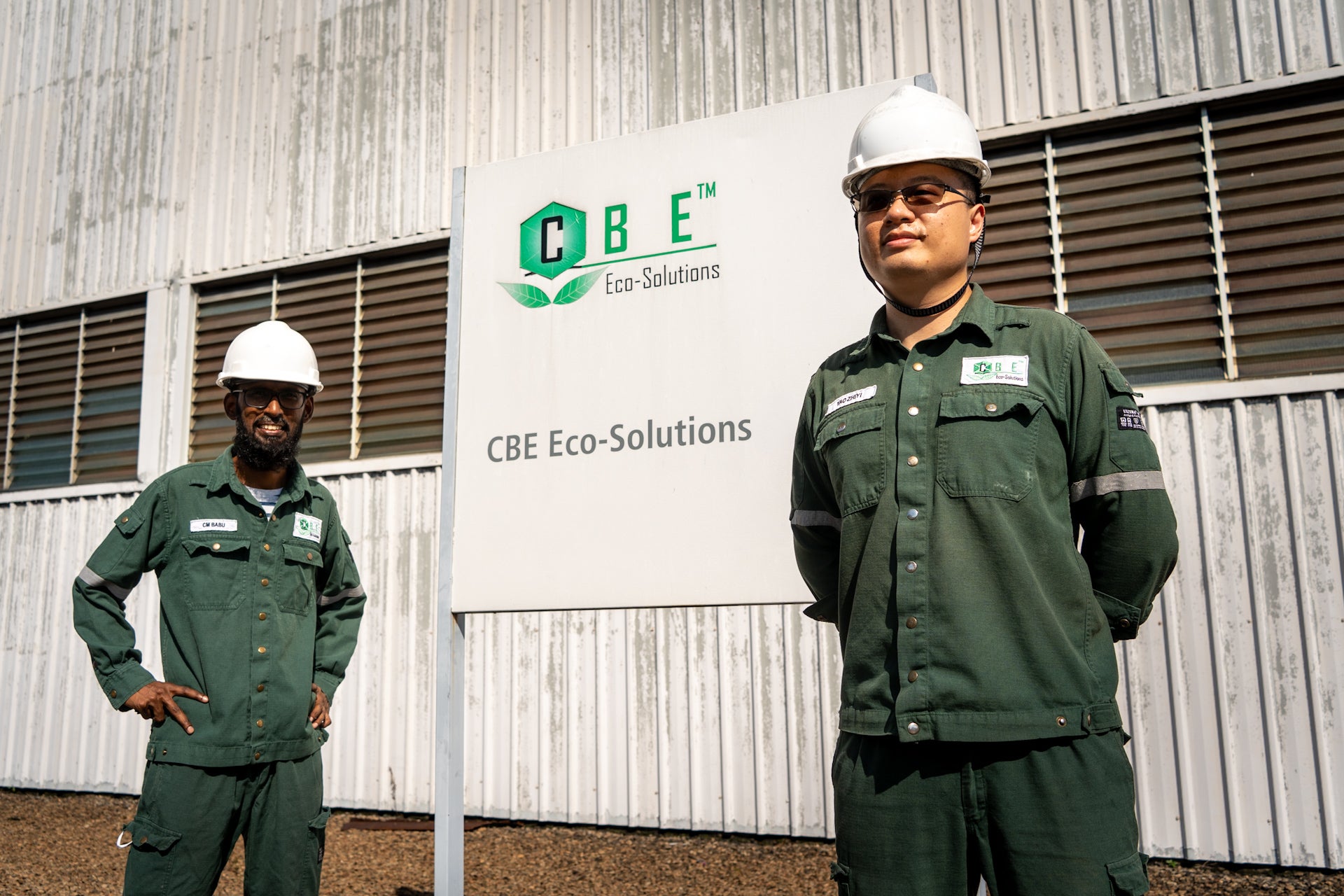
Operating on Jurong Island, CBE Eco-Solutions is a deep tech start-up turning hazardous refinery waste into high-value materials, reducing emissions while creating new economic value for industry.
Founded by former researchers Dr Yao Zhiyi and Dr Babu Cadiam Mohan from the Department of Chemical and Biomolecular Engineering at CDE, the start-up grew out of research on carbon soot recycling under the Sembcorp-NUS Corporate Lab, supervised by Prof Chi-Hwa Wang, before being supported by NUS Enterprise to commercialise its technology.
Every day, Singapore’s oil refineries produce around 200 tonnes of carbon soot, a hazardous by-product of gasification that is usually incinerated or sent to landfill. CBE’s processing technology converts this waste into materials used in batteries, tyres and energy storage, while cutting both disposal costs and carbon emissions.
“We are the first in the world to recycle carbon soot into high-value products,” said Dr Yao. “Our technology significantly cuts emissions associated with carbon soot disposal, preventing 1.4 tonnes of CO2 for every tonne of soot processed, and reducing wastewater treatment costs by more than 90% through our in-house purification process.”
CBE’s products are already drawing strong commercial interest. Its demonstration plant on Jurong Island is capable of processing two tonnes of carbon soot per day, and the company is now preparing to scale up to a full commercial facility able to handle up to 50 tonnes daily, producing around 15 tonnes of high-value materials.
Looking ahead, Dr Yao said CBE’s vision is to become “a leading global company in circular technologies, providing customised solutions to recycle various industrial wastes into advanced chemicals and materials.”
With proven technology and strong demand, CBE Eco-Solutions shows how research born at CDE can grow into a company tackling some of industry’s toughest waste challenges while creating new value for a cleaner future.
Read more about CBE’s journey and where it is headed next in this article from NUS Enterprise here.