


RESEARCH
Decoding the hidden grammar of cities
Designing better cities begins with understanding how they really work.
Asst Prof Yu Qian Ang (Presidential Young Professor) leads the City Syntax lab at CDE. His research uses data, advanced modelling and AI to uncover the hidden “grammar” of cities, developing solutions for shaping more liveable, sustainable and healthier urban environments.
The NUS Presidential Young Professorship aims to attract, support, and empower the brightest and most promising young academics in the early stage of their careers. For more information: https://www.nus.edu.sg/careers/nus-programmes/.
DBE researchers share their work at La Biennale di Venezia 2025
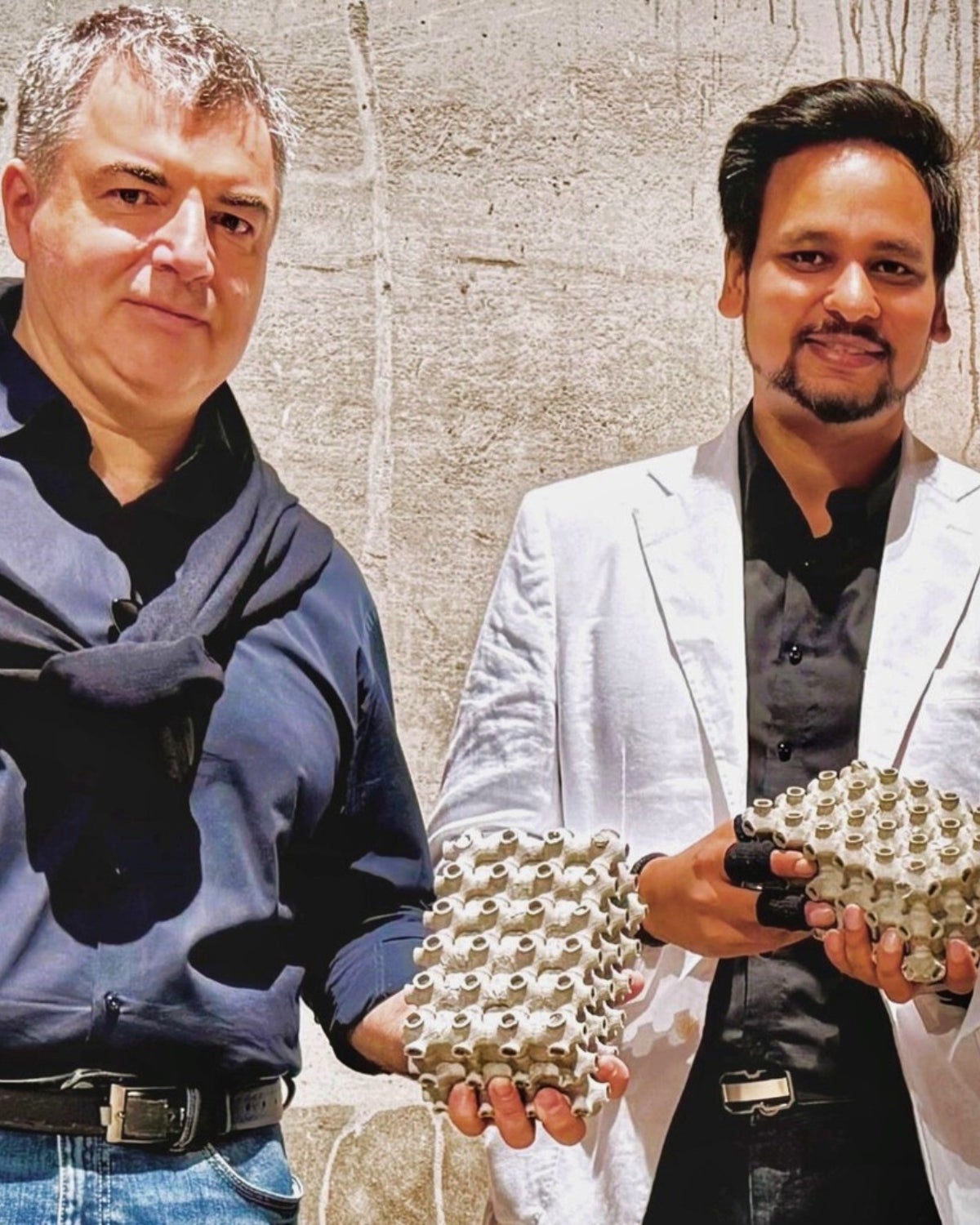
When researchers at the Department of the Built Environment met with Nobel Laureate Professor Sir Konstantin Novoselov and his team from the Institute for Functional Intelligent Materials (I-FIM), the team did not expect to end up presenting an exhibition at the 19th International Architecture Exhibition – La Biennale di Venezia 2025 Venice Architecture Biennale), one of the world’s most prominent platforms for architectural and material innovation.
Sir Prof Nosolelov, the Nobel Prize-winning physicist known for groundbreaking work on graphene, who is also from the Department of Materials Science, and Assoc Prof Kua Harn Wei, whose research focuses on applications of biochar as sustainable building materials, decided to collaborate on 3D printing of graphene concrete.
Initial discussions focused on the feasibility of incorporating graphene supplied by I-FIM into cementitious mixes suitable for laboratory-scale casting and 3D printing. A decision was made to produce physical concrete samples rather than computational or theoretical studies. The opportunity to present at the Venice Architecture Biennale provided impetus that subsequently shaped the scope, timeline, and deliverables of the collaboration.
Graphene material was prepared and supplied by I-FIM, with formulation input from the materials science team to ensure compatibility with cementitious systems. Concrete mix design, batching, casting, and curing led by Research Associate Abhimanyu Goel were conducted using facilities at the Department of the Built Environment laboratories.
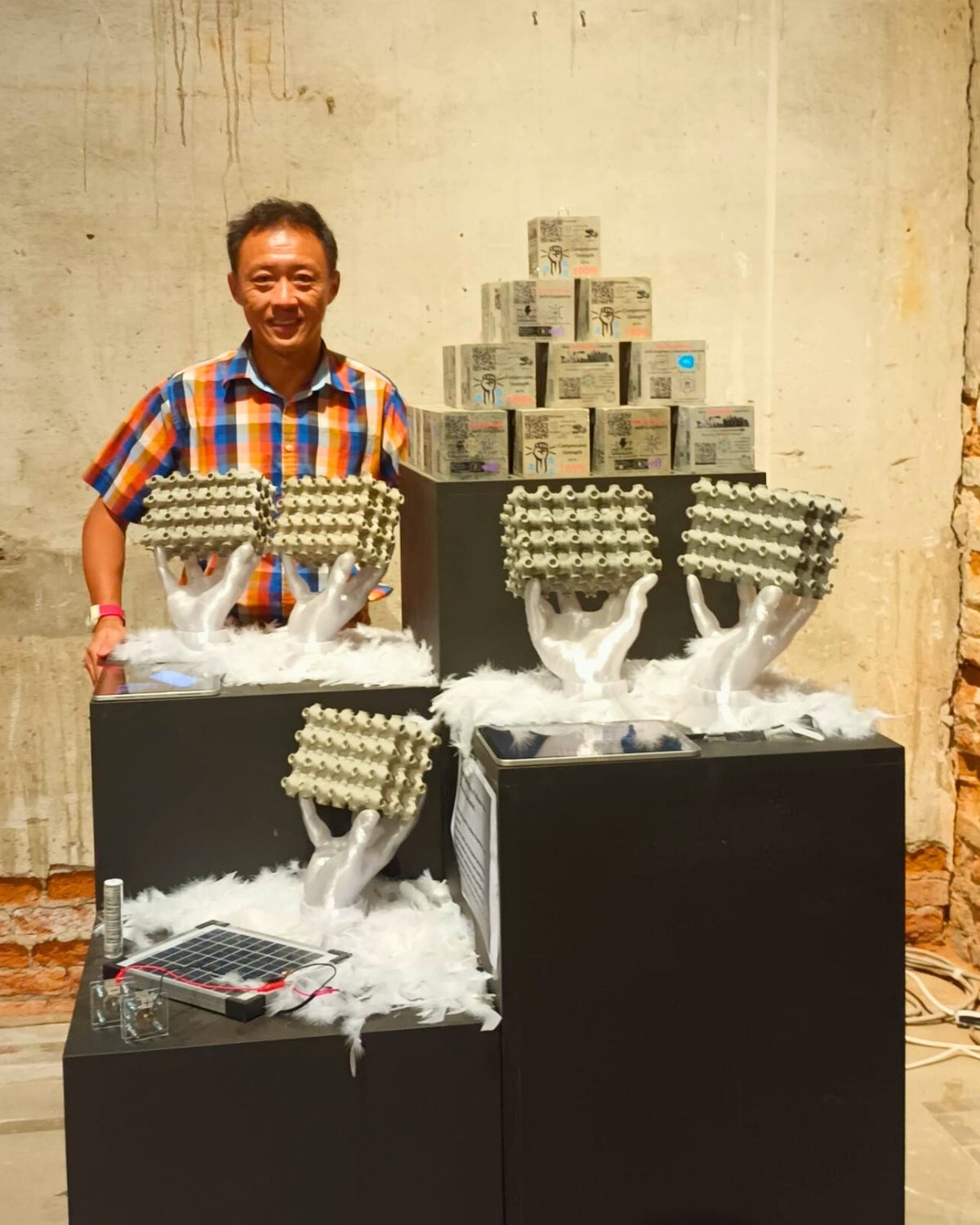
The team designed and fabricated a series of 3D-printed concrete modules based on Triply Periodic Minimal Surfaces (TPMS), demonstrating how digital design and biomimicry can create structurally efficient, lightweight forms with minimal material usage. TPMS structures, found in nature and molecular biology, are ideally suited for 3D printing, enabling the creation of complex geometries layer by layer and producing functional lattice materials. “These forms express a fusion of computation, material efficiency, and spatial poetry,” said Mr Goel, who acted as the project’s lead architect.
Architectural exhibition components, including layout drawings, display elements, and physical samples, were designed and fabricated specifically for the Venice Biennale. The resultant exhibit materials were later reused and adapted for display at Singapore Design Week, showcasing the interplay of material intelligence, geometry, and sustainable design.
Assoc Prof Kua stated that “I am keen to explore utilising the unique properties of graphene to customise concrete for different functions. Additionally, combining graphene with other carbon-based materials, such as biochar, holds immense potential for the wide-scale innovation of high-performance, next-generation concrete that is also sustainable.”
Medical AI to see, reason and anticipate
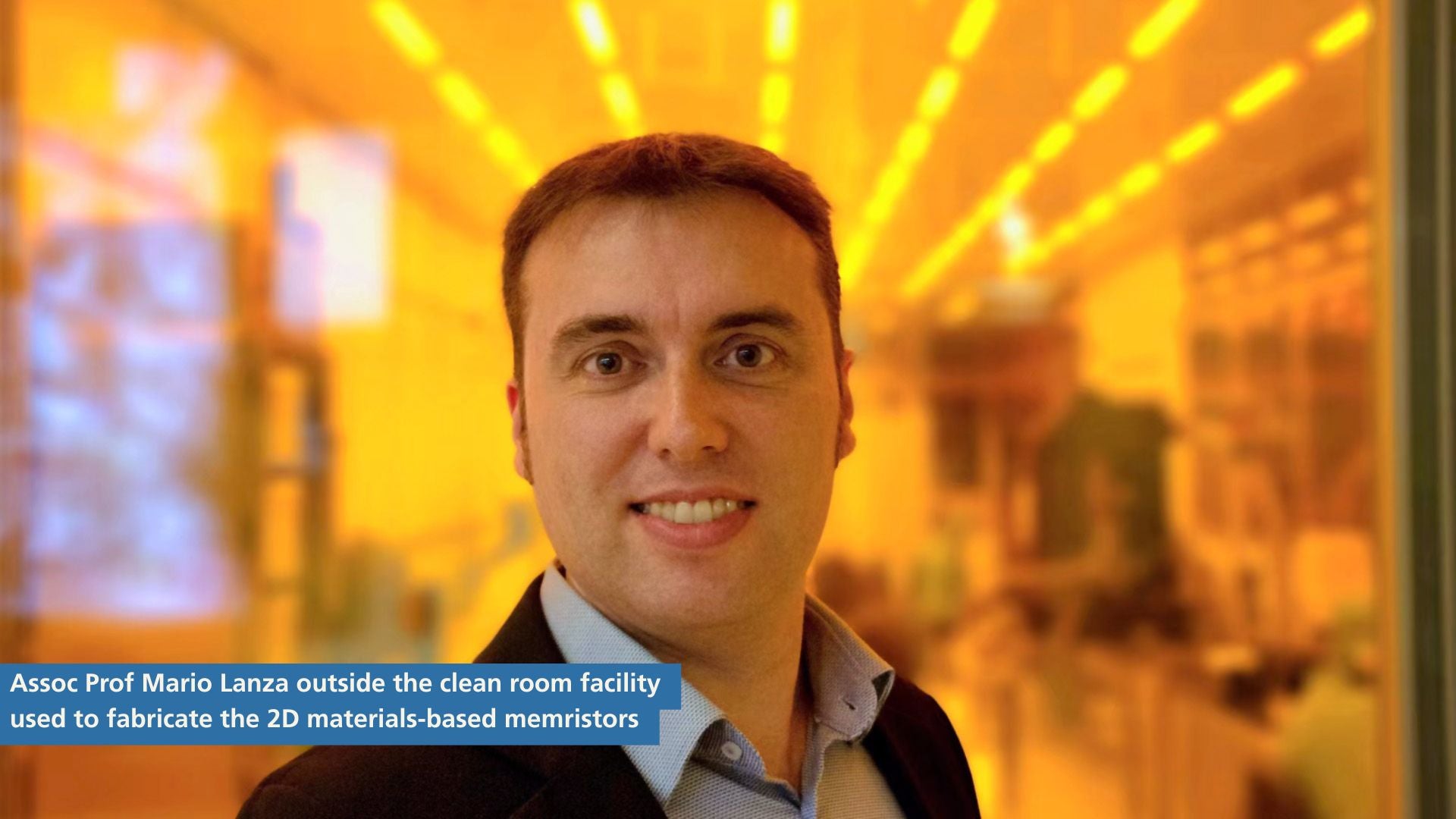
A major, multi-year research project led by Assoc Prof Mario Lanza to advance electronic materials and devices for future memory and computing applications has been awarded a prestigious Competitive Research Programme (CRP) grant.
The project centres on the design, fabrication and testing of memristors, an emerging category of electronic devices with potential uses in non-volatile memory, which can retain information even when power is switched off, as well as in brain-inspired computing systems.
“Despite their promise, memristors face challenges related to device variability and scalability, which currently limit wider deployment,” said Assoc Prof Lanza. “Our project aims to address these challenges through the development and study of novel nanomaterials with improved physical and electronic properties, and by assessing their performance in device and circuit applications.”
Assoc Prof Lanza’s research focuses on the development and characterisation of nanoscale electronic materials and devices, particularly for memory technologies and computing systems that mimic how the human brain processes information.
With Assoc Prof Lanza as the principal investigator (PI), the five-year project will involve collaboration across three Singapore universities (NUS, NTU and SUTD) alongside leading industry partners based in Europe.
The CRP grant is administered by the National Research Foundation Singapore, and supports only a small number of large-scale projects through a highly selective, nationwide competition. CRP calls are launched periodically to enable ambitious multidisciplinary research efforts that address significant national-level scientific and technological challenges.
Major Grants Awarded
The major grants (start date in January 2026) with total project value > $1M.
| Hosting Unit | Project Title | Funding Programme (Source of Funding) |
Principal Investigator | Co-Investigator |
| DOA | Modelling and development of poro-metamaterials with double porosity systems for inter-floor noise isolation | Cities of tomorrow R&D programme: Greater sustainability – 2023/MND | Lau Siu Kit | Zhai Wei |
| ME | Advancing rainwater management through cutting-edge weather louvre panels | Cities of tomorrow R&D programme: Greater sustainability – 2024/MND | Shu Chang | Lee Heow Pueh; Khoo Boo Cheong |
| CEE | Enhancing concrete resilience in Singapore: Evaluating limestone as an alternative for concrete applications | Cities of tomorrow R&D programme: Advanced construction – 2024/MND | Pang Sze Dai | Qian Xudong; Geng Guoqing; Du Hongjian; Tan Kiang Hwee |
| BME | Developing whole-cell biosensors for environmental monitoring of pathogens | DSO National Laboratories | Poh Chueh Loo | |
| ECE | Foundational building blocks for next-generation magnetic memories | NRF Open/General competitive research programme (NRF-CRP) – 2024/NRF | Anjan Soumyanarayanan (Physics); Yang Hyunsoo | |
| ME | Hierarchical cooperation and competition learning for swarm defence scenarios | ST Engineering Land Systems Ltd | Guillaume Adrien Sartoretti |