
STUDENT ACHIEVEMENTS & STUDENT LIFE
Climate-resilient design leads NUS to top two prizes at iNTA 2025
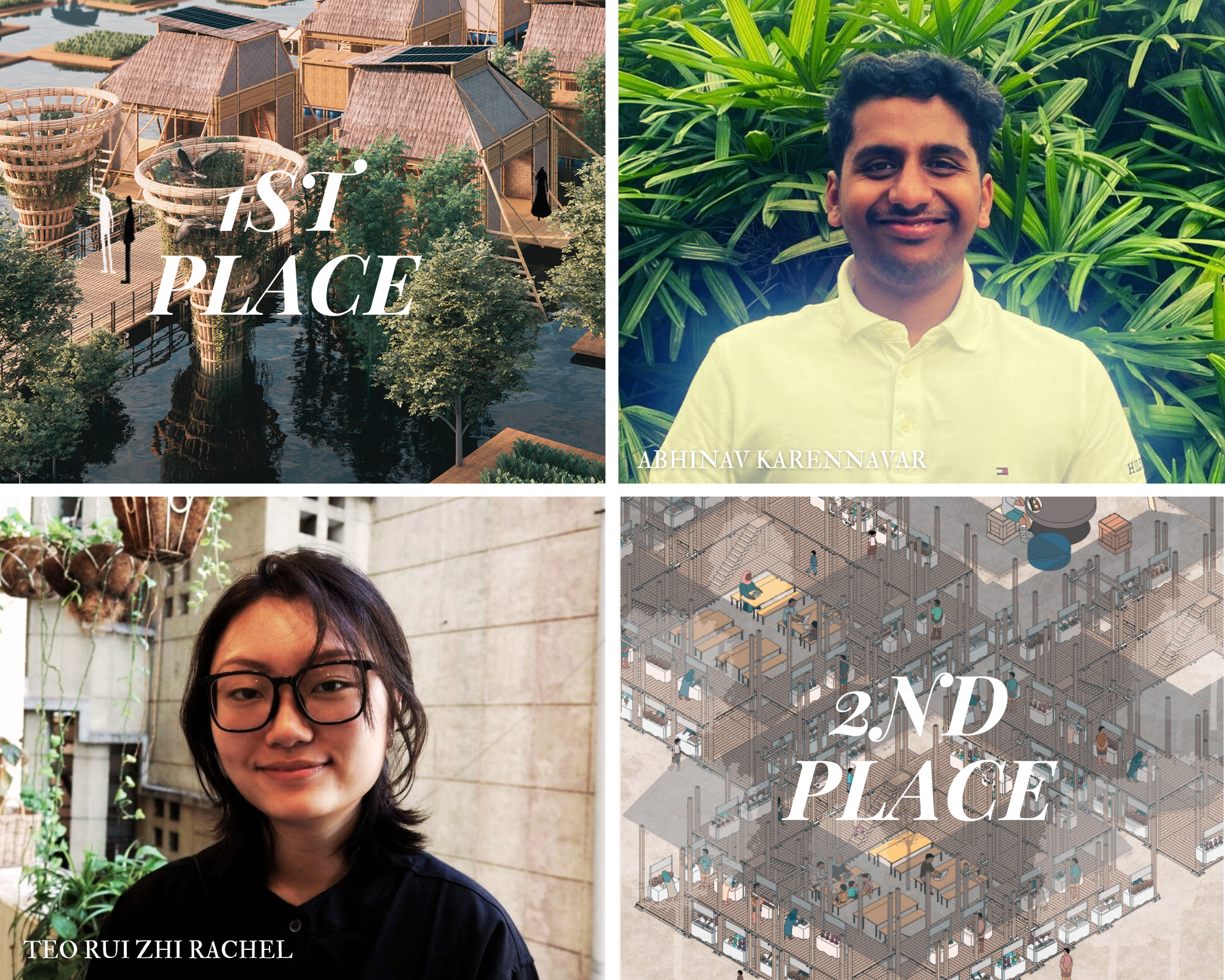
When design research is grounded in real-world needs, our graduates swept the top two awards at the recent International Network for Tropical Architecture (iNTA) Design Competition. First prize went to Ar Abhinav Prakash Karennavar, Master of Science in Integrated Sustainable Design for “NIDIT: Riverine Resilience, India,” and second prize to Master of Architecture alumna Rachel Teo (Class of 2025) for “Kamp to Kampong, Banda Aceh, Indonesia,” which formed part of her master’s thesis.
Kudos to both for their outstanding efforts. These achievements underscore the strength of our Master’s programmes and their global perspective in shaping impactful solutions for the future of the built environment.
Read more here.
PhD student Song Jingwen receives Honourable mention at SSC
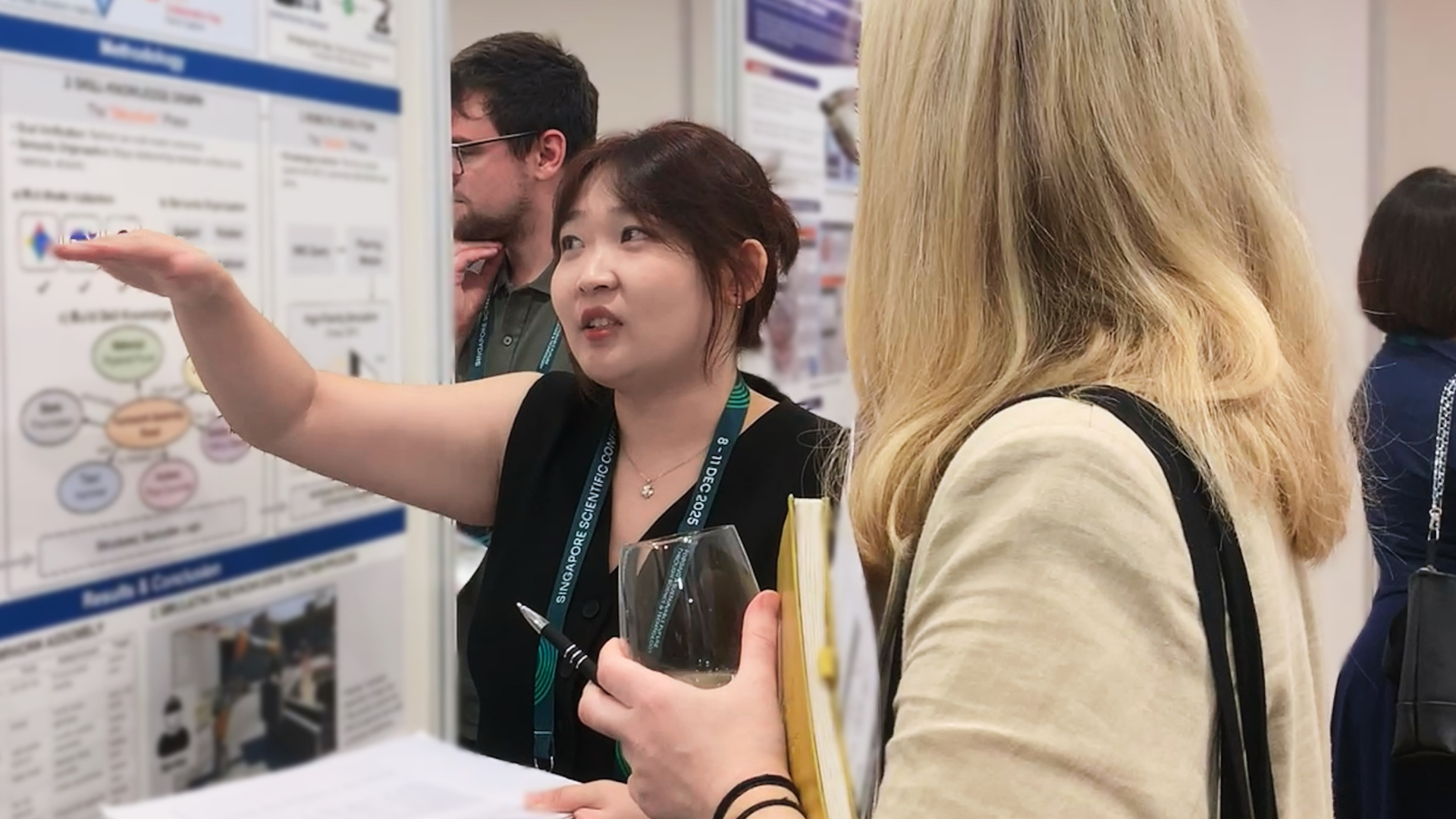
Song Jingwen, a PhD student supervised by Dr Alexander Lin from the Department of Built Environment, presented a poster and received an Honourable Mention in the Manufacturing category at the Singapore Scientific Conference (SSC), held under the theme “Forging a Sustainable Future Through Science & Technology.”
In her poster and presentation, Jingwen showcased a Large Language Model (LLM)-driven framework for capturing, structuring, and transferring expert tacit knowledge to enable more effective human–robot collaboration in construction. The conference brought together international and interdisciplinary perspectives that enriched discussion around the work.
PhD students receive best Paper and Presenter award at ISMT 2025
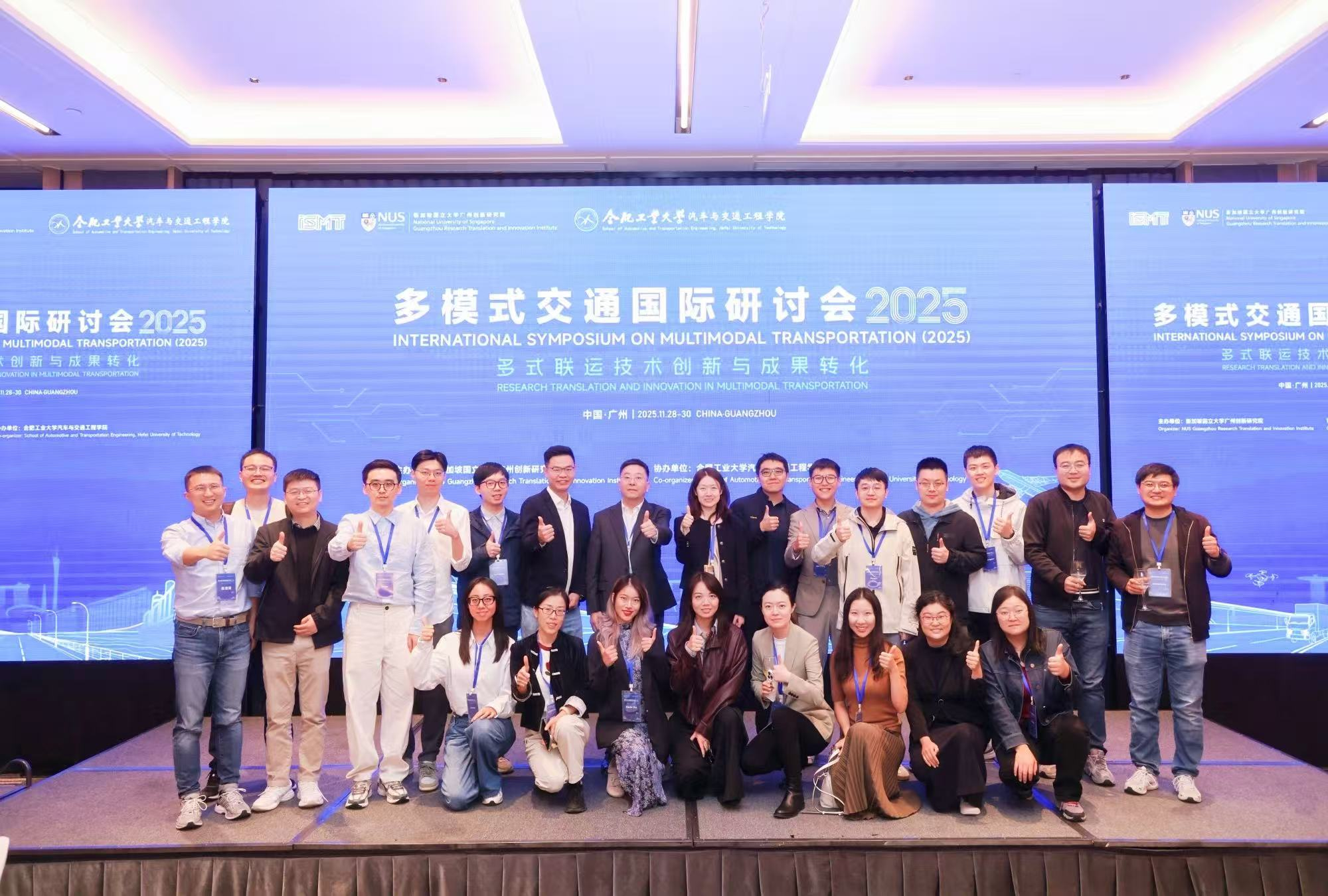
Two PhD students from Civil and Environmental Engineering, supervised by Assistant Professor Yang Kaidi, were recognised at the 7th International Symposium on Multimodal Transportation (ISMT 2025), held from 28–30 November 2025 in Guangzhou, China, and hosted by the National University of Singapore Guangzhou Research Translation and Innovation Institute (NUS GRTII).
PhD student Wang Qiqing received the Best Paper Award for his work titled “LLMs as Virtual Traffic Police: Incident-Aware Traffic Signal Control Augmented by Large Language Models,” which explores the use of large language models to enhance traffic signal control under incident conditions.
PhD student Zhou Jingyuan was awarded the Best Presenter Award for his paper, “Formally Verifying Multi-Region Perimeter Control with Neural Vector Lyapunov Certificates,” which focuses on the formal verification of traffic control strategies using learning-based methods.
From undergraduate research to scientific conference: CDE students present sustainable hydrogel project
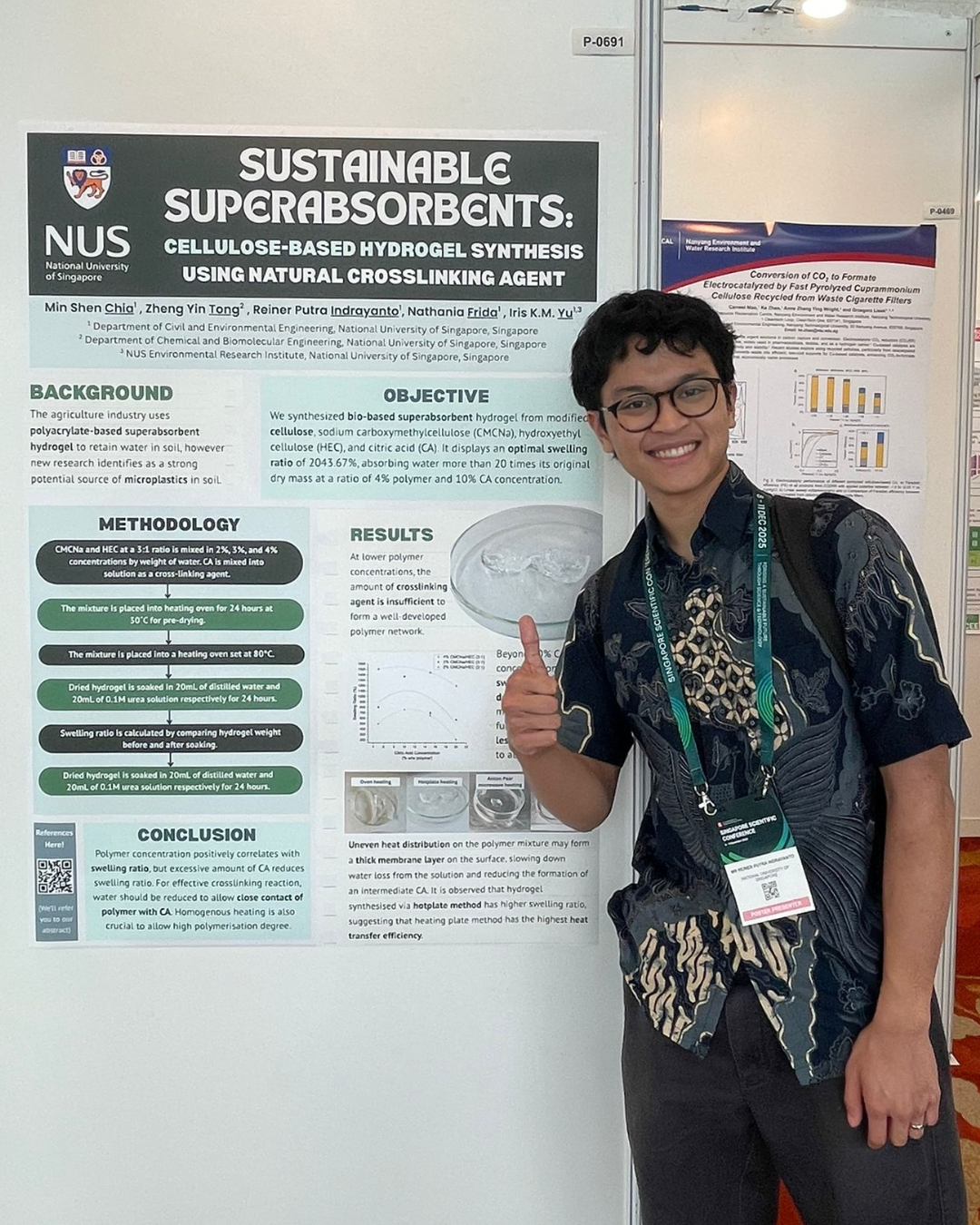
“Presenting our work alongside PhD students and postdoctoral researchers made us realise how far an undergraduate project can go,” shared Reiner Putra Indrayanto (Year 3, Environmental and Sustainability Engineering).
Reiner was part of an undergraduate research team comprising Chia Min Shen, Nathania Frida (Year 3, Environmental and Sustainability Engineering), and Tong Zheng Yin (Year 3, Chemical Engineering), supervised by Assistant Professor Iris Yu. The team was among the few undergraduate groups presenting at the Singapore Scientific Conference: Forging a Sustainable Future Through Science & Technology.
Their project, “Sustainable Super absorbents: Cellulose-based hydrogel synthesis using natural crosslinking agents,” explores greener alternatives to petroleum-based hydrogels, which are a potential source of microplastics in soil. The conference marks a milestone in a journey that began under the CDE Undergraduate Research Experience (UREx) programme. The project also received the CDE 2025 Research Award (Merit) and NED–Engineering Innovation Challenge (EIC) 2025 (Merit), reflecting the strength of its multidisciplinary foundation across chemical and environmental engineering.
The team shared, “Browsing through posters and meeting rooms hosting world-class researchers opened my eyes to the scope of modern scientific research. Intimidation quickly turned into excitement when I spoke with the people behind the abstracts.”
On the value of such exposure, Asst Prof Iris Yu noted: “Top scientific conferences bring together local and international experts to discuss the state of the art, inspiring undergraduate students to shape their own ideas and offering a valuable glimpse into academic life.”
The team hopes to build on this work by further studying the hydrogel formation mechanism, with the aim of improving water-use efficiency in agriculture. By retaining moisture in the soil for longer periods, the solution could help reduce water loss and address growing water scarcity challenges.
Masters students gain industry exposure at HIMA FUN SAFE 2025
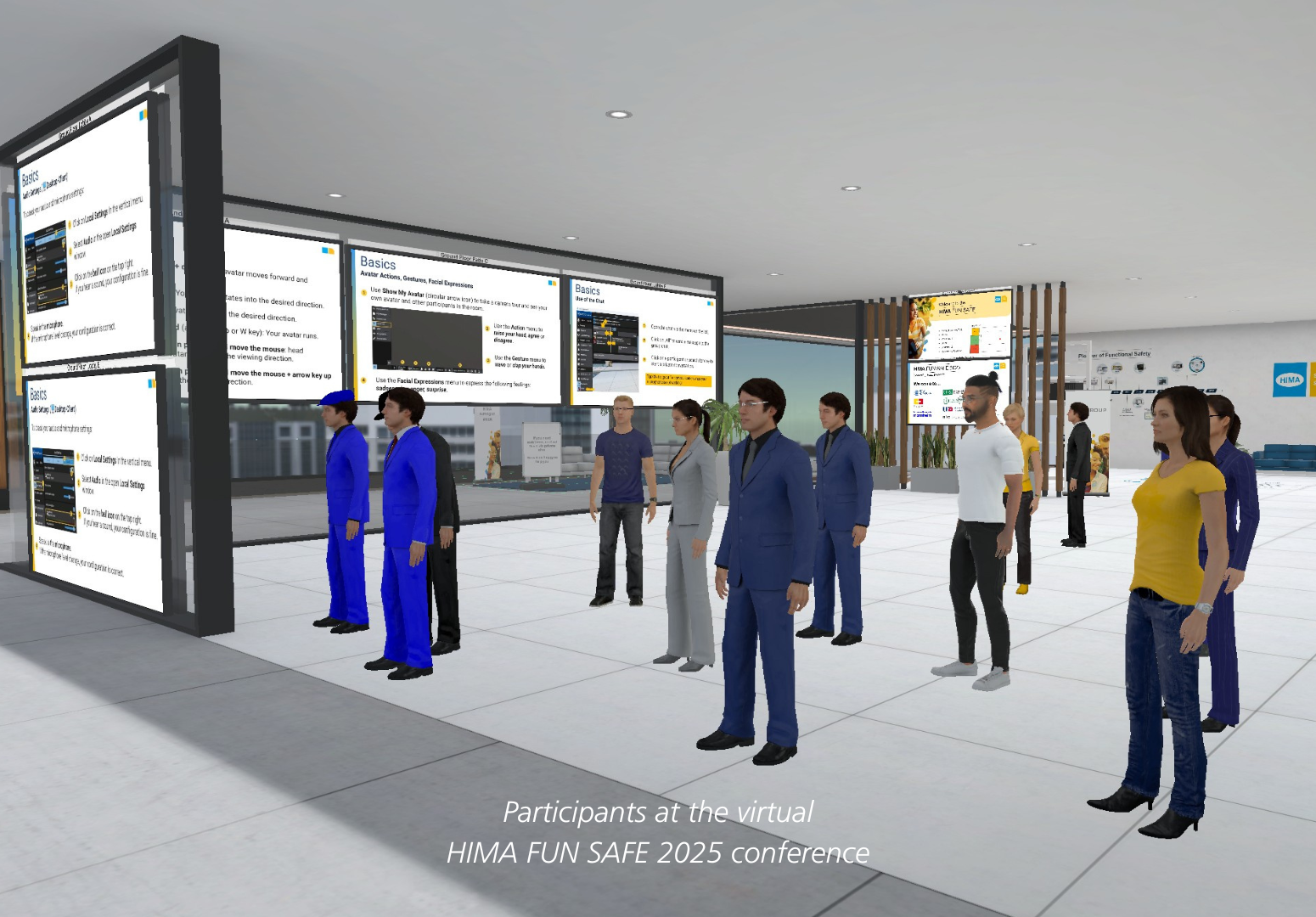
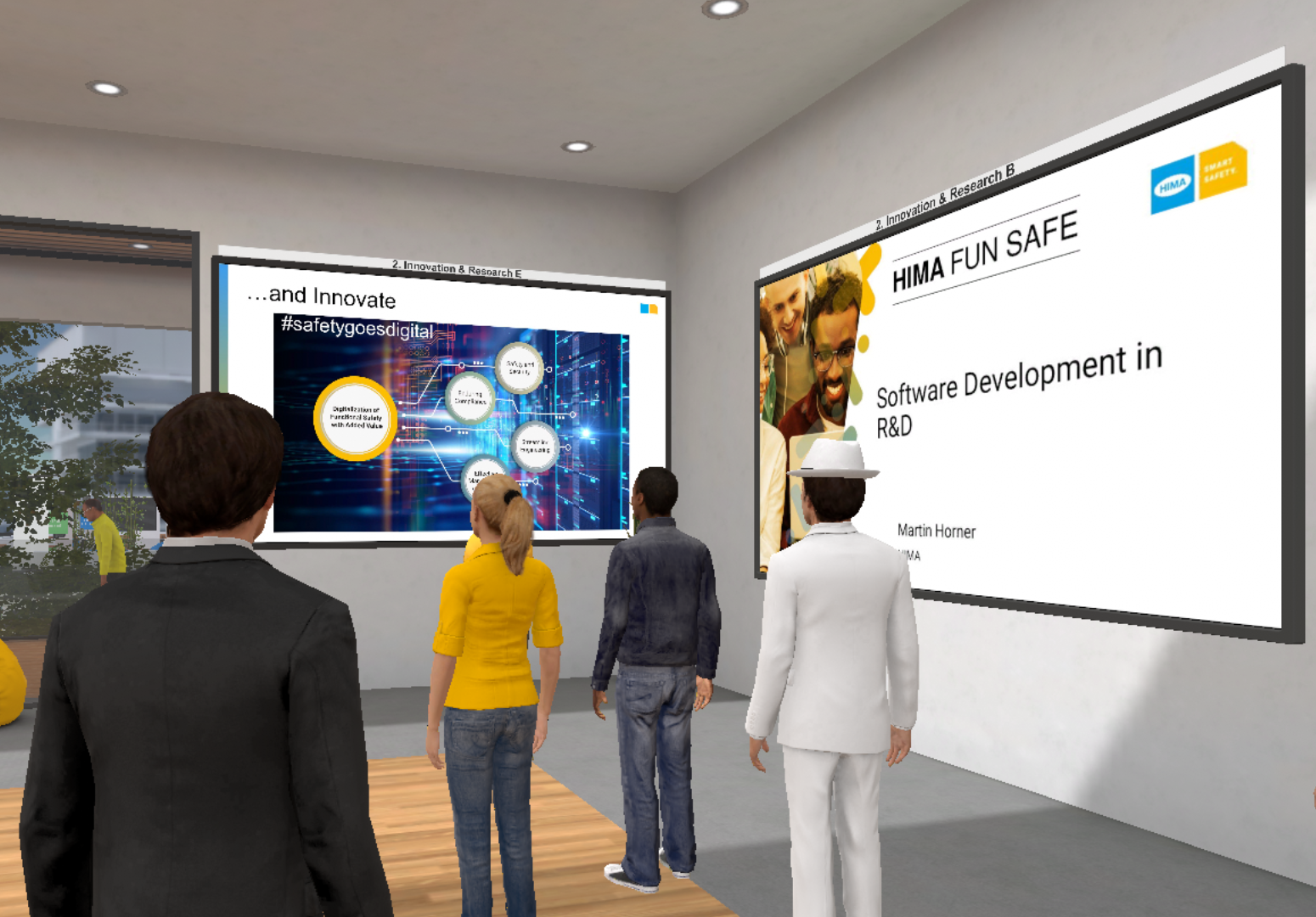
“The opportunity to broaden my understanding of functional safety in real industrial contexts, and to learn more about industry practices through case-based discussions was invaluable,” said Zhou Mingxun (Master of Science in Safety, Health and Environmental Technology) after attending the HIMA FUN SAFE 2025 conference. “The gamified learning format made the process highly immersive and engaging, which helped to reinforce the concepts and keep the experience memorable.”
Mingxun was one of the over 20 CDE students who participated in HIMA FUN SAFE 2025, a two-day virtual conference that makes functional safety accessible and practical for students and universities. Instead of passive webinars, participants joined live, interactive sessions in a 3D environment, met peers and professors, and saw how safety connects to real industries and career paths.
Under the theme “Digitalisation of Safety and Security”, the 2025 edition brought together around 120 international students and young professionals from eight universities. As a partner university, CDE is proud to support initiatives like this that connect classroom learning with industry practice.
Associate Professor Ivan Sin, Programme Director of the Master of Science in Safety, Health and Environmental Technology, shared, “The event enriches the overall learning journey in functional safety with industry-relevant focus, allowing students to apply their learning, exchange ideas, and gain new perspectives from peers, bridging theory and practice.”
“Studying a variety of real cases is meaningful for this field, and attending sessions like this helps bridge classroom learning with industry realities, improving how we interpret and apply the methods and frameworks covered in the course,” added Mingxun.
Scenting the past: Bringing hawker culture to life in VR

How can we capture and share experiences and connect cultures through technology? Well, a student team worked on a project to do just that. Their Scenting the Past project is a multisensory virtual reality (VR) installation that was showcased at the Singapore Chinese Cultural Centre (SCCC) as part of the Shantang Arts & Culture Exhibition. The project explores Singapore’s hawker culture through visual, auditory, and even olfactory experiences.
The project team comprised not only students from across engineering disciplines, but also Mullappalli Devesh, a Year 3 Economics student! “As the only student from the Faculty of Arts and Social Sciences in the team, I brought the cultural heritage perspective, while my teammates handled the VR and hardware work. That’s how we learned the most from each other,” said Devesh.
The project was developed by Devesh, Park Junha (Year 3, Industrial and Systems Engineering), Bao Ying (Year 3, Electrical Engineering), Chen Yun Feng (Year 3, Mechanical Engineering) through CDE3301: Ideas to Proof-of-Concept by the Engineering Design and Innovation Centre, together with Ni Shi Yong (Year 2, Computer Engineering), who joined the project through the Undergraduate Research Opportunities Programme (UROP). They were guided by Dr Cai Shaoyu and supported by MSc Engineering Design and Innovation students Gan Quanhao and Lin Tao.
Through VR hawker scenes and virtual Teochew foods, such as fish porridge, the project highlights how everyday food practices reflect values of kindness, sharing, and community. It also highlights how Teochew-influenced shantang values of mutual support and collaboration have historically shaped hawker culture.
“Shantang tradition, as reflected in hawker culture, is ultimately about human kindness and mutual support,” said Dr Cai Shaoyu. “Multisensory experiences allow these values to be felt, making cultural heritage more tangible and meaningful.”
During the exhibition, the students demonstrated the project to Mr Baey Yam Keng, Minister of State for Culture, Community and Youth, and Transport. Mr Baey commended the students’ efforts and recognised their contributions in promoting Singapore’s cultural heritage through technology, particularly in engaging younger audiences.
Reflecting on the process, Park Junha shared, “Sharing our project with visitors of different ages was both fun and rewarding. Many were curious about how the VR and scent-diffusing technology worked, and it was exciting to see people, especially children, experience it for the first time.”
He added, “Working in a multidisciplinary team was refreshing. Everyone brought unique strengths. Devesh led the research and interviews, Bao Ying and Yun-Feng handled the hardware, and I focused on the VR software. The project challenged me to learn about cultural heritage and develop new technical skills. Seeing everything come together was very rewarding.”
Light Brain: An exchange studio project with global impact
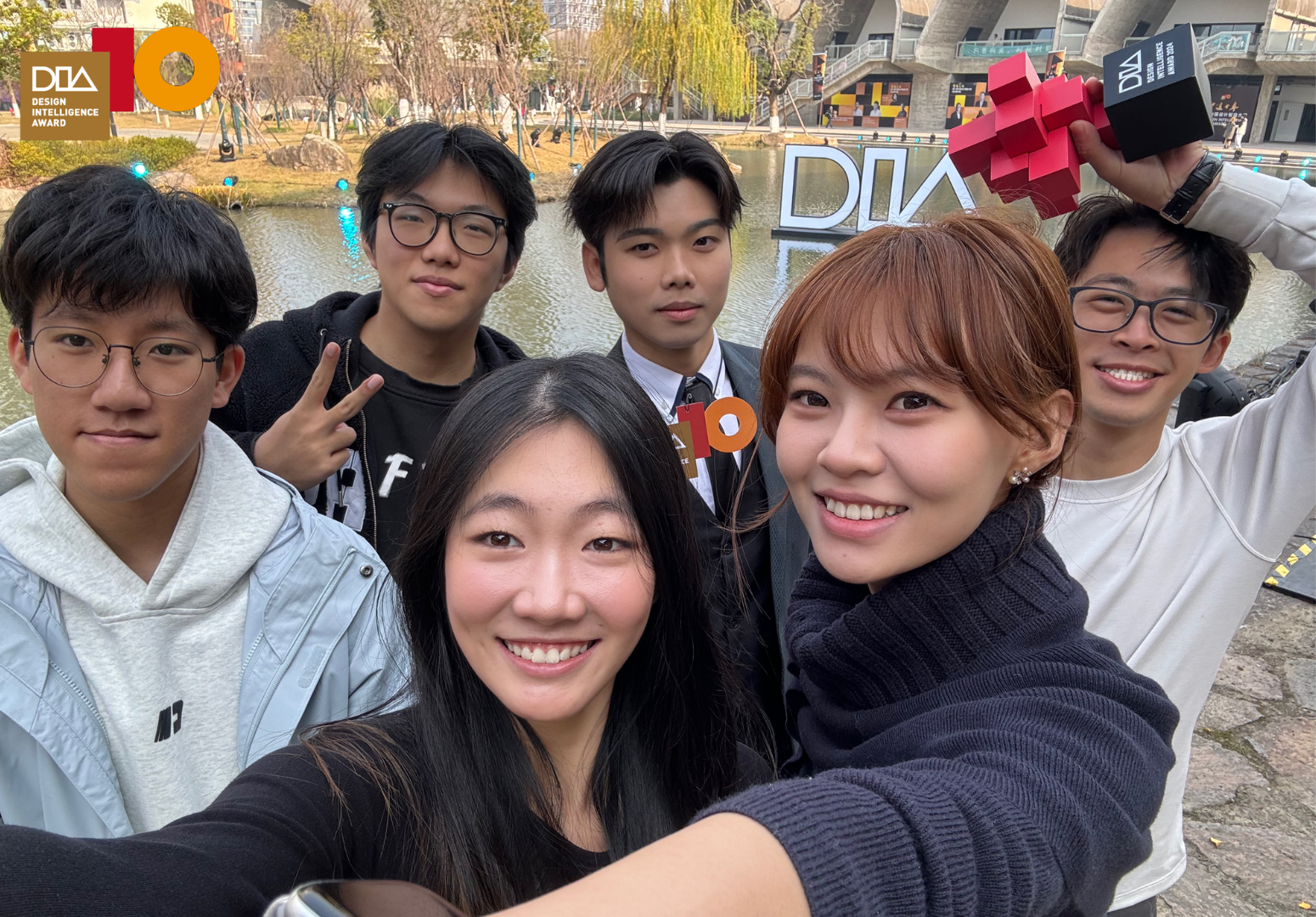
Developed across two universities and cultures, Light Brain (轻脑) emerged from a semester-long industrial design studio jointly conducted at the Divison of Industrial Design (DID), Zhejiang University (ZJU) and the China Academy of Art during the Student Exchange Programme (SEP) in Summer 2025, and was later recognised as one of the Bronze Award winners at the Design Intelligence Award (DIA) 2025.
The DIA is an international industrial design competition and innovation platform established in 2015, with entries from over 87 countries and regions.
Working with three peers (Gao Yuxuan, Qian Kaihang and Meng Liwen) based in China, our Year 4 Industrial Design students, Ong Yong Qing, Hailey Yang Yixuan and Vilmos Soh, set out to design a non-invasive migraine intervention wearable that prioritised discretion, comfort, and everyday confidence, challenging the conventional aesthetics of medical devices. The focus was on industrial design and product architecture: translating complex neuromodulation technology into a lightweight, non-stigmatising form factor suitable for public use.
The wearable is supported by a companion app that fits into the therapy workflow with minimal interaction. During a typical session, users can rest for around 45 minutes while the wearable delivers neuromodulation therapy. After the session, the app prompts a brief check-in for users to rate comfort and perceived relief, supporting longer-term optimisation and personalisation while keeping the experience calm, discreet, and low-effort.
The cross-border studio experience pushed the team into unfamiliar territory. Collaborating with BrainCo, a leading Hangzhou-based tech company, meant designing around real neuromodulation hardware rather than speculative concepts, and balancing strict medical requirements with consumer usability and aesthetics.
The project’s biggest challenge surfaced after the exchange ended. With team members split between Singapore and China, collaboration continued remotely despite clashing academic schedules and differing commitments. Designing a physical hardware product without being able to touch it tested the team deeply, particularly in Industrial Design, where weight, texture, and ergonomics are critical. Progress depended on trust, disciplined communication, and countless late-night WeChat video calls, where detailed visual checks helped ensure the prototype’s physical “feel” met shared standards despite the distance.
“Not being able to touch the product was the hardest part,” shared Yong Qing. “It forced us to trust our teammates and communicate with a level of clarity we hadn’t needed before. That experience changed how I see design, as something built collectively, not individually.”
Light Brain offers a glimpse into how exchange-based studios expose students to cross-border collaboration, real-world constraints, and international design contexts, extending learning beyond the classroom!
Read more about Light Brain here
Photo credits: Design Intelligence Award 2025, Ong Yong Qing