

EVENTS & OTHER HAPPENINGS
Robotics Meets AI showcase: Inspiring the next generation
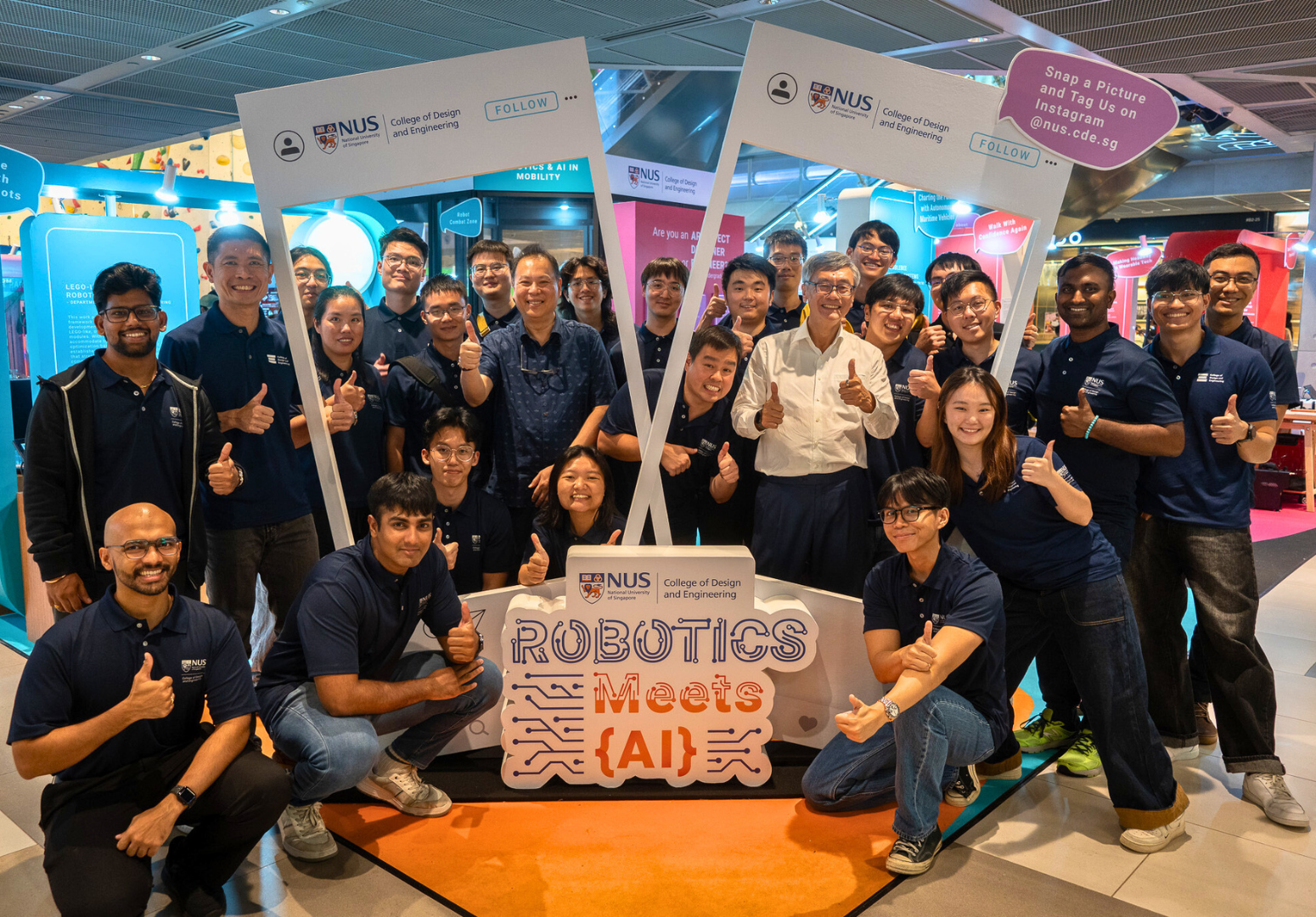
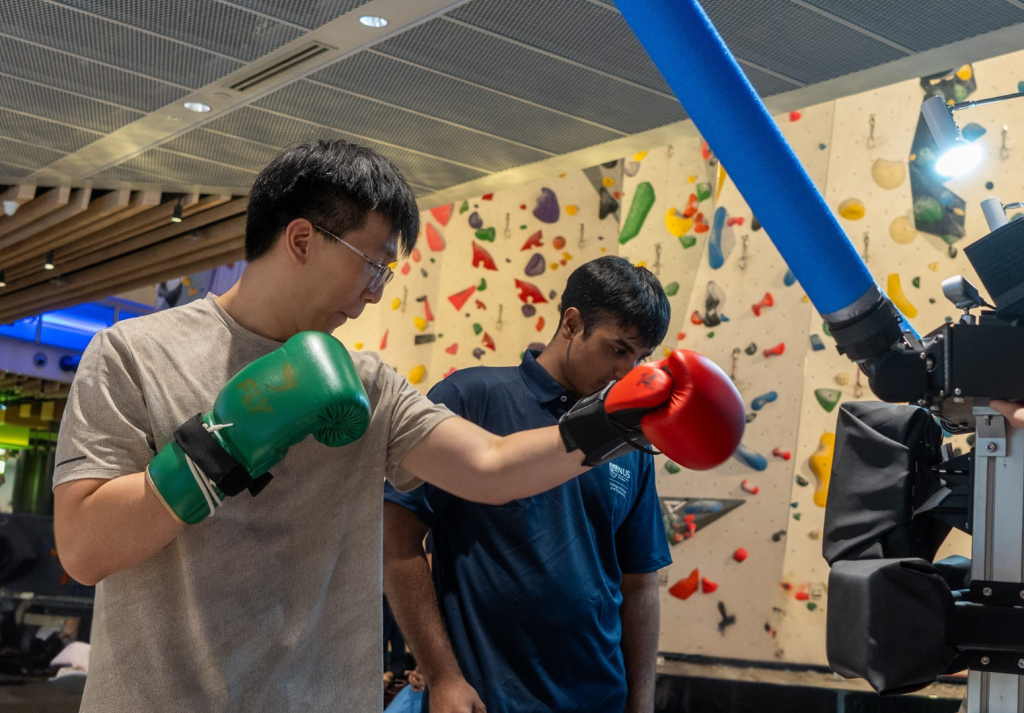
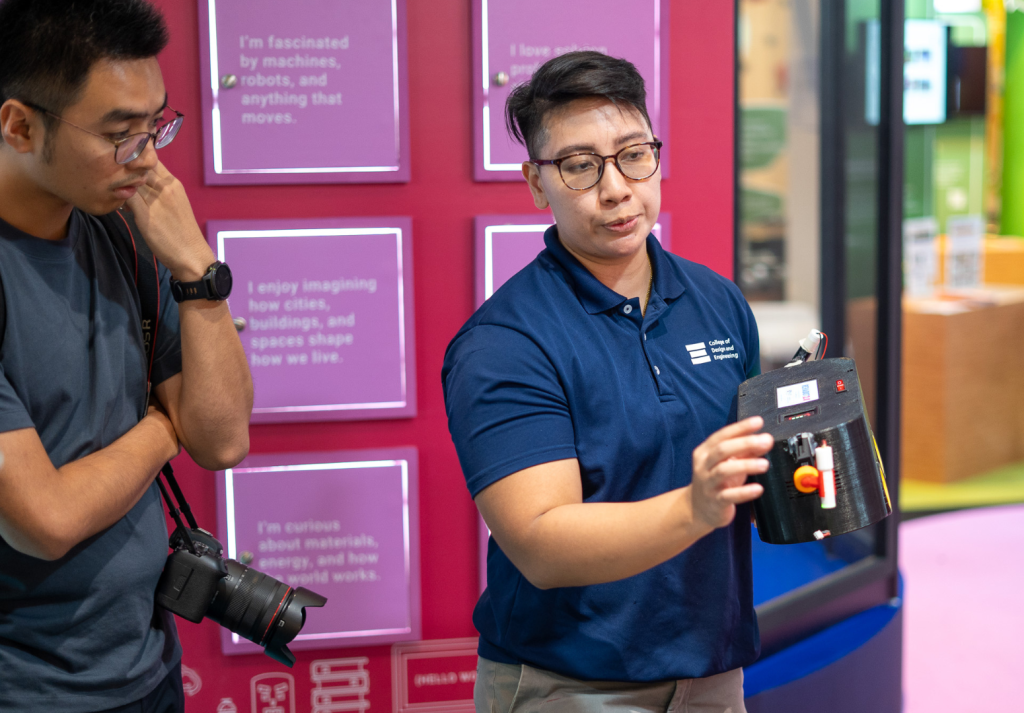
We were honoured to host NUS President Professor Tan Eng Chye and CDE Dean Professor Teo Kie Leong, who engaged with our talented student teams and their innovative projects, including highlights from NUS Calibur Robotics Team.
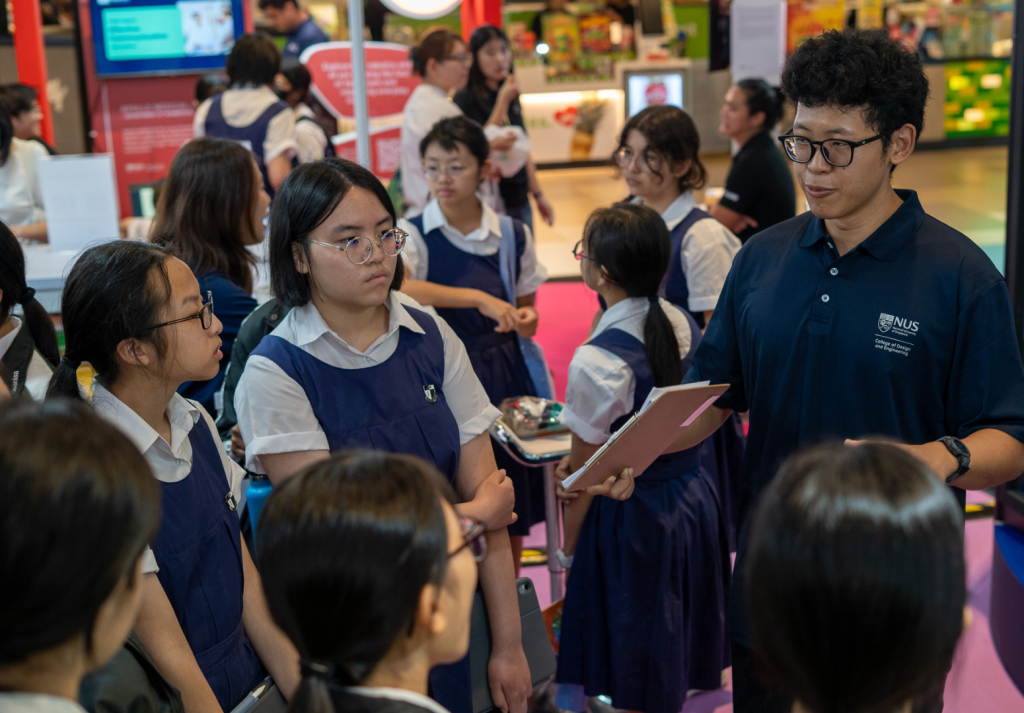
The showcase was all about making technology tangible. For aspiring engineers like Priyal from Nanyang Junior College, it was a chance to find clarity. “I’m trying to apply to CDE, and I’m passionate about robotics, so I came to find out more. I learned about the different engineering disciplines and what each specialises in, especially mechanical engineering. It’s been really informative.”
The event also reshaped perspectives on AI. As Chen Leyi from Tampines Meridian Junior College put it, “Usually, we see AI as a new technology that comes out to take our jobs, but in the engineering field, engineers can work together with AI to make something possible. It brought a new perspective on AI for me.”
Shaping the Future of Human-Robot Collaboration
“With one haptic device, you are touching the whole planet.”
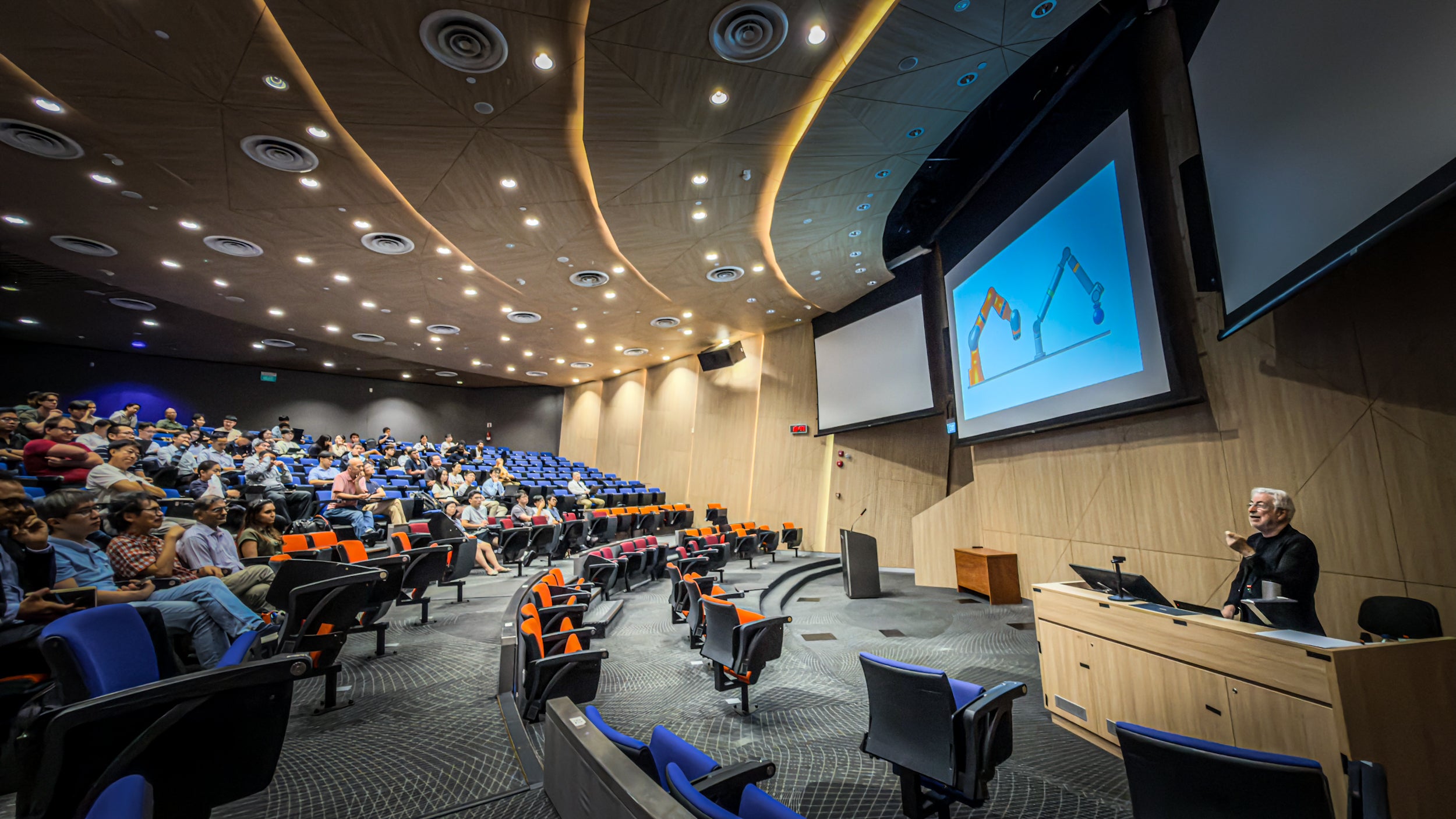
That was how robotics expert Prof Oussama Khatib described a live global experiment in which teams across multiple countries remotely controlled robots through a single interface, performing manipulation and ultrasound tasks while allowing operators to feel what the robot was touching in real time.
Speaking at the seminar “Shaping the Future of Human-Robot Collaboration” held at CDE, a core theme of his talk was that the future of work will not be human or robot. It will be human and robot.
A pioneer in robotics and haptics and Director of the Stanford Robotics Center, Prof Khatib has spent decades advancing how robots move, sense and physically interact with the world. Currently on sabbatical at CDE, hosted by the Advanced Robotics Centre and the Department of Mechanical Engineering, he has been meeting with faculty and students working on underwater robotics, including the NUS Bumblebee team, and holding discussions with PhD students on their research.
In his seminar, given to an audience of around 200 students, faculty and robotics practitioners, Prof Khatib emphasised that robotics should amplify human expertise, not replace it.
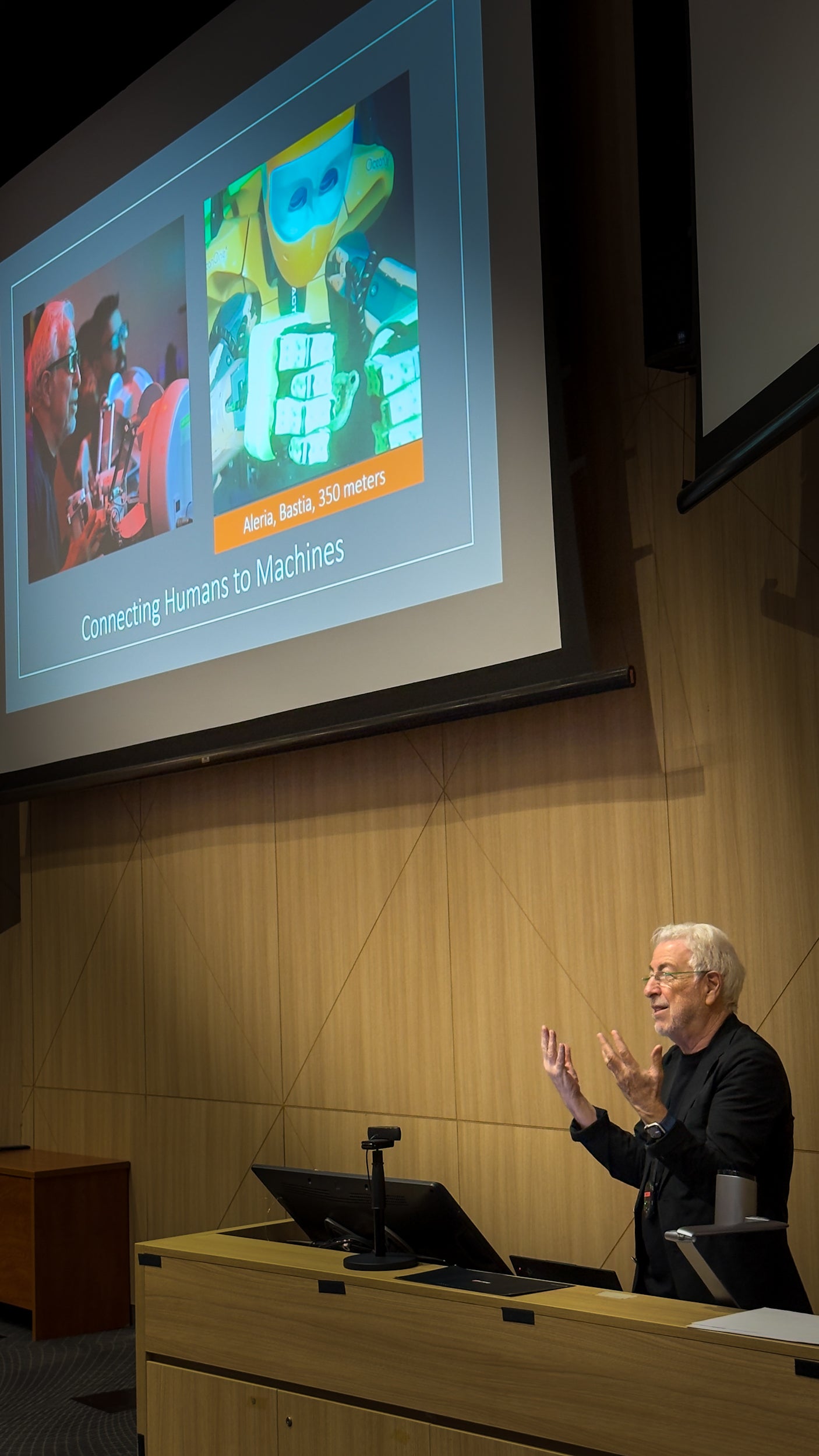
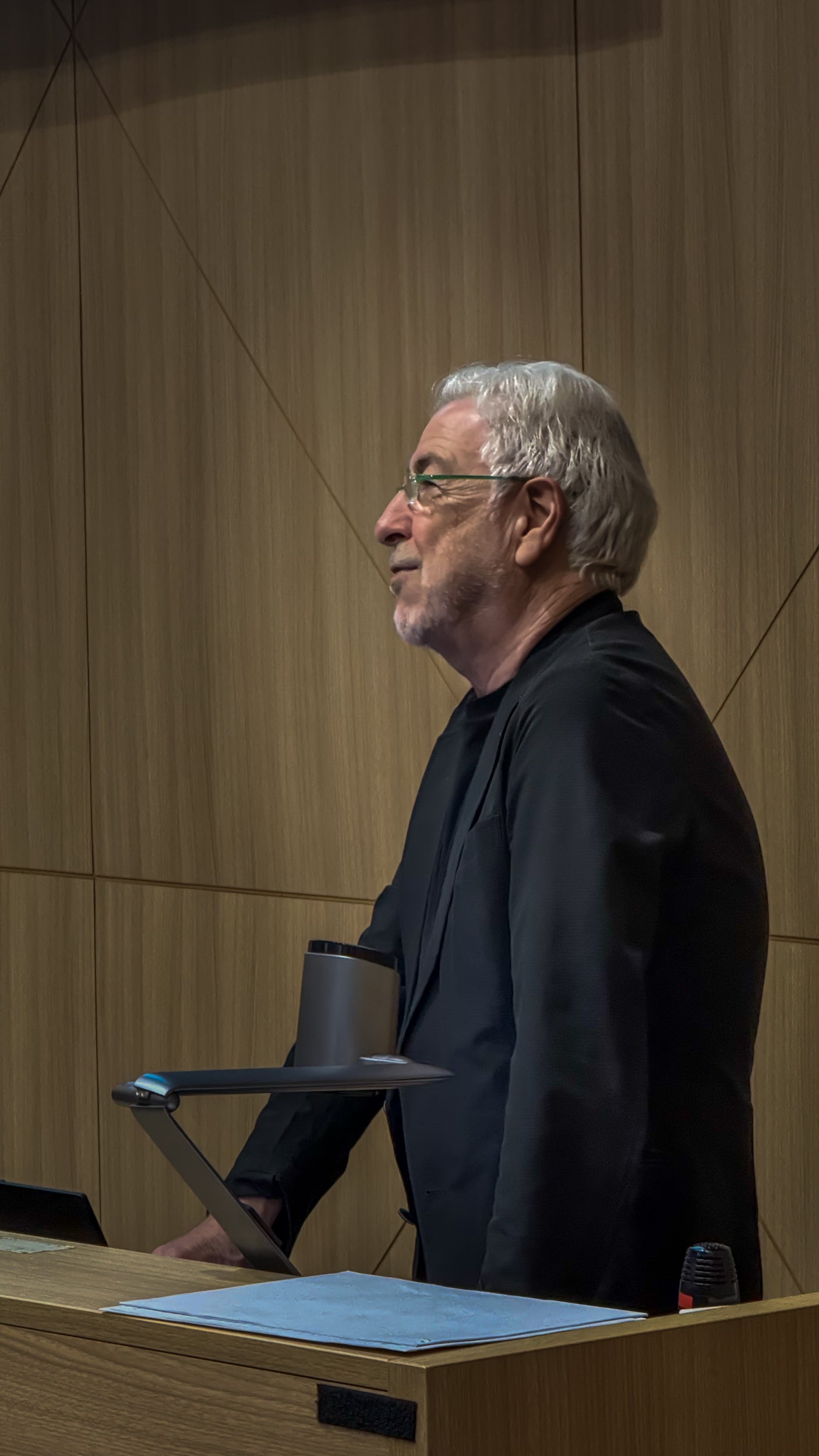
“If it’s a dangerous place, we are connecting people while distancing them", he said, connecting their human skills “through the medium of the robot”.
From underwater exploration to enabling remote ultrasound scans in locations without specialist doctors, the focus of Prof Khatib’s talk was on using robots to reach places humans cannot easily or safely go while keeping human expertise firmly in the loop. He illustrated this through OceanOneK, his humanoid underwater robot capable of operating at depths of up to 1,000 metres to support archaeological recovery and scientific missions beyond human reach.
Prof Khatib also explained why collaboration is essential to make this possible. “You cannot really solve big problems in your lab,” he said. Robotics demands more than technical depth in a single discipline. “You need to bring multiple people from multiple backgrounds.” Mechanical design, sensing, control, AI, medicine and real-world application must come together if research is to move beyond theory.
Ultimately, Prof Khatib said, “We are trying to create a bridge between research and the real world.” Human-robot collaboration is not about replacement. It is about partnership grounded in engineering, designed for safety and driven by impact.
Assembling the Social: An exhibition hosted by the newly launched Social Design Lab
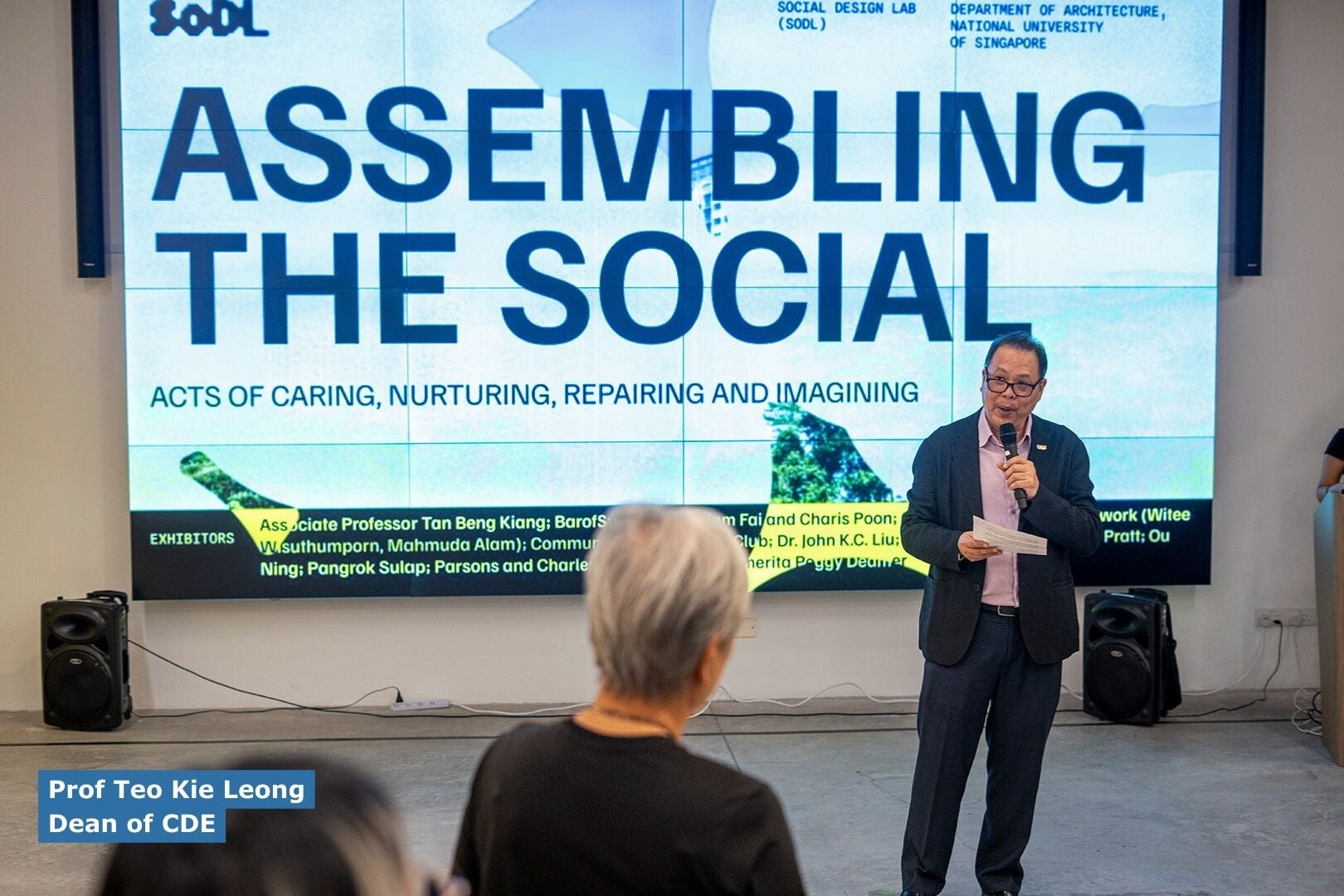
“You have created a space for critical reflection and shown that design can remain deeply human, ethical and social.”
A new exhibition, Assembling the Social, organised by the Social Design Lab (SoDL) at the Department of Architecture, looks at how design works through care, relationships and collective action, rather than just objects or end results.
Opening the exhibition on 5 February 2026, Professor Teo Kie Leong, Dean of CDE, reflected on how design decisions shape relationships and everyday life. “Design and engineering solutions have the most impact when they take into consideration not just technical or economic factors but what binds and connects us all,” he said.
Featuring 12 socially engaged practices from around the world, Assembling the Social brings together architects, artists, designers, educators and community activists working across different contexts and scales. The exhibition also marks a significant milestone for SoDL, which was established in 2025 to bring together teaching, research and public engagement around socially engaged design.
Speaking at the opening, SoDL co-director, Associate Professor Thomas Kong, organiser of the exhibition, said it represented “a brilliant assembly of artists and their different approaches to the four pillars of care, nurture, repair, and imagination.”
Among the works featured is that of Assoc Prof Tan Beng Kiang, an educator and registered architect whose long-standing commitment to participatory community design has shaped service-learning and community-based projects in Singapore and across ASEAN.
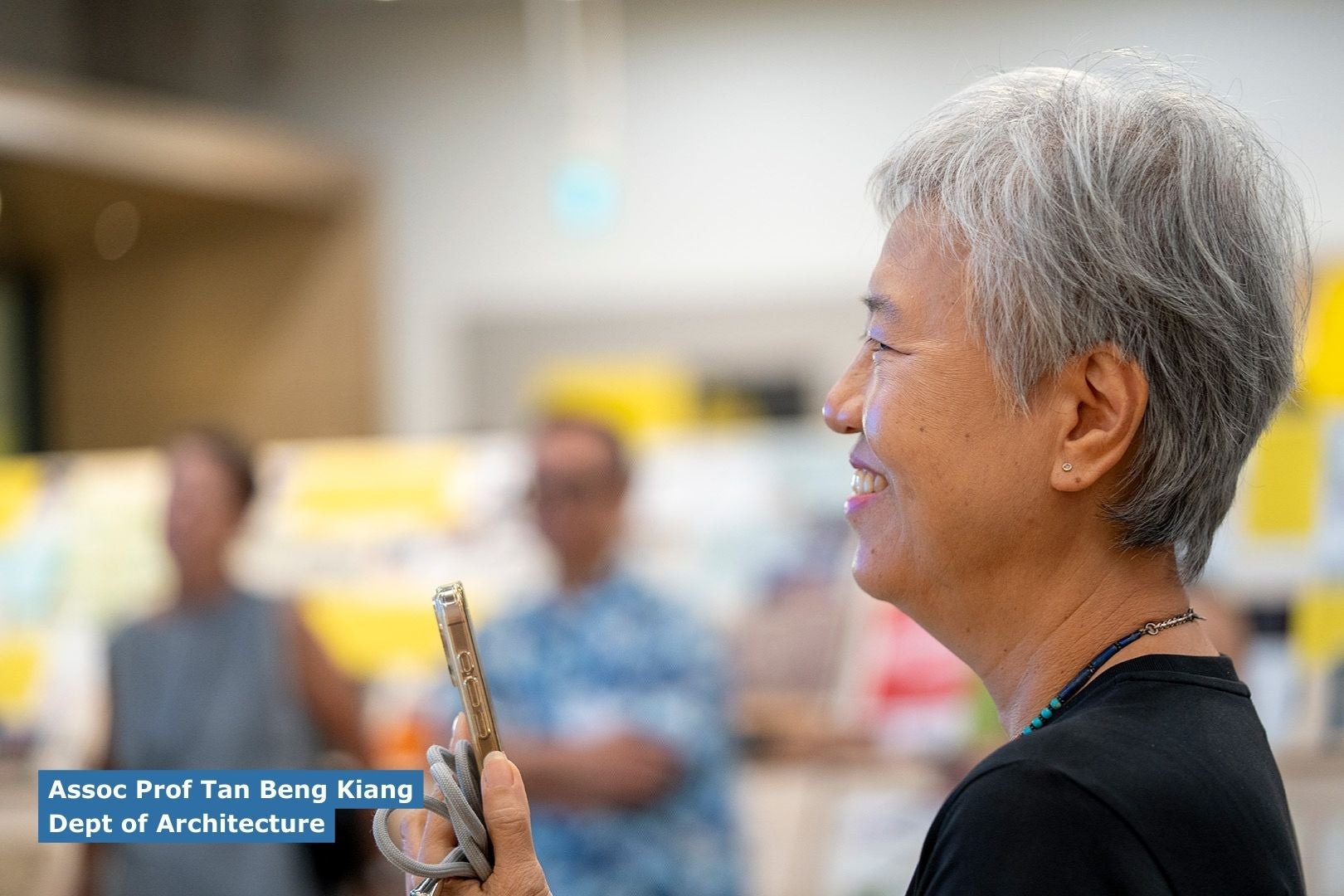
Highlighting Assoc Prof Tan’s work, Prof Teo said “it is particularly meaningful that this exhibition showcases projects developed together with her students, demonstrating how socially engaged design is carried forward through teaching, mentorship and learning in action.”
The exhibition also includes the work of Emmanuel Pratt, co-founder and Executive Director of the Sweet Water Foundation in Chicago. Since 2014, Pratt and his collaborators have transformed six neighbouring city blocks on Chicago’s South Side into The CommonWealth, a community-led campus combining urban ecology, civic arts, agroecology and lifelong learning.
The opening of the exhibition followed the conclusion of SoDL’s inaugural conference, Designing the Social, chaired by Assoc Prof Lilian Chee, SODL co-director. The day-long conference brought together academics and practitioners to discuss how design can respond to social, environmental and community needs through research, practice and education.
The Assembling the Social exhibition runs until 8 March 2026 at the Level 1 gallery of SDE 3.
Celebrating bonds and fostering relationships: CDE staff lunch
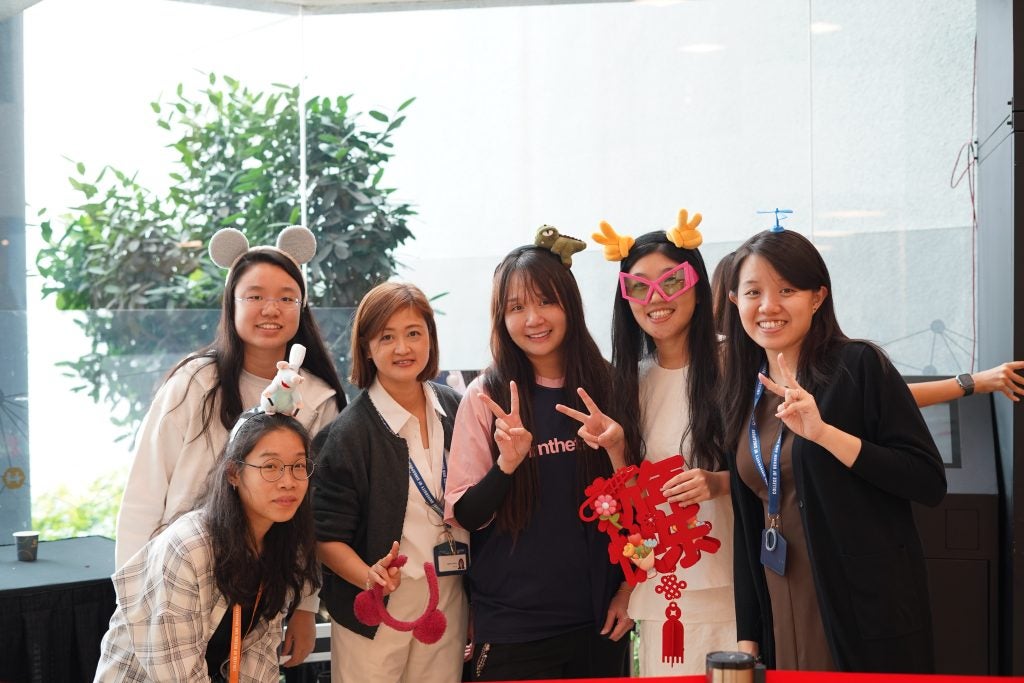
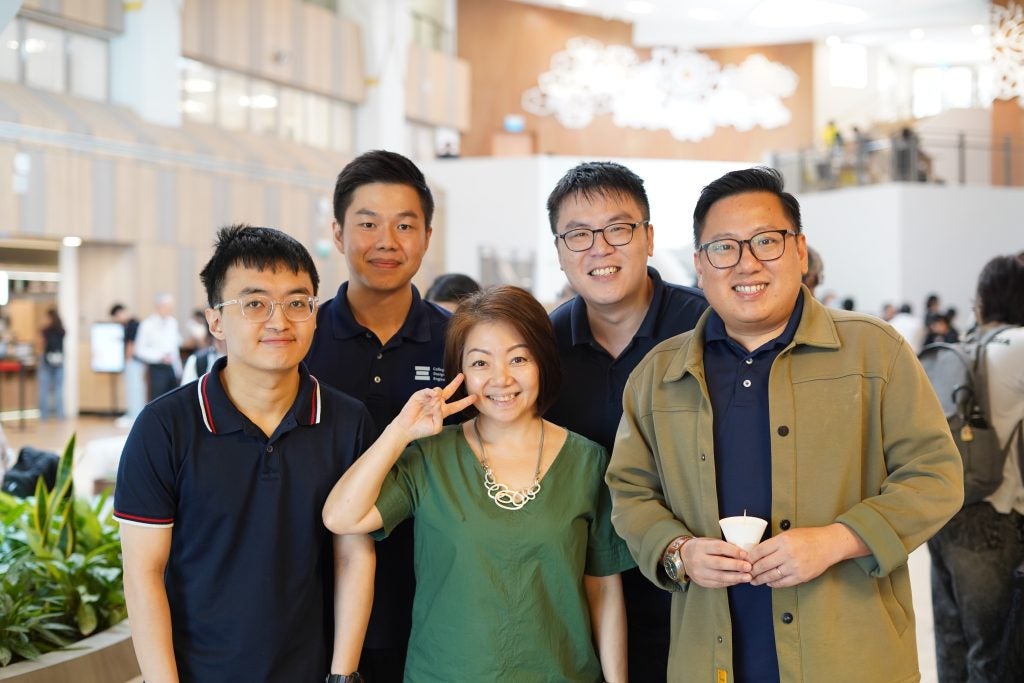
On 29 January 2026, over 500 staff from across all CDE departments gathered for a lively buffet lunch to reconnect, celebrate the start of the year, and strengthen cross-department camaraderie. The spread featured live stations serving local favourites like laksa and muah chee, alongside the undisputed highlight of the afternoon, freshly made bubble tea that quickly became the crowd favourite.
Crafting a touch of wellness, one candle at a time
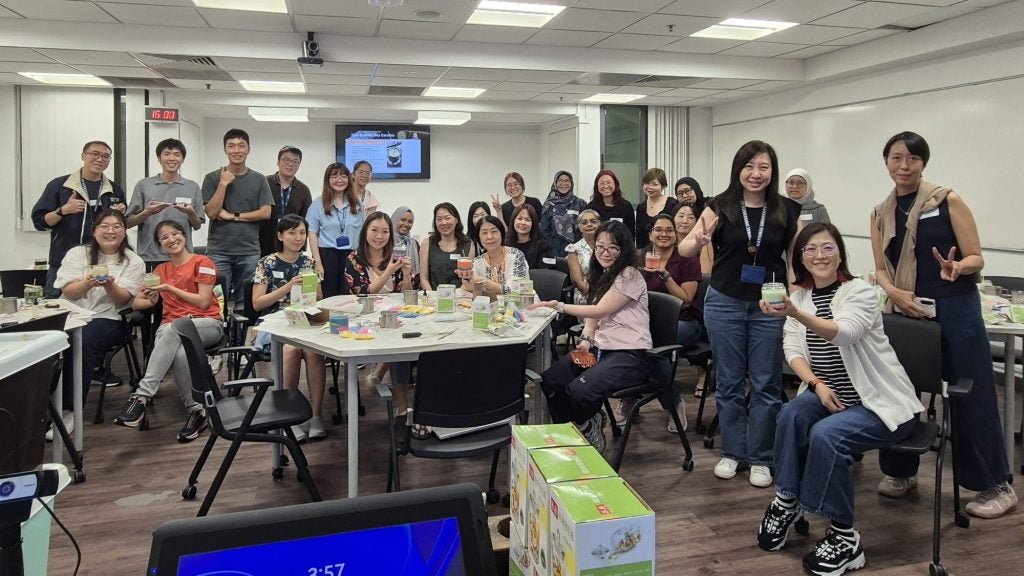
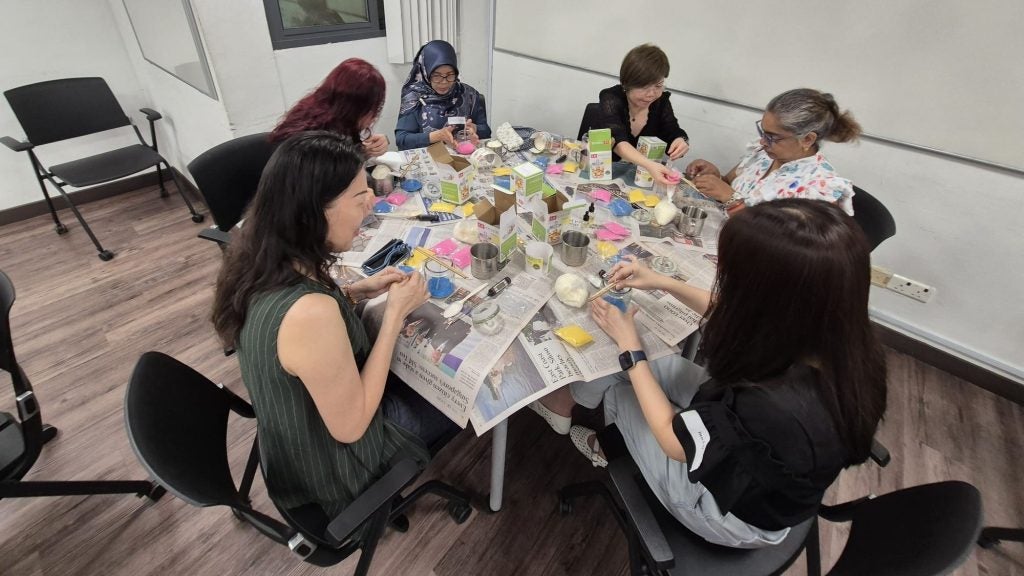
On 11 February 2026, CDE staff came together for a fun and engaging soy candle-making workshop, organised as a mid-semester break to recharge and foster team bonding across departments. Participants enjoyed a hands-on experience crafting their own candles, choosing from a range of scents, colours, and decorative elements to personalise their creations.
HIGHLIGHTS
UPCOMING AND ONGOING EVENTS!
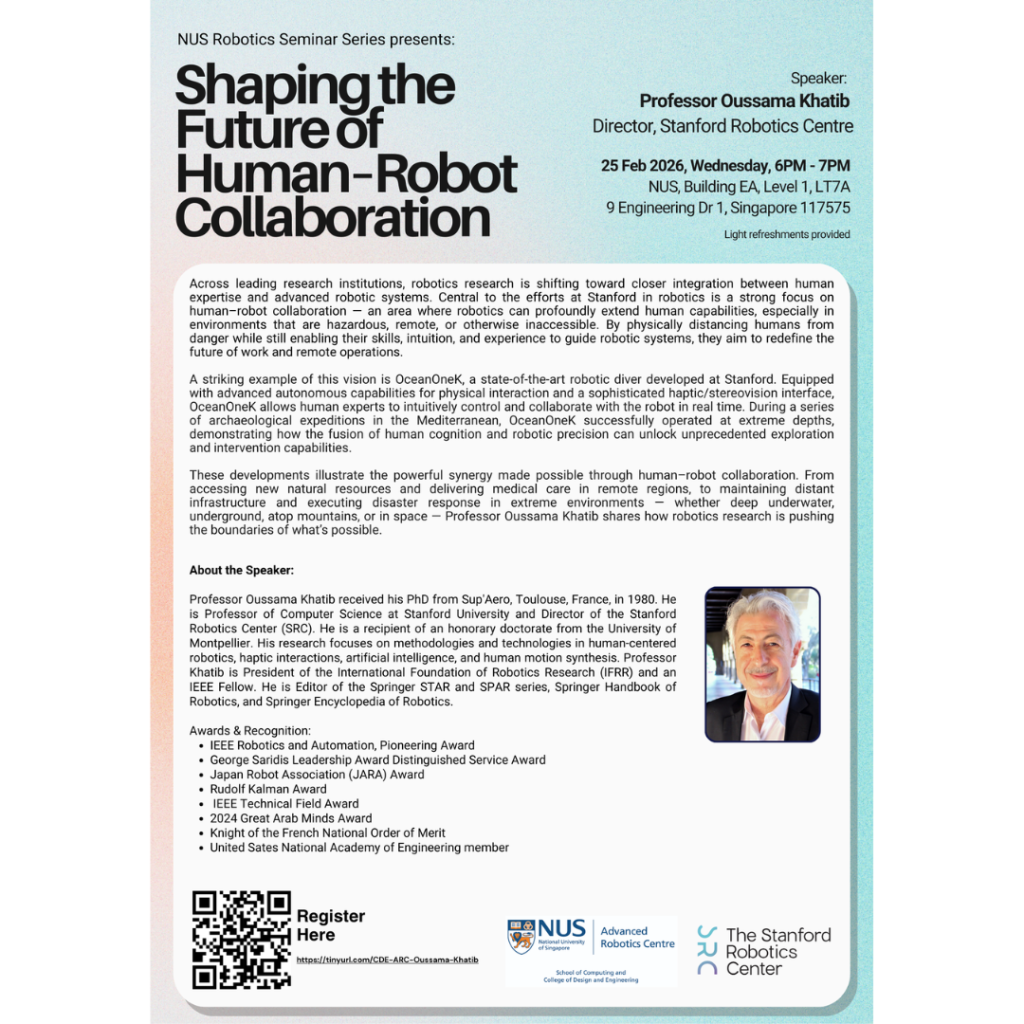
Shaping the Future of Human-Robot Collaboration
Across leading research institutions, robotics research is increasingly focused on extending human capability through meaningful human–robot collaboration. At Stanford University, this work is particularly focused on environments that are hazardous, remote, or otherwise inaccessible to people; by physically distancing humans from danger while still enabling their skills, intuition, and experience to guide robotic systems, they […]