


INDUSTRY & INNOVATION
3D Concrete Printing research used in upcoming residential development

A collaboration between academia and industry is breaking new ground in construction, moving 3D concrete printing (3DCP) from a promising technology into a practical, on-site reality.
While 3DCP has long offered the potential to fabricate complex shapes without formwork and with minimal labour, its application has largely been restricted to non-structural elements.
Now, a research team led by Dr Hongjian Du and Assoc Prof Pang Sze Dai, has partnered with industry leader Woh Hup (Private) Limited to overcome this limitation.
Together, they have achieved a Singapore first: the successful 3D printing of structural concrete elements on a live construction site at Woh Hup’s Norwood Grand. This breakthrough allows for greater design freedom and material efficiency in load-bearing components.
The practical benefits of this approach are significant. “Together, these efforts position 3DCP as a practical tool for improving productivity, reducing manpower requirements and supporting safer construction practices in Singapore,” stated Dr Du Hongjian.
This milestone demonstrates a core principle of effective innovation. “Construction innovation only matters if it can be applied on site,” said Associate Professor Pang. “Working directly with industry partners enables us to test these technologies against real constraints and build confidence for wider adoption.”
This landmark achievement was made possible by a powerful ecosystem of support, including the strategic partnership with Woh Hup and crucial backing from the Building and Construction Authority (BCA) and NAMIC Singapore, the National Additive Manufacturing Innovation Cluster, a national platform led by the A*STAR - Agency for Science, Technology and Research, supported by the National Research Foundation.
This success serves as both a proof of concept and a template for partnerships that take ideas and innovation from lab to reality, accelerating the adoption of 3DCP.
Research project launched to advance near zero emissions ammonia marine engines
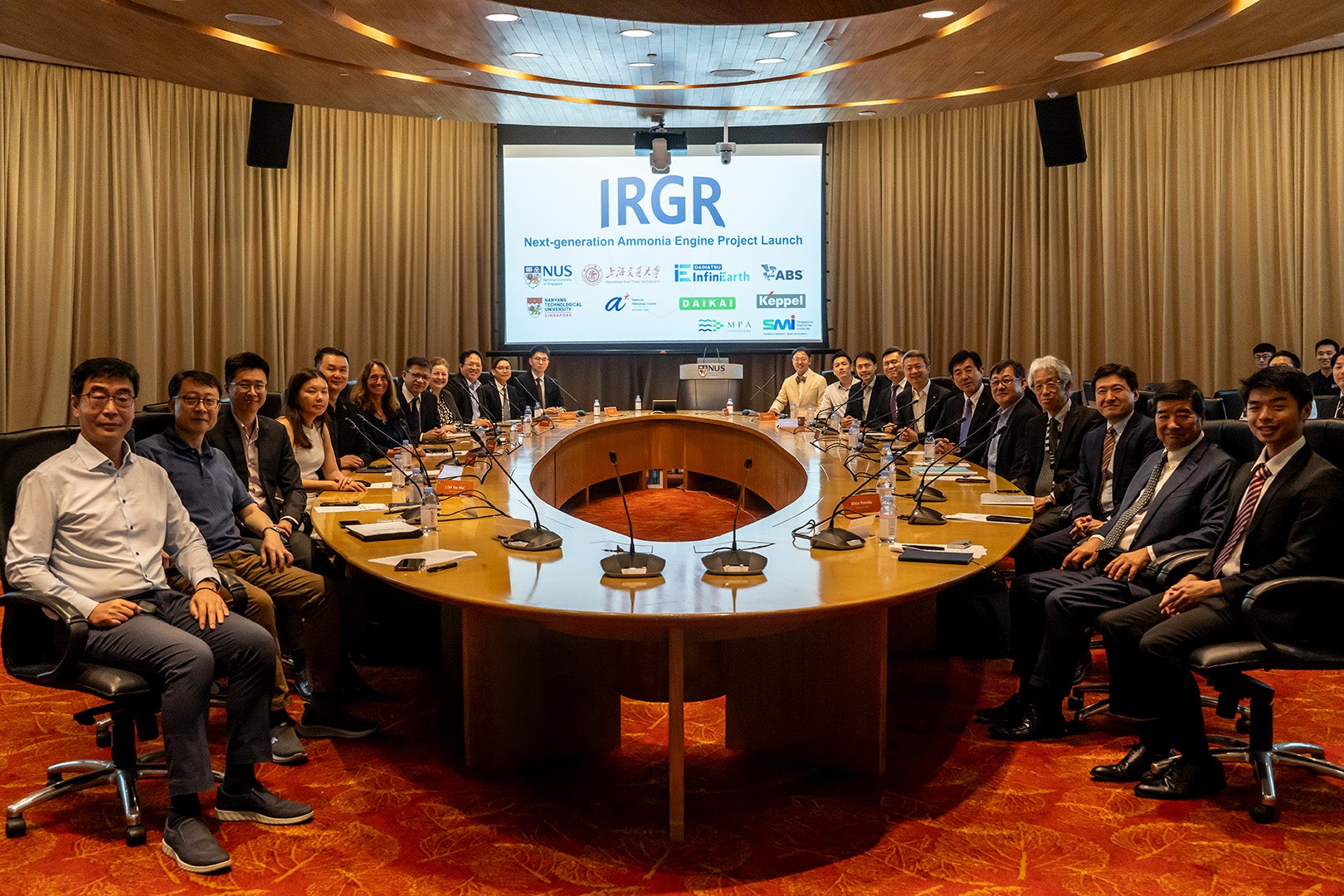
“Ammonia has been recognised as one of the most promising fuels for achieving near-zero greenhouse gas emissions in marine transportation.” – Assoc Prof Yang Wenming.
A major new research project aims to accelerate the decarbonisation of the global shipping industry through the development of next-generation ammonia-fuelled marine engines with high efficiency and near-zero emissions.
Officially launched on 4 February 2026, the IRGR Ammonia Engine Project is being led by Assoc Prof Yang Wenming as the lead PI, with project funding from the Singapore Maritime Institute.
The industry–academia collaboration brings together partners including Daihatsu, the American Bureau of Shipping, as well as leading universities and research institutes. The project will be based in a dedicated lab at CDE, including an engine test room, control room and facilities for fundamental combustion and systems research.
The project reflects CDE’s focus on translating fundamental research into real-world impact through close industry collaboration.
Read more here: https://cde.nus.edu.sg/news/nus-launches-project-to-advance-near-zero-emissions-ammonia-marine-engines/
SHINE centre signs collaboration agreements with Samsung
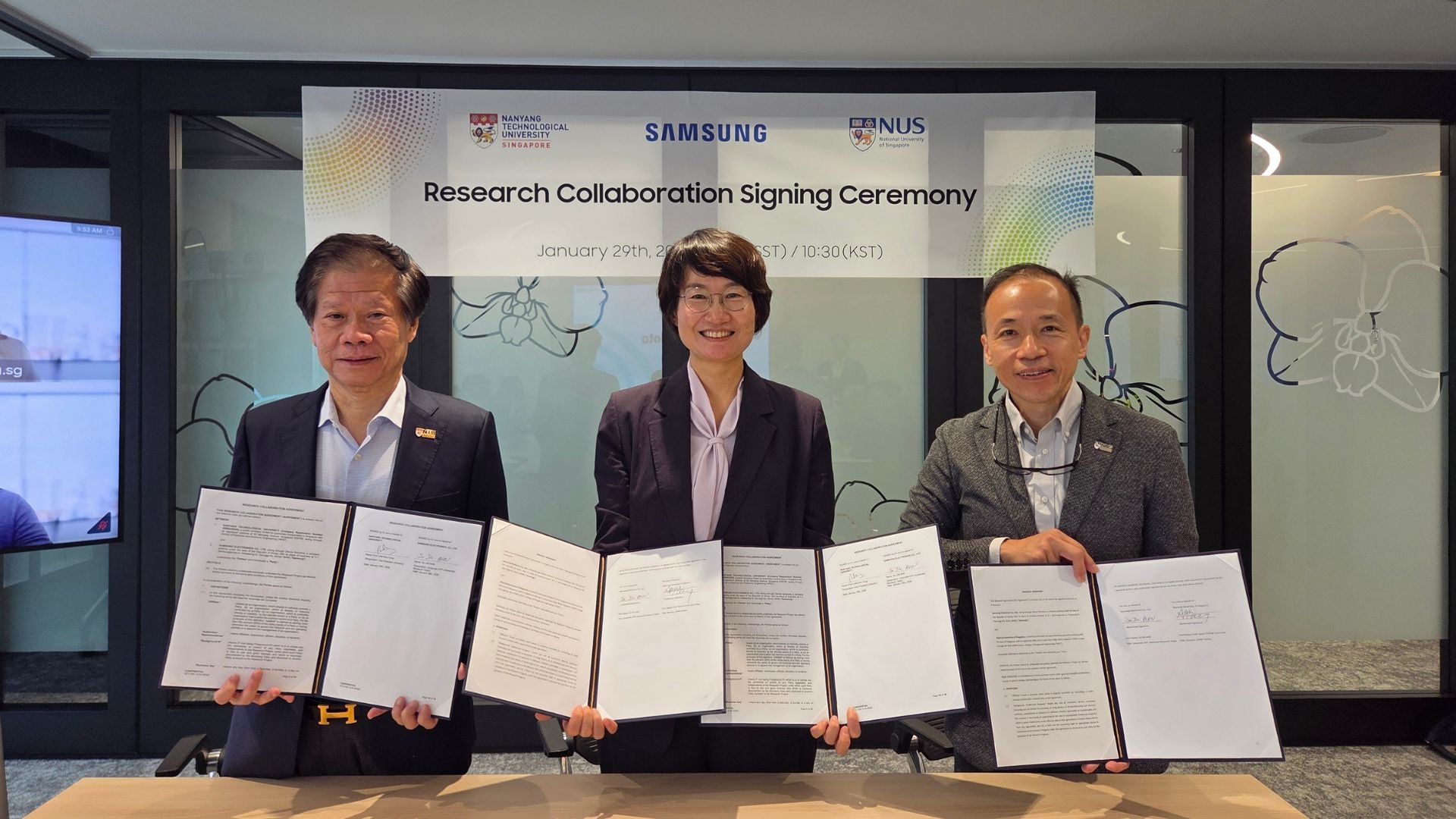
The Singapore Hybrid-Integrated Next-Generation µ-Electronics Centre (SHINE) at CDE has signed two research collaboration agreements with Samsung Electronics, strengthening industry–academia collaboration in advanced electronics research.
Signed at Samsung Hub Singapore, the agreements support industry-facing research in high-performance computing and semiconductor manufacturing, and form part of a broader collaboration programme involving NUS, Nanyang Technological University Singapore (NTU) and Samsung.
The two SHINE-led projects are led by Professor Yeow Kheng Lim (NUS Department of Electrical and Computer Engineering), Programme Director at SHINE, and Assistant Professor Sunmi Shin (NUS Mechanical Engineering), and will focus on system-level integration, advanced packaging, and semiconductor manufacturing approaches.
Speaking at the ceremony, Professor Aaron Voon-Yew Thean, Director of the SHINE Centre and NUS Deputy President (Academic Affairs) & Provost, highlighted the relevance of the collaboration to Singapore’s research and industry landscape, and its potential to support longer-term partnerships.
Read more here: https://cde.nus.edu.sg/news/shine-centre-signs-collaboration-agreements-with-samsung/