STUDENT ACHIEVEMENTS & STUDENT LIFE
BME student Shankar Shanmuga and his team shine at the Built for Good Hackathon with SeniorSays

Meet Shankar Shanmuga Sundaram (first from right), a Year 3 Biomedical Engineering student, who teamed up with peers from other institutions and disciplines to develop SeniorSays, a voice-first digital note-taking app that helps volunteers in senior care record, summarise, and track their engagements with seniors.
The app streamlines communication between volunteers and staff, ensuring better continuity of care and more meaningful connections with seniors.
What began at the Built for Good Hackathon (organised by Open Government Products and People’s Association) has since grown into a collaborative project with the People’s Association and Fei Yue Organisation, where the team is now piloting the app with volunteers.
“During the hackathon, we learnt that solving real problems starts with listening. By engaging directly with organisations and volunteers, we could design something that truly met their needs,” shares Shankar, who led user research and outreach.
Drawing on his background in Biomedical Engineering at CDE, Shankar applied empathy-driven design and technical skills to bring the prototype to life. “CDE modules like Design Thinking and CDE2501 taught me to approach engineering through a human lens, understanding people before designing solutions.”
Now in the prototyping and development stage, SeniorSays has its Record & Go Smart Summary feature fully functional and tested with volunteers from People’s Association and Fei Yue Organisation. The team continues to refine the app through pilot trials, with the goal of scaling it across care centres and volunteer networks in Singapore, leveraging technology to promote dignity, connection, and inclusion for seniors.
iDP students use AI to reimagine the National Gallery Singapore’s Strength through Art (stART) programme

Blending art, AI, and empathy, three Year 3 CDE students from the Innovation and Design Programme, Jonathan Ong (Computer Engineering), Brandon Lim (Electrical Engineering), and Samikshaa Ravikumar (Biomedical Engineering), are reimagining how we experience mental wellness. They transformed the National Gallery Singapore’s Strength through Art (stART) programme into an AI-powered interactive booth. Originally designed for secondary school workshops, stART now offers a tech-driven, immersive experience that brings art-based wellness to everyone.
Participants embark on a multi-sensory wellness journey: starting with a calming audio track and body scan, mapping areas of tension on a digital interface, receiving personalised stress-relief suggestions, and finally selecting a gallery artwork that reflects their mood. AI then reimagines the piece through their emotions, creating a unique, interactive artwork that blends self-reflection and creativity.
Under the mentorship of Dr Kate Sangwon Lee, the team refined the booth’s interface, sensory design, and ambience. The National Gallery Singapore guided the students in preserving the programme’s emotional integrity while adapting it for technology.
“Seeing how National Gallery Singapore uses art to reach young audiences was heartwarming and deeply inspiring,” the team reflects. “It reinforced how meaningful design can be when it connects innovation with empathy and purpose.”
Dr Lee said, “The team’s collaboration and execution show how ready our students are to make a real-world impact. They exceeded expectations, using AI to tackle complex youth mental wellness issues. Their persistence, teamwork, and creativity turned classroom concepts into a tangible, successful exhibition booth, and demonstrates what can be achieved when students work fearlessly and collaboratively with industry partners."
Ms Kng Mian Tze, Director of the stART Programme, was grateful for the team’s effort and said, “I appreciate their hard work and dedication to this project, and it's evident that they've created a viable prototype that has the potential to address real-world issues.”
Venkatachalam Meenakshi awarded Best Student Book Prize award

Congratulations to Venkatachalam Meenakshi (MSc Project Management, Class of 2025) on receiving the Society of Project Managers (SPM) Best Student Book Prize Award!
The SPM was founded in 1994 to advance Project Management in Singapore and beyond.
In awarding the SPM Best Student Book Prize to Meenakshi, SPM cited the following: “In recognition of the excellent academic achievements that you have attained through this course and the experiences that you have gained, this award goes to encourage you in your pursuit of continuous education and also to acknowledge your personal achievement in this Master of Science programme.”
The Book Prize was presented by the Guest of Honour, Ms Indranee Rajah, Minister in the Prime Minister’s Office, Second Minister for Finance and Second Minister for National Development at the SPM 30th Annual Dinner 2025 held on 30 Sep 2025.
Kavindra Senaratna receives 2025 OSPP Award from European Geosciences Union
PhD student Kavindra Senaratna has been awarded the 2025 Outstanding Student and PhD candidate Presentation (OSPP) Award for his poster/PICO entitled "Characterising Soil Respiration rates across different Land uses in a Tropical Urban Catchment".
Under the supervision of Prof Karina Gin and Prof Simone Fatichi, Kavindra’s work focused on modelling terrestrial nutrient cycling in order to simulate the effects of climate change and changes in land use on nutrient loading into reservoirs.
In the poster he presented at the EGU General Assembly 2025, he characterised the spatial and temporal variation of soil respiration across different land uses in a tropical urban catchment. In this study, soil respiration was used as a proxy for the level of microbial activity in the soil, contributing to nutrient cycling. Results showed that the level of microbial activity was influenced by land use changes and temperature, and that microbial activity levels positively correlated with soil nitrate concentrations.
Read more: https://www.egu.eu/awards-medals/ospp-award/2025/kavindra-senaratna/

Xinwei Li receives the BiTN Young Awards 2025

Ms Xinwei Li, advised by Dr Prateek Bansal, has received the Behaviour Modelling in Transport Networks (BiTN) Young Award 2025.
The committee recognised her original research on behaviorally grounded transport models that integrate psychological mechanisms with strong theoretical foundations.
Her work was commended for its innovative nature, rigorous methodology, and excellent balance between theory and real-world application, highlighting its strong potential to advance the field of behavioural studies.
Computer Engineering student Nivedit applies knowledge, leadership, and curiosity beyond the classroom
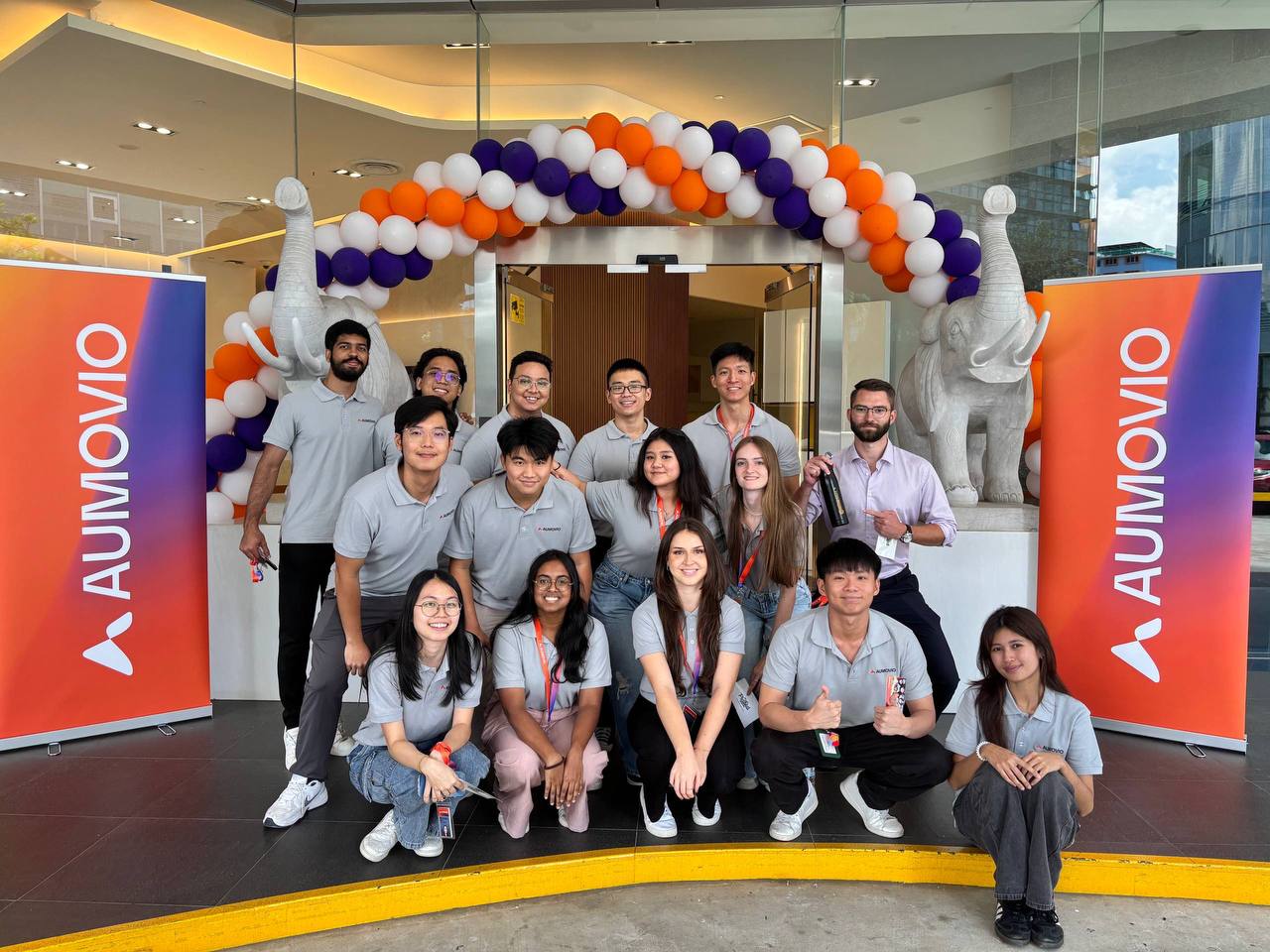
“For me, CDE has been a place to grow not just as an engineer, but as a person.”
Year 3 Computer Engineering student Chittazhi Nivedit recently completed his first internship at AUMOVIO, where he gained hands-on experience in embedded systems. Applying concepts from modules like Computer Organisation (CG2028) and Real-Time Operating Systems (CG2271), he optimised memory usage across multiple software layers and automated workflows using Bash and Python scripts. “The foundational knowledge I gained at CDE made it easier to navigate complex codebases and contribute meaningfully from early on,” he reflects.
Beyond his internship, Nivedit has taken on leadership roles and engaged with the community. As Vice President of the 11th Electrical and Computer Engineering (ECE) Undergraduate Student Council and Project Director of the ECE Internship and Career Fair 2025, he helped build stronger connections between students, faculty, and industry partners, creating platforms for professional growth.
To stay balanced, he trains and performs with NUS Callisthenics, where competing in his first freestyle competition and advancing to the semifinals taught him the value of persistence and self-discipline.
“My internship and campus experiences have shown me how curiosity, patience, and collaboration drive growth, both technically and personally,” Nivedit shares.
ECE x CFG: Effective Communications Workshop for Engineers

The Electrical and Computer Engineering (ECE) Club, in collaboration with the Centre for Future-ready Graduates (CFG), hosted the Effective Communications Workshop for Engineers on October 22, 2025.
Led by Mr Goh Ze Li and Mr Kirby Mark, Career Advisors from CFG, the workshop focused on building strong communication and presentation skills essential for engineers. Participants learned about the core principles of communication, including verbal, vocal, and visual aspects, as well as the use of tools such as Excel, Google Slides, and Python for creating effective data-driven presentations. The session also included hands-on group activities designed to simulate real-world, internship-style presentation scenarios.
We hope that through this workshop, participants gained valuable insights into expressing technical ideas clearly and confidently, preparing them to excel in both academic and professional environments.
ECE Club Alumni Talk 2025: Sharing industry insights and more
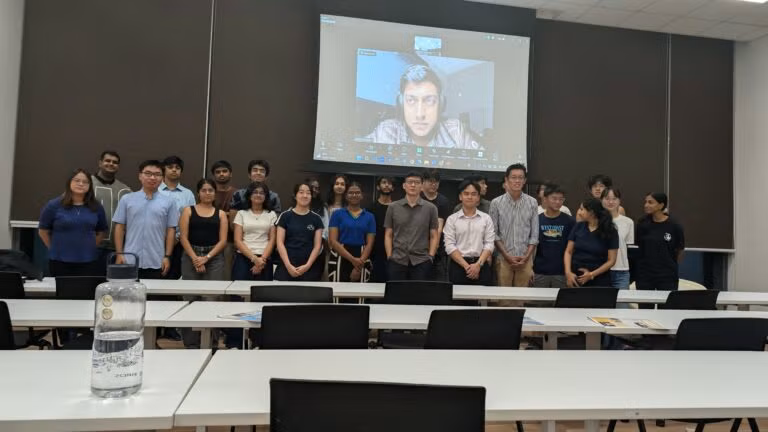
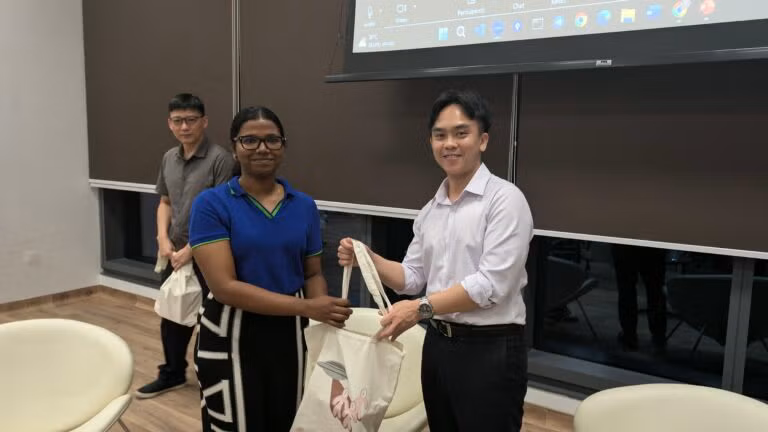
The Electrical and Computer Engineering (ECE) Club, in collaboration with the ECE Club Alumni Group, held the ECE Club Alumni Talk 2025 on 4 November 2025. The event featured four distinguished alumni speakers, Esmond Teo (Deputy Director, National Council of Social Service), Rishab Patwari (Co-Founder & CEO, HiveBotics), Garry Fung (Senior Project Engineer, Land Transport Authority), and Chin Keong Ho (Founder, Sentinan), who shared their diverse career journeys and insights with current students.
From entrepreneurship and innovation to leadership in both public and private sectors, the speakers highlighted the wide range of paths an ECE degree can lead to. They also discussed how their time at NUS shaped their problem-solving mindset and professional growth.
The session concluded with an engaging Q&A and networking segment, during which students had the opportunity to interact directly with the speakers and gain valuable advice on navigating career development and industry trends.
Scan, play, rethink: DID students push the boundaries of QR code design

“At first, students were unsure how much more could be done with QR codes and barcodes. By the end, they realised the possibilities are endless,” said Assistant Professor Clement Zheng.
As the lead of the Interactive Materials Lab, which created the successful BARC exhibition, Asst Prof Zheng has continued to explore how barcodes shape our relationship with everyday technology. Building on this work, he developed a Design Platform, a project-based studio called ‘Coded Life,’ for Industrial Design students. This initiative provided 15 Year 2 and 3 students with the opportunity to critically and creatively reimagine QR codes and barcodes as design materials for interactive, educational, and inclusive experiences.
The students were split into seven groups and developed projects that transform everyday codes into playful and meaningful experiences. Some highlights include:
• Dan the Duck: a scam awareness campaign using QR-coded posters around campus. Over 1,000 people scanned them in four days and were redirected to a site teaching safe scanning habits.
• Co|Decode: a collaborative escape room where QR codes become shared puzzles, turning scanning into a team activity.
• Bridging Senses: tactile QR codes and an accessible scanner that make digital payments inclusive for the blind and low-vision community.
• DECODE: an exhibition of seven interactive stations that reveal the hidden logic and design of QR codes.
• QRdo: a family-friendly scavenger hunt at the Science Centre, encouraging participants to explore sustainability by scanning QR codes hidden in everyday objects.
Jamie Koh Teng Suan (Year 3, Industrial Design) reflected, “QR codes were designed for convenience, but through this project, we learnt who they leave out. Accessibility isn’t about adding features. It’s about rethinking how everyone can take part.”
Read more about some of the projects via the links below:
ISEM students clinch first prize for the poster competition at the Singapore Healthcare Management 2025

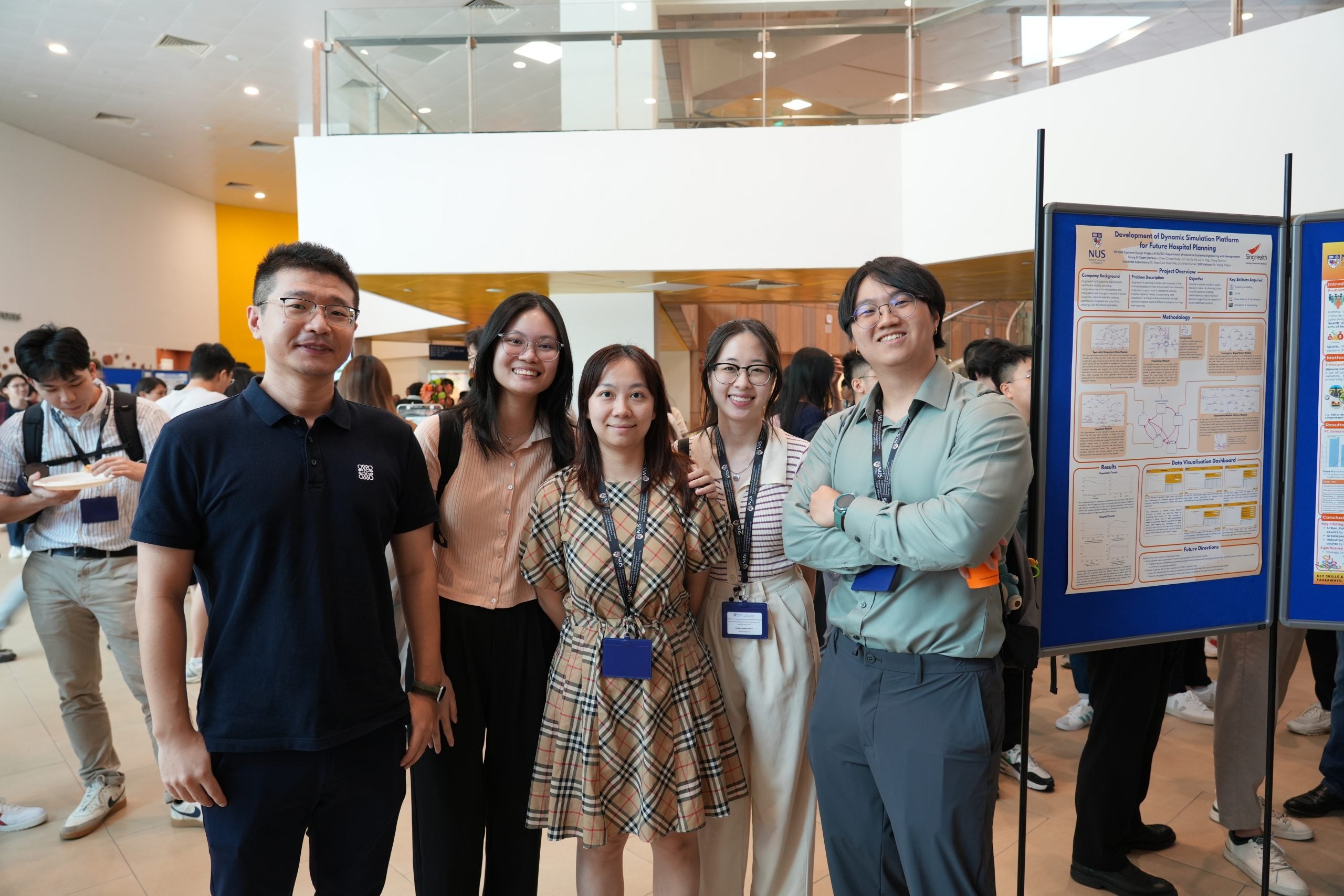
When Singapore’s largest public healthcare cluster, SingHealth, looked for ways to plan its future hospitals, a team of final-year students from Department of Industrial Systems Engineering and Management (ISEM) stepped up to the challenge. Their task: to build a tool that could help healthcare planners anticipate and prepare for the demands of Singapore’s evolving population.
The project was part of ISEM’s flagship Systems Design Project (SDP), where students work with industry partners on complex, real-world problems. SDP Group 14, comprising Chen Chwen Huey, Jon Tan Ee Xin, Lu Yu Ting, and team leader Zhang Guoyun, collaborated with SingHealth supervisors, Adj A/Prof Sean Lam and Dr Ashish Kumar, and was guided by academic advisor Dr Wang Zhiguo. The SDP coordinator, Dr Bok Shung Hwee, also provided important support throughout the process.
To do this, the team developed a dynamic simulation platform using Stella Architect. The platform models population growth, forecasts demand for hospital services, and simulates the adoption of alternative models of care (AMoC) such as telemedicine and hospital-at-home.
At the heart of their work is an interactive dashboard that allows planners to run what-if analyses. By adjusting key parameters like immigration policy, staff-to-patient ratios, or AMoC adoption rates, planners can immediately see how different scenarios impact healthcare demand and resources.
Beyond an Award
For the students, the project was more than just about winning a prize. It was about contributing to a national challenge, how Singapore will provide sustainable, high-quality healthcare in the decades ahead. For Industrial Systems Engineering and Management, this project underscores the value of the SDP programme. It demonstrates how experiential learning, where students apply systems engineering principles to real-world contexts, not only deepens learning but also yields outcomes that benefit both industry and society.
Learning and growing abroad: Kash’s exchange at ISAE-SUPAERO

“Living and learning abroad taught me more about the world, and myself, than any classroom could.”
For six months, Ukkasyah (Kash), made Toulouse, France, his second home while on a semester-long exchange at ISAE-SUPAERO (Higher Institute of Aeronautics and Space). As a Year 4 Mechanical Engineering student specialising in Aeronautical Engineering and Industrial 4.0, Kash adapted to the everyday challenges of settling into a new country, from navigating campus life to managing simple conversations in French. But through it all, the experience became a journey of growth and discovery, one that broadened his perspective and shaped his aspirations for the future.
Being in Europe’s aviation hub, Kash found himself surrounded by inspiration. “It was surreal to learn directly from experts and engineers at Airbus, ONERA (the French Aerospace Lab), and CNES (the French National Space Agency),” he shared. “They were deeply passionate about their work, and their insights reminded me to always stay curious and grounded in first principles.”
At ISAE-SUPAERO, Kash delved into courses such as Aerodynamics, Aircraft Design, and Dynamic Systems Control, building upon the foundations he had established at CDE. Designing aircraft based on the A320 to optimising NACA airfoils and developing control systems for low-Earth orbit satellites, every project strengthened his technical confidence and teamwork skills.
His exchange also became a gateway to explore 20 European cities, from the natural beauty of Scandinavia to the warmth of southern Europe and the rich history of the Balkans. “Every city had a story, and each one reminded me how much there is to learn beyond textbooks,” he said.
Now back at NUS, Kash is continuing his French journey by taking A2 French, a small but meaningful way to keep his exchange memories alive.