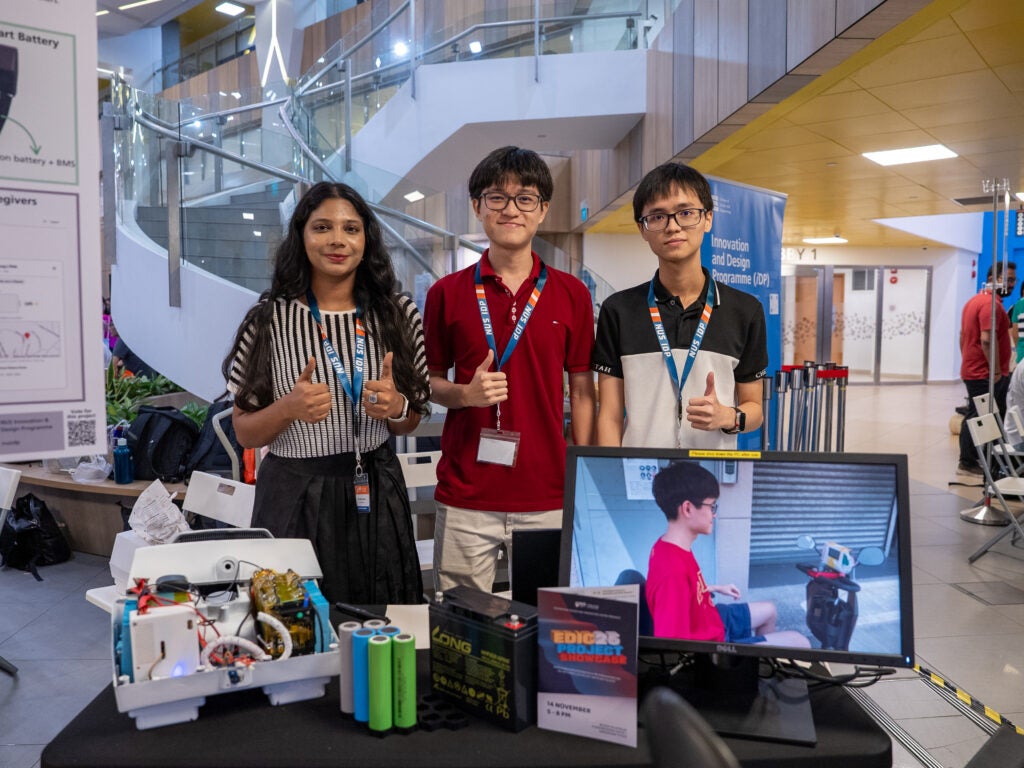

NaSoBATT: a smart battery solution for mobility scooters
A recurring issue faced by many users of mobility scooters is the frequent replacement of lead acid batteries that power their scooters. In our research, we found that most users typically need to replace their lead acid batteries more than once per year which poses a significant financial burden for the users and their caregivers. Further investigation found that this problem is caused by the high-current deep discharge cycles that the batteries typically undergo during operation, as well as misconfigured battery charge indicator which prompts users to stop charging prematurely which leads to increases degradation and reduces lifespan of the batteries.
Simultaneously, we found that two key fear factors discourage regular use of mobility scooters. Firstly, users have expressed anxiety about toppling while driving, with some reports indicating that 60% of elderly users experience at least one fall or toppling incident within 12 months of using a scooter. These incidents can cause serious injury to elderly users, whom without timely rescue, could increase the likelihood of physiological and psychological harm. Secondly, users have also expressed fear over battery fires occurring on their mobility scooters amid frequent media coverage of similar incidents, many of which are linked to overcharging of lithium ion batteries.
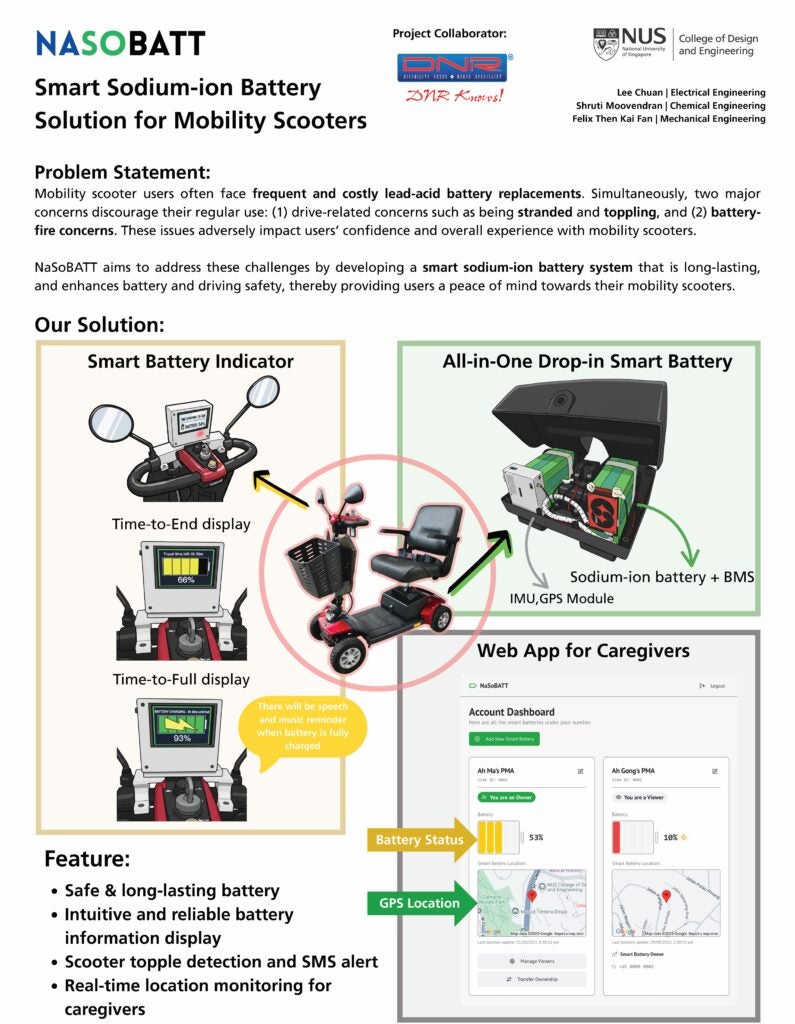
To address these issues, we have designed NaSoBATT — an all-as-a-kit smart battery solution designed to provide a long lifespan power source for mobility scooters as well as enhance battery and drive safety. It comprises the following features:
- Battery subsystem:
- Fire-tolerant and long-lasting sodium-ion batteries
- Battery management system for added layer of overcharging protection
- Smart battery charge indicator:
- Easy-to-understand LCD display mounted on the scooter’s steering handle
- Accurate and consistent battery charge indication
- Charging guidance alerts with visual and audio cues
- Detection and alert subsystem:
- Detects when scooter topples
- Triggers buzzer to alert nearby passers-by in the event of a topple
- Sends SMS alerts with location information to caregivers in the event of a topple
- Companion web app:
- Caregivers can remotely view battery status and scooter location
Our preliminary testing have demonstrated strong acceptance of the following features from both users and caregivers:
- Longer-lasting, safer batteries reduces financial and fire-related anxiety
- Smart battery charge indicator eliminates confusion and supports safe charging and journey planning
- Detection and alert subsystem provides reassurance and faster response during emergencies
- Web app enables caregiver involvement, making users more willing to travel independently
Project Team
Students:
- Felix Then Kai Fan (Mechanical Engineering, Class of 2027)
- Lee Chuan (Electrical Engineering, Class of 2027)
- Shruti Moovendran (Chemical Engineering, Class of 2027)
Supervisors:
- Mr Keith Tan (keithtcy@nus.edu.sg)
- Mr Royston Shieh (shiehtw@nus.edu.sg)