Hydrolyte: bioimpedance for intravascular volume status assessment
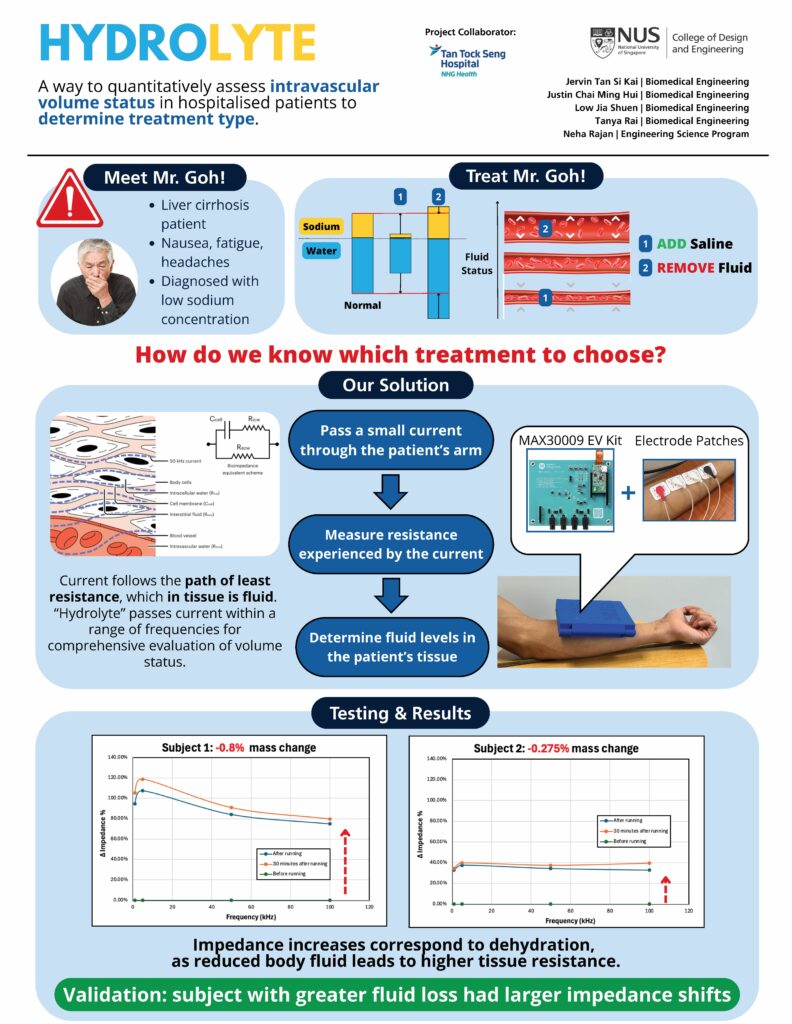
Patients who are hospitalised may develop low sodium concentrations (hyponatremia) either due to reduced water and sodium or increased water content which dilutes the sodium. The former is treated by supplying saline while the latter by depleting fluids. To differentiate between the two causes so that the right treatment may be given, the volume of fluid in the blood vessels — which is known as the intravascular volume status (IVS) — needs to measured. However, current methods for determining IVS in general wards are slow, imprecise, and subjective.
To address this problem, we designed Hydrolyte, a device that applies to the principle of Bioimpedance Spectroscopy (BIS) to quantify fluid status in a non-invasive and efficient manner. Hydrolyte works by passing a safe alternating current through a patient’s body and measures the impedance. The output data is processed by a custom-built Python program to display fluid status as a percentage. The whole software configuration process is automated by Power Automate, with just a single click from the user to start the measurement. This solution can be integrated into a hospital’s computer on wheels (COW) system to inform clinicians whether a patient requires saline administration or fluid depletion.
Through our experiments, we observed a positive correlation between fluid loss and increase in impedance value, with the impedance rising by approximately 80% for a 0.8% body mass reduction (due to water loss) and 35% impedance increase for a 0.275% reduction of body mass. These results support that the concept of BIS is reliable to track changes in fluid status. Future development of our solution will focus on scaling down the size of Hydrolyte into a wearable device, enabling frequent IVS monitoring, and going beyond hospital applications such as the military and sports.
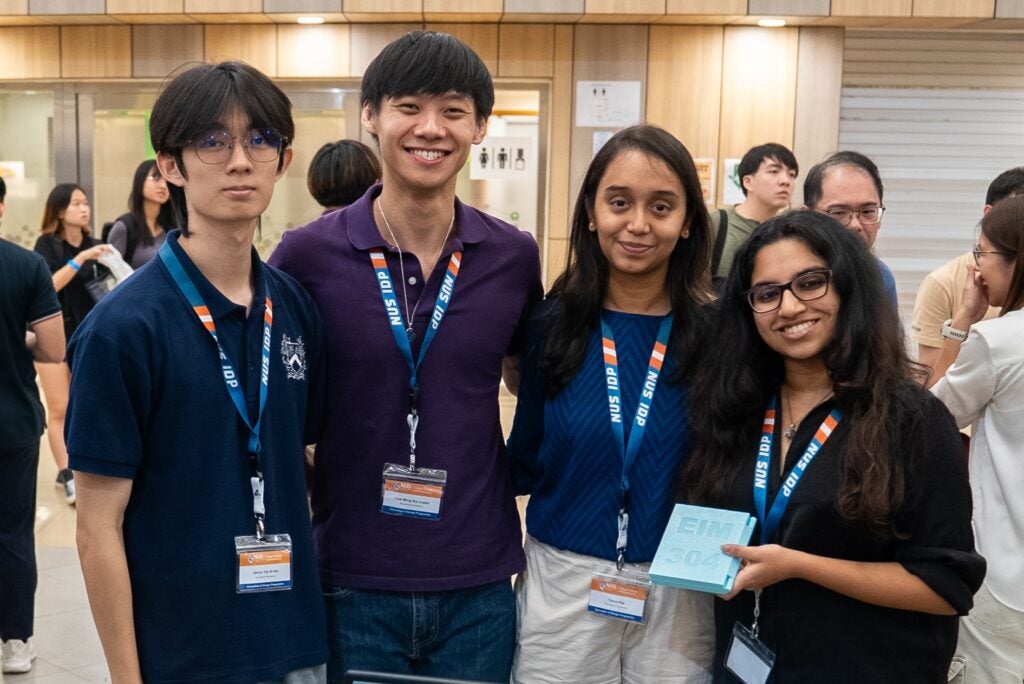
Project Team
Students:
- Chai Ming Hui Justin (Biomedical Engineering, Class of 2026)
- Jervin Tan Si Kai (Biomedical Engineering, Class of 2027)
- Low Jia Shuen (Biomedical Engineering, Class of 2027)
- Rajan Neha (Engineering Science, Class of 2027)
- Tanya Rai (Biomedical Engineering, Class of 2027)
Supervisors:
- A/Prof Mark Chong (bieskmc@nus.edu.sg)
- Dr Tang Kok Zuea (kz.tang@nus.edu.sg)