
CDE Alumni Spotlight
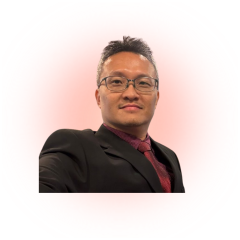
Interview with Mr Mark Lim
Q: What first drew you to Chemical Engineering and how did that interest evolve into your current role in teaching and process operations?
My interest in Chemical Engineering stemmed from a strong background in math and science during my A-levels. A newspaper article about the average starting salary of engineering graduates nudged me towards this path, and I made what I'd call a practical decision. Among the various options, Chemical Engineering stood out for offering both a rewarding salary and a broad industrial base. Exposure to the engineering block and advice from seniors further reinforced my choice.
I started as a process engineer, eventually moving into the manufacturing industry. After 16 years in the field, I transitioned to teaching. What began as a part-time teaching opportunity evolved into a full-time passion, and now I lecture at Singapore Polytechnic. The shift came at a stage in life where I find more meaning in coaching students than chasing profits in corporate roles.
Q: How important is hands-on training and simulation in developing workforce ready graduates?
It is absolutely essential. There is a significant gap between the theoretical knowledge taught in school and the practical skills required by the industry. Many engineering graduates are unfamiliar with basic operational tasks, such as handling pumps or troubleshooting real-time process issues. While universities offer bench-top experiments suitable for chemists, engineers require exposure to pilot plants, industrial-grade equipment and full-scale simulations.
Unfortunately, these are often lacking due to resource constraints. Hands-on experience — including high fidelity simulations — is crucial to bridge this theory-practice gap. When integrated effectively, simulation tools offer a safe, scalable way to develop both technical proficiency and decision-making confidence.
Q: In light of automation and Artificial Intelligence (AI) reshaping early-career roles, what skill sets or attitudes do you feel are non-negotiables for graduates entering process or technical industries?
While AI and automation increase operational efficiency, they do not eliminate the need for engineers. In fact, they amplify the importance of critical thinking and soft skills. Engineers must possess the ability to interpret data trends, troubleshoot processes, and optimise operations — all tasks where human judgement still plays a vital role.
Soft skills such as communication, adaptability and collaboration are non-negotiable. Furthermore, understanding the logic and mechanics behind algorithms is more valuable than simply learning how to operate them. With globalization and remote work models, Singaporean graduates now compete with global talent. Hence, being technically competent and interpersonally agile is key.
Q: Lastly, if you could go back and give your undergraduate self one piece of advice, what would it be?
I would tell my younger self to engage more fully in university life beyond academics. During my undergraduate years, I was overly focused on grades and missed out on enriching experiences such as volunteering, exchange programmes, or participating in student-led initiatives. These activities build the soft skills and resilience that are often more valuable than a Grade Point Average (GPA) in the professional world.
While my subsequent backpacking trip across nine countries was a transformative experience, I wish I had started exploring such opportunities earlier. University offers a safe environment to learn from failure and develop leadership, communication, and empathy skills that are vital but often underappreciated by students.
Interview by: Tong Zheng Yin (Alumni Relations Student Ambassador)