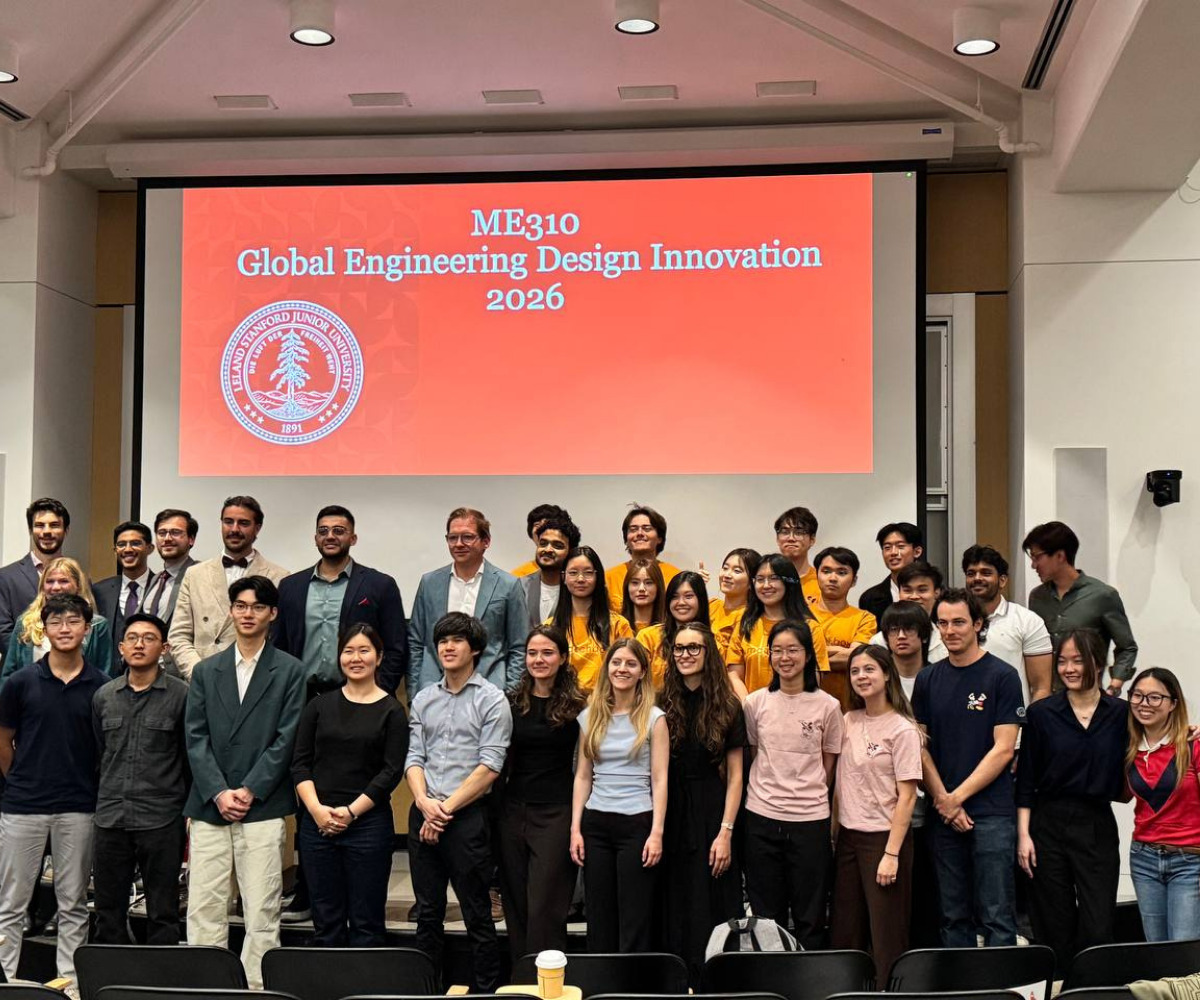
After months of collaboration, experimentation and rapid prototyping, NUS CDE students have completed their final showcase at Stanford University as part of the Stanford Global Engineering Design Innovation (GEDI) programme, bringing their projects to an international stage. Building on work first developed under CDE4301 Innovation & Design Capstone — offered by the Innovation and Design Programme (iDP) at the Engineering Design and Innovation Centre (EDIC) within CDE — the students then worked alongside their Stanford counterparts to test assumptions, refine their thinking and further develop their prototypes.
Their projects, PrimeDrive and Golf Hawks, were created in response to briefs from Venture Corporation and Meta respectively. They evolved significantly through the experience, revealing not only new technical possibilities, but also deeper insights into user needs, trust, care, and the role of technology in shaping human experiences.
PrimeDrive reimagines the hotel arrival experience
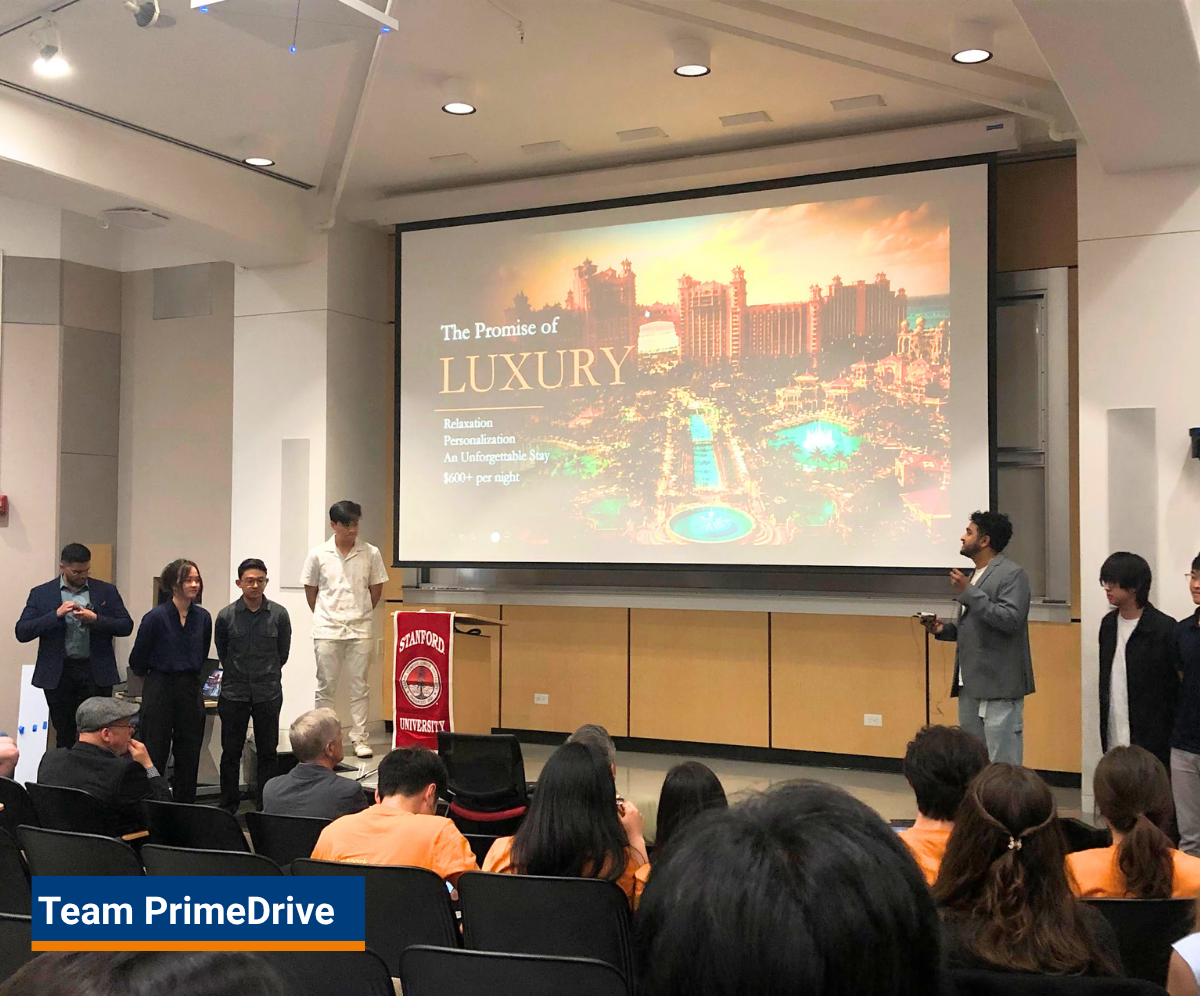
The team behind PrimeDrive included CDE students Jolie Koh (Biomedical Engineering), Lim Soong En (Computer Engineering), Muhammad Ilham (Industrial Systems Engineering and Management), and Gavin Tey (Mechanical Engineering). Their idea began as ELEVIA, an AI-powered hotel check-in kiosk focused on automating front-desk tasks such as passport scanning, reservation confirmation, payment and digital key issuance.
At Stanford, the concept evolved into a broader arrival platform that explored how hospitality could begin before guests even reached the hotel. The resulting prototype featured a guest-facing tablet, live concierge support, reservation lookup, passport capture, payment and signature capture, room personalisation, luggage handling, service recommendations and physical key card issuance.
This shift also changed the students’ understanding of luxury hospitality. “A fully automated experience can be efficient, but it may not always feel premium,” they said. “Through the project, we came to see luxury as a balance between technology and human judgement.”
A key breakthrough came when they realised that the human concierge should remain central to the experience. Rather than replacing staff, PrimeDrive became a live concierge-assisted journey in which technology supports more personal, responsive service. Working with Stanford students also pushed them to think beyond functionality and focus on trust, emotional tone and how the experience would feel for guests.

Golf Hawks evolves through exploration and rapid prototyping
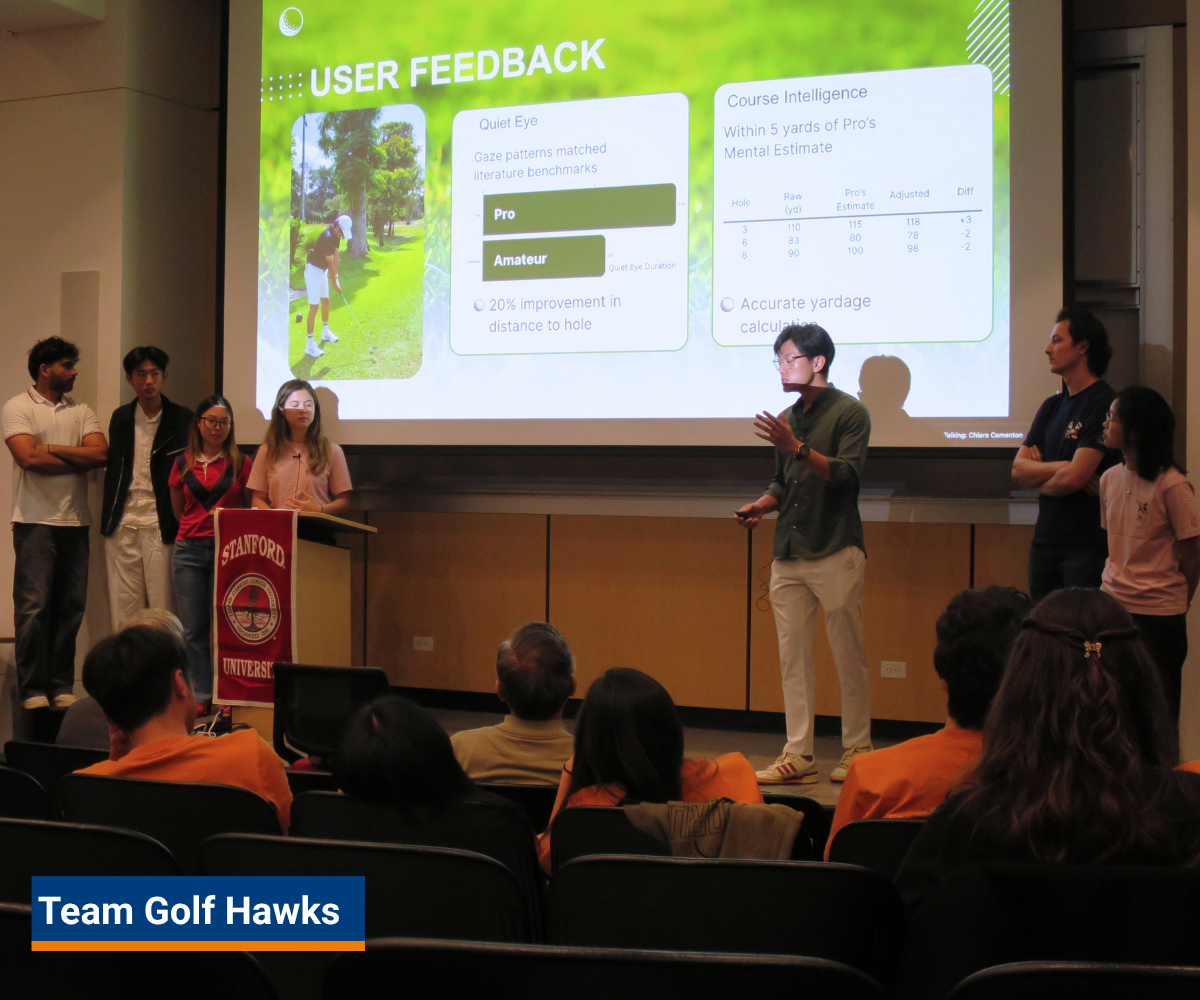
The team behind Golf Hawks included Rex Yong (Computer Engineering), along with Thulasidas, Jonathan Teo and Goh Nuoxu (Mechanical Engineering). For them, the Stanford experience was defined by exploration and iteration. They said, “Golf Hawks’ evolution was not a linear process; it was a winding one. Unlike conventional final-year projects that have a predefined problem to optimise or solve, the Stanford GEDI programme started off with the broad prompt of finding use cases for the Meta smart glasses.”
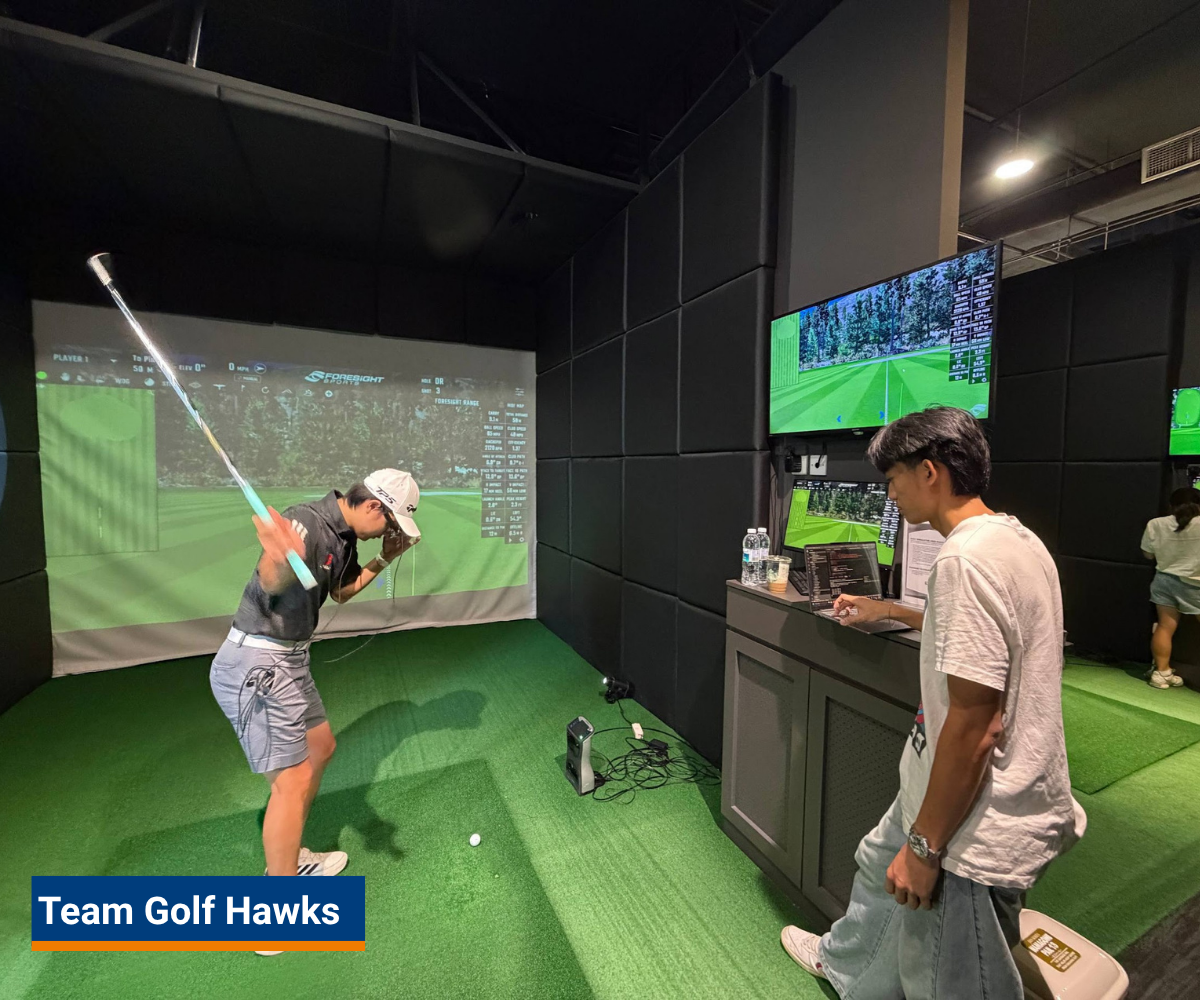
The CDE students investigated eight possible directions, ranging from elderly care and networking to wellness, productivity and sports. Their breakthrough came in the second semester, when they realised that eye-tracking technology, initially explored for detecting cognitive stress, could be applied to golf. This first took shape as GolfVision, before later evolving into Golf Hawks: a smart glasses concept that combines AI caddie support with eye-tracking-enabled focus training.
The project also drew on interdisciplinary strengths, with students developing both hardware and software, including 3D-printed components and a backend system for delivering feedback.
They said one of the most valuable lessons was the importance of rapid prototyping. Building quick prototypes helped them test assumptions and align faster as a team. They also came away with a deeper view of innovation in the age of AI: the real challenge is not just what can be built, but what should be built and why.
A shared experience of growth and ambition
While PrimeDrive and Golf Hawks evolved in very different ways, CDE students from both teams found that the Stanford portion of GEDI pushed them to expand their thinking, test ideas more boldly and refine their concepts through cross-border collaboration.
Working with Stanford students broadened their perspectives, helping them think beyond local contexts and consider the wider global relevance of their ideas. It also expanded their user testing pool, allowing them to gather feedback from a more diverse range of users and better understand how their prototypes might serve audiences beyond Singapore.
For the Golf Hawks CDE students, one proud moment came during their first full-system test with a professional golfer, when the athlete followed the AI caddie’s advice and made a strong shot. For the PrimeDrive CDE students, the biggest fulfilment came from elevating their project from a straightforward AI kiosk for check-in and luggage transport into a more thoughtful, layered hospitality experience that balances automation with human presence.
The NUS-Stanford partnership was made possible through a US$1.5 million gift from the Khetan Foundation to NUS Enterprise, together with the efforts of Dr Tan Sian Wee, Senior Vice President (Innovation & Enterprise), who was instrumental in establishing the programme.
He said, “GEDI is not a standalone exchange. It is a deliberate stage in how we build founder capability at NUS: students take real industry briefs, work in multi-disciplinary teams across borders, and prove they can build under uncertainty. The fact that both PrimeDrive and Golf Hawks moved well beyond their original briefs through prototyping and iteration is exactly the outcome this stage exists to produce, and exactly what the next stage builds on.”
Together, the two projects reflect the spirit of CDE: interdisciplinary, cross-border collaboration that pushes students to prototype boldly, think critically, and design with both innovation and empathy in mind.