

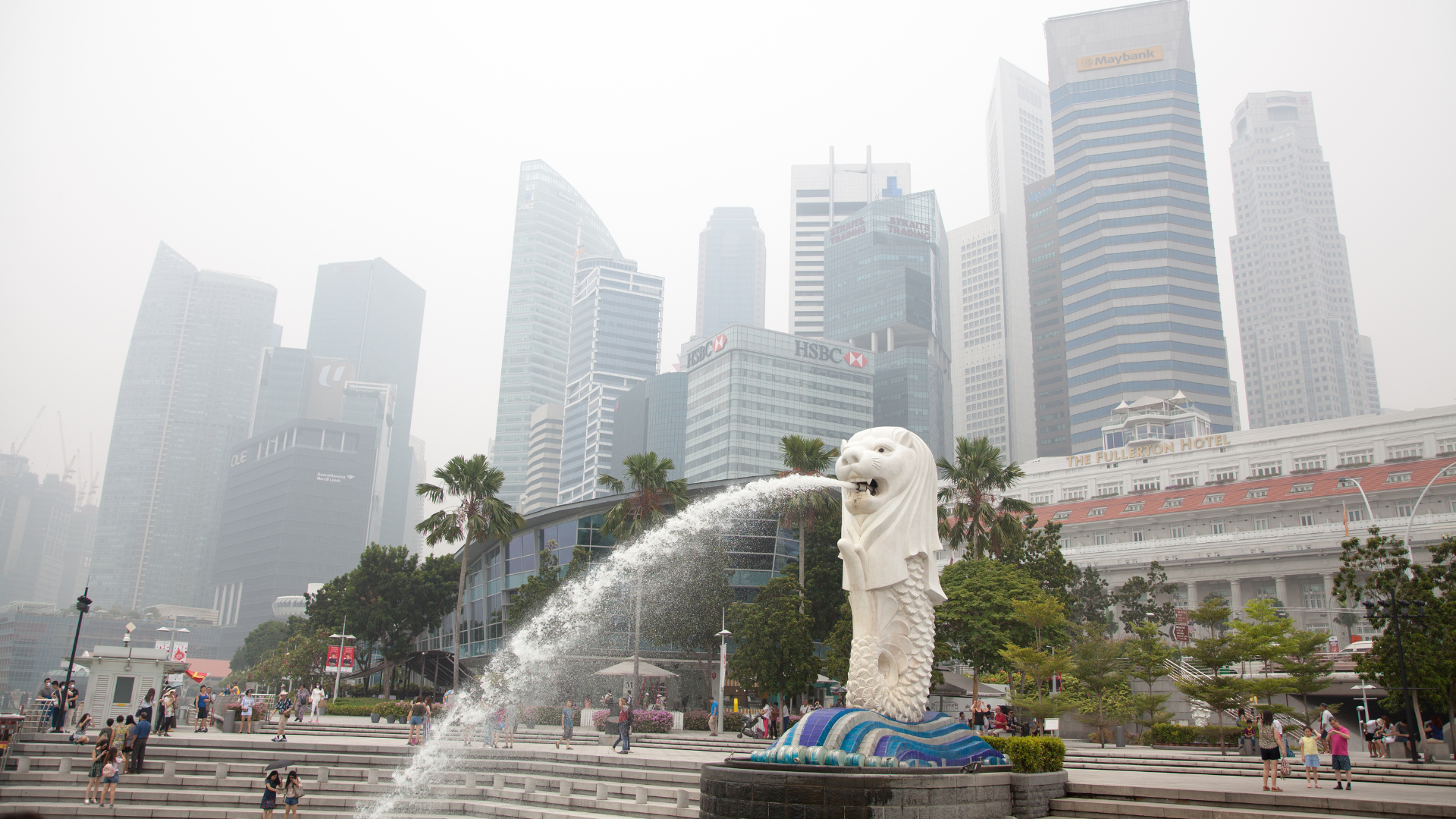
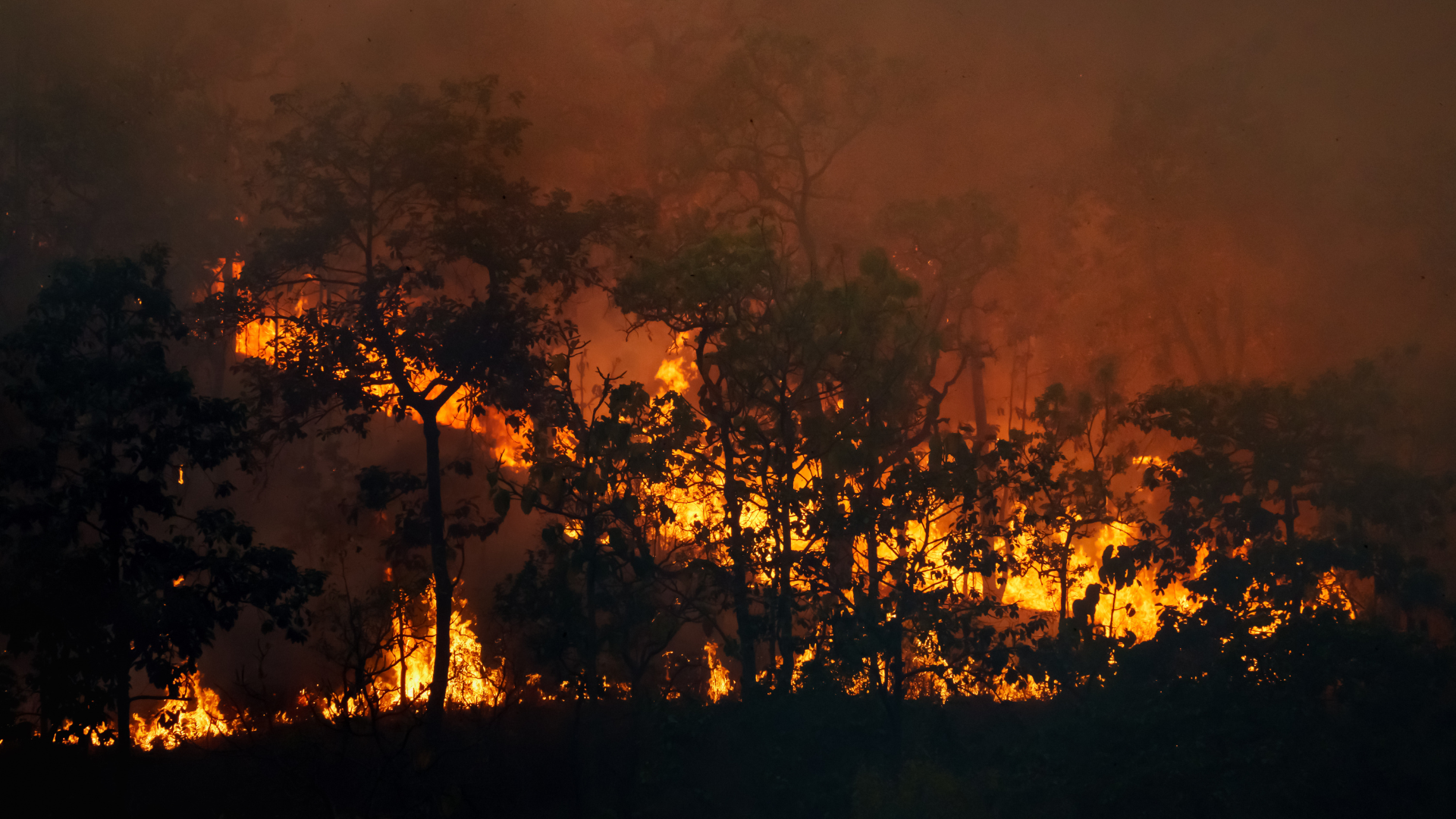
Singapore and Southeast Asia have been put on red alert for a high risk of severe haze in the second half of the year, as El Niño conditions and related weather patterns threaten to bring hotter and drier weather to the region.
For those who recall the severe haze episodes of 2013, 2015, and 2019, the warnings bring back a familiar set of memories: the grey skyline, the acrid burning smell, the rush for masks, possible school closures, and the daily checking of PSI (Pollutant Standards Index) readings before deciding whether to go outside.
But if or when haze returns, the number on the screen is only part of the story.
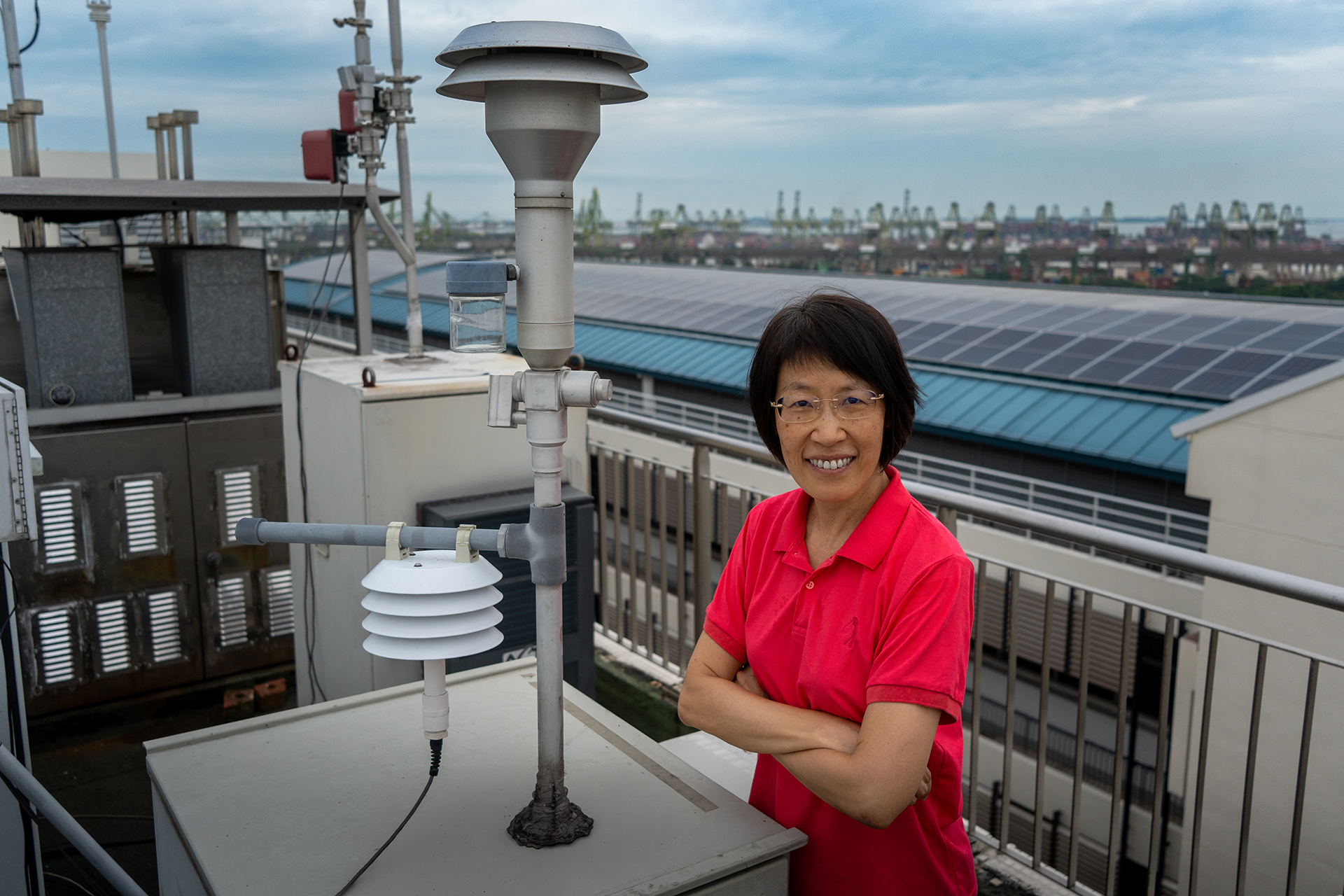
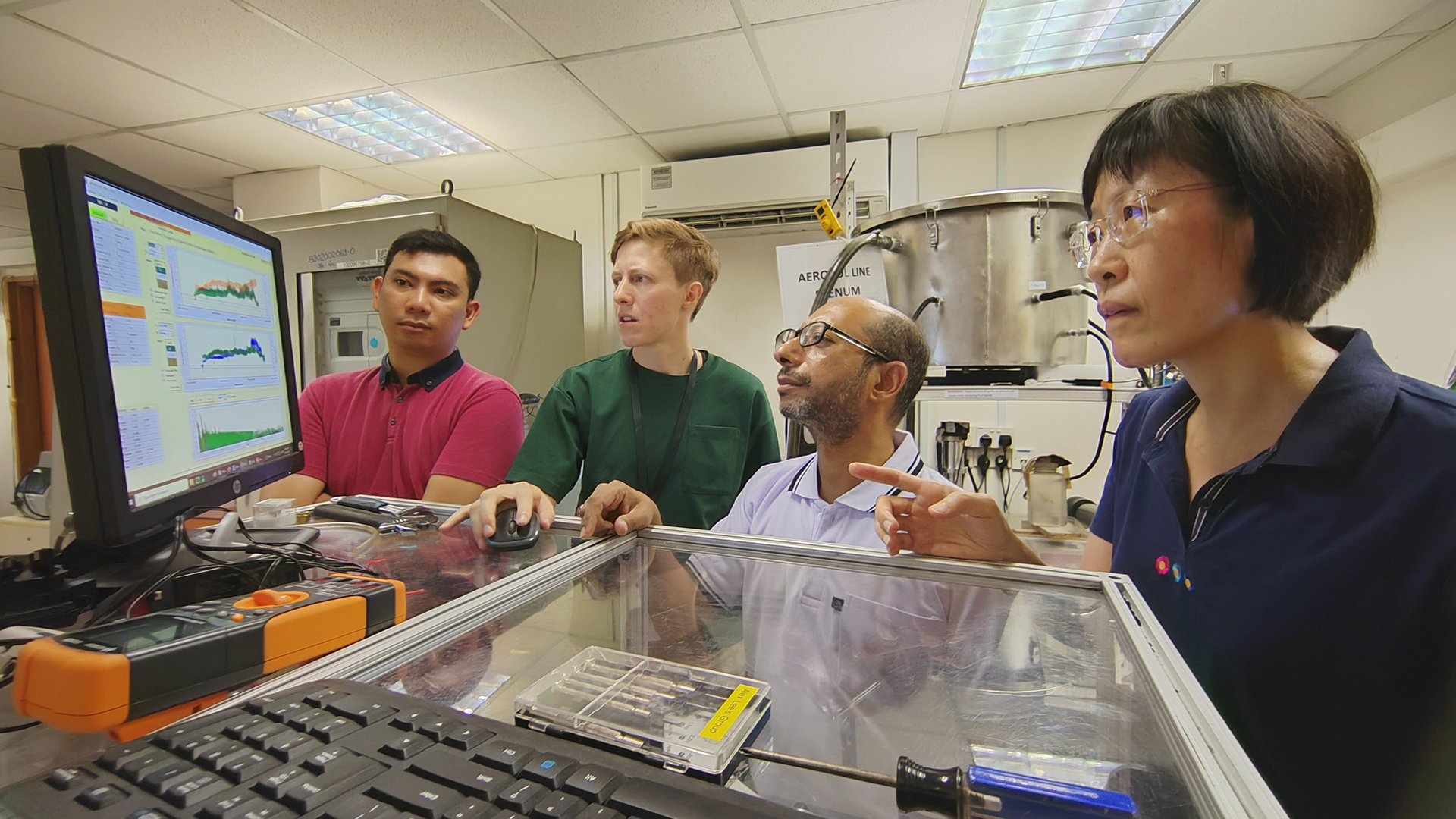
At CDE, Associate Professor Yu Liya (Department of Civil and Environmental Engineering) is studying what lies hidden behind headline air-quality readings. Her research is a form of environmental detective work: reading the chemical clues carried in the air to understand what is being transported into Singapore, how it changes, and what that means for preparedness.
“Air pollution does not stop at national borders,” she says. “There is no gate we can close for air. If we want to respond better to smoke haze, we need to know where the pollution is coming from, how it reaches Singapore, and how it changes along the way.”
| Could the 2026 haze season be worse than before?
Assoc Prof Yu Liya: “It’s hard to say, as it depends on many factors. Although 2026 is forecast to be drier than previous years, the severity of haze is influenced by things like where fires occur, how dry the peatlands are, how much burning takes place, and whether the wind direction carries smoke towards Singapore. Past haze episodes have had different characteristics. In 2015 the haze was very severe in intensity, while the 2019 episode lasted much longer. The 2013 episode was unusual because it was strongly influenced by meteorological conditions that brought smoke towards Singapore. There are also mitigating factors to consider. Indonesia’s peatland restoration programme, for example, has aimed to keep some peatlands wetter and less prone to burning. International alerts and regional prevention efforts may also help governments prepare. So, while the risk is real, we should not assume that any future haze will simply repeat 2015 or 2019. The conditions, the burning, and the transport of smoke can all be different. That's why continued monitoring and evidence are important.” |
Assoc Prof Yu studies air quality and aerosol science, focusing on fine airborne particles, pollution sources, and how pollutants change in Singapore’s tropical urban environment.
Haze is often experienced through a single number, such as the PSI or PM2.5 reading. Those readings are important for public updates, but they cannot show the full picture of what is happening in the air.
“PSI tells us how polluted the air is based on a handful criteria of airborne pollutants, but it does not tell us the whole story of what we are breathing,” she says. “To prepare better, we need to understand what is in the air, where it came from, and what else may be travelling with it.”
One of the most striking clues came from smoke transported to Singapore during the severe 2015 haze episode. Assoc Prof Yu and collaborators analysed particles in the smoke and found that their average carbon age was around 800 years old.
That was not just a scientific detail. It pointed to the source of the smoke.
Trees and surface vegetation are far younger. Carbon that old indicated peat burning underground, where fires can smoulder for weeks and become much harder to detect and extinguish.
“When we found carbon that was around, on average, 800 years old, that was a very strong clue,” she says. “It showed the smoke could not have come only from trees or surface vegetation. It pointed to underground burning of peat that has accumulated over thousands of years.”
Other clues lie in the chemical “fingerprints” of PM2.5, fine particles small enough to be inhaled deep into the lungs. During smoke haze episodes, PM2.5 is usually the dominant pollutant reflected in PSI readings. But not all PM2.5 is the same. Its chemical make-up can reveal whether particles come from traffic, shipping, industrial activity, regional fires, or a mix of sources.
Early detection
Assoc Prof Yu’s team has developed an hourly indicator that can help detect when smoke from biomass burning has reached Singapore.
“By the time people smell smoke, it has already significantly impacted urban air quality,” she says. “Our indicator can detect the signal earlier, before the smell becomes noticeable, and show when transported smoke particles are beginning to arrive.”
That signal does not replace official forecasts or public health advice. But it can provide earlier evidence of what is happening, how serious an episode may be, and whether communication or response measures need to be prepared.
“The value is preparation,” she says. “If we can see the signal earlier and understand where the smoke is coming from, then agencies have stronger evidence to communicate, plan and coordinate.”
Singapore cannot control the wind or stop smoke at its borders. What it can do is build a clearer picture of the pollution it experiences, including whether it is mainly local, nearby cross-border, or transported from much further away.
Assoc Prof Yu’s current research, supported under the Air Quality Monitoring and Control Funding Initiative and jointly hosted by the NUS Environmental Research Institute and the Department of Civil and Environmental Engineering, looks at the pollutants in Singapore’s air, both day to day and during haze episodes.
Pollution sources
Her team is studying how much pollution comes from local sources, how much is carried across borders, how airborne chemicals can contribute to ozone formation, and how newer concerns such as airborne plastics and long-lasting chemicals known as PFAS may be moving through the air.
A key part of the research is working out how much different sources contribute to PM2.5. Pollution from road traffic, shipping or industry requires different strategies from smoke transported from regional fires. Understanding the mix gives agencies a clearer basis for monitoring, mitigation and longer-term air quality management.
Singapore’s urban environment adds another layer of complexity. In the densely populated city-state, industrial, commercial and residential areas sit close together. Local emissions mix with cross-border pollution and, during haze episodes, long-range transported smoke. As pollutants travel, they can also react in the atmosphere and change chemically.
“Singapore’s air is already a complex mix of local and nearby cross-border emissions,” Assoc Prof Yu says. “When transported smoke is added to that mix, the chemistry becomes even more complicated. That is why we need to understand the air in Singapore’s own tropical urban context.”
The same detective work is also beginning to point to newer airborne concerns. Assoc Prof Yu says transported smoke can carry traces linked to airborne plastics, likely connected to human activities in burning areas. She cautions that more work is needed before drawing conclusions about toxicity or health effects.
“We are finding that transported smoke may carry more than the products of burning vegetation,” she says. “There are also traces linked to human activity, including airborne plastics. That suggests smoke haze may be carrying a more complex mixture of pollutants than we understood before.”
As the region enters a higher-risk haze season, PSI readings will still matter. But CDE research is helping Singapore look beyond the number: What exactly are we breathing? Where did it come from? How is it changing as it travels? And what warning signs can help agencies prepare earlier?
Answering those questions will help us read the air more clearly, understand the threat sooner, and plan with stronger evidence before haze becomes part of daily life again.
This research project is supported by the National Research Foundation, Singapore, and National Environment Agency under its Air Quality Monitoring and Control Funding Initiative (Award No.: AQMC-2023-1D-01). Any opinions, findings and conclusions or recommendations expressed in this material are those of the author(s) and do not reflect the views of National Research Foundation, Singapore and National Environment Agency.