

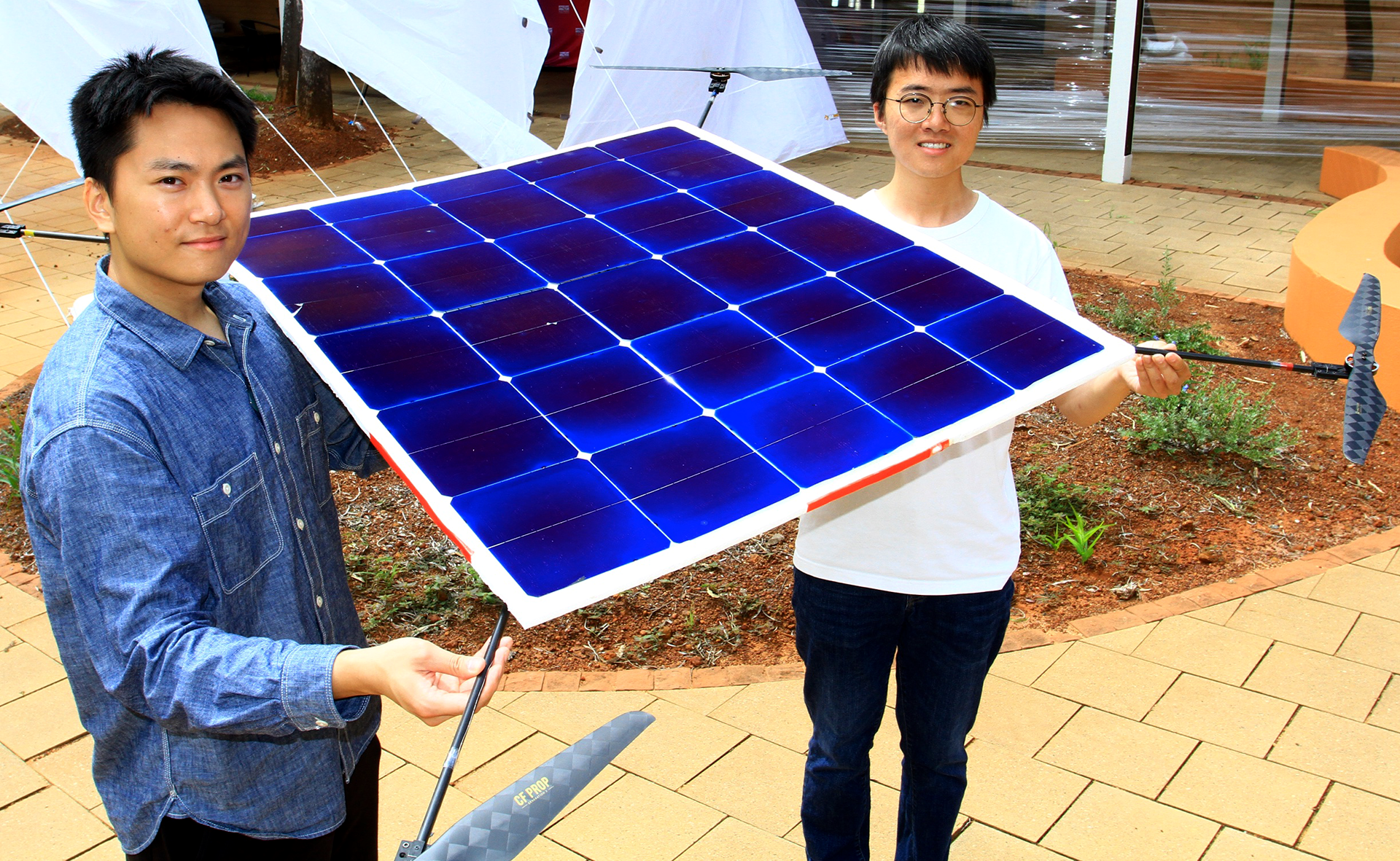
A student team from CDE has pushed drone technology past a key milestone, flying a fully solar-powered quadcopter for four hours and 25 minutes without any onboard battery.
The flight, conducted in Alice Springs, Australia, went well past the current official world endurance record of three hours and 15 minutes for multirotor drones, marking a significant step forward in ultra-long-endurance drone flight.
Developed by a small team from the Department of Electrical and Computer Engineering, supervised by Associate Professor Aaron Danner, the drone is powered entirely by sunlight, with solar cells driving its motors directly.
“Our aim was to see how far we could push flight time using only solar energy,” said Zhang Dewen, the PhD student leading the project. “Exceeding four hours showed that, with the right combination of efficiency and control, sustained solar flight is possible.”
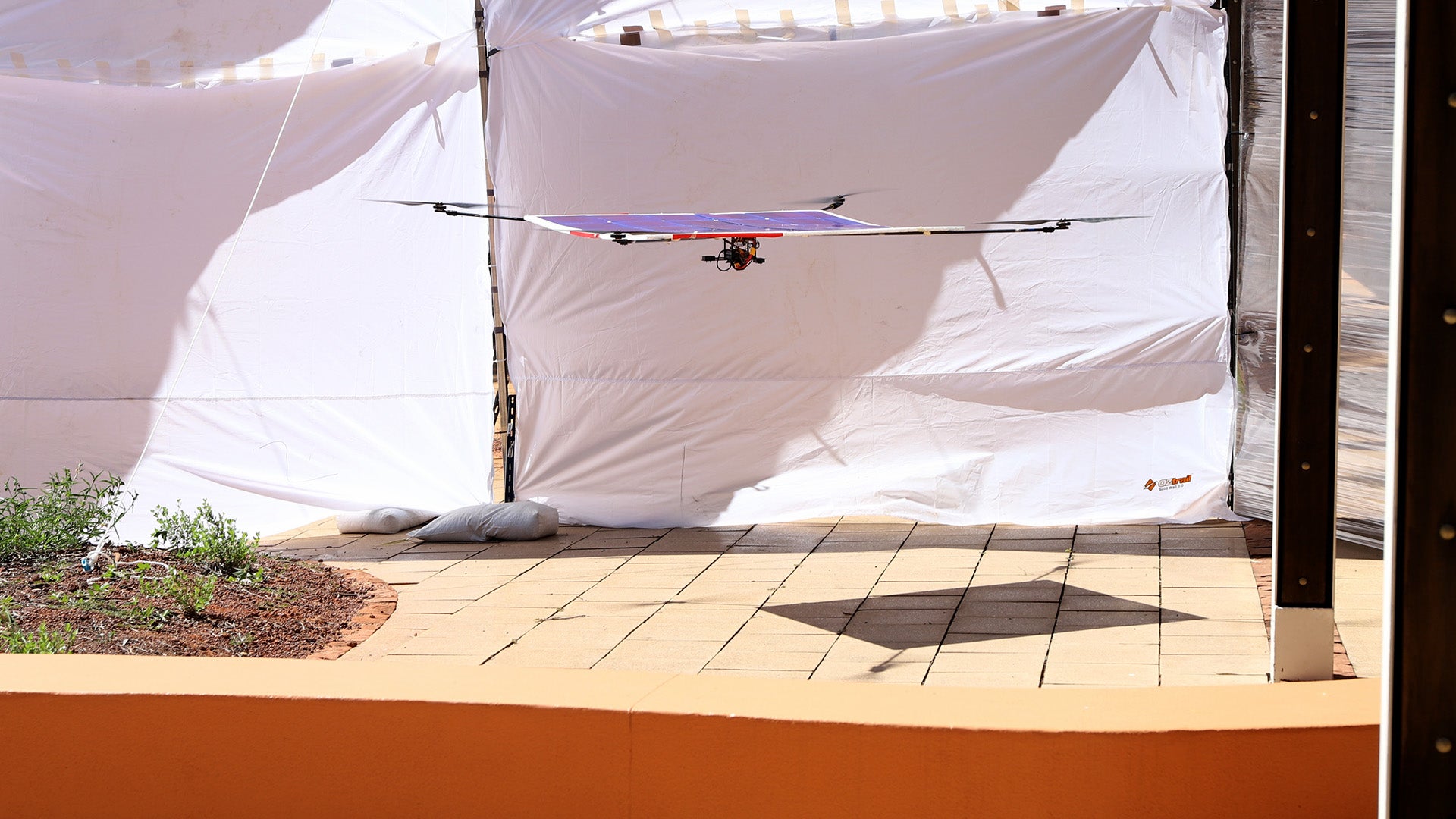
Unlike conventional drones, which typically fly for around 20 minutes before needing to recharge, the aircraft requires no charging and can remain airborne as long as sufficient sunlight is available.
“What’s exciting here is not just the duration, but the possibility of continuous flight without needing to land and recharge,” said Assoc Prof Danner.
The Alice Springs flight marked the culmination of years of development and testing. Over nearly 10 days, the team carried out multiple flight attempts, progressively increasing endurance from just over three hours to the final four hour 25 minute flight.
Watch the team's video about their breakthrough flight:
Weather challenges
“The biggest challenge was keeping the system stable for that long,” said Zhang. “You’re dealing with changing sunlight and wind, so everything has to be carefully optimised.”
The test itself was not without setbacks. Unseasonal rain and strong winds delayed initial trials for several days, while identifying a suitable test site required extensive local coordination.
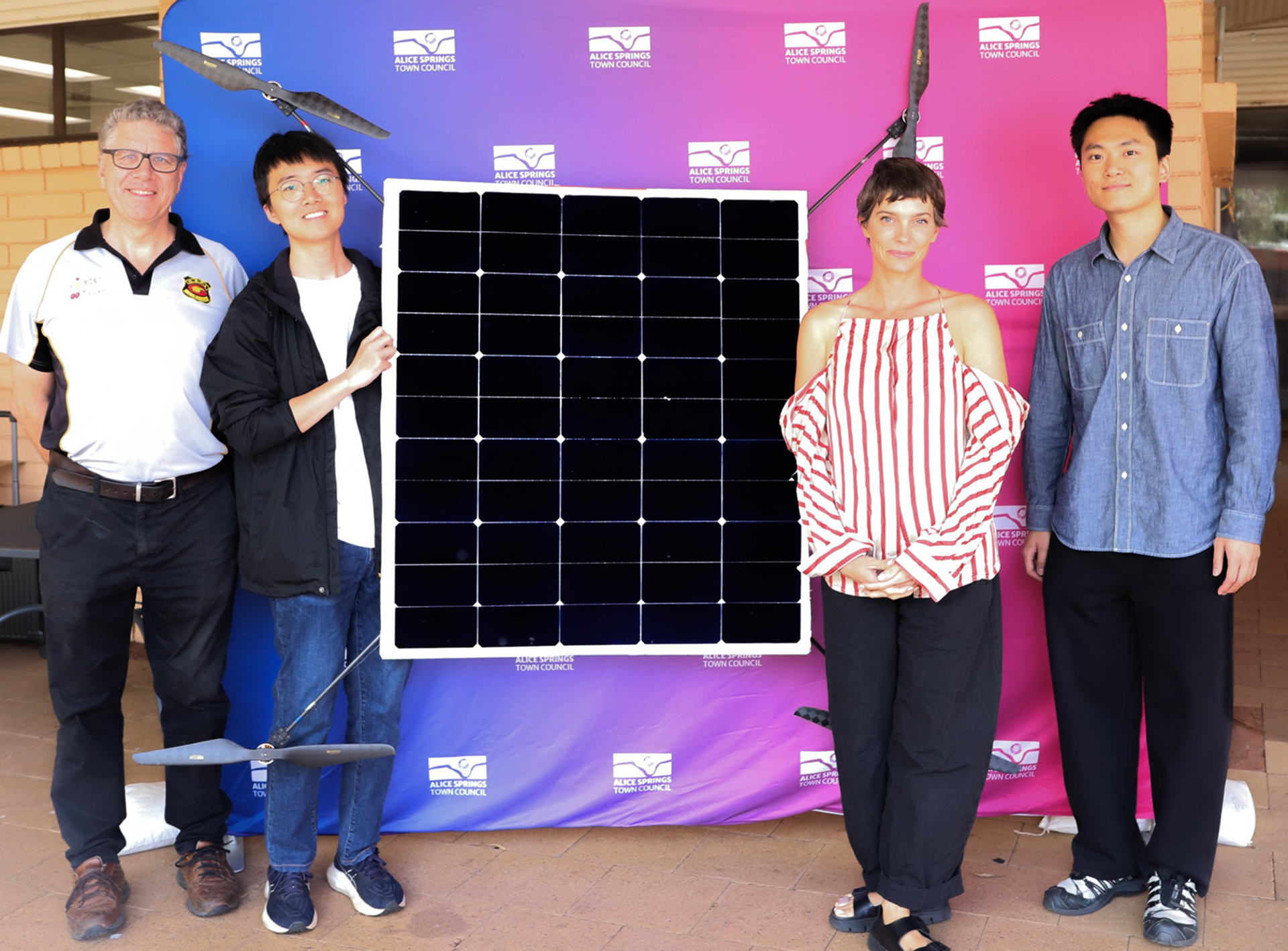
With support from the Alice Springs Town Council, the team eventually conducted the flight within a sheltered courtyard in the Mayor’s Office building that helped reduce wind interference.
During the flight, the drone hovered at a steady height for over four hours, with onboard systems handling most of the stabilisation autonomously. The pilot intervened only when needed to counter gusts of wind and maintain position.
“Most drones today are limited by battery life,” said Assoc Prof Danner. “This work shows a different approach, where the aircraft can stay airborne as long as there is sufficient sunlight.”
The flight ended only when sunlight levels dropped.
The team’s technology could enable drones that remain airborne for extended periods, opening up new possibilities for environmental monitoring, infrastructure inspection, agriculture, and disaster response.
The team behind the solar drone includes PhD students Zhang Dewen (project leader) and Yuan Zifeng, along with undergraduate student Hu Jiamo.