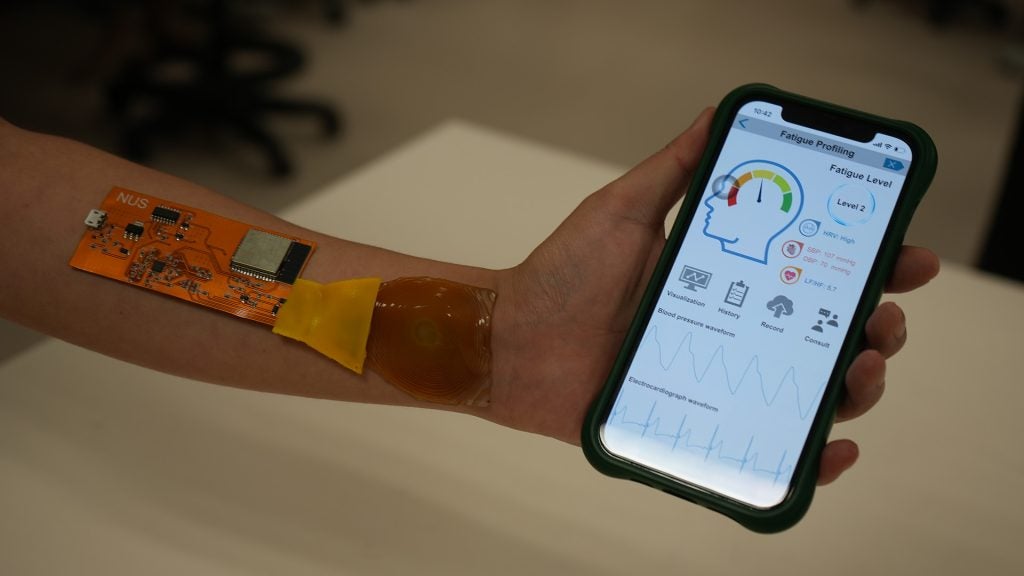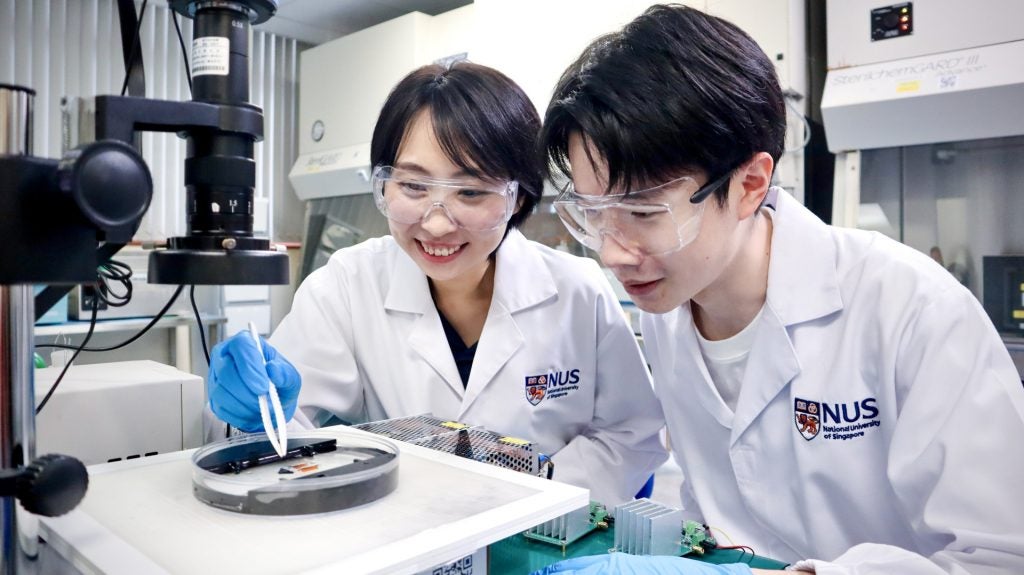


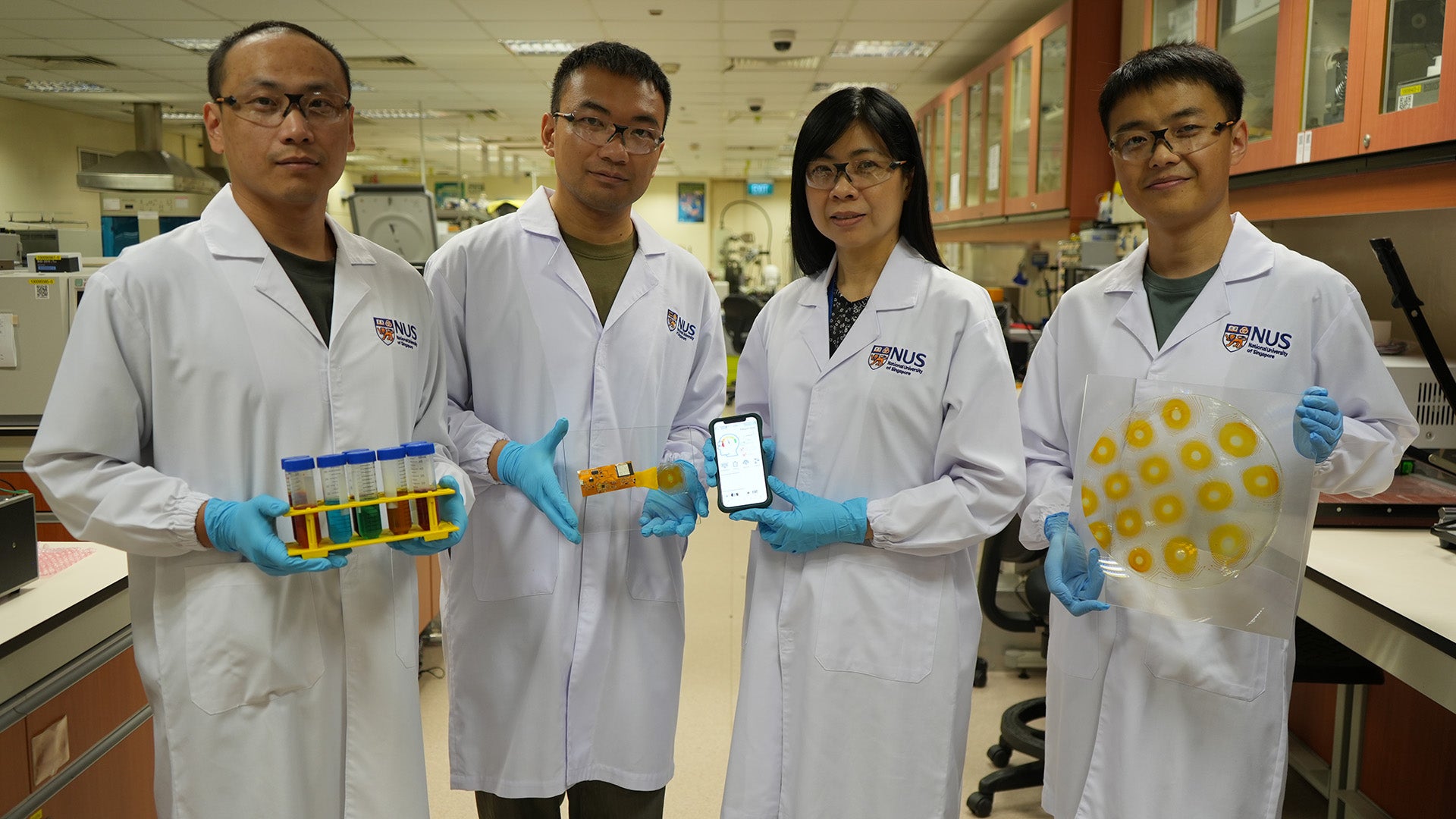
A new wearable sensor developed by researchers at CDE enables clinical-grade monitoring of fatigue and mental health in real-world settings, even during movement, overcoming a major limitation of existing devices.
By combining a soft, skin-conforming hydrogel with AI-driven signal processing, the system captures accurate heart and blood pressure signals on the move, paving the way for continuous and objective tracking of mental-health states.
The research team, led by Professor Ho Ghim Wei (Electrical and Computer Engineering) with Research Fellow Dr Tian Guo as first author, developed a metahydrogel platform that suppresses multiple sources of motion noise simultaneously. The system achieves clinical-grade performance, delivering an electrocardiograph signal-to-noise ratio of 37.36 dB and blood pressure deviation as low as 3 mmHg during movement.
Combined with machine learning, the platform can classify fatigue levels with 92 per cent accuracy, pointing towards objective, continuous mental health monitoring outside clinical settings. The findings were published in Nature Sensors on 24 March 2026.
Filtering noise at the source
About one in three employees in Singapore report feeling burnt out, yet fatigue and related mental health conditions are still largely diagnosed through subjective questionnaires. While wearable devices offer a potential solution, their accuracy drops significantly during everyday movement due to motion artefacts.
Instead of relying only on software to clean noisy data, the team addressed the problem at the sensor–body interface. Their metahydrogel artefact-mitigating platform combines two filtering mechanisms within a single material.
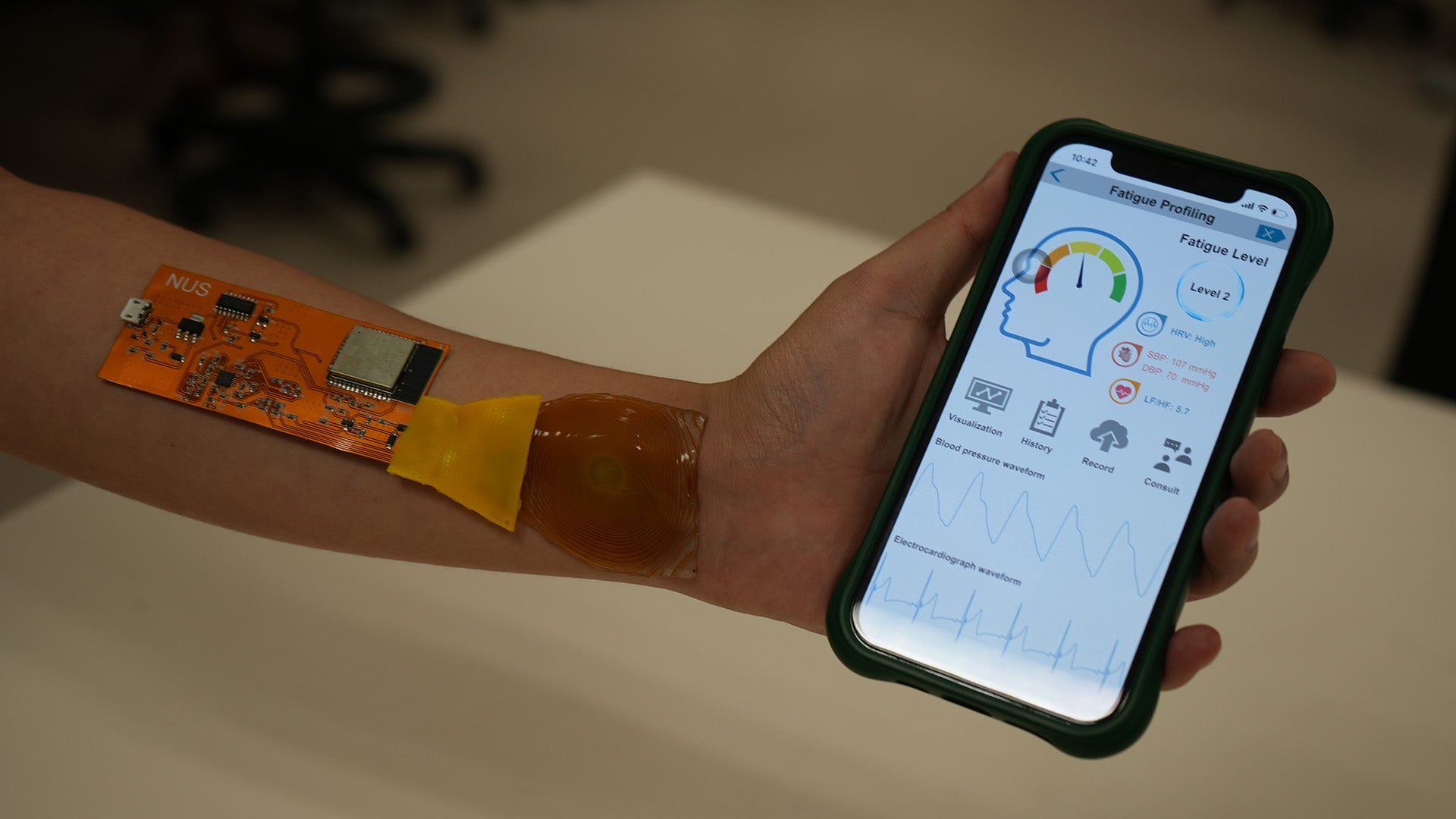
Nanoparticles embedded in the hydrogel scatter and absorb mechanical vibrations, blocking movement-related noise. At the same time, a glycerol-water electrolyte allows low-frequency heart signals to pass through while suppressing higher-frequency muscle noise. A machine-learning algorithm then removes any remaining noise while preserving key physiological features.
This approach significantly improves signal quality, boosting ECG signal-to-noise ratio from 5.19 dB to 37.36 dB and increasing peak-detection accuracy from 52 per cent to 93 per cent.
“Compared with current commercial devices, our metahydrogel platform demonstrates superior performance, particularly under motion conditions where artefact suppression is critical,” said Dr Tian. “Our system achieves around 37 dB during daily activity.”
From stable signals to mental-state decoding
Fatigue affects the autonomic nervous system, leaving measurable traces in heart rate variability, blood pressure and ECG features — but only if those signals can be reliably captured.
Using the hydrogel sensor, the team collected high-quality cardiovascular data from participants over multiple days, including simulated driving tasks. A deep-learning system trained on this data identified fatigue levels with 92 per cent accuracy, compared with 64 per cent without the platform.
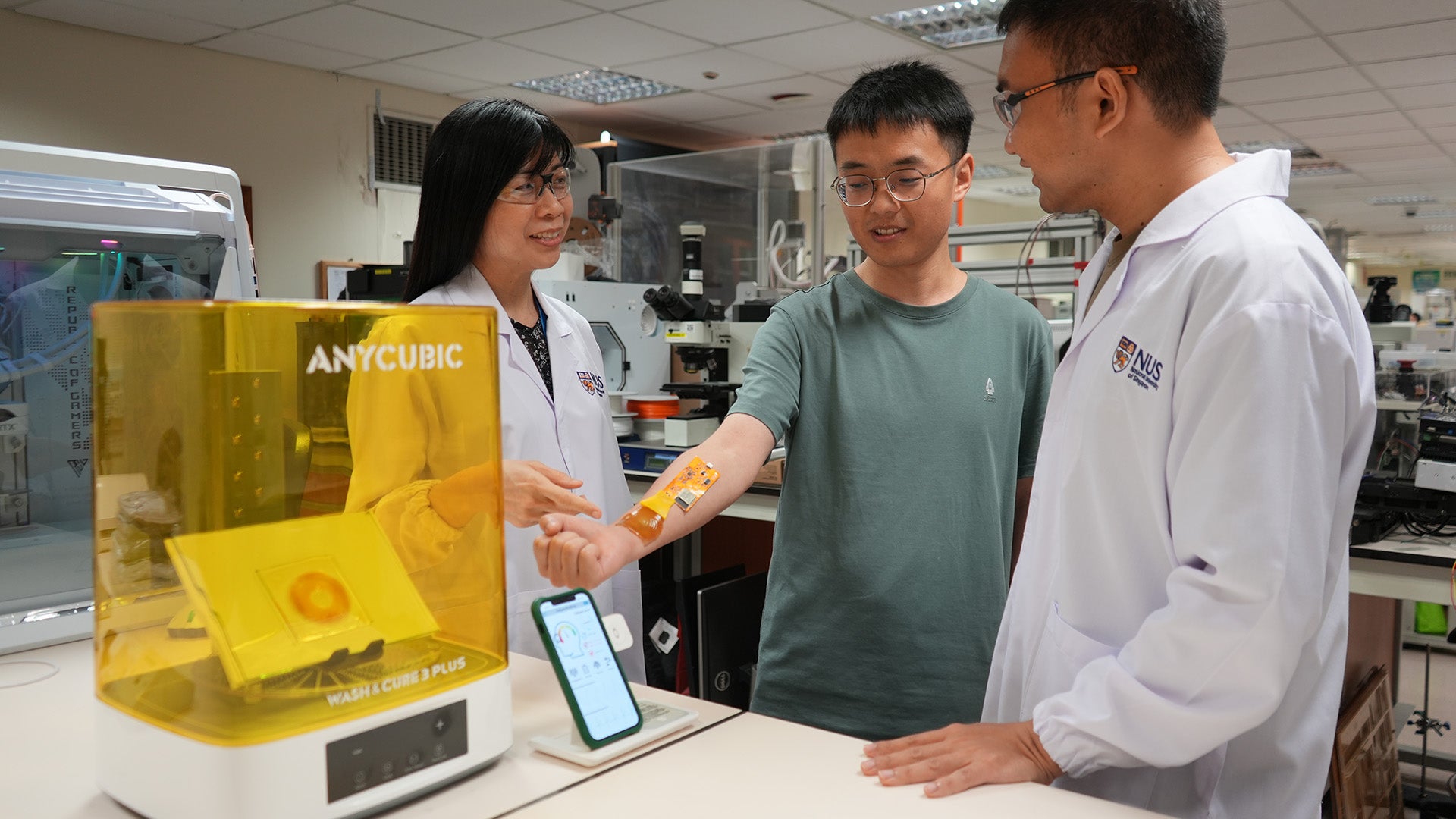
The system also meets ISO 81060-2 standards for blood pressure monitoring. Beyond fatigue tracking, it demonstrated the ability to suppress noise across a wide range of biosignals, including heart sounds, respiratory sounds, voice, brain-wave and eye-movement recordings.
Towards real-world mental-health monitoring
The team spent four years developing the underlying sensing technologies, followed by system integration and validation.
They are now looking to work with clinicians to better understand how physiological data can be used in real-world mental health applications.
“We hope to work closely with mental-health physicians to better understand what types of physiological data are most relevant in real-world settings,” said Prof Ho.
The researchers are also seeking industry partners to scale up manufacturing and move towards practical deployment.