


RESEARCH FEATURES

A chip off the old block
A single transistor can mimic the neural and synaptic behaviours of the human brain, bringing biologically inspired computing closer to reality.

Lighting the path to faster, smarter AI
Bringing non-linearity into the light, a new photonic accelerator allows AI to compute and respond entirely in the optical domain.

Soft robots take on hard tasks
Soft, robust miniature robots powered by fluid kinetic energy can traverse tricky terrains at impressive speeds, offering a valuable new tool for search and rescue operations.

A robust robotic support system
Driven by a differential series elastic actuator, a novel back-support exoskeleton aids users during lifting tasks, easing strain without adding muscle activation to the back and legs.
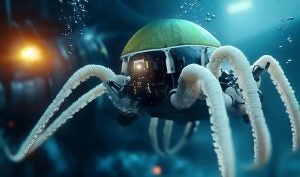
Teaching soft robots self-awareness
Soft robots with human-like perception can anticipate sensory inputs, detect contact and adapt dynamically, paving the way for applications in autonomous exploration and precision-driven medical procedures.
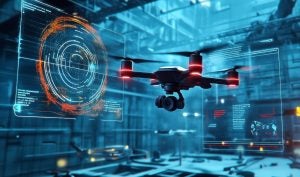
Lean, mean flying machines
A fast-adaptive estimator for robust flight control draws from the best of both deep-learning techniques and conventional control algorithms to improve drone performance.
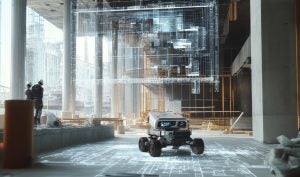
Helping robots find their way around the construction maze
By improving how unmanned ground vehicles see and navigate complex, cluttered construction sites, automation is set to transform tasks like site mapping and monitoring.
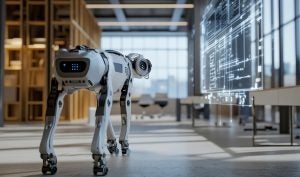
Automating 3D scanning of built environments
By integrating building information with indoor spatial data, robots are equipped with the capability to navigate and map complex indoor spaces more efficiently, advancing how industries capture the digital representation of the built environment.
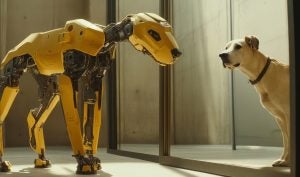
Teaching robodogs new tricks
Modelled on the neural control systems of animals, a new layered control framework enables legged robots to navigate complex terrains with greater agility and precision.
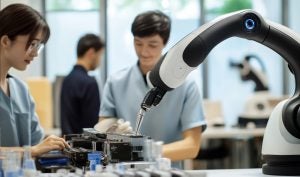
Robot safety a top priority
Designing safe, reliable and human-centric robots is a growing priority as they become an integral part of daily life.

Golden years bring golden opportunities
The new Centre for Environment and Ageing Well at the College of Design and Engineering transforms how societies approach ageing-related challenges through research-driven solutions — ensuring an inclusive future in ageing.

Learning from the platypus’s ‘sixth sense’
By integrating triboelectric and visuotactile sensing, a novel bionic electro-mechanosensory finger achieves both remote control and tactile perception, mimicking the platypus’s ability to sense electronical signals in murky waters and respond to physical stimuli.