

Community Engagement
Communities In Need
Communities In Need
Communities In Need brings students together to harness innovation and design for meaningful social impact. Students work across disciplines and alongside communities to understand real-world needs, develop creative ideas, and co-create practical, sustainable solutions that improve lives while building empathy, adaptability and a deeper sense of social responsibility.
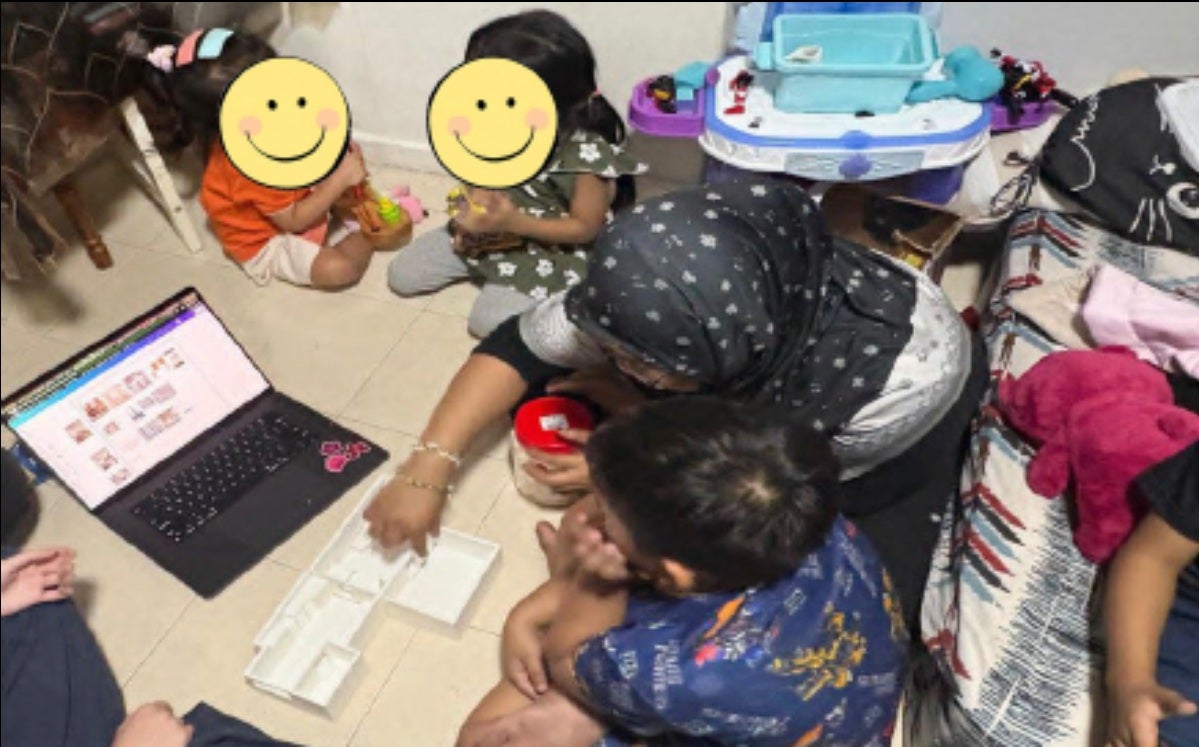
The Innovation and Design for Communities course is designed to facilitate community-based engagement and learning for design and engineering students through placemaking or transformation of spaces to positively impact underprivileged communities. Here, students will analyse existing spaces and constraints before applying their discipline-specific skillsets and competencies in design and technology innovation, such as space design, human-centric design of furnishings and fittings and smart home technologies, to co-create an improved community or living space to support these underprivileged communities.
The course broadly covers the following topics:
- Understanding Housing and Inequality in Singapore
- Social Determinants of Health and Wellbeing in the Built Environment
- Understanding Housing and Inequality in Singapore
- Social Determinants of Health and Wellbeing in the Built Environment
- Community-Centric Design: Ethics and Engagement
- Design Thinking Process for Small and Shared Environments
- Space Planning for Small and Shared Environments
- Furniture and Product Design for Compact Living
- Universal Design and Smart Home Technologies
Learning Outcomes
- Analyse and assess community needs through research and stakeholder engagement, understanding challenges and constraints of underprivileged communities' living spaces.
- Apply design thinking and problem-solving skills to address space-related needs of underprivileged communities, ensuring innovative and practical solutions for placemaking and space transformation.
- Integrate knowledge from design, engineering, and technology to create holistic solutions, fostering interdisciplinary collaboration to address community challenges and enhance project outcomes.
- Collaborate with community members and stakeholders to ensure designs are culturally sensitive, contextually appropriate, and reflect community aspirations and values.
- Develop skills to assess design interventions' effectiveness and sustainability, considering social, economic, environmental, and cultural impacts on community well-being.
General Education (GE) Requirement
- CDE2001 can be used to fulfil the Communities & Engagement (C&E) pillar of the NUS General Education requirements.
Course Availability
- Semester 1 and Semester 2
Who Can Apply
- Open to CDE undergraduate students.
For Enquiries, Contact
- Jacqueline Chiang, cde_specialprojects@nus.edu.sg
Innovation & Design Programme (iDP), CDE3301 Ideas to Proof-of-Concept, Designing for Community Wellbeing Studio
Under the iDP, we believe that meaningful innovation happens when students engage directly with communities to solve real-world challenges. Our community wellbeing studio integrates hands-on design thinking, user-centred research, and collaborative problem-solving with local and global communities. Students work alongside community partners to identify needs, prototype solutions, and create lasting impact. The Community Wellbeing Studio is a hands-on, project-based course where students work directly with community partners to design solutions that enhance wellbeing and quality of life. Through this studio, interdisciplinary teams collaborate with non-profit organisations, community groups, and social service agencies to identify challenges and co-create meaningful interventions that address real needs in Singapore's diverse communities.
Objective
- To develop students' competencies in human-centred design while creating tangible solutions that improve community wellbeing. Students learn to conduct empathetic research, engage meaningfully with stakeholders, and design interventions that are culturally sensitive, sustainable, and impactful.
Goals
- Apply design thinking methodologies to address authentic community wellbeing challenges
- Develop empathy and cultural competence through sustained community engagement
- Create functional prototypes or interventions that community partners can implement and sustain
- Build collaborative skills through interdisciplinary teamwork and stakeholder partnerships
- Foster a sense of social responsibility and understanding of complex social issues
- Gain practical experience in project management, user research, and iterative design processes
How to Apply
- Students need to take part in the CDE3301 Ideas to Proof-of-Concept project selection exercise, which happens towards the end of Semester 1 of each academic year (in October/November). The course is typically offered in Semester 2 and runs to the end of the following Semester 1 (January - November). Limited spots available – please write in to indicate your interest.
- Review course syllabus and community partners in November
- Students are matched with community partners based on their interests, the community partners' needs, and team composition requirements.
Eligibility & Special Skills Requirements
Who Can Apply
- Open to all NUS undergraduate students
- Students from all faculties are welcome - interdisciplinary teams are highly valued
- No prior design or community engagement experience required
Desired Skills/Attributes
- Essential: Open-mindedness, empathy, and respect for diverse perspectives
- Beneficial: Experience with qualitative research, CAD, prototyping, or community work
For Enquiries, Contact
- Assoc Prof Idris Lim, lihongidris@nus.edu.sg
- Dr Kate Lee Sangwon, katelee@nus.edu.sg
FOR ENQUIRIES, PLEASE CONTACT
Jacqueline Chiang
cde_specialprojects@nus.edu.sg