



Dear Reader,
Welcome to the latest edition of the NUS CDE Research Newsletter, covering a topic of profound importance to our global community: Energy. From new materials to breakthroughs in device engineering, being at the leading edge of energy innovation is among the highest priorities for our CDE community. In this issue, we are joined by guest editor, Professor Lee Poh Seng. We thank him for his stewardship of this important topic and our colleagues who are pioneering new advancements in the field!
All the best,
Dean Ho
Editor-in-Chief
Designing energy systems that can think, adapt and endure
Energy systems are in the midst of a quiet but profound transformation. Grids are becoming more dynamic and bidirectional, cities are layering digital infrastructure onto ageing assets, and industry, shipping and data centres face mounting pressure to decarbonise even as demand for mobility, trade and computation grows. In a tropical, resource-constrained setting, the question is straightforward but not easily answered: how do we stay cool, connected and competitive within tight carbon, land and water limits?
At the College of Design and Engineering (CDE), we approach this as a systems challenge. No single device, algorithm or material will solve it. Meaningful progress comes from joining up advances across domains and scales: from nanoscale heat transfer and catalytic surfaces, to building- and campus-level cooling and power, and on to regional grids and energy markets.
The work featured in this issue reflects that perspective. In power systems, colleagues are developing data-driven forecasting, optimisation and control tools for decentralised, renewable-rich grids that must remain reliable, flexible and, increasingly, fair. In thermal management, we are revisiting cooling from first principles, with efforts in advanced dehumidification, high-performance heat exchangers and liquid-cooled, low-water concepts for high-density AI data centres. On storage and fuels, research spans safer and more sustainable batteries, compact and inherently safer fuel storage, and low-carbon fuels such as ammonia and hydrogen, from fundamental chemistry through to engines and industrial heat applications. Electrified mobility and ASEAN-wide system studies add another layer, examining how EVs, renewables and cross-border interconnections can be orchestrated to support an affordable, reliable net-zero pathway.
A unifying thread is the emerging role of the NUS Energy Solutions Hub (NESH) under NUS Sustainable Futures. NESH is intended to act as a systems integrator for CDE and the wider university, linking cooling and power at the data-centre and campus scale, storage and fuels at the industrial scale, and markets and policy at national and regional scales. The planned Phase 2 of the Sustainable Tropical Data Centre Testbed (STDCT 2.0) with JTC on Jurong Island is a concrete example: a living lab for liquid cooling, warm- and seawater-based heat rejection, low-carbon power architectures and grid-supportive, AI-intensive operations in one of the world’s most demanding climates.
In parallel, there is growing interest within CDE in building a coherent nuclear engineering research agenda aligned with our national context. Advanced nuclear technologies such as small modular reactors are clearly a long-term option, but they sit squarely within questions we already work on: high-power-density thermal-hydraulics and heat removal, materials and structural integrity under extreme conditions, integration of firm low-carbon supply into renewable-rich coastal grids, and safety and systems engineering for complex, high-consequence infrastructure. Developing foundational research and talent in nuclear engineering is therefore a natural extension of our broader energy systems work.
Underlying all of this is a simple point: the connections matter as much as the individual innovations. Algorithms only have impact when they are embedded in devices, markets and institutions. Materials only change outcomes when they can be manufactured and deployed at scale. Regional models only matter when they inform investment, regulation and cooperation. Any future exploration of nuclear options will be no different; it will need to be evaluated and developed as part of an integrated system that includes renewables, grids, cooling, storage, shipping, data centres and industry.
My hope is that this issue of the CDE Energy Newsletter serves both as a snapshot of our current efforts and as an invitation. Many of the challenges we face cut across departments, disciplines and sectors. If you see resonance with your own work, I encourage you to reach out, start a conversation and explore collaboration with our colleagues, with NESH, and with emerging efforts in strategic areas such as nuclear engineering.
Professor Lee Poh Seng
Head of the Department of Mechanical Engineering
Co-Director of NUS Sustainable Futures in charge of the NUS Energy Solutions Hub (NESH)
Programme Director of the STDCT project.
DECEMBER ISSUE
A new current of change
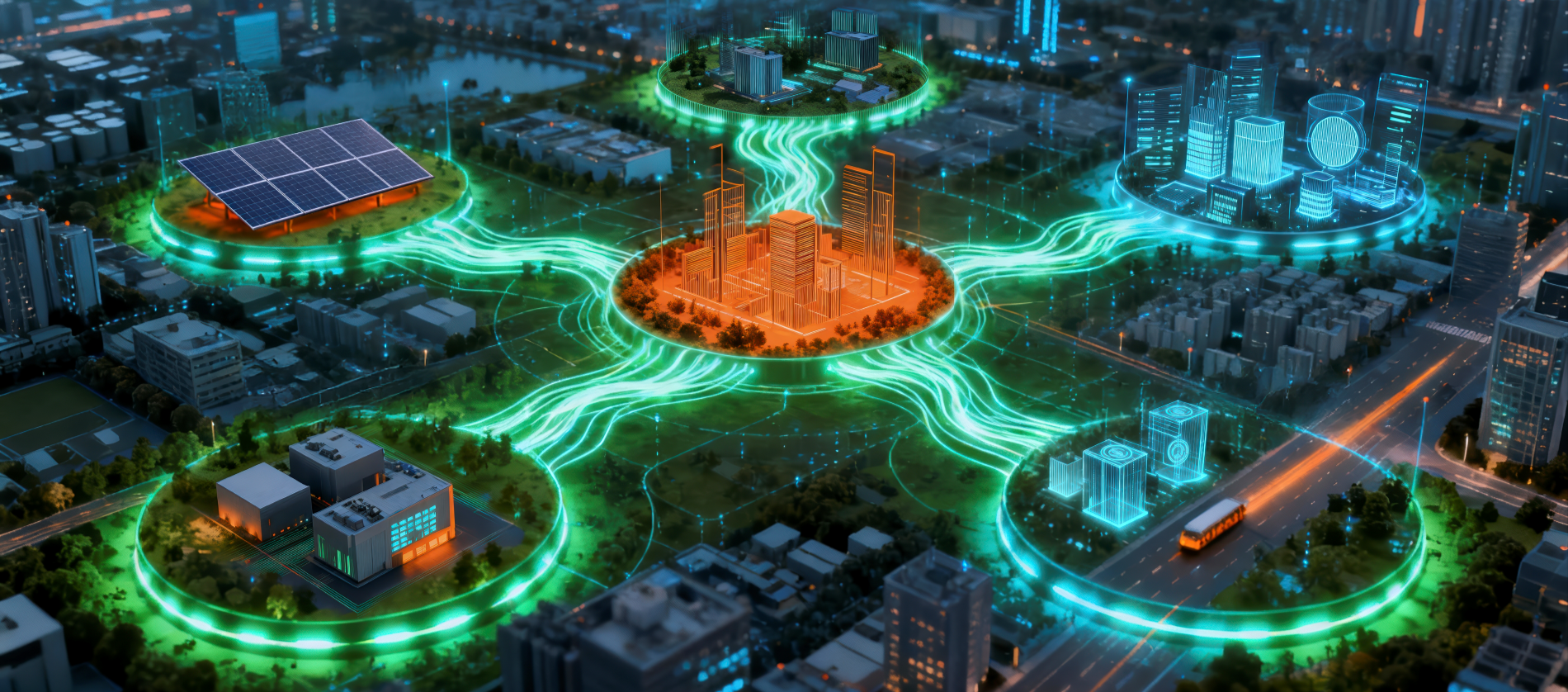
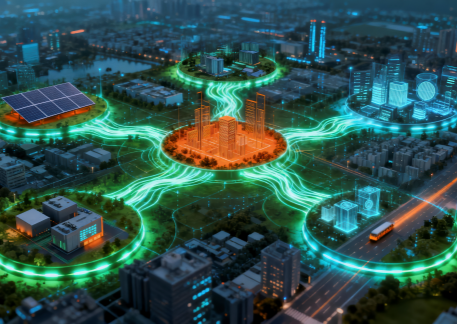
At the NUS Energy Solutions Hub, researchers and partners are pooling expertise across disciplines to reimagine from the ground up how tropical cities can stay cool, connected and carbon-conscious.
Read More | PDF Download
Ice mixed with amino acids stores methane in minutes
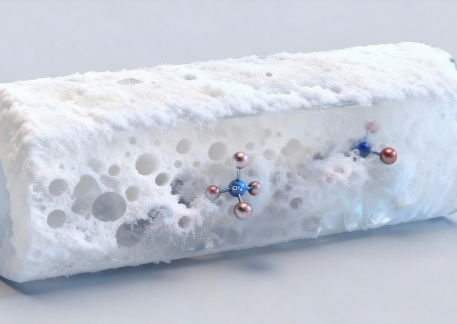
A reusable, biodegradable ice material captures methane rapidly, paving the way for safer and cleaner storage of natural gas and biomethane.
Read More | PDF Download
Making ammonia burn cleanly at industrial heat
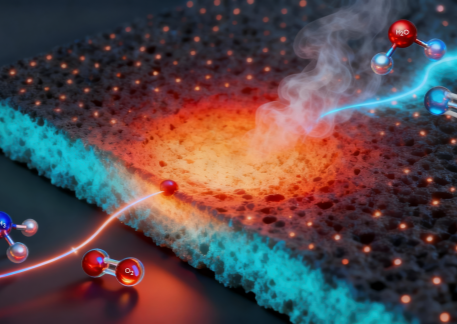
A single-atom platinum catalyst lights ammonia at 200 °C and keeps it burning steadily at 1,100 °C with low NOx, generating high-grade, carbon-free heat for steel, cement and chemicals.
Read More | PDF Download
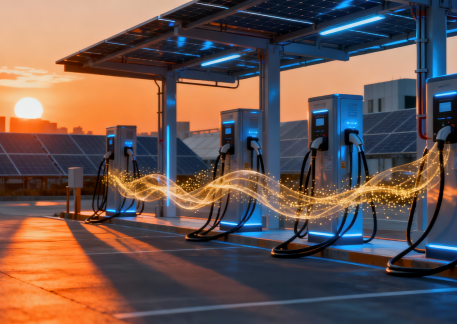
Balancing the charge towards clean mobility
A coordinated control approach keeps electric vehicles, solar power and the grid in perfect harmony, enabling stable, battery-free ultra-fast charging that makes the most of the sun.
Read More | PDF Download
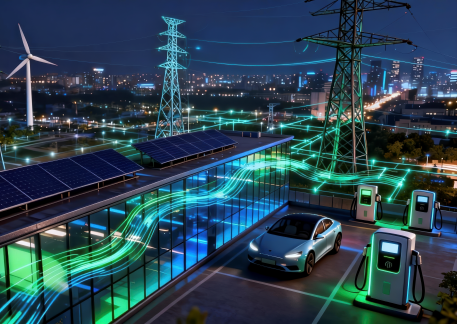
Injecting intelligence into tomorrow’s electrified world
From wind farms and ports to electric buses and charging hubs, Professor Dipti Srinivasan is designing optimisation frameworks that make renewable energy systems smarter, fairer and more efficient.
Read More | PDF Download
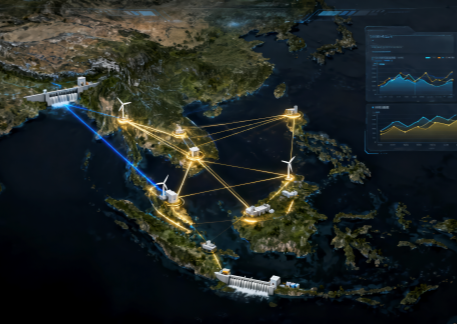
Powering a shared energy future
New modelling shows that linking ASEAN’s power grids could accelerate the region’s path to net zero, cutting costs and easing the burden of a just energy transition.
Read More | PDF Download
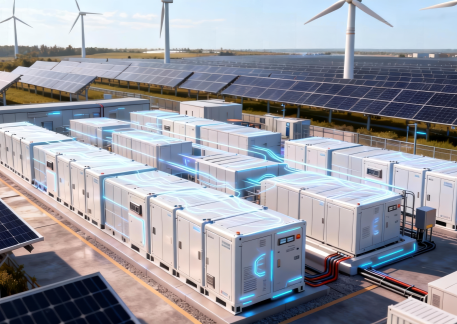
Building safer batteries
Associate Professor Palani Balaya develops sodium- and lithium-ion battery technologies, raising their performance and safety for an increasingly electrified world.
Read More | PDF Download
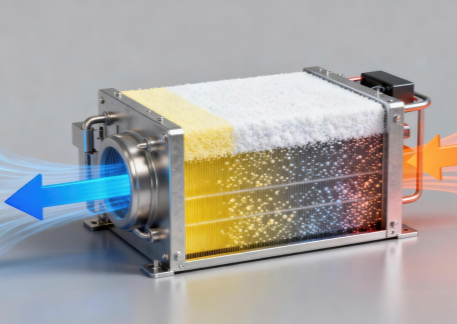
A smarter way to stay cool
A new heat exchanger design combines condensation and desiccant processes to manage humidity more efficiently, reducing energy use without sacrificing comfort.
Read More | PDF Download
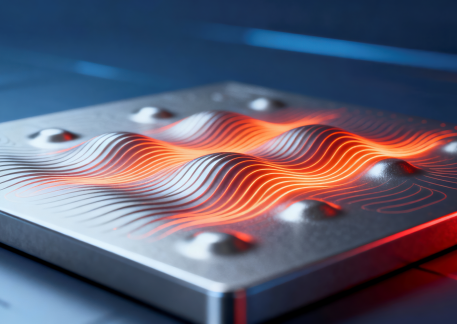
Riding the heat wave
A new nanoscale design channels hybrid light–vibration waves to carry heat more efficiently, allowing better thermal management in compact, energy-hungry electronics.
Read More | PDF Download

Fuelling the future of sustainable shipping
A new engine concept turns ammonia into its own source of hydrogen, charting new waters for cleaner, more efficient shipping without the need to store hydrogen onboard.
Read More | PDF Download
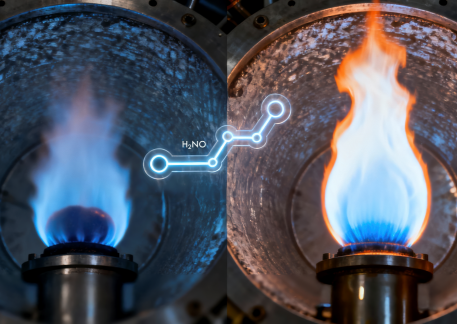
Keeping the (ammonia) flame alive
The chemistry of ammonia under pressure shows that even a small dose of hydrogen can turn a fickle flame into a steadier source of clean power.
Read More | PDF Download
A new current of change
At the NUS Energy Solutions Hub, researchers and partners are pooling expertise across disciplines to reimagine from the ground up how tropical cities can stay cool, connected and carbon-conscious.
Ice mixed with amino acids stores methane in minutes
A reusable, biodegradable ice material captures methane rapidly, paving the way for safer and cleaner storage of natural gas and biomethane.
Making ammonia burn cleanly at industrial heat
A single-atom platinum catalyst lights ammonia at 200 °C and keeps it burning steadily at 1,100 °C with low NOx, generating high-grade, carbon-free heat for steel, cement and chemicals.
Balancing the charge towards clean mobility
A coordinated control approach keeps electric vehicles, solar power and the grid in perfect harmony, enabling stable, battery-free ultra-fast charging that makes the most of the sun.
Injecting intelligence into tomorrow’s electrified world
From wind farms and ports to electric buses and charging hubs, Professor Dipti Srinivasan is designing optimisation frameworks that make renewable energy systems smarter, fairer and more efficient.
Powering a shared energy future
New modelling shows that linking ASEAN’s power grids could accelerate the region’s path to net zero, cutting costs and easing the burden of a just energy transition.
Building safer batteries
Associate Professor Palani Balaya develops sodium- and lithium-ion battery technologies, raising their performance and safety for an increasingly electrified world.
A smarter way to stay cool
A new heat exchanger design combines condensation and desiccant processes to manage humidity more efficiently, reducing energy use without sacrificing comfort.
Riding the heat wave
A new nanoscale design channels hybrid light–vibration waves to carry heat more efficiently, allowing better thermal management in compact, energy-hungry electronics.
Fuelling the future of sustainable shipping
A new engine concept turns ammonia into its own source of hydrogen, charting new waters for cleaner, more efficient shipping without the need to store hydrogen onboard.
Keeping the (ammonia) flame alive
The chemistry of ammonia under pressure shows that even a small dose of hydrogen can turn a fickle flame into a steadier source of clean power.
A new current of change
At the NUS Energy Solutions Hub, researchers and partners are pooling expertise across disciplines to reimagine from the ground up how tropical cities can stay cool, connected and carbon-conscious.
Ice mixed with amino acids stores methane in minutes
A reusable, biodegradable ice material captures methane rapidly, paving the way for safer and cleaner storage of natural gas and biomethane.
Making ammonia burn cleanly at industrial heat
A single-atom platinum catalyst lights ammonia at 200 °C and keeps it burning steadily at 1,100 °C with low NOx, generating high-grade, carbon-free heat for steel, cement and chemicals.
Balancing the charge towards clean mobility
A coordinated control approach keeps electric vehicles, solar power and the grid in perfect harmony, enabling stable, battery-free ultra-fast charging that makes the most of the sun.
Injecting intelligence into tomorrow’s electrified world
From wind farms and ports to electric buses and charging hubs, Professor Dipti Srinivasan is designing optimisation frameworks that make renewable energy systems smarter, fairer and more efficient.
Powering a shared energy future
New modelling shows that linking ASEAN’s power grids could accelerate the region’s path to net zero, cutting costs and easing the burden of a just energy transition.
Building safer batteries
Associate Professor Palani Balaya develops sodium- and lithium-ion battery technologies, raising their performance and safety for an increasingly electrified world.
A smarter way to stay cool
A new heat exchanger design combines condensation and desiccant processes to manage humidity more efficiently, reducing energy use without sacrificing comfort.
Riding the heat wave
A new nanoscale design channels hybrid light–vibration waves to carry heat more efficiently, allowing better thermal management in compact, energy-hungry electronics.
Fuelling the future of sustainable shipping
A new engine concept turns ammonia into its own source of hydrogen, charting new waters for cleaner, more efficient shipping without the need to store hydrogen onboard.
Keeping the (ammonia) flame alive
The chemistry of ammonia under pressure shows that even a small dose of hydrogen can turn a fickle flame into a steadier source of clean power.
PDF DOWNLOAD
Download the full issue below.
EDITORIAL BOARD
ISSUE 7
Editor-in-Chief:

Editorial Board Members:




PAST ISSUES
Click Here to view earlier issues and articles.
SUBSCRIBE
Click Here to subscribe to our newsletter.
Graphic images in this newsletter were generated using AI and intended only as a visualisation of general concepts or ideas related to the research.