
Ryan Loh Yong Rui (Year 4, Computer Engineering), did not set out to build just another AI tool. He co-founded LearnKata to tackle a problem he had seen firsthand: many students were putting in the effort but still struggling because their learning lacked structure.
Together with LearnKata CTO Alfred Ben (Year 4, Computer Science), they developed an AI-powered study platform designed to help students learn more effectively. While Ryan shaped the platform’s educational vision, Alfred played a key role in building its technical foundation and user experience. The idea for LearnKata emerged from Ryan’s experience tutoring students. Through these sessions, he observed that many learners were overwhelmed by dense lecture notes, fragmented resources and AI tools that could provide answers quickly but did not always support genuine understanding.
“Most current AI tools are not actually built for learning,” Ryan said. “They can often give students the right answer, but there is no real process for helping students understand and apply concepts properly.”
Building for how students actually learn
This insight became even clearer when Ryan was tutoring his younger brother in history. He realised that while AI tools could provide answers, students who were already struggling often did not know how to use them effectively as learning aids. This prompted Ryan and Alfred to take a more intentional approach in designing LearnKata.
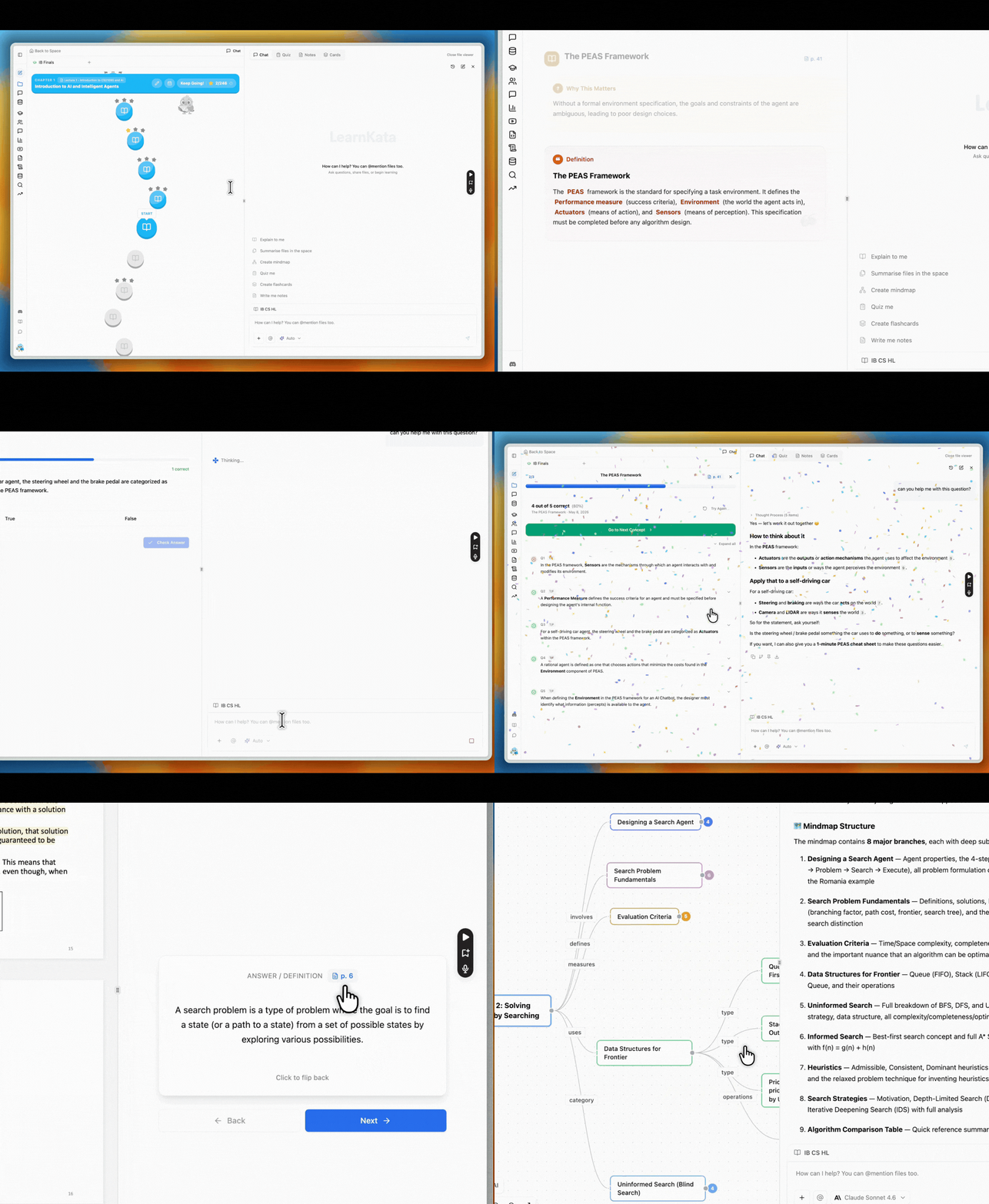
Rather than functioning as a generic chatbot, LearnKata is structured specifically to support the learning process. Students can upload their study materials and be guided concept by concept, with explanations of why each idea matters, how concepts connect, and quizzes that reinforce understanding before they move on. In doing so, the platform aims to help students build stronger foundations and avoid becoming overwhelmed.
LearnKata began as a way for students to chat with their lecture notes while tracing responses back to source material. Since then, it has evolved into a more comprehensive study platform that can turn uploaded content into notes, quizzes, flashcards, mind maps and personalised study support. Alfred has been instrumental in driving this technical direction, helping translate the team’s educational vision into tools that align with real student workflows.
Pushing through the early stages
The journey, however, was far from easy. In the early days, the team spent five months growing from 0 to 300 users while generating only about $100 in revenue. They had also left their previous internships to focus on building LearnKata full-time, making the uncertainty even more significant.
“The hardest part was staying focused on the process rather than the metrics, and tuning out the naysayers and people who did not believe in us,” Ryan said.
That persistence has since paid off. Today, LearnKata has grown to more than 40,000 users, is generating healthy five-digit monthly revenue, and has verbally closed a deal with a school in Hong Kong.
Alfred added, “What really surprised us was when Ryan posted a video that took off and brought in a huge number of users. It showed us that while building features matters, how you market the product can make all the difference.”
Creating impact through learning
For Ryan, the most meaningful part of the journey has not been the growth figures, but the feedback from students.
“The most rewarding part has definitely been hearing from students who tell us that they genuinely enjoy learning now because of LearnKata, or that it helped them finally understand concepts in a way they never could before,” he said.
Ryan and Alfred’s work reflects the spirit of CDE innovation: applying engineering thinking to real-world challenges and building technology that creates meaningful impact for learners.