As part of National Engineers Day (NED) 2026, student innovators from CDE put their ideas to the test at the Engineering Innovation Challenge (EIC), a national platform that encourages students to apply engineering knowledge to real-world problems.
Held on 14 August, NED brought together engineers, educators, students and industry professionals to celebrate the role of engineering in shaping Singapore’s future. Organised by the Institution of Engineers, Singapore (IES), the event featured industry-led seminars, learning journeys and EIC, where student teams presented practical solutions for resilient city living.
For the CDE teams, the challenge was not only about building prototypes, but also about learning how to make difficult design decisions, work across disciplines, and communicate the value of engineering solutions clearly.
Building smarter coastal defences awarded 1st Runner-Up
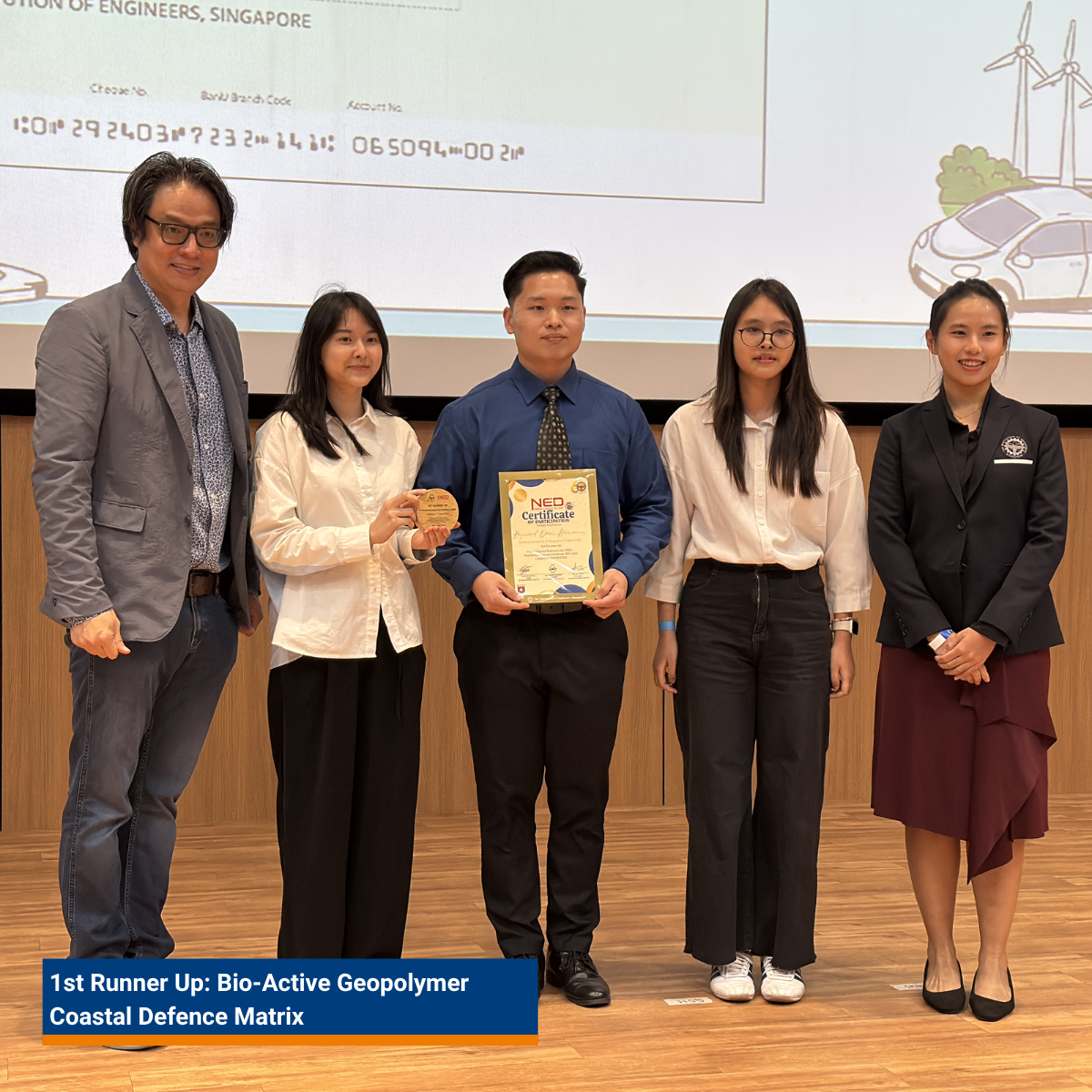
Among the standout teams, Bio-Active Geopolymer Coastal Defence Matrix was named 1st Runner-Up at the Engineering Innovation Challenge. Developed by Ding Cong Yu, Winy Pyi Soe, Clarissa Joyceline Edi Surya and Reynard Deon Himawan (Civil & Environmental Engineering), the self-powered Ocean-IoT ecosystem is designed for passive filtration and real-time wave monitoring.
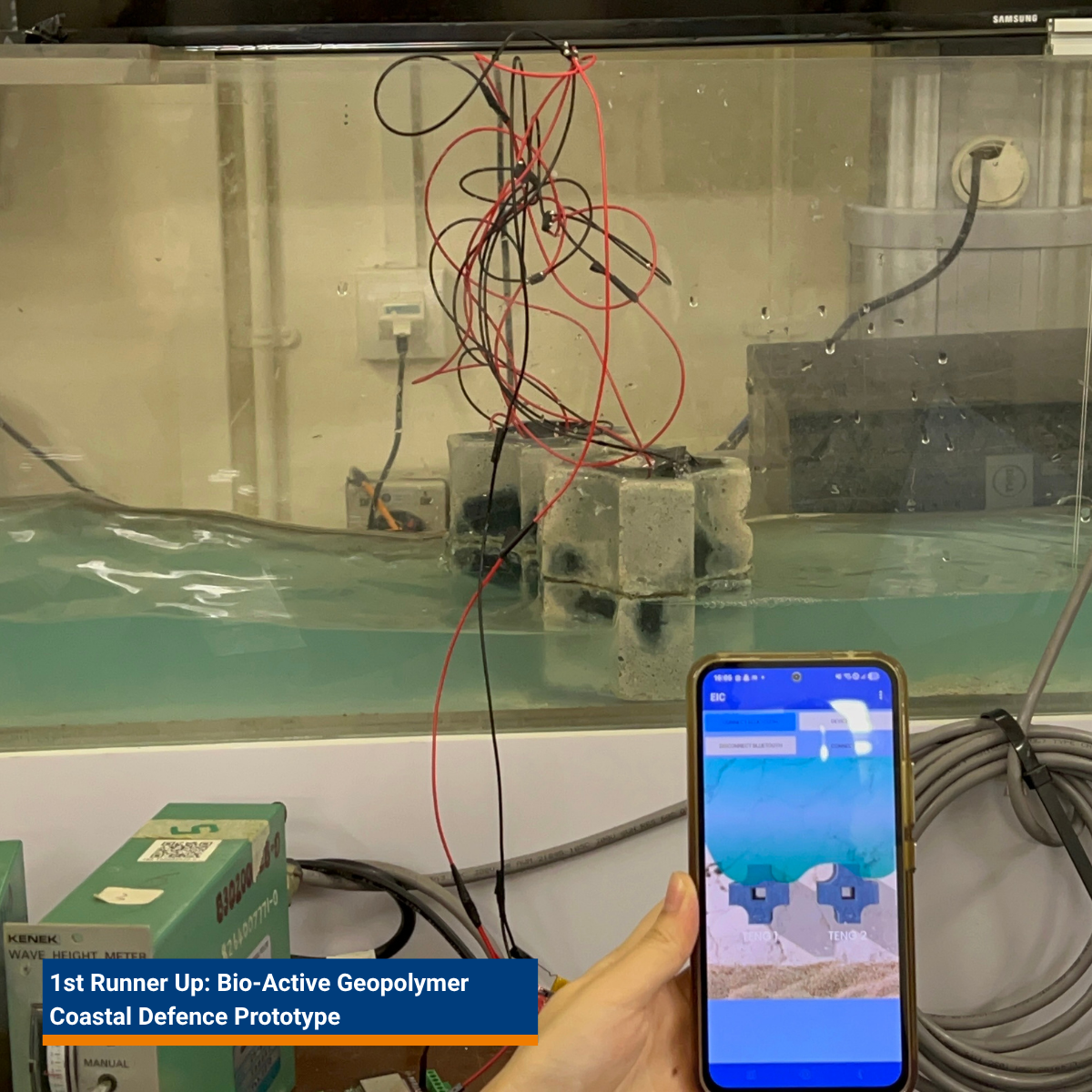
It proposes a directionally optimised breakwater matrix that helps address coastal erosion, water security and ecological degradation. Made from marine geopolymer concrete instead of conventional Ordinary Portland Cement, the system is designed to support marine biodiversity, reduce wave energy, trap low-micrometre plastics, adsorb heavy metals and harvest tidal kinetic energy to power real-time coastal monitoring.
Reflecting on the project, the team said the EIC pushed them to balance ambition with practicality.
“We learned that profound engineering rarely goes according to plan. Success depends entirely on communication, flexibility, and trust.”
They added that their team’s strength came from combining expertise across “heavy civil engineering and delicate micro-electronics”, even when this led to different views on design priorities. One major debate centred on the internal tunnel geometry: some members wanted to optimise the structure for wave attenuation, while others wanted to maximise the surface area for energy harvesting. The team eventually resolved the disagreement through wave flume trials, which also happened to be their most memorable moment. The full system worked as they intended: waves struck the breakwater, the tunnels dissipated the force, the sensors captured kinetic energy, and the microcontroller streamed a live event marker to their mobile app — all without an external battery.
“Seeing theoretical knowledge transform into a functional, live-monitored system without a single external battery was incredibly gratifying.”
Improving access to lymphedema therapy
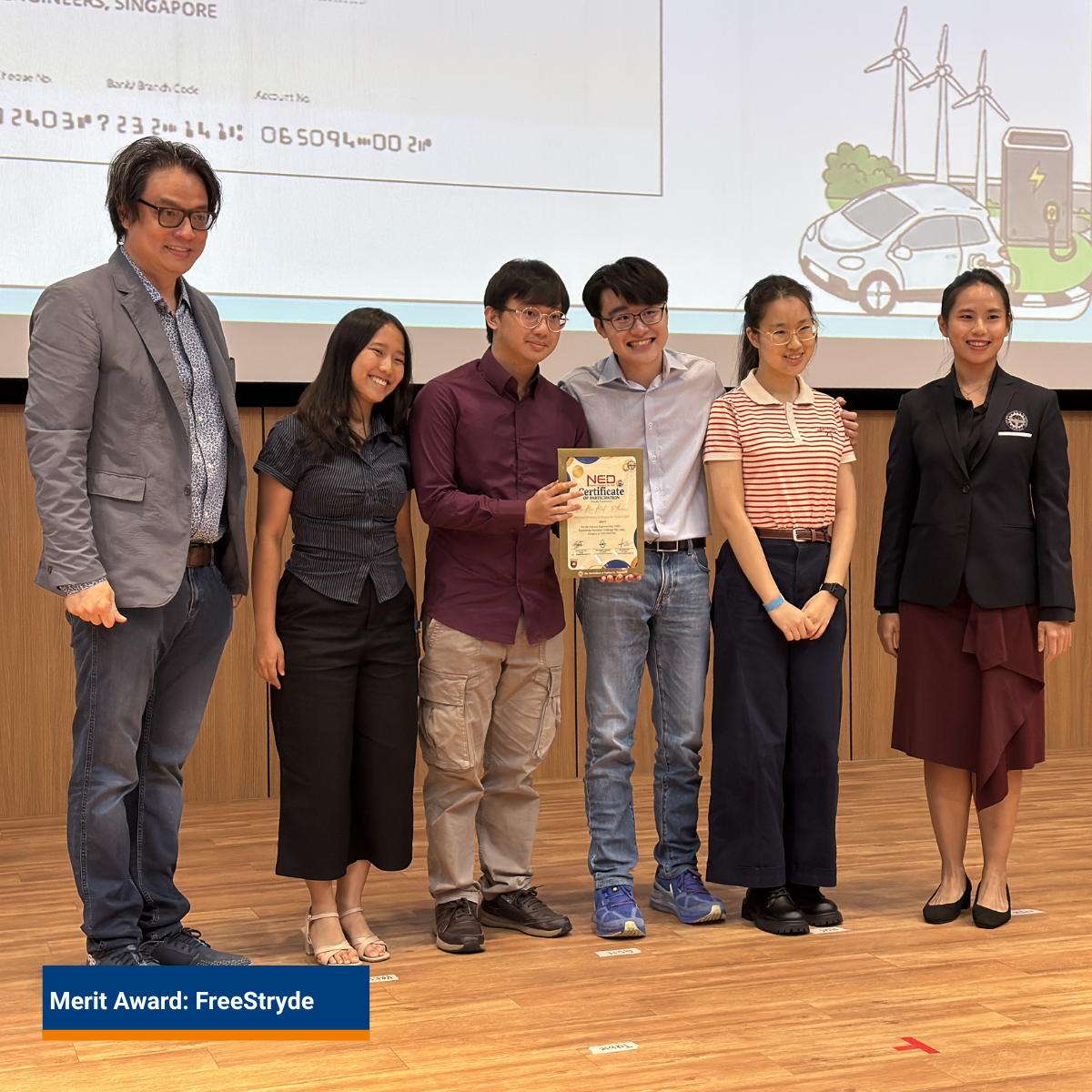
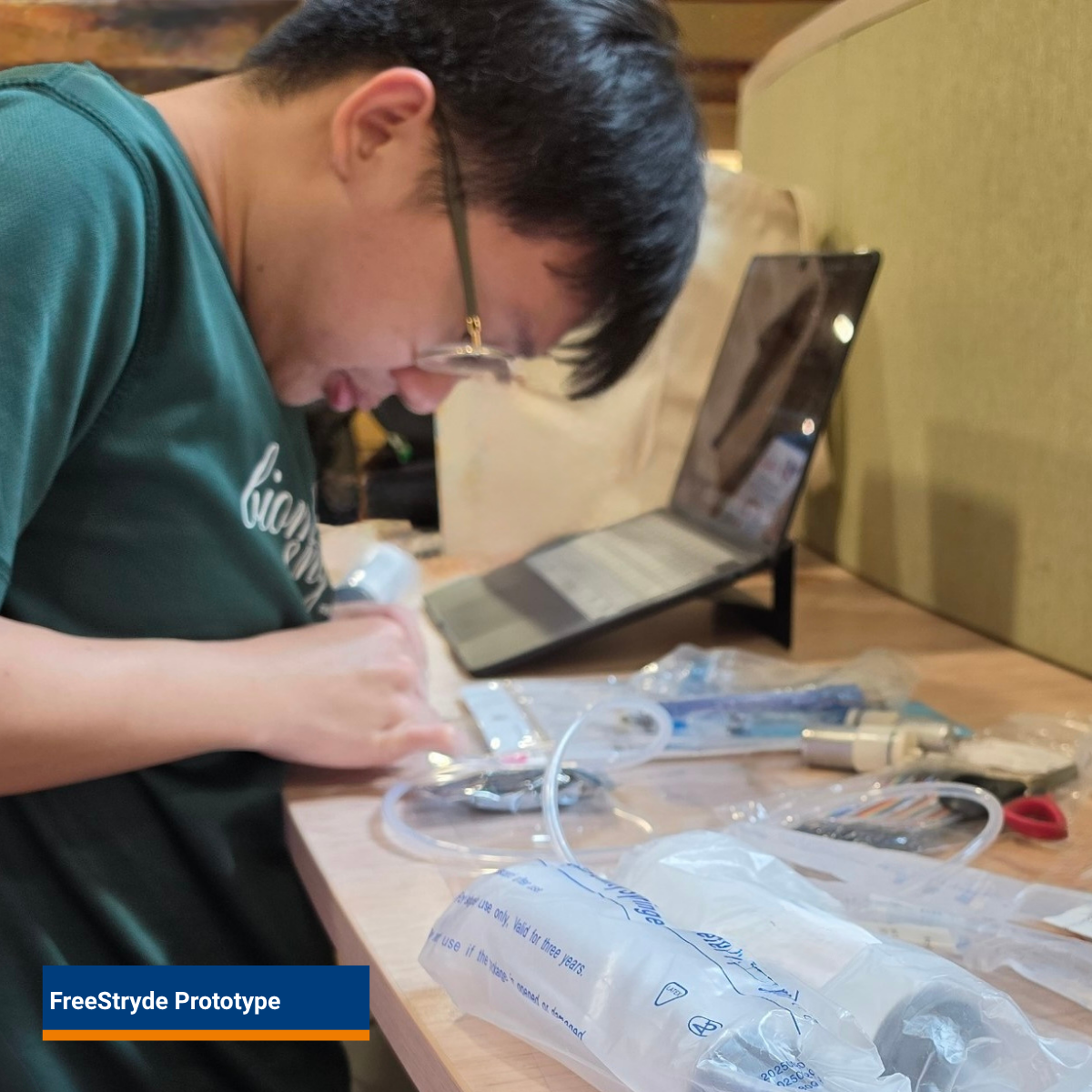
Also recognised with a Merit Award was FreeStryde, by Leo Kee Kiat Ethan, Jordan Low Jun Yi, Sarah Tan, Tan Min Min and Tay Hock Jun (Biomedical Engineering). The team tackled lymphedema, a chronic condition that causes persistent limb swelling when the lymphatic system fails to clear protein-rich interstitial fluid. FreeStryde proposes a dual-plane pneumatic mechanism that combines vacuum suction lift with bellows-driven lateral displacement, aiming to replicate the tangential skin stretch associated with Manual Lymphatic Drainage (MLD) without requiring direct therapist involvement.
For the team, EIC was a chance to move from understanding a clinical problem to testing whether an engineering solution could work.
“A strong engineering idea is only as good as the evidence supporting it. In many ways, crafting a good experimental question can be just as important as identifying a good clinical need in the first place.”
They said the experience also reminded them that engineering is ultimately about people.
“As engineers, it is easy to focus on technical performance metrics and validation results. Hearing the stories [of patients and therapists] reminded us that behind every design requirement and experiment is a real patient trying to manage a lifelong condition.”
Reimagining coastal protection and energy generation
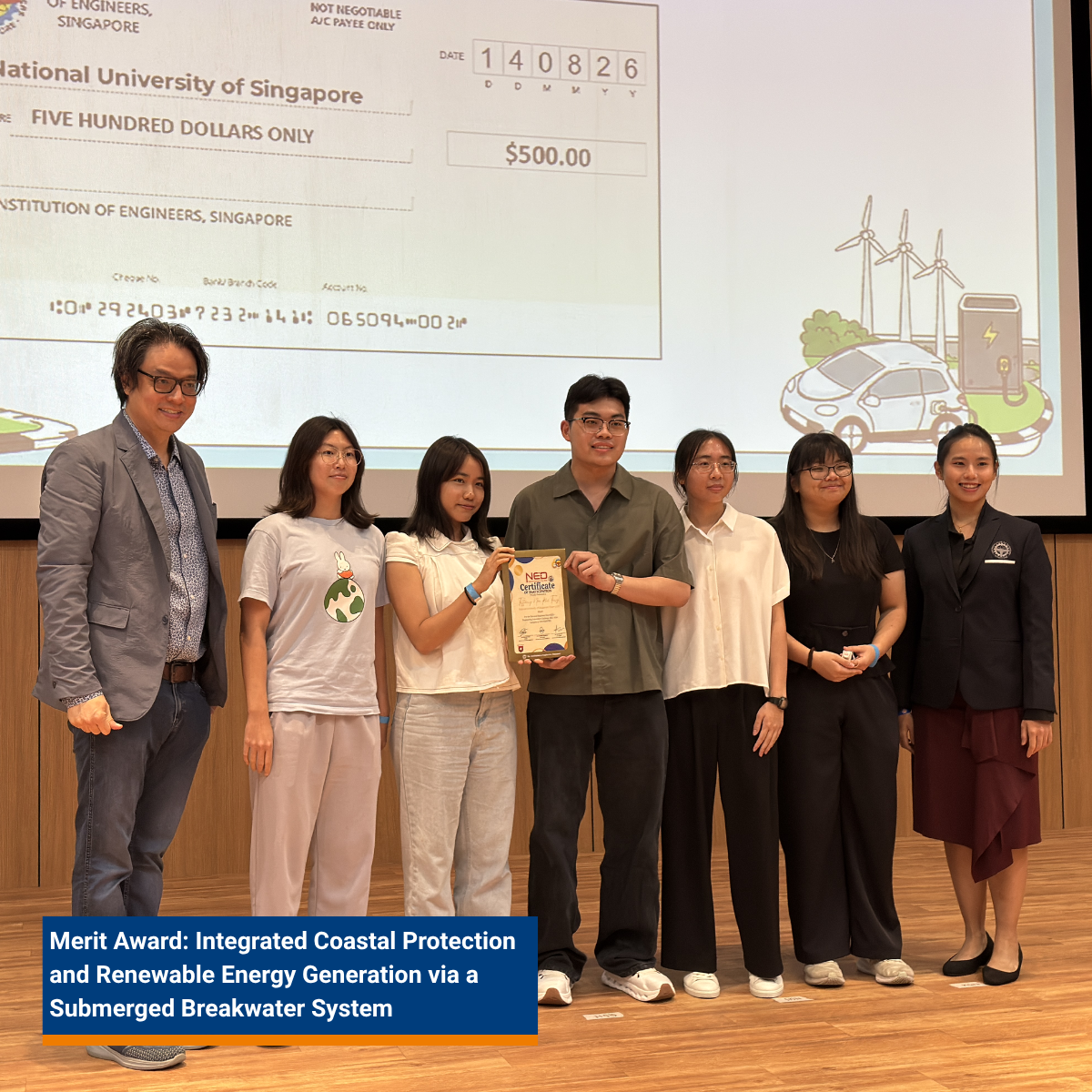
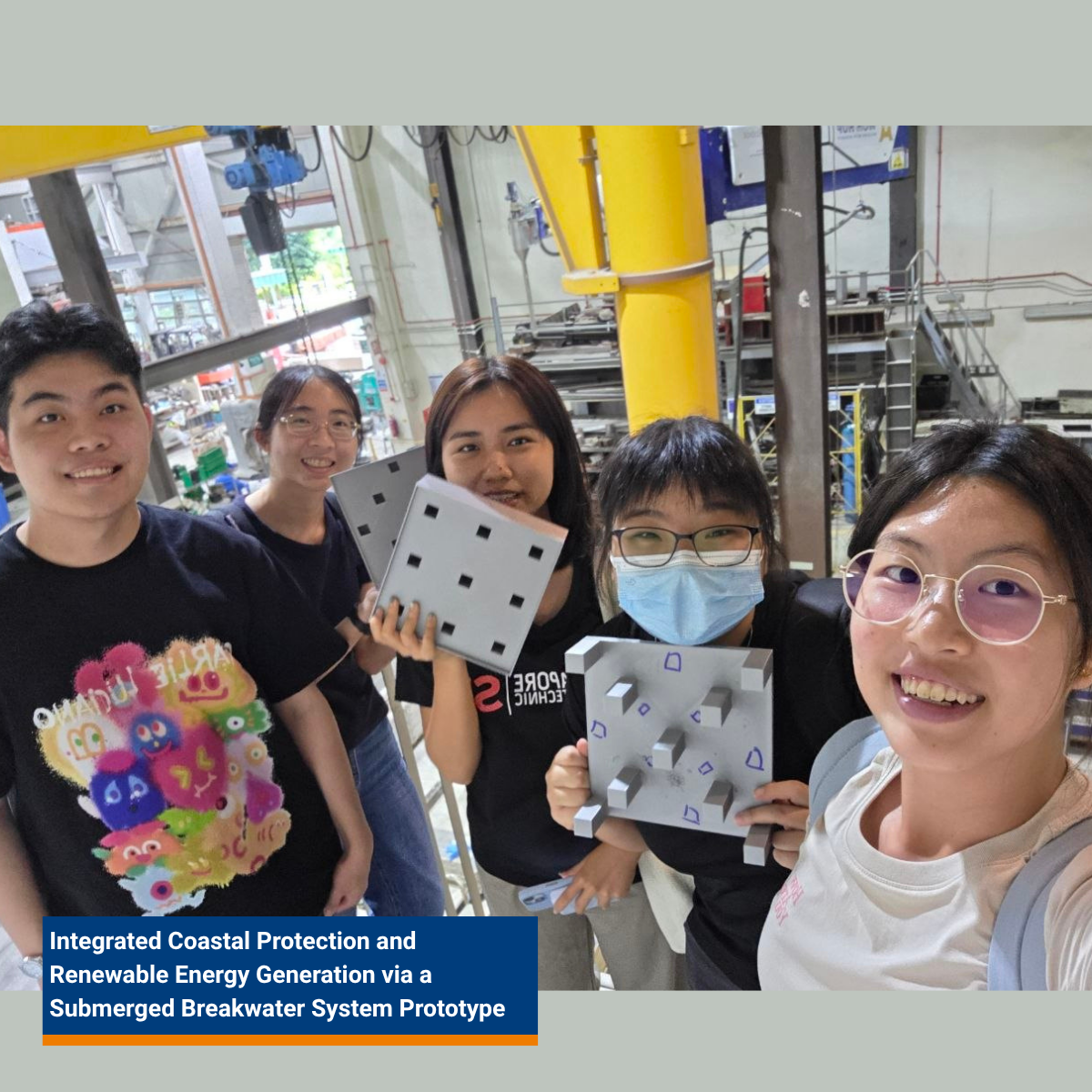
Another Merit Award went to the Integrated Coastal Protection and Renewable Energy Generation via a Submerged Breakwater System team, comprising Tiffany Neo Rui Ting, Chua Jing Ning, Tan Jiaxuan Constance, Soo Pei Jun Ada and Wu Wenhao (Civil and Environmental Engineering). Inspired by mangrove systems and vortex bladeless turbine technology, the team designed a submerged breakwater system that uses flexible vertical cylinders to reduce wave energy while generating electricity through vortex-induced vibrations. The harvested energy could support low-power coastal infrastructure such as environmental sensors, monitoring systems and warning lights.
For the team, the project changed how they viewed engineering.
“We went into the Engineering Innovation Challenge thinking that engineering was mainly about applying existing formulas, standards, and design codes to solve problems. However, this experience showed us that engineering is also a highly creative process.”
They added that building a breakwater capable of both reducing wave energy and generating electricity required them to “think beyond conventional solutions” and balance functionality, sustainability and practicality.
Giving batteries a second life
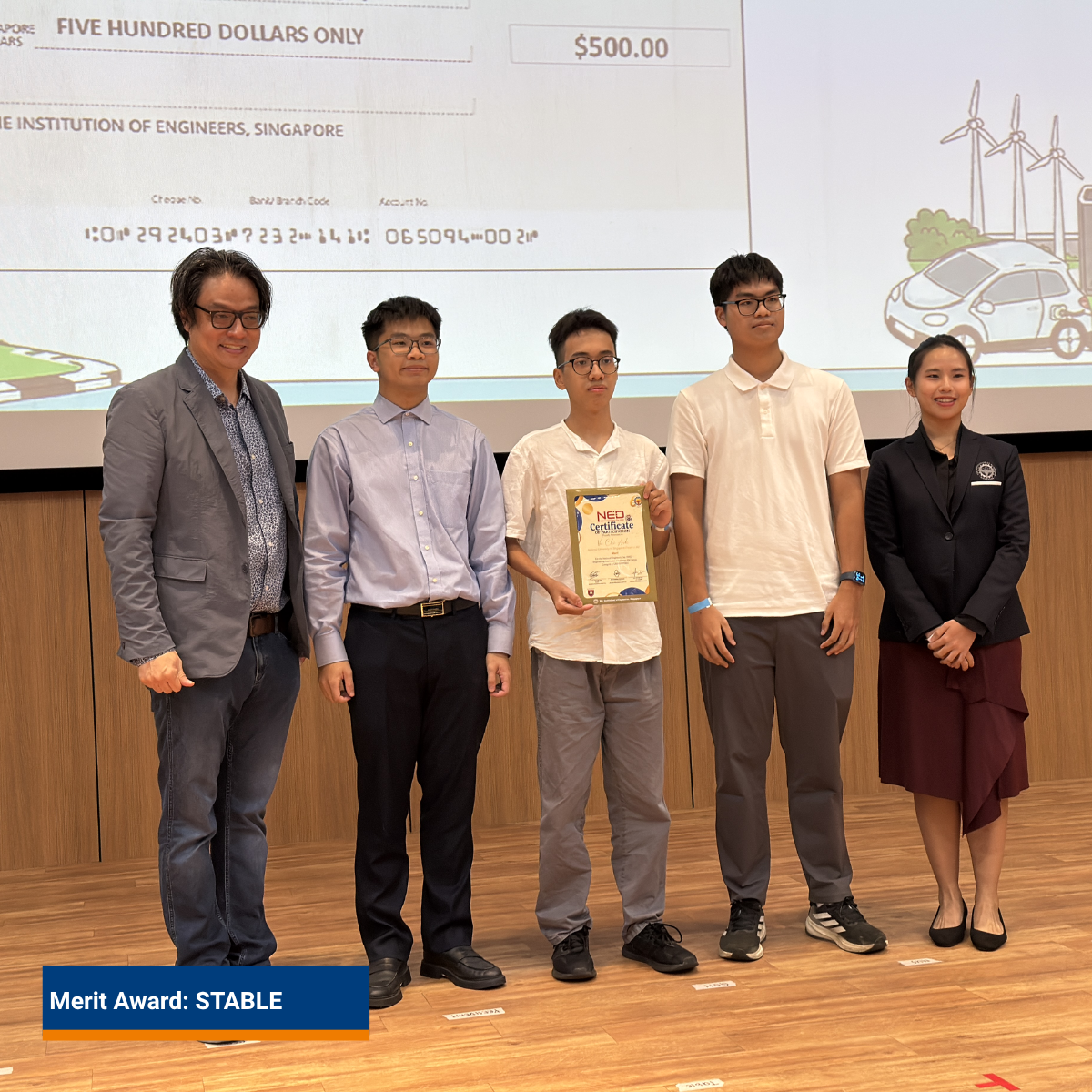
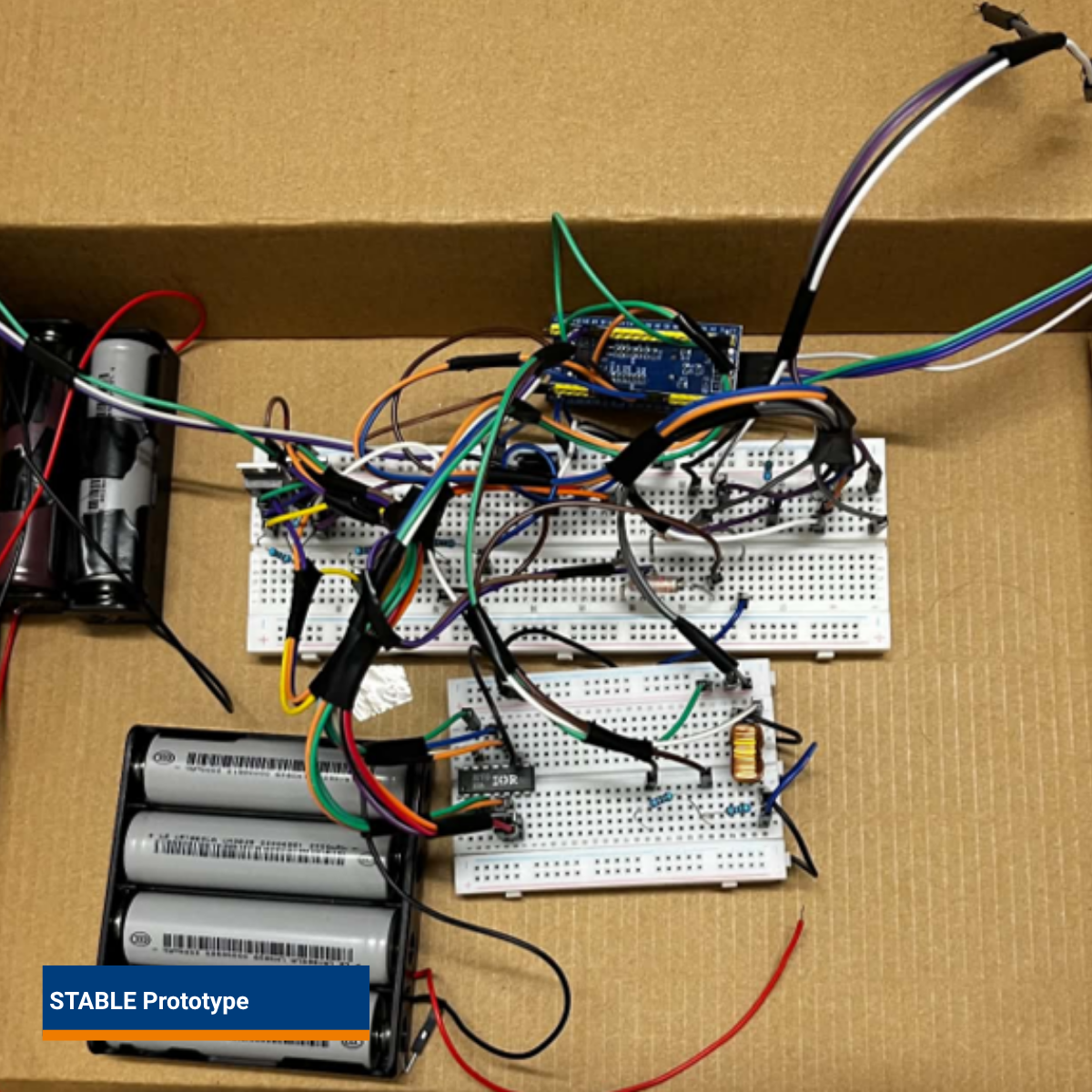
Team STABLE also received a Merit Award for its work on safer reuse of degraded lithium-ion batteries. The team — Vu Chi Anh (Electrical Engineering), Nguyen Khuong Duy (Chemical Engineering) and Dinh Trong An (Chemical Engineering) — focused on the growing challenge of end-of-life battery management as the use of power-assisted bicycles and other battery-powered devices increases. The project was shaped in part by Vu Chi Anh’s own experience owning an electric vehicle in Vietnam, where tropical conditions can accelerate battery degradation. This prompted him to think about what happens to batteries after their first life, and whether their useful lifespan could be extended.
STABLE proposes a dual-layer electro-mechanical safety architecture for second-life batteries, with the aim of creating a safer, expandable framework for reusing depleted batteries in low-power stationary applications.
The team said EIC taught them the value of complementary skills.
“We learned that a strong engineering team is not necessarily made up of people who are all good at the same thing. It is more like having different pieces that complement each other, and when you put them together, you can build something much more complete than one person could alone.”
Learning through iteration
Across the winning teams, a common lesson emerged: engineering innovation rarely follows a straight path. Prototypes became too complex, validation plans had to be narrowed, and design assumptions were tested against physical constraints.
For the Bio-Active Geopolymer Coastal Defence Matrix team, that meant abandoning a monolithic casting design when it proved impractical and pivoting to a modular assembly. It also meant dropping unvalidated LED and photodiode arrays before submission.
“Do not be afraid to step out of your comfort zone and embrace the learning curve. Treat early failures as vital iteration steps.”
That spirit of iteration ran through the other teams as well. FreeStryde focused on testing its highest-risk assumption first. The Integrated Coastal Protection and Renewable Energy Generation team learned that engineering involves creative compromise, not simply applying a fixed formula. STABLE discovered that a simpler, reliable prototype can be more valuable than an overdesigned one.
Together, the teams showed how EIC gives students the space to explore bold ideas, confront real-world constraints and build solutions with potential beyond the competition.