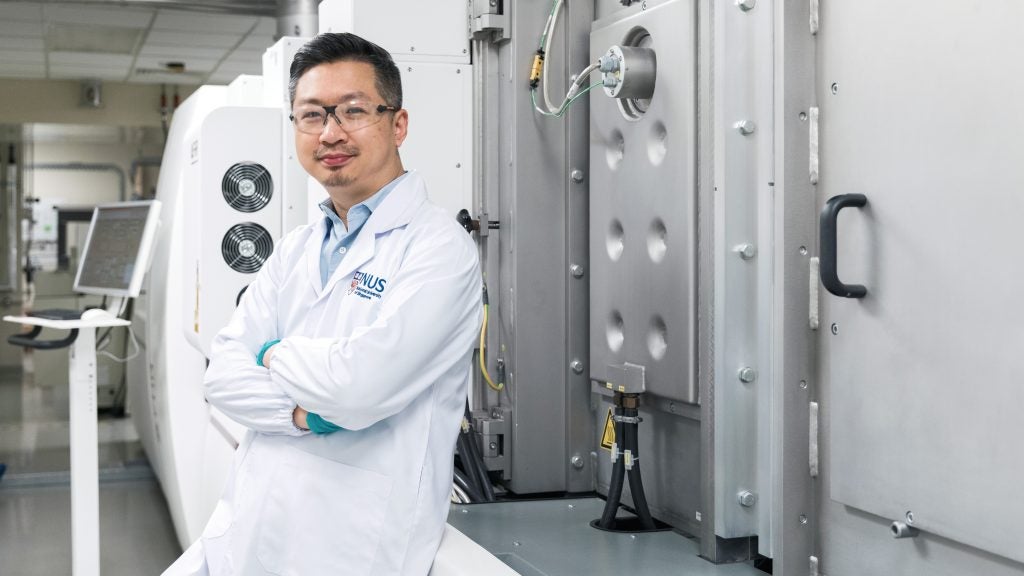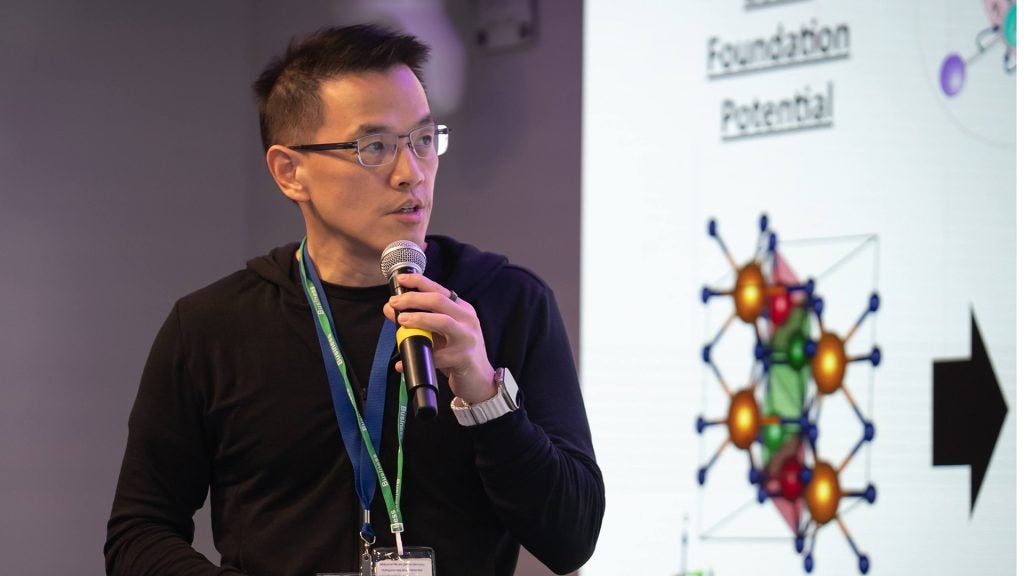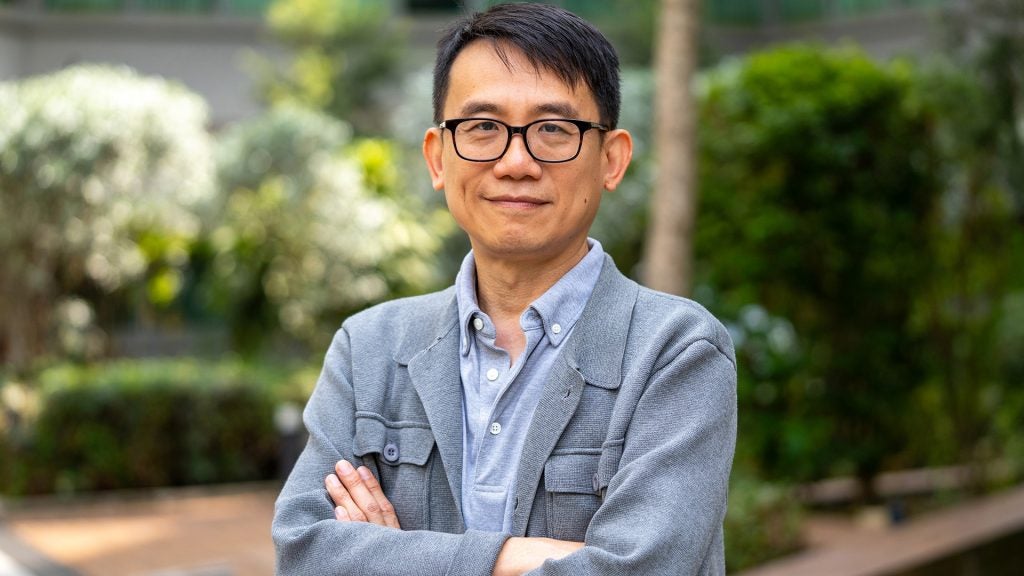

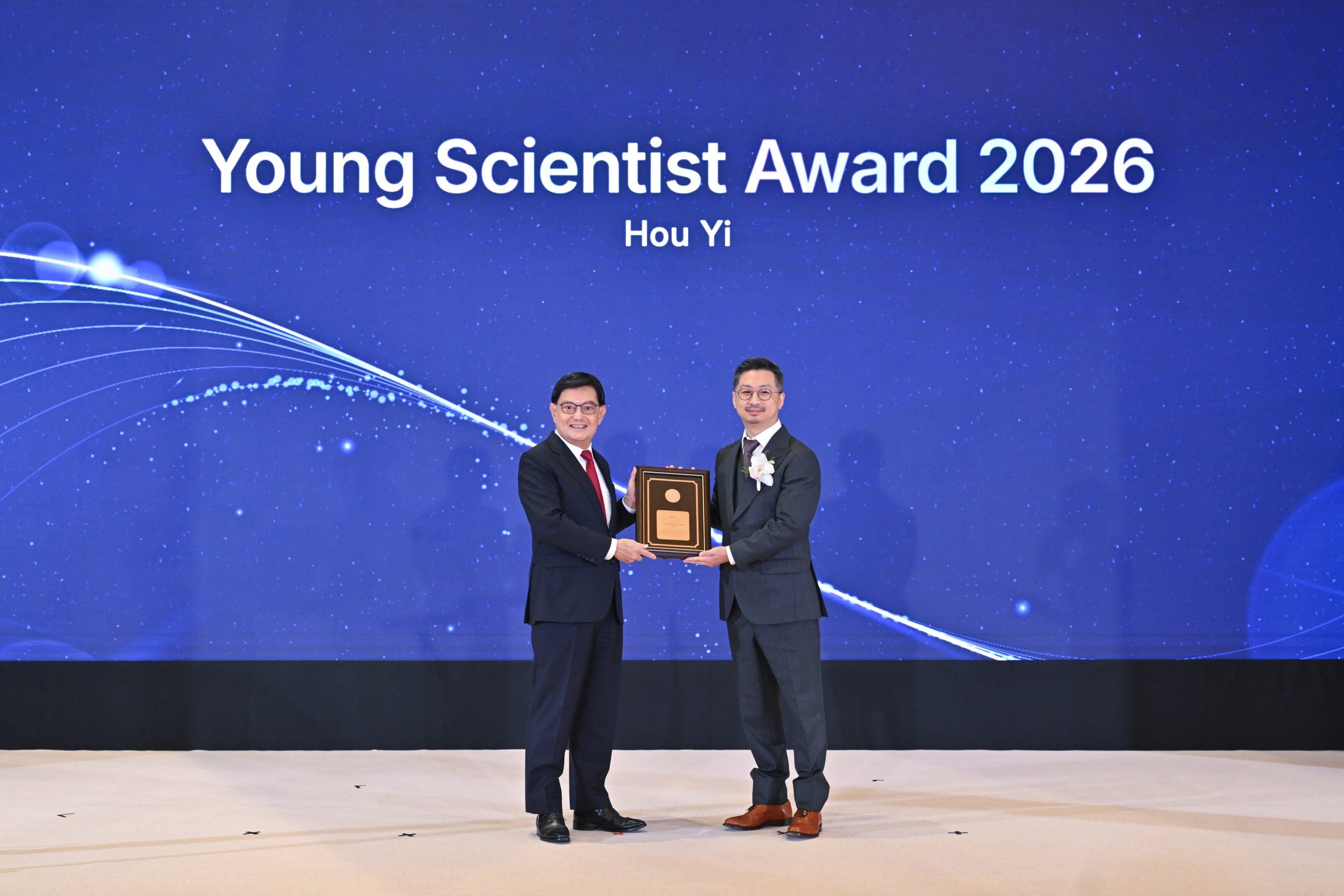
Assistant Professor Hou Yi (Department of Chemical and Biomolecular Engineering) has been presented with the Young Scientist Award at the annual President’s Science & Technology Awards (PSTA), Singapore’s highest honours for scientists and engineers.
Asst Prof Hou was honoured in recognition of his pioneering work in the development of next-generation solar cell technology, in particular for his contributions to the development of high-performance perovskite solar technologies, from record-breaking devices to scalable manufacturing.
Organised and presented annually by the National Research Foundation (NRF), the Young Scientist Award (YSA) is awarded to researchers aged 40 or under who are actively engaged in R&D in Singapore and who have shown great potential to be world-class researchers in their fields of expertise.
Asst Prof Hou was presented with the award by NRF Chairman Mr Heng Swee Keat at a ceremony on 28 August 2026 held at Nanyang Technological University.
Sustainable energy
Perovskite solar cells use a class of crystal-structured materials that absorb sunlight efficiently and can be made into thin, lightweight, flexible or semi-transparent layers. They are widely seen as a highly promising next-generation technology that could make solar power cheaper and more efficient, making it suitable for applications, such as electricity-generating windows, building façades, vehicle roofs and portable devices.
Asst Prof Hou specialises in tandem solar cells, stacking two light-absorbing layers, often using perovskite materials, to capture more solar energy than conventional single-layer cells.
His research has produced multiple world-record performances and tackled key challenges in stability and large-scale deployment, in addition to enabling lightweight and energy-efficient power systems for AI infrastructure, wearable electronics, space platforms and sustainable energy applications.
By expanding the understanding of how different material layers interact and the degradation mechanisms of solar cells, Asst Prof Hou has made these advanced solar technologies significantly more durable, efficient, and commercially viable. His breakthroughs are paving the way for lightweight, energy-efficient power generation, moving beyond the limitations of traditional silicon and enabling new energy solutions for a wide range of demanding applications.
“One of the biggest challenges in our research has been translating high-performance perovskite solar cells from laboratory-scale devices into technologies that are stable, scalable, and relevant to real-world applications,” said Asst Prof Hou. “We have addressed this by working across disciplines and continuously connecting fundamental materials science with device engineering and manufacturing.”
“One of the biggest challenges in our research has been translating high-performance perovskite solar cells from laboratory-scale devices into technologies that are stable, scalable, and relevant to real-world applications. We have addressed this by working across disciplines and continuously connecting fundamental materials science with device engineering and manufacturing.”
Asst Prof Hou Yi
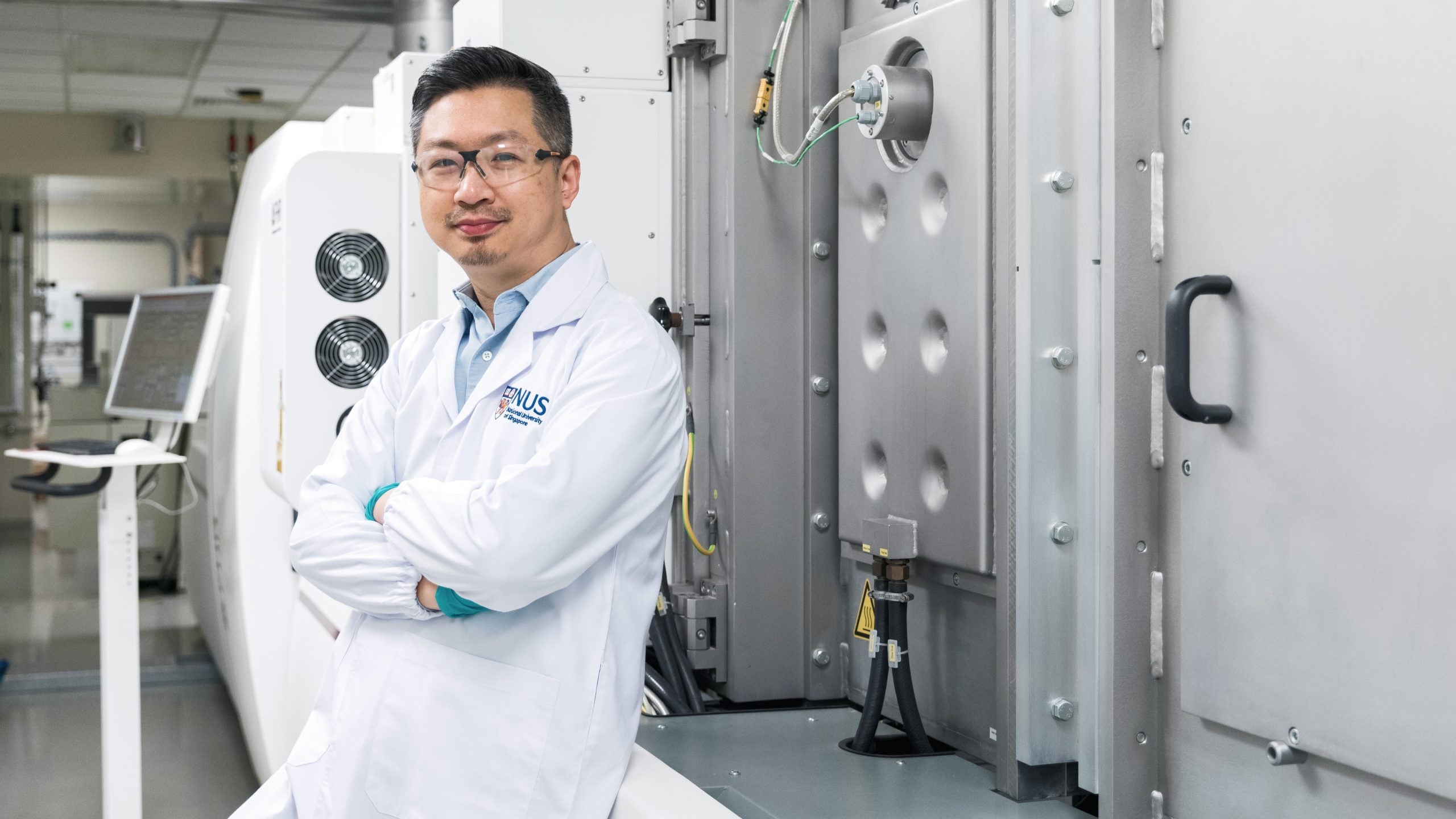
‘Stay curious’
Outside the lab, Asst Prof Hou is deeply involved in technology commercialisation. As the founder of the NUS spin-off company Singfilm Solar, he actively translates academic research into industrial use. Through his research and entrepreneurial efforts, he is building revolutionary power sources for AI infrastructure, wearable electronics, and space systems, strengthening Singapore’s position as a global leader in next-generation solar technology.
To young or aspiring researchers, his advice is “to stay curious, focus on important problems, and not be afraid of taking on challenges that may initially seem difficult or unconventional”.
The official PSTA citation for Asst Prof Hou’s award states: “For his contributions to the development of high-performance perovskite solar technologies, from record-setting devices to scalable manufacturing, enabling lightweight and energy-efficient power systems for AI infrastructure, wearable electronics, space platforms and sustainable energy applications.”