Meeting the rapidly growing computing demands of artificial intelligence (AI) will require new approaches to semiconductor design, energy efficiency and managing the heat generated by increasingly powerful chips.
These challenges were the focus of the SHINE 2.0 Opening Workshop, held at CDE on 22 October 2026, with close to 250 researchers and industry representatives exploring emerging technologies and opportunities for collaboration.
The workshop was the first held under SHINE 2.0, opening a new chapter at the Singapore Hybrid-Integrated Next-Generation Micro-Electronics (SHINE) Centre, bringing together researchers and industry partners to develop next-generation semiconductor technologies.
A central focus of SHINE 2.0 is heterogeneous integration, an approach that combines different types of chips and components within a single system. Rather than relying solely on making individual transistors smaller, it offers new ways to improve computing performance while reducing energy consumption.
New demands
Opening the workshop, Professor Aaron Thean, Director of the SHINE Centre and NUS Deputy President (Academic Affairs) and Provost, introduced the centre's research programme and outlined its ambitions for the next phase of semiconductor innovation.
Presentations by industry and research leaders examined how AI and high-performance computing are reshaping semiconductor technology, creating new demands for faster data processing, more efficient memory and better ways of managing the power consumption and heat generated by increasingly powerful chips.
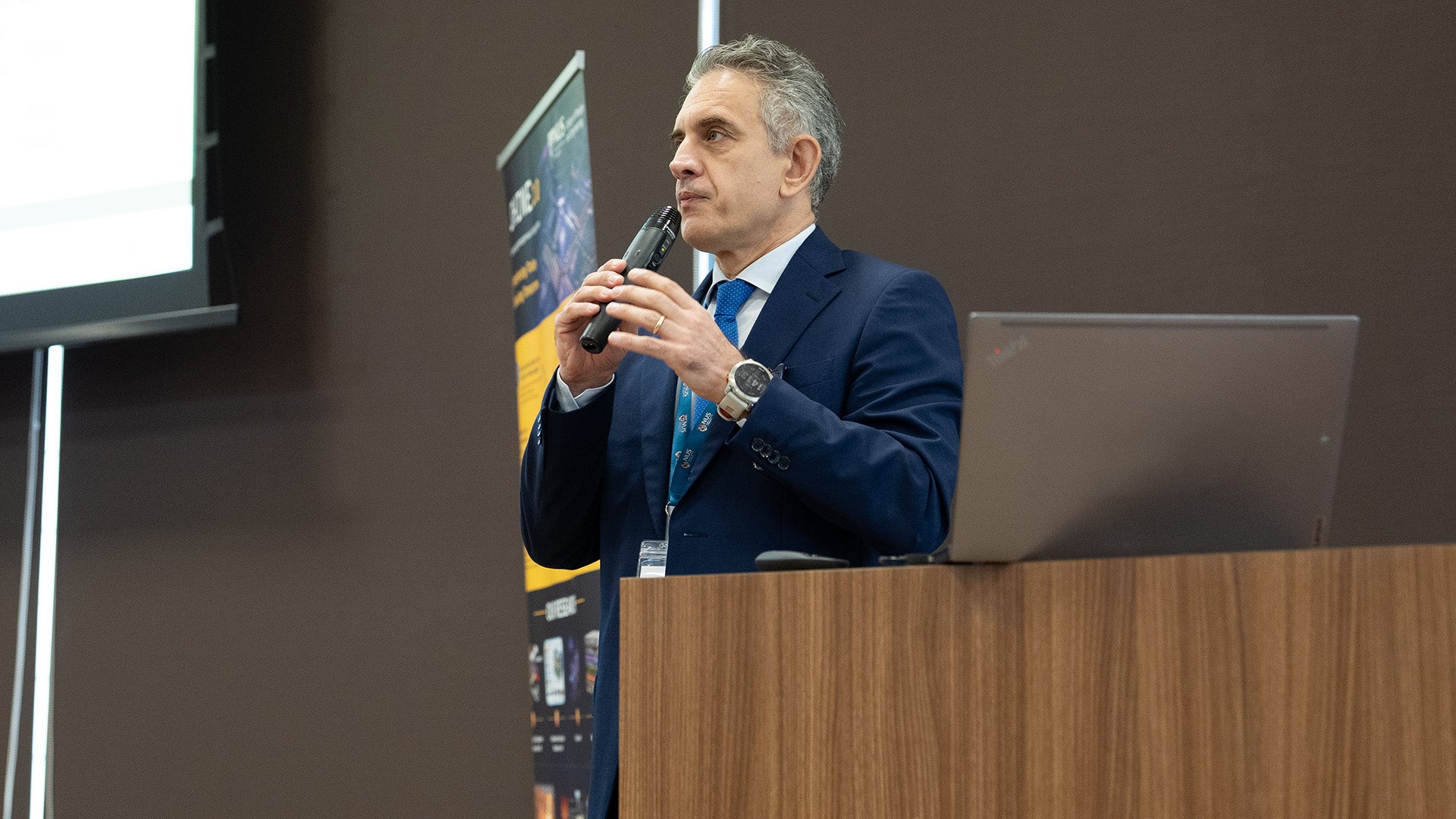
Speakers from major players in the global semiconductor industry including Applied Materials, Micron and imec highlighted emerging technologies that could help address these challenges, particularly through new approaches to chip design, packaging and integration.
Singapore's ambitions to strengthen its position in the global semiconductor industry were another focus, with representatives from the Singapore Economic Development Board and A*STAR discussing national research priorities, including the importance of developing multidisciplinary talent, strengthening research capabilities and translating scientific advances into technologies that industry can adopt.
Turning research into impact
The workshop also showcased research under SHINE 2.0, with academic presentations covering more energy-efficient computing, faster communication between chips, advanced materials and new approaches to managing heat and improving reliability.
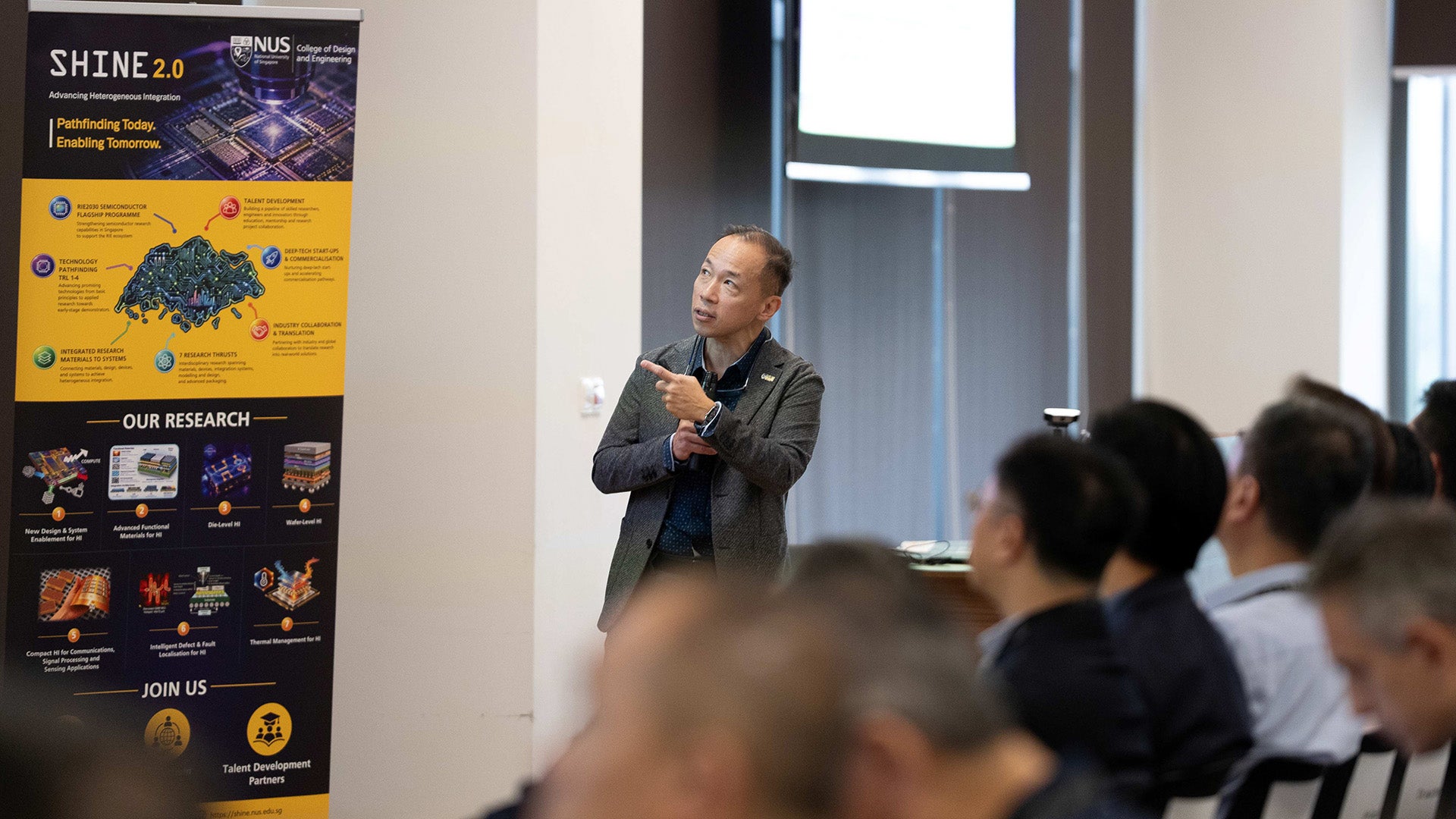
Among the CDE researchers presenting, Prof Thean highlighted work on combining different semiconductor technologies and developing new cooling approaches to manage the heat generated by increasingly powerful systems.
Professor Massimo Alioto (Department of Electrical and Computer Engineering) discussed ways to overcome limitations in power delivery, data transfer and memory, including the use of AI to improve energy efficiency, while Professor Lim Yeow Kheng (Department of Electrical and Computer Engineering) presented research using advanced modelling and AI to improve semiconductor design and identify faults.
Professor Koenraad Mouthaan (Department of Electrical and Computer Engineering) also outlined advances in microelectronics for communications, signal processing and sensing.
Together, these projects illustrate how SHINE 2.0 is bringing together expertise across different engineering disciplines to tackle challenges that cannot be addressed through improvements to individual semiconductor components alone.
The importance of connecting research with industry needs was a recurring theme, with Prof Yeo Yee Chia(opens in new tab) of A*STAR and Visiting Prof Radha Nagarajan(opens in new tab) (Department of Electrical and Computer Engineering), who is also Senior Vice President and Chief Technology Officer of Marvell’s Optical Engineering Group, offering perspectives on Singapore’s semiconductor research priorities and the technologies and partnerships needed to drive future innovation.
A concluding panel discussion, titled "Beyond the AI Boom: What Will Define the Next Semiconductor Era?", brought together leaders from academia, research institutions and industry to consider the technologies, partnerships and skills that will shape the sector's future.
Moderated by Mr Ang Wee Seng, Executive Director of the Singapore Semiconductor Industry Association, the discussion examined how closer collaboration could help accelerate innovation and develop the next generation of semiconductor talent.
For SHINE 2.0, these partnerships will be central to its ambitions, connecting research advances with the practical challenges faced by semiconductor companies and supporting Singapore's longer-term position in the global industry.
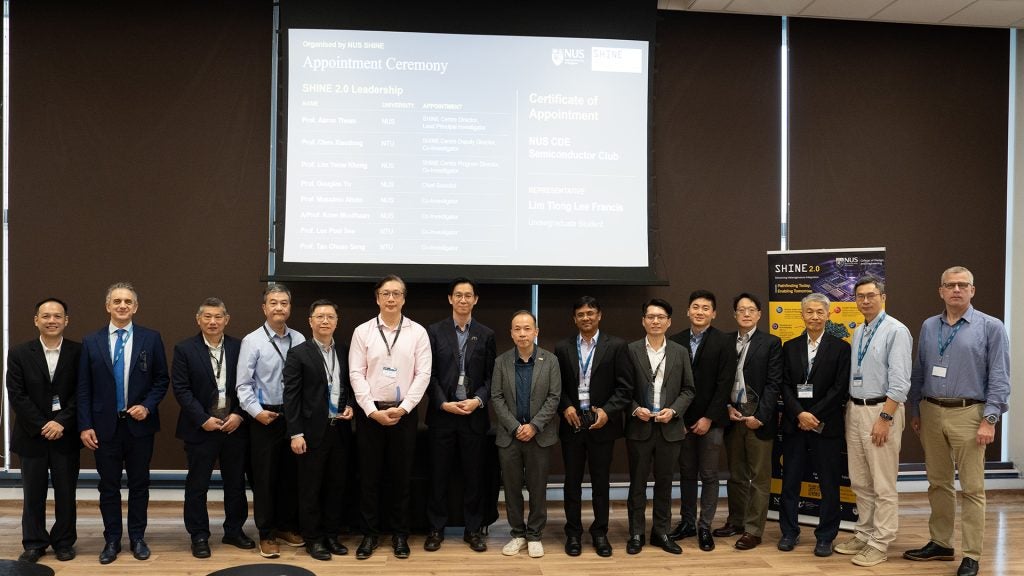
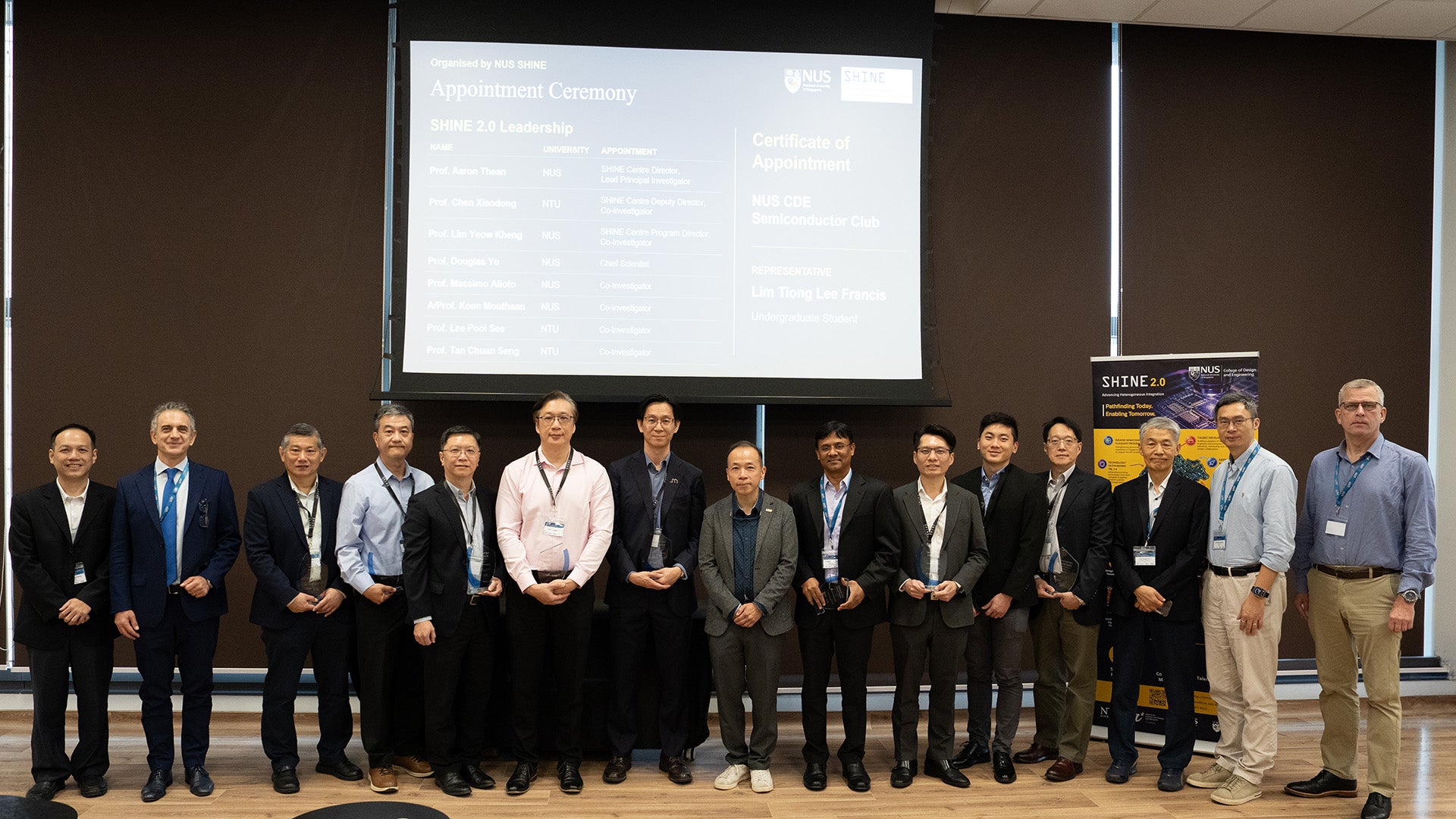
The workshop, the eighth in SHINE's technical workshop series, marked the formal appointment of the SHINE 2.0 leadership team, led by Prof Thean. The team includes Professor Douglas Yu (Department of Electrical and Computer Engineering), Chief Scientist of the SHINE Centre, who brings more than 30 years of industry experience pioneering advanced chip packaging and integration technologies.
Reflecting the importance of developing future semiconductor talent, the NUS CDE Semiconductor Club(opens in new tab) was formally appointed to support SHINE's activities and student outreach, helping to connect students with opportunities in semiconductor research and industry.
The workshop recognised the contributions of SHINE 1.0 Governance Board and Scientific and Technology Advisory Committee members, together with industry partners, whose support has helped shape the centre's progress and its next phase of research.