Living Collage: The Whampoa River and the Afterlife of the Garden City
PROGRAMME
Master of Landscape Architecture
STUDENT
Bao Yihan
YEAR
1
ADVISOR/TUTOR
Victoria Jane Marshall
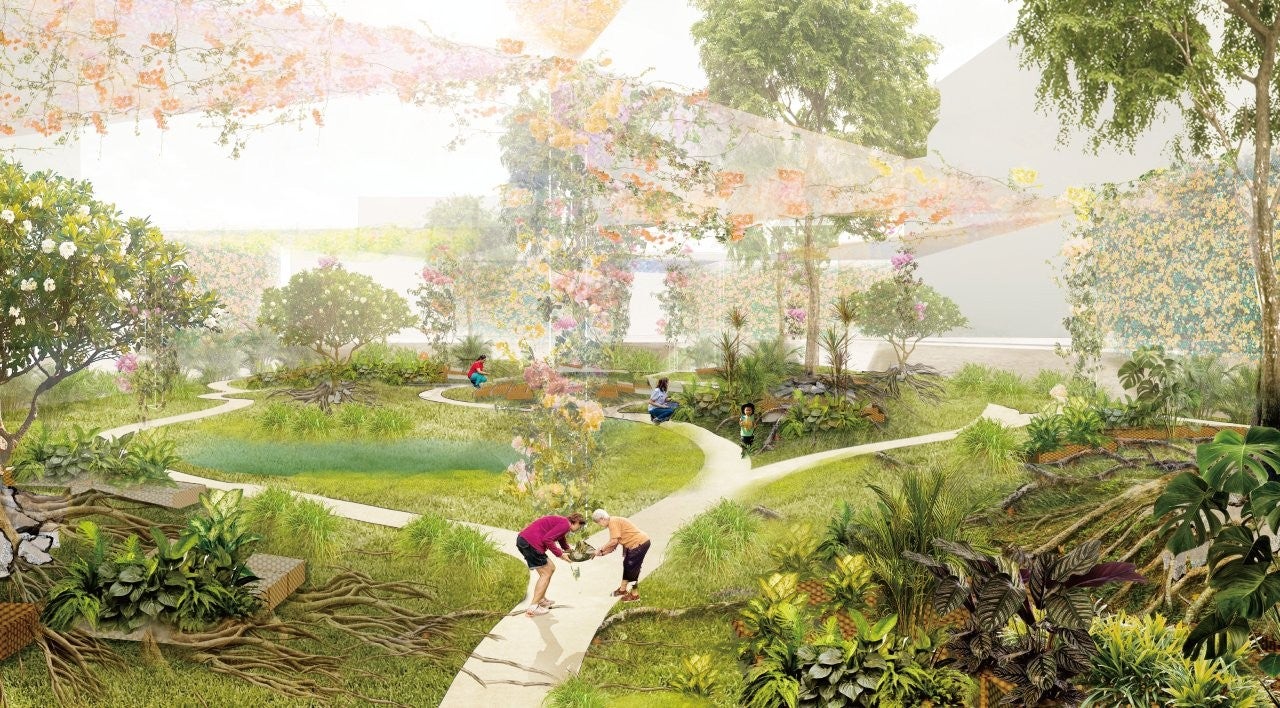
The project reimagines a lawn-dominated reserve site bordered by the Whampoa River, the Whampoa Community Club, and the National Kidney Foundation Centre as a plant-led, resident-led enclosed garden. Titled ‘Living Collage’, it is conceived as a response to the area’s history and to the ways in which nature has historically been produced and managed here.
Two key interventions illustrate this history. The Whampoa River was channelised in 1958, while the reserve site itself once formed part of the Singapore Improvement Trust’s (SIT) first public housing estates in Balestier, built between the 1930s and 1960s. Both developments occurred during the early years of Singapore’s Garden City planning ethos and embody a modernist ethic of landscape management and control. Water, for instance, was framed as a problem and redesigned to drain quickly and efficiently. Housing, likewise, was presented as a rational solution to overcrowding and the perceived disorder of self-built settlements. In both cases, woody vegetation was used sparingly, while straight lines and hard edges structured the landscape.
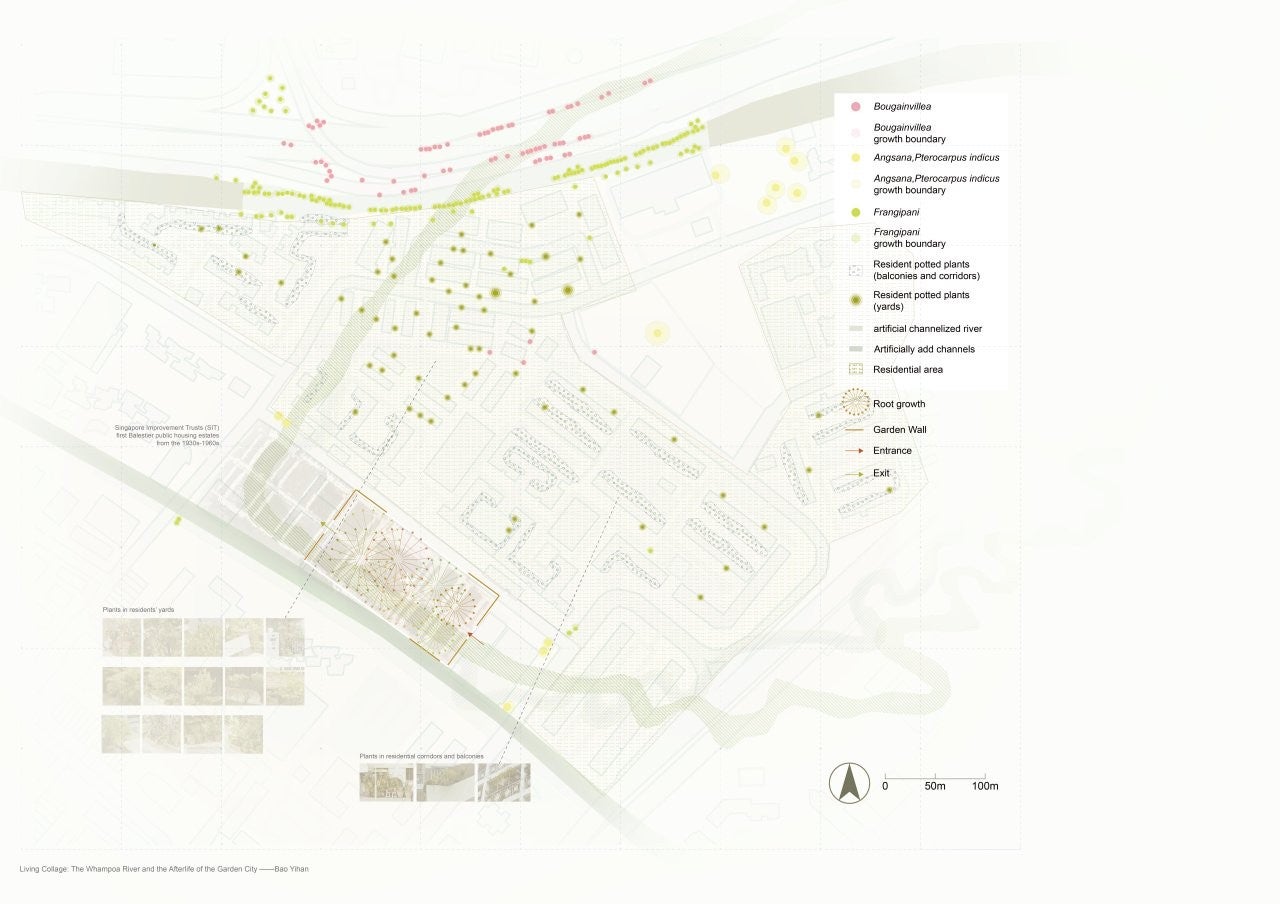
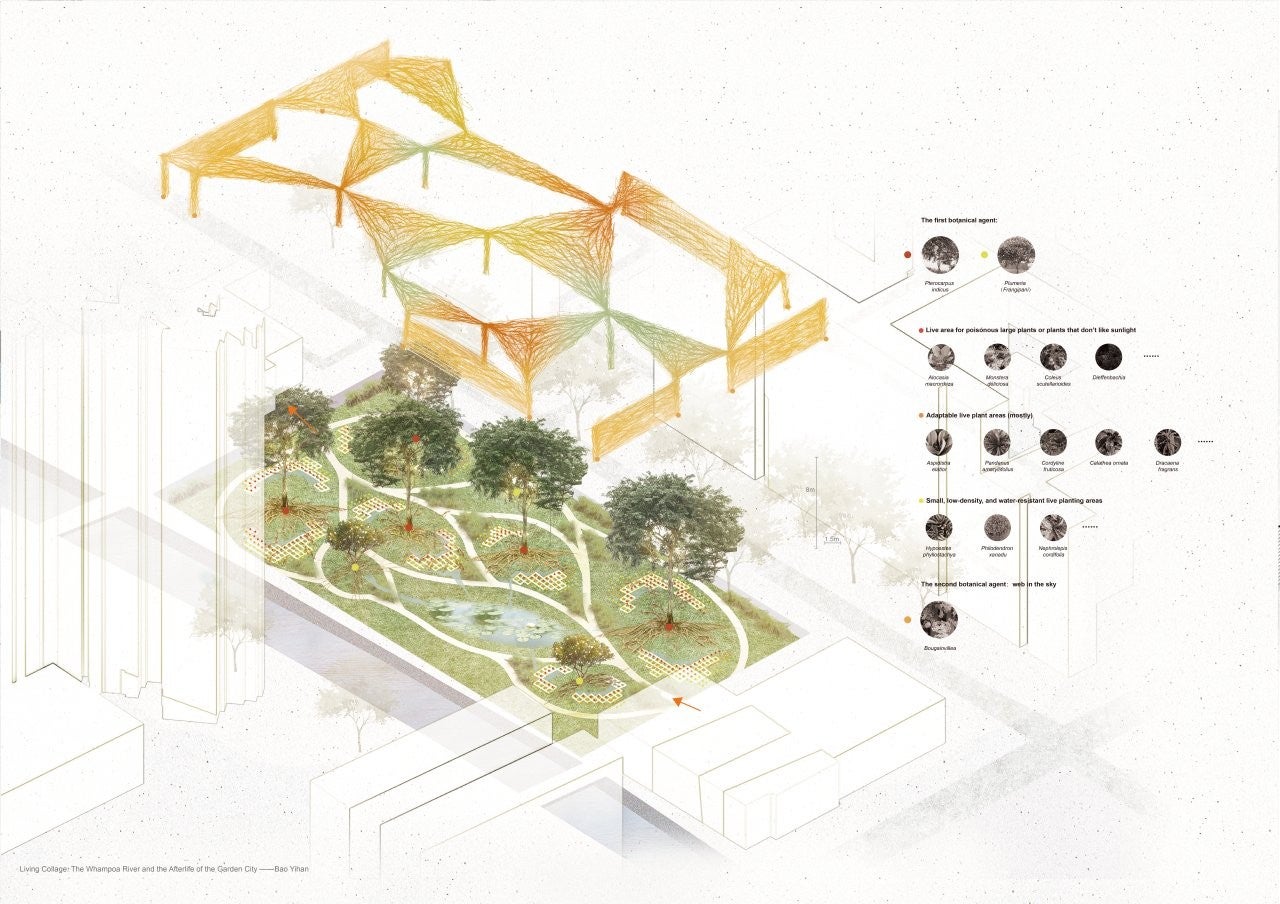
These interventions transformed what had once been a lived river edge into two distinct, master-planned zones: the water infrastructure of the canal and the residential landscape of public housing. My project proposes an alternative ethic, one centred on plant-led entanglements, through which water, home, and everyday life can be reinscribed in new ways.
This approach operates through both social and ecological strategies. Socially, it relies on the agency of a proposed garden club and the repurposing of domestic houseplants contributed by residents. Ecologically, the planting plan reinterprets familiar Garden City species for contemporary conditions. The garden is designed to receive or “adopt” unwanted or long-lived potted plants, some kept by residents for decades, even up to forty or fifty years, and allow them to grow larger and more freely once rooted in the soil. Through ongoing human care and plant growth, the garden evolves.
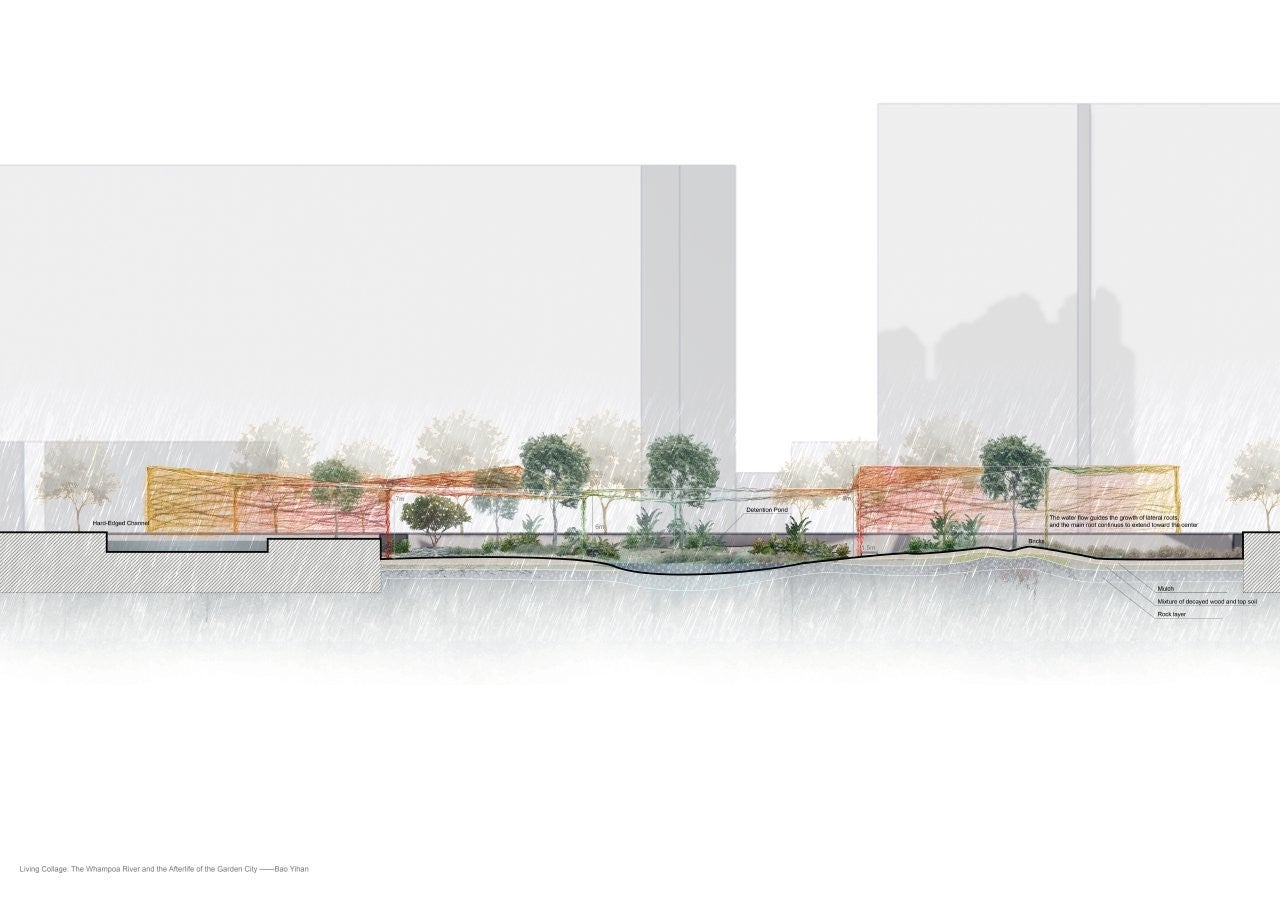
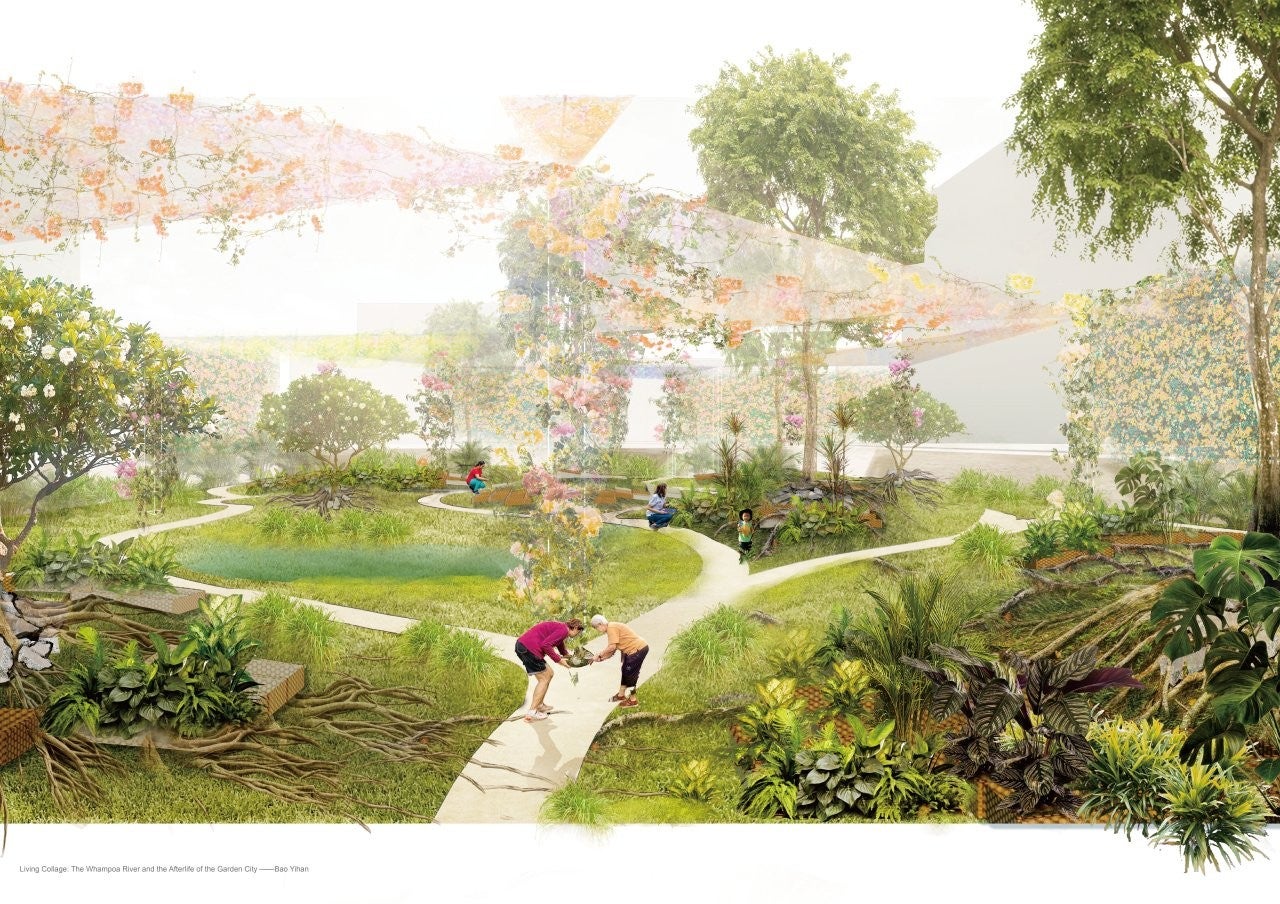
Overall, this project creates a future lifestyle for plants in the post-garden city era, so that such plants can persist. As care routines are established, adopted public Garden City plants are integrated with people’s own potted plants, a botanical institution can emerge. A self-growing, living collage of fifth nature is being created.