Materialities of Resistance: Empowering overlooked heritages and communities along Chiang Mai’s outer city wall
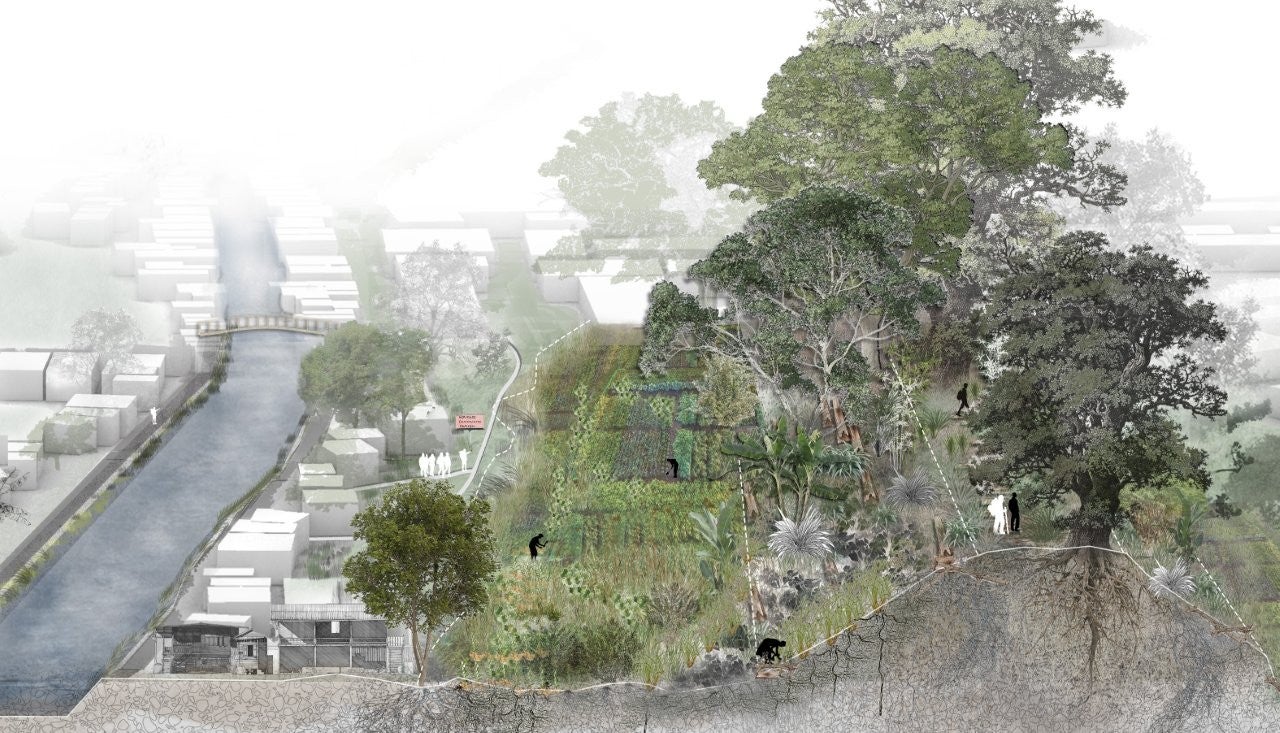
This project rethinks heritage conservation through the living landscape of Chiang Mai, focusing on the gradually eroding outer city wall. Rather than treating heritage as a static object, the project understands it as a dynamic layer of memory, continuously shaped by ecological processes, community practices, and material change. It responds to the limitations of state-led conservation by proposing alternative strategies that foreground local stewardship, informal land use, and the agency of non-human systems.
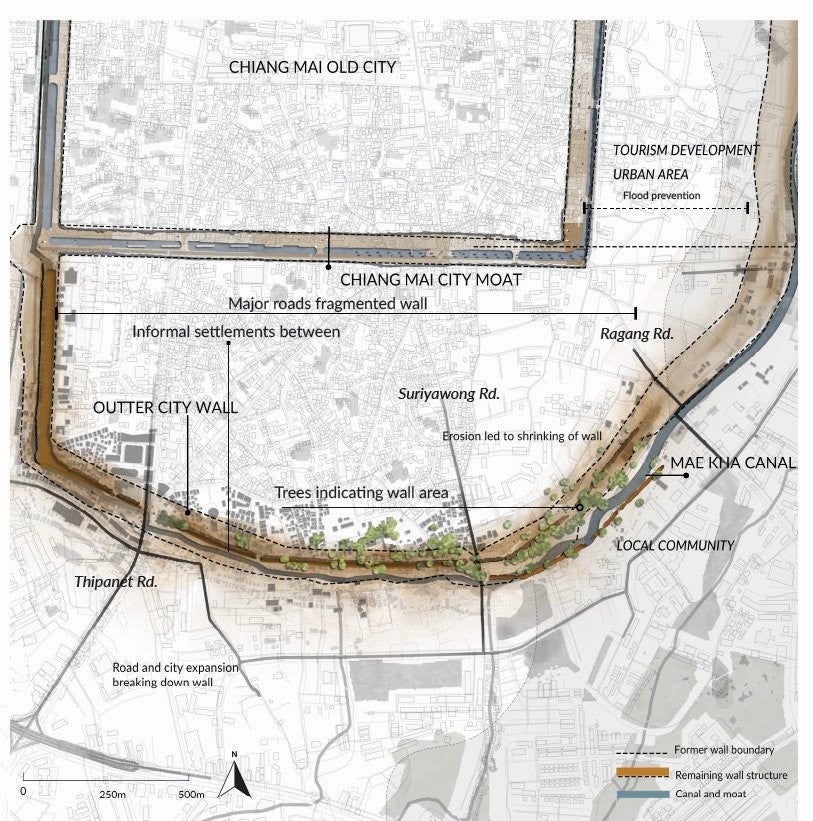
Constructed alongside the Mae Kha Canal and moat, the outer wall once formed part of a dual defence system against flooding from the Ping River. Today, it exists as a fragmented structure. Twentieth-century urban expansion cut through the wall, while informal settlements emerged along the canal. Despite its designation as a heritage site, the wall continues to deteriorate due to rainfall erosion, seasonal weathering, and human activity. At the same time, it remains embedded in everyday life, used as a shortcut, a site of worship, and a space of communal care.
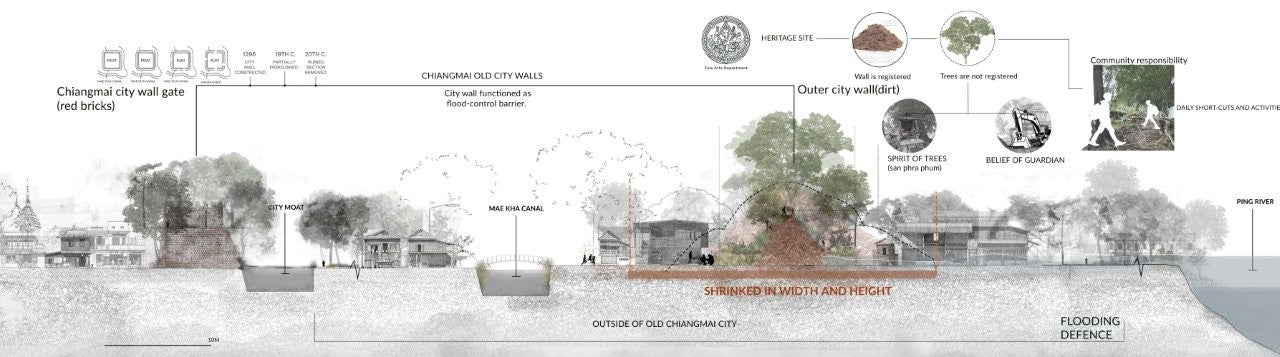
A key observation is that while the earthen wall is officially protected, the vegetation that stabilises it, particularly Ficus trees and seasonal grasses, is not recognised as heritage. Yet these species play a crucial role in holding the structure together. Equally significant are the spiritual and cultural practices that animate the site: spirit houses, offerings, and community rituals that sustain a deep, ongoing relationship with the landscape.
In response, the project proposes a ‘communal-ecological heritage corridor’ that integrates conservation with everyday use. The strategy is organised across slope gradients, combining erosion control with productive planting and habitat formation. Gentle slopes are transformed into shared cultivation spaces for herbs, vegetables, and fruit trees, fostering collective stewardship. Steeper slopes prioritise soil stabilisation through layered planting systems that also support small-scale harvesting and biodiversity. The most vulnerable areas focus on immediate erosion control, preserving existing vegetation and introducing deep-rooted species alongside lightweight timber and bamboo structures.
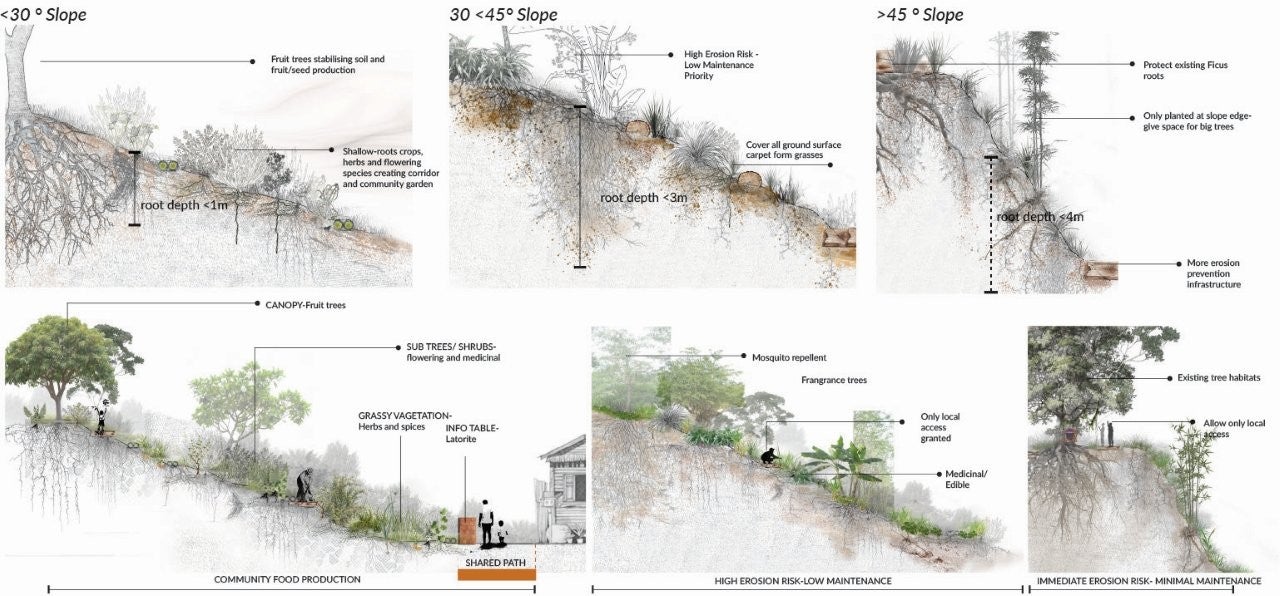
Across all zones, interventions draw on local materials and practices, enabling a cyclical and adaptable approach to maintenance. Importantly, the project reframes nearby communities not as threats to heritage, but as essential caretakers of the landscape.
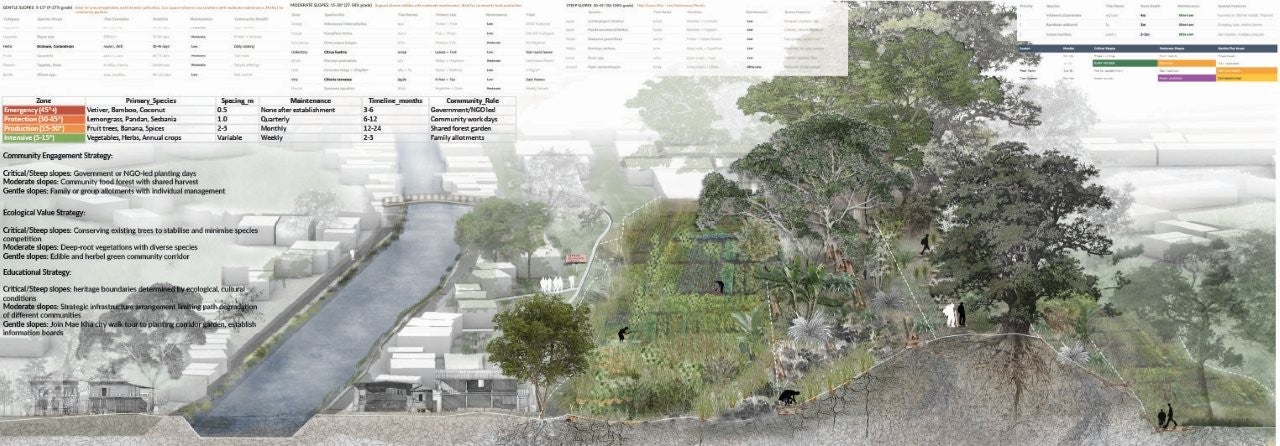
In conclusion, this proposal positions conservation as an active negotiation between historical monumentality, ecological resilience, and social life. By aligning environmental processes with cultural practices, the project transforms the outer wall into a living, inhabited system. One where heritage is not only preserved, but continually produced through use, care, and collective memory.