Reweaving the Field
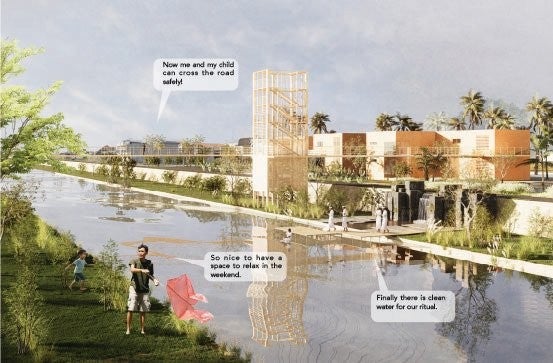
Reweaving the Field is a landscape proposal situated along the downstream section of the Pemogan River in Denpasar, Bali, where rapid urbanization has transformed agricultural land into dense urban development. This shift has not only reduced farmland but also intensified flooding due to inadequate stormwater management. In this context, the project asks how landscape can address environmental risk while reactivating the cultural and social systems historically tied to agriculture.
In Bali, agriculture has long been embedded within the Subak system, a network that connects irrigation, religion, and community through rivers and water temples. Yet in downstream areas, industrial pollution and urban runoff have severed this relationship. As river water became increasingly contaminated, farmers turned to groundwater instead, weakening the ecological and cultural foundations of Subak and disconnecting communities from the river.
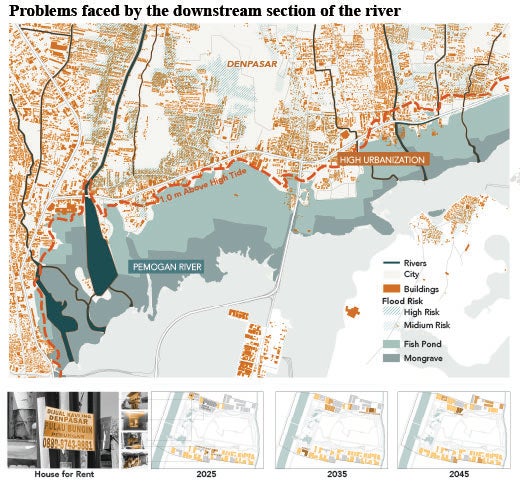
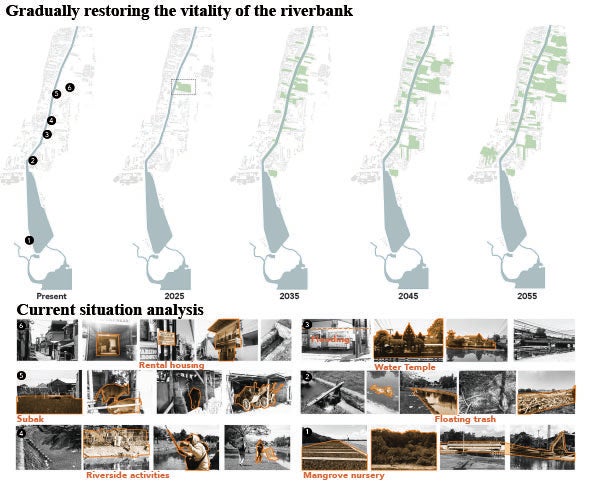
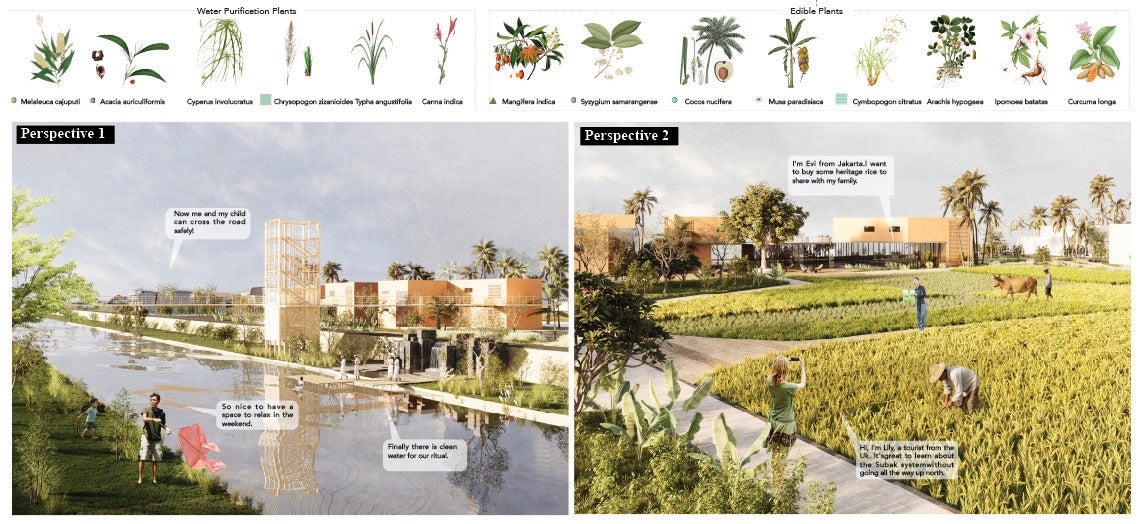
Rather than attempting to restore the past exactly as it was, Reweaving the Field proposes a new model that adapts Subak principles to contemporary urban conditions. The design introduces an independent water circulation system that captures and purifies industrial and urban runoff before redirecting it into productive landscapes. Constructed wetlands are placed between urban development and agricultural land, functioning both as ecological filtration systems and as public recreational spaces. In doing so, the project creates a shared interface where infrastructure, ecology, and everyday life can coexist.
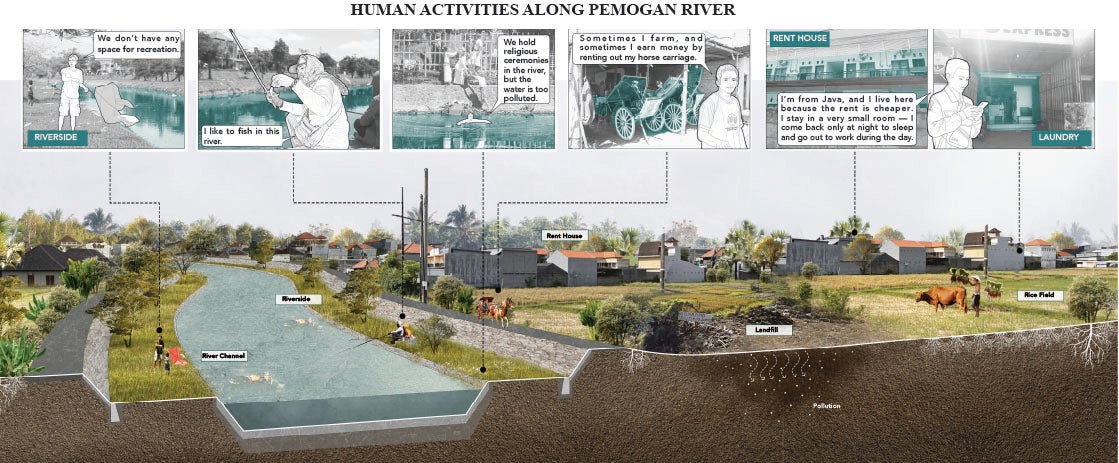
The proposal is grounded in field observations along the Pemogan River, which revealed a landscape shaped by overlapping livelihoods, informal recreation, ritual practices, and fragmented settlement patterns. Local residents move between farming and tourism-related work, migrant workers occupy low-cost rental housing, and visitors stay in nearby villas. What is missing is not activity, but a system that reconnects these different groups through water, agriculture, and culture.
At the center of the site, a demonstration paddy field allows visitors to engage directly with agricultural practices. A museum and learning center at the entrance supports agricultural education for children and introduces visitors to Subak culture and heritage rice from upstream regions. Farmers take on expanded roles as producers, conservation workers, and hosts, creating a new livelihood model that supports both cultural continuity and economic resilience.
As a pilot intervention, the project envisions similar small-scale strategies extending along the river over time, gradually addressing the interrelated challenges of flooding, pollution, and community livelihood.