Mangrove Retreat & Return: Adaptive Coastal Living in Benoa Bay, Bali
PROGRAMME
Master of Landscape Architecture
STUDENT
Yang Yuanyuan
YEAR
2
ADVISOR/TUTOR
Evi Syariffudin
This project explores how coastal communities in Indonesia can adapt to sea-level rise through a new model of living with water. Indonesia is one of the countries most vulnerable to sea-level rise, and in many coastal regions, communities face a difficult choice: resist flooding by raising houses, or retreat inland. Yet land ownership, fishing-based livelihoods, and limited alternatives often make relocation impossible. In this context, adaptive water-based living becomes an important strategy for long-term resilience.
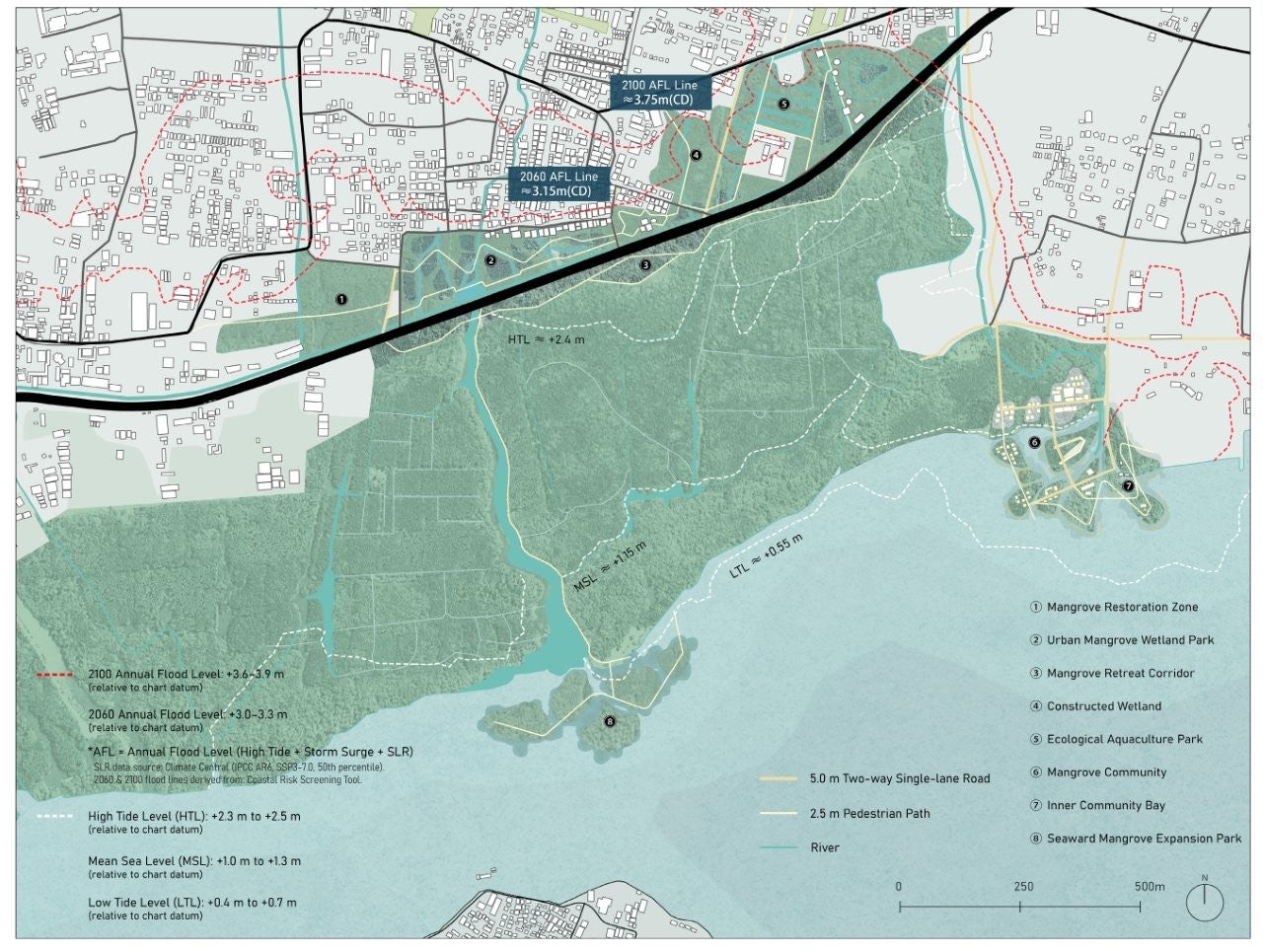
The project is situated in Benoa Bay, Bali, a landscape shaped by tourism expansion, ecological degradation, reclamation conflicts, and local cultural values. The bay is not only an ecological system of mangroves, seagrass, and coral habitats, but also a lived cultural landscape tied to fishing livelihoods, sacred sites, and community identity. The selected site lies along the northern mangrove edge of the bay, where erosion, mangrove loss, and barriers to inland retreat are already visible.
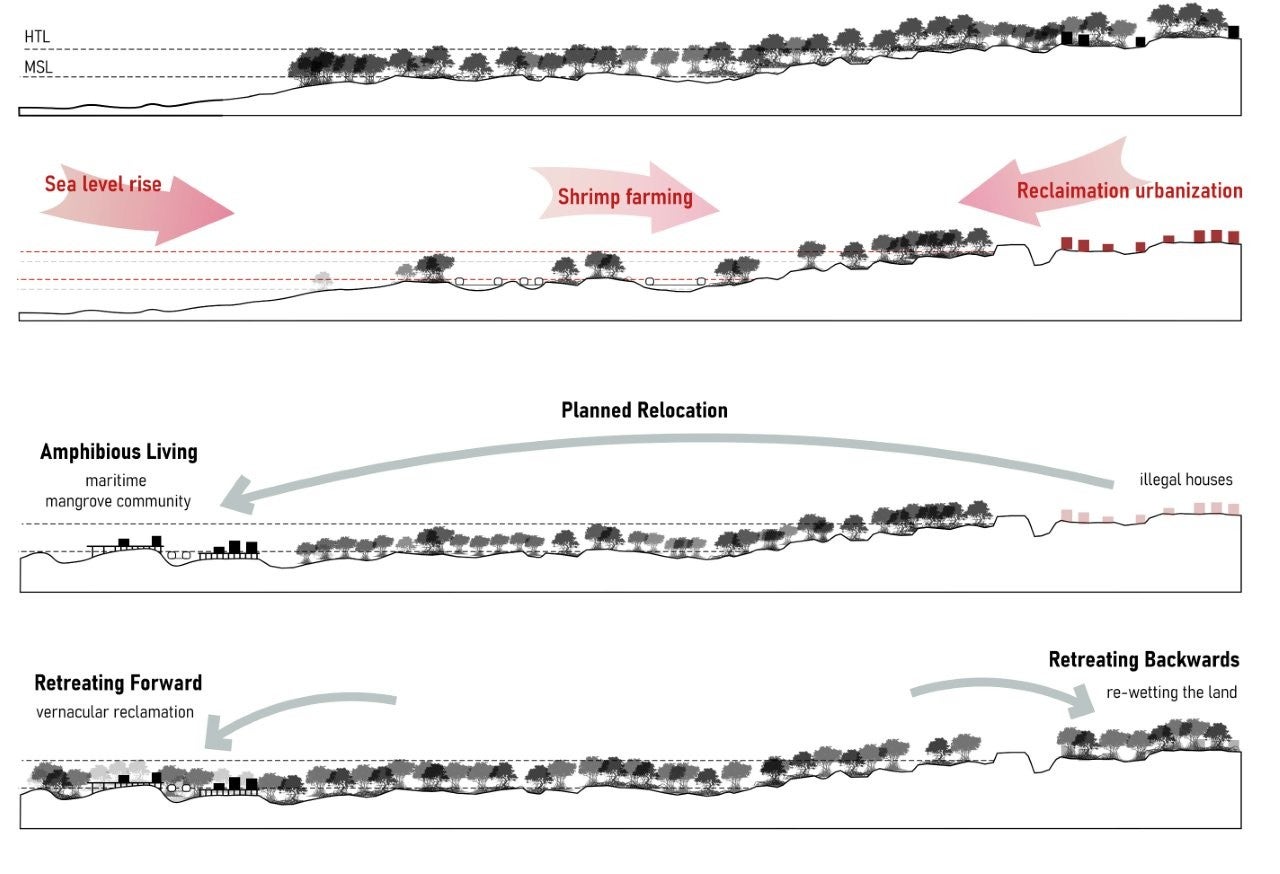
Mangroves play a critical role in coastal defence. They reduce wave energy, trap sediment, stabilize shorelines, and support biodiversity. However, they can only survive if they are able to either build sediment vertically or migrate inland horizontally. On urbanized coasts, roads, drainage channels, reclaimed land, and development often block this retreat, accelerating mangrove loss. This project responds to that condition by proposing a dual strategy: allowing mangroves to retreat landward while enabling vulnerable coastal communities to adapt seaward.
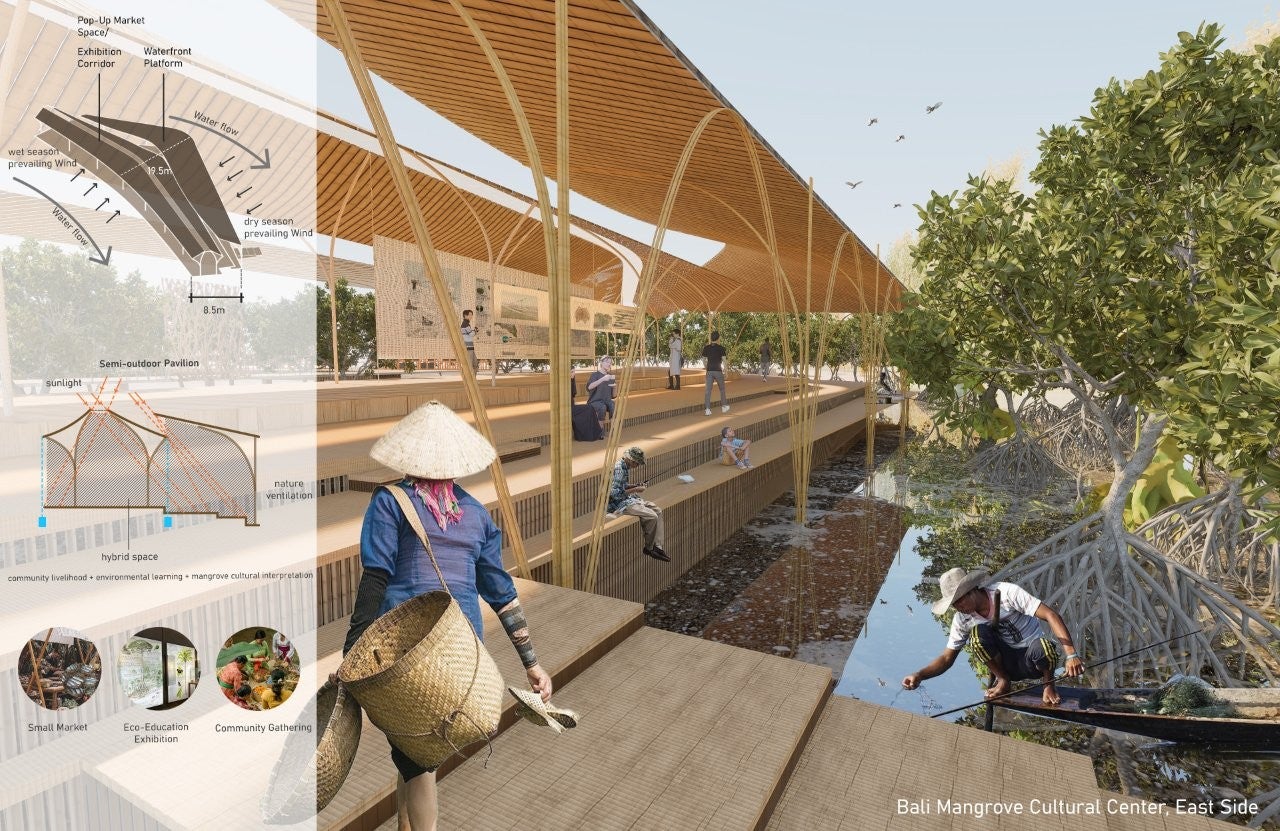
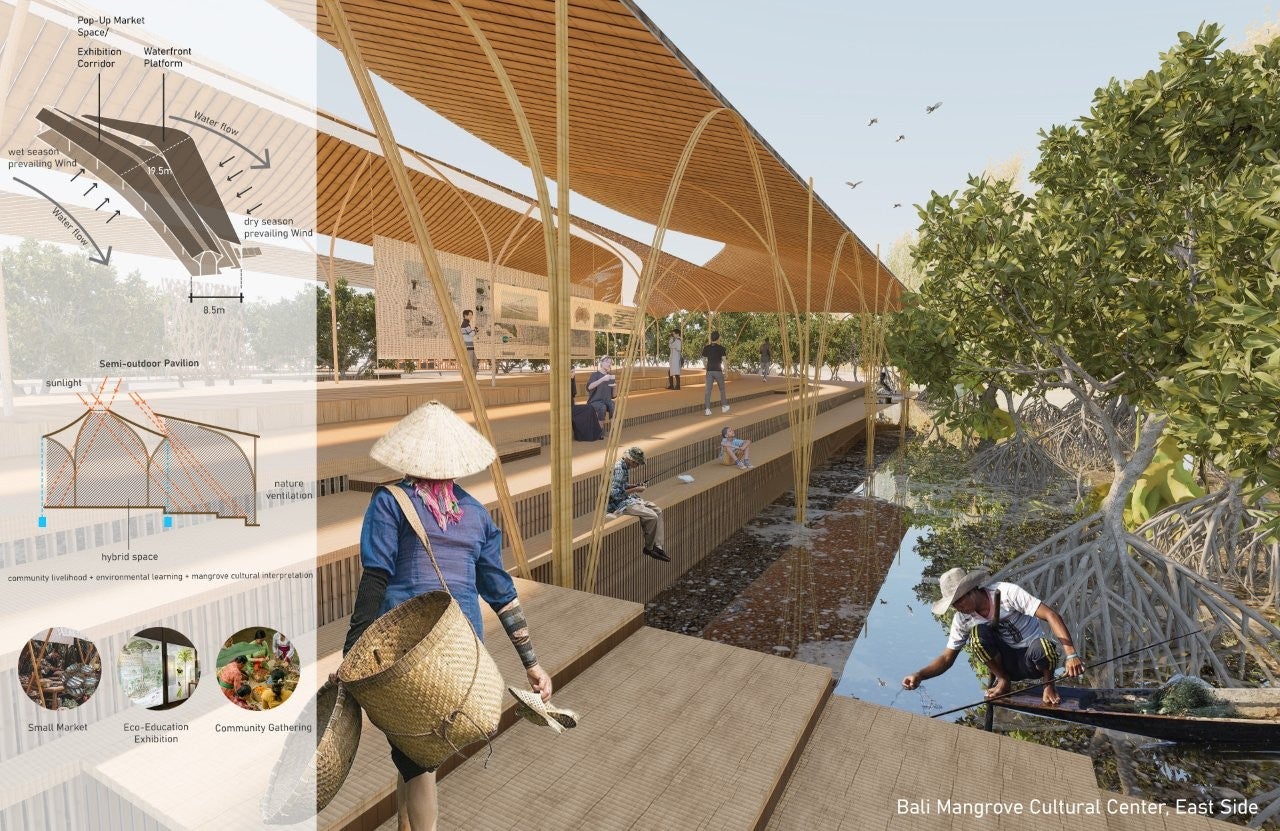
The design develops an 8.6-hectare mangrove community composed of stilted housing, public buildings, mangrove islands, aquaculture zones, and wetland park spaces. Inspired by precedents such as Ganvie, the settlement uses elevated structures to adapt to tidal conditions while creating space below for small-scale family aquaculture. The community includes residential areas, a service center, cultural and ritual spaces, a fish market, ecological education facilities, and waterfront walkways connecting the settlement to the surrounding beach and mangrove edge.
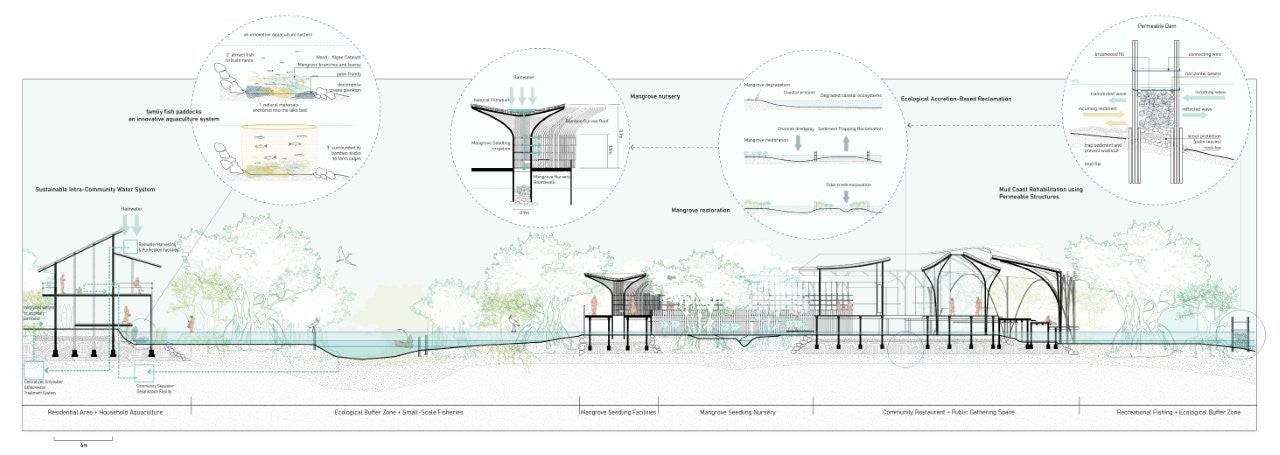
Rather than treating coastal adaptation as a purely technical problem, the project frames it as a landscape-based negotiation between ecology, livelihood, culture, and future habitation. It imagines a long-term coexistence mechanism in which mangrove restoration and community life are not separated, but designed to support one another through retreat, regeneration, and adaptation.