The Ethics of Aesthetic Cores - Federico Ruberto
Name of Event/Lecture
The Ethics of Aesthetic Cores - Federico Ruberto
Location
SDE 3 Grand Staircase
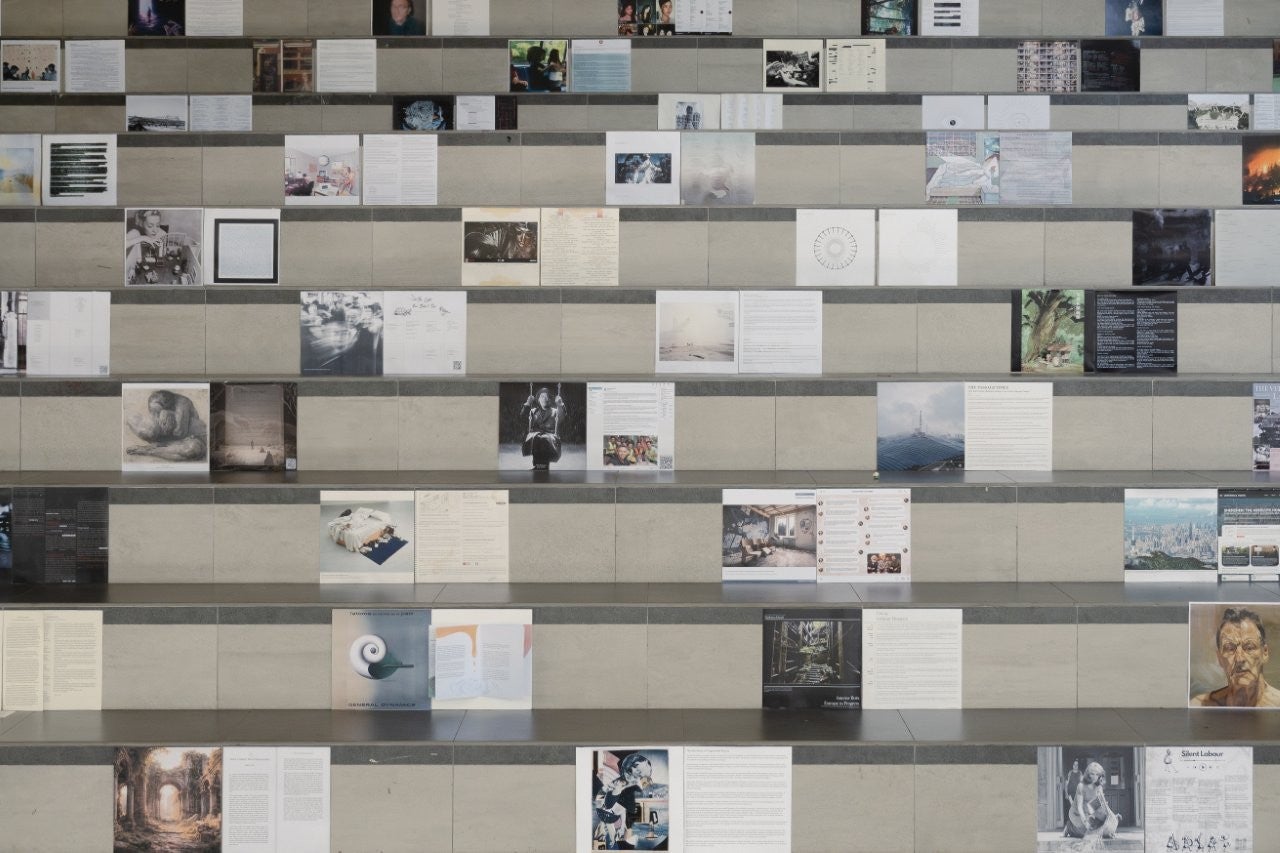
Contemporary Theories exhibition is open!
Date: 16 April – 16 June 2026
Venue: SDE 3 Grand Staircase
Critical art is an art that aims to produce a new perception of the world,
and therefore to create a commitment to its transformation.”
Jaques Rancière, Dissensus: On Politics and Aesthetics, p. 144
Why does it feel so dull to state “I like that”, “cool”, “so cute”, “interesting”? How shall we discuss aesthetic gestures or orientations, the pleasures of falling in and for beauty? In a world defined by excessive visuality and doom-scrolling, how to classify the aesthetic experience, the sense of beauty, how to materialise through words, images, or performances? How to encapsulated into a concept? In fact, does it even make sense to ask what is the meaning of “beautiful”, as such? What are its consequences? What is that prompts us to have an aesthetic feel, a vibe, a taste? What is taste and where does it come from? We are back at it, it is a matter of psychology, of psychology of forms. What is it to talk about beauty in the age of infinite AI-LLM maxxing, the hybridisation of senseless, unmoored, entropic, automated, forms of soulless re-production? What is beauty in the age of information overload and attention deficit? The beautiful metaphysically hides, as it is everywhere and nowhere in the age of fatigued re-production. Could there be beauty in the “poor image”? The theatre of production endlessly re-stages simulacra, where images no longer refer to reality or perception, but only to other images, statistics, and predictive models. In such condition returning to beauty becomes an ethical demand. In the words of Byung-Chul Han, “today, we are faced with a crisis of beauty – insofar as the beautiful is smoothened out into objects of pleasure, of the Like, into something arbitrary and comfortable. The saving of beauty is the saving of that which commits us”. To insist on beauty today is to insist on presence against circulation, lyrical judgment against metrics, and also, the possibility of redesigning the stage of affectivity, a place for a beholder to receive and be transformed by, the beautiful.
Understanding aesthetics revolves around the relationship between art, politics, and sensory experience. Aesthetics is not just a field of artistic endeavour, the pleasure of the “beautiful”, but a broader mode of experience that reorganises our perception of the world. Aesthetic experience according to Jaques Rancière is the modes and the field to redistribute the sensible: determining what can be seen, heard, and thought within a particular social order. Rancière views aesthetics as a realm that can transform the given by presenting alternative ways of perceiving and interpreting the world. This kind of positive disruption opens spaces for critical reflection, fostering a form of emancipation. We promote this necessary mode of developing a theory of aesthetics and aesthetic experiences that fosters encounters and critical thinking, challenging habitual perceptions and allowing individuals to reimagine their roles within the social fabric. Through selected aesthetic encounters, spectators are not passive recipients but active interpreters who can reconfigure meanings and relationships, thus practicing a form of critical thinking, and using critical thinking in their practice. Students therefore though lectures/debates/assignments in the course are exposed the agency of critical/media theory, grasping concepts: in action. Being is not abstract, it is felt, lived. Thought is always embodied: it feels therefore it is. Aesthetics is primary because perception precedes concepts. Such could be a productive statement to be followed up by an ethics of attention, care, and relationality. To perceive otherwise is already to live otherwise. Also, objects exceed perception, and appearance is always partial, eerie, withdrawn. To address the above, the course proposes an alternative way to bring back the need of “contemporary theories”. It looks at the value of theory, and how theory could address how we live and how we judge by promoting close encounters with the other, the other that always comes at-to us through un-knowing aesthetic dimension.Teaching, studying, and defending beauty should be retooled, redrafted and reframed, an act not of taste but one of ontological care: preserving the conditions under which something can still appear as other, rather than merely as content.
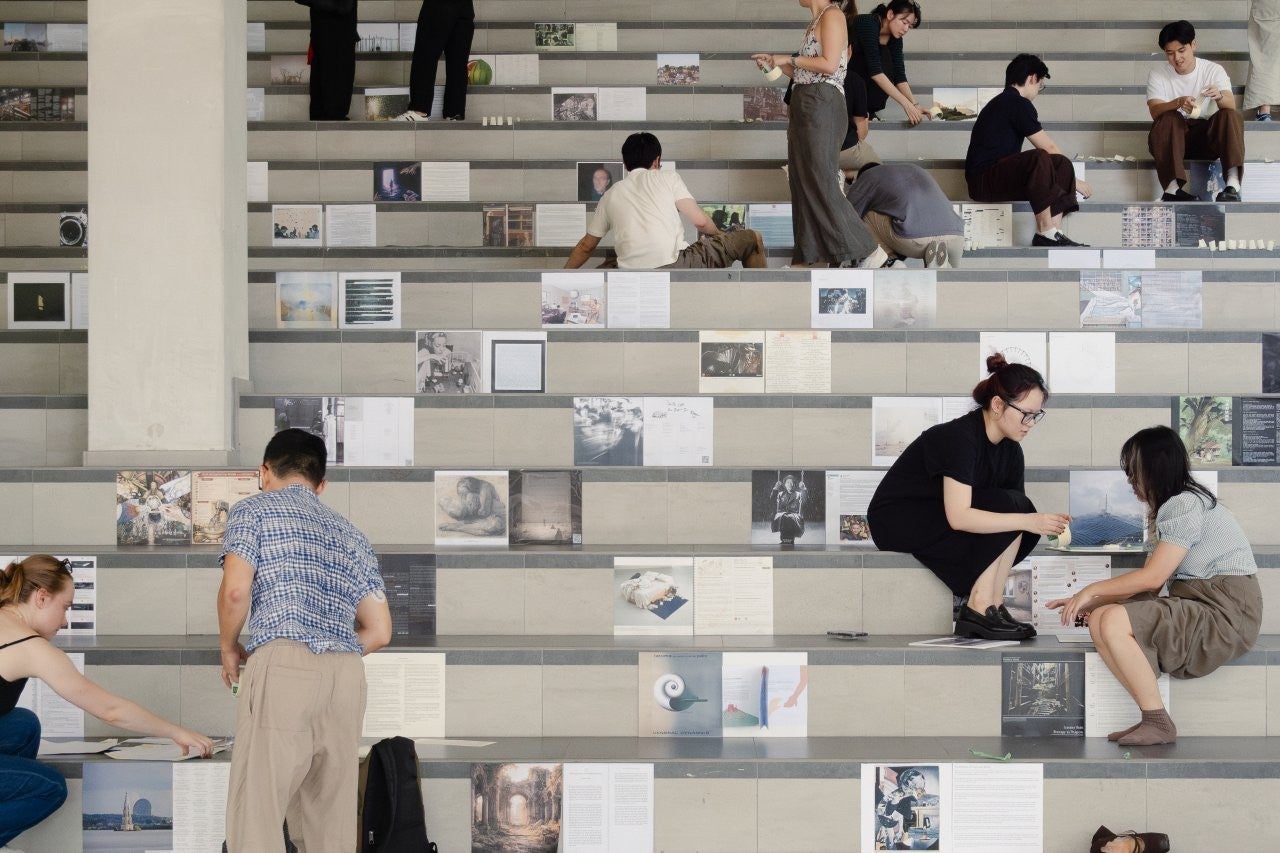
What is Contemporary Theories? A general orientation: From the abstraction of Reality to the reality of Abstraction
Contemporary Theories is a module that aims to expose architecture students to an array of intellectual ideas and theoretical positions by drawing from an expanded field of discourse that includes architecture, urban studies, design, cinema and the humanities. The broad focus acknowledges the unique nature of architectural education, the manifold forces that shape the design of a building, and the role an architect plays in society. The module is intended as a framework for designers for critically reading what architecture is and means, how it is sublimating into new forms of production requiring alternative aesthetics and/or processes of narration. The classes are carried forward to expose a delicate knot: in what way theory, critical/media theory affects architectural practices? In what way architectural production is connected to the expanded field of aesthetic-theory, critical-theory, media-theory and digital humanities? In what sense technology predefines the “model” —epistemological, aesthetic, ontological— in which we happen to be situated and immersed predetermining the way we live and design? We do not (only) utilise technology to represent design, but any technology predefines the very “model” of reality in which design takes place. The story is even more complicated than this, as design is a technology itself, a field in fact that coverts, transforms, expands, re-invents and hybridises various technologies. The course is an exploration and survey of selected theoretical nodes, artistic productions and architectural visions that interpreted reality giving to it new meanings. Students are brought to witness particular historical moments that expose how architecture is a multi-threaded an non-linear endeavour, a ramified semiosis. The main series of lectures accompanied by selected readings reveal architectural discourses and events events that translated, in particular manners, the fabric of space-time —a fabric that before being framed architecturally is already given and framed within socio-cultural, literary, artistic, and philosophical (ontological and metaphysical) ideas. The topics covered is a selection that marches through a speculative history of abstraction/re-presentation uncovering “models” of reality, their transmutation —or in other words, how the meta-historical, collective conceptualisation of “space-time” has morphed altering our cognitive capacities of picturing the “world”, of projecting novel world-views into the future, thus altering the very sense we give to the word “world”.
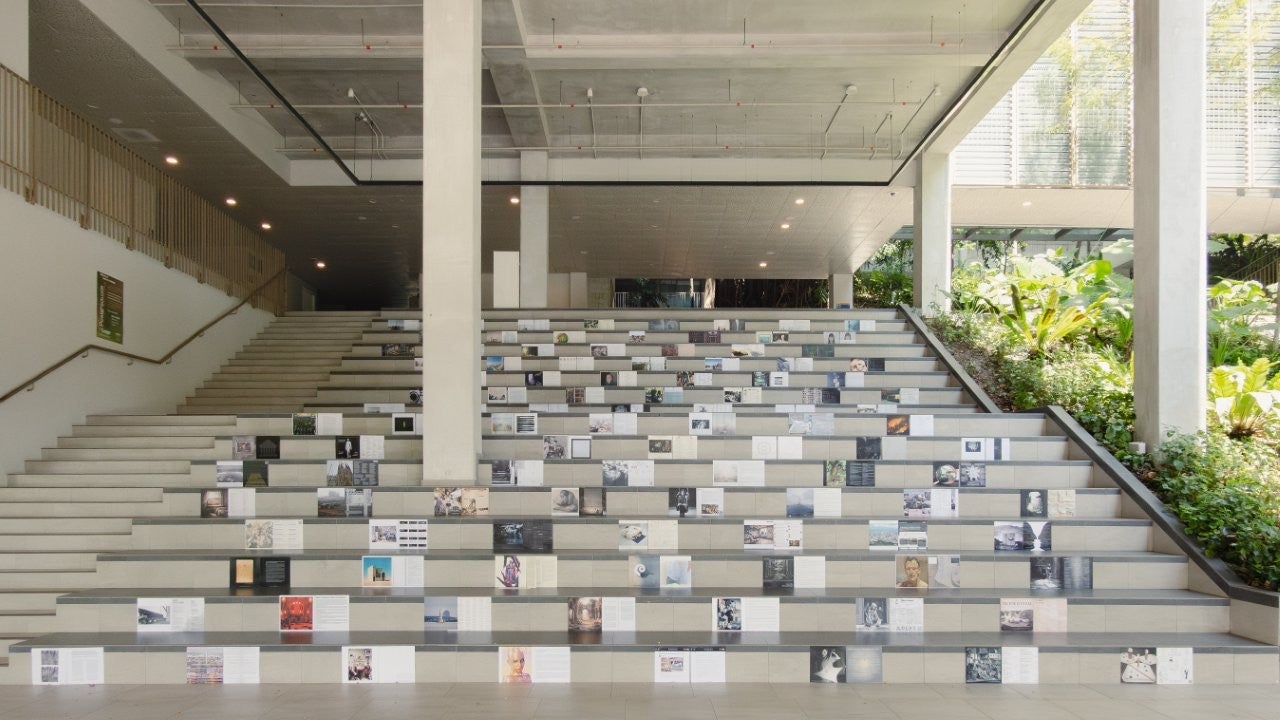
The lectures/reflections of AY25/26 are designed to provide a comprehensive yet topical journey through the historical moments that marked significantly different turns in aesthetics, in our conceptualisation of the what is worth to be called “beautiful”. The lecture series and class debates/conversations and practical exercises are designed to foster a deep engagement with the aesthetic experience, whilst developing a research methodology and experimenting with writing. Theoretical explorations presented through the lectures are augmented through a series of selected texts revealing multiple perspectives and aesthetic tendencies.
Course Lead and lectures: Federico Ruberto
Tutorial Classes: Wai Hon Tham, Chan Hao Ong, Dr. Wong Zi hao, Sim Yi-Ting Michel, Isabella Ong Zhixu.