Ephemeral Identity: Reconstructing Urban Identities Through Landscape Systems
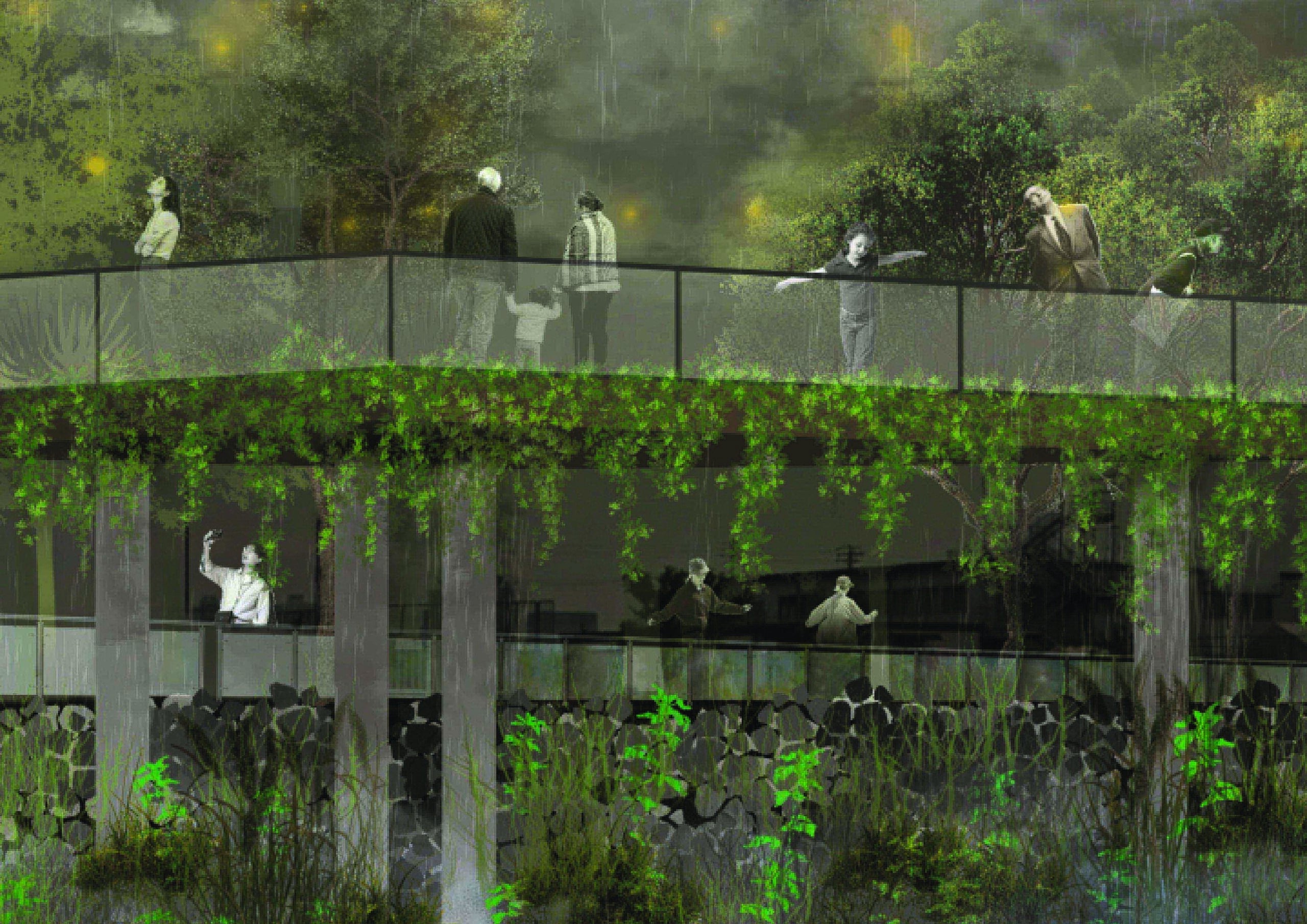
Ephemeral Identity explores how landscape can accommodate places whose identities are continually rewritten by urban transformation. Set in Harumi, Tokyo—a district that has evolved from a working waterfront to a pop-culture destination, an Olympic Village, and now a residential neighbourhood—the project challenges the notion of identity as a fixed condition. Instead, it proposes that urban identity emerges through the ongoing interactions between landscape, time, and everyday life.
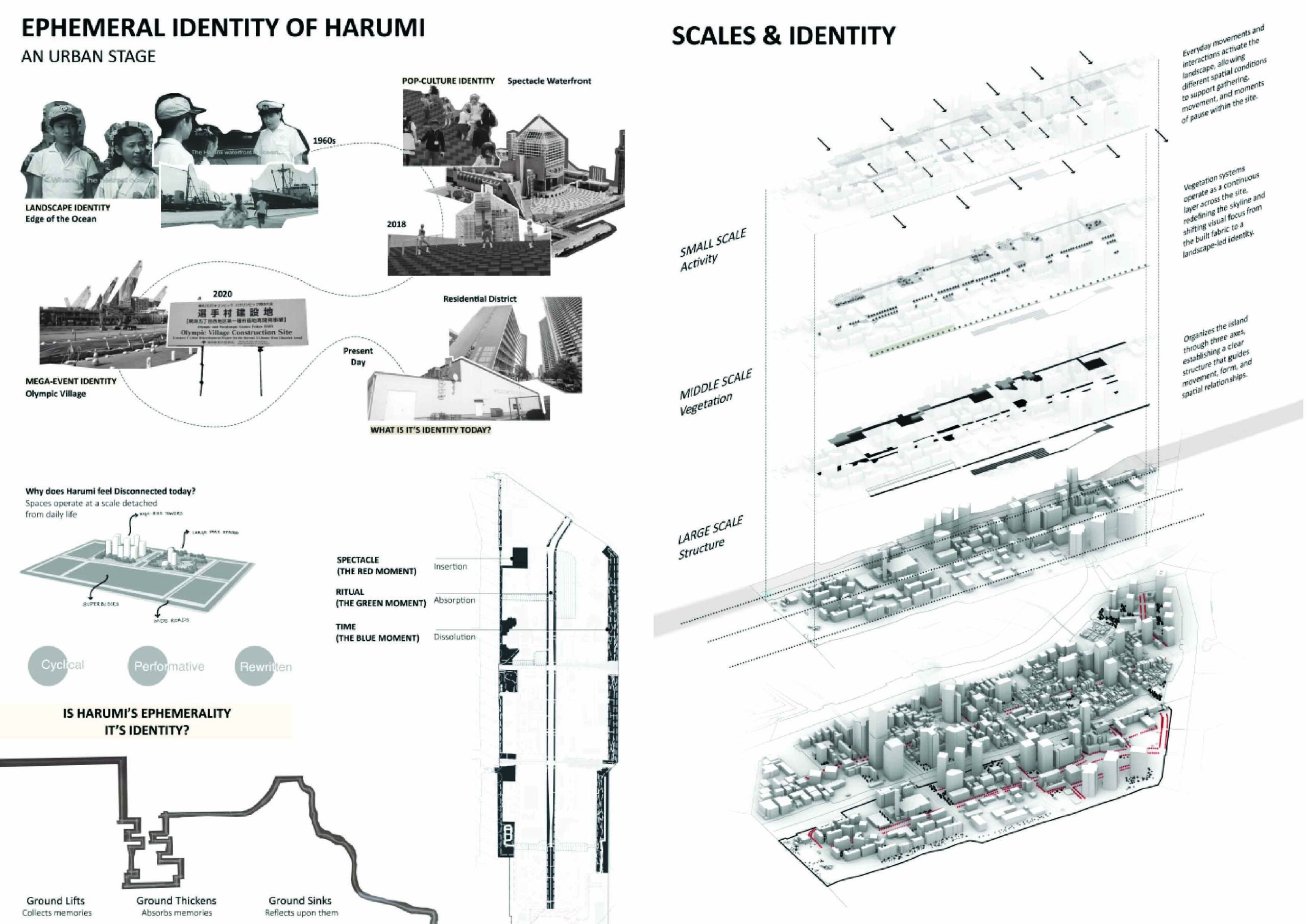
The design reimagines Harumi as an Urban Stage, structured around three complementary experiential frameworks: Spectacle, Ritual, and Time. The Spectacle axis employs elevated, layered gardens that establish landscape as a prominent visual and performative element within the skyline. The Ritual axis introduces a sequence of intimate public spaces that support movement, pause, and social interaction, embedding landscape within the rhythms of daily life. The Time axis embraces gradual transformation through seasonal change, ecological succession, and spaces for reflection, allowing the site to evolve rather than remain static.
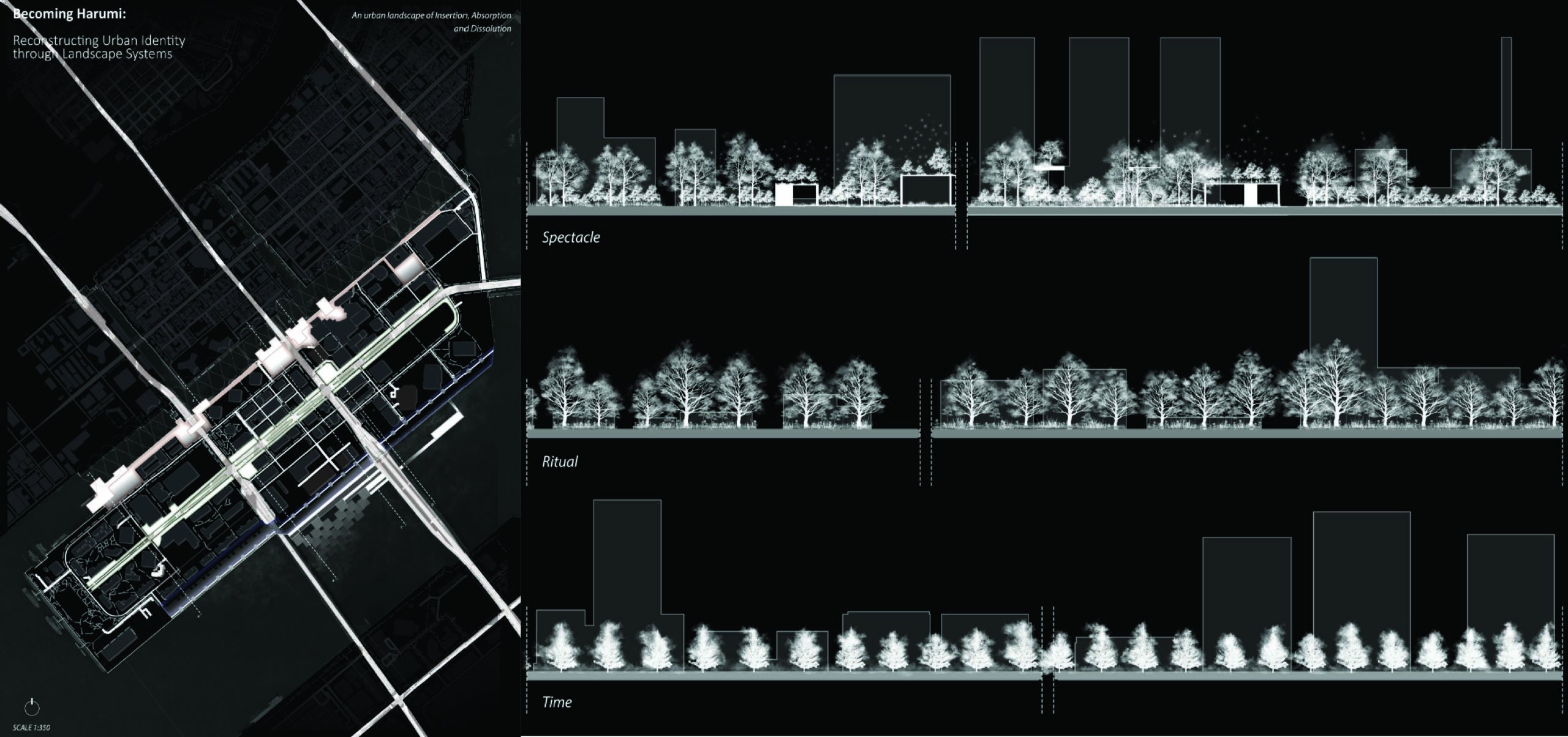
Vegetation serves as the primary medium through which these narratives are expressed, shifting attention from architecture to living systems and reinforcing the project’s central theme of impermanence. Seasonal cycles and changing plant communities continuously reshape the spatial experience, ensuring that no single identity dominates the site.
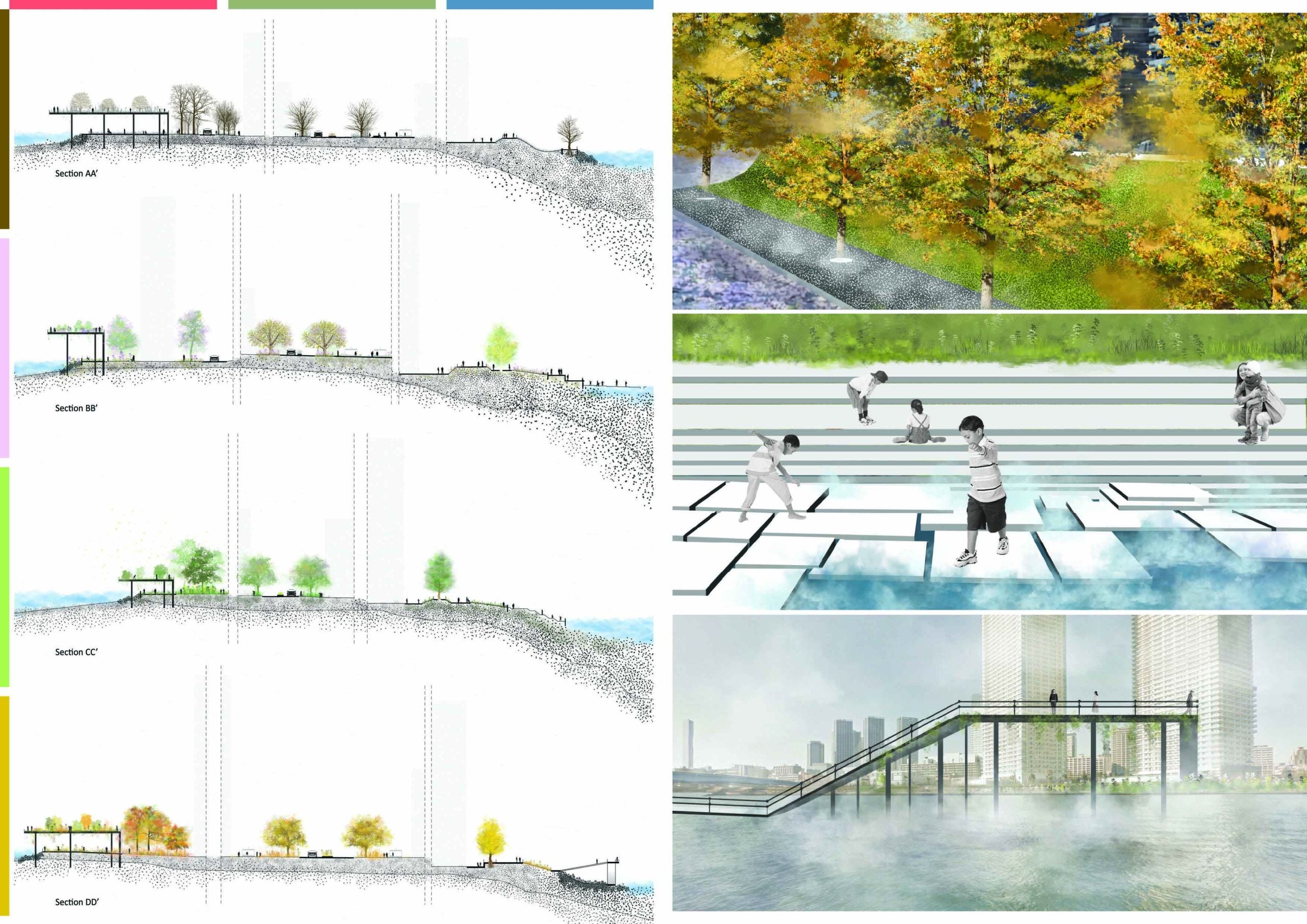 Rather than imposing a permanent image, Ephemeral Identity proposes a landscape that is continuously authored by ecological processes and human occupation. The project demonstrates how adaptable public spaces can accommodate changing social, cultural, and environmental conditions, transforming urban identity into an evolving, participatory process rather than a fixed destination.