Purifying Gradient
PROGRAMME
Master of Landscape Architecture
STUDENT
Liu Yunqi
YEAR
1
ADVISOR/TUTOR
Ervine Lin Shengwei
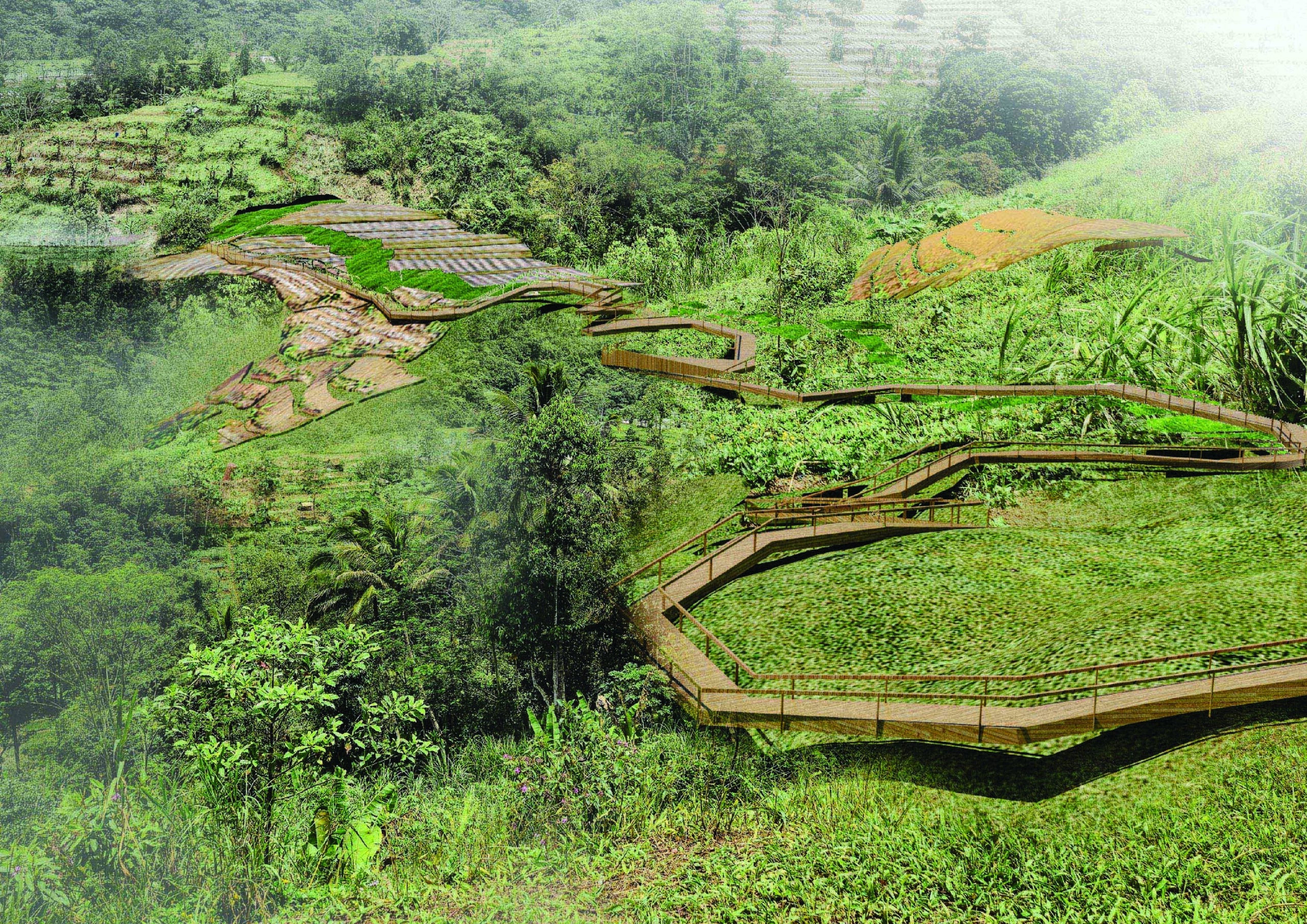
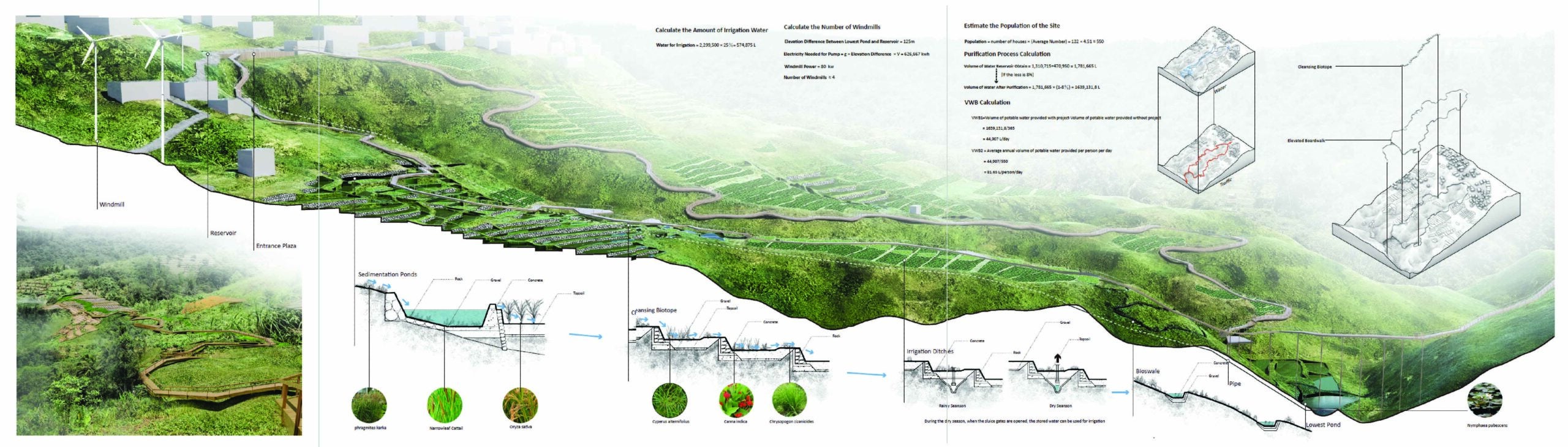
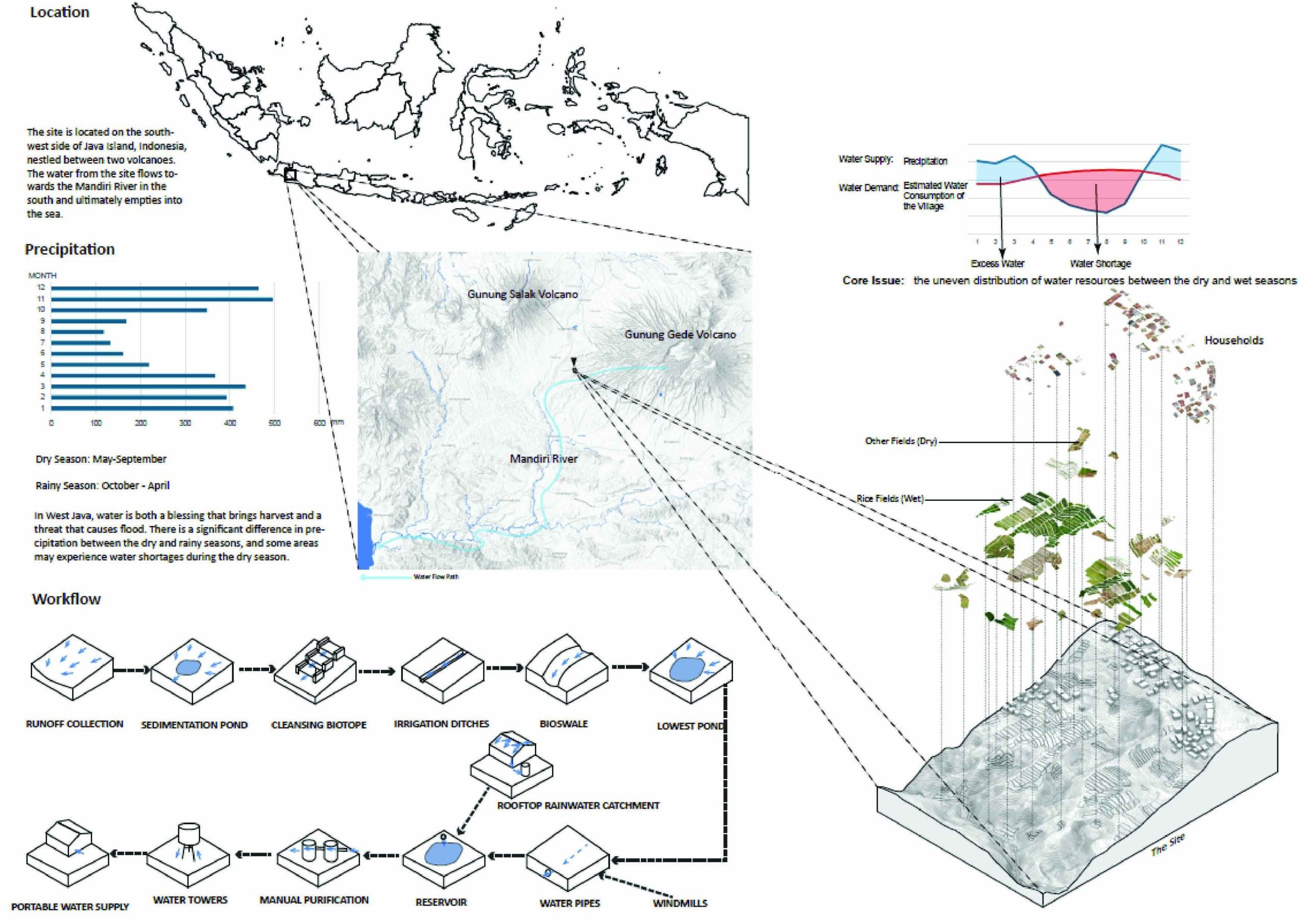
Purifying Gradient reimagines the rice terraces of West Java as a living water infrastructure that addresses seasonal water scarcity and declining water quality through ecological design. Although the region experiences intense rainfall during the wet season, many rural communities face water shortages during prolonged dry periods while contending with pollution from agricultural runoff and human activities. Rather than relying on engineered grey infrastructure, the project transforms the valley’s existing terraced landscape into a distributed system for water purification, storage, and reuse.
Working with the site’s natural topography, the proposal establishes a layered purification gradient that guides water through a sequence of ecological processes. Rainwater and surface runoff are first slowed within vegetated sedimentation ponds, allowing soil and debris to settle before entering a series of stepped biofiltration basins. Planted with native Javanese wetland species, these terraces function as living filters, removing excess nutrients and pollutants while improving water quality through natural biological processes. As water gradually descends through the landscape, it becomes progressively cleaner before being collected in a retention reservoir at the valley floor.
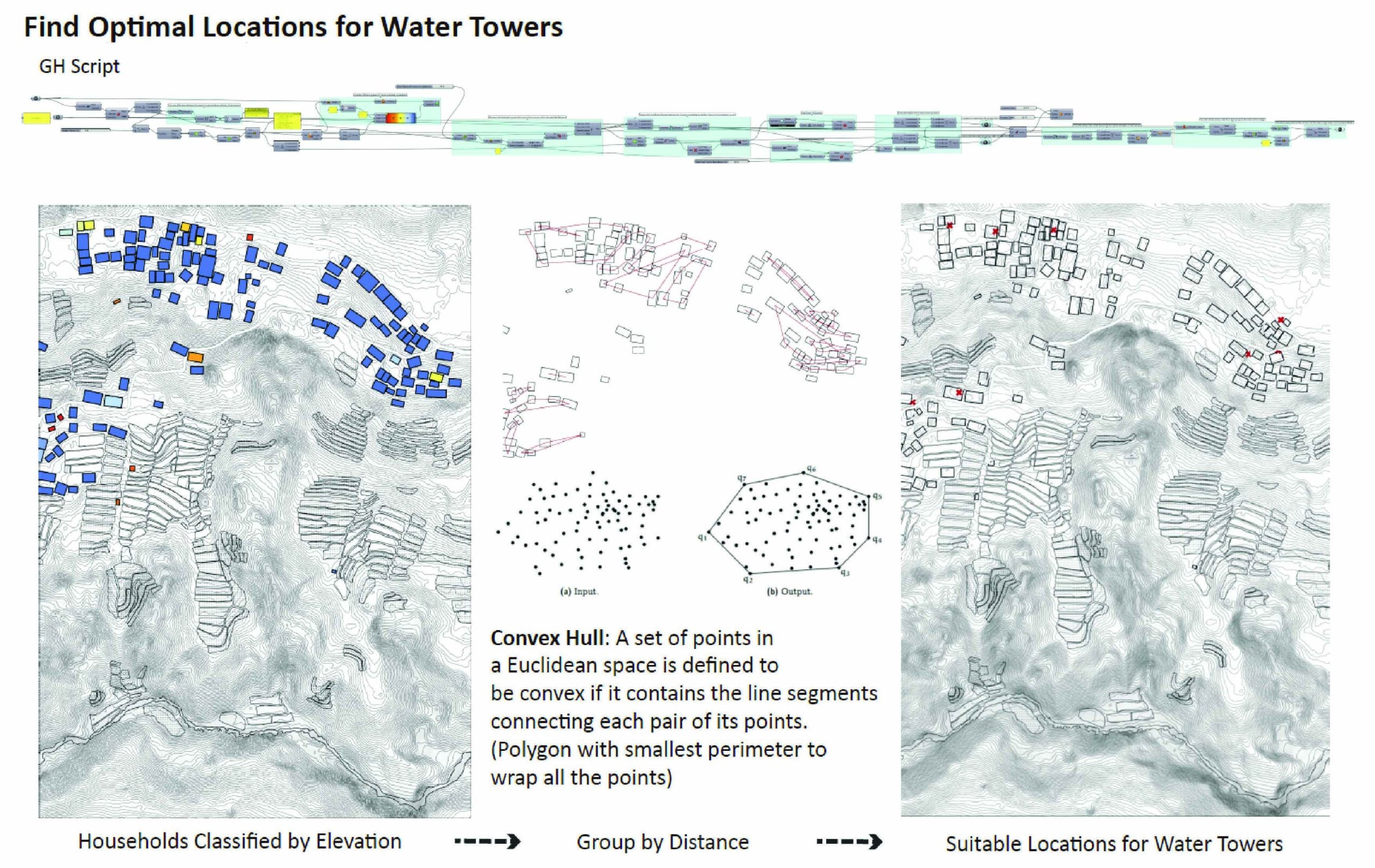
The stored water is then redistributed through a simple pumping system to supply nearby households, irrigate rice fields during the dry season, and supplement rooftop rainwater harvesting networks. By integrating water management directly into the productive landscape, the proposal strengthens agricultural resilience while preserving the ecological and cultural significance of traditional rice terraces.
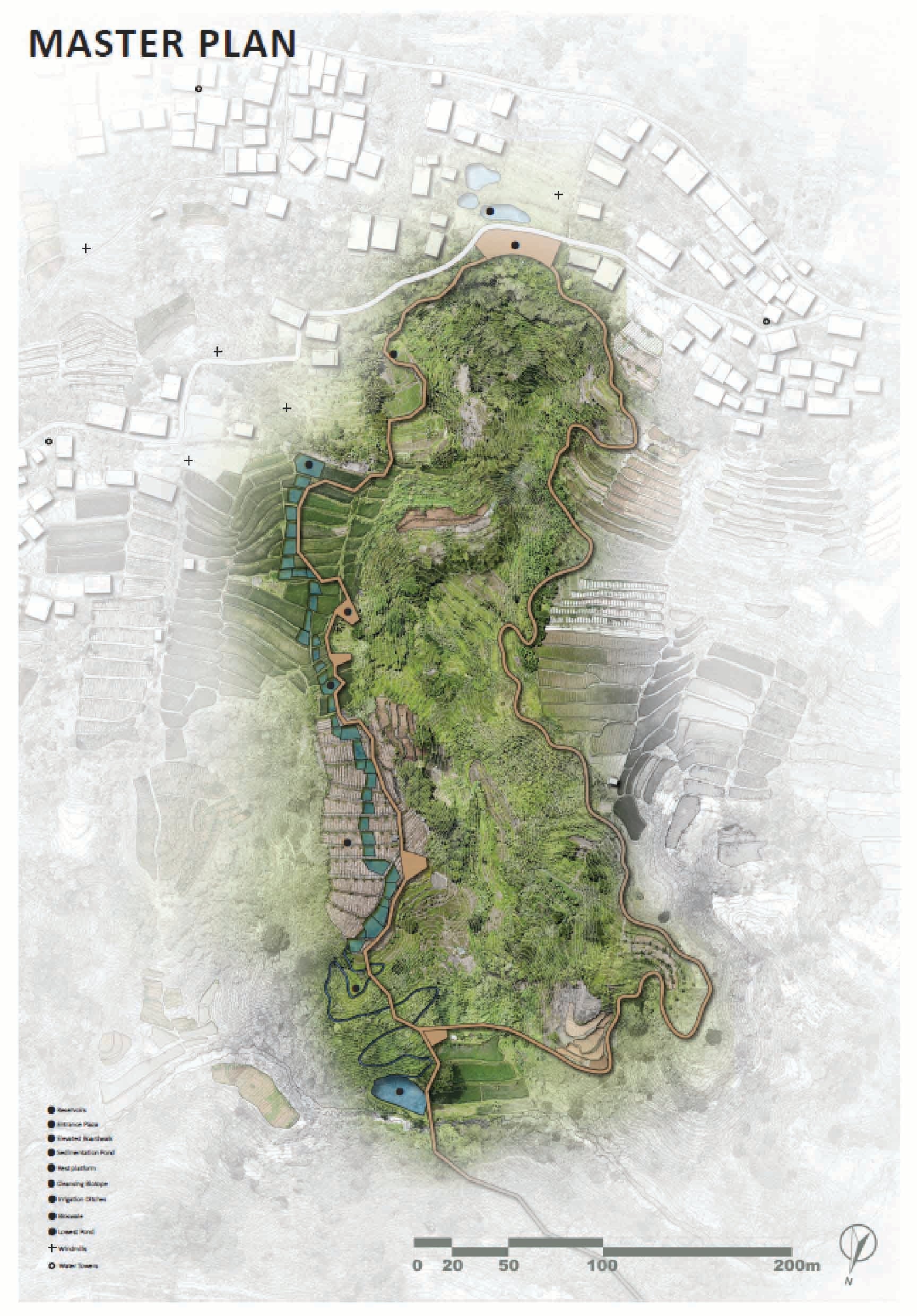
Rather than replacing existing farming practices, Purifying Gradient demonstrates how landscape processes can enhance them, creating a scalable model for climate-adaptive water management that supports rural livelihoods through regenerative, low-impact infrastructure.