Tepi Sungai Crossings
PROGRAMME
Master of Landscape Architecture
STUDENT
Yan Linhao
YEAR
1
ADVISOR/TUTOR
Victoria Jane Marshall
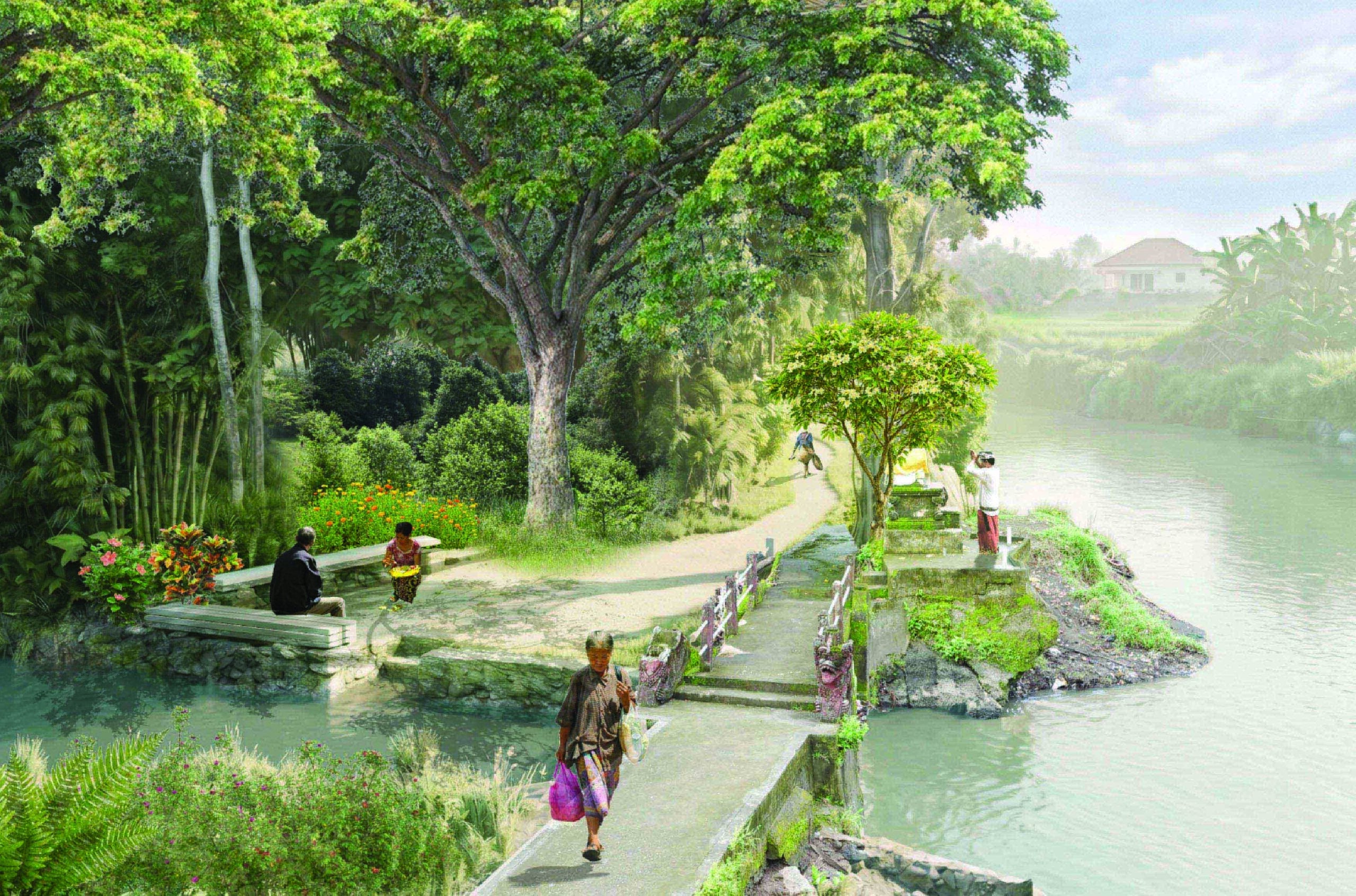
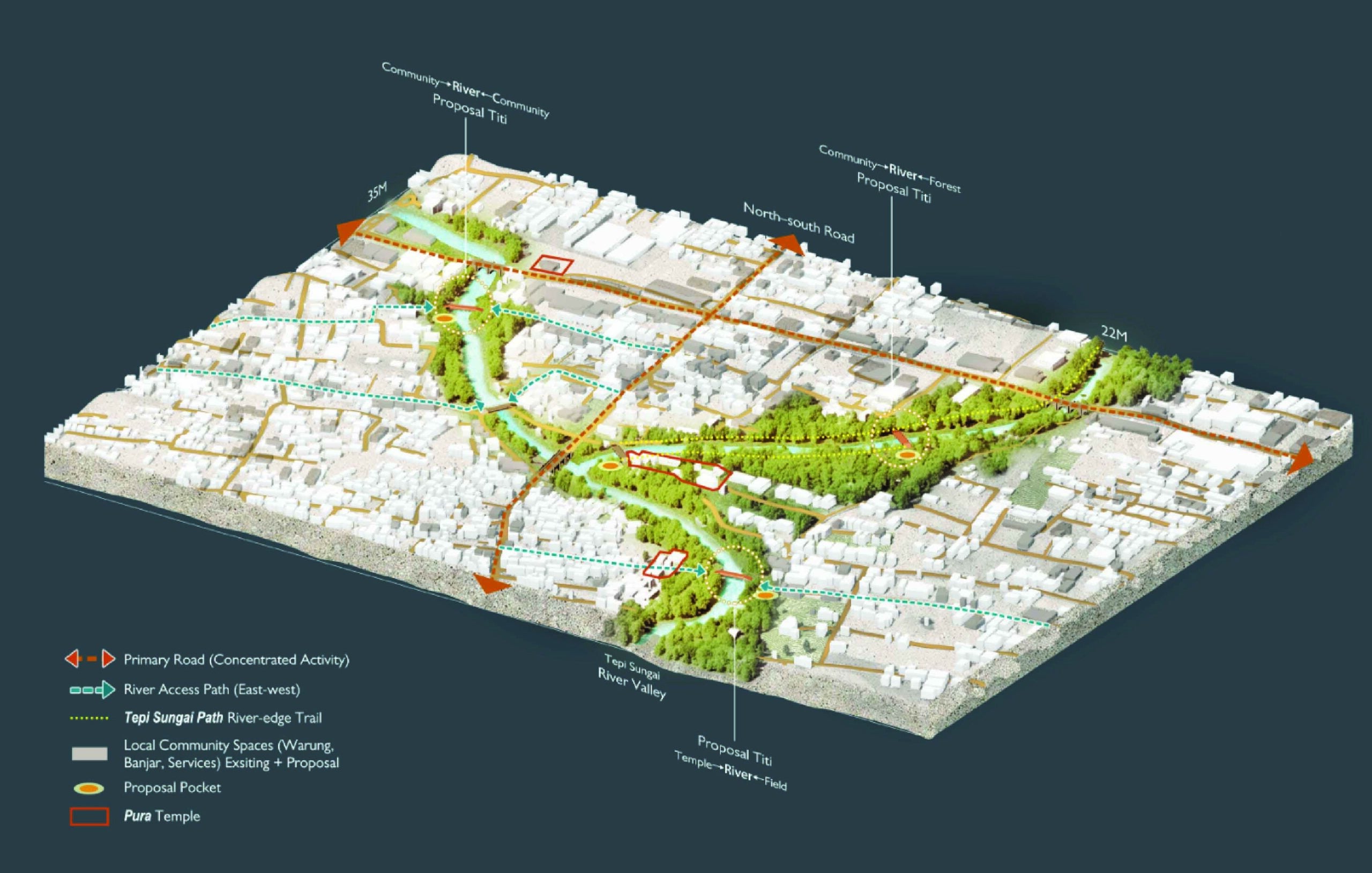
Tepi Sungai Crossings reimagines the neglected river corridors of northern peri-urban Denpasar as a network of everyday public spaces, challenging the area’s dominant north–south, road-oriented settlement pattern. While major roads concentrate movement, services, and development, they also generate persistent congestion. Running parallel, the rivers remain ecologically rich yet largely disconnected from daily life. Rather than introducing new roads or formal riverside parks—which risk increasing traffic, accelerating land value change, and displacing local communities—the project proposes a slower, more incremental approach.
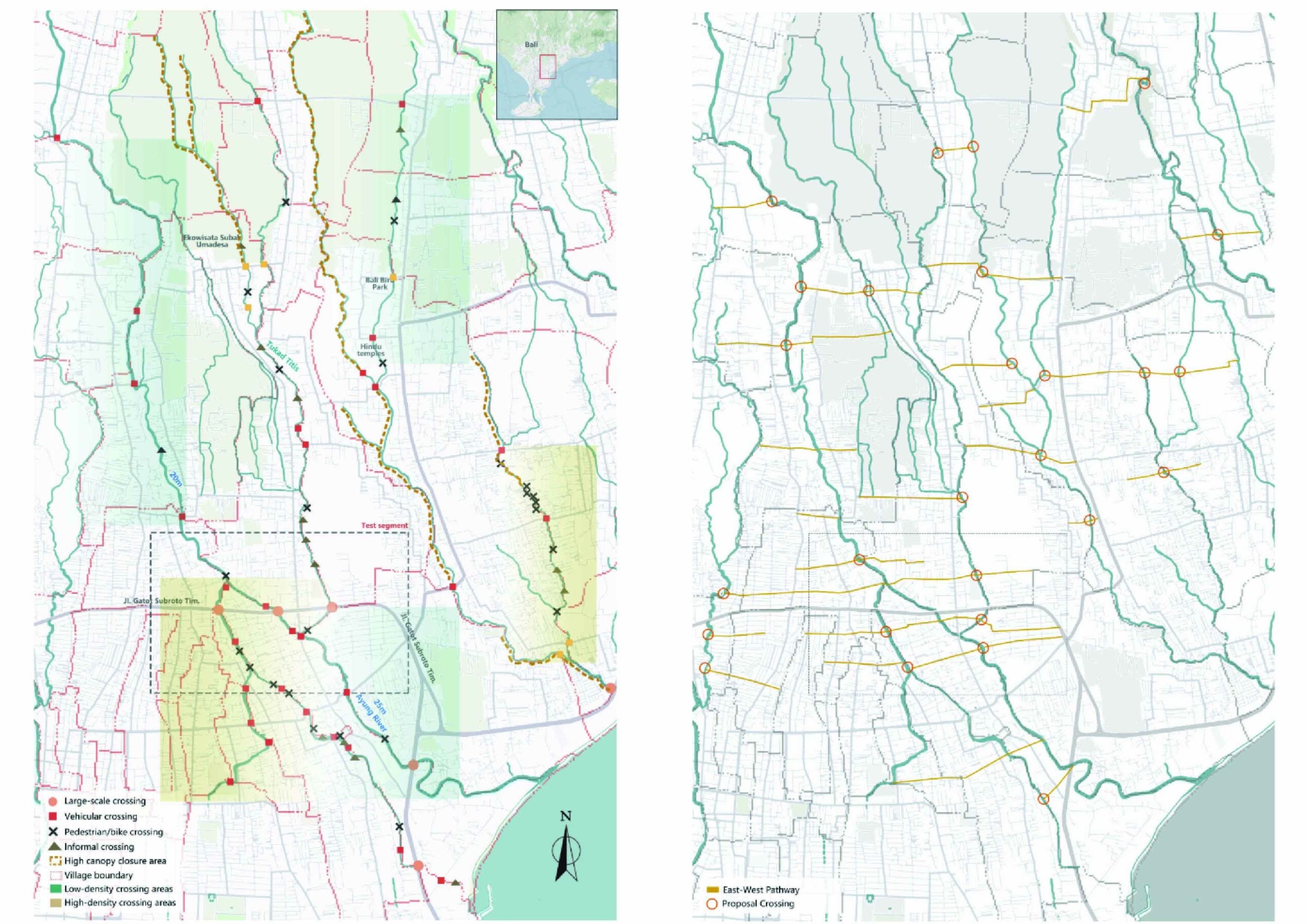
The design establishes a system of small-scale crossings comprising narrow pedestrian and scooter bridges (titi) and informal footpaths (jalan setapak) that create local east–west connections across the river corridor. By deliberately excluding cars and incorporating vegetation to slow movement, these interventions function as neighbourhood shortcuts while encouraging moments of pause, encounter, and engagement with the river landscape.
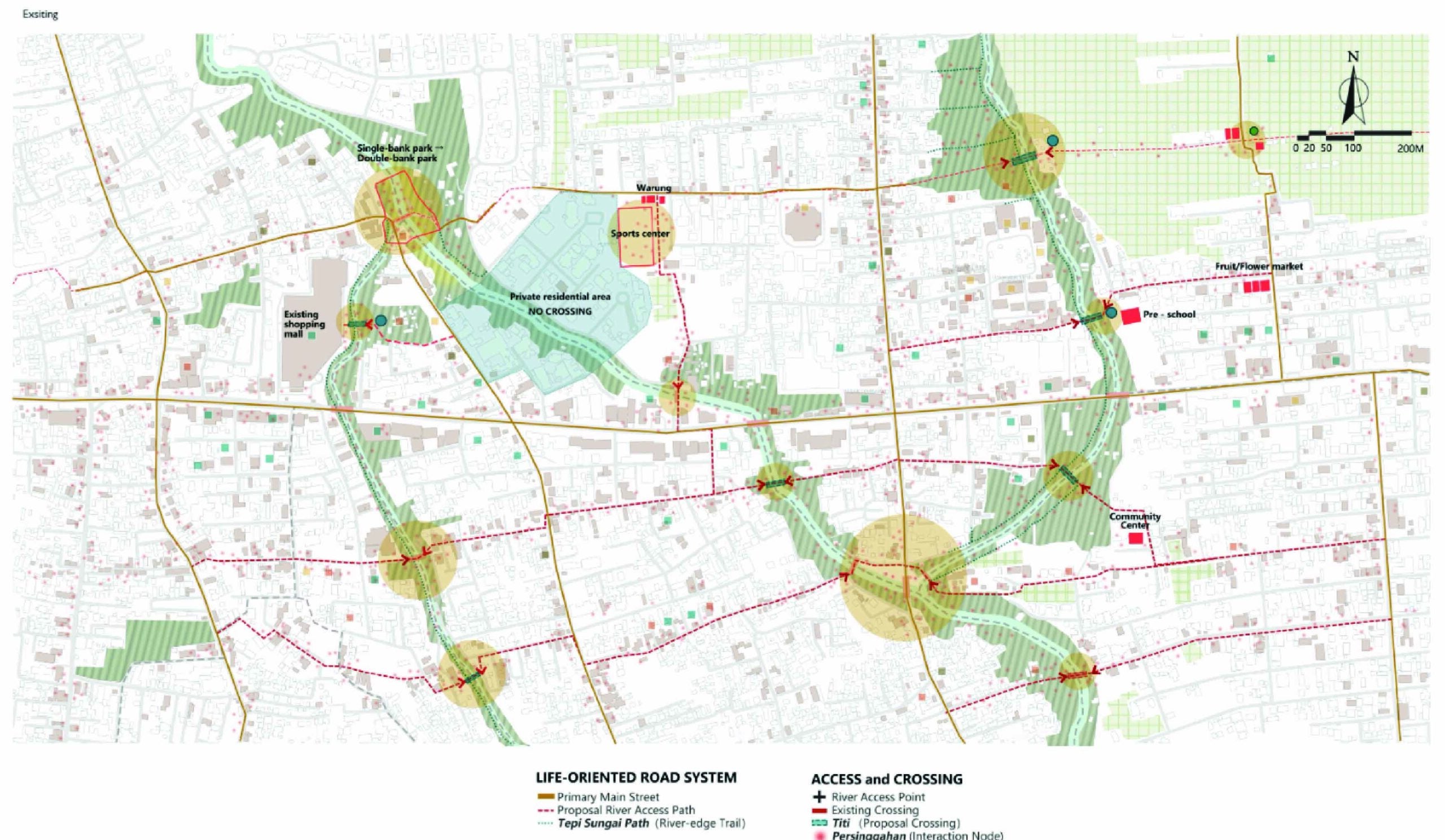
Supporting this network are a series of activity pockets located at crossings, along paths, and within adjacent riparian spaces. Rather than prescribing fixed programmes, these flexible spaces accommodate everyday uses such as resting, gathering, and informal commerce while strengthening the river’s existing cultural and ritual significance. Incremental improvements to the riparian edge encourage residents from surrounding villages to reconnect with the river without triggering the large-scale redevelopment often associated with conventional public space projects.
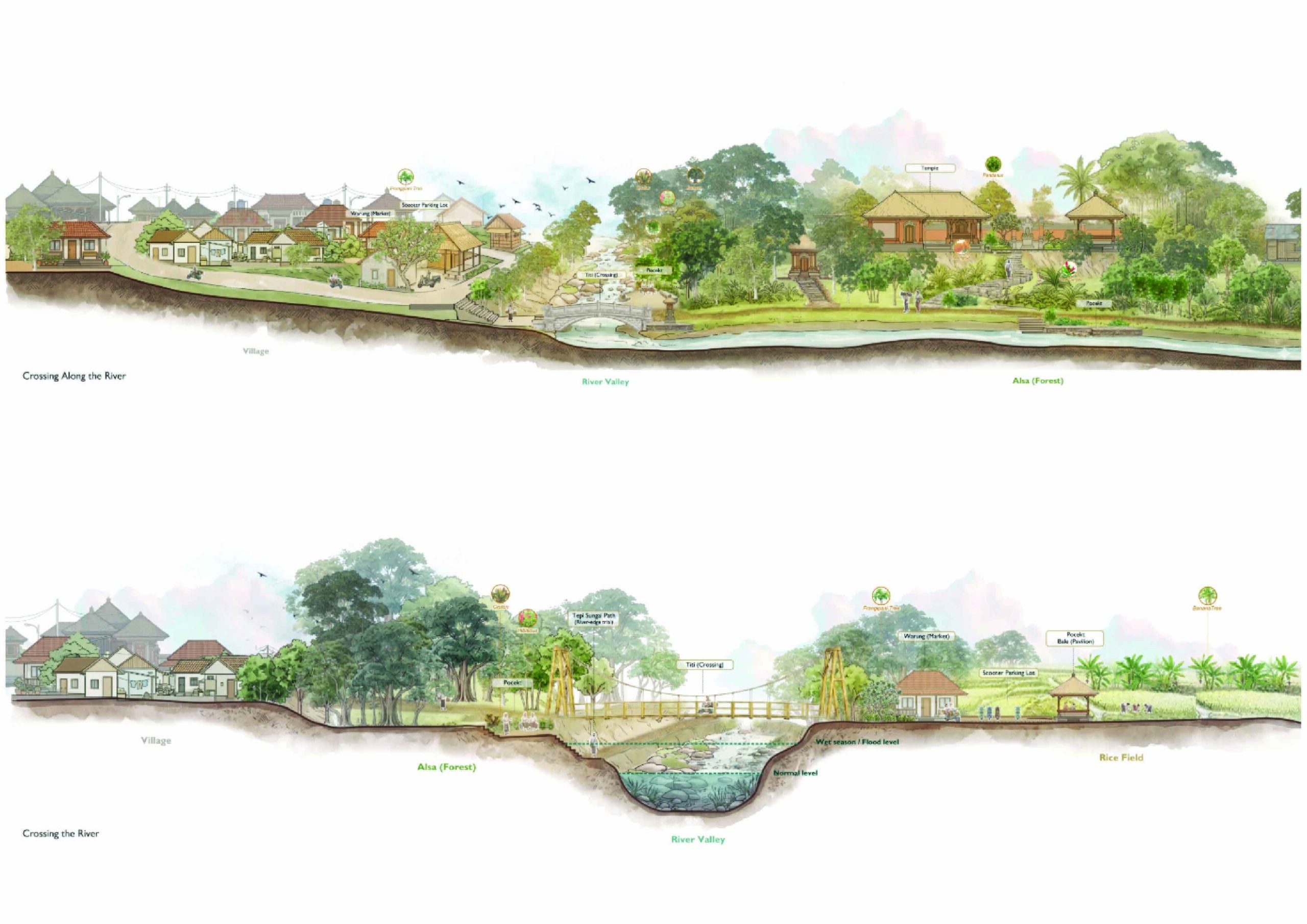
By prioritising accessibility, ecological restoration, and everyday occupation over major infrastructure, Tepi Sungai Crossings transforms the river into a shared civic landscape. The project demonstrates how small, distributed interventions can diversify movement patterns, strengthen local identity, and improve environmental and social resilience while resisting the pressures of gentrification and car-oriented urban growth.