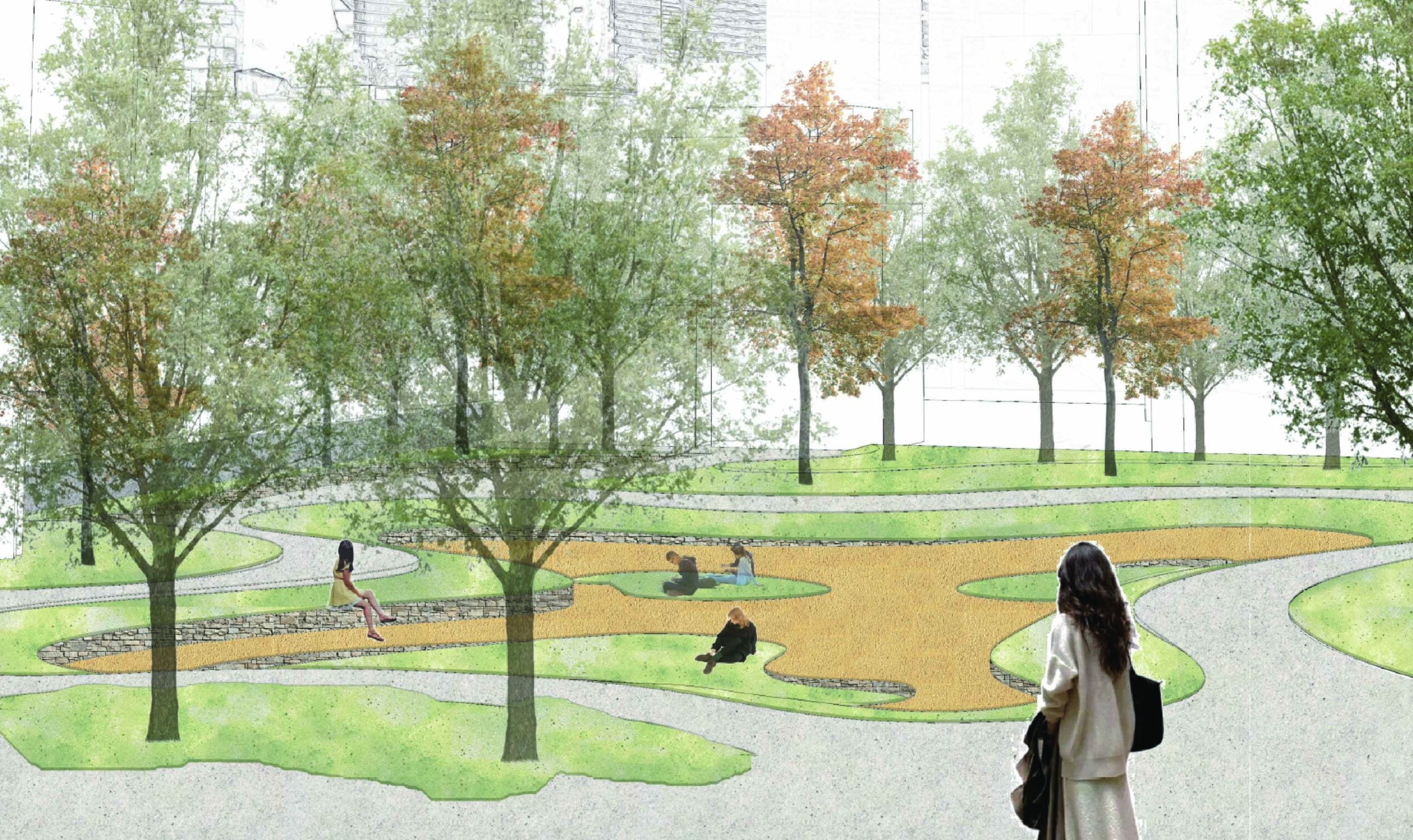
Encounter Loop: Island of Encounter
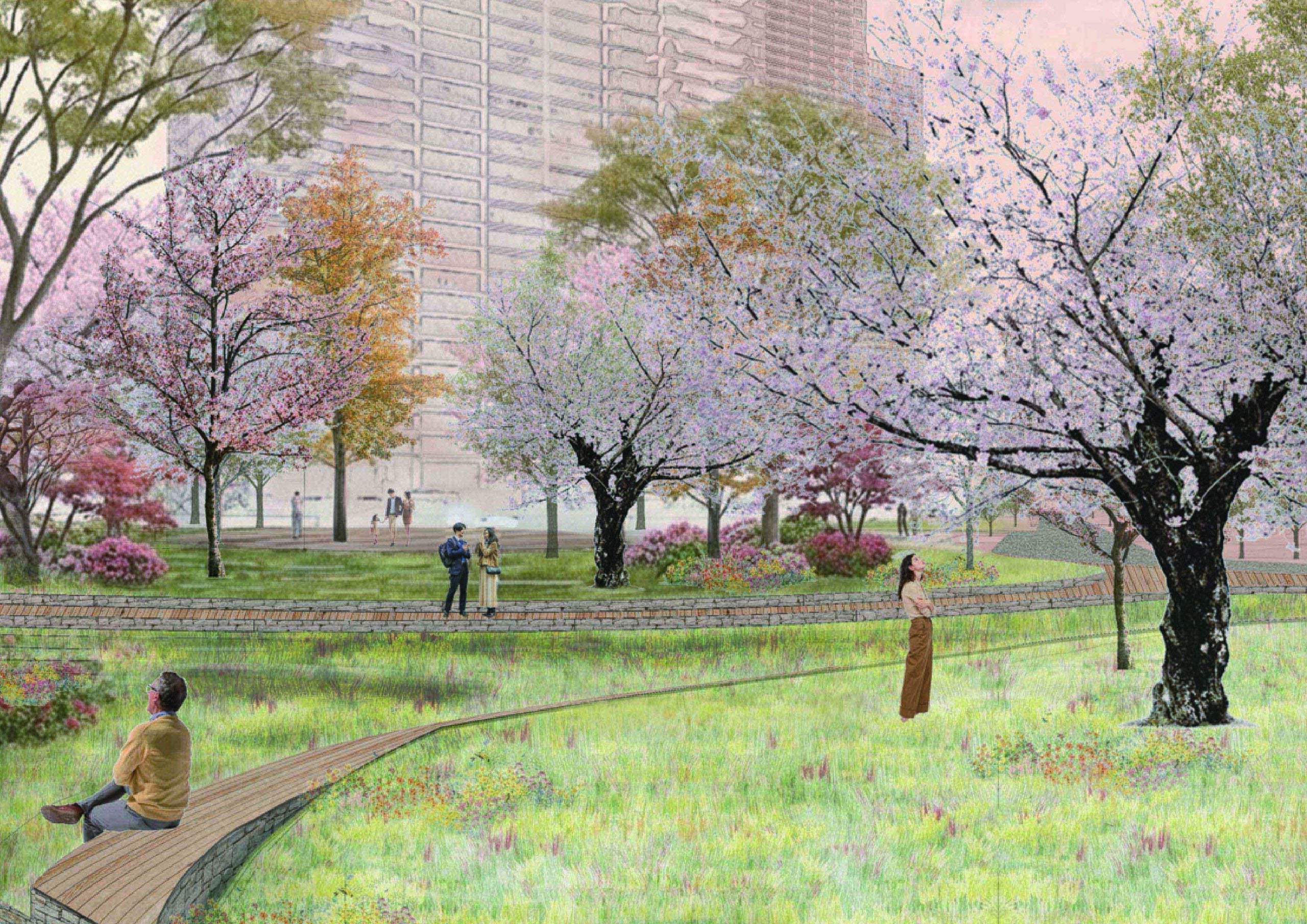
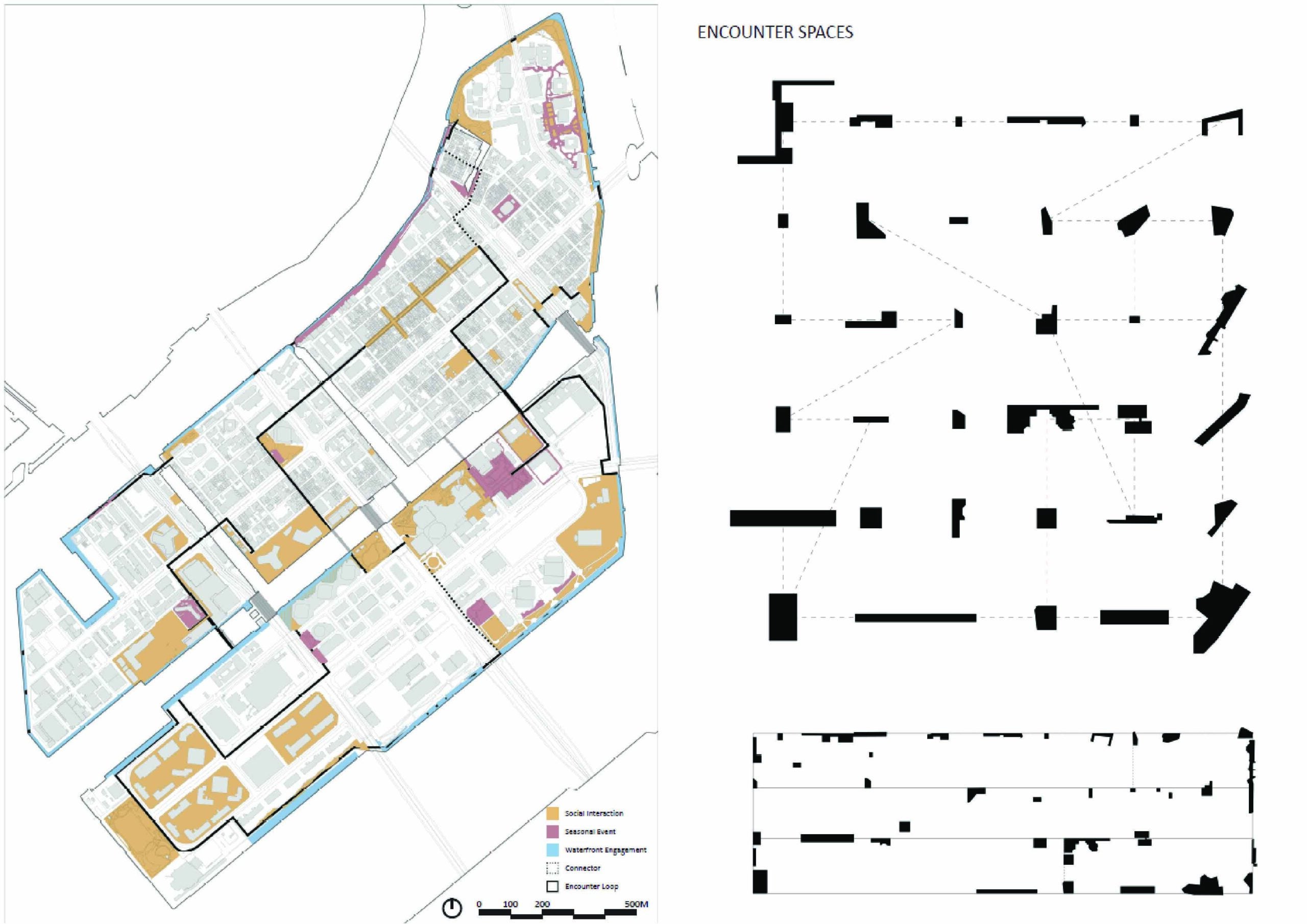
Encounter Loop reimagines the fragmented public landscapes of Tsukishima and Harumi, Tokyo, by establishing a continuous network of public spaces that strengthens both connectivity and place identity. Although the two islands are physically linked by bridges and occupy a strategic position between Tokyo’s historic center and its redeveloped waterfront, their open spaces remain disconnected, resulting in fragmented movement patterns and a weak sense of shared public life. The project addresses this gap by proposing the Encounter Loop—a spatial framework that reconnects existing parks, streets, neighborhood spaces, and waterfronts into a cohesive landscape system.
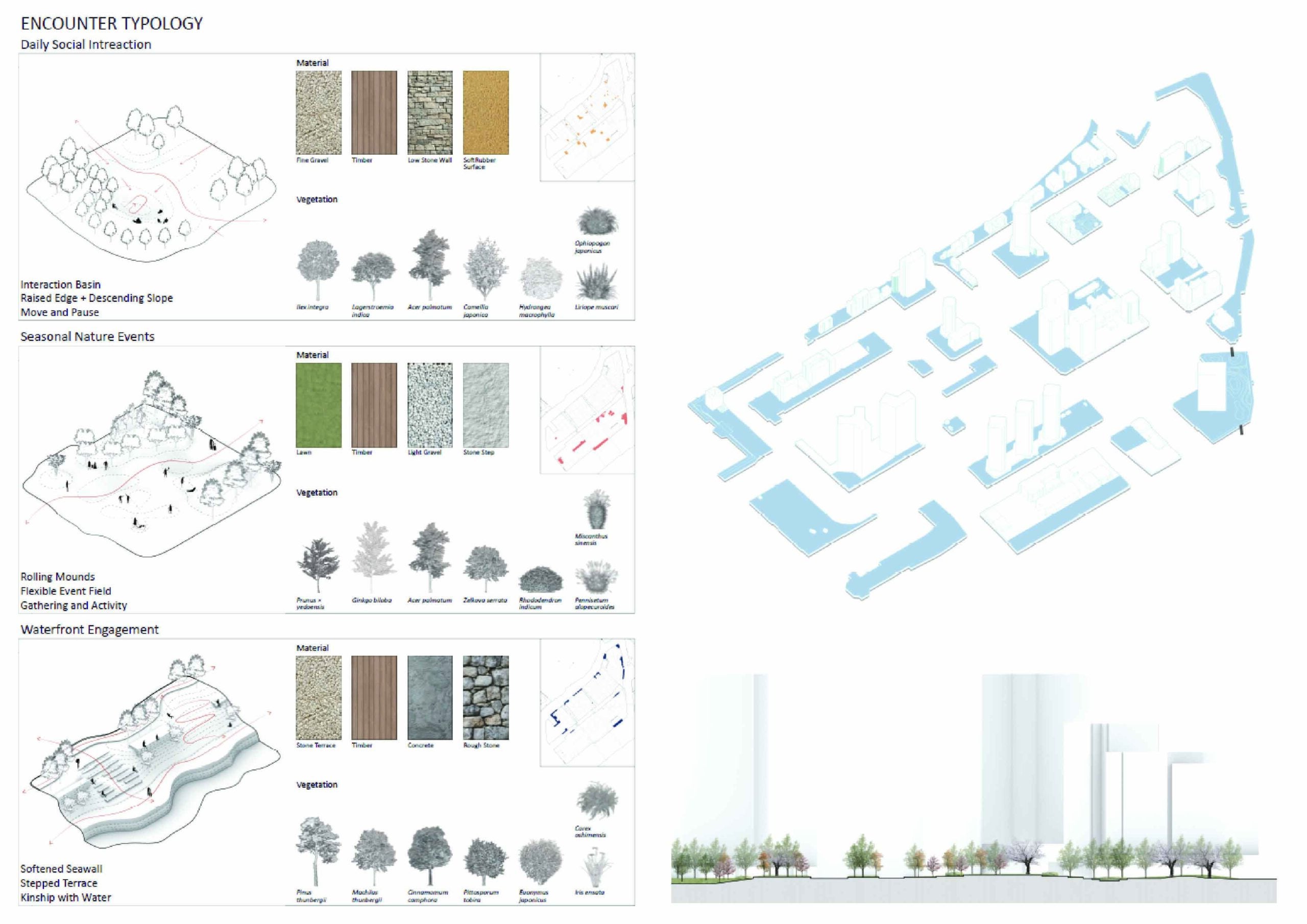
Rather than treating the loop solely as a circulation network, the project transforms it into a sequence of social landscapes organized around three recurring forms of encounter: daily social interaction, seasonal gathering, and waterfront engagement. These conditions are translated into a family of adaptable landform typologies that can be repeated across different sites while responding to local contexts. Interaction Basins create intimate neighborhood spaces for everyday meeting and pause; Rolling Mounds and Event Fields support seasonal activities and flexible public use; and Softened Seawalls with Stepped Terraces transform hard waterfront edges into accessible civic spaces that encourage closer relationships with the water.
Distributed along the loop, these encounter nodes create a continuous public landscape that links residential districts, major open spaces, and the waterfront through a shared spatial language. By using landform as a medium for social interaction rather than simply shaping topography, Encounter Loop demonstrates how fragmented urban spaces can be reconnected into an adaptable, legible, and inclusive public realm, fostering a stronger collective identity for Tsukishima and Harumi.