At the Edge of Fire: Eucalyptus-Based Strategies for Coexisting with Fire
PROGRAMME
Master of Landscape Architecture
STUDENT
Huang Jinguo
YEAR
2
ADVISOR/TUTOR
Russell Arthur Smith
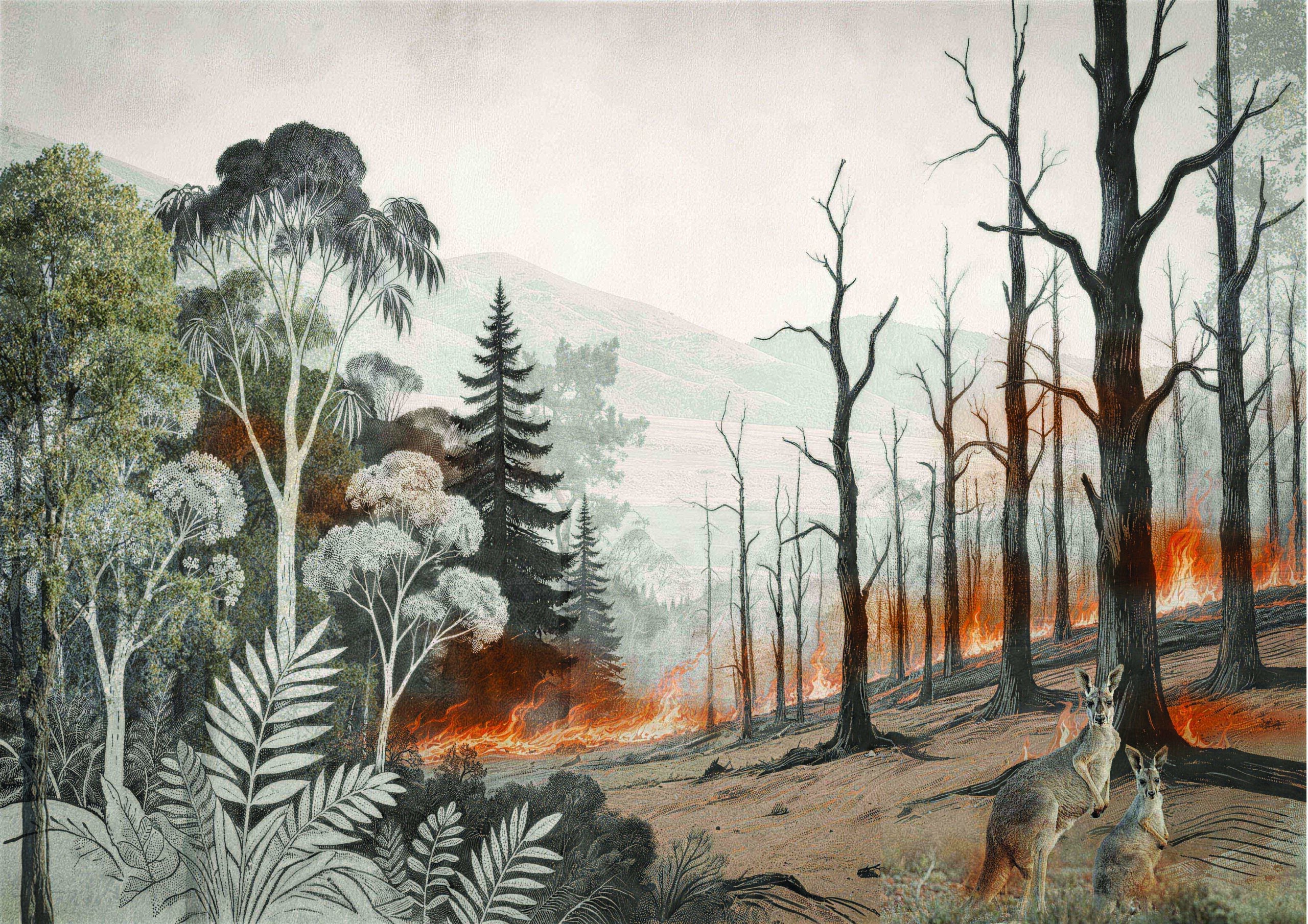
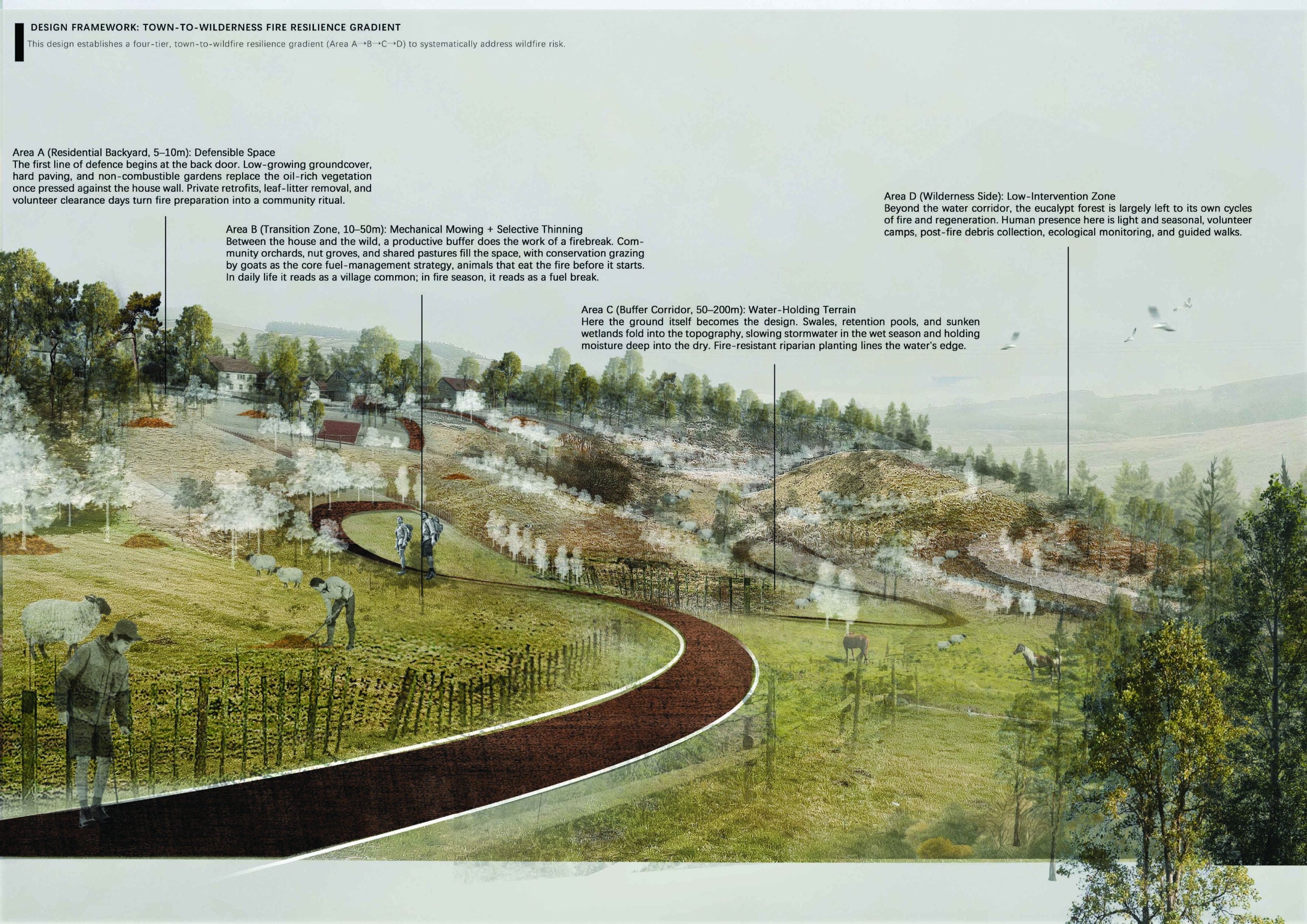
At the Edge of Fire rethinks wildfire resilience in the Blue Mountains by shifting the focus from resisting fire to designing landscapes that coexist with it. Rather than treating bushfire as a disaster to eliminate, the project draws from the ecology of Eucalyptus—one of the world’s most flammable yet fire-adapted tree genera—to develop a landscape framework that embraces fire as an ecological process while reducing risk to surrounding communities.
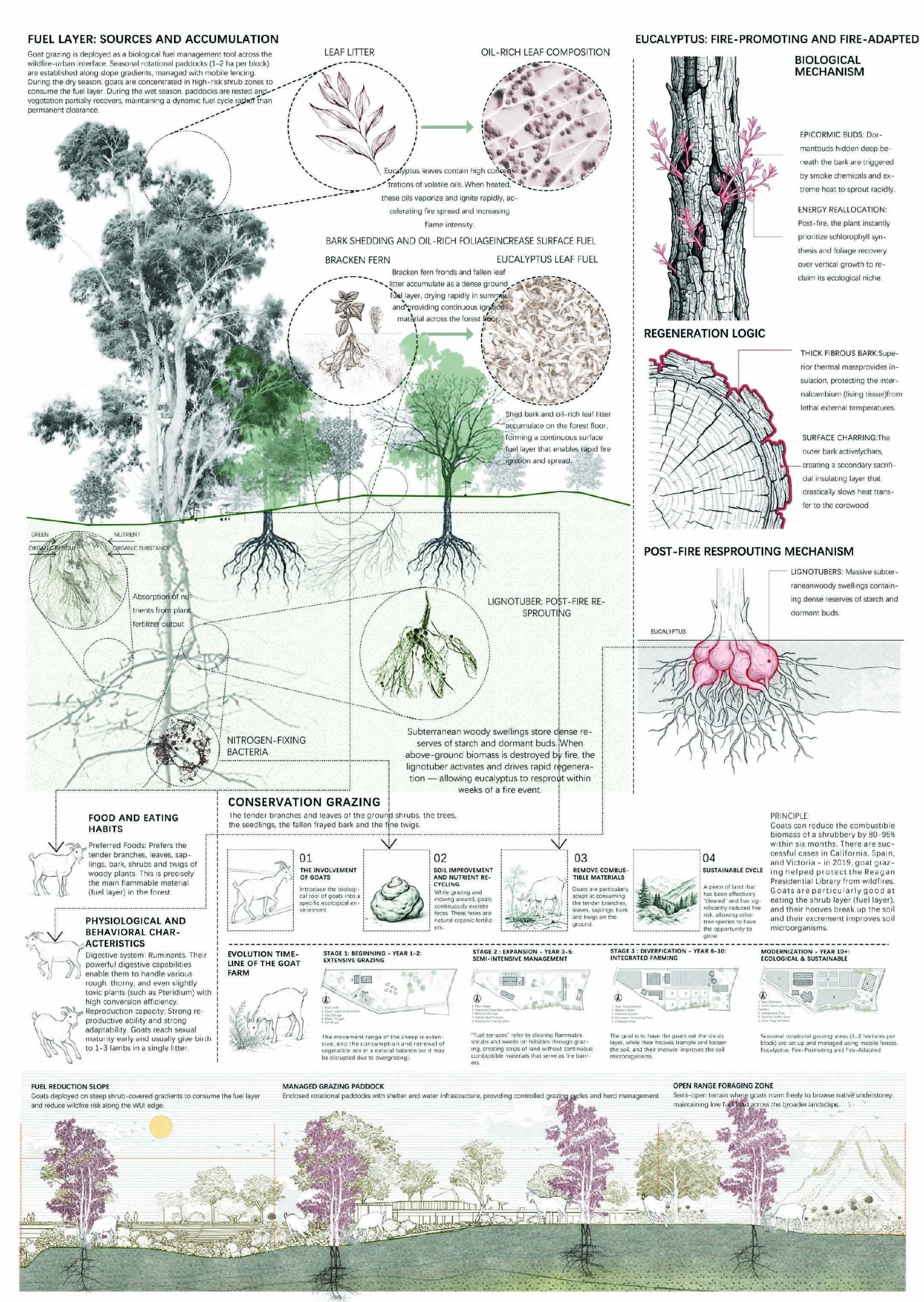
Grounded in fieldwork, ecological analysis, and policy mapping, the project translates the biological strategies of Eucalyptus into a four-zone landscape framework that reorganises the settlement–forest interface. Defensive gardens establish ember-resistant residential edges, productive buffer landscapes integrate orchards and rotational conservation grazing to reduce fuel loads while supporting local livelihoods, water-retention corridors reshape topography through contour swales and retention ponds to improve moisture and slow fire behaviour, and minimally managed wilderness areas allow natural regeneration while encouraging community stewardship.
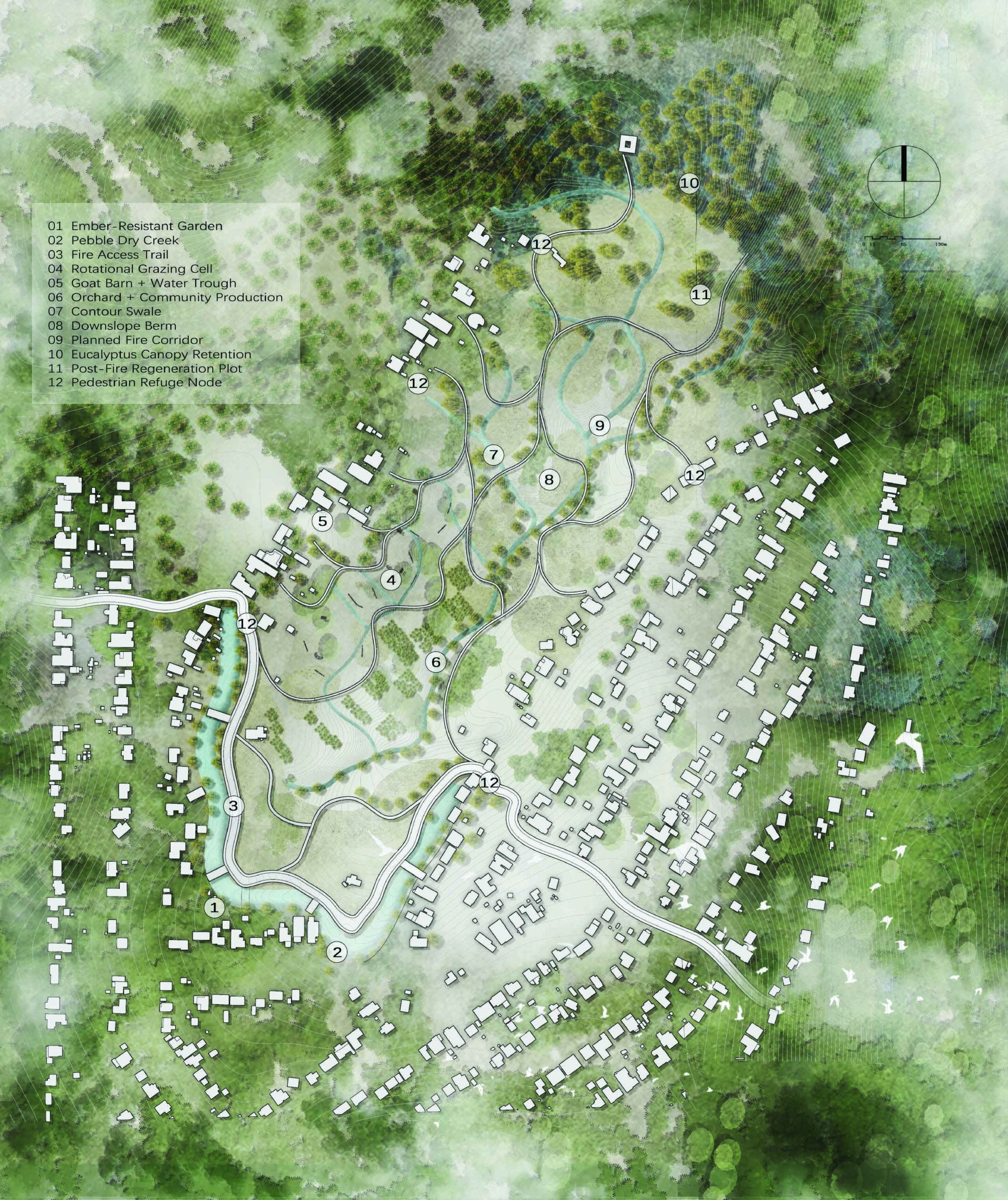
Rather than relying solely on prescribed burning or mechanical clearing, the proposal combines ecological resilience with everyday landscape practices. Shared trails, productive commons, seasonal maintenance, and post-fire recovery become part of the same continuous system, ensuring that fire adaptation is embedded within daily life rather than activated only during emergencies.
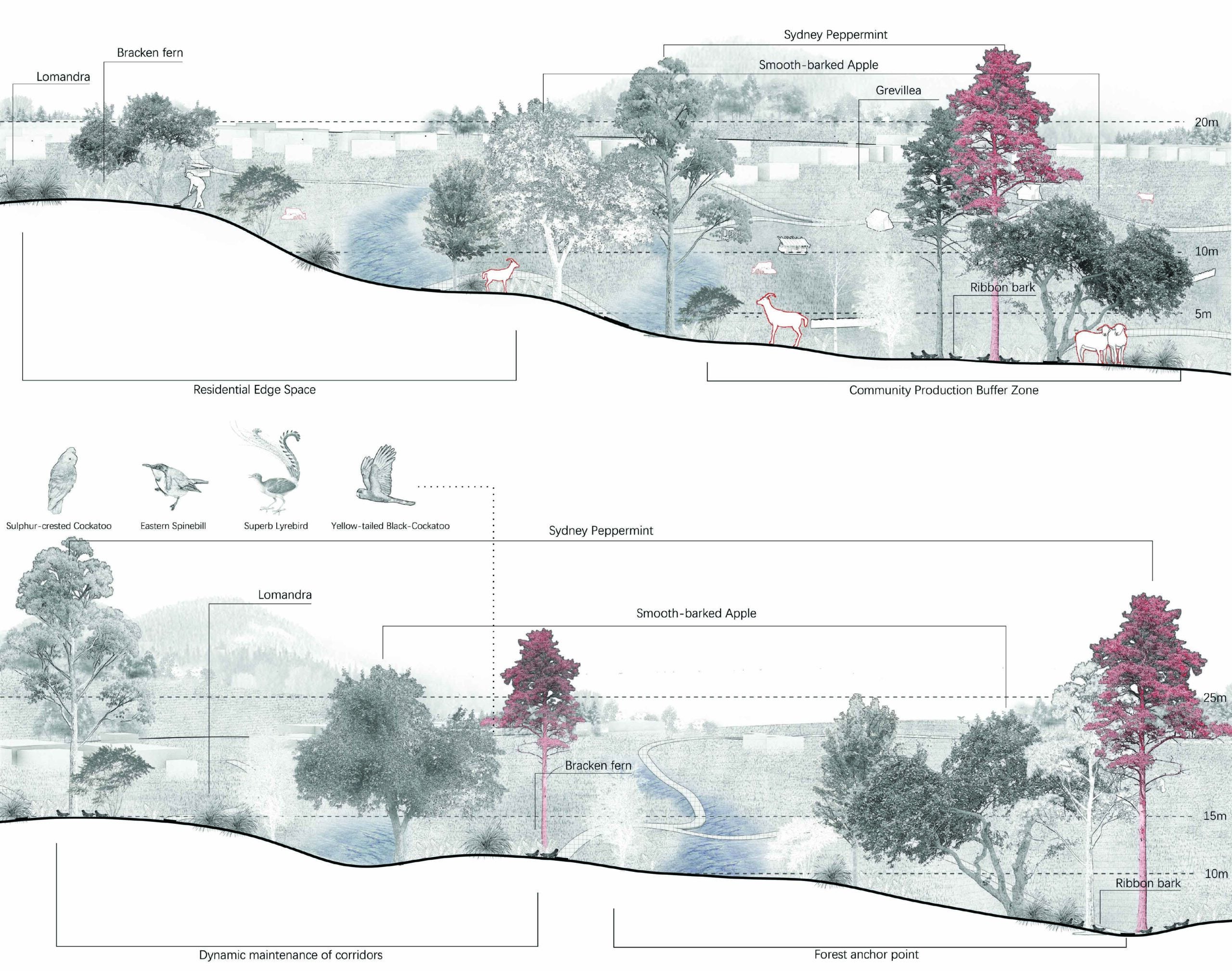
By reframing the urban–wildland edge as a graduated landscape instead of a defensive boundary, At the Edge of Fire proposes a scalable model for living with wildfire. The project demonstrates how ecological processes, community participation, and landscape design can work together to create settlements that are more resilient, productive, and adaptive in an increasingly fire-prone future.