Locality Through Care: Rectivating Telajakan for Frangipani in Denpasar
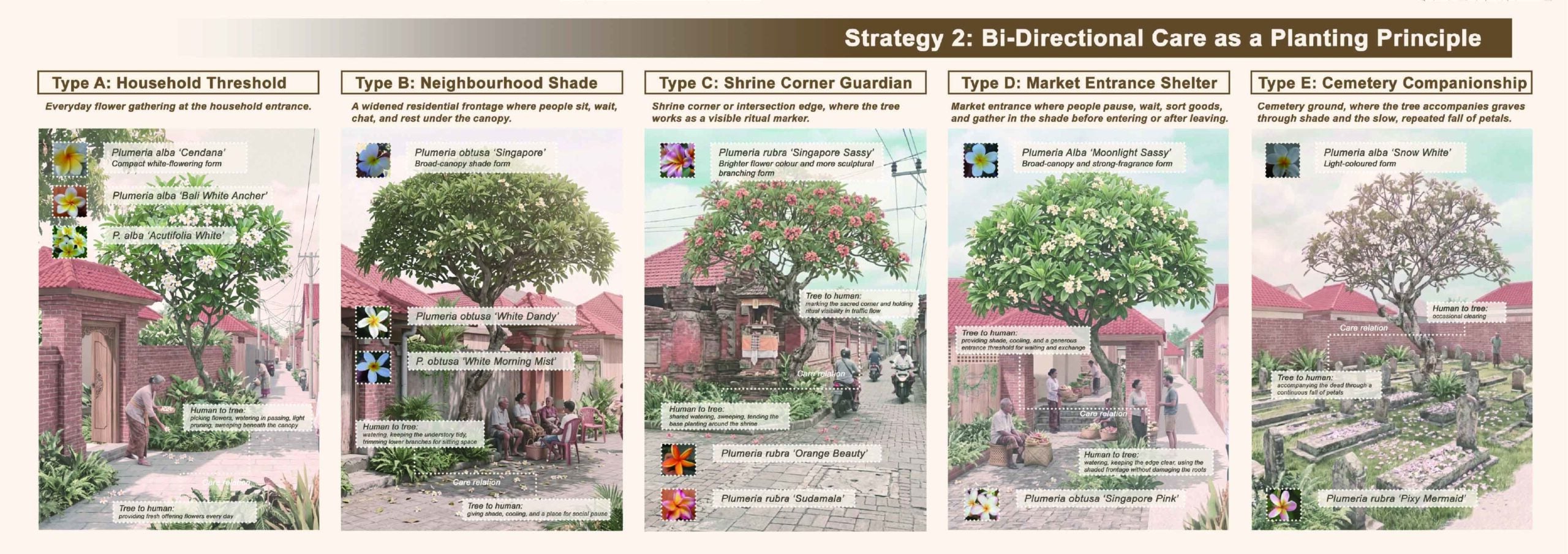
This thesis explores locality not as a matter of origin, but as something continuously produced through everyday practices of care, using frangipani—a non-native species deeply embedded in Denpasar’s ritual and urban life—as a lens. Although introduced to Bali, frangipani has become integral to daily offerings, neighbourhood identity, and the city’s distributed ecological networks. Its significance is sustained not by its provenance, but through longstanding systems of cultivation embedded within the urban fabric.
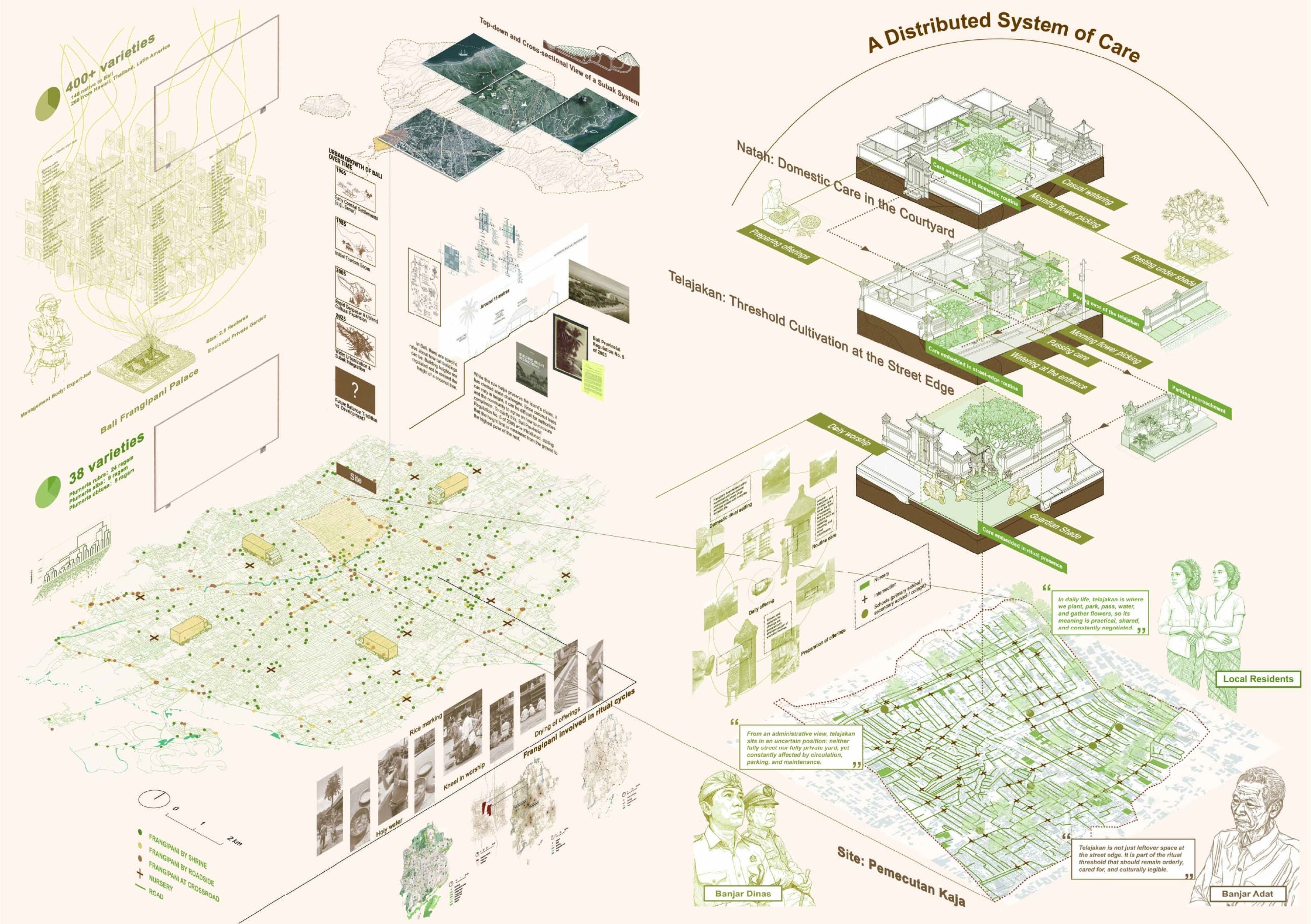
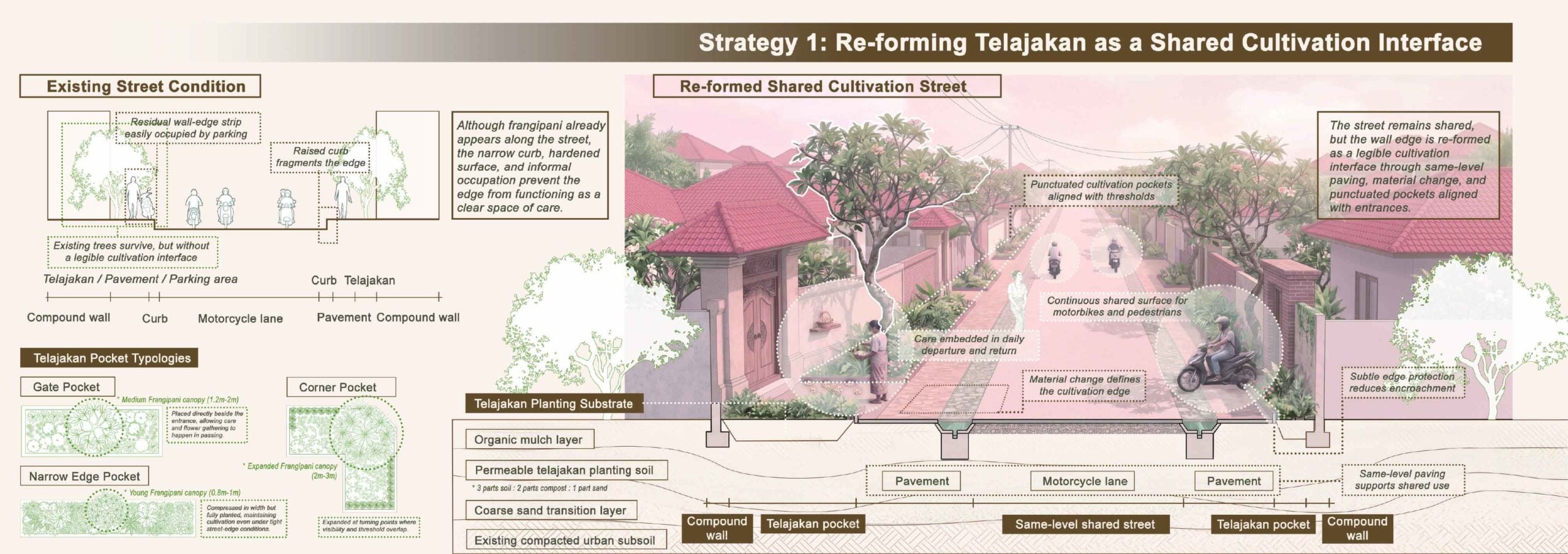
Historically, frangipani has been supported by two complementary spaces: the household courtyard (natah), where trees are cultivated within domestic life, and the street-side planting strip (telajakan), which extends care into the public realm. Together, these spaces create a decentralised network that keeps flowers accessible for ritual while contributing to the ecological and cultural character of the city. However, ongoing urbanisation is eroding this system. Household expansion has reduced courtyard space, while parking, road widening, and the privatisation of street edges have diminished telajakan, weakening the local capacity to cultivate and share frangipani. The resulting gap between ritual demand and everyday availability reflects not merely a shortage of trees, but the gradual breakdown of the spatial and social infrastructures of care.
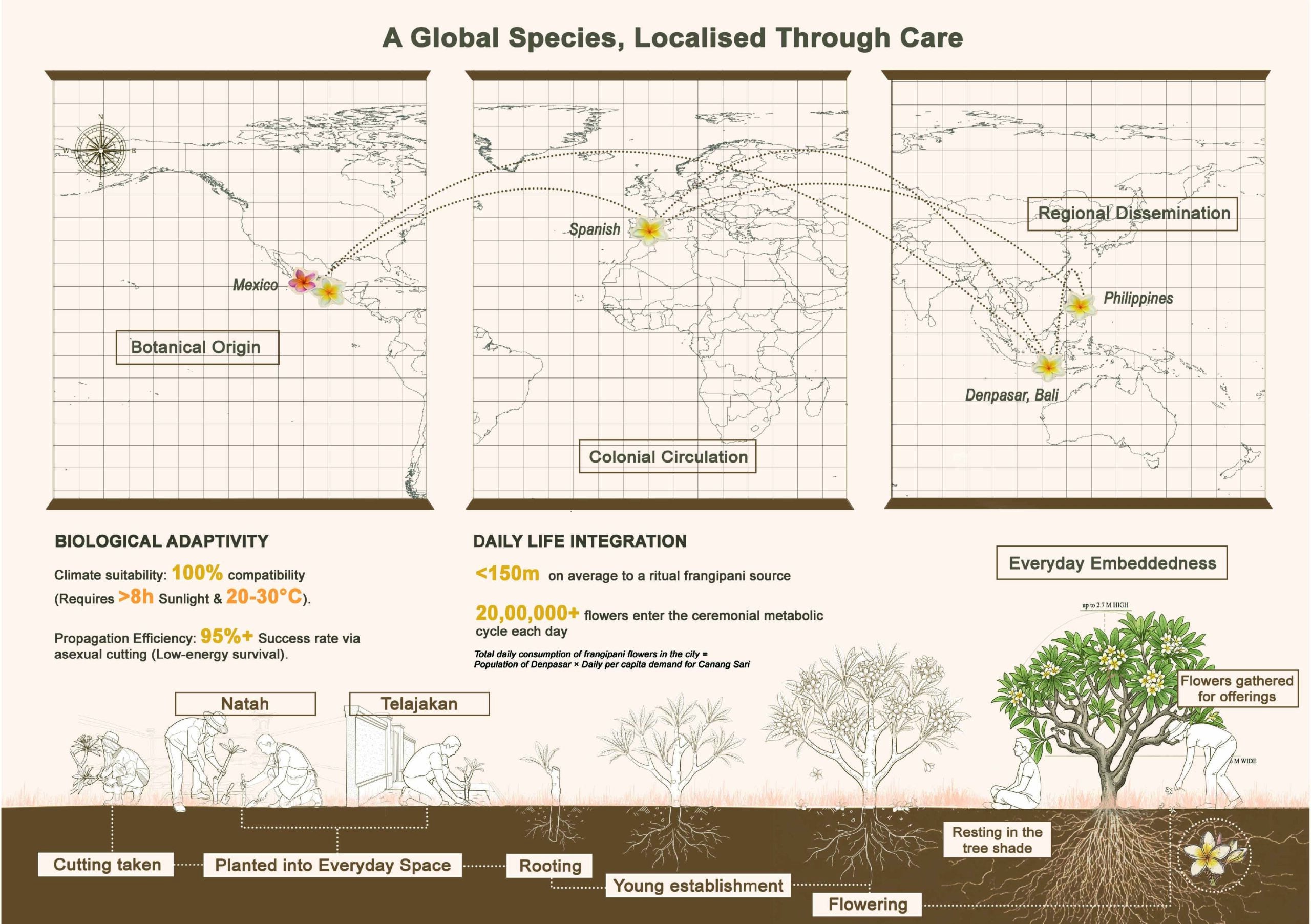
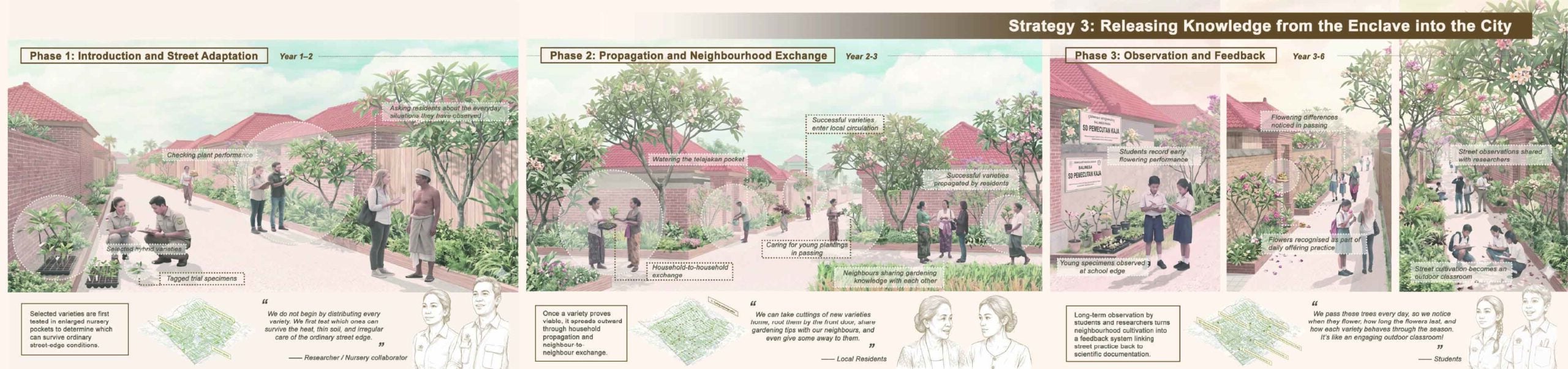
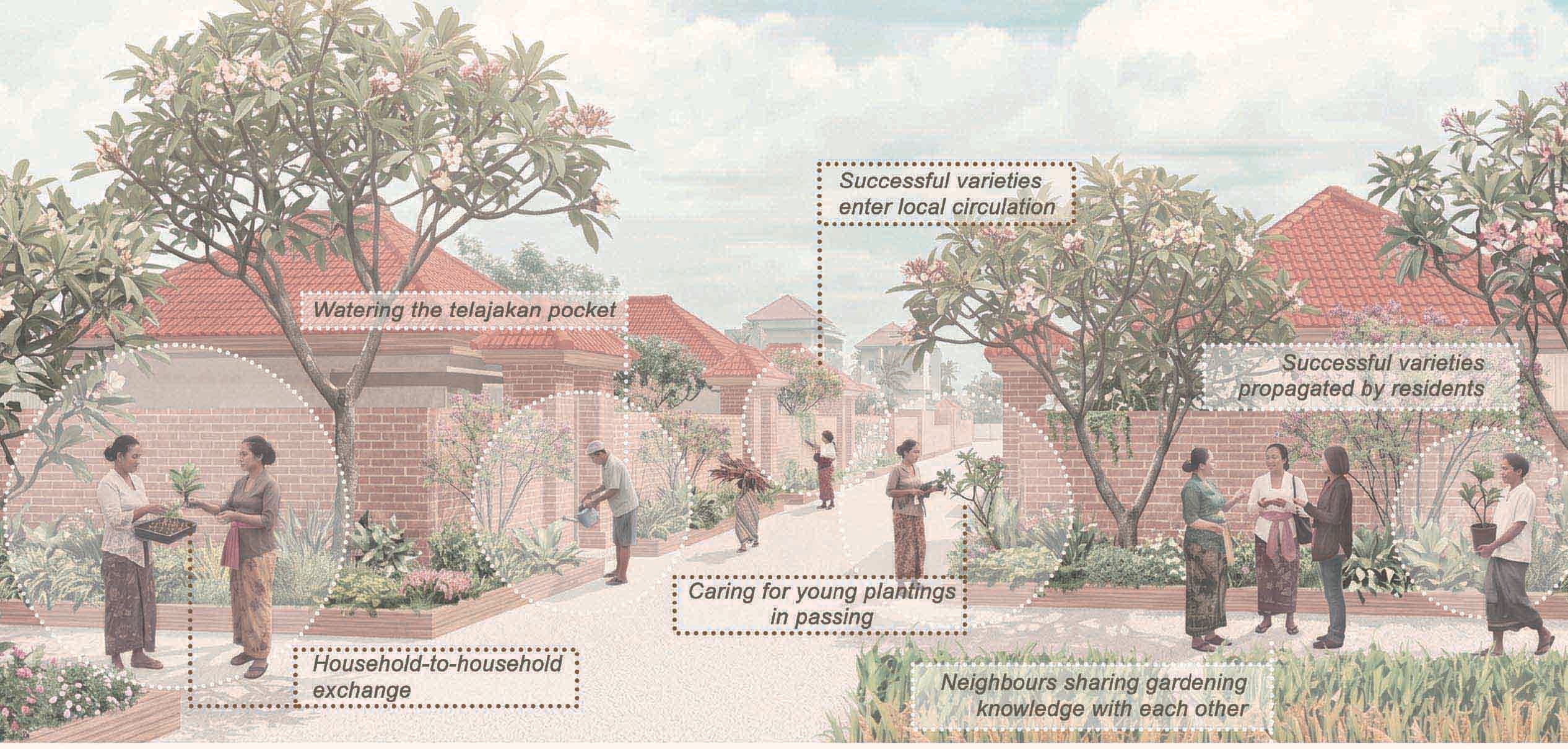
The project proposes the reactivation of telajakan as a contemporary landscape strategy that strengthens these distributed networks of stewardship. Rather than simply increasing tree planting, it restores the conditions through which frangipani can continue to support Denpasar’s socio-ecological and spiritual life, demonstrating how everyday landscapes of care can reinforce locality, resilience, and cultural continuity within a rapidly urbanising city.