DoA Symposium: Building / Community in the Tropics and Beyond
11.00–12.30 Practices
Yori Antar & Varani Kosasih, Uma Nusantara Foundation, Indonesia
Raoul Castillo Amores & Yani Amores Dutta, The Regenesis Project, Philippines
Moderated by Florian Heinzelmann, NUS
Standardised design and construction strive to produce uniform architectural outcomes. Yet such processes become detached from local histories, climates, and ways of life. Focusing on architecture and landscape as intertwined practices, this session centres acts of critique in response to the related problems of standardisation and rationalisation. It examines how practitioners engage with indigenous and local communities to preserve, reinterpret, or transform vernacular knowledge, and how such practices negotiate tradition and innovation in the making of buildings and landscapes.
Uma Nusantara
Yori Antar & Varani Kosasih, Uma Nusantara Foundation, Indonesia
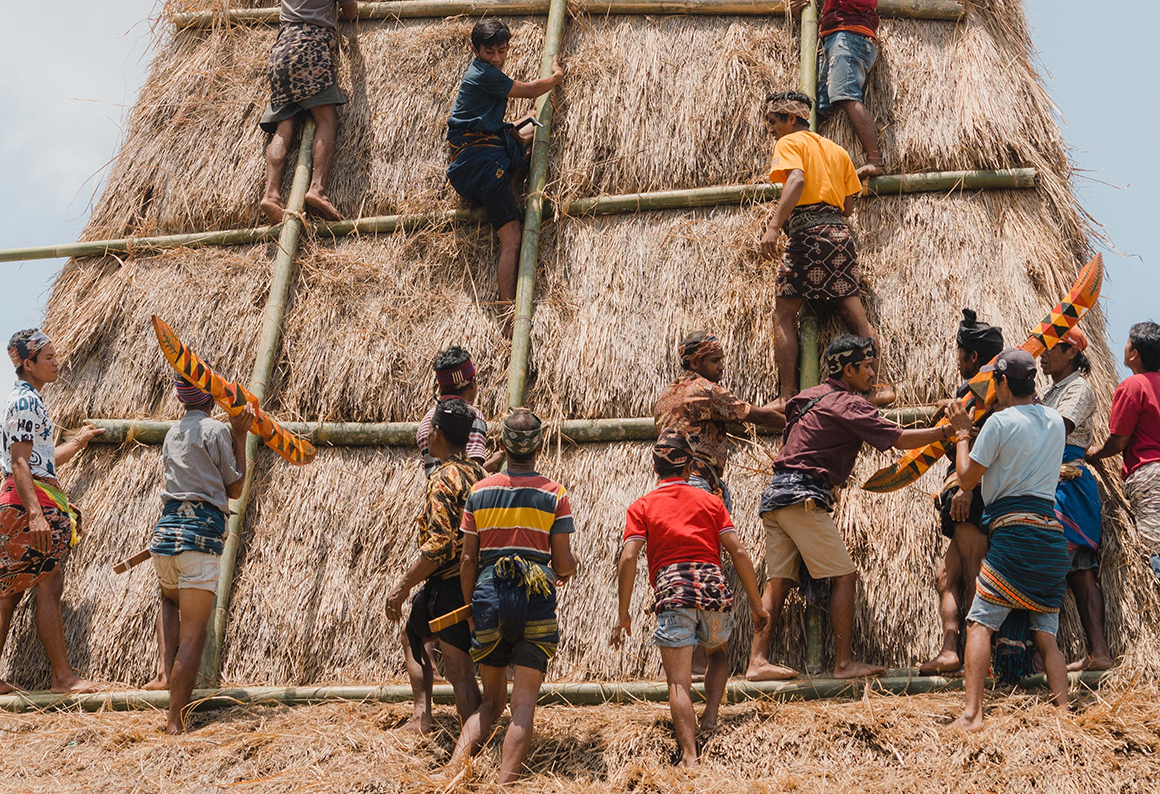
An annual trip by a group of young architects initiated by Yori Antar, the principal architect of Han Awal & Partners Architects, to enjoy the beauty of Indonesia has evolved and grown into Uma Nusantara: a movement to protect Indonesian architectural heritage.
In 2008, while traveling in Flores the team heard about a village called Waerebo in Manggarai. The incredible journey to reach the village, the amazing traditional houses and warm welcome from the villagers made this trip dierent . After returning to Jakarta, the architects set up a project to save the endangered Waerebo traditional, hand-in hand with the local community.
Today Uma Nusantara is more of a movement , impacting the general architecture community in Indonesia and extending beyond to anthropologist and archeologists. Their latest work includes the initiation of Sumba Weaving Road – a series of project involving community development while preserving the culture and architectural heritage.
Recovering Knowledge to Co-Evolve: Regeneration in Cebu and Bohol, Philippines
Raoul Castillo Amores & Yani Amores Dutta, The Regenesis Project, Philippines
The people of Cebu and Bohol, Philippines have always been people of water. Yet today, they face intensifying floods, droughts, and climate shocks that threaten not just their livelihoods but their relationship to place itself. These crises stem not only from climate change, but from a deeper loss: the erasure of indigenous knowledge that allowed communities to co-evolve within this disaster-prone archipelago for generations. In its place, standardized and extractive development models have degraded both urban and rural landscapes, severing the connections between people and their environment.
If we are to regenerate, we must first ask: what are we regenerating toward? How can we restore what we cannot remember? Regeneration cannot be only about land and ecosystems; it must also recover the knowledge of how to live with and within our landscapes again. This work begins with first principles: understanding the story of each place, learning how specific sites function geologically, ecologically and culturally, then developing practices that intertwine with these rhythms. Through on-the-ground experimentation—Permaculture, bamboo cultivation, water system design, riparian restoration—we rebuild contextual knowledge alongside communities, formalizing and sharing what we learn so it can guide the way forward.