Human-Crocodile Conflict Mitigation: Designing safe recreational waterfront spaces in Kuching
PROGRAMME
Master of Landscape Architecture
STUDENT
Cao Yutong
YEAR
2
ADVISOR/TUTOR
Casey Wang Nai-Huei
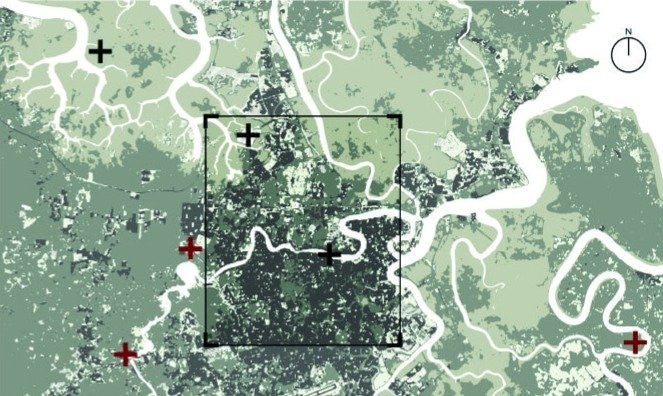
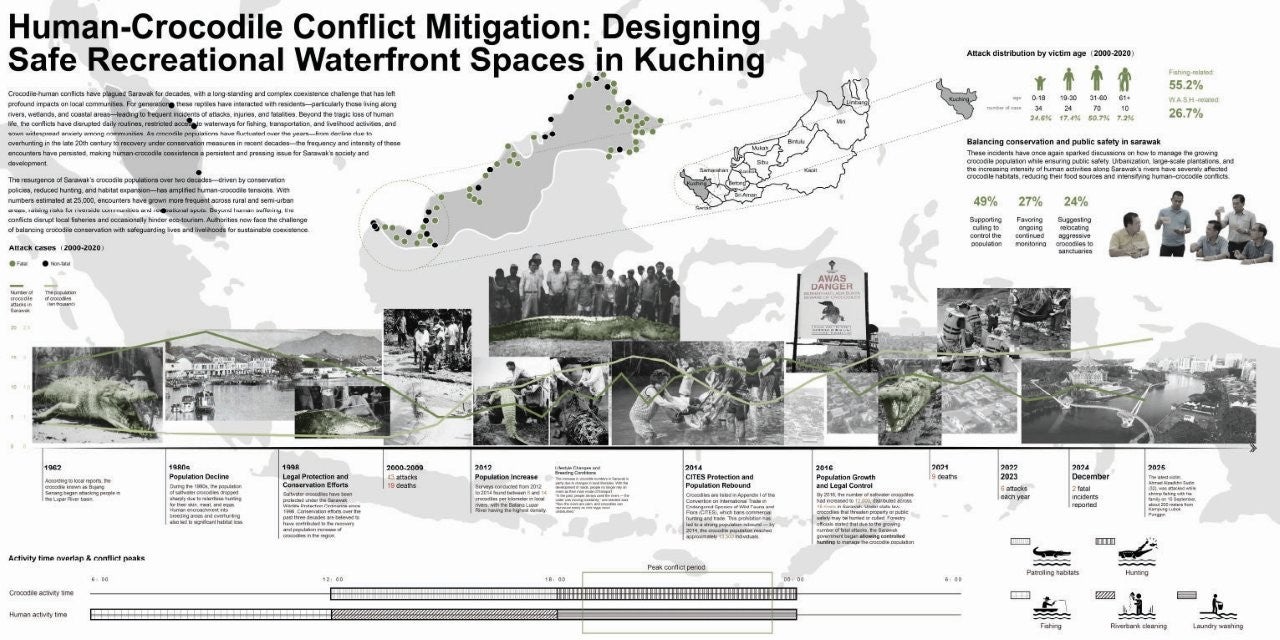
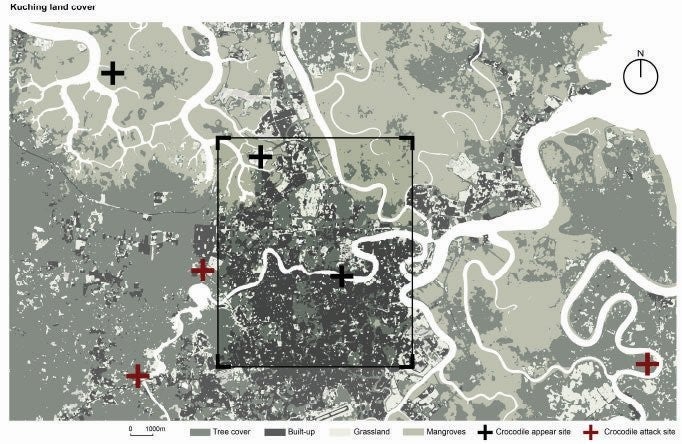
Sarawak has been experiencing human–crocodile conflict for several decades. Since 1962, attacks—including fatal cases—have continued to occur, and the numbers have remained significant over the years. Some years were particularly severe; for example, around nine deaths were recorded in 2021, and about six attack cases were documented in 2023. Even in 2025, several new incidents have already been reported, showing that the problem is persistent and serious.
From the human perspective, many residents feel worried or afraid, while others express frustration. Public opinion is also divided: surveys show that 49% of respondents support culling to control crocodile numbers, while others strongly oppose it. These differences highlight that although people are aware of the danger, society has not reached a clear agreement on how to respond.
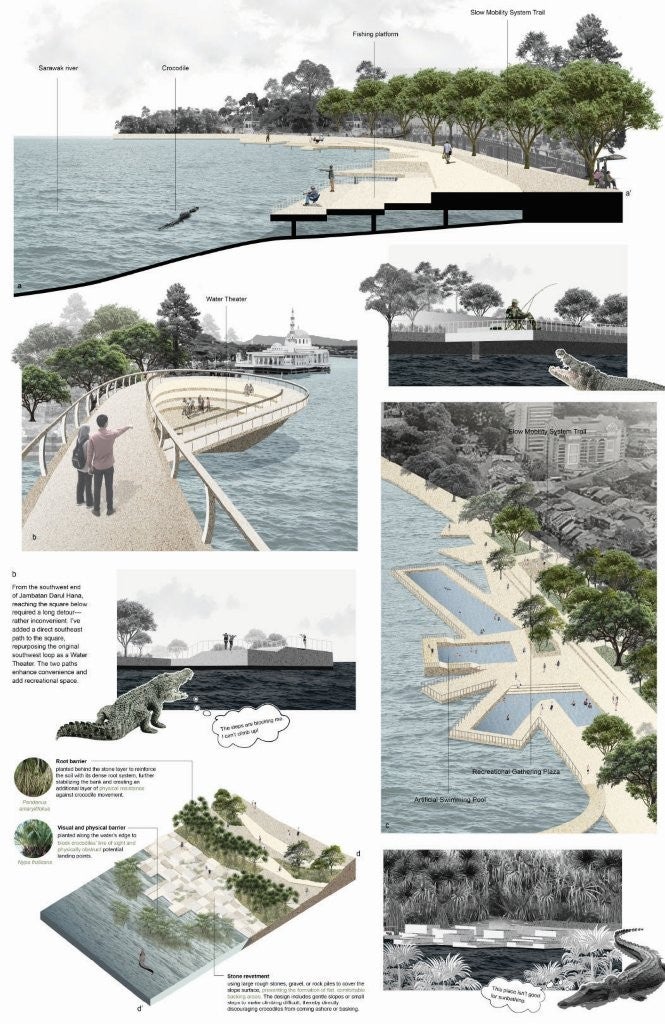
To understand where people are most exposed, I analysed the different riverbank types along the Sarawak River. Vertical retaining walls with railings are almost impossible for crocodiles to climb, while natural sloped banks allow easy access from water to land. This comparison helps identify high-risk zones and guides where design interventions should focus.
Based on these findings, the strategy is divided into three phases. Phase 1 (0–2 years) establishes a safe foundation by preventing crocodiles from climbing onto the riverbank. Phase 2 (3–7 years) focuses on human use. Safe fishing platforms and water-play areas, such as small artificial pools, are introduced. Phase 3 (8+ years) supports long-term ecological balance. Community Fishing Zones introduce controlled fishing periods, including a closed season from November to March to protect fish stocks.
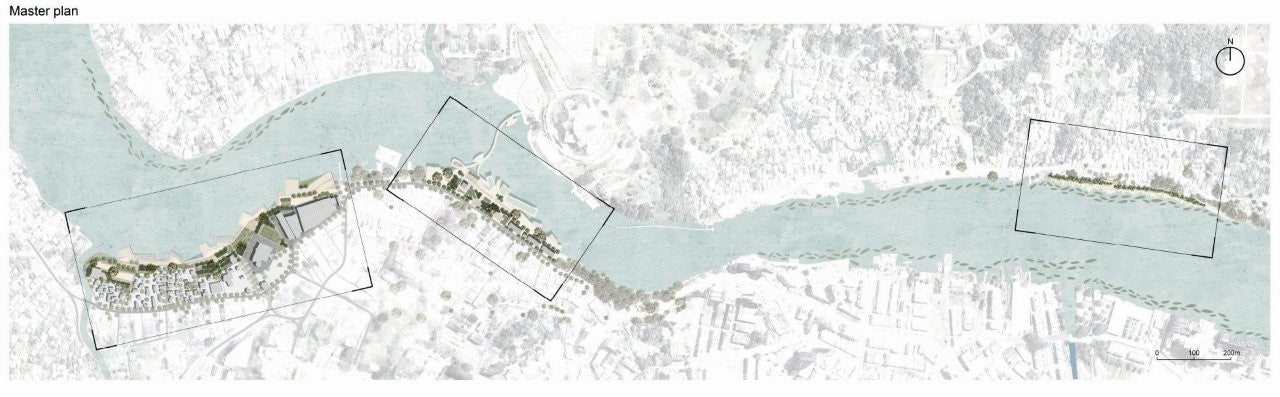
In conclusion, this project begins with human–crocodile conflict but moves beyond it. The design does not only protect people; it also creates social and recreational spaces and supports long-term ecological restoration. The goal is not simply to block danger, but to reimagine how Kuching’s riverfront can function as a safe, vibrant, and resilient public landscape.