Kuching Community Craft & Foodplace
PROGRAMME
Master of Landscape Architecture
STUDENT
Deng Pinyi
YEAR
2
ADVISOR/TUTOR
Casey Wang Nai-Huei
This project is centered around Edible Landscape, Five-Sense Experience and Community Collaboration, considering daily food ingredients and traditional weaving materials as key mediums for rebuilding cultural continuity, ecological restoration, and community space regeneration.
The two sites are located between Kampung Surabaya, Kampung Gersik, Kampung Bintawa Tengah, and Kampung Semarang, presenting distinct spatial ecological conditions – an unspoiled native forest and an open bare land. They form a sustainable, year-round growing community ecological network, allowing endangered food cultures and traditional crafts to be reintegrated into contemporary community life.
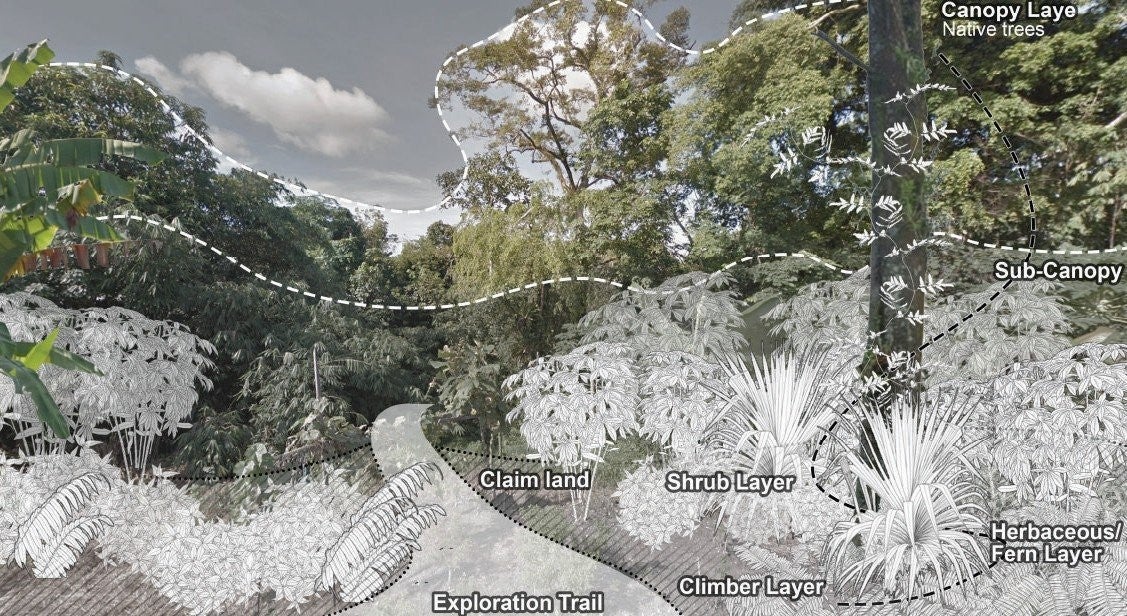
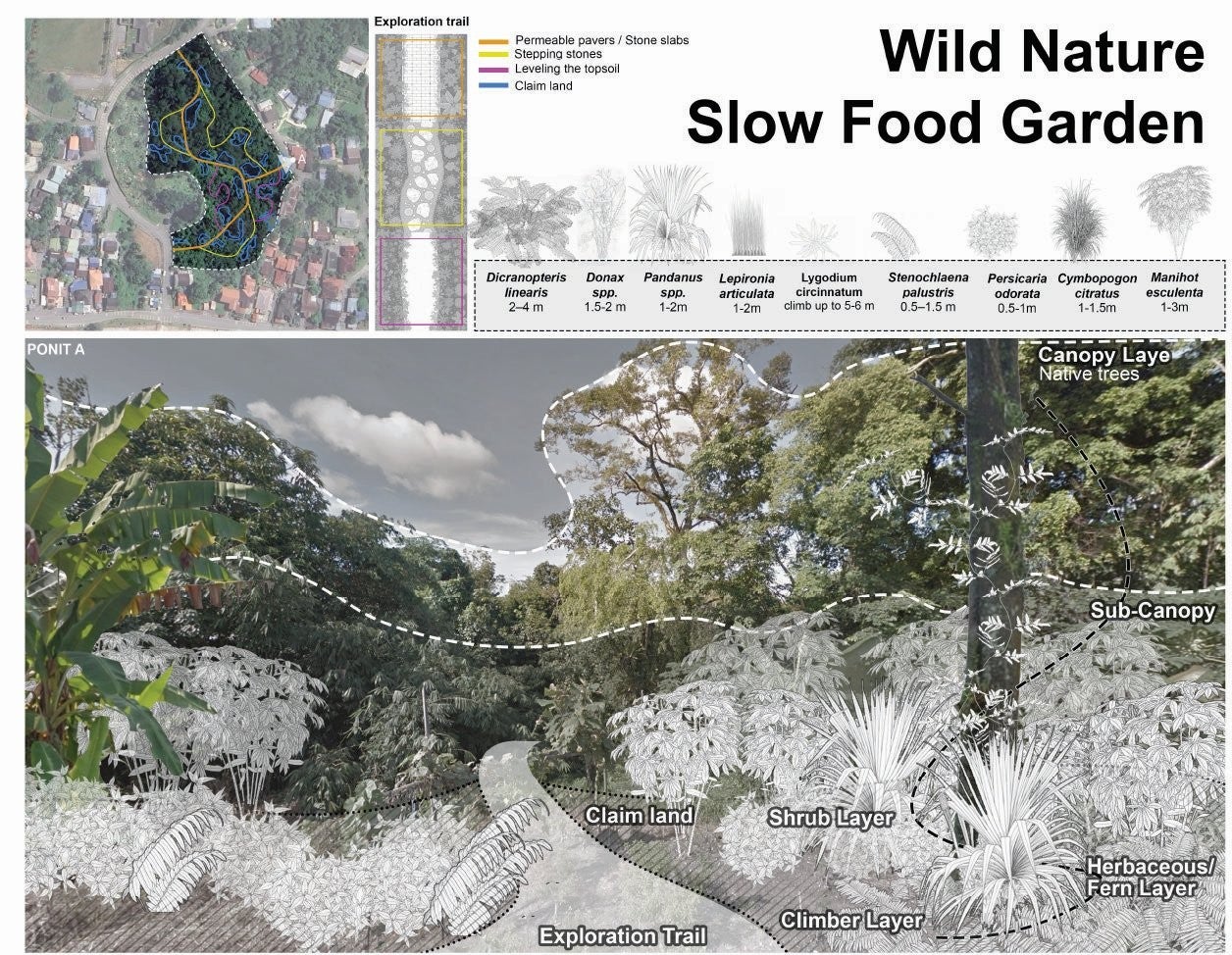
The first site, Wild Nature Slow Food Garden, is situated in the native forest. Rather than clearing the land, the design introduces plants into natural forest clearings. These pockets of cultivation are interconnected by three types of exploratory trails, each with distinct paving treatments. In response to spatial constraints, shrubs and ferns are incorporated in a manner that respects and reinforces the forest’s natural vertical stratification.
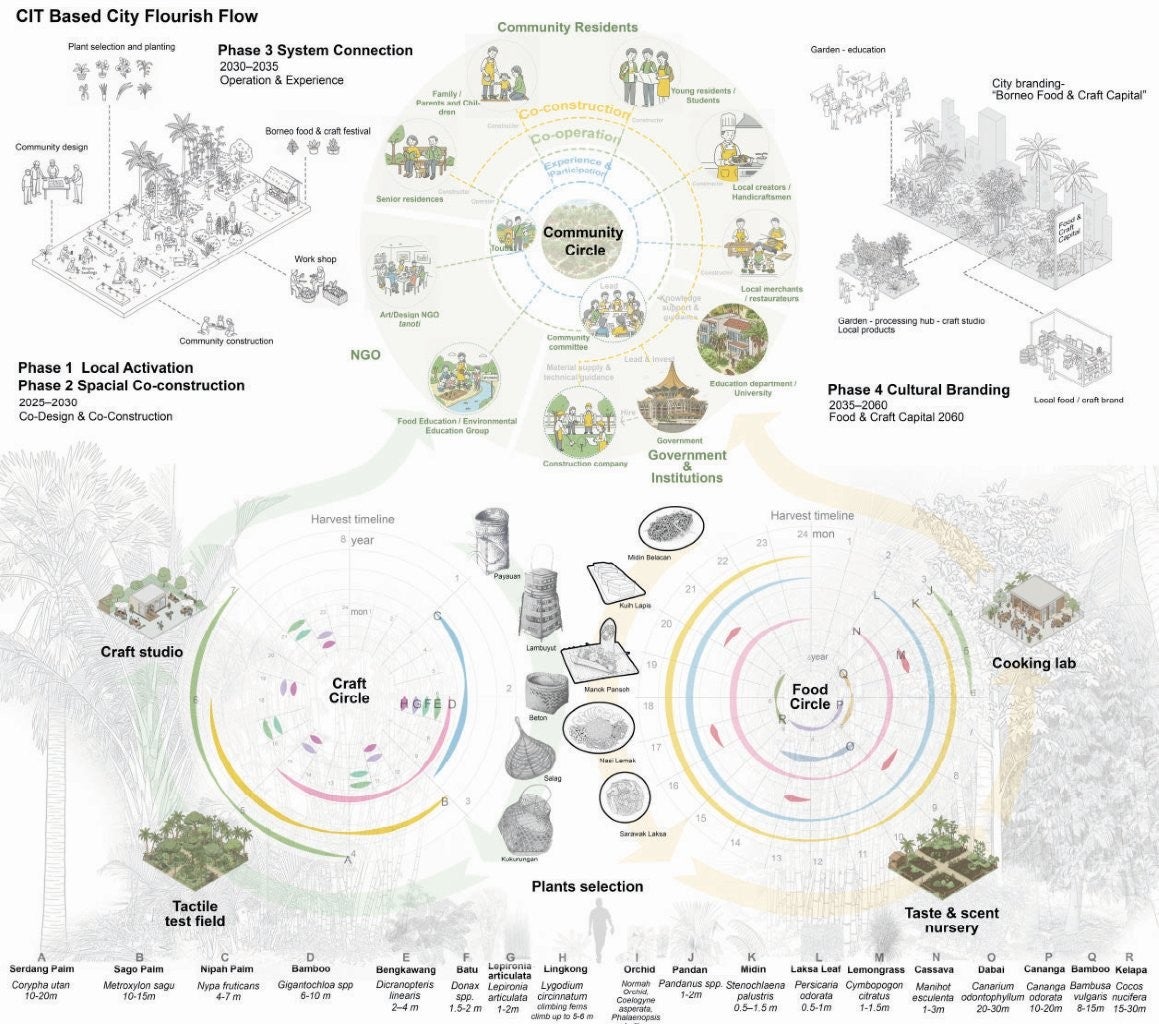
The second site, Garden of Sense and Flavors, transforms the flat and bare area into a clearly structured thematic landscape with five senses. Through 3 distinct zones of touch, sight and sound, taste and scent, weaving materials plants, fragrant and food plants are introduced.
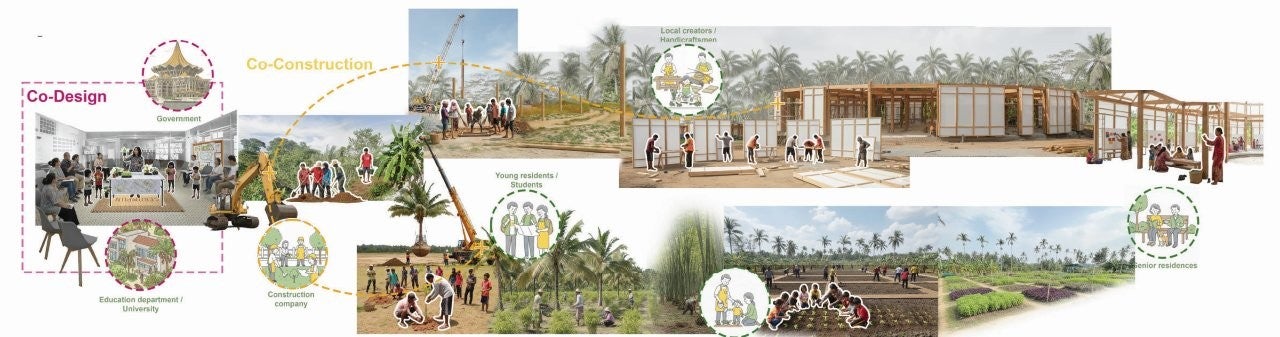
At the social level, the project encompasses diverse groups such as community elders, families, teenagers, NGOs, craft teams, and government planners. At the ecological level, the two sites enhance biodiversity, improve soil, regulate microclimate, and enhance rainwater resilience through layered vegetation, native forest protection, and phased growth strategies. At the economic level, the project gradually builds a micro-industrial chain supported by spices, food plants, and weaving materials.
By 2060, these two sites will jointly shape the Food & Craft Capital vision, promoting sustainable community economic development through cultural production, ecological education, and local dietary craftsmanship.