Archive in Motion: Negotiating Landscape, Infrastructure, and Governance, in Skeiðarársandur
PROGRAMME
Master of Landscape Architecture
STUDENT
Du Xinyang
YEAR
2
ADVISOR/TUTOR
Victoria Jane Marshall
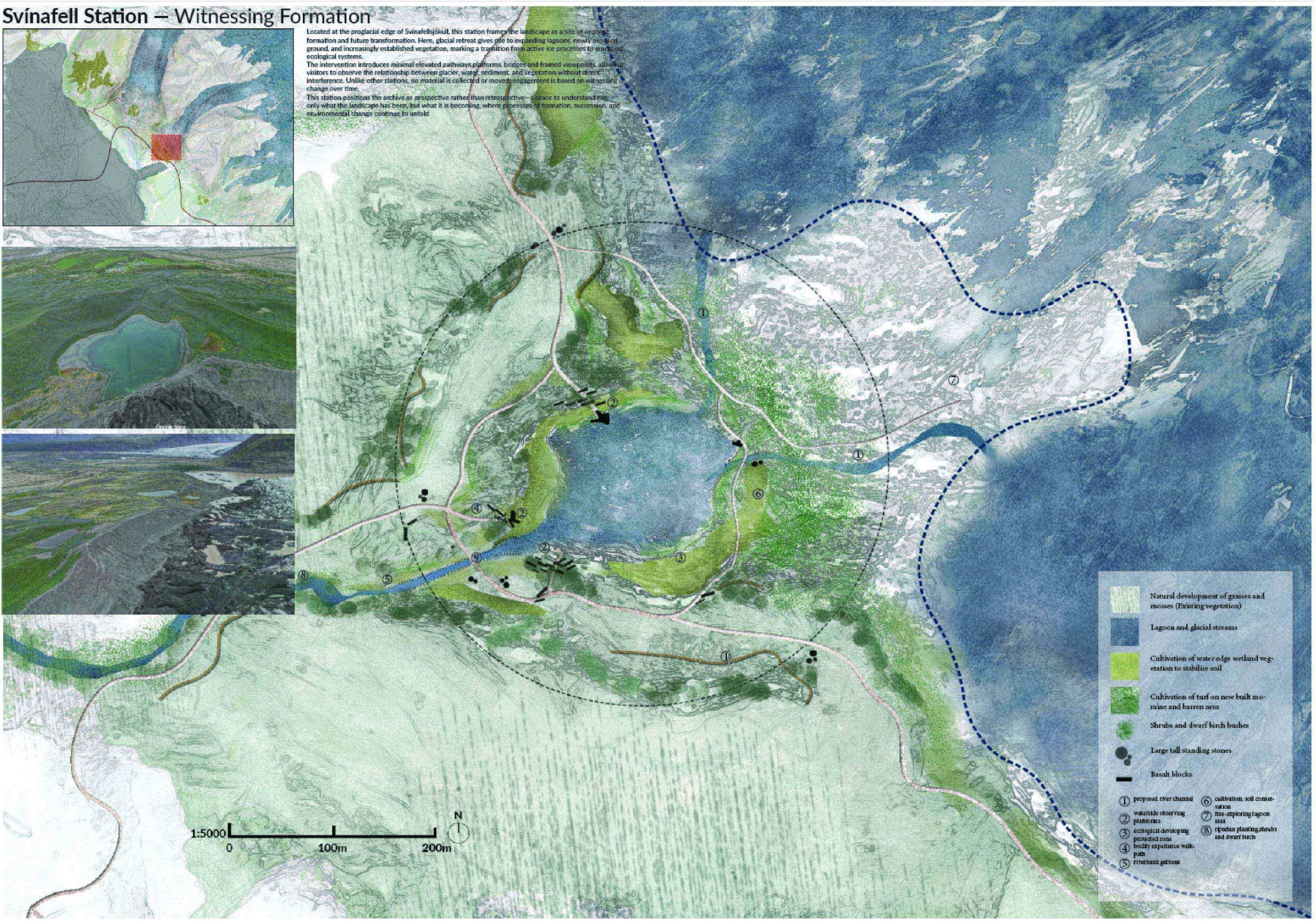
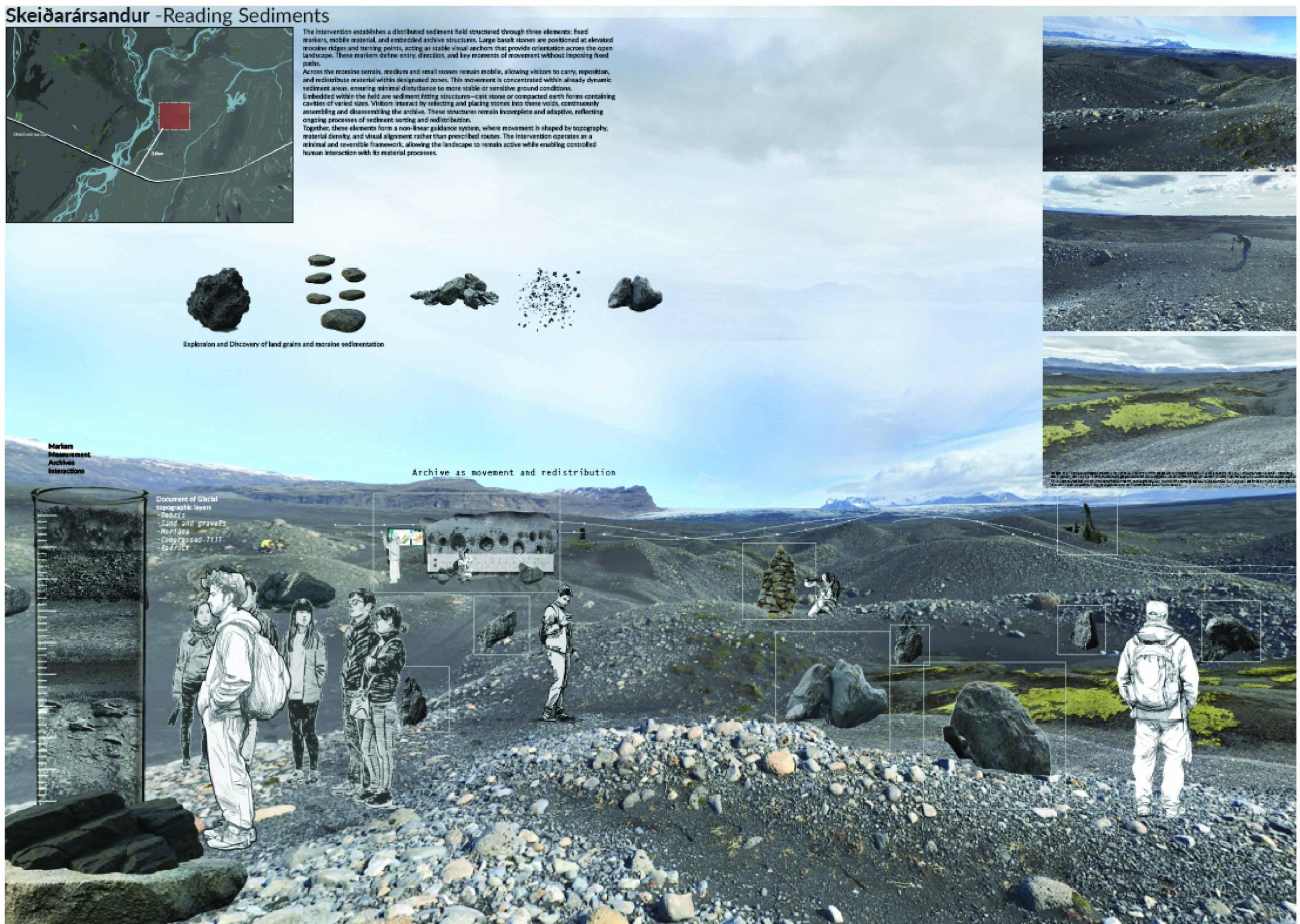
Archive in Motion reimagines conservation in Iceland’s Vatnajökull region by proposing a “living archive” that documents landscapes through participation rather than preservation alone. Focusing on Skeiðarársandur, a dynamic glacial outwash plain shaped by retreating ice, volcanic activity, and catastrophic floods, the project argues that conventional conservation—based on fixed boundaries and restricted access—is ill-suited to landscapes defined by continual transformation. Instead, it reframes conservation as an active practice of care, where ecological change and human engagement become inseparable.
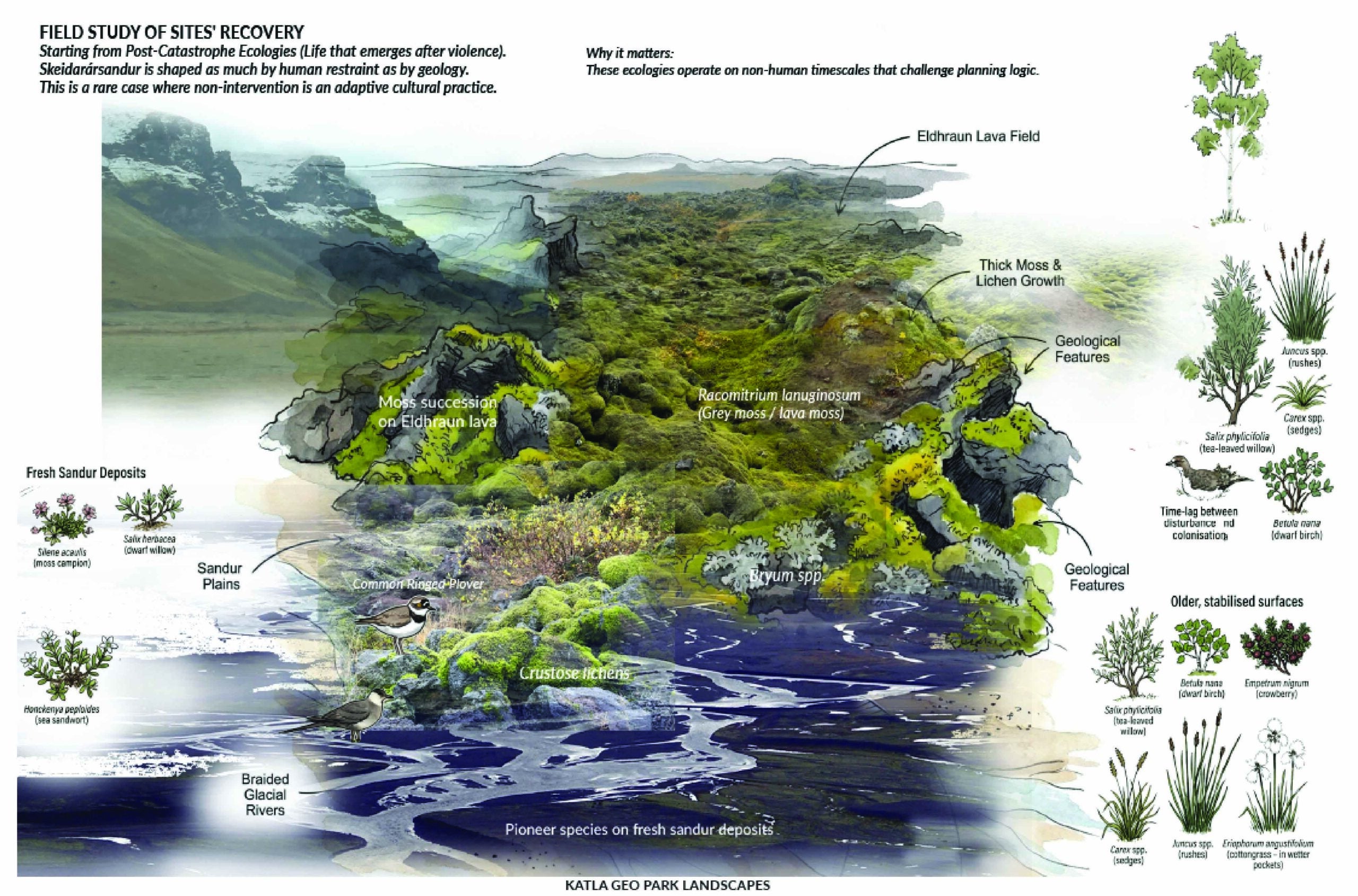
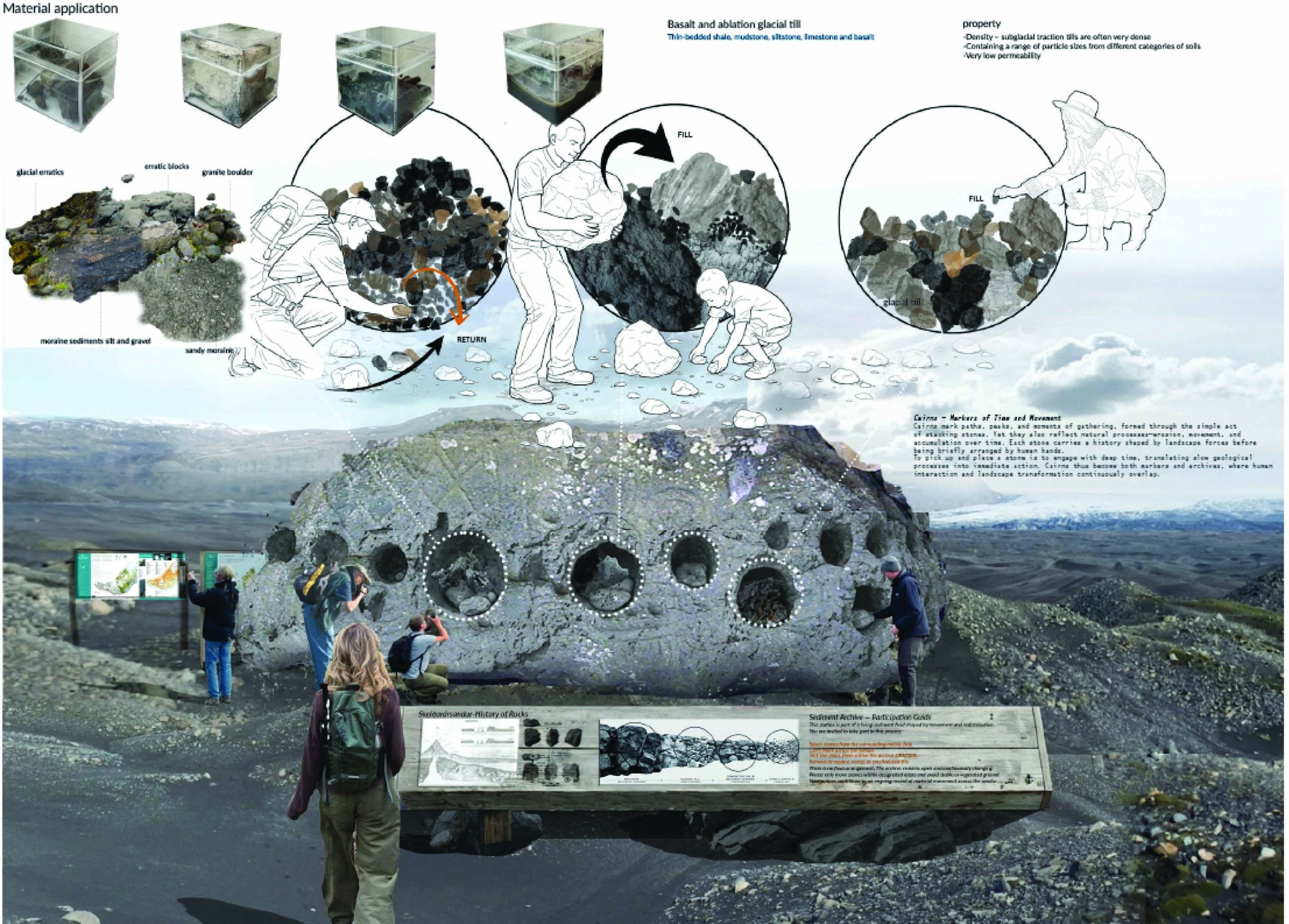
The project reorients Iceland’s Ring Road from a transport corridor into a spine of engagement, linking a distributed network of four archive stations across the landscape. Each station invites a different mode of interaction—cultivating moss and turf, redistributing glacial sediments, witnessing post-flood ecological recovery, and observing glacial retreat—allowing visitors to experience geological and ecological processes through direct participation rather than passive observation. Local materials, including basalt, moss, and sediment, form the basis of each intervention, ensuring that the archive remains embedded within the landscape it documents.
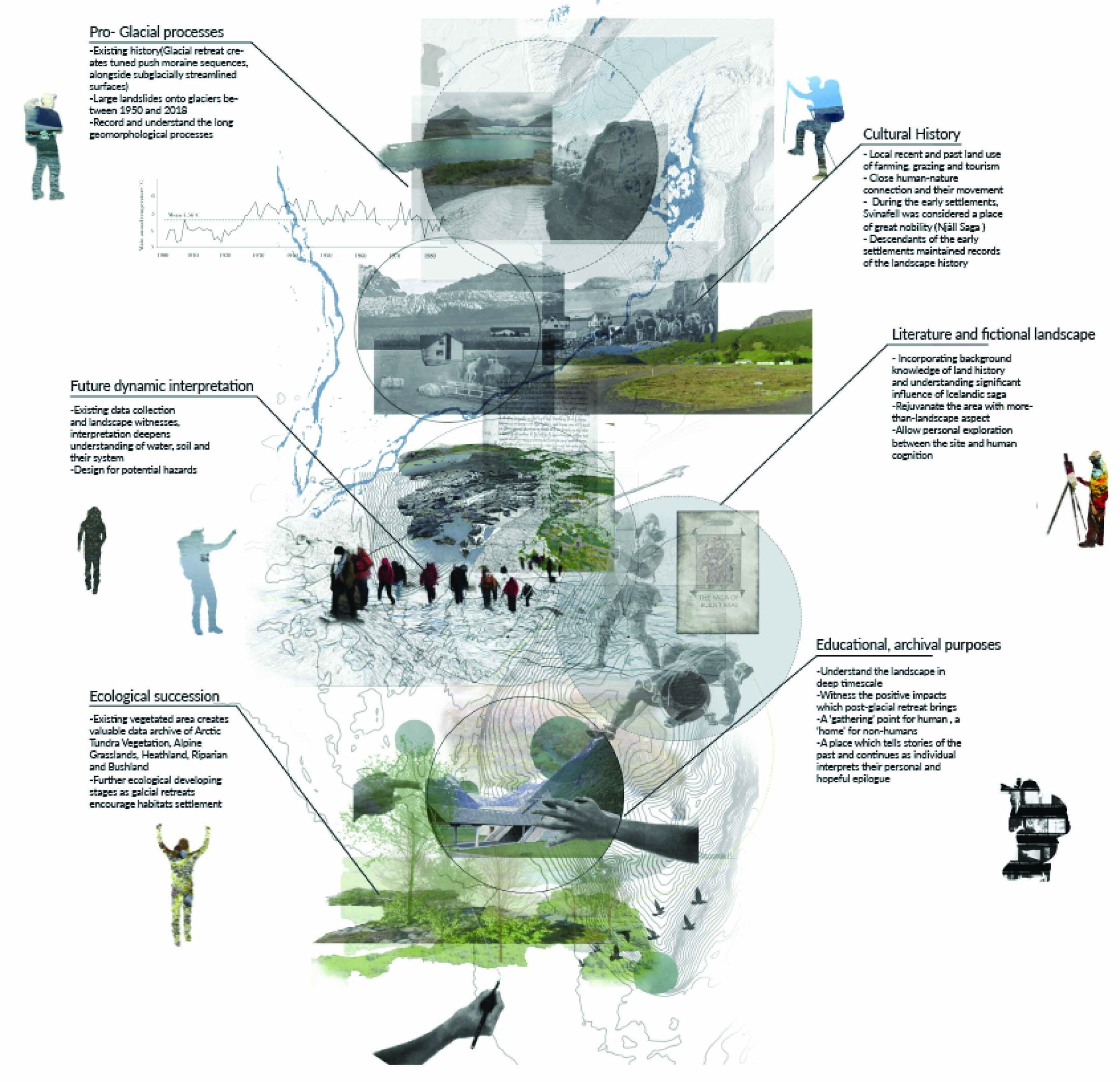
Rather than producing a static record of a disappearing environment, the archive continuously evolves alongside the landscape itself. Through fieldwork, custom research instruments, cartographic documentation, and site-specific interventions, the project demonstrates how landscape architecture can transform documentation into an act of stewardship. By positioning visitors, researchers, and local communities as active participants, Archive in Motion proposes a transferable model for conserving fragile, climate-sensitive landscapes through engagement, observation, and shared responsibility rather than exclusion.