Beyond the Garden Enclave: Redistributing Environmental Knowledge through Everyday Landscapes of Care
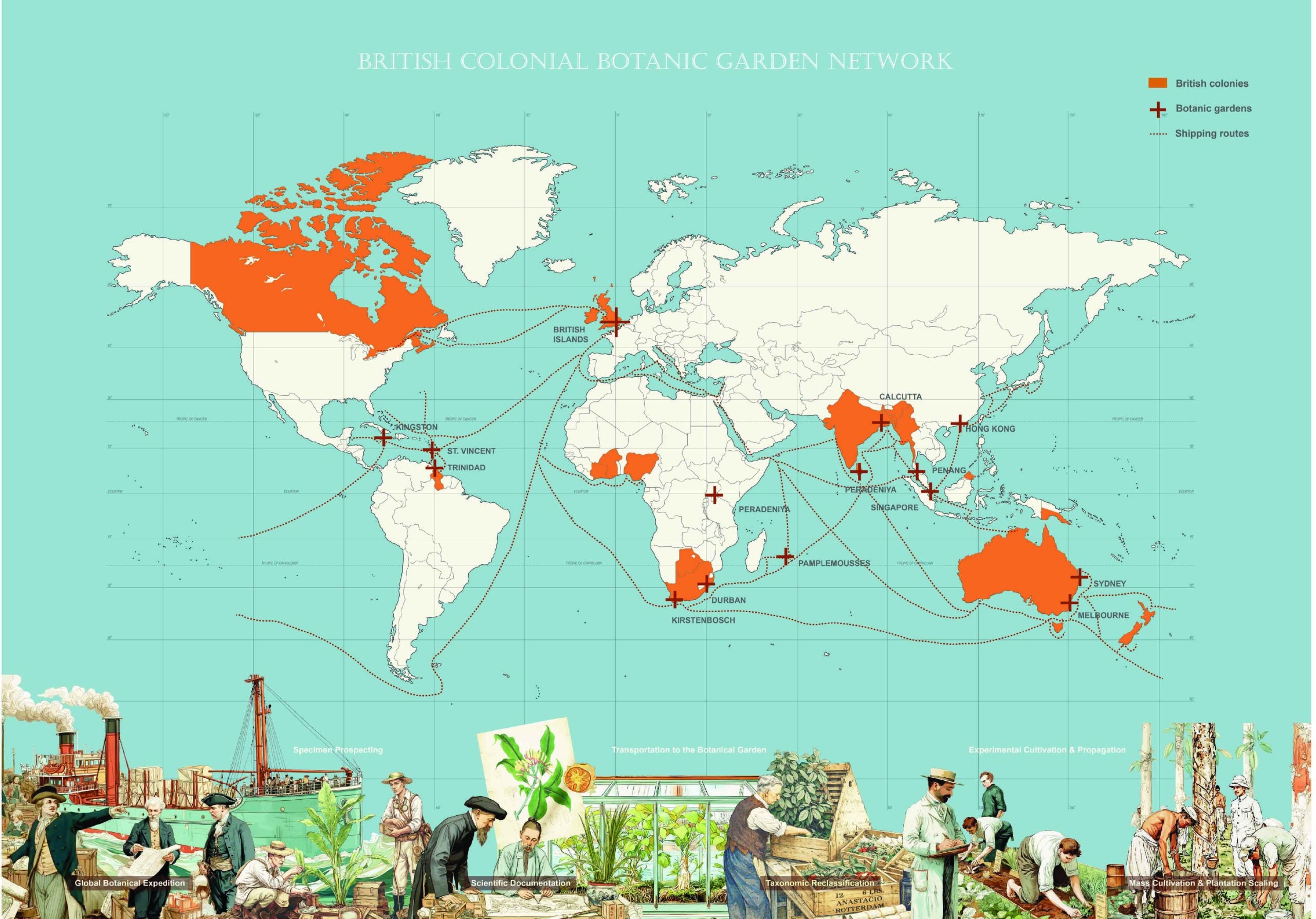
This project reinterprets the Singapore Botanic Gardens as more than a heritage institution, positioning it as a historical node through which botanical knowledge was produced, standardised, and disseminated across the city. Rather than viewing the Gardens as an isolated site, the thesis examines how its legacies of classification, control, and efficiency continue to shape Singapore’s contemporary landscapes and influence the ways people are permitted to engage with nature.
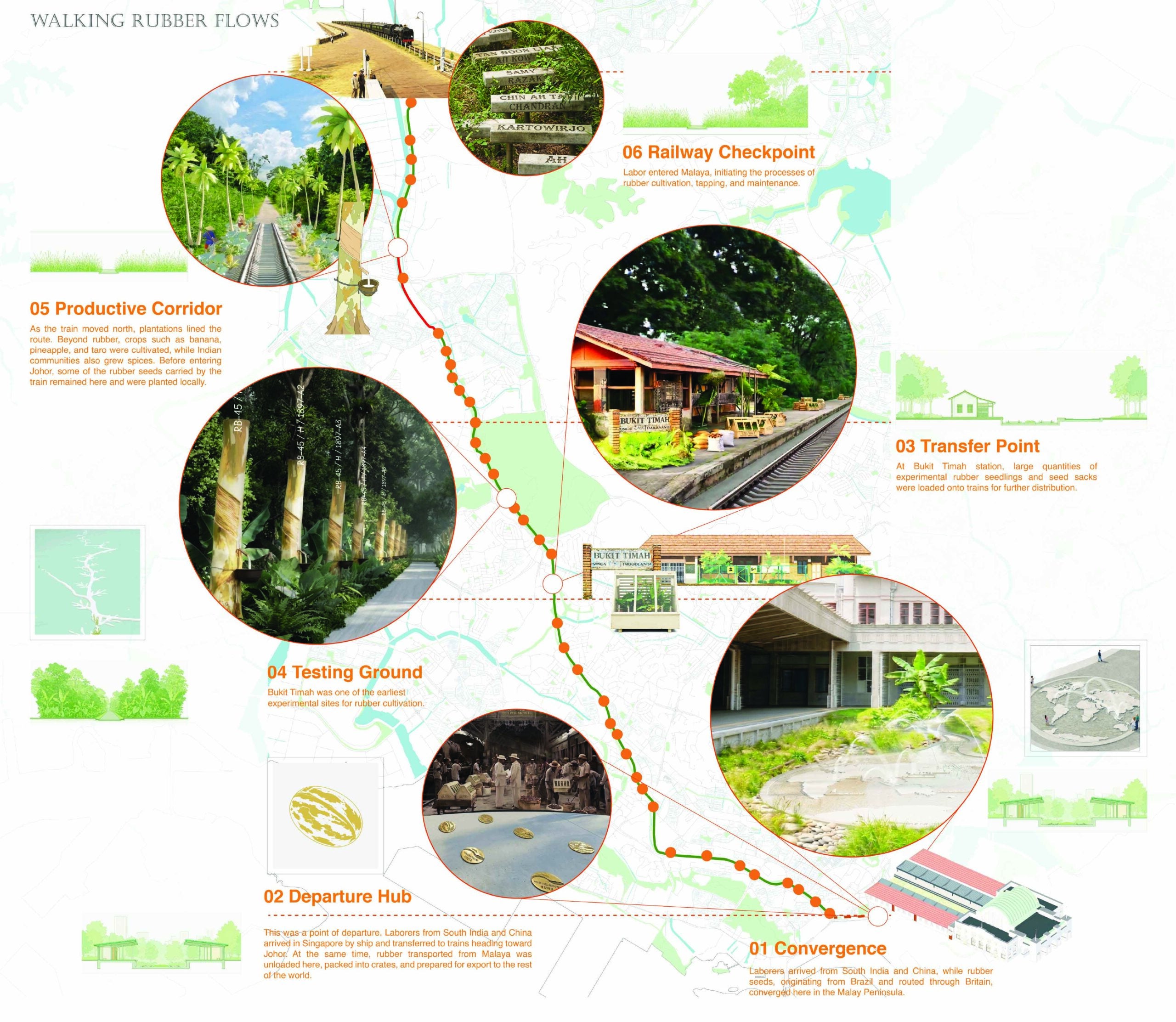
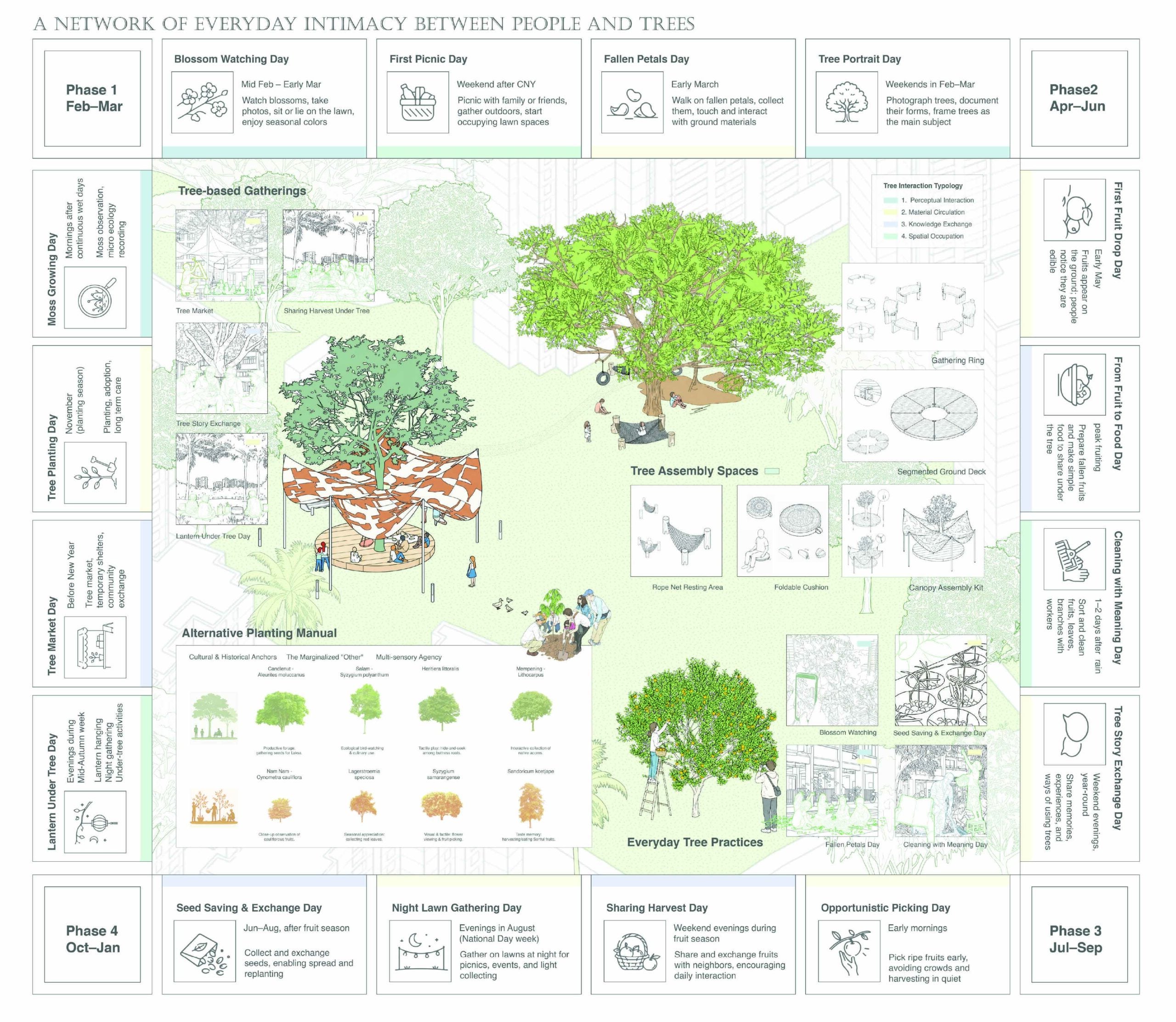
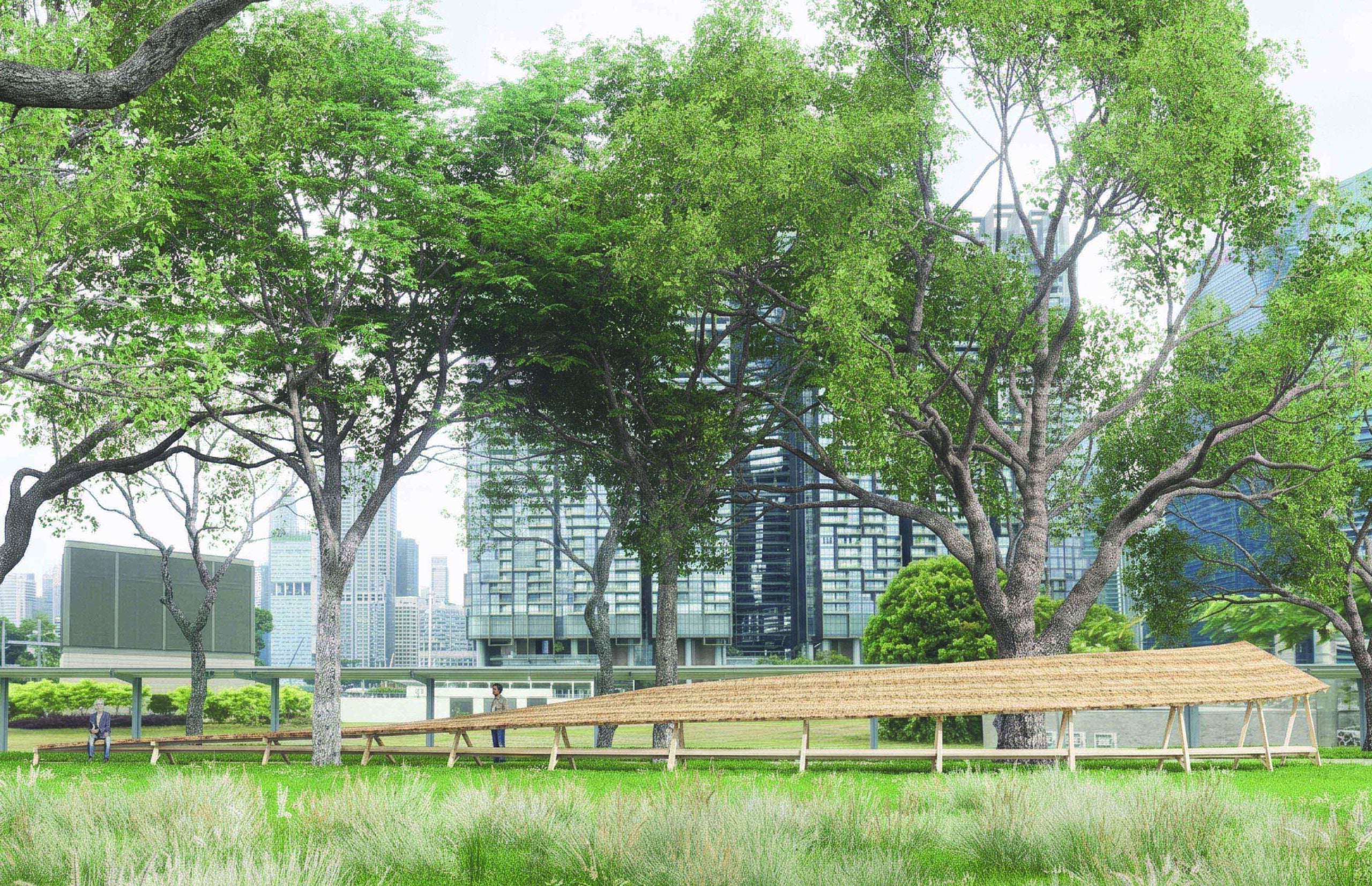
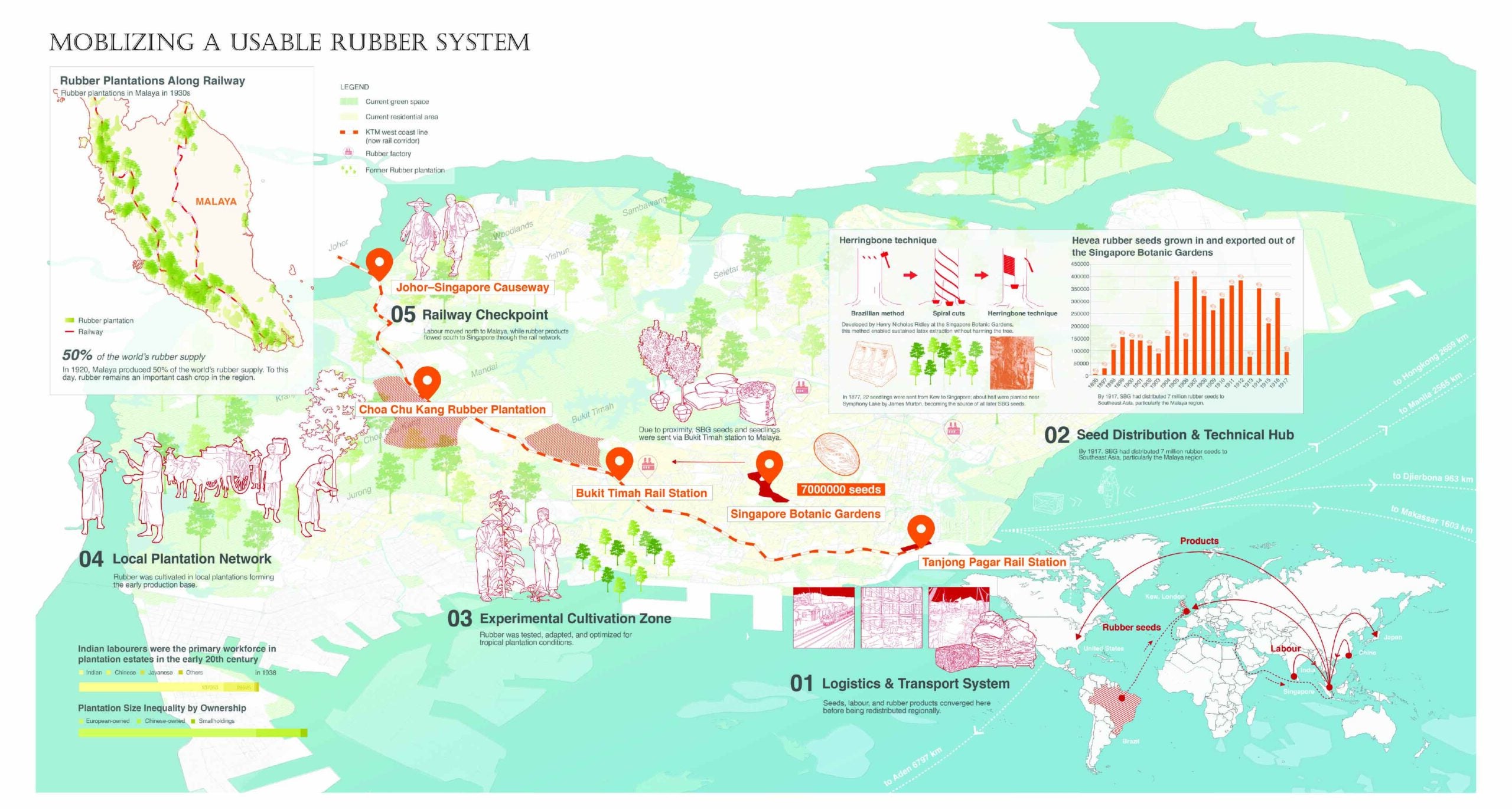
Through four interconnected narratives, the project reveals opportunities to transform passive green spaces into landscapes of participation and care. Lalang, commonly dismissed as a weed, is reframed as a resource that can be harvested and understood through everyday practices. At forest edges, moss-based installations make subtle environmental changes visible, encouraging visitors to observe ecological processes and forest health. Along the Rail Corridor, ground markings and augmented reality overlays uncover the historical movement of rubber through global trade networks, reconnecting local landscapes to their colonial and economic histories. Within HDB neighbourhoods, small gathering platforms, accessible planting zones, and curated fruit tree networks encourage residents to sit beneath, cultivate, and care for urban vegetation as part of daily life.
Together, these interventions establish a distributed landscape of environmental learning, where knowledge is generated through direct interaction rather than institutional instruction alone. By decentralising botanical knowledge beyond the boundaries of the Singapore Botanic Gardens, the project reimagines urban landscapes as spaces where care, stewardship, and ecological understanding are cultivated through everyday experience, fostering more active relationships between people, plants, and the city.