Sand Reclaimed
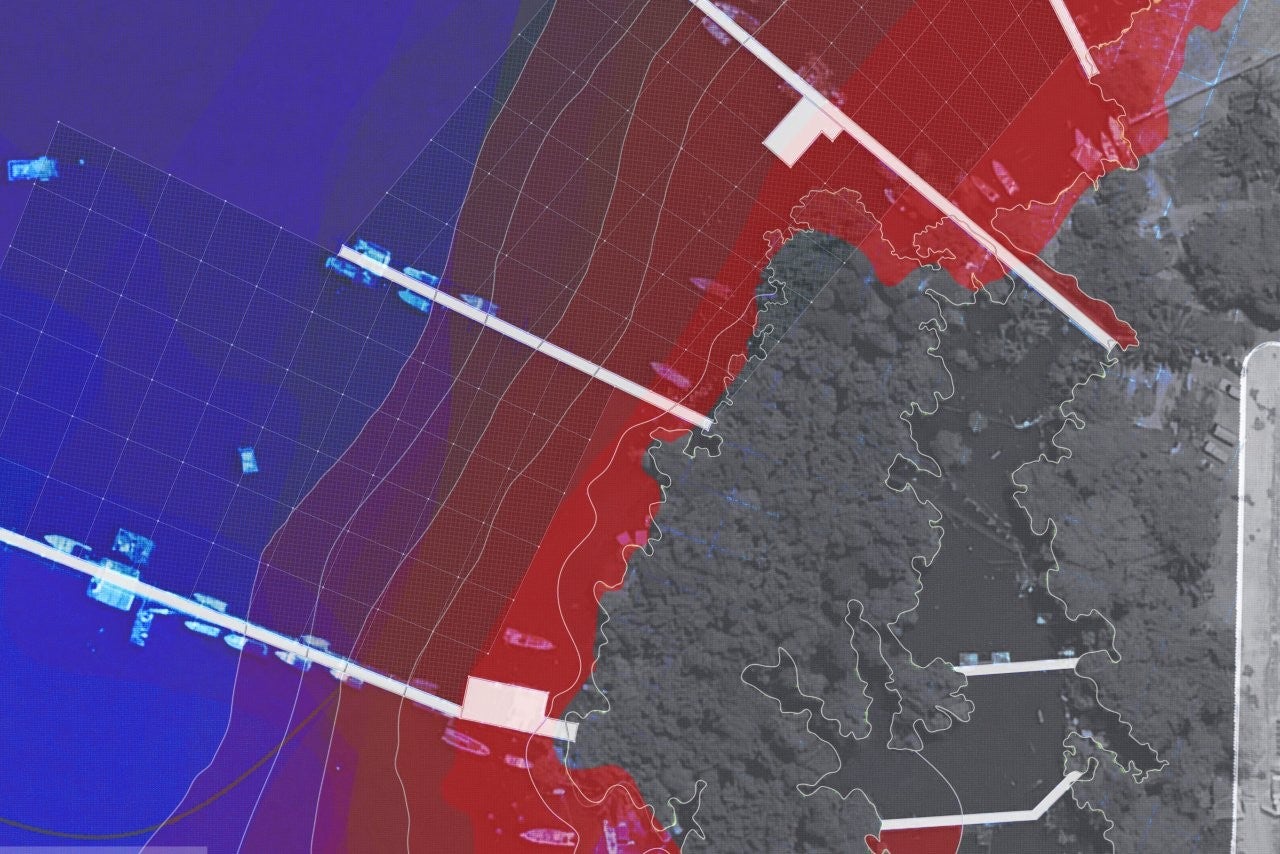
Seletar Fishing Village, Singapore’s last remaining Coastal Kampung, sits along the Northeastern shoreline and faces a constant negotiation between sand and sea, finding itself at the front line of ecological change.
Sand-Reclaimed transforms this shifting coastline into a study of how sand mediates the relationship between human and non-human, acting as both a builder and an eraser. Once a thriving ecosystem where mangroves flourished along the rhythms of the tide, the site now bears the tension between the rising seas and restricted inland growth. Sand that is carried away and deposited by the tide has become a silent force, redrawing its own limits with every passing day.
The landscape of the fishing village is in a constant state of flux and has transformed drastically overtime. However, the village has been a quiet witness to this lively bustle, to and fro around it.
This project positions sand not as an inert material, but as an active agent that builds, buries and reveals life along the coast. Within this garden of flux, the fishing village is an island of memory, enclosed by time, tide and a territory that is continually redefined by the shifting power of sand.
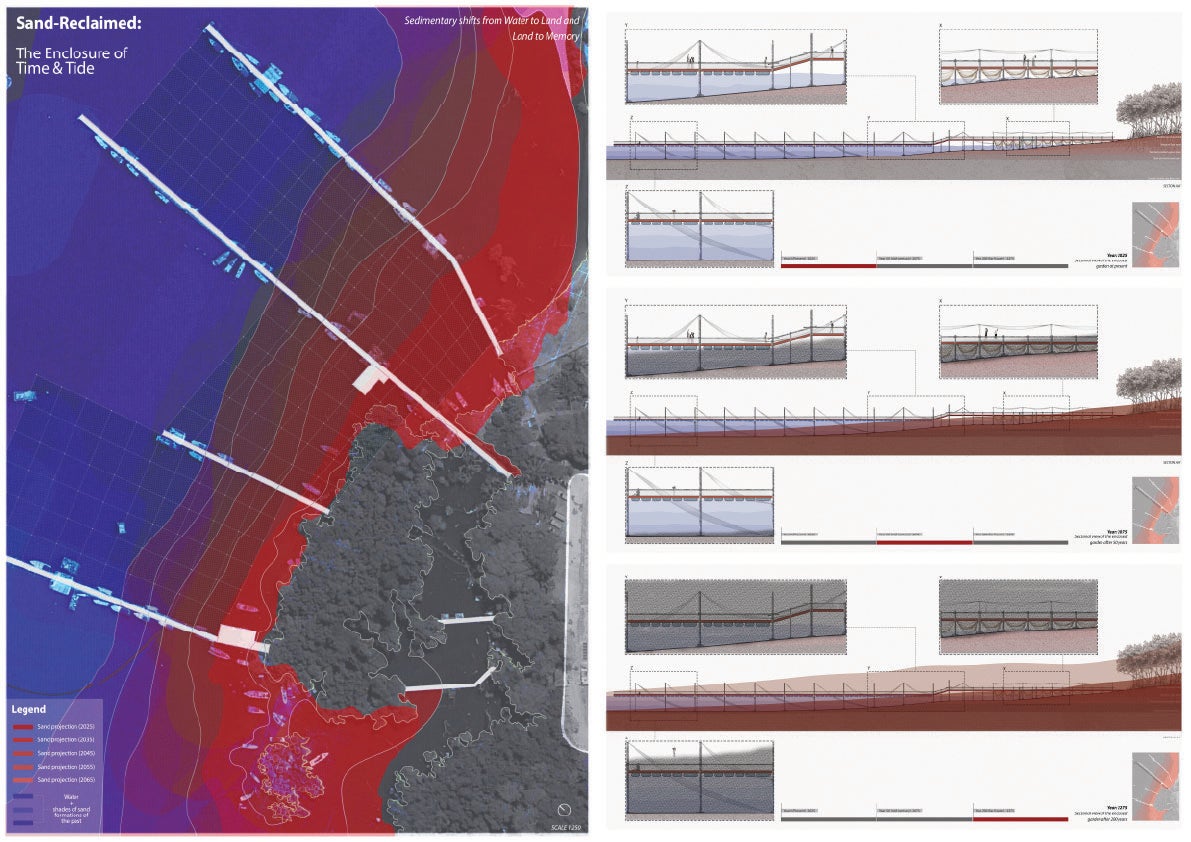
The garden is envisioned as a network of nets, turning absence into presence. Since the fishermen no longer live here, the village has become a third place, and the nets and stilts become stand-ins, weaving the memories of the village into the landscape.
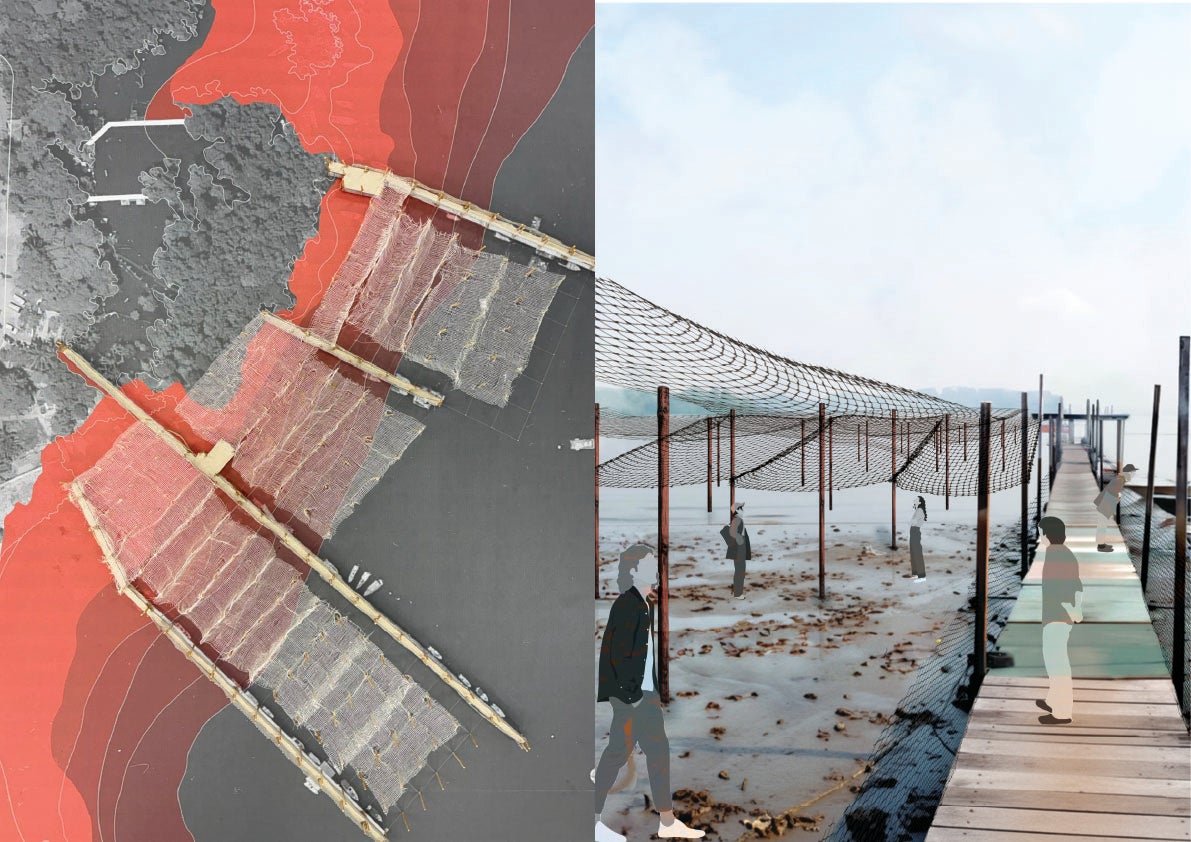
It envisions reclamation not as an act of conquering but as a synchrony with flux, where the land itself is allowed to reclaim its agency. By positioning sand in the foreground as an active agent, the project invites reflection on being witnesses of temporality and transformation. By repositioning humans as observers rather than controllers, it allows us to imagine a landscape that is written by the memories and natural forces and the silhouettes of erosion.