Gardens of Neglect: Ruderal Reorganisation of Ecology, Time and Informality in Urban Ruins
PROGRAMME
Master of Landscape Architecture
STUDENT
Shruthakeerthi Karthikeyan
YEAR
2
ADVISOR/TUTOR
Lin Yifeng
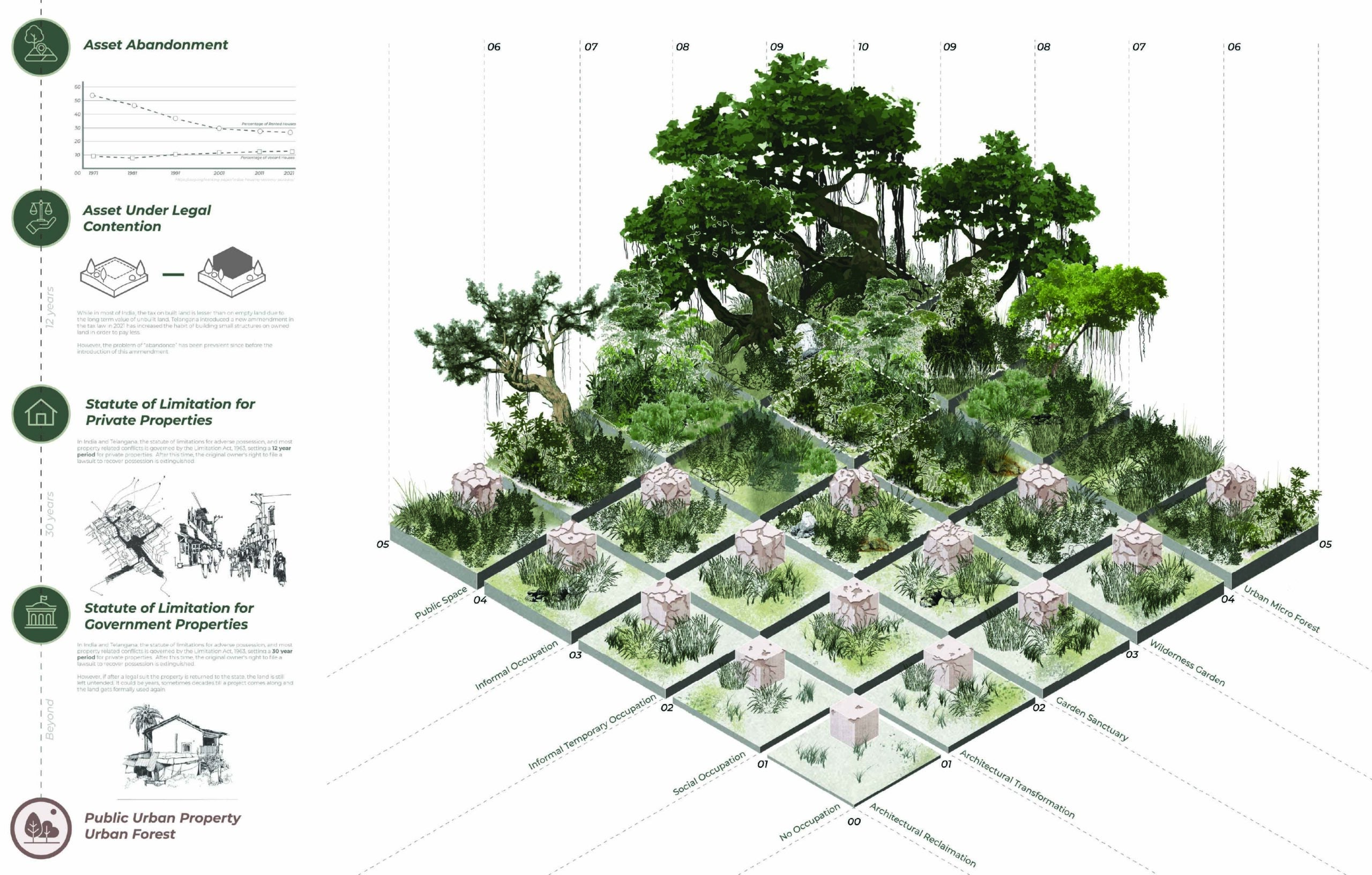
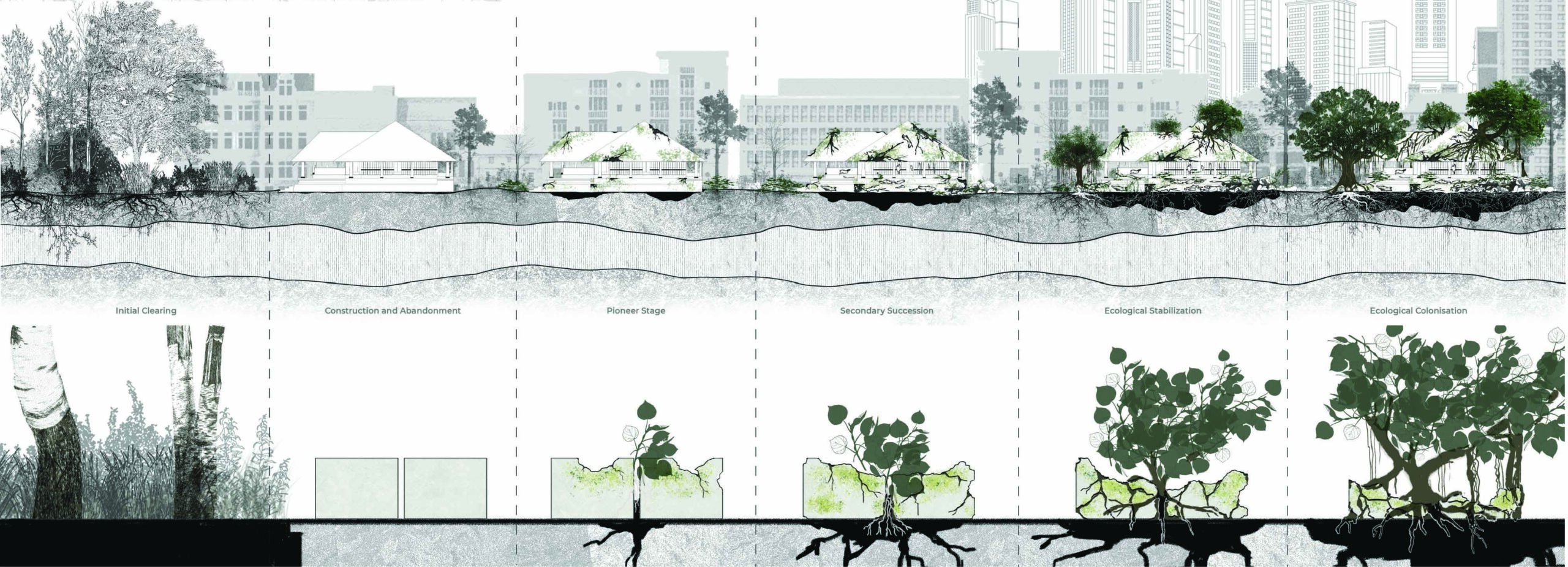
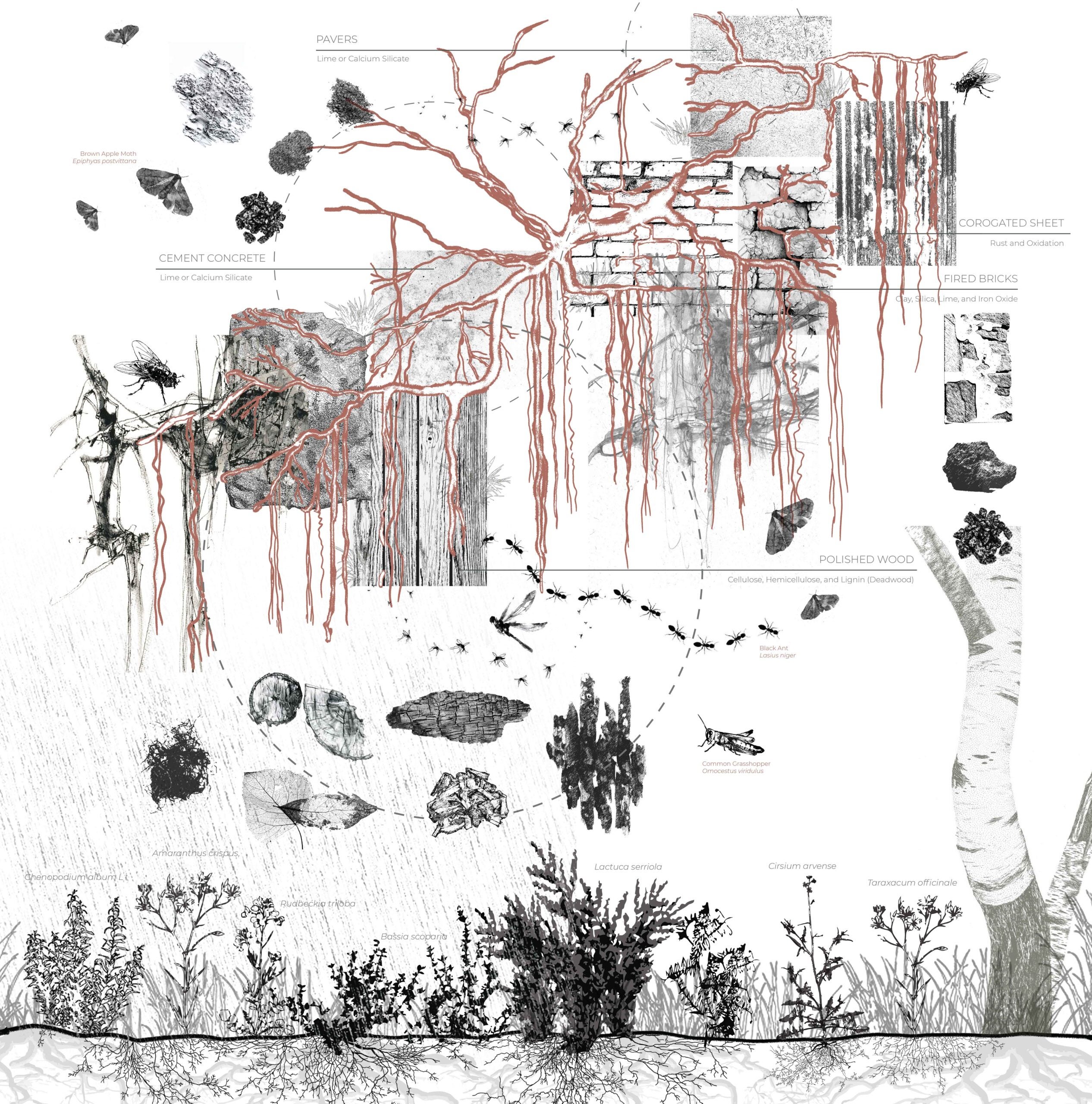
Gardens of Neglect investigates abandonment as a generative condition of urbanisation in South and Southeast Asia, examining how legal ambiguity, ecological succession, and informal occupation reshape urban ruins over time. Inspired by ruderal ecologies (pioneer species that colonise disturbed environments) the project argues that abandoned sites should be understood not as failures awaiting redevelopment, but as evolving landscapes where architecture, nature, and everyday life coexist.
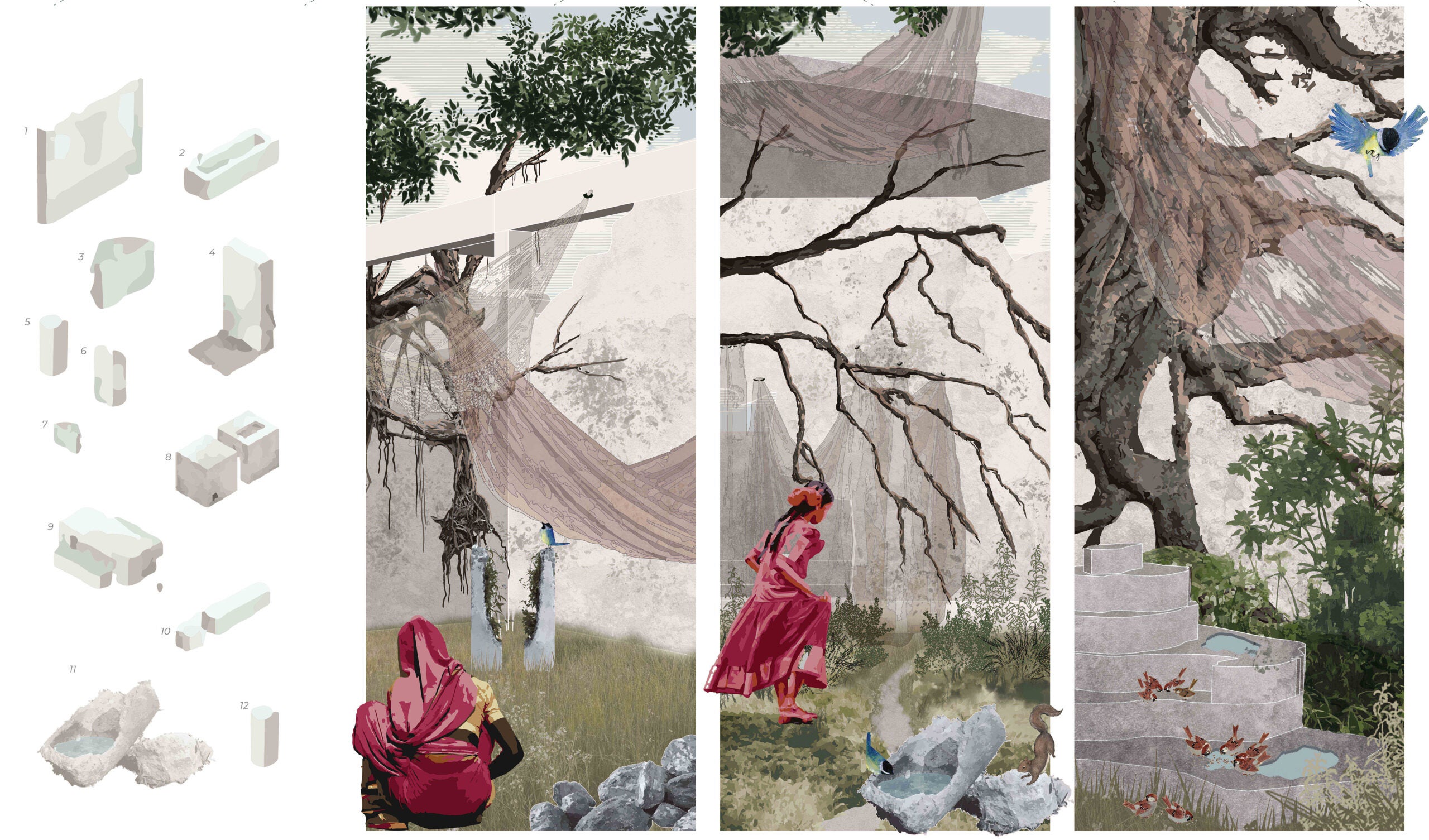
Using Hyderabad’s contested Nizam-era properties as a pilot site, the research reveals how prolonged legal disputes, policy loopholes, and speculative urbanisation produce spaces that become simultaneously ecologically rich and socially occupied. Fieldwork demonstrated that these ruins are rarely empty, instead supporting informal livelihoods and temporary habitation alongside spontaneous vegetation. Drawing from the legal doctrine of adverse possession, the thesis proposes extending recognition to ruderal ecologies, positioning both human and non-human occupation as legitimate claims to neglected land.
The design outcome is a matrix of disturbance that guides interventions according to the duration of abandonment, degree of ecological succession, and patterns of occupation. Rather than prescribing fixed programmes, the framework shifts the designer’s role from restoring architecture to choreographing coexistence, gradually prioritising ecological processes as sites mature into public gardens and, ultimately, urban microforests.
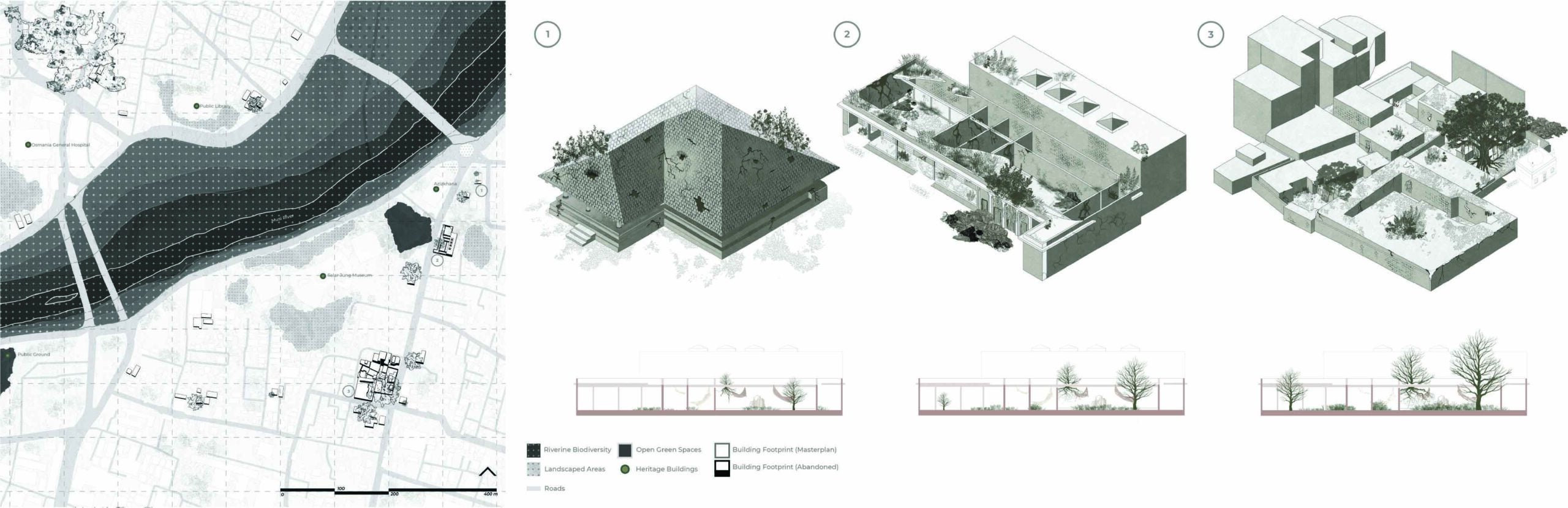
By reframing abandonment as an active and productive urban condition, Gardens of Neglect challenges conventional approaches to redevelopment and conservation. It proposes an adaptive design methodology that embraces uncertainty, recognising time, ecology, and informality as essential agents in shaping more resilient and inclusive urban futures.