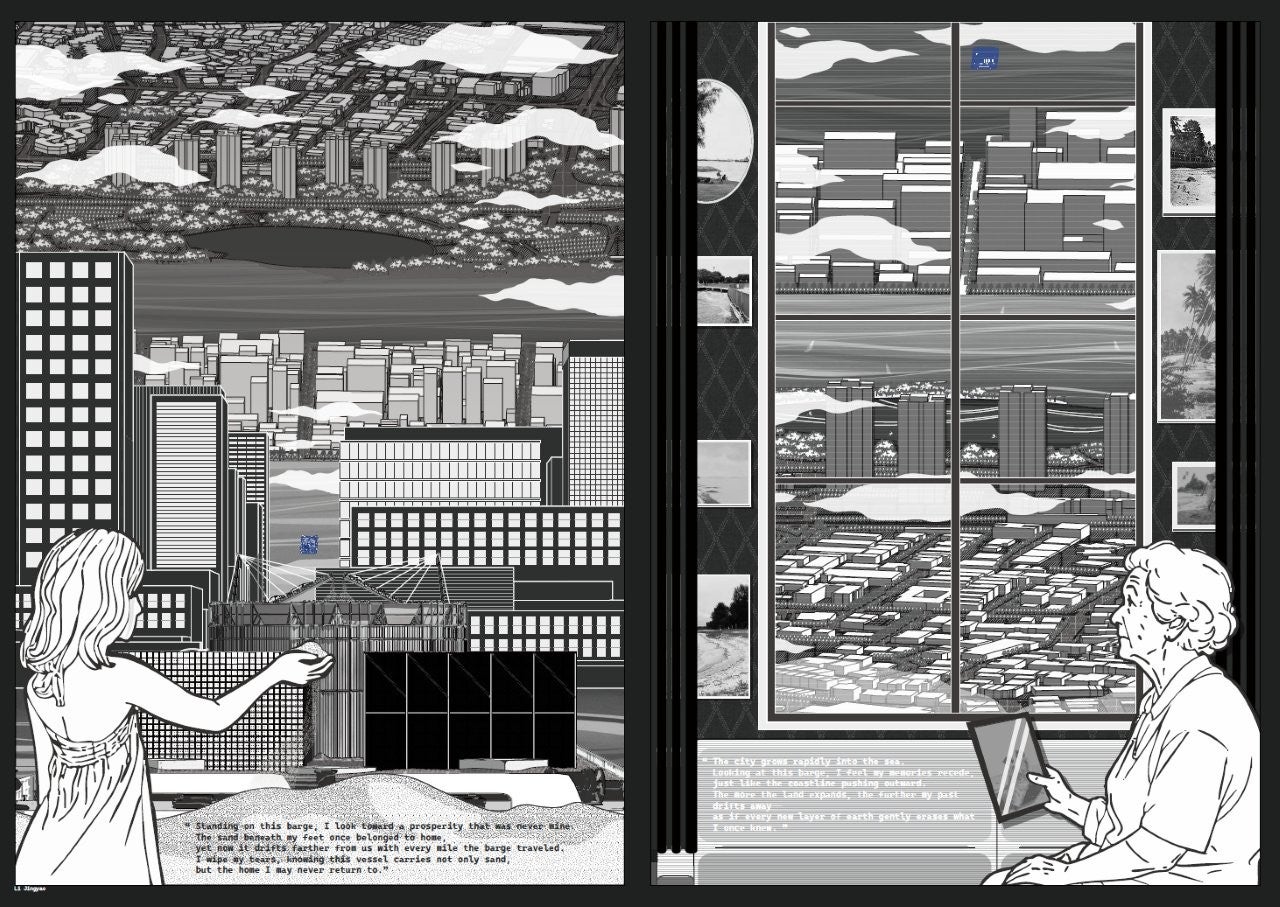
The Last Sand Barge
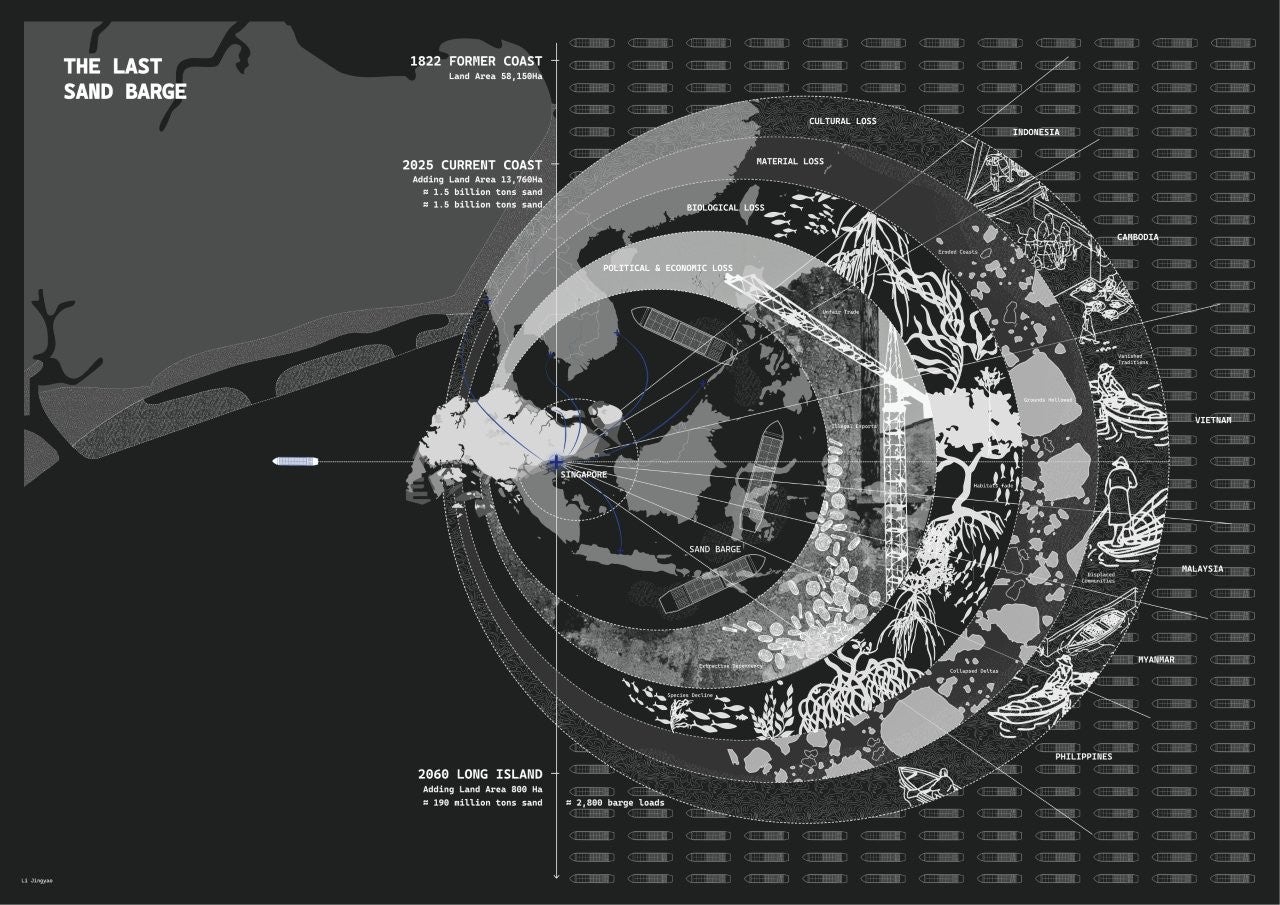
In the past sixty years, large-scale land reclamation has pushed Singapore’s shoreline ever farther into the sea, turning soft tidal edges into engineered borders. Each gain of land concealed the loss of another coast, another ecosystem, another way of life.
My project began with a simple question: what do we gain and what do we lose after the boundary? I imagined three possible futures: one where the city retreats and returns space to the sea but progress halts; one where expansion continues without end; and one where development persists until the ground beneath it completely disappears. These are not mutually exclusive, but different stages of the same destiny. Brief moments of retreat are replaced by new waves of expansion, until progress devours its own foundation. Eventually, the shoreline stands still— not because we choose to stop, but because there is no sand left to build upon.
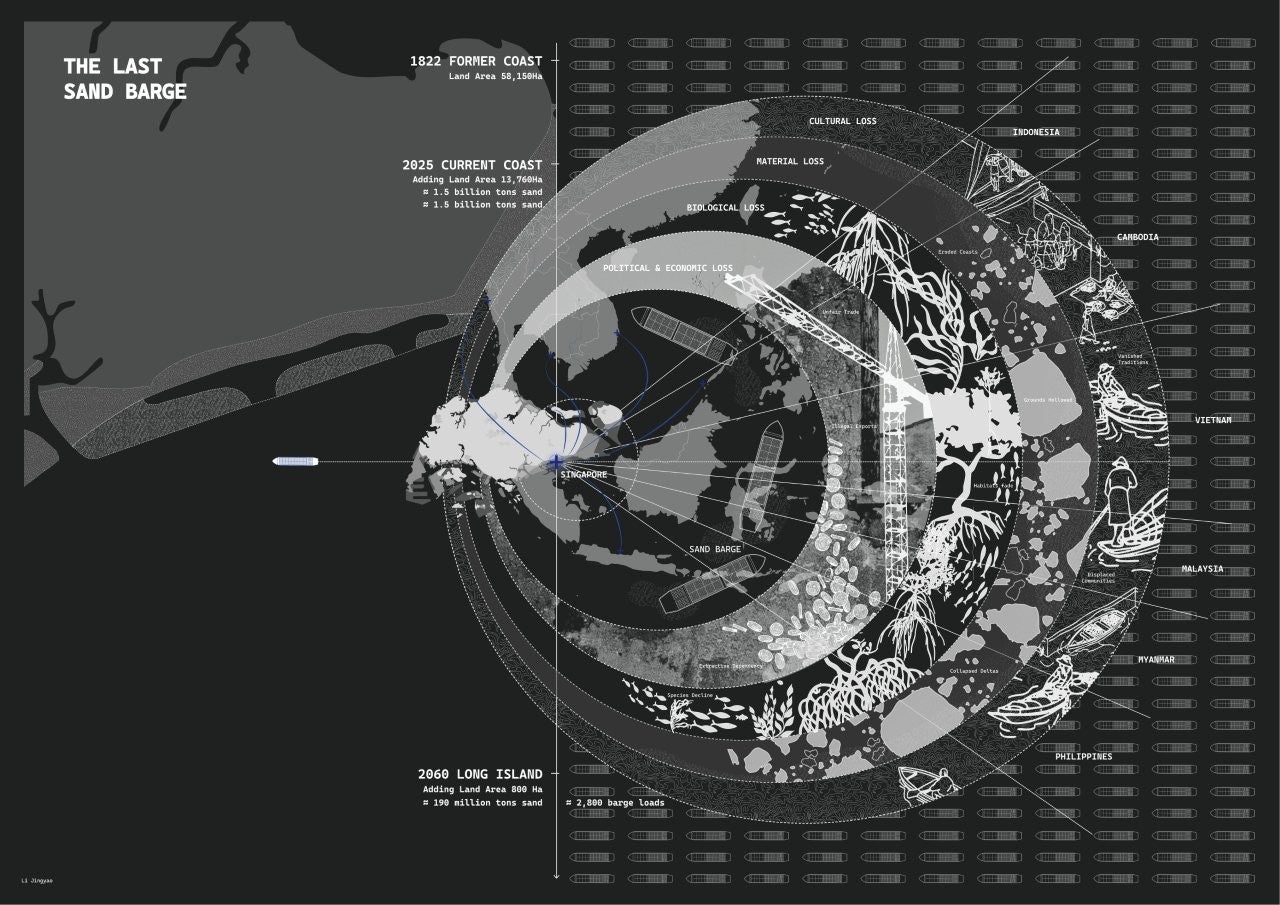
I imagined a future in which Singapore’s expansion meets its geological limit. By 2080, this future has become reality. Long Island is complete, but the rivers of Southeast Asia are exhausted— no sand can be mined, and no nation is willing or able to sell it.
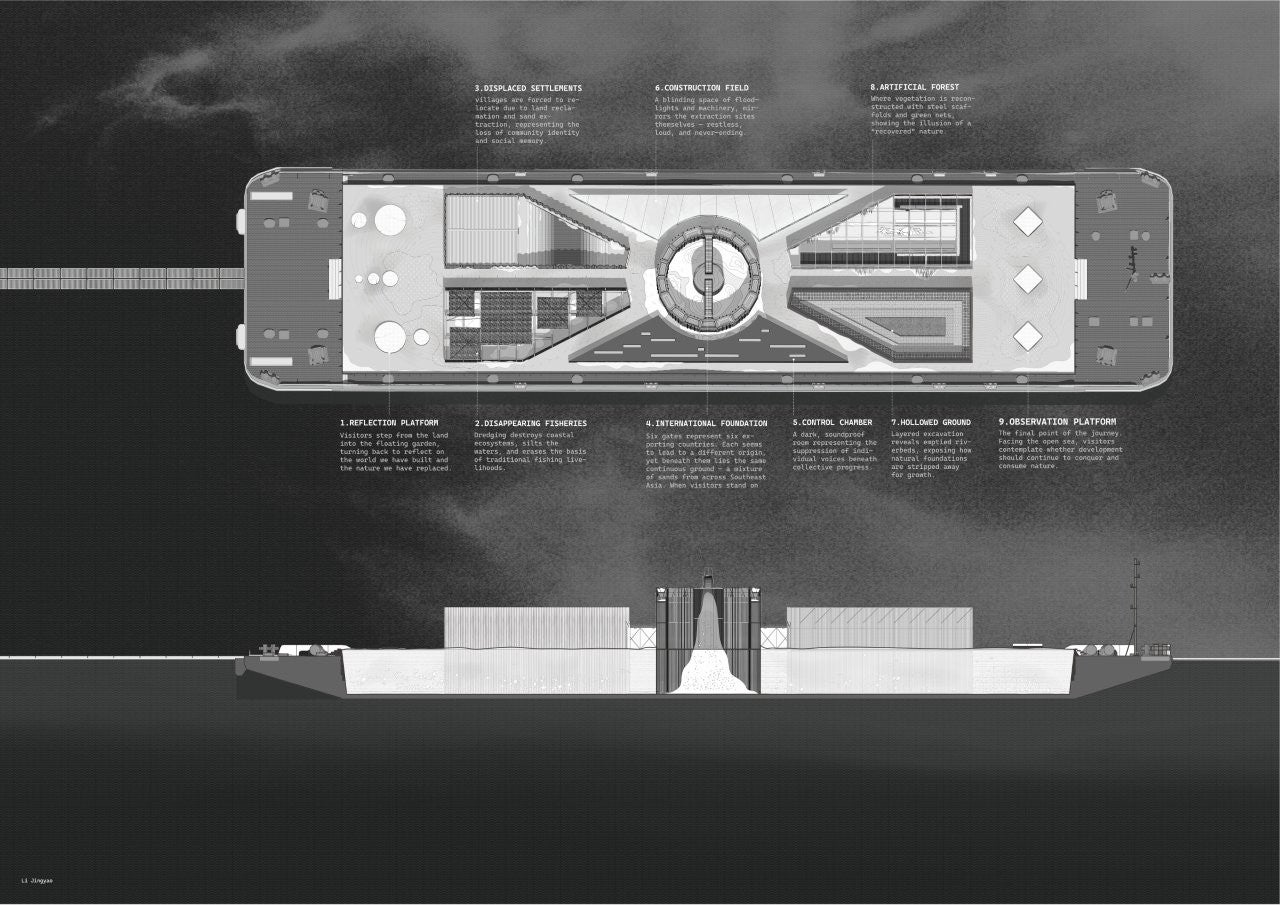
The last barge, still laden with the final mixed sediments from Cambodia, Vietnam, Malaysia, Myanmar, Philippines and Indonesia, drifts outside the finished shoreline. There is nowhere to unload. Abandoned at the edge of the nation, it becomes the The Last Sand Barge — a floating vessel of reflection that forces progress to look back at its own foundation.
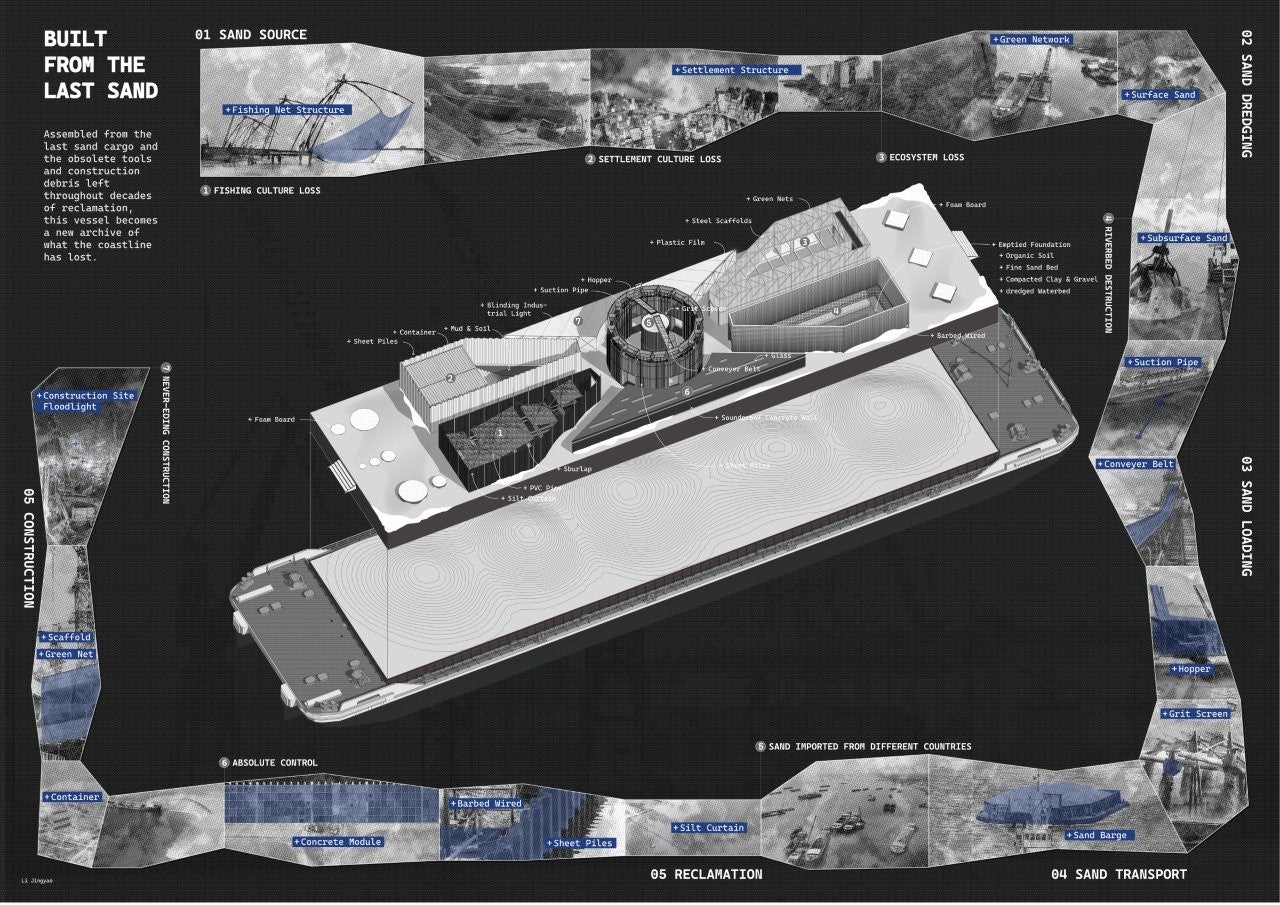
The project does not reject development; instead, it exposes its costs. Fifth Nature, in this context, is not another form of greening but a form of awareness—an enclosed space that distils what remains unseen in Singapore’s coastal transformation. It invites the city to pause, to recognise its dependence on finite landscapes beyond its borders, and to ask: if endless extraction is impossible, what futures can we imagine—and what worlds are we willing to leave behind?